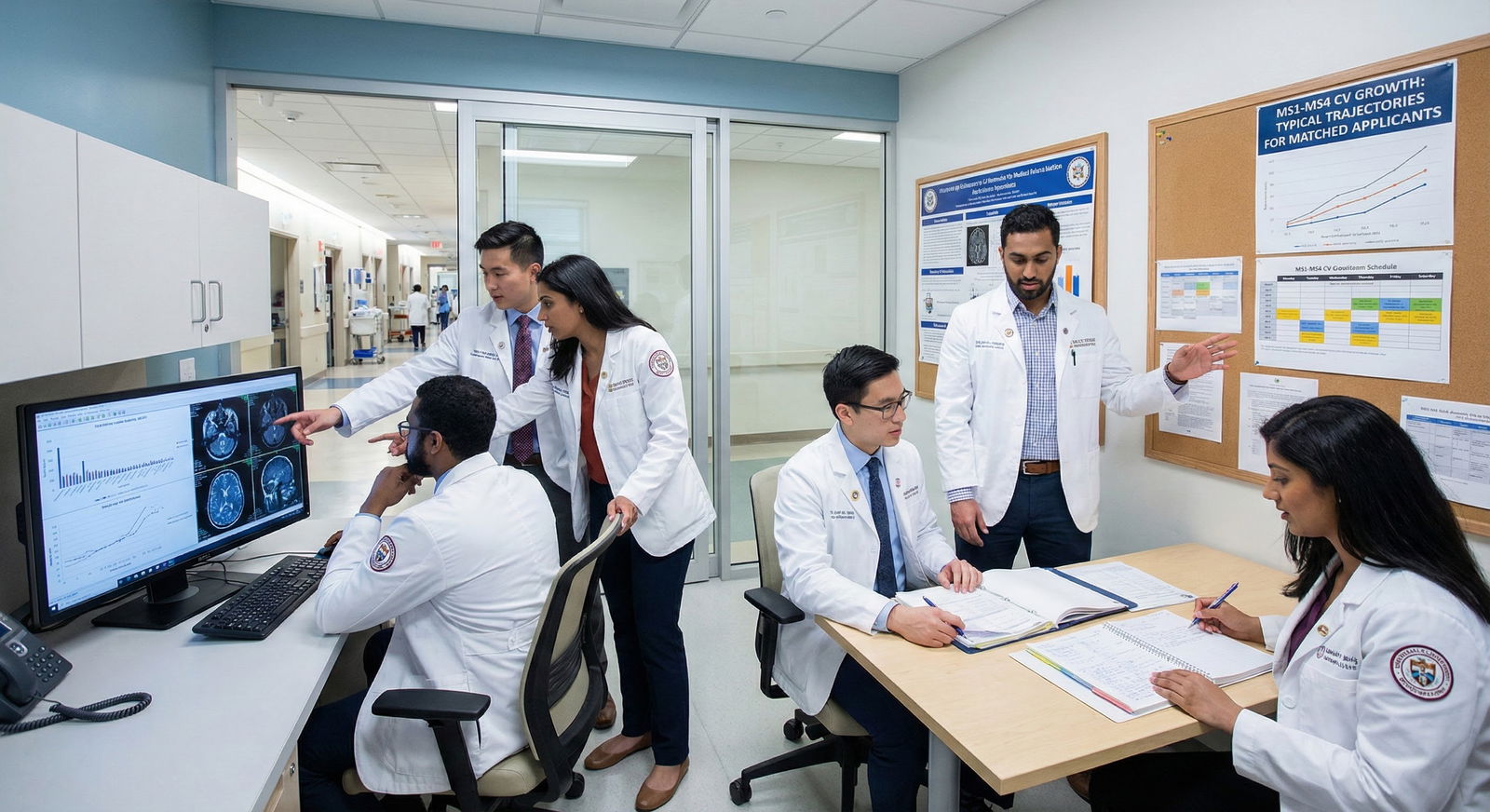
The fastest way to get your international clinical experience ignored on ERAS is to present it like a vacation with scrubs.
You want programs to see it as serious, supervised clinical training that made you a better future resident. Not a “medical tourism” week where you took selfies with kids and handed out Tylenol.
Let’s walk through exactly how to present international clinical experience credibly on ERAS—so it helps you, not hurts you.
1. First, be honest about the problem: many programs are skeptical
I’ll be blunt: a lot of PDs and faculty roll their eyes when they hear “international rotation” or “global health trip.”
They’ve seen:
- One-week “mission trips” described as “managing patient panels”
- Shadowing presented as “independent clinical practice”
- Students doing procedures abroad they’re not allowed to do at home
They’re not wrong to be wary. So you’re starting in a hole. Your job is to climb out of it.
You do that with:
- Clear structure
- Transparent supervision
- Concrete clinical responsibilities
- No exaggeration. At all.
Think like a PD reading quickly at 11:30 pm after a call night. If anything smells inflated, they mentally downgrade the whole application.
So your guiding rule: understate slightly rather than overstate. If they come away thinking, “This sounds solid and appropriate for a student,” you win.
2. Where to put international clinical experience on ERAS
If your experience was legitimate clinical exposure (not just observation), you have several options. The right one depends on what you actually did.
Here’s how to sort it:
| Type of Experience | Best ERAS Section |
|---|---|
| Full-time, formal rotation with supervision | Experiences – Clinical |
| Long-term (≥1 month) elective with duties | Experiences – Clinical |
| Shadowing-only abroad | Experiences – Non-Clinical/Other |
| Short (1–2 week) “mission trip” | Experiences – Volunteer |
| Research-based global health project | Experiences – Research |
Basic principles:
- If you touched patients, it belongs under clinical or volunteer, with supervision spelled out.
- If you just watched, call it what it was: shadowing/observation.
- If it mixed clinical + outreach + teaching, you can still use one entry—just define the scope clearly.
Do NOT create three separate entries to make it look longer: “Volunteer in Peru,” “Clinic in Peru,” “Teaching in Peru” if they were all one short trip. That looks like padding, and PDs notice.
3. How to write the ERAS entry so it sounds credible
You’ve got four big levers inside each ERAS experience entry:
- Title
- Organization
- Dates/time commitment
- Description
3.1. Title: avoid the fluff
Bad titles:
- “Global Health Mission – Kenya”
- “Doctor – Rural Clinic in Guatemala”
- “Primary Care Provider – Uganda”
Better titles:
- “Clinical Elective – Internal Medicine, Hospital X, Country”
- “Student Volunteer – Outpatient Clinic, Country”
- “Clinical Observer – Pediatrics, Tertiary Hospital, Country”
If you were a student, your title should sound like a student. “Elective Student,” “Volunteer,” “Observer,” “Visiting Student.” That’s it. Anything more senior sounds fake.
3.2. Organization: name it like it would appear on a CV
Use:
- Official hospital/university name
- City, Country
Example:
“Hospital das Clínicas, University of São Paulo – São Paulo, Brazil”
If it was through your home med school, you can note that in the description: “International elective arranged through XYZ School of Medicine.”
That lowers suspicion right away.
3.3. Dates and hours: be precise and realistic
Don’t claim 500+ hours for a 4-week rotation unless you’re in residency. Programs know the math.
Be consistent:
- Start/end month and year
- “Average hours per week” that match what a student could reasonably handle
Reasonable ranges:
- 4-week full-time elective: ~40–60 hours/week
- 1–2 week trip: 20–40 hours/week, depending on structure
- Longitudinal remote global health project: 2–10 hours/week
If you’re guessing, err low. Overestimating just to inflate hours is amateurish and obvious.
3.4. Description: structure it in three parts
Best structure:
- Setting and supervision
- Concrete responsibilities
- What you learned that matters for residency
Use 3–5 short bullets or tight paragraphs. No essays.
Example for a 4-week internal medicine elective:
- Participated in a 4-week internal medicine elective at a tertiary academic hospital under supervision of attending physicians and residents.
- Joined daily ward rounds, pre-rounded on 3–5 patients, presented cases, and contributed to assessment and plan discussions.
- Performed focused histories and physical exams in Spanish with resident review; documented notes in the local EMR after staff sign-off.
- Assisted with bedside procedures (e.g., paracentesis) as appropriate for a medical student, with direct supervision.
- Gained experience managing advanced presentations of conditions (e.g., decompensated cirrhosis, uncontrolled diabetes) in a resource-limited setting.
Notice what this does:
- Names your level (student)
- States supervision
- Describes activities that make sense for your level
- Avoids hero language like “managed,” “independently treated,” “ran clinic”
If you MUST say “managed,” qualify it: “Participated in management of…” or “Assisted in managing…”
4. Clinical vs “medical tourism”: the credibility test
Let’s separate experiences into two piles: ones that impress people, and ones that make them worried.
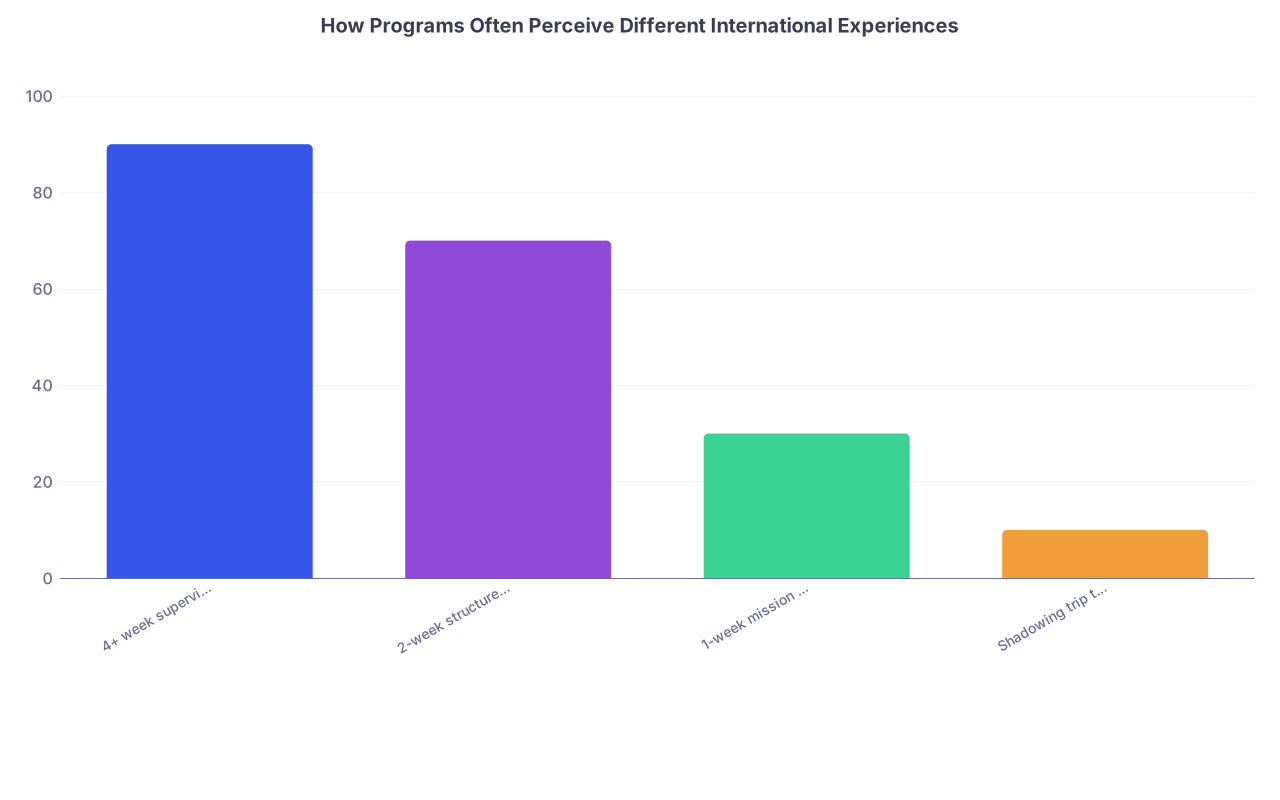
| Category | Value |
|---|---|
| 4+ week supervised elective | 90 |
| 2-week structured teaching clinic | 70 |
| 1-week mission with unclear roles | 30 |
| Shadowing trip through church group | 10 |
Numbers here are a vibe score, not real data—but the point stands.
High-credibility experiences usually have:
- ≥4 weeks of continuous work
- Clear affiliation with a known hospital/university
- Explicit attending/resident supervision
- Responsibilities identical or similar to what you’d do at home as a student
- Documentation, lectures, conferences—some academic structure
Low-credibility experiences usually have:
- 5–10 days in-country
- No clear supervising physician named
- Vague phrases like “provided free medical care to hundreds of patients”
- Students doing procedures far beyond their level (and bragging about it)
- Organized by non-medical NGOs or church groups without academic oversight
If your experience is in the second category, don’t panic. You can still present it honestly as:
- Service/volunteer work
- Exposure to different health systems
- Motivation for later, more formal global health work
But do not dress it up as residency-level clinical training. That’s where applications go to die.
5. How to talk about international experience in your personal statement
Your ERAS entry shows what you did.
Your personal statement, if you choose to include this, should focus on why it matters for residency.
Two traps to avoid:
- The “savior” narrative (“I went to save them, then I realized…”).
- The “poverty porn” essay describing how poor everyone was.
Residency programs have seen those 10,000 times. They read as naïve and self-centered.
Instead, focus on:
- What you learned about resource use, triage, communication, cultural humility
- How it changed your approach to patient care now, in the US
- How it confirmed or refined your choice of specialty
Example pivot for internal medicine:
“During my month at Hospital Nacional X in Country Y, I saw uncontrolled diabetes and heart failure at stages I rarely encounter in the United States. Working within a limited lab and imaging menu forced me to rely more heavily on clinical reasoning and physical exam. Since returning, I have been more deliberate about which tests I order and more attentive to cost discussions with patients. This experience deepened my interest in internal medicine as a field where thoughtful diagnostic reasoning and longitudinal relationships can significantly change a patient’s trajectory.”
That sounds mature. Connected to your specialty. Not exploitative.
6. Letters of recommendation from abroad: when they help, when they don’t
A strong letter from an international rotation can absolutely help—if it checks a few boxes.
Good scenarios:
- The attending has a formal academic role (Professor/Consultant at University Hospital X).
- They comment clearly on your clinical skills, reliability, and professionalism.
- The letter acknowledges the context: “as a visiting medical student from [Home School].”
Weaker scenarios:
- Vague community letters with no clear clinical supervision.
- Over-the-top praise that sounds copied (“the best student in 30 years”) with minimal specifics.
- Poor English, making it hard for PDs to interpret.
If you’re going to ask for a letter:
- Make sure they supervised you closely (not someone you met twice).
- Provide them with your CV and what you’re applying for.
- Ask them to compare you to an appropriate peer group (other medical students).
If the letter feels weak when you see it (some countries allow you to see it; some don’t), you do not have to use it just because it’s “international.” A strong US-based letter beats a mediocre foreign one every time.
7. FMGs / IMGs: when your entire clinical training is “international”
Different situation here. If you trained outside the US, your whole profile is “international clinical experience.”
Your goal is to:
- Show that your core clinical training was structured and rigorous
- Translate your roles into US-equivalent language
- Highlight any US-based clinical experience to “bridge” systems
For ERAS experiences:
- Use entries to explain internships (house jobs), residency-equivalent years, and major rotations.
- Clarify level: “Intern (equivalent to PGY-1)” or “Medical Officer (postgraduate training year).”
- Avoid claiming attending-level independence if you were still in a training position.
Example description for a house officer year:
“Completed a 12-month rotating internship (equivalent to PGY-1) at [Hospital], a 500-bed tertiary care center. Rotations included internal medicine, general surgery, pediatrics, and obstetrics. Managed inpatient and ED admissions under supervision of registrars and consultants, performed common procedures (arterial lines, lumbar puncture, central lines) with supervision, and participated in daily rounds and weekly academic conferences.”
That gives US readers a mental “slot” to place you in.
If you ALSO did short “mission trips,” be even more careful not to oversell those. Your main credibility comes from your formal training and any US clinical experience (USCE).
8. Handling common problem scenarios
Let’s deal with some messy real-life situations I’ve seen over and over.
Scenario A: You did a 1-week “mission” as an MS1 with limited clinical knowledge
Present it as:
- Volunteer/service experience
- Early exposure to health disparities
- A motivator, not your main clinical credential
Example entry:
Title: Student Volunteer – Community Outreach Trip, Country
Type: Volunteer/Community Service
Description (2–3 bullets):
- Participated in a 1-week community health outreach trip through [Organization] as a first-year medical student.
- Assisted with non-clinical tasks including patient registration, vital sign measurement under nurse supervision, and health education activities.
- Gained early exposure to challenges in providing longitudinal care in resource-limited rural settings.
That’s honest. It won’t offend anyone. It won’t carry your application either, which is fine.
Scenario B: You did a 4th-year elective abroad that was mostly shadowing
Don’t pretend you were running the wards.
Use “observer” or “observed” language:
- Observed inpatient rounds and outpatient clinics in the department of cardiology at [Hospital].
- Discussed cases with residents and attendings and participated in teaching conferences.
- Compared diagnostic and treatment approaches between [Country] and the US.
You can still mention clinical content in interviews: what cases you saw, what you learned. But in writing, stick to what you actually did.
Scenario C: You did procedures abroad that you weren’t allowed to do at home
This is where people get into trouble fast.
You might have done:
- Suturing independently
- Deliveries on your own
- Even minor surgeries in extreme settings
Don’t brag. Don’t center those.
You can say:
- “Assisted with laceration repair and wound care under physician supervision.”
- “Participated in labor and delivery management as part of the obstetric team.”
Avoid phrases like “performed independently” or “managed without supervision,” unless you were truly in a licensed, responsible provider role.
Programs are wary of boundary violations abroad. You don’t want them thinking, “Is this person safe?”
9. Using international experience in interviews without sounding performative
If your ERAS and PS are done right, your international work will almost certainly come up in interviews.
Here’s the move:
- Answer briefly what you did.
- Pivot quickly to what you learned that’s relevant for residency.
- End with how it changed your current practice or approach.
Example for IM or FM:
“I spent a month in rural clinics in Country X during my fourth year. I mainly took histories and did focused exams, then presented to the attending and helped with patient counseling. The most valuable part for me was learning to make decisions with a very limited formulary and minimal diagnostic testing. It’s made me more thoughtful about ordering tests here and more aware of cost and access issues, especially with uninsured patients.”
Notice: no hero story. No “I realized how lucky we are in America.” Just growth that maps directly to residency skills.
10. Quick checklist: how to make your international experience credible
Use this as a final scrub before you submit ERAS.
- Does your title match your level (student, intern, volunteer, observer)?
- Are the dates and hours plausible for what you claim?
- Do you clearly state supervision where you did clinical work?
- Do your responsibilities sound realistic for your training level?
- Did you avoid any suggestion you practiced beyond your scope?
- Did you keep short trips in perspective and avoid making them the “core” of your clinical narrative?
- Do your personal statement and interviews focus on skills and insight, not savior stories?
If you can answer “yes” down that list, your international clinical experience will land as mature, grounded, and additive—not a red flag.
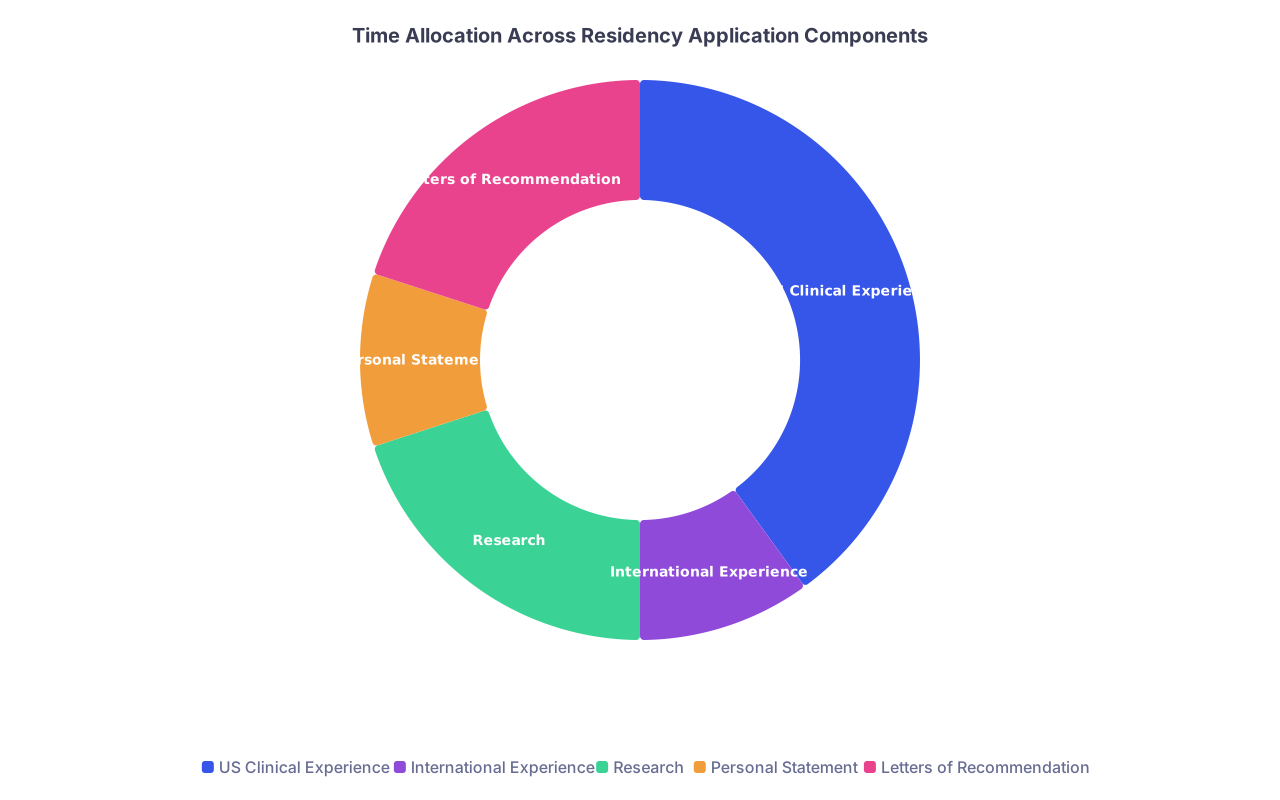
| Category | Value |
|---|---|
| US Clinical Experience | 40 |
| International Experience | 10 |
| Research | 20 |
| Personal Statement | 10 |
| Letters of Recommendation | 20 |
Your international work should be a bonus 10%, not the whole story.

| Step | Description |
|---|---|
| Step 1 | International Experience |
| Step 2 | Volunteer or Non Clinical |
| Step 3 | Clinical Experience Entry |
| Step 4 | Volunteer Experience Entry |
| Step 5 | Explain clearly as supervised clinical work |
| Step 6 | Direct patient contact? |
| Step 7 | Formal rotation or elective? |
| Step 8 | Short term trip? |


FAQ (exactly 5 questions)
1. Is a 1–2 week international trip even worth putting on ERAS?
Yes, but in proportion. List it as a volunteer/community experience, be honest about your role (often mostly non-clinical as a junior student), and do not make it the core of your clinical narrative. It’s a supplement, not a centerpiece.
2. Can I count international rotations as “US clinical experience” if they were in an American-style hospital abroad?
No. “USCE” means clinical experience physically in the United States (or sometimes Canada), in the system where you’re applying. You can emphasize that your international site used US-style EMRs or guidelines, but do not mislabel it as USCE.
3. Should I translate foreign hospital names into English on ERAS?
Keep the official name in the local language, then clarify in the description: “500-bed tertiary academic hospital affiliated with [University].” That preserves accuracy while giving context. Do not rename it “National Teaching Hospital” if that’s not the actual name.
4. How many international experiences is too many on my CV?
If your ERAS starts to look like you were constantly abroad and barely present at your home institution, that can backfire. One or two well-explained, substantial experiences (4+ weeks each) are great. Four or five short trips look scattered unless you are clearly in a structured global health track.
5. Will programs see international experience as a positive or a negative?
When presented honestly—clear supervision, appropriate scope, realistic responsibilities—most programs see it as a positive: evidence of adaptability, cultural competence, and interest in underserved populations. It becomes a negative only when it looks exaggerated, ethically questionable, or like you used foreign settings to do things beyond your training.
Key points to leave with:
- Present your international clinical experience with ruthless honesty about your role, supervision, and duration.
- Treat it as a credible, structured part of your education—not a heroic adventure story—and tie it concretely to skills that make you a better resident.