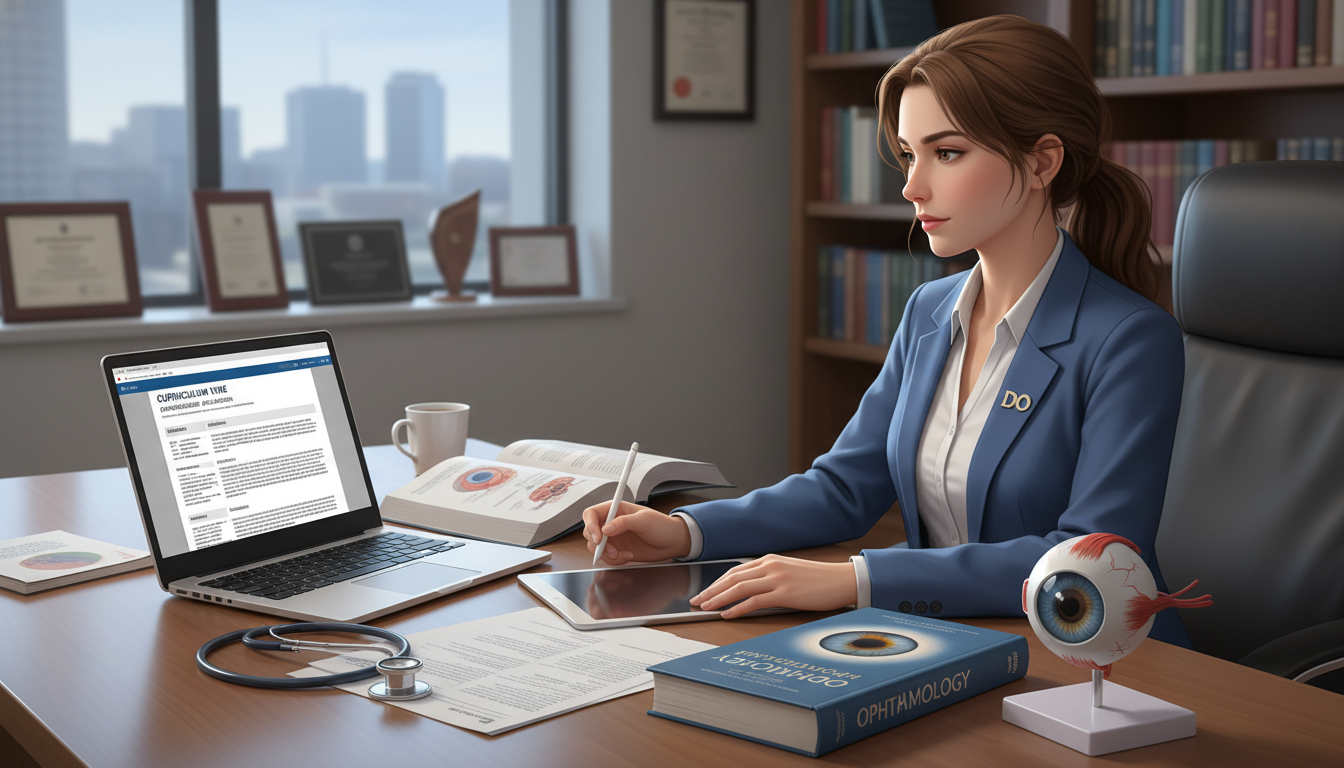
Understanding the Neurology Residency CV as a US Citizen IMG
As a US citizen IMG (American studying abroad), you’re competing in a neurology residency landscape where programs are increasingly receptive to international graduates—but still very selective. Your CV is often the first filter that determines whether you move to the interview pile or the “no” stack.
Unlike a generic medical student CV, a neurology-specific residency CV must:
- Communicate clear interest and commitment to neurology
- Demonstrate academic reliability despite training abroad
- Show that you understand US clinical standards and team culture
- Make your “US citizen IMG” status a strength, not an explanation
Before getting into residency CV tips and structure, keep this framework in mind:
Neurology program directors want to see:
- Trajectory: A consistent story of interest in neuroscience and patient care
- Trustworthiness: A track record of reliability, follow-through, and professionalism
- Fit for neurology: Cognitive, detail-oriented, and longitudinal-care mindset
- US-readiness: Clinical experience, communication, and documentation skills in US systems
Your CV is not just a list; it’s a curated narrative that says, “I’m a safe, motivated future neurologist who is ready for training in the US system.”
Core Structure: How to Build a CV for Neurology Residency
Think of your CV as a standardized document that lets program directors quickly scan your strengths. A clean, conventional format is crucial. Creativity belongs in your experiences and achievements, not in the layout.
Essential Sections for a Neurology Residency CV
For a US citizen IMG, a strong neurology residency CV typically includes:
- Header & Contact Information
- Education & Training
- USMLE and Licensing Exams
- Clinical Experience (US and abroad)
- Neurology-Specific Experiences
- Research & Publications
- Presentations & Conferences
- Leadership, Teaching, and Extracurriculars
- Honors & Awards
- Skills (language, technical, procedural)
- Professional Memberships
Let’s break down how each section should look, especially from the perspective of an American studying abroad.
1. Header & Contact Information
Keep it professional and simple:
- Full name, medical degree (e.g., Jane Doe, MD)
- Professional email (avoid casual usernames)
- US phone number (Google Voice if needed)
- Current mailing address (can be abroad) and a “US correspondence address” if available
- Optional: LinkedIn (only if it’s polished and consistent with your CV)
Do not include:
- Photo (unless applying to regions where it’s standard and allowed; in the US, ERAS handles this separately)
- Date of birth, marital status, or unrelated personal details
2. Education & Training
For a US citizen IMG, clarity around your medical school and degree is critical.
List in reverse chronological order:
Medical School Name, City, Country
- Degree (e.g., MD or MBBS equivalent)
- Expected or actual graduation date
- Class ranking or GPA (only if favorable and understandable to US readers)
- If grading systems are unusual, add a brief clarifier:
- “Top 10% of class based on cumulative exam performance”
Undergraduate Education (if applicable)
- Degree, major, institution, honors (e.g., cum laude, Dean’s List)
Make sure it is obvious that you are a US citizen IMG:
- This doesn’t necessarily go into the header, but you can specify “U.S. Citizen” in your ERAS application and mention your background in your personal statement. In the CV itself, the fact that you studied abroad will be obvious; your citizenship will be clarified elsewhere.
3. USMLE and Exam Information
Program directors often glance at this section early.
List:
- USMLE Step 1: score (if you choose to report), pass date
- USMLE Step 2 CK: score, pass date
- USMLE Step 3: if completed, especially valuable for some IMG-heavy programs
- Any ECFMG certification status (if applicable by the time you apply)
Be accurate and consistent with what you report on ERAS. If Step 1 is pass/fail for your cohort, just list “Pass” with the date.

Highlighting Neurology-Relevant Clinical Experience
For your neuro match, clinical experience is the heart of your CV. As a US citizen IMG, how you present your rotations—especially US-based ones—will significantly impact interview chances.
4. Clinical Experience: US vs. Home Institution
Separate your US clinical experience from non-US clinical rotations:
A. US Clinical Experience
Programs look for proof you can function in US-style clinical environments:
- Sub-internships (Sub-I) / Acting Internships in Neurology
- Neurology electives (outpatient and inpatient)
- General medicine or critical care rotations (showing broad foundation)
- Observerships (less strong but still useful if properly framed)
For each US experience, list:
- Institution, City, State
- Dates (month/year – month/year)
- Role (e.g., Clinical Elective, Sub-Internship, Observership)
- Supervising neurologist(s) (especially if they wrote LORs)
- 3–5 bullet points focusing on responsibilities and skills, not just tasks
Example bullets for a neurology elective:
- Participated in daily rounds on a 20-bed inpatient neurology service managing stroke, epilepsy, and neurodegenerative conditions
- Performed focused neurological examinations on 5–8 patients per day under direct supervision and presented assessments and plans
- Assisted with acute stroke codes, observing tPA decision-making and neuroimaging review
- Documented progress notes in the EMR and communicated clinical updates to multidisciplinary teams
Key tip: Highlight progression of responsibility and any feedback you received (“Selected by clerkship director to present at case conference”).
B. Clinical Experience at Your International Medical School
Don’t underplay your home training. For neurology residency, your internal medicine, psychiatry, and neuro-related rotations matter:
- Core rotations (Internal Medicine, Neurology, Psychiatry)
- Electives in Neurosurgery, Neurocritical Care, Rehab, or Geriatrics
Use similar bullet style, but emphasize:
- Patient volume and diversity
- Complexity of neurological cases
- Any teaching or leadership roles as a senior student
If your school structure is unfamiliar to US programs, clarify briefly:
- “Final-year clerkship equivalent to sub-internship with primary responsibility for daily patient management under supervision.”
5. Neurology-Focused Experiences: Making Your Interest Obvious
Programs prefer applicants whose interest in neurology is clear and sustained. Create a subsection (or emphasize within experiences):
“Neurology-Focused Clinical and Co-Curricular Experience”
Possible items:
- Extra neurologyobserverships in the US
- Shadowing with a community neurologist during breaks in the US
- Volunteering at epilepsy foundations, Parkinson’s disease support groups, or stroke awareness events
- Participation in neurology teaching sessions, case conferences, or journal clubs
For each, focus on what you learned that prepares you for neurology: longitudinal patient care, complex decision-making, handling uncertainty, communicating prognosis, etc.
Research, Publications, and Academic Productivity for Neuro Match
Neurology is an increasingly academic specialty. A US citizen IMG doesn’t need a PhD-level research portfolio, but some exposure to scholarly work is a strong signal of seriousness.
6. Neurology and Neuroscience Research
If you have neurology, neurosurgery, or neuroscience-related projects, group them clearly:
“Neurology & Neuroscience Research Experience”
For each project:
- Role (e.g., Research assistant, Student investigator)
- Institution, department, mentor
- Dates
- 2–4 bullets: hypothesis or focus, methods, your specific contribution, and outcome (poster, publication, QI change)
Example:
- Assisted in retrospective chart review of 150 patients with first-time seizures to identify predictors of abnormal MRI findings
- Extracted clinical and imaging data using REDCap and performed basic statistical analysis in SPSS
- Contributed to abstract preparation accepted for poster presentation at the American Academy of Neurology Annual Meeting
Even if the project is ongoing, it’s worth including if your role is substantial. Clearly label “In progress” for manuscripts.
7. Non-Neurology Research
You can still list non-neurology projects under a general Research Experience section. Emphasize:
- Understanding of study design and evidence-based medicine
- Skills transferable to neurology: data collection, biostatistics, literature review
8. Publications, Abstracts, and Presentations
Create separate, clearly labeled subsections:
- Peer-Reviewed Publications
- Abstracts & Poster Presentations
- Oral Presentations
Use standard citation formats and bold your name. For example:
- Doe J, Smith A, et al. “Clinical predictors of MRI abnormalities in first-time seizure patients.” Journal of Neurology. 2024;XX(X):XX–XX.
If you lack publications, maximize posters and presentations. Regional or institutional presentations still count.
9. QI and Clinical Projects
Neurology programs value quality improvement and patient safety experience:
- Stroke pathway optimization projects
- Reducing door-to-needle time for tPA
- Improving delirium screening on neurology wards
- EMR note template optimization for neurology consults
In your CV, treat QI like research: problem, intervention, outcome.
Leadership, Teaching, and Service: Showing You’re a Future Neurology Resident
Program directors often mention that beyond grades and scores, leadership and teaching differentiate applicants.
10. Leadership Roles
As a US citizen IMG, leadership helps counter any bias about training abroad by showing maturity and initiative.
Relevant leadership examples:
- Founder or president of a Neurology or Neuroscience Interest Group
- Organizing community stroke education or brain awareness events
- Coordinating student-led case conferences or journal clubs
- Serving as class representative or student government member
- Leading a volunteer initiative in disability or neurorehab settings
When writing bullets, emphasize impact:
- “Organized monthly neurology case discussions attended by 15–20 students; invited faculty speakers and coordinated topics aligned with board-style learning.”
11. Teaching Experience
Neurology is teaching-heavy. Residents constantly educate patients, families, students, and colleagues.
Include:
- Near-peer teaching for junior medical students
- Anatomy, neuroanatomy, or neurophysiology tutoring
- Small-group facilitation during problem-based learning sessions
- Formal teaching electives or certificates, if available
Describe audience, format, and frequency:
- “Led weekly neuroanatomy review sessions for 10 second-year medical students over 12 weeks, using clinical cases to reinforce spinal cord and brainstem localization.”
12. Volunteer and Service Activities
Choose experiences that reflect empathy, communication, and long-term patient interaction, all essential in neurology:
- Work with patients with chronic disability (stroke survivors, MS, spinal cord injury)
- Support groups (dementia caregivers, Parkinson’s)
- Community health fairs with BP checks and stroke risk counseling
Instead of generic lines like “Gained communication skills,” be specific:
- “Assisted patients with advanced Parkinson’s disease during weekly art therapy sessions, adapting activities to tremor and rigidity limitations.”
Tailoring Your CV as a US Citizen IMG: Strategy and Common Pitfalls
Beyond individual sections, your overall strategy matters.
13. Emphasize Your Advantage as a US Citizen IMG
Being a US citizen IMG removes visa concerns. This is a practical advantage programs care about.
You don’t need a special “citizenship” section on the CV itself, but you should:
- Make sure your ERAS and demographic data are correct
- Consider gently referencing your “American studying abroad” journey in your personal statement, while your CV simply shows capability and readiness
- Highlight any extended time spent in US settings (high school, college, work, or clinical experiences)
14. Prioritize Neurology-Relevant Content
When you wonder how to build a CV for residency in neurology, prioritize experiences that show:
- Cognitive and diagnostic thinking
- Comfort with chronic disease management
- Communication of complex information
- Interdisciplinary collaboration (e.g., with rehab, psychiatry, neurosurgery)
That means:
- Put neurology-related clinical experiences higher within the clinical section
- Group neurology research and neurology leadership near the top of their respective headings
- Don’t bury your strongest neurology experiences under a long list of unrelated activities
15. Use Strong, Specific Bullet Points
Residency CV tips often ignore the quality of the bullet points. Avoid:
- “Assisted with patient care”
- “Participated in rounds”
- “Volunteered in hospital”
Instead, use action + scope + outcome:
- “Performed and presented daily neurological examinations on 4–6 stroke patients, refining localization and prognostic skills.”
- “Developed a patient-friendly handout explaining TIA vs. stroke, now used in clinic for patient education.”
16. Formatting and Length
For neurology residency:
- Target 2–4 pages (many academic neurology applicants lean closer to 3–4, especially with research).
- Use consistent font, spacing, and formatting.
- Avoid dense blocks of text; use bullet points.
- Maintain reverse chronological order within each section.
17. Common Mistakes for US Citizen IMG Neurology Applicants
Avoid these pitfalls:
Overloading with non-relevant experiences
- Example: Detailed descriptions of unrelated non-medical jobs at the expense of clinical and academic content.
- Keep them, but brief: 1–2 bullets focused on transferable skills (teamwork, reliability).
Not distinguishing US from non-US experiences
- Programs want to quickly see your familiarity with the US system. Make that easy.
Unclear time gaps
- If you took a dedicated study year for USMLE or research, list it clearly as such (“Full-time USMLE preparation and neurology research fellowship”).
Inconsistent dates or inflated roles
- Credibility is everything. Do not exaggerate. US neurology is a small world; faculty talk.
Action Plan: Step-by-Step CV Building for the Neuro Match
To make this practical, here’s a structured approach for a US citizen IMG aiming at neurology residency:
Step 1: Take Inventory
Make a master list (not yet formatted) of:
- All clinical rotations (US and abroad)
- All neurology/neuroscience exposures (clinical, research, shadowing, lectures, conferences)
- Research projects (completed, ongoing, or abandoned but with real work done)
- Posters, oral presentations, publications
- Teaching and tutoring
- Leadership roles
- Volunteer and community service
- Awards and scholarships
- Skills (languages, computer/statistical, EMR exposure)
Step 2: Flag Neurology-Relevant Items
Mark each item:
- High neuro relevance: direct neurology or neuroscience
- Medium: internal medicine, psychiatry, geriatrics, rehab, ICU
- Low: unrelated topics but still potentially useful
Your CV should place high neuro relevance experiences “above the fold” in each section.
Step 3: Draft the Core Sections
Start with:
- Education
- Exams
- Clinical Experience (subsections for US vs. non-US if helpful)
- Neurology-Focused Experiences (could be a combined heading if you have enough material)
- Research & Publications
Populate each with specific bullet points emphasizing responsibility and learning.
Step 4: Add Leadership, Teaching, and Service
Create distinct sections:
- Leadership & Organizational Roles
- Teaching Experience
- Volunteer & Community Involvement
This structure signals maturity to neurology program directors, who rely on residents as teachers and team leaders.
Step 5: Review for Clarity and Honesty
Ask yourself:
- Does my CV tell a coherent story of an American studying abroad who is now fully prepared for neurology residency in the US?
- Can a program director, scanning in 60–90 seconds, easily identify:
- My neurology interest
- US clinical exposure
- Academic productivity
- Professionalism and leadership?
Have a mentor—ideally a neurology resident, faculty member, or advisor familiar with US residency—review your CV for:
- Jargon that US programs might not understand
- Gaps or inconsistencies
- Over- or under-emphasized experiences
Step 6: Align CV with Personal Statement and ERAS
Your medical student CV should complement, not contradict, your personal statement:
- If your statement highlights a particular patient or neurology research project, make sure that experience appears clearly in your CV.
- Keep dates and roles consistent across all documents (CV, ERAS entries, and letters).
FAQs: CV Building for US Citizen IMG in Neurology
1. How is a neurology residency CV different for a US citizen IMG compared to a US MD/DO?
The core structure is the same, but as a US citizen IMG, you must be more deliberate in demonstrating:
- Clear, documented US clinical experience
- Strong communication skills and familiarity with US healthcare systems
- A consistent neurology interest (so programs see you as a committed choice, not a fallback)
You also benefit by not needing visa sponsorship; you don’t need to highlight this on the CV itself, but ensure ERAS reflects your citizenship status correctly.
2. I don’t have neurology research. Is that a big problem for my neuro match?
Not necessarily. Research helps, but is not mandatory for all programs. To compensate:
- Highlight neurology clinical experiences and electives, especially in US settings
- Emphasize any scholarly work you do have (even QI projects, clinical audits, or case reports)
- Show academic curiosity through conference attendance, case presentations, or teaching activities related to neurology
If you still have time before applying, consider a small, focused project with a neurologist (e.g., case report, chart review).
3. How far back should I go with activities on my residency CV?
Focus primarily on:
- Medical school years (all relevant experiences)
- Undergraduate activities only if they’re significant (research, degrees in neuroscience, major leadership roles)
- Older experiences (high school, early jobs) only if they strongly support your narrative (e.g., long-term caregiving for a relative with dementia). Keep these brief.
4. Should I include observerships and shadowing experiences on my neurology CV?
Yes, especially as a US citizen IMG, if they are meaningful and structured:
- Label them clearly as observerships or shadowing
- Provide concise bullets highlighting exposure to neurology practice, EMR, multidisciplinary teams
- Avoid overstating your clinical responsibilities; emphasize learning, observation, and any allowed contributions (e.g., note drafting for review).
They should complement, not replace, formal clinical electives or sub-internships, which are stronger experiences.
By building a structured, honest, and neurology-focused residency CV, you present yourself not just as a US citizen IMG, but as a well-prepared, competitive future neurologist—someone programs can confidently envision managing complex patients on their neurology wards and consult services.