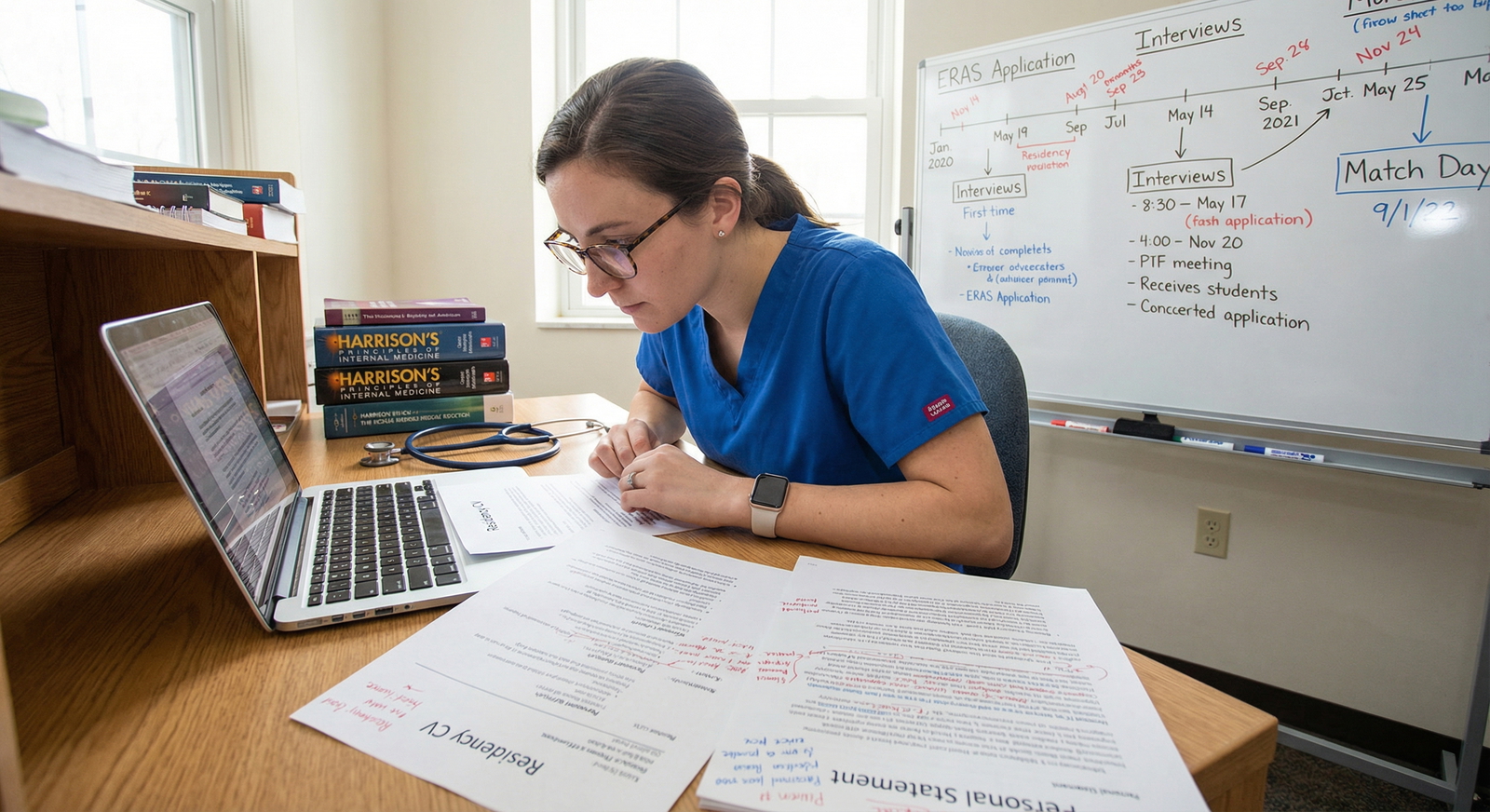
Crafting a compelling CV is one of the most important—and most controllable—parts of your residency application as a non-US citizen IMG. Program directors will use your CV to quickly answer three questions:
- Who are you as a physician-in-training?
- What have you actually done (and accomplished)?
- Are you organized, serious, and ready to thrive in a US training environment?
This article breaks down CV building strategies for non-US citizen IMGs, with specific, actionable guidance on how to build a CV for residency that speaks to US program expectations.
Understanding the Purpose of Your Residency CV as a Non-US Citizen IMG
Your residency CV is not just a list of activities. It is:
- A professional snapshot of your medical journey
- A tool to highlight your strengths in ways that US programs recognize
- A way to offset disadvantages often faced by non-US citizen IMGs (visa needs, unfamiliar school, distance from US training)
For a foreign national medical graduate, your CV needs to:
- Clearly show that you are well-trained, reliable, and ready for residency
- Make it easy for program directors to understand your background, even if your school, grading system, or degrees are unfamiliar
- Provide strong evidence of your commitment to the specialty and to practicing in the US
What Program Directors Look for in an IMG CV
Most PDs and faculty scan a medical student CV or residency CV in 30–90 seconds before deciding whether to look closer. They’re scanning for:
- US clinical experience (USCE) and performance
- Consistency in education and work timeline (no unexplained gaps)
- Evidence of reliability: long-term commitments, leadership, follow-through
- Academic engagement: research, presentations, QI, case reports
- Professionalism: organized, error-free document, appropriate tone
- Specialty fit: activities and experiences that make sense for the chosen field
For a non-US citizen IMG, your CV also silently answers:
- Did this applicant find ways to get involved in the US system?
- Will they adapt quickly to US healthcare culture?
- Are they serious enough that sponsoring a visa makes sense?
Your job is to design a clear, targeted, and polished CV that lets them confidently say “yes.”
Core Structure: What to Include in an IMG Residency CV
There is no single “correct” format, but almost all strong residency CVs for IMGs contain the following sections, generally in this order:
- Contact Information & Personal Details
- Education
- Examinations & Licensure (USMLE, ECFMG status, etc.)
- Clinical Experience (US and home country)
- Research & Scholarly Activities
- Teaching & Academic Roles
- Leadership & Extracurricular Activities
- Honors & Awards
- Skills (including languages and technical skills)
- Volunteer Work / Community Service (optional but often helpful)
1. Contact Information & Personal Details
Include:
- Full name (consistent with passport and ERAS)
- Professional email address (e.g., firstname.lastname@gmail.com)
- Phone number (with country code)
- Current mailing address (or at least city and country)
- Citizenship status (e.g., “Citizenship: India. Requires J-1 visa sponsorship.”)
- ECFMG number (optional on CV if already in ERAS, but some add it)
Avoid adding:
- Date of birth, marital status, religion, or photograph—these are not needed on a US-style CV.
- Unprofessional email addresses.
2. Education
List your education in reverse chronological order:
- Medical school: name, city, country
- Dates attended (month/year)
- Degree (e.g., MBBS, MD)
- Class rank or percentile if strong and available
If your grading system is unusual, a brief clarification can help (e.g., “Graduated in top 10% of class” or “Distinction in Internal Medicine and Surgery”).
Include:
Example Entry
- Doctor of Medicine (MD), University of Zagreb School of Medicine, Zagreb, Croatia
09/2016 – 07/2022- Graduated with Honors; top 15% of class
- Distinctions in Internal Medicine and Pediatrics
If you have completed a prior degree (e.g., BSc, MPH, PhD), list it with clear dates and major; this can be a strong advantage if relevant.
3. Examinations & Licensure
For a non-US citizen IMG, exam results are central to your profile. Create a dedicated section labeled:
- “Examinations & Licensure” or
- “Professional Examinations and Certifications”
Include:
- USMLE Step 1, Step 2 CK scores and attempt status
- Planned/expected exam dates if not yet taken (clearly labeled as “scheduled”)
- ECFMG certification status (e.g., “ECFMG Certified, 06/2024”)
- Other exams: PLAB, MCCQE, language proficiency tests (IELTS/TOEFL) if relevant
Be honest and precise:
- Use “Pass” or “Pass (first attempt)” for Step 1 if scored as pass/fail.
- If you had a repeat attempt, do not hide it; ERAS reveals this anyway. Your CV should match.

Presenting Clinical Experience Strategically as a Non-US Citizen IMG
For a non-US citizen IMG, clinical experience—especially US clinical experience—is one of the most important parts of your residency CV. This is where you demonstrate that you can function safely and effectively in the US clinical environment.
1. Separate USCE from Home-Country Experience
Create clear subsections:
- US Clinical Experience
- International / Home-Country Clinical Experience (or simply “Clinical Experience” with locations specified)
For each position, include:
- Role title (e.g., Clinical Elective Student, Sub-intern, Observer, Research Fellow, Junior Resident, etc.)
- Specialty and department
- Institution name, city, state, country
- Dates (month/year)
- 2–4 bullet points describing responsibilities and achievements
Example: US Clinical Experience Section Entry
Clinical Elective Student – Internal Medicine
Department of Internal Medicine, XYZ University Hospital, Chicago, IL, USA
09/2023 – 10/2023
- Managed 4–6 patients daily under supervision, presenting assessments and plans on rounds
- Performed focused histories and physical exams; documented daily progress notes in EMR
- Participated in multidisciplinary rounds and family meetings, practicing patient-centered communication
- Received commendation from attending physician for clinical reasoning and professionalism
2. Emphasize Hands-On Activities (When Allowed)
Residency programs distinguish:
- Hands-on USCE (electives, clerkships, sub-internships, observerships where you interact directly with patients and EMR under supervision)
vs. - Shadowing/Observerships with limited or no direct patient care.
Where appropriate and true, highlight hands-on elements:
- “Performed supervised histories and physical examinations”
- “Entered notes and orders in EMR under supervision”
- “Presented new admissions on rounds”
If your experience was mostly observational, focus on learning outcomes:
- “Observed outpatient management of chronic diseases in a US primary care setting”
- “Attended case discussions and morbidity and mortality conferences”
Never exaggerate the level of autonomy.
3. Use US-Style Language and Terminology
Translate your clinical roles into terminology familiar to US faculty. For example:
- Instead of “House Officer” → “Junior Resident (equivalent to PGY-1)”
- Instead of “Internship (Rotating)” → “Internship (Rotating, PGY-1 Equivalent)”
Clarify:
Example
Junior Resident (PGY-1 Equivalent) – General Surgery
XYZ Teaching Hospital, Lahore, Pakistan
01/2022 – 12/2022
- Assisted in >100 operative cases, including appendectomies, cholecystectomies, and hernia repairs
- Managed pre- and postoperative patient care, including wound care, fluid management, and discharge planning
- Led daily progress rounds for 6–8 inpatients under attending supervision
4. Show Specialty Commitment in Your Clinical Section
For each specialty you’re applying to, try to ensure that your clinical experience includes:
- At least one elective or significant rotation in that specialty
- Related experiences in home country if US exposure is limited
If your primary specialty interest is Internal Medicine, your CV should not look like a pure surgery portfolio.
Building a Strong Academic and Leadership Profile
Residency programs highly value evidence of initiative, curiosity, and leadership—especially in a non-US citizen IMG, where they may be less familiar with your training environment.
1. Research & Scholarly Activity
You do not need dozens of publications, but you do need to show that you can engage with academic medicine. Include:
- Published papers (peer-reviewed journals)
- Case reports, letters to the editor
- Conference abstracts and presentations
- Poster presentations
- Quality improvement (QI) projects
- Thesis work (especially if clinically relevant)
Use separate subsections if you have many entries:
- Publications
- Presentations
- Quality Improvement Projects
Follow a consistent citation format (e.g., AMA). Make your name bold in author lists.
Example: Publication Entry
Publications
- Khan A, Rodriguez M, Lee J. Incidence of hospital-acquired infections in a tertiary care center in Pakistan: a 5-year retrospective study. J Hosp Infect Control. 2023;45(2):115–122.
Example: Presentation Entry
Presentations
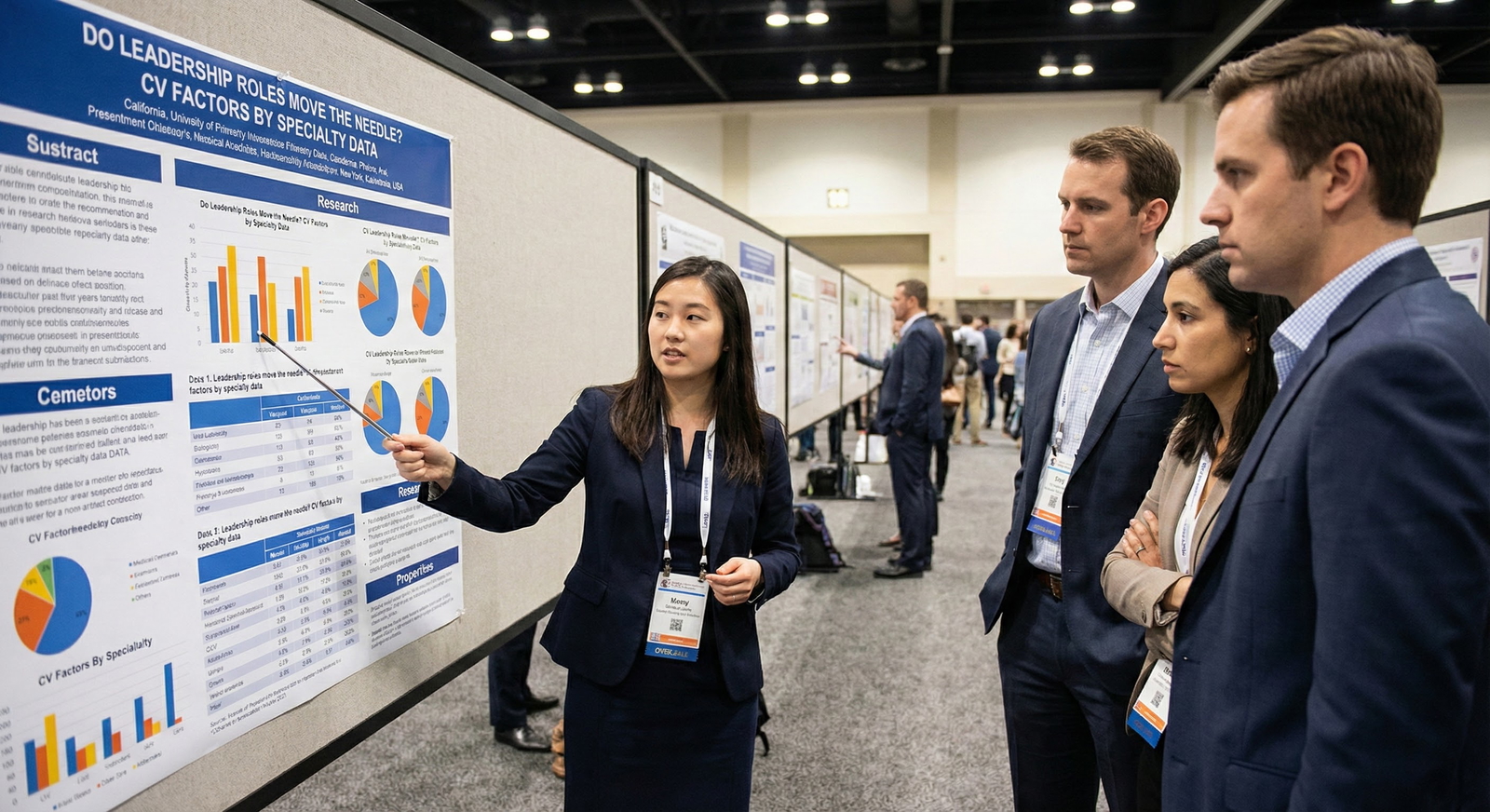
- Khan A, Smith D. Patterns of antimicrobial resistance in ICU patients in a tertiary care center. Oral presentation at: American College of Physicians Illinois Chapter Meeting; October 2023; Chicago, IL, USA.
If you are a foreign national medical graduate with limited access to formal research, consider:
- Case reports from interesting patients you’ve seen
- QI projects in your home hospital (e.g., improving hand hygiene compliance)
- Audit projects
- Participation in online research collaborations or remote projects with US mentors
2. Teaching and Academic Roles
Programs value residents who can teach.
Include:
- Teaching assistant roles (anatomy, physiology, clinical skills)
- Peer tutoring or mentoring junior students
- Teaching sessions for nurses or other staff
- OSCE preparation sessions you led
Example:
Clinical Skills Tutor
ABC Medical College, Mumbai, India
09/2020 – 05/2021
- Conducted weekly small-group sessions (8–10 students) on history-taking and physical examination
- Provided structured feedback and mock OSCE practice for second-year medical students
- Contributed to developing checklists and evaluation forms for bedside assessments
Highlighting teaching demonstrates communication skills and professionalism—both high-yield attributes for your residency CV.
3. Leadership & Extracurricular Activities
For a non-US citizen IMG, leadership experiences help:
- Demonstrate your ability to work in teams
- Show initiative and responsibility
- Compensate for perceived distance from US culture
Include:
- Class representative or student council roles
- Leadership on committees (curriculum reform, research committee, event organization)
- Roles in student organizations (e.g., IFMSA, specialty interest groups)
- Leadership in community-based initiatives
Example:
President, Student Internal Medicine Society
XYZ Medical University, Cairo, Egypt
09/2020 – 07/2021
- Led a team of 12 student volunteers in organizing weekly case-based learning sessions
- Coordinated virtual webinars with US-based internists on residency application strategies
- Increased society membership by 40% and improved event attendance by 60% over one academic year
When describing these roles:
- Focus on outcomes and impact, not just tasks.
- Use numbers where possible (e.g., “organized 4 conferences with ~200 attendees each”).

Formatting, Style, and Common Pitfalls: Residency CV Tips for IMGs
How you present your CV sends a strong message about your professionalism. As a non-US citizen IMG, you want your document to look like it was created by someone already familiar with US academic standards.
1. General Formatting Guidelines
- Length: For most medical student CVs or early career foreign national medical graduates, 2–4 pages is typical. Do not artificially stretch or compress.
- Font: Use standard fonts (Times New Roman, Arial, Calibri) in 11–12 pt.
- Margins: 1 inch on all sides for readability, though 0.75 inch is acceptable.
- Consistency:
- Same date format throughout (e.g., 09/2020 – 06/2022)
- Same bullet style
- Same heading format
- File type: PDF is safest to preserve layout.
Use clear section headings (bold, slightly larger font) and consistent subheadings.
2. Bullet Points that Show Impact
Weak bullet:
- “Participated in ward rounds and patient care”
Stronger bullet:
- “Performed daily assessments and presented 4–6 patients on internal medicine rounds, formulating differential diagnoses and management plans under supervision”
Each bullet should start with a strong action verb:
- Managed, Led, Organized, Developed, Implemented, Analyzed, Taught, Coordinated, Presented, Initiated, Improved, Investigated
Where possible, quantify:
- “Reviewed 50+ patient charts”
- “Supervised 10 junior students”
- “Increased clinic follow-up rate from 60% to 80%”
3. Tailoring Your CV to Your Target Specialty
Your CV should signal a clear specialty interest, especially for competitive fields.
For example, if you are applying to Internal Medicine:
- Emphasize IM rotations, research, and QI projects
- Feature IM-related leadership (e.g., Internal Medicine Society, ACP chapter activities)
- Highlight experiences with chronic disease, inpatient care, and complex cases
For Family Medicine:
- Highlight outpatient, primary care, community health, preventive medicine
- Emphasize community service and longitudinal patient care
For Psychiatry:
- Draw attention to mental health-related volunteering, research, and rotations
- Highlight communication skills, counseling, and community mental health work
You do not need multiple versions of your CV for every single program, but you can adjust ordering or emphasis for different specialties if you are dual-applying (e.g., IM + Family).
4. Avoiding Common CV Mistakes as a Non-US Citizen IMG
Common pitfalls include:
Including irrelevant or outdated activities
- High school awards are rarely needed unless truly exceptional.
- Non-medical jobs can be included if they show responsibility (e.g., long-term employment, leadership, or skills transferable to medicine), but keep them brief.
Overly long descriptions
- 2–4 bullets per experience are usually enough.
Grammar and spelling errors
- Ask at least one person fluent in English to proofread.
- Tools like Grammarly can help, but human review is essential.
Inconsistent dates or unexplained gaps
- If you have a gap (e.g., exam preparation, family reasons), it is better to acknowledge it briefly in the CV or personal statement than to pretend it doesn’t exist.
Exaggeration or misrepresentation
- US programs take professionalism very seriously. Always be truthful.
Unprofessional tone
- Avoid overly casual language. Keep your writing clear, factual, and humble.
Strategic Additions for Non-US Citizen IMGs: Standing Out Positively
As a non-US citizen IMG, you may need to work a bit harder to show programs that you understand the US healthcare environment and are ready to integrate quickly. Here are additional elements that can make your residency CV tips strategy more competitive.
1. Language Skills
List languages in a “Skills” or “Languages” section, with proficiency level:
- Native
- Fluent
- Professional working proficiency
- Conversational
Many US programs serve diverse communities and value multilingual physicians. This is often an advantage rather than a minor detail.
Example:
Languages
- English – Fluent (TOEFL iBT 110/120, 2022)
- Spanish – Professional working proficiency
- Arabic – Native
2. Technical and Clinical Skills
Include a brief “Skills” section with items relevant to US training:
- EMR experience (e.g., Epic, Cerner), if genuine
- Basic procedures: phlebotomy, IV insertion, suturing, lumbar puncture (as appropriate and honest)
- Statistical software (SPSS, R, STATA) if you have research experience
- Advanced life support (BLS/ACLS) certifications
Avoid listing extremely basic skills (e.g., “taking blood pressure”) unless in a context where it is truly meaningful (e.g., community screening program).
3. US Healthcare Exposure Beyond Rotations
If you have any additional US-related exposure, include it:
- Telemedicine shadowing or case discussions with US physicians
- Participation in US-based online courses, MOOCs (Coursera, edX) on quality improvement, patient safety, public health
- Remote research collaborations with US institutions
- Attendance at US conferences (virtual or in-person)
These experiences send a signal: You are proactively learning how US medicine works.
4. CV Alignment with ERAS Application
Your CV does not replace ERAS; it complements it.
- Ensure that all major items in your CV also appear in your ERAS application.
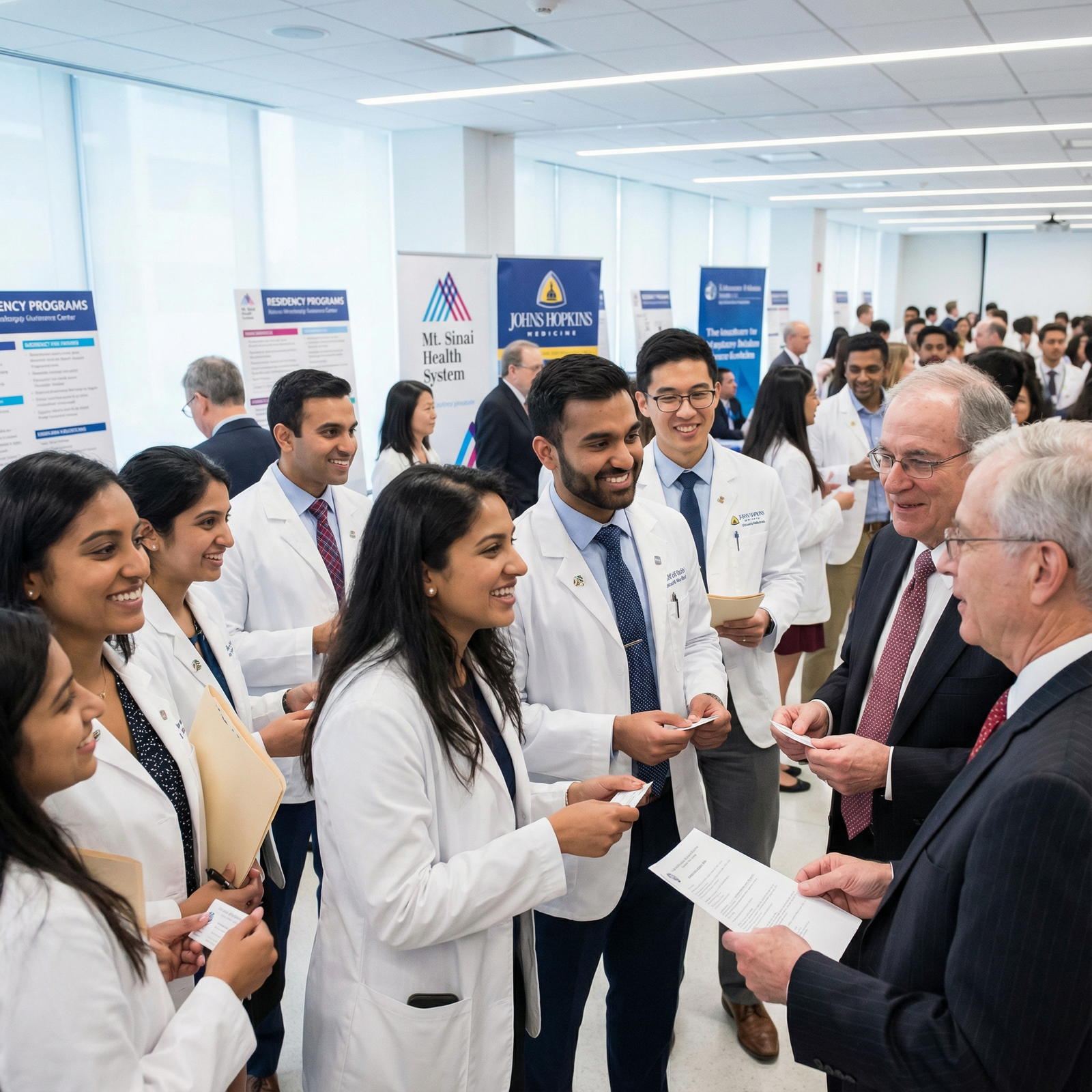
- Use the CV as a professional document for networking, emailing potential mentors, or handing out at conferences.
- When emailing US faculty for observerships or research positions, attach a polished PDF CV that aligns with what will later appear in ERAS.
Putting It All Together: A Step-By-Step Plan to Build Your Residency CV
For a non-US citizen IMG wondering exactly how to build a CV for residency, here is a practical workflow:
Collect Raw Data
- List all rotations, jobs, research, volunteering, and leadership roles.
- Write dates, locations, supervisors, and contact information.
Organize by Category
- Education
- Examinations
- Clinical Experience (USCE vs. home country)
- Research
- Teaching
- Leadership/Extracurricular
- Skills/Languages
- Volunteer Activities
Draft Bullet Points
- Use action verbs.
- For each entry, answer: “What was my role?” and “What did I achieve or learn?”
- Emphasize outcomes and numbers when possible.
Prioritize and Trim
- Keep the most recent and most relevant experiences.
- Combine very small or similar activities into one entry if needed.
Format Professionally
- Choose a clean font and consistent layout.
- Make sure headings and dates line up neatly.
Tailor to Your Specialty
- Move specialty-related experiences higher in each section.
- Adjust emphasis (but not facts) for Internal Medicine vs Family Medicine vs Psychiatry, etc.
Proofread Multiple Times
- Check for grammar, spelling, and formatting errors.
- Ask a mentor or peer with US experience to review.
Update Regularly
- Each time you complete a new rotation, research project, or presentation, update your CV.
- Your CV is a living document, not a one-time task.
By following these steps, you’ll transform your experiences—from medical school and beyond—into a coherent, persuasive story of why you’re ready for US residency training.
Frequently Asked Questions (FAQ)
1. How is a residency CV different for a non-US citizen IMG compared to a US medical student?
The basic structure is similar, but as a non-US citizen IMG you must:
- Emphasize US clinical experience and your adaptability to the US system
- Clearly state exam status (USMLE, ECFMG certification)
- Clarify roles and training structure so that US readers can understand your level
- Often work harder to demonstrate specialty commitment and academic engagement, given potential unfamiliarity with your medical school
The overall goal is to reduce uncertainty in the mind of the program director.
2. Should I include observerships and shadowing on my CV?
Yes, especially if you have limited US clinical experience, but:
- Label them clearly as “Observership” or “Shadowing”
- Do not imply that you had responsibilities you did not have
- Focus your bullet points on what you observed and learned, conferences attended, and how it prepared you for residency
Hands-on USCE carries more weight, but observerships still show initiative and interest in US practice.
3. How many pages should my residency CV be as an IMG?
Most medical student CVs and early foreign national medical graduate CVs are 2–4 pages:
- If you’re still in medical school or recently graduated without extensive research, 2–3 pages is common.
- If you have several years of post-graduate training, research, or multiple publications, 3–4 pages is acceptable.
Focus on quality and relevance, not artificially hitting or avoiding a specific page count.
4. Do I need a separate CV if I am submitting ERAS?
ERAS collects most of the same information, but a separate CV is still important because:
- You will use it to email potential mentors, research supervisors, and physicians for USCE opportunities.
- It is often requested when you apply for observerships, externships, or research positions.
- Faculty and advisors may ask for your CV to write stronger letters of recommendation.
Ensure that information in your medical student CV, ERAS application, and any printed CVs is consistent.
By applying these strategies—focusing on clarity, relevance, and professionalism—you can create a residency CV that helps overcome the barriers often faced by non-US citizen IMGs and presents you as a confident, capable future resident in the US healthcare system.