Why Your CV Matters So Much in Plastic Surgery
Plastic surgery is one of the most competitive specialties in the residency match. In the integrated plastics match, tiny differences between applicants often determine interview offers and rank list positions. Your CV is not just a list of what you’ve done—it is:
- A blueprint of your professional identity
- A tool to direct the interview conversation to your strengths
- A reflection of how you think, prioritize, and communicate
Program directors and faculty use your CV to quickly answer:
- Does this applicant show sustained interest in plastic surgery?
- Have they demonstrated excellence relative to available opportunities?
- Are they likely to be productive, collegial, and resilient residents?
This guide will walk you through how to build, organize, and optimize your medical student CV for plastic surgery residency, with concrete residency CV tips tailored to this highly selective field.
Core Principles of a Strong Plastic Surgery CV
Before we get into sections and formatting, it’s critical to understand what plastic surgery programs are actually looking for.
1. Sustained, Documented Interest in Plastic Surgery
Faculty want to see that you:
- Discovered an interest in plastics
- Explored it meaningfully over time
- Committed to developing skills relevant to the field
Key signals on your CV:
- Multiple plastic surgery rotations (home and away)
- Longitudinal mentorship with plastic surgeons
- Research projects, QI projects, or case reports in plastic surgery
- Leadership or active involvement in your school’s plastic surgery interest group
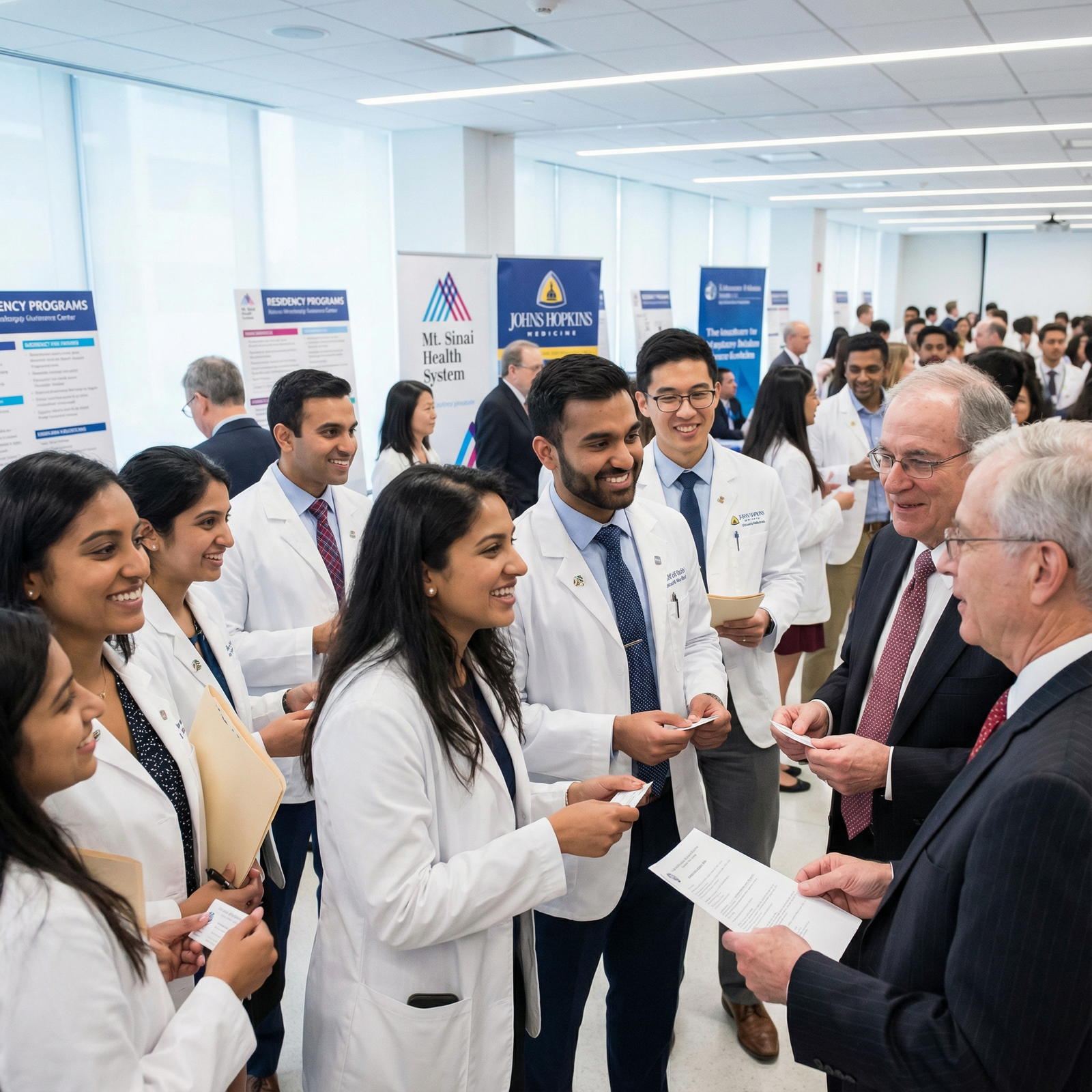
- Attendance or presentations at plastic surgery meetings (ASPS, ASMS, ASAPS, local/regional societies)
2. Productivity and Follow-Through
Everyone can say they’re “interested in research” or “care about education.” Your CV must show:
- Completed projects, not just “in progress”
- Manuscripts that made it to publication or at least submission
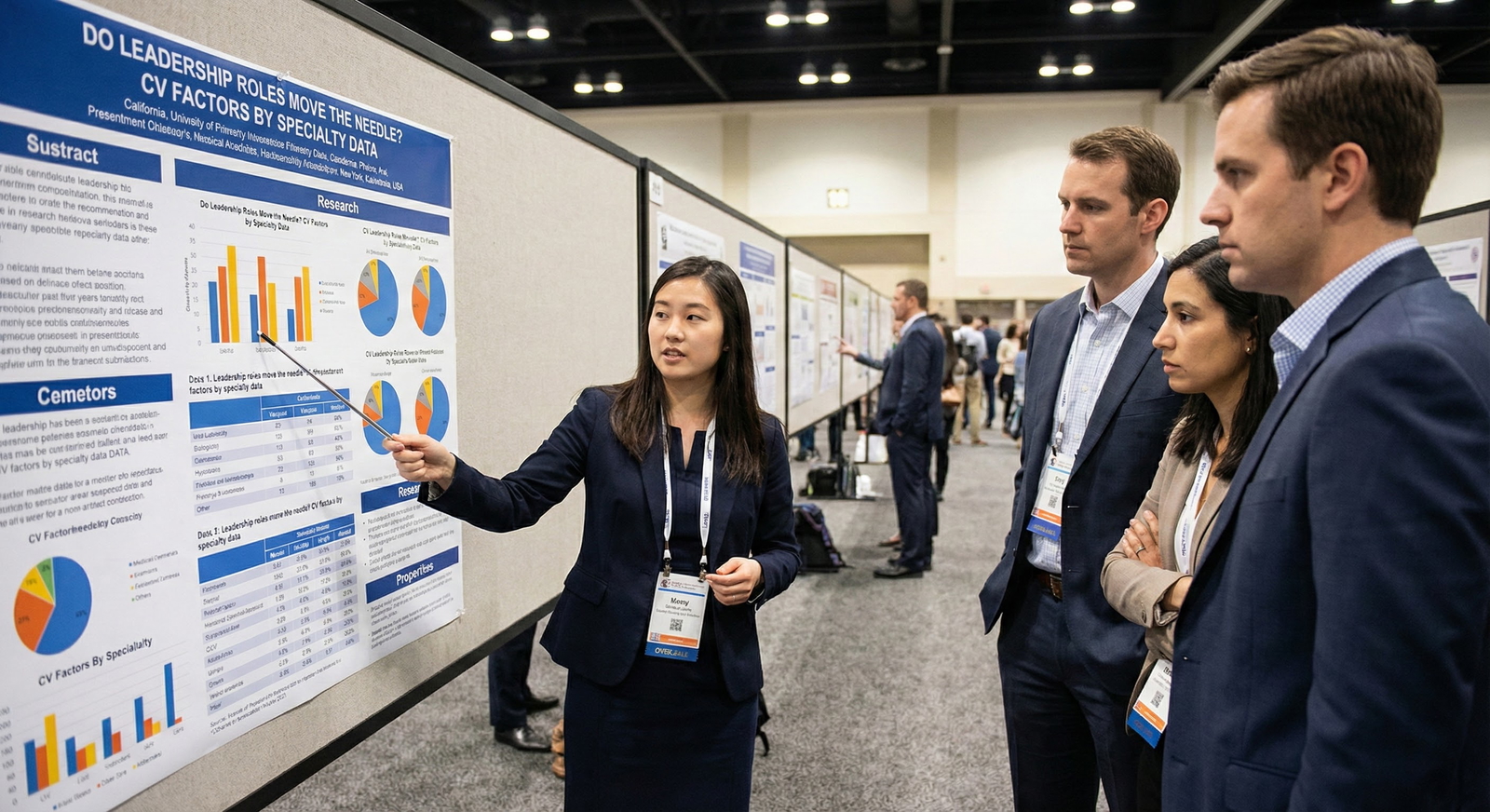
- Posters and oral presentations
- Leadership roles with defined outcomes (e.g., event organized, curriculum built)
In a competitive integrated plastics match, a few well-executed, completed projects beat a long list of half-finished, non-published efforts.
3. Trajectory, Not Just Totals
Program directors look for an upward trend:
- Increasing responsibility over time
- Progression from volunteer to leader
- Early exposure turning into genuine scholarship (e.g., M1 shadowing → M2 research → M3/M4 presentations/publications)
A CV that shows growth is far more compelling than a static list of isolated achievements.
4. Clarity, Organization, and Professionalism
In plastic surgery, attention to detail is non-negotiable. Your CV is a direct test of that. It must be:
- Well-organized with consistent formatting
- Free of spelling, grammar, or punctuation errors
- Easy to scan—faculty often skim dozens of CVs at once
- Honest and verifiable
Anything sloppy—misaligned dates, inconsistent fonts, vague descriptions—immediately raises concerns about your habits and reliability.
Essential CV Sections for Plastic Surgery Applicants
Below is a recommended structure for how to build a CV for residency in plastic surgery. Exact headings may vary, but most applicants benefit from including these major sections.

1. Contact Information & Professional Summary (Optional)
Contact Information:
- Full name (as used on ERAS)
- Current email (professional; ideally school email)
- Mobile phone
- City/State (optional, but common)
Avoid adding photos, personal logos, or decorative elements; this is not a business marketing CV.
Professional Summary (Optional, 2–3 lines):
For some programs or independent sharing (e.g., when emailing mentors), a brief summary can help quickly frame who you are. Keep it factual, concise, and specific:
Fourth-year medical student with a strong interest in reconstructive and hand surgery, 8 peer‑reviewed publications, and extensive experience in surgical education leadership and quality improvement.
Do not use overblown adjectives (“world-class,” “exceptional”) or generic buzzwords.
2. Education
List in reverse chronological order:
- Medical school: name, city, state, dates (MM/YYYY–present or graduation year)
- Degree: MD, DO (include distinction if applicable—e.g., “MD with Distinction in Research”)
- Undergraduate institution, degree, major, graduation year
- Additional degrees (MPH, PhD, MS) with thesis titles if relevant to plastics or surgery
Include honors under each degree or in a separate “Honors & Awards” section, but don’t repeat the same award in multiple places.
Example entry:
Doctor of Medicine (MD)
University X School of Medicine, City, State
2019–2023
- Distinction in Research
- AOA Honor Medical Society (elected MS3)
3. Board Scores, Class Rank, and Honors (If Allowed)
Different schools and application systems vary in how you present this, and Step 1 is now pass/fail. Still, if possible and appropriate:
- USMLE Step 2 CK (or COMLEX Level 2) score
- Class rank or quartile if reported
- Notable academic honors
If your school does not rank and you have no class data, don’t try to approximate or guess. Plastic surgery faculty are familiar with wide variability in grading systems.
4. Research Experience & Publications
For the integrated plastics match, this is often the section that gets the closest scrutiny.
Organizing Your Research
Break into subheadings for clarity:
- Peer‑Reviewed Publications
- Manuscripts Under Review or In Preparation (clearly labeled)
- Book Chapters
- Conference Presentations & Posters
- Research Positions/Projects
Within each category, list items in reverse chronological order.
Publications
Format consistently. A common approach:
- Authors (Last Name Initials, up to 6 authors before “et al.” if long)
- Title
- Journal name (abbreviation OK)
- Year; volume(issue):pages
- DOI (optional)
Example:
Smith AB, Lee C, Patel R, et al. Outcomes of free flap reconstruction in lower extremity trauma: A 10-year single-center review. Plast Reconstr Surg. 2024;154(2):123‑131.
Always list your name in bold in multi-author publications so your role is clear, e.g.:
Smith AB, Jones CD, Patel R, et al.
“In Progress” Work
Plastic surgery faculty are skeptical of lengthy “in progress” lists. To avoid inflating:
- Use clear labels: Submitted, Under Review, In Revision, In Preparation
- Only include “In preparation” projects that have a complete draft or near-final form
- Be ready to discuss each item in detail at interviews—methods, your role, outcomes
Describing Research Positions
If you completed a dedicated research year or major longitudinal project, list it explicitly:
Plastic Surgery Research Fellow
Department of Plastic and Reconstructive Surgery, Institution Y, City, State
06/2022–06/2023
- Conducted outcomes research on breast reconstruction and lymphedema (7 manuscripts, 3 podium presentations)
- Coordinated prospective database of 250+ microsurgical breast reconstruction patients
- Mentored junior medical students on study design and IRB submissions
5. Clinical Experience & Rotations
Most of your clinical training is captured in ERAS, but your CV should highlight plastic surgery-specific experiences and any additional surgical exposure.
Suggested structure:
- Sub‑Internships / Acting Internships (Plastics and general surgery)
- Away Rotations in Plastic Surgery
- Other Significant Clerkships or Electives
For each:
- Institution, department, city, state
- Dates
- Short bullet points (1–3) emphasizing responsibilities, exposure, and any specific skills
Example:
Sub‑Internship in Plastic and Reconstructive Surgery
University Z Medical Center, City, State
08/2023–09/2023
- Assisted in complex microsurgical breast and lower extremity reconstruction cases
- Independently performed simple wound closures and local tissue rearrangements under supervision
- Participated in weekly flap conference and morbidity and mortality (M&M) discussions
If you did early exposure programs (e.g., summer OR assistant, preclinical surgery tracks), you can include them here or in an “Additional Clinical Experience” subsection.
6. Teaching, Leadership, and Service
Plastic surgery programs value residents who can teach, lead teams, and contribute to the community.
Teaching Experience
Include:
- Anatomy teaching assistant roles
- Peer-tutoring (especially for anatomy, surgery, or procedural skills)
- Clinical skills precepting for junior students
For each, describe scope and frequency:
- “Led weekly surgical anatomy small groups for 20 MS1 students”
- “Co-developed suturing workshop attended by 50+ first- and second-year students”
Leadership Roles
Examples:
- Plastic Surgery Interest Group (PSIG) officer or president
- AOA or GHHS roles
- Student government positions
- Committee work related to curriculum or wellness
Be specific about what you accomplished:
Organized first annual Plastic Surgery Career Night featuring 5 faculty speakers and 3 residents; attendance increased from 10 to 60 students.
Service & Volunteer Work
Demonstrate your values and ability to serve diverse patient populations:
- Free clinics
- Health fairs
- Surgical missions (only if you had a defined and ethical role)
- Long-term community engagement
Plastic surgeons work with patients across age groups, backgrounds, and complex psychosocial contexts. Your service record can highlight your empathy, cultural competence, and commitment.
7. Honors, Awards, and Scholarships
Group by level if needed:
- National Awards
- Institutional Awards
- Departmental or Course Awards
Include:
- Research prizes
- Clerkship honors (e.g., “Surgery Clerkship Award”)
- Professional society scholarships (e.g., ASPS medical student scholarships)
Make sure award titles are accurate and, if unclear, briefly clarify in parentheses.
8. Professional Memberships
Relevant memberships signal early professional identity:
- American Society of Plastic Surgeons (ASPS) – Resident and Associate Society (RASP) student membership
- American Society for Surgery of the Hand (ASSH) student membership
- Other reputable surgical or medical societies
Avoid listing purely commercial or low-value “memberships.”
9. Skills, Certifications, and Interests
This section should be brief and curated.
Skills & Certifications:
- BLS/ACLS
- Basic microsurgical training workshop participation
- Surgical skills courses (e.g., cadaver dissection, hand fracture course)
Only list language skills if you can truly function in clinical settings with that language. Use clear descriptors: “Native,” “Fluent,” “Conversational,” “Basic.”
Interests:
Interests are not fluff when used well—they humanize you and give interviewers an easy conversation opener. Be specific:
- “Long-distance running (completed two half-marathons)”
- “Portrait drawing and medical illustration (created figures for 3 published articles)”
Avoid controversial or vague entries (“politics,” “social media”).
Strategic CV Building by Training Stage
Knowing how to build a CV for residency also means knowing when to build what. Here’s a strategic timeline tailored to plastic surgery.
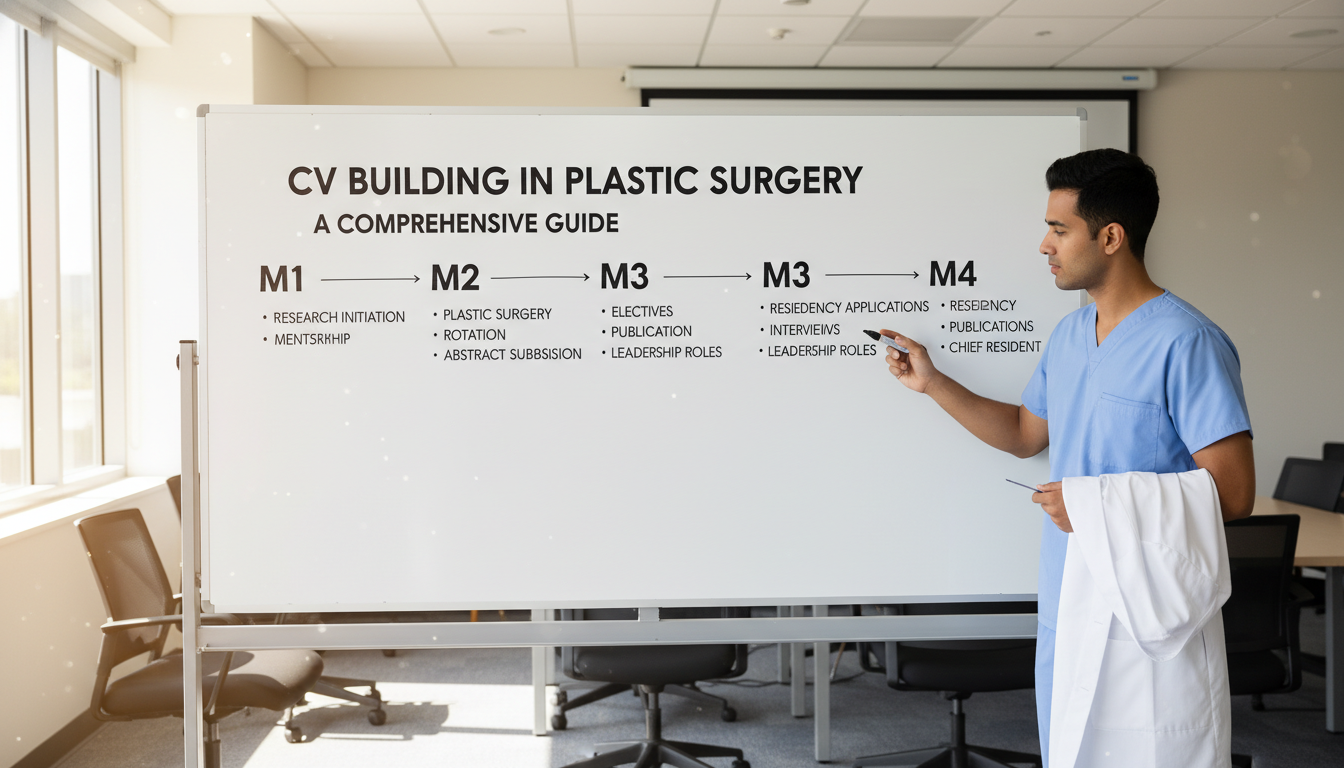
Preclinical Years (M1–M2): Laying the Foundation
Goals:
- Confirm genuine interest in plastic surgery
- Establish relationships with mentors
- Start at least one meaningful research or scholarly project
Actionable steps:
Shadow Early and Intentionally
- Attend clinic, OR, and multidisciplinary conferences
- Identify what aspects excite you (reconstruction, hand, craniofacial, aesthetics, burn)
Find a Research Home
- Email faculty with a focused message and a one-page CV (even if short)
- Express interest in specific areas (e.g., “breast reconstruction outcomes,” “hand trauma”)
- Ask about joining ongoing projects rather than starting from scratch
Join the Plastic Surgery Interest Group (PSIG)
- Volunteer for events
- Offer to help create educational materials or coordinate talks
Build Basic CV Structure Now
- Document everything as it happens: dates, titles, your precise role
- Use a consistent format from the beginning to avoid rework later
Core Clinical Year (M3): Showcasing Clinical Maturity
Goals:
- Excel clinically, especially on surgery rotations
- Deepen your portfolio of plastic surgery-related activities
- Convert research efforts into abstracts, posters, and manuscripts
Actionable steps:
Perform at a High Level on Surgery
- Strong performance on general surgery clerkship often correlates with plastic surgery residency success
- Honors in surgery clerkship is a significant positive signal on your CV
Align Clinical Cases with Scholarship
- Convert interesting cases into case reports or small series
- Collaborate with residents/fellows on write-ups
Maintain and Refine Your CV Quarterly
- Every 3 months, update new roles, presentations, and milestones
- Remove outdated or lower-yield entries that clutter the narrative
Seek Leadership within the PSIG
- Apply for officer roles (e.g., research chair, events coordinator)
- Lead substantive initiatives that will show concrete outcomes on your CV
Senior Year (M4) and Dedicated Research Time
Goals:
- Solidify your CV into a competitive integrated plastics application
- Showcase your best work clearly and honestly
- Prepare a polished document aligned with ERAS entries
If you do a research year:
- Aim for depth and completion, not just volume
- At the end of the year, your CV should reflect:
- 1–2 major areas of focus
- Several abstracts and presentations
- A realistic number of submitted or accepted manuscripts
Before applications open:
- Tighten descriptions (no dense paragraphs; use clear, short bullets)
- Check for internal consistency (dates, institution names, formatting)
- Have at least two mentors (ideally in plastic surgery) review your CV
- Make sure the CV and ERAS entries tell the same story—no contradictions
Presentation, Formatting, and Common Pitfalls
Even a strong CV can be undermined by poor presentation. In plastic surgery, perceived sloppiness can be particularly damaging.
Formatting Best Practices
- Length: 3–6 pages is common for plastic surgery applicants with research; more is fine if truly warranted, but avoid padding.
- Font: Professional, readable (e.g., 11- or 12-point Times New Roman, Calibri, Garamond)
- Margins: Standard (1 inch)
- Headings: Clear hierarchy with bold or slightly larger font
Use consistent:
- Date format (e.g., MM/YYYY–MM/YYYY or Month Year–Month Year)
- Bullet style and indentation
- Journal and conference naming conventions
Avoid These Common Mistakes
Inflated Titles or Roles
- Don’t call yourself “Co‑PI” if you were a student assistant.
- Avoid vague titles like “Lead Researcher” without context.
Overemphasizing Short-Term Activities
- One-day volunteering events are fine but shouldn’t dominate your CV.
- Emphasize longitudinal commitments.
Listing Every Minor Shadowing Experience
- Shadowing is foundational but not a highlight at the M4 level.
- Focus on what you did with that exposure (e.g., research, projects, career direction).
Redundant Entries
- Don’t repeat the same activity under multiple headings.
- Cross-reference only when necessary (e.g., leadership in PSIG under both Leadership and Service, but written differently).
Unclear Acronyms and Jargon
- Spell out less-known acronyms at least once.
- Assume some reviewers may not know your local program-specific terms.
Typos and Inconsistent Grammar
- Proofread carefully or use grammar tools.
- Read out loud to catch awkward phrasing.
Tailoring Your CV to the Plastic Surgery Audience
While you want one master CV, you may slightly adapt it based on context:
- Master Academic CV: Longest version, includes all projects, used for mentors, research positions.
- Residency Application CV (ERAS-aligned): Streamlined, focuses on what matters most for plastic surgery residency.
- Targeted CV for Specific Opportunities: If applying for a specific plastic surgery research fellowship or externship, highlight the most relevant items near the top (e.g., plastics research, microsurgery workshops).
For plastics, prioritize:
- Plastic surgery research and presentations
- Surgical leadership and teaching
- Clinical performance and honors in surgical disciplines
- Evidence of fine-motor or craftsmanship skills is a subtle plus (e.g., drawing, sculpture, woodworking) but should not overshadow core academic content.
Putting It All Together: Residency CV Tips in Practice
To maximize your chances in the integrated plastics match, your CV should:
- Tell a coherent story of growing engagement with plastic surgery
- Demonstrate academic rigor and research productivity proportional to opportunities you’ve had
- Reflect professionalism, attention to detail, and humility
- Be consistent across your CV, ERAS application, and personal statement
Practical final checklist:
- Is your sustained interest in plastic surgery obvious from multiple angles (research, rotations, leadership)?
- Are your top 5–7 accomplishments easy to find within 30 seconds of scanning?
- Have you removed or minimized low-yield, one-off activities that dilute your message?
- Are dates, titles, and institutions internally consistent?
- Have at least two trusted mentors in plastic surgery reviewed your CV?
- Can you comfortably discuss every line on your CV during an interview?
If you can answer “yes” to all of the above, your CV is well on its way to supporting a strong plastic surgery residency application.
FAQ: CV Building in Plastic Surgery
1. How many publications do I need for a competitive plastic surgery residency CV?
There is no magic number. Many successful applicants have 5–15-peer reviewed publications or abstracts, often including case reports and retrospective studies. What matters most is:
- Demonstrated follow-through (projects completed)
- Substance and relevance of work
- Clear understanding of methods and content when discussed
A smaller number of high-quality, completed projects is far better than a long list of “in preparation” manuscripts.
2. Is a dedicated research year mandatory for the integrated plastics match?
Not mandatory, but increasingly common at highly competitive programs. A research year may help if:
- You discovered your interest in plastics later in medical school
- Your current research output is minimal
- You want to work with high-volume plastics researchers
However, a research year is not a guarantee of matching. Use it strategically: secure strong mentorship, plan concrete projects, and aim for completed work that clearly strengthens your CV.
3. Should I include non-medical jobs or activities on my residency CV?
Yes—if they:
- Show long-term commitment, leadership, or unique skills
- Help explain your background (e.g., first-generation student, prior career)
- Connect to qualities valued in surgery (discipline, teamwork, craftsmanship)
Keep descriptions brief and professional. You don’t need to list every job you’ve ever held, but meaningful long-term experiences can enrich your narrative.
4. How different should my CV be from what I put into ERAS?
Content should be consistent, but:
- ERAS entries are tightly structured and character-limited.
- Your separate CV (if requested by programs or used for networking) can:
- Provide more context
- Use academic citation formats for publications
- Show a clearer hierarchy and grouping of activities
Think of ERAS as a standardized database, and your CV as a polished, curated snapshot of your academic and professional identity. Both should reinforce each other in helping plastic surgery programs see you as a strong, well-prepared future resident.