
The worst time to discover your dream specialty is “late.” The second worst time is “never.” You’re in the first group. That’s fixable.
You realized—maybe end of third year, maybe early fourth, maybe during intern year—that you actually want a different specialty than the one your CV points to. Your experiences scream Internal Medicine, but you just fell in love with Anesthesia. Or your whole file is Pediatrics-heavy and now you’re obsessed with Radiology. You’re staring at ERAS thinking, “My CV looks like I want a totally different life.”
I’ll be blunt: you can’t rebuild a 4-year arc in 4 months. But you also don’t need to. You just need enough targeted, believable alignment that a PD looks at your application and thinks, “Okay, this makes sense, and they’re committed.”
Here’s how to do that quickly, without lying, and without burning yourself out.
Step 1: Get brutally clear on how late you actually are
Start with where you really are in the timeline. Not vibes. Dates.
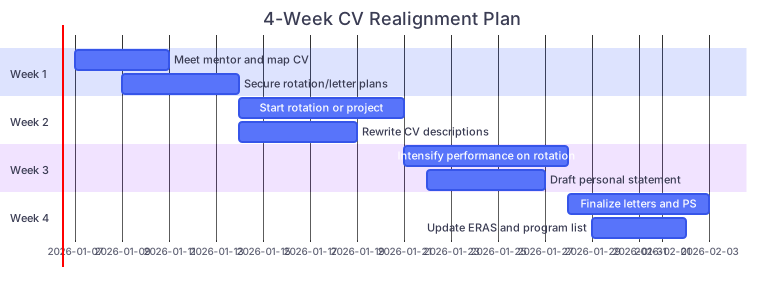
| Task | Details |
|---|---|
| Week 1: Meet mentor and map CV | a1, 2026-01-07, 4d |
| Week 1: Secure rotation/letter plans | a2, 2026-01-09, 5d |
| Week 2: Start rotation or project | b1, 2026-01-14, 7d |
| Week 2: Rewrite CV descriptions | b2, 2026-01-14, 5d |
| Week 3: Intensify performance on rotation | c1, 2026-01-21, 7d |
| Week 3: Draft personal statement | c2, 2026-01-22, 5d |
| Week 4: Finalize letters and PS | d1, 2026-01-28, 6d |
| Week 4: Update ERAS and program list | d2, 2026-01-29, 4d |
Rough buckets:
- MS3 / early: You’re late emotionally, not logistically. You can still engineer rotations, research, and letters.
- Late MS3 / early MS4 before ERAS opens: You have a few months to be surgical (pun not intended) about what you do.
- MS4 after ERAS submission: Now it’s micro-adjustments, signaling commitment, and explaining your pivot.
- In a prelim / TY / PGY1 spot: You’re essentially doing a career pivot with some leverage—but also real risk.
Your exact bucket determines what’s realistic. But the core playbook is the same: redirect, reframe, and reinforce.
Step 2: Map your existing CV to the new specialty (without lying)
Most people in this situation assume their CV is “wrong” for the new field. It usually isn’t. It’s just unlabeled.
Take 30 minutes, open your CV, and mark every single item as one of three:
- Directly relevant to the new specialty
- Indirectly relevant (transferable skill)
- Dead weight (not helpful, but not harmful)
Then, you relabel.
Example: You’re flipping from Pediatrics to Anesthesia.
- Pediatrics sub-I → Emphasize airway management, acute care, working with critically ill kids, procedural exposure.
- Community health outreach → Emphasize communication with anxious families, explaining complex procedures.
- Research in childhood obesity → Emphasize interest in perioperative risk, physiology, and multidisciplinary care.
Same experience. Different lens. You’re not inventing anything. You’re re-framing the parts that actually align.
Do this ruthlessly. You’re not rewriting history. You’re choosing which parts of your history to spotlight.
Step 3: Engineer fast alignment experiences (6–12 weeks)
You need a small cluster of highly visible things screaming, “Yes, this person is genuinely into [specialty].”
You aren’t going to build a 20-paper research portfolio in 3 months. Stop fantasizing about that. What you can build is a spike: a concentrated set of experiences that PDs recognize as commitment.
Priority order for rapid alignment
If you have 2–3 months before ERAS or rank lists, focus like this:
- One or two targeted rotations in the new specialty
- At least one real letter from within the field
- One short, doable academic or scholarly project
- A few concrete, recent non-clinical touches (interest group, teaching, QI, etc.)
Let’s break those down.
3A. Rotations: your highest-yield realignment tool
You need actual time on that service. Without it, the rest looks flimsy.
Aim for:
- A home sub-I or acting internship in the new specialty
- If your school doesn’t offer it, an away or visiting rotation
- If that’s not possible, at least an elective with heavy exposure
Timing matters. Earlier is better, but even a late rotation this fall is better than zero.
If you’re late MS4: beg, trade, wheel-and-deal with your dean’s office. Explain that your specialty choice solidified recently, and you need a sub-I/away as proof of fit. They’ve heard this before. The good ones will help.
During that rotation, behave like you are already an applicant for that field. That means:
- Show up prepared and early
- Ask to present at least one case or topic to the team
- Volunteer for unglamorous but visible work (notes, follow-up calls, teaching M3s)
- Tell the attending directly: “I’m applying to [specialty] and am hoping to earn a strong letter if I do a good job.”
Do not be coy. Faculty are busy. They can’t guess your intentions.
3B. Letters: get at least one strong letter in the new field
You cannot “realign” your CV if all your letters are from a different specialty.
You want:
- 1 strong letter from an attending in the new specialty who directly supervised you
- 1–2 letters from attendings who can speak to your clinical excellence, work ethic, and professionalism (any field)
If you’re very late and only have 2–3 weeks on service, your job is to be unmissable. Not annoying. Unmissable. That means:
- Ask for feedback in week 1: “Anything I can do to be more helpful to the team?”
- Take ownership of something: following labs, tracking consults, prepping teaching slides
- At the end: “Dr. X, I’ve really enjoyed this rotation and I’m applying to [specialty] this cycle. If you feel you can write a strong letter for me, I’d be very grateful.”
Use the word “strong.” It gives them an out if they can’t.
3C. Quick-win academic work: small, fast, visible
You’re not getting a randomized trial done. You might get:
- A case report (especially if you saw something interesting on your new rotation)
- A poster or abstract with a resident or fellow
- A chart review or QI project that’s already in motion and needs extra hands
Target things that:
- Already exist (ongoing project)
- Have a clear timeline (poster submission in 4–8 weeks)
- Involve people known in the field, if possible
Walk up to residents/fellows: “I’m switching to [specialty] and trying to get involved in any ongoing project where I can be genuinely useful, even in a small role. Is there anything I can help with?”
Someone always has a half-finished poster or data set.
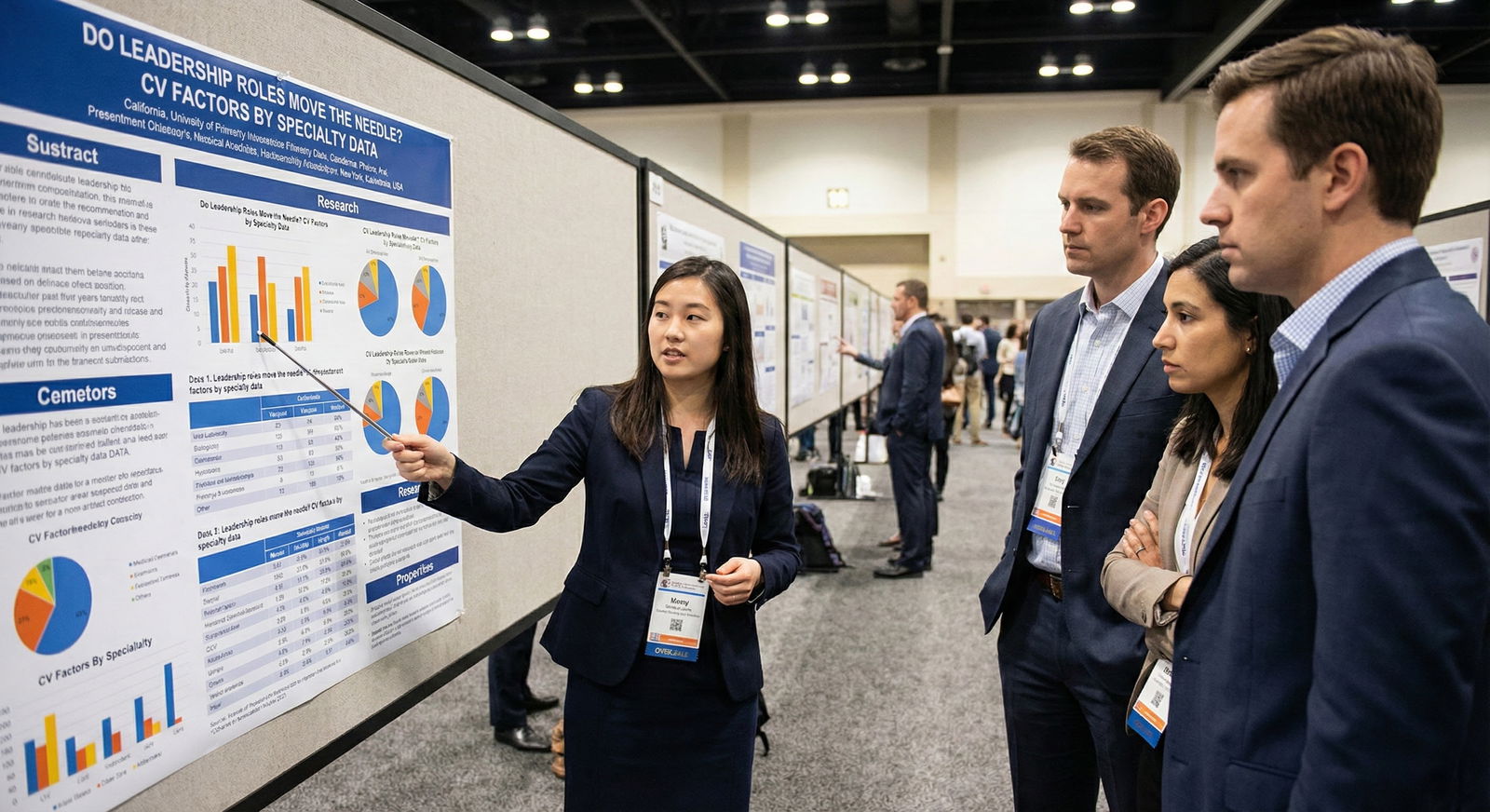
Even one poster with “Anesthesiology” or “Radiology” on it changes how your ERAS looks in a PD’s brain. It ticks the “they’ve at least stood near some research in our field” box.
3D. Low-lift résumé padding that actually matters
You don’t need 15 activities. You need a few with intent and recency.
Possibilities:
- Join the specialty interest group and actually do something: help organize a panel, coordinate a workshop, run a journal club.
- Teach related content to juniors: airway talk for M2s if you’re moving toward EM/Anesthesia, imaging pearls for M3s if Radiology.
- Get involved with a national society’s student/resident arm: quick committee work, virtual webinars, small leadership roles.
The key: make it recent. PDs know when you panic-joined something a week ago. So join early enough that by the time ERAS is read, you’ve done at least one concrete thing you can describe.
Step 4: Rewrite your CV to tell one coherent story
Now the mechanical part: your CV and ERAS Activities section.
Your old CV probably reads like a grab bag of whatever you happened to do. That’s normal. Now you’re going to edit it to answer a simple question:
“Why does this person make sense in [specialty]?”
Reorder, don’t just add
Most people in your shoes make a classic mistake: they add a couple of new things on page 2 and leave page 1 untouched. PDs rarely read that far carefully.
You should:
- Move new-specialty experiences to the top of their categories
- Put the most convincing rotations and projects first in Clinical and Research sections
- Prune or compress irrelevant items instead of listing everything you ever did
If your first three experiences are obviously connected to your target specialty, you’ve already shifted the impression.
Rewrite descriptions with specialty-specific language
Same job, different words.
Example: previously applying to IM, now switching to EM:
Old description (Peds inpatient rotation):
- “Managed 6–8 patients daily, presented on rounds, coordinated with multidisciplinary teams.”
Reframed for EM:
- “Led initial assessment and stabilization of acutely ill pediatric patients, rapidly synthesized data for senior residents, and coordinated urgent multidisciplinary interventions.”
You didn’t lie. You highlighted the “acute care” and “rapid decision-making” aspects that EM cares about.
Do this across your CV:
- Use terms the specialty loves: “procedural,” “perioperative,” “acute,” “longitudinal,” “systems-based,” “diagnostic reasoning,” etc., depending on field.
- Emphasize patient population or setting that overlaps: ICU, ED, OR, primary care clinic, etc.
- Connect leadership roles to what matters in that specialty: logistics, communication, crisis management, education.
Step 5: Use your personal statement and experiences to explain the pivot
If you discovered your desired specialty late, you must address it. Silence looks weirder than honesty.
The structure that works:
- Concrete, recent clinical moment that hooked you
- Show you actually understand the specialty (beyond “I like procedures”)
- Briefly explain your earlier trajectory in another direction
- Show what you did once you realized the fit (rotations, projects, letters)
- Tie it to the future: the kind of resident you’ll be in their program
You do not need to write, “I was wrong about [old specialty].” You write, “I was drawn to X aspects of medicine, which I initially explored through [old path]. On [rotation/event], I saw how those same values play out more fully in [new specialty], and it clicked. Since then I’ve… [concrete alignment steps].”
The “since then I’ve…” part is where your rapid CV realignment pays off. Without that, it sounds like a crush, not a commitment.
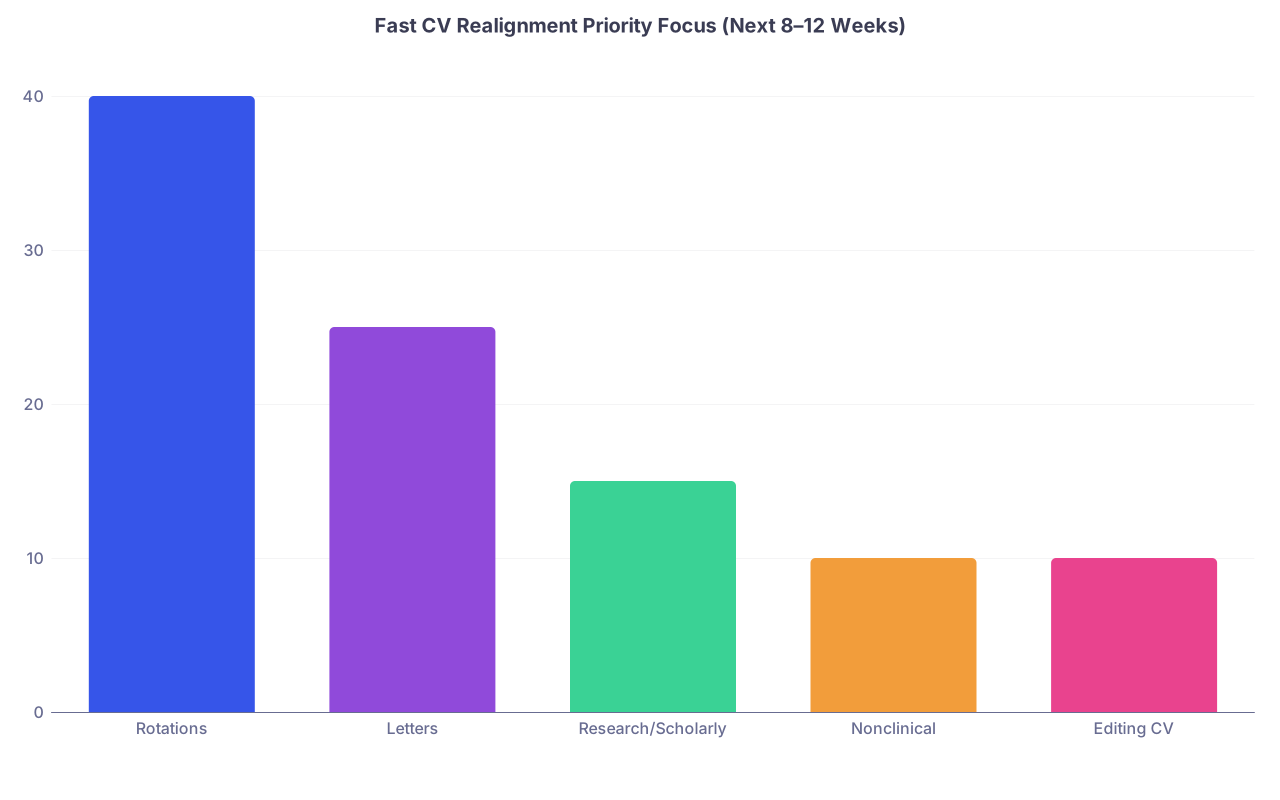
| Category | Value |
|---|---|
| Rotations | 40 |
| Letters | 25 |
| Research/Scholarly | 15 |
| Nonclinical | 10 |
| Editing CV | 10 |
Step 6: Understand program risk tolerance and pick targets strategically
Some specialties and some programs are more forgiving of late pivots than others.
As a rough, opinionated guide:
| Specialty | Flexibility for Late Pivot | What Helps Most |
|---|---|---|
| Internal Med | High | Strong letters, solid narrative |
| Family Med | High | Service, continuity emphasis |
| Psych | Moderate-High | Fit, insight, psych exposure |
| EM | Moderate | SLOEs, EM rotations |
| Anesthesia | Moderate | Sub-I, periop exposure |
| Radiology | Moderate-Low | Step scores, strong letters |
| Surgery (categorical) | Low | Early commitment, surgery letters |
You can absolutely match “competitive” fields with a late decision, but you need to be realistic:
- Your Step scores and class performance matter more when your field-specific CV is thin.
- Community programs may be more open to non-traditional or late-decider applicants than big-name academic powerhouses.
- Programs with linked prelim/TY years are often less flexible; they want early commitment.
When building your list, tilt it toward:
- Places where your school has sent grads in that specialty
- Programs where you or your faculty have personal connections
- Programs that value “strong clinician, good teammate” over “ten first-author publications”
If you’re very late, “fit and reliability” is your currency, not “shiny research machine.”
Step 7: If you’ve already submitted ERAS or you’re in a prelim year
This is the higher-stress version of the problem, but the moves are similar.
If ERAS is in but interviews aren’t over
You still can:
- Add new experiences to ERAS as updates (if allowed)
- Email programs with a brief, specific update letter after a relevant rotation or new letter
- Use interviews to clearly and calmly explain your trajectory
Don’t send a 3-page life story. Send 1–2 focused paragraphs:
- New rotation completed
- New letter writer in the specialty
- One line on what the experience reinforced about your fit
If you’re in a prelim/TY or PGY1
Now you’re essentially a transfer.
Priority list:
- Perform exceptionally in your current role; PDs talk.
- Get explicit support (or at least no active opposition) from your current PD.
- Collect letters that vouch for your professionalism, work ethic, and teachability.
- Arrange an elective or off-service rotation in the new specialty if your schedule allows.
Your CV will need to show:
- You’re not running away from your current field because you’re failing.
- You’re moving toward the new specialty with thought and intention.
- You’ve carried out your current duties to a high standard despite planning a pivot.
Programs don’t want to import someone else’s problem child. Make sure your current supervisors are clearly not labeling you that way.
Step 8: What to stop doing so you don’t waste precious time
If you’re late in the game, you can’t do everything. Cut ruthlessly.
Things that are usually not worth heavy investment right now:
- Starting a totally new, long-term research project from scratch with no clear endpoint before application season.
- Joining 5 committees that meet monthly but produce nothing concrete for your CV this year.
- Perfecting a dozen minor volunteer roles that don’t connect clearly to your specialty.
Instead, ask of every opportunity: “Will this produce a visible, documentable outcome in the next 2–3 months, that clearly relates to [specialty]?”
If the answer is no, say no.
Step 9: Mentors and honesty: how much to reveal
You need at least one mentor in your new specialty. Ideally:
- A faculty member who’s seen you clinically
- Someone who has some sway in the department (clerkship director, APD, or influential attending)
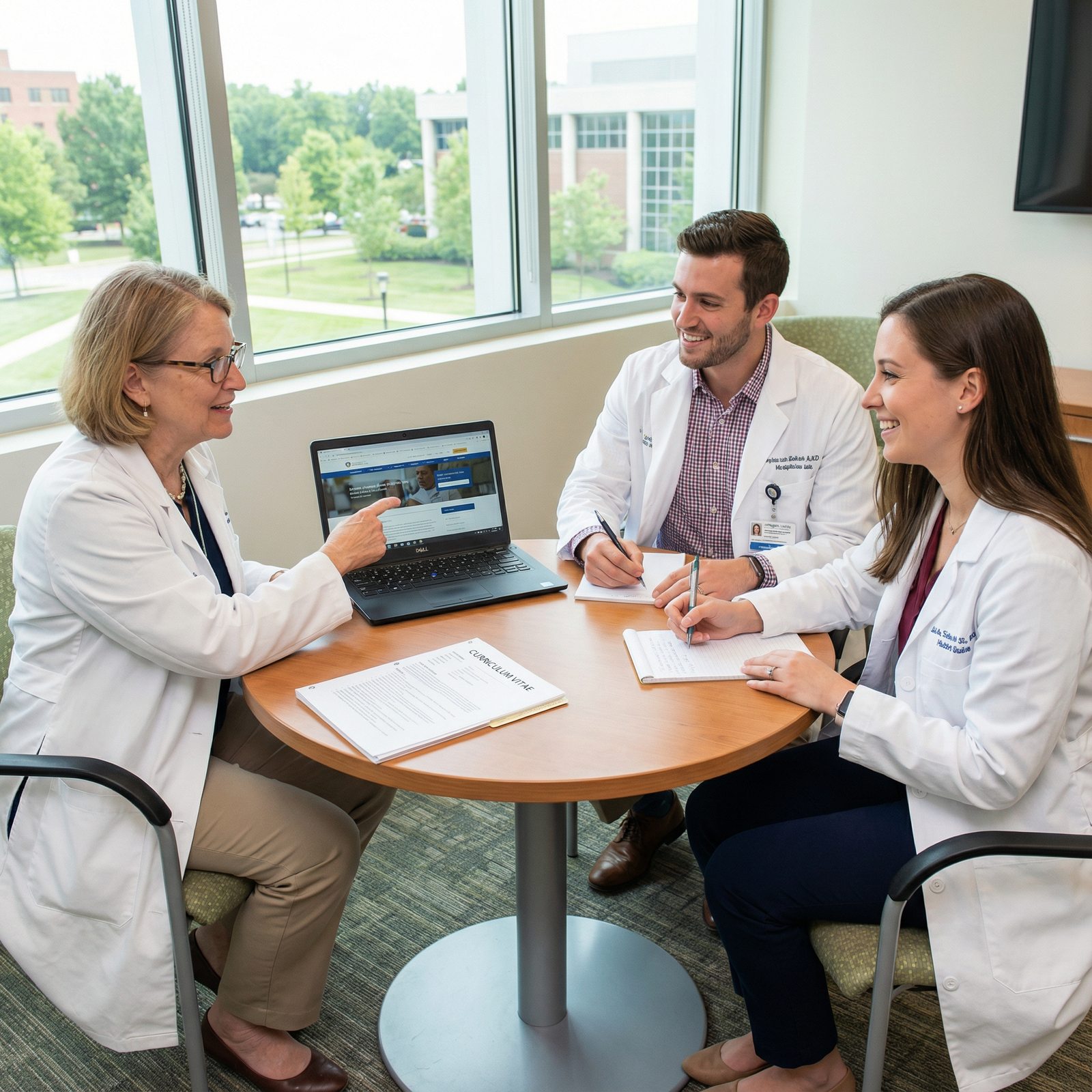
Be candid: “I realized later than ideal that [specialty] is the best fit for me. I’m trying to align my experiences quickly but honestly. Can you help me pressure-test my plan and see what’s realistic this cycle?”
Good mentors will:
- Tell you if you’re competitive enough this year or if a delayed application / research year might actually serve you better
- Help you prioritize where to spend time
- Sometimes, quietly pick up the phone or email a colleague about you
If three honest mentors in the field all tell you, “You need another year,” don’t ignore that because you’re tired of training. Missing once in the Match is expensive. Missing twice is brutal.
Step 10: Convert anxiety into a 4-week action sprint
You’re probably spinning with “I’m behind” stress. Good. Use it.
Here’s what the next 4 weeks could look like:
| Task | Details |
|---|---|
| Week 1: Meet mentor and map CV | a1, 2026-01-07, 4d |
| Week 1: Secure rotation/letter plans | a2, 2026-01-09, 5d |
| Week 2: Start rotation or project | b1, 2026-01-14, 7d |
| Week 2: Rewrite CV descriptions | b2, 2026-01-14, 5d |
| Week 3: Intensify performance on rotation | c1, 2026-01-21, 7d |
| Week 3: Draft personal statement | c2, 2026-01-22, 5d |
| Week 4: Finalize letters and PS | d1, 2026-01-28, 6d |
| Week 4: Update ERAS and program list | d2, 2026-01-29, 4d |
You’re not trying to become the national poster child for the specialty. You’re trying to cross an invisible threshold: from “random late switcher” to “believably aligned, trainable colleague.”
That bar is lower than you think—but you only clear it with intentional, focused moves, not random scrambling.

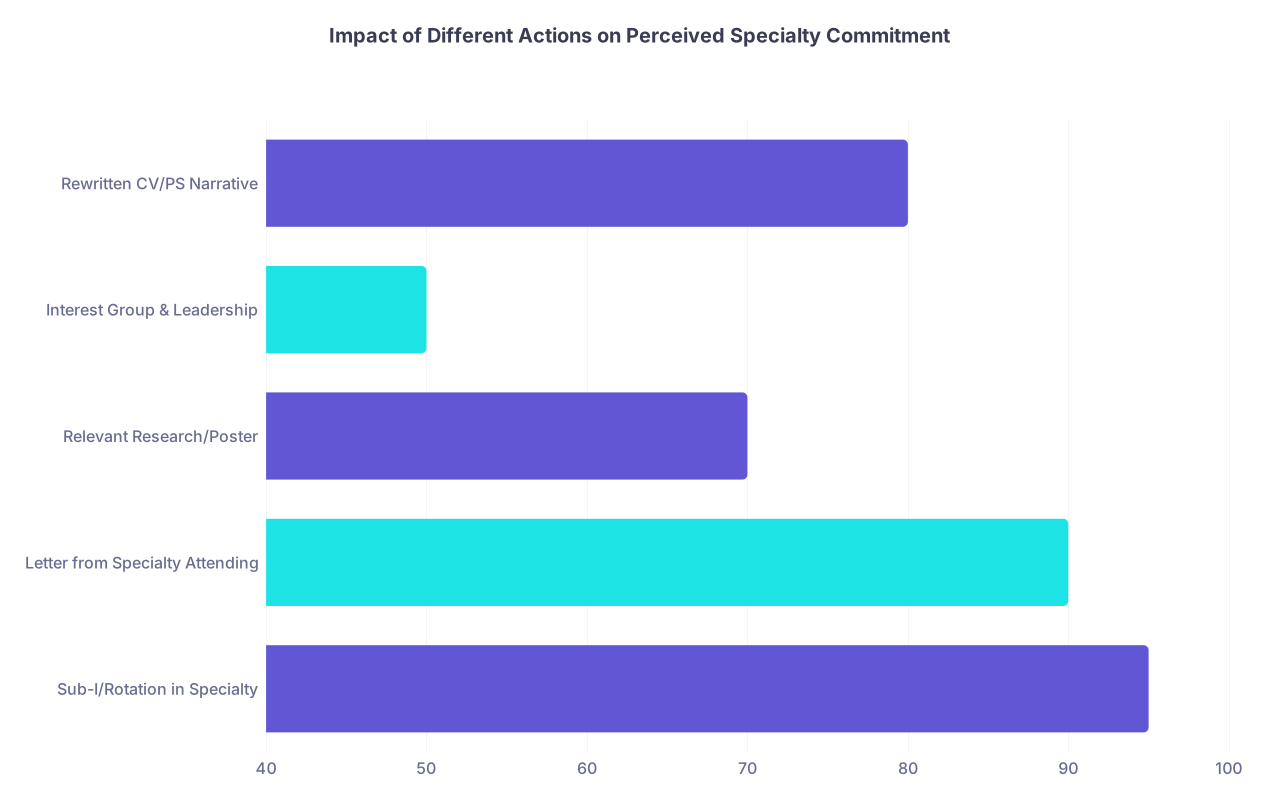
| Category | Value |
|---|---|
| Sub-I/Rotation in Specialty | 95 |
| Letter from Specialty Attending | 90 |
| Relevant Research/Poster | 70 |
| Interest Group & Leadership | 50 |
| Rewritten CV/PS Narrative | 80 |
Do one concrete thing today: email one faculty member in your desired specialty and ask for a 20-minute meeting this week to review your current CV and your timeline. Attach your CV, be upfront that you’re a “late decider,” and ask them what two actions over the next month would move the needle most for you. Then actually do those two things.