
Disclaimer: This article is for educational purposes only and is not financial advice, not legal advice, not tax advice. Figures vary based on individual circumstances; consult a qualified professional before making any financial or insurance decisions.
Opening: Why These 10 Moves Matter Before You Quit for Med School
(See also: Can You Sell Your Home Before Med School to Save Money? for strategies on leveraging home equity.)
(See also: When to Quit Your Job: A Month-by-Month Decision Timeline for Premeds for guidance on timing your departure.)
You're about to trade a steady paycheck for four years of zero income and a mountain of debt. Non-traditional med students don't just leave a job, they leave behind every financial safety net their employer built for them. Health insurance disappears. Life and disability coverage vanish. Retirement accounts sit in limbo. If you miss these steps, you can lose thousands to unnecessary fees, tax penalties, or coverage gaps that wreck your health and assets when you can least afford it.
I've seen too many career-changers assume they can "figure it out later" and end up uninsured during Step 1 study or hit with a surprise tax bill. The stakes are sky-high: your future earning capacity as a physician is your biggest asset, and you need to protect it now, before you quit. Here are the 10 moves that will keep you covered and financially sane as you walk into med school.
Move 1: Secure Your Health Insurance Before Leaving Your Job
Your employer-sponsored plan ends the day you leave. Some companies let it run through month-end, but don't count on it. A coverage gap, even a week, can mean catastrophic bills if you get appendicitis or a car accident. So lock in your next plan before your final day.
You've got three realistic paths:
- COBRA: You keep your current plan, but you pay the full premium (your share + the employer's portion) plus a 2% admin fee. Expect $700-$900/month for an individual. It's expensive, but you know the network and deductibles. Good if you've already met your out-of-pocket max or need continuous coverage for an ongoing condition.
- Marketplace (ACA): Job loss triggers a special enrollment period. File based on your expected med school income, which will be near zero. In 2024, a single person earning under $20,000 can get huge subsidies, often bringing premiums below $100/month for a solid silver plan. This is the sweet spot for most non-traditional students.
- Spousal coverage: If you're married, jump on your spouse's plan. Usually the cheapest option and the simplest. Don't assume you're automatically eligible, enroll during their open enrollment or your life event window.
I can't overstate this: a hospital stay without insurance will bankrupt you before you ever see a white coat. Get it done.
(See also: Myth: You Must Quit Your Job Completely to Be a Serious Premed for insights on maintaining employment during premed.)
(See also: 5-Year Transition Plan: From Established Career to First Day of Med School for a comprehensive roadmap.)
Move 2: Review and Convert Life Insurance Policies
If you have dependents, employer-provided group life insurance is a ticking clock. It ends the moment you leave. If you're perfectly healthy, no issue, you'll get a term policy later. But what if you develop a health condition during med school or residency? You become uninsurable just as your debt burden skyrockets.
Check your current group policy for conversion or portability options. Conversion lets you keep permanent coverage without a medical exam, though premiums will be higher. Portability lets you take the group term policy with you, but that's less common. Convert or port before your last day.
Aim for coverage of 10-12x your future income to protect dependents, factoring in med school loans. If you're single, a small $100k-$250k policy can cover debt and final expenses so nobody else is saddled. Get quotes now while you're insurable.
Move 3: Lock In Disability Insurance Before It's Too Late
This is non-negotiable. Your future income as a physician, millions over a career, is your most valuable asset. Yet as a student you have no current income to replace, so why buy disability now? Because you can't protect future income if you can't get approved later.
Individual own-occupation disability insurance defines disability as being unable to work in your specific specialty (or, for a student, as a physician). That's the gold standard. Employer short-term and long-term disability plans are gone the minute you quit, so you need a standalone policy. Right now, you've got a clean health history (hopefully). Once you're in med school, you could develop stress-related conditions, back issues, or mental health diagnoses, all reasons carriers hike rates or deny coverage.
Get a policy with a guaranteed renewable option (GUO), it locks in rates and insurability regardless of future health changes. Many carriers offer resident/student riders that increase coverage later without further exams. Do this before you even send the resignation letter.
Move 4: Handle Your Retirement Accounts Strategically
You've got a 401(k) or 403(b) with your current employer. Don't just let it sit there, and for the love of your future self, do not cash it out.
Your options:
- Leave it where it is. Fine if the plan has low fees and good funds. But you can't make new contributions, and you'll have one more account to track.
- Roll over to a traditional IRA. Gives you full control, tax-free growth, and access to thousands of low-cost index funds. No taxes if done correctly; you'll get a check but have 60 days to deposit it into an IRA. I recommend a direct rollover to avoid the headache.
- Roll into a new employer's 401(k). Only relevant if you'll work part-time somewhere with a plan.
If you have a Roth IRA, contributions (not earnings) can be withdrawn tax-free for qualified education expenses, but I'd still avoid it, you're robbing your retirement. Early withdrawals from traditional accounts incur a 10% penalty plus income tax, eating 30-40% of your balance. Don't do it. Med school loans are a better deal than decimating your nest egg.
Move 5: Maximize Your HSA Before Starting Med School
If you're covered by a high-deductible health plan (HDHP) right now, you're sitting on a triple tax-advantaged goldmine: Health Savings Account. Contributions are pretax, growth is tax-free, and withdrawals for medical expenses are tax-free forever. There's no "use it or lose it" like an FSA. So before you leave the job, max it out.
For 2024, that's $4,150 for individuals, $8,300 for families. Even if you leave your HDHP midyear, you can still use those funds for qualified expenses later, med school health insurance premiums, Step exam fees, travel to rotations, glasses, therapy, you name it. The money never expires. You can also pay for past eligible expenses (incurred while you had the HDHP) years down the road, reimbursing yourself tax-free. It's a stealth emergency fund for healthcare that beats any savings account.

Move 6: Build Your Emergency Fund Before Quitting
Med school is a four-year marathon with no paychecks. You'll have loans, maybe a spouse's income, but surprises happen, car repairs, laptop crashes, family emergencies. Having 6-12 months of living expenses tucked away in a high-yield savings account prevents disaster and keeps you borrowing more.
For most single students, that's $20,000-$40,000. Bump it higher if you have kids or a mortgage. Don't invest this money; it's not for returns. It's for sleep-at-night insurance. I've seen classmates drop out because they couldn't afford a $3,000 dental emergency or had to fix a car to get to rotations. Avoid being that statistic.
Move 7: Address Existing Debt Before Med School
If you're carrying credit card debt at 20%+ APR, pay it off before you quit. That interest will compound mercilessly for four years while you're living on loans. Don't assume you'll pay it with side income, you'll be too busy.
Student loans from undergrad? Consider consolidation or switching to an income-driven repayment plan before med school. Once you're a full-time student with no income, your payments could drop to $0, preventing interest capitalization and keeping your credit intact. Refinance private loans now while you have a job and income, it's much harder to qualify later as a student.
Mortgage and car loans are lower priority, but aim to have a buffer so you're not scrambling if interest rates jump. Zero out high-interest debt first, then build that emergency fund.
Move 8: Explore Professional Liability (Malpractice) Insurance
Your med school will provide professional liability coverage during clinical rotations, but it's often claims-made, meaning it only covers incidents that occur and are reported while the policy is active. If you graduate and a patient later sues for something during your rotation, you're exposed unless you have "tail" coverage. Some schools include it; others don't. Ask.
Also, if you do any patient care outside official rotations, summer research involving human subjects, volunteer work, shadowing, you might be personally liable. A personal student malpractice policy costs about $100-$200 per year and can include occurrence-based coverage (no tail needed). It's cheap peace of mind. I know a student who faced a lawsuit from a free clinic volunteer session; the school's policy didn't cover it. Don't learn that lesson the hard way.

Move 9: Notify and Update Beneficiaries on All Accounts
This feels obvious but gets skipped constantly. When you leave your employer, your 401(k) beneficiary designation might still list an ex-spouse or a sibling from a decade ago. Update it immediately. Same for your life insurance, IRA, and even your HSA.
If you don't designate a beneficiary, those accounts go to your estate and into probate, delaying access for your loved ones and possibly triggering unnecessary taxes. Check every account, not just the big ones. A quick 10-minute audit can save massive headaches later.
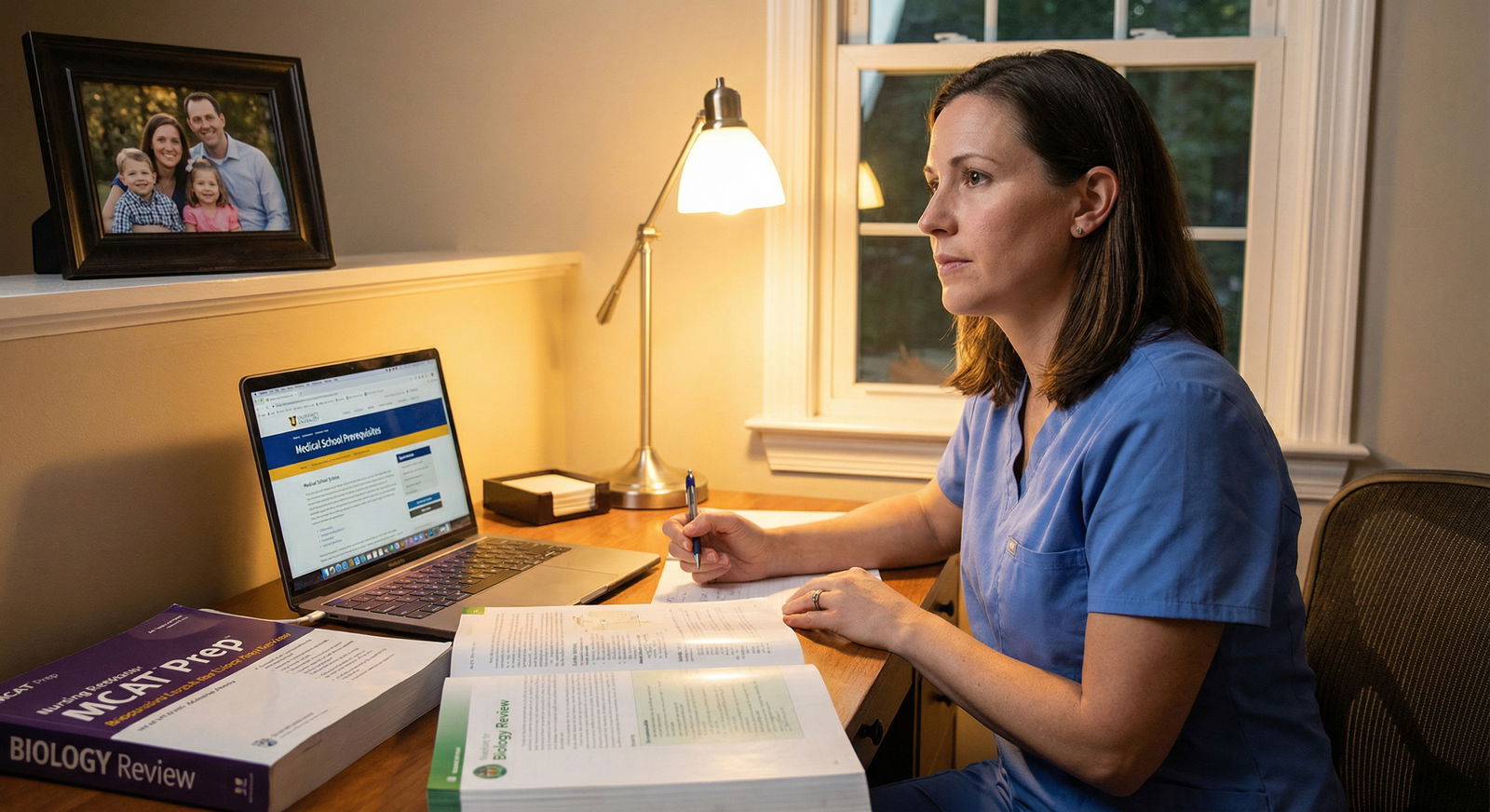
Move 10: Create a Med School Financial Plan and Stick to It
You've secured your insurance and retirement. Now build a realistic monthly budget for the next four years. Loans won't cover everything, and unexpected costs like USMLE exams, residency interview travel, and relocation can add $10,000+ to your tab.
Map out: tuition (often unavoidable), living expenses (cut ruthlessly), books/equipment (share, buy used), loan disbursement dates. Use a budgeting app or a simple spreadsheet. If you have a spouse or partner, plan for their income too.
Look into future debt forgiveness options (PSLF, loan repayment programs) now, so you know which loans qualify. Also, consider side income realistically, tutoring online, MCAT prep, virtual scribing. But don't bank on it; first year is brutal. Your goal: borrow only what you need, never more.
Summary: Your Pre-Med School Financial Checklist
Here's the blunt truth: if you skip any of these, you're gambling with your health, your family's security, and your future physician career. Complete these moves before your last day of employment, in this order:
- Health insurance, COBRA, Marketplace, or spouse.
- Life insurance, convert or port before it expires.
- Disability insurance, own-occupation, guaranteed renewable, now.
- Retirement accounts, roll to IRA, never cash out.
- HSA, max it out.
- Emergency fund, 6-12 months liquid.
- Debt, kill high-interest cards, switch to IBR.
- Malpractice, confirm school coverage, consider personal policy.
- Beneficiaries, update every account.
- Med school budget, live on less, borrow wisely.
Future you, standing in a white coat with M.D. after your name, will be grateful you protected everything that matters, before you took the leap.