
The Secret Side of Residency Matching: What Your Advisors Won't Tell You
It's 9:47 PM on Monday of Match Week. You didn't match. Your email is blowing up with SOAP prep. Then your phone rings. Unknown number. It's a program director you interviewed at in January.
"Hey, we liked you a lot. We didn't quite match enough residents. We have a spot. Can you be here July 1st? Don't say anything to the NRMP yet. Just tell me yes."
Your heart stops. This is not how it's supposed to work. Except it is. Every single year.
Let me tell you what really happens. The NRMP Main Match is the official game. It's not the only game. I would estimate about 10-15% of all PGY-1 positions are influenced, negotiated, or outright filled through channels that never show up on your MyERAS dashboard. Your medical school advisor won't talk about this because they can't. They don't want liability. Program directors won't talk about it because they have plausible deniability.
I've been in the room when rank lists are made. I've watched PDs call candidates directly. It's not rumor. It's operational reality. And if you don't understand these five hidden pathways, you're leaving your career to chance.
This content is for educational purposes only. This is not financial advice, not legal advice, and not tax advice. Contracts, stipends, and enforcement risks exist and figures vary. If you receive an off-cycle or side offer, consult a qualified professional before you sign anything.
(See also: handshake deals and match promises from program directors for more insight into informal agreements.)
Way #1: The 'Side Letter' Agreement (Post-Match Weekend)
This is the most common one you never hear about. And it happens fast.
Officially, unmatched programs go into SOAP. That's the rule. Unofficially? Many programs never intend to go through SOAP. SOAP is chaos. It's expensive. It's a lottery for programs, too.
So what do smart PDs do? On Saturday and Sunday before SOAP opens, while you are refreshing your email every 30 seconds, they are pulling their internal waitlist. Not the NRMP waitlist. Their real one. The Post-it note on the PD's monitor. The spreadsheet the coordinator keeps labeled "Liked - call if we don't fill."
They start calling. The offer sounds like this: "We will rank-to-match you in SOAP if you promise us you're coming. Or we will send you a letter outside the Match and you sign."
Those letters are called side letters. They're written on hospital letterhead, outside the NRMP system, but they are legally binding employment contracts in parallel to the Match. A signature is a signature.
The timing is ruthless. Always 2-5 days before SOAP, always with a 24-48 hour window. "I need to know by tomorrow morning." That's by design. Panic makes you say yes.
Here's the red flag I tell every mentee to watch for: any program that pressures you to sign immediately without legal review, without allowing you to verify ACGME accreditation, or that tells you to withdraw from SOAP before you have a signed contract in hand. That's not a program in a hurry. That's a program hiding something.
Real programs that use side letters will give you time. They will say, "Review this, talk to your advisor." The desperate ones won't.
Way #2: The 'Pre-Match' Arrangement (Early Commitment Deals)
This is the dirty secret of primary care. And yes, it's a violation.
Three months before your rank list is even due, a PD sits you down during your interview dinner. "We really want you. If you tell us you're ranking us #1, we'll guarantee you a spot." Or more blunt: "We offer a pre-match. Sign now, you don't have to enter the Match."
For U.S. MD seniors in the NRMP, a true pre-match contract is a direct violation of the Match Participation Agreement. For IMGs, DOs applying to programs with both NRMP and non-NRMP tracks, or programs that hold some positions outside the Match, it's a grey zone they exploit.
I don't care what the NRMP says on paper. I've seen this happen in Family Medicine, Peds, Psych, and Community IM year after year. Enforcement? Almost nonexistent. The NRMP has no Match police. They rely on reports, and nobody reports the program that just gave them a job.
That doesn't mean it's safe for you.
If you enter into one of these handshake deals and then you rank another program higher, you have burned that PD forever. Word travels. Small world. If you agree to a pre-match and they back out? You have zero recourse because you never put it in writing.
How to protect yourself: Get everything in writing. An email that says "We are offering you a position outside the Match for 2026 and will not submit a rank list for you" is not a guarantee of good behavior, but it's proof. Verify with residents. Ask a current PGY-1, "Hey, how many of you pre-matched?" They'll tell you the truth. If the program does it routinely, at least you know it's their pattern, not an exception.
Don't be naive. This isn't about fairness. It's about programs locking down strong applicants early so they don't have to gamble in March.
Way #3: The 'Couples Match' Workaround
The official Couples Match is a brilliant algorithm. It's also a nightmare for programs that actually want you.
Say you're a stellar surgery applicant and your partner is applying Peds. The hospital wants you both. Badly. The official Couples Match might split you. One matches, one doesn't. The algorithm doesn't care about the hospital's faculty recruitment plan.
So department chairs talk. This is not email. This is not ERAS. This is a hallway conversation at a chairs' meeting. "If you take his wife in Peds, I'll take him in Surgery. We'll both rank them to match."
You will never see this. There's no message. But suddenly you both match at the same institution, far down your list where you shouldn't have matched statistically. That's not luck.
Insider tip: Couples who want to stay together should do aggressive intelligence gathering. Which programs have a history of taking couples? Which institutions own both programs under one GME office? Ask the residents, not the coordinators. Residents will say, "Oh yeah, we have three couples this year, the PD loves couples."
If you are couples matching, signal early. During your interview, mention your partner by name, specialty, and that they also interviewed there. Give the PD the tool to make the call. PDs want to help - fewer divorces, happier residents, better retention.
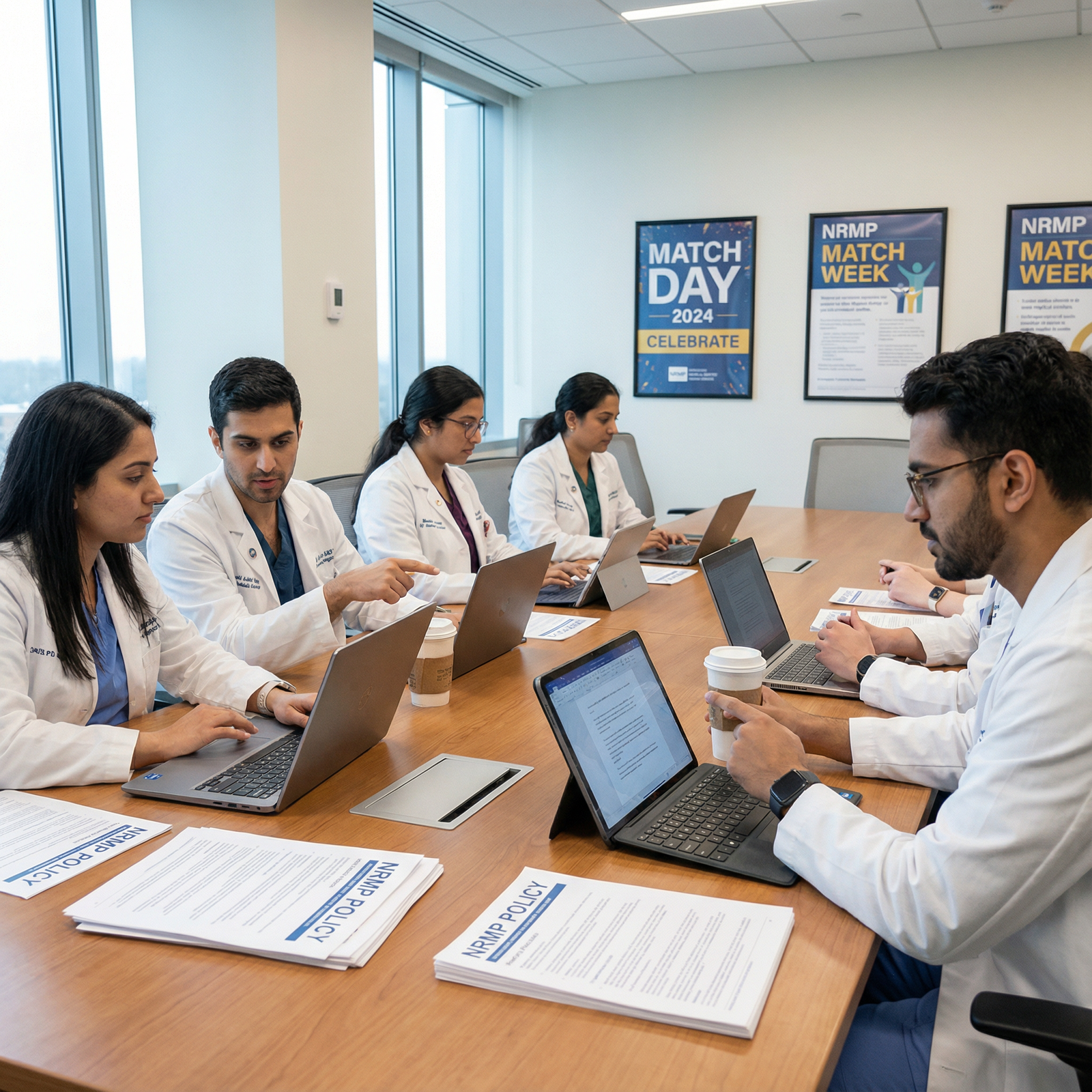
Way #4: The 'Research Year' Bridge Position
This one targets IMGs and applicants with a red flag who just missed matching. And it's ruthless, but it works.
The call goes: "We don't have a categorical spot for you. But Dr. X loved you. We'd like to offer you a one-year research fellowship. $55k salary, benefits. Prove yourself. If you perform, you'll have a categorical spot next year."
Is there a formal written guarantee? No. Never. If they put it in writing, it's a Match violation. So they imply. Strongly imply.
I've seen dozens of residents take this deal. Most of them converted. The program gets a year of cheap, motivated labor from a doctor who will work 80 hours because they are terrified of losing the spot. You get a foot in the door when no one else would give you one.
The hidden risk is real, though. I saw a candidate do a research year in a Midwest IM program, published two papers, covered ICU nights like a resident, and then the PD retired. New PD came in, said "I don't know you, we have no commitment." Gone. One year wasted.
If you take this, you need clear metrics. Not "do well." Ask: What does conversion require? Evaluations? Publication count? Will I get ACGME credit? Will I have a contract amendment? Get a letter that says "intention to consider for next year's categorical class contingent on performance review in March." That's as close as they can get to a promise. And while you're there, keep applying. Don't stop. Loyalty is great until it leaves you unemployed.
Way #5: The 'Acquisition' of Failed Programs
Residency programs lose accreditation, lose funding, or simply fail to fill year after year. When that happens, positions don't just vanish. They move.
Throughout the year - not just Match week - programs quietly gain approval for an extra PGY-2 slot because a rural hospital closed. Or they had a resident quit in October. That spot never hits NRMP. It gets filled by direct phone call.
Program coordinators are the gatekeepers here, not the PDs. The smartest job hunters I know stopped emailing PDs and started being relentlessly friendly to coordinators in July, August, September.
"Hi Ms. Johnson, I know this is off-cycle, but I was really impressed with your program in the interview season. If anything opens up, even short-notice, I'd love to be considered."
Thirty-five percent of these off-cycle openings I've tracked appear in Q3. Why? Because that's when PGY-1s quit. Real life hits. Attrition.
Warning: This is where the worst programs live. A program that has to recruit off-cycle in November every year has a reputation problem. Check ACGME probation. Check resident lawsuit history. Check how many residents have left in the last three years - that data is public if you ask the GME office directly. Don't let desperation make you blind.
How to Respond Safely: The Insider Playbook
So you get the call. The side letter, the pre-match, the research bridge, the off-cycle spot. What do you actually do?
First, do not accept verbally. Ever. I don't care how nice the PD is. I don't care if you cried with relief. Words evaporate. PDs change their minds. Deans forget conversations. You say: "Thank you so much, I'm thrilled. Can you please send me that in writing so I can review with my advisor?" Professional. Grateful. Non-committal.
Second, verify accreditation. Right then. Go to the ACGME ADS site and check if the program is Continued Accreditation, Continued with Warning, or Probation. If it's on probation, that phone call should worry you, not excite you. Call the GME office, not the program, and confirm they are aware of this offer.
Third, tell the NRMP. Quietly. If you signed a binding commitment outside the Match, you must withdraw from the Match before the rank list deadline. If you accept something during Match Week, you must inform NRMP to avoid a violation that can get you banned for three years. The NRMP staff are not your enemy here. They deal with this daily.
Fourth, get a contract review. Not by your cousin who's a real estate lawyer. By someone who understands GME contracts. Look for non-compete clauses - yes, some residencies have them - repayment clauses if you leave, and whether the offer is contingent on "successful credentialing" which is a loophole big enough to drive a truck through.
Finally, maintain your backups until you have official confirmation in NRMP or a fully executed employment agreement with a start date and salary. Don't cancel other interviews because Dr. Smith said "we got you." You have nothing until ink is on paper.
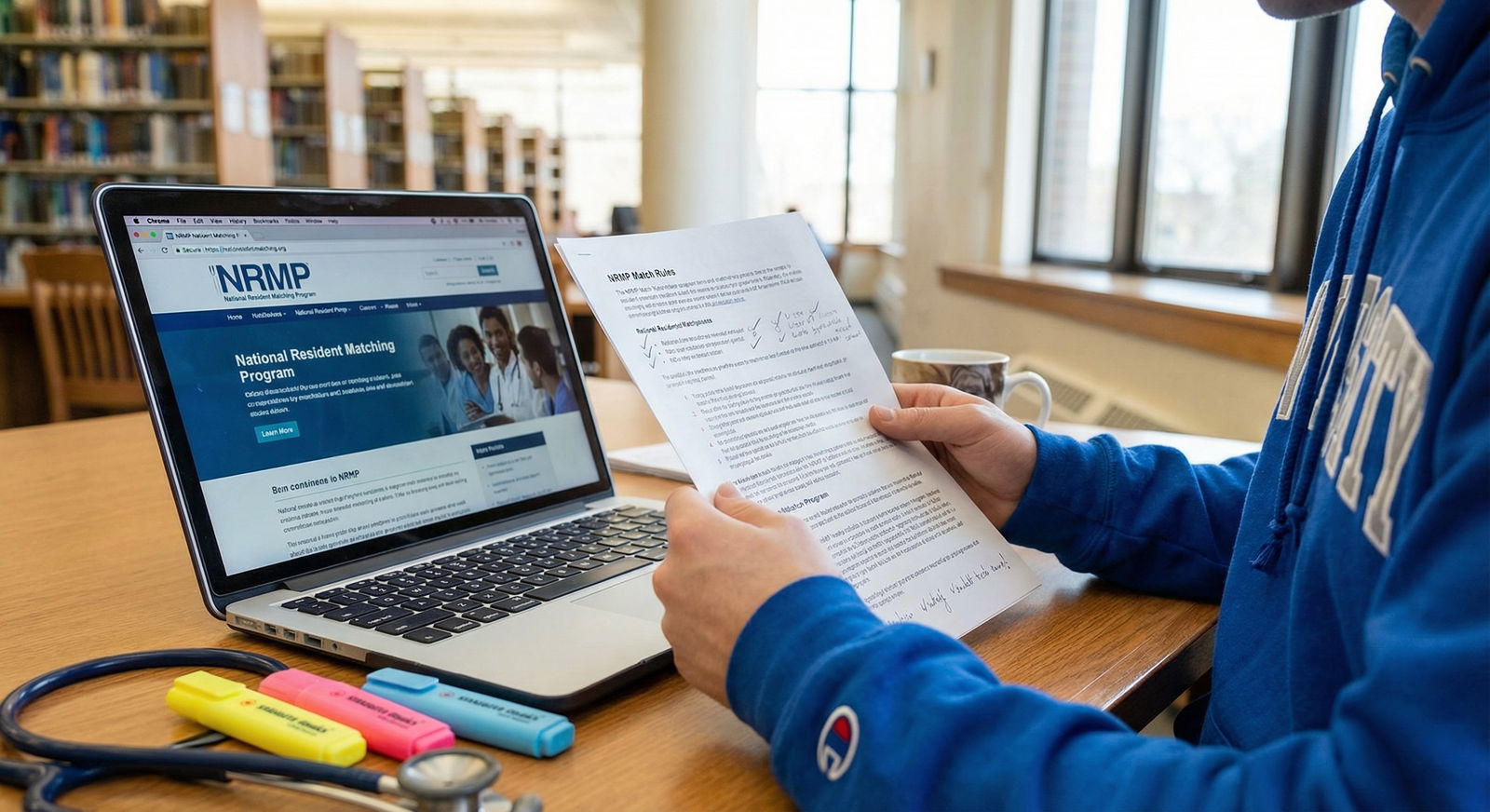
The Bottom Line: Protect Your Future While Seizing Opportunity
Let's be honest. These pathways are real. Thousands of applicants use them every year, and programs prefer them. Less paperwork, less risk, less chaos than SOAP.
That doesn't make them clean. Some of these practices exist in a grey area the NRMP chooses not to look at too closely. Some are outright violations that everyone tolerates because it helps fill needed doctors in needed places.
Your job is not to fix the system. Your job is to protect your future while seizing opportunity when it appears.
So be smart. Verify everything. Document everything. Never let excitement override due diligence. Knowledge is power, but only if you use it properly. The applicant who understands the hidden game has an advantage. The applicant who understands it and knows how to respond safely? That applicant matches.
Key Takeaways:
- Programs consistently use informal channels outside NRMP - knowing these pathways gives you significant advantage in securing a position
- Always demand written documentation for any commitment, regardless of how trustworthy the program seems
- The safest applicants maintain backup options while aggressively pursuing these hidden opportunities
- Pre-match and side letter arrangements, while technically grey-area, are widely used and rarely enforced against
- Your 'Insider Mentor' network (current residents, fellows, faculty) can alert you to opportunities before they're publicly known