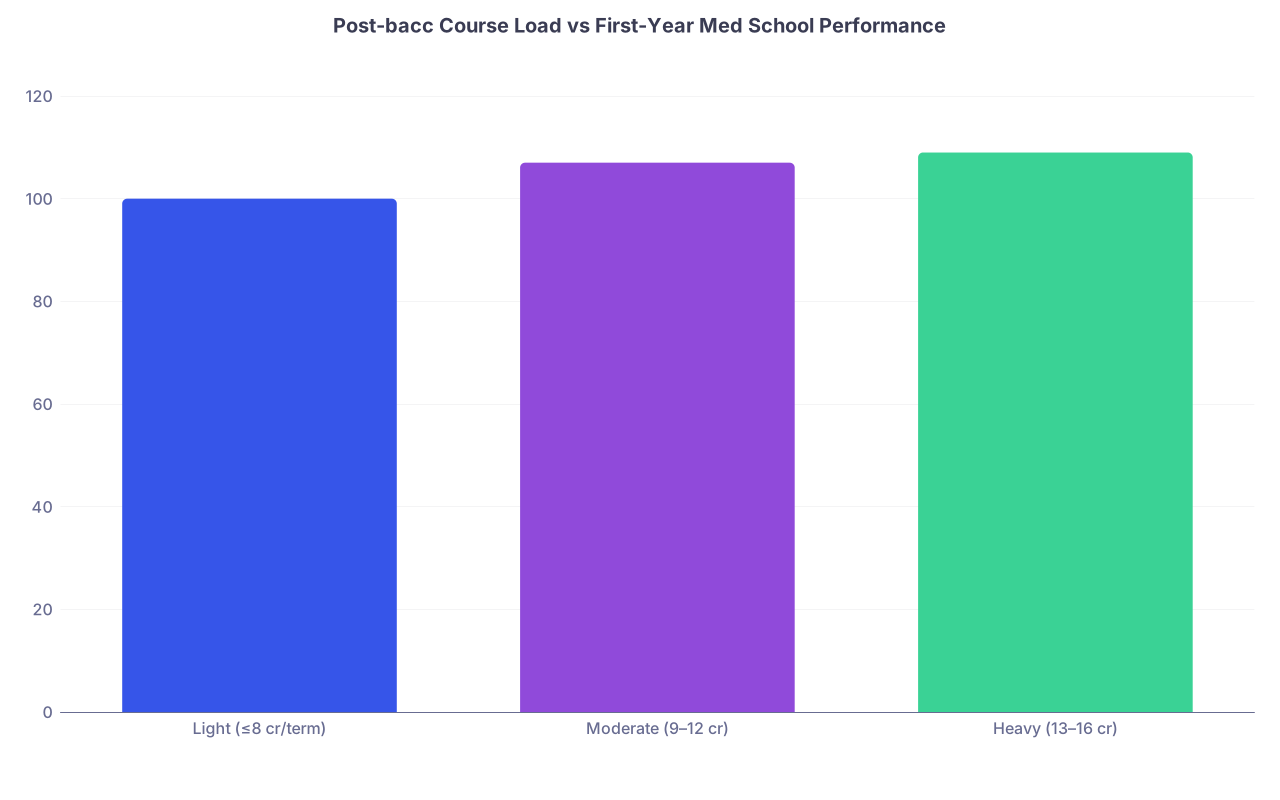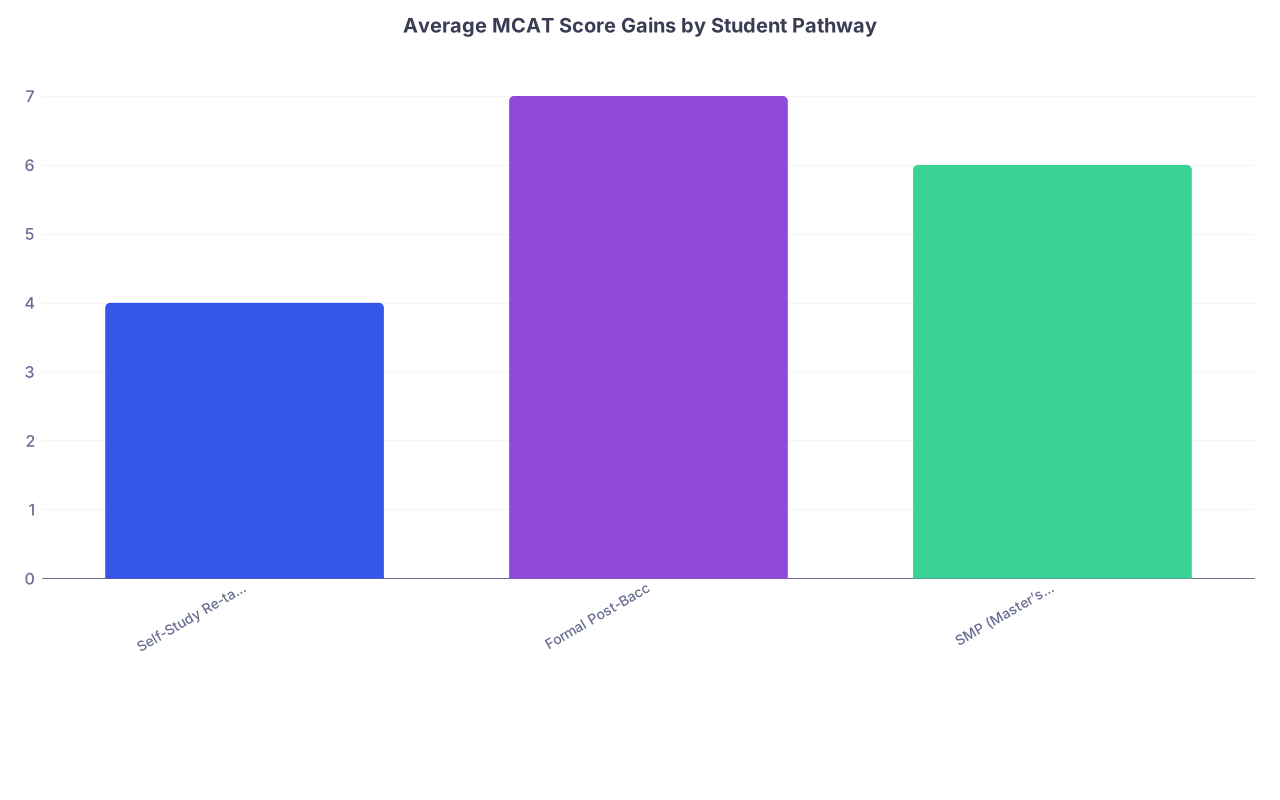
Your post-bacc semester is not an apology tour. It's a proof of concept.
Admissions committees won't read it as a do-over for whatever went sideways in undergrad. They read it as a trend line, the most recent, most relevant data point on whether you can handle medical school rigor. One bad week won't sink you. A bad semester confirms their worst suspicion. Consistency is the whole game.
Here's the timeline reality: you have roughly 15 weeks. Fifteen weeks to generate the grades that anchor your academic narrative. No ramp-up period. No gentle onboarding.
(See also: Weekly Priorities from Orientation to Final Exams for a detailed schedule.)
So treat this like a job, a demanding one:
- No side hustles
- No "just this once" weekend trips
- No commitments that can't survive a midterm week
I've watched talented students fumble this because they treated the post-bacc like undergrad 2.0, same habits, new campus. It never works. At this point, you should be thinking in systems, not motivation. Motivation burns out around week six. Systems don't.
This article is for educational purposes only. It is not financial advice, not legal advice, and not tax advice. Figures vary by individual circumstances, so consult a qualified professional before acting.
(See also: Immediate Rescue Steps for Slipping Grades if things go off track.)
Pre-Semester Prep: Weeks -4 to -1 (Before Classes Begin)
The semester is won before it starts. Dramatic? Maybe. True? Absolutely.
At this point, four weeks out, your course load should be locked. And here's my strong opinion: three to four rigorous courses beat six manageable ones, every time. Committees aren't fooled by padded schedules. They're looking for density of difficulty.
Your pre-semester checklist:
- Pick at least one heavy lifter. Biochemistry, Organic Chemistry, or Physics. You need an early, credible signal that you can survive hard science. Don't stack all three at once, that's how 3.9s become 3.2s.
- Visit office hours before day one. Walk in, introduce yourself, and say the quiet part out loud: "I'm a post-bacc targeting top grades. What do your A students do differently?" Faculty remember the students who show up early. These are the people writing your letters later.
- Run a mock week. Simulate your real schedule, commute, meals, gym, study blocks, for two or three days. Find the time sinks now, while adjustments are still free.
The dip in the middle is your sweet spot: enough rigor to prove something, not so much that you crater.
Month 1: Foundation Building (Weeks 1-4)
At this point, you should be boring. Gloriously, predictably boring.
Same wake time. Same study blocks. Same library seat, if you can swing it. Consistency beats intensity across 15 weeks, the student who studies four focused hours daily will bury the one doing twelve heroic hours every Sunday.
Week 1 priorities:
- Deconstruct every syllabus. Transfer each exam, quiz, paper, and lab deadline onto one master calendar. Not three apps. One. If it isn't on the calendar, it doesn't exist, and that's how deadlines ambush people.
- Start active recall immediately. Flashcards, practice questions, closed-book self-quizzing. Passive reading feels productive and produces almost nothing. It's where GPAs go to die. By midterms, the re-readers are drowning while the recall crowd is already reviewing.
- Monitor energy, not just output. Feeling frayed by week 3? Fix your sleep first; don't touch the study system yet. Most month-one "burnout" is a sleep deficit wearing a costume.
Month 2: The Crucible & Triage (Weeks 5-8)
Here's what nobody tells you: your first midterm will probably sting. Even with perfect prep, you're facing new professors writing unfamiliar question styles, and something slips. Expect it. Budget for the confidence dip the way you'd budget for a bill.
At this point, triage becomes your core skill:
- Run a ruthless audit after each exam. Which topics actually cost you points?
- Allocate roughly 70% of review time to weak areas, 30% to maintaining strengths.
- Resist re-studying what you already know because it feels good. That's comfort, not studying.
And kill your perfectionism before it kills your GPA. If a lab report sits at A-/B+ quality and organic chemistry needs you, submit and move. Chasing the last 2% on one assignment while neglecting an exam worth 30% of your grade is terrible math.
One more thing: if a grade drops, email the professor that week. Faculty can fix problems they know about. They can't help the student who surfaces in week 14 after a semester of silence.

Month 3: Consolidation & Peak Performance (Weeks 9-12)
At this point, new content should never arrive without old content riding alongside it. Every week: review Month 1 material, drill Month 2 material, learn Month 3 material. Layered, not linear.
Two moves define this stretch:
- Join or build a high-performing study group. Not a social hour that occasionally mentions enzymes, a working group where you teach each other. Explaining glycolysis out loud to a skeptical peer exposes gaps that silent rereading never will. Teaching is the highest-yield review method in existence. Full stop.
- Synthesize across courses. Connect buffer systems from chemistry to acid-base physiology in biology. Medical school exams demand exactly this cross-wiring, and building it now is free advantage.
Your weekly loop should look like this:
And beware the post-bacc version of senioritis. Week 10 is when discipline starts feeling optional. It isn't.
Final Stretch: Exams & Integration (Weeks 13-15)
At this point, stop learning new material. Everything shifts to reinforcement:
- Spaced repetition only. Cycle your cumulative flashcard decks and problem sets on a tightening schedule.
- Sleep like it's a course requirement. Functionally, it is one. Memory consolidation happens during sleep; an all-nighter trades tomorrow's recall for tonight's false confidence. Bad trade. I've never seen one pay off on a cumulative final.
- Simulate exam conditions. Timed, silent, phone in another room. A three-hour cumulative final is an endurance event, and stamina is trainable.
- Start drafting your narrative. How do these grades fit your personal statement? A strong semester writes itself into a compelling paragraph, but only if you've thought about it before application season steamrolls you.
Conclusion: The Long View
Remember this when the grade portal finally refreshes: your post-bacc GPA is a signal, not the story. It proves you can handle rigor. It says nothing, yet, about your empathy, your composure with patients, your leadership. Those get proven elsewhere.
So build systems this semester that survive into medical school, not just a number that looks good in December.
Trust the timeline. Execute it. At this point, you should already be moving.
Key Takeaways:
- Treat the semester as a full-time professional commitment; consistency over cramming.
- Map every deadline to one master calendar before Week 1.
- Adopt active recall and spaced repetition from day one, passive review won't survive a high-stakes science course.