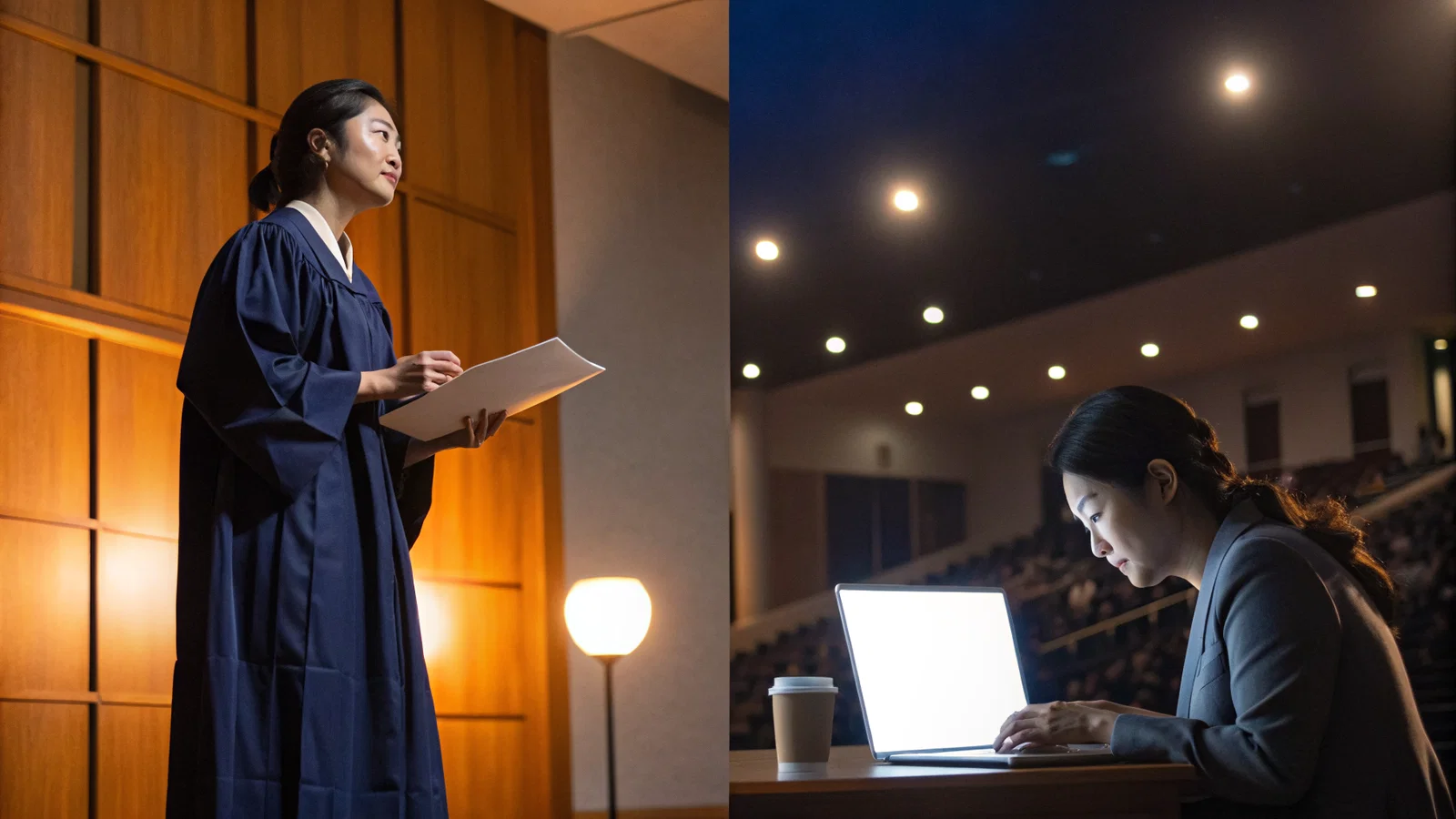
Here's the myth I keep hearing every March: if you open the Match email early, you've "ruined" Match Day. Or the flip side, if you wait for the ceremony, you're somehow less prepared, less mature, less in control. Both takes are wrong. Loudly wrong.
The outcome already exists. The algorithm already ran. Your rank list already met the programs' rank lists somewhere in a server farm long before your phone buzzed. Opening early doesn't change where you're going. Waiting doesn't change it either. What changes is the experience of finding out, and that experience is personal, not moral.
Opening Contrast: The Ceremony Is the Event, The Email Is Just the Delivery System
People treat the early email like a cheat code or a spoiler. It's neither. It's a delivery system. The Match was built as a ceremonial, high-stakes moment, envelopes, stages, group photos, the collective gasp when someone matches at their dream program. That ritual is real and valuable. But the email is just how the result gets to you now. Confusing the two is like arguing that reading a board score on your phone somehow invalidates the exam you already took.
I've watched applicants spiral over the timing as if the timestamp rewrites destiny. It doesn't. The psychological load of seeing results early is almost entirely about anticipation management, not outcome alteration. You're choosing how you want to feel the hit, or the high, not what the hit will be.
That's the core thesis, and I'll keep hammering it: early access may change how the moment feels. It does not change the Match result. For a lot of applicants, the ceremony still matters more than the clock. For others, privacy and a quiet hour with the truth matter more than balloons and a livestream. Neither group is broken. The people who insist there's one correct path? They're the ones selling fiction.
What Actually Changes When You Open Early: Emotion, Not Outcome
Opening early can shrink uncertainty. Some applicants sleep better once they know. They stop refreshing forums, stop rehearsing disaster scenarios, stop performing calm for their partners. For them, information is relief.
For others, early access is a stress multiplier. They open alone at 11 p.m., get a result they didn't want, and then sit with it in isolation while everyone else is still hyped for "the big day." No classmates nearby. No program director texting congratulations yet. Just rumination and a calendar full of obligatory smiles. I've seen that version too, and it's rough.
There's a real difference between immediate information and meaningful processing. Some people need privacy and time to react, cry, call their mom, rewrite their internal narrative, before they can face a crowd. Others draw strength from the shared experience: the group hug, the faculty who show up, the friend who matched nearby. Preference isn't weakness. It's data about how you regulate emotion.
So let's kill the myth that early email access is inherently "better." It isn't. Lived experience and plain observation say it's highly preference-dependent. Universal advice here is lazy advice.
If you need solitude to metabolize big news, open early. If the communal ritual is part of how you make meaning, wait. If you're purely logistical, couples match details, housing deposits, plane tickets, open when it helps you act. Same result either way. Different nervous systems.
The Psychological Trade-Offs: Anticipation, Control, and Regret
The other bad assumption: opening early always reduces anxiety. No. For plenty of people, the uncertainty just changes shape. Before you open, the fear is "What will happen?" After you open early, it can become "How am I going to hold this until Friday?" or "Did I just steal the only joyful public moment I was going to get?" Anxiety doesn't vanish. It relocates.
Control feels comforting, if you actually want control. Some applicants crave agency after months of black-box waiting. Fair. Others experience early access as a premature emotional ambush. The email sits there like a live wire. You didn't ask for the option, and now not opening feels like cowardice while opening feels like sabotage. That's not empowerment. That's a trap dressed up as convenience.
And then come the regret narratives, which I hear every year in both directions:
- "I wish I had waited. I opened alone and felt hollow during the ceremony."
- "I wish I had known sooner. I spent three days performing optimism I didn't feel."
Both can be true. Temperament and circumstances decide which regret is more likely for you. If you tend to ruminate, early bad news without support can linger. If you hate suspense more than disappointment, waiting can feel like torture. Don't outsource this choice to Twitter or to the loudest person in your group chat.

Practical Reality: Logistics, Support, and Professionalism Still Matter More Than Timing
Strip away the drama and early access can be useful for real-world planning. Couples Match logistics. Travel. Housing. Telling family across time zones. Looping in a mentor before the public wave hits. Those are legitimate reasons, not character flaws.
Make the choice based on your coping style, your schedule, and your actual social support. Not peer pressure. Not the myth that waiting is more "pure" or that opening early is more "adult." Maturity is knowing yourself. It's not performing ceremony for an audience that won't live your residency years with you.
One hard line on professionalism: early email access is not a license to spoil the day for everyone else. Don't blast your result into a group chat full of people who wanted the stage moment. Don't treat Match Day like optional theater you get to dismantle because you peeked. You can know privately and still show up fully for classmates who waited. That's basic decency, not nostalgia.
Read that chart as directional, not destiny. Privacy and planning tilt early. Shared celebration tilts ceremony. Regret risk sits in the middle because both paths can produce it when you choose against your own wiring.
Bottom Line: Don't Confuse Information Timing With Meaning
The Match result is fixed before you ever touch the email. What isn't fixed is how you prefer to experience the reveal. That's the whole game.
Choose the path that fits your emotional needs, your support system, and your tolerance for uncertainty. If privacy protects you, take it. If the ceremony is sacred to you, protect that instead. Ignore anyone selling a universal rule.
Reminder: there is no single "correct" way to open Match results. The best choice is the one that protects your mental state and still respects the moment, for you and for the people standing next to you when the envelopes come out.
Key takeaways
- Opening Match results early changes the experience, not the outcome.
- The best choice depends on temperament, support, and whether you value privacy or ceremony.