
The panic about your Match Day reaction is wildly overblown. Program directors are not sitting in a dark room replaying your scream, your tears, or your blank face in slow motion.
Let me be blunt: there is almost no credible evidence that your on-camera Match Day reaction affects how program directors (PDs) view you after you’ve matched. The anxiety is driven far more by TikTok, Instagram, and rumor than by actual PD behavior.
You’re about to go through one of the most emotionally loaded days of your training. The last thing you need is another fake “high stakes” performance to worry about. So let’s shred a few myths with whatever data we do have—and some real-world context from how PDs actually operate.
What Actually Matters to PDs on Match Day (And What Doesn’t)
Here’s the unglamorous truth: for PDs, Match Day is mostly administrative, not cinematic.
By Match Day:
- Rank lists are certified.
- The NRMP algorithm has run.
- You’re already matched (or not) before anybody sees a video clip.
PDs cannot go back and “unmatch” you because they didn’t like your reaction. There is no “vibe-based retroactive un-match” button in ERAS.
What PDs actually focus on that week is pretty boring: they get their official match lists, start looking over incoming interns, and begin the spreadsheet and email chaos of onboarding.
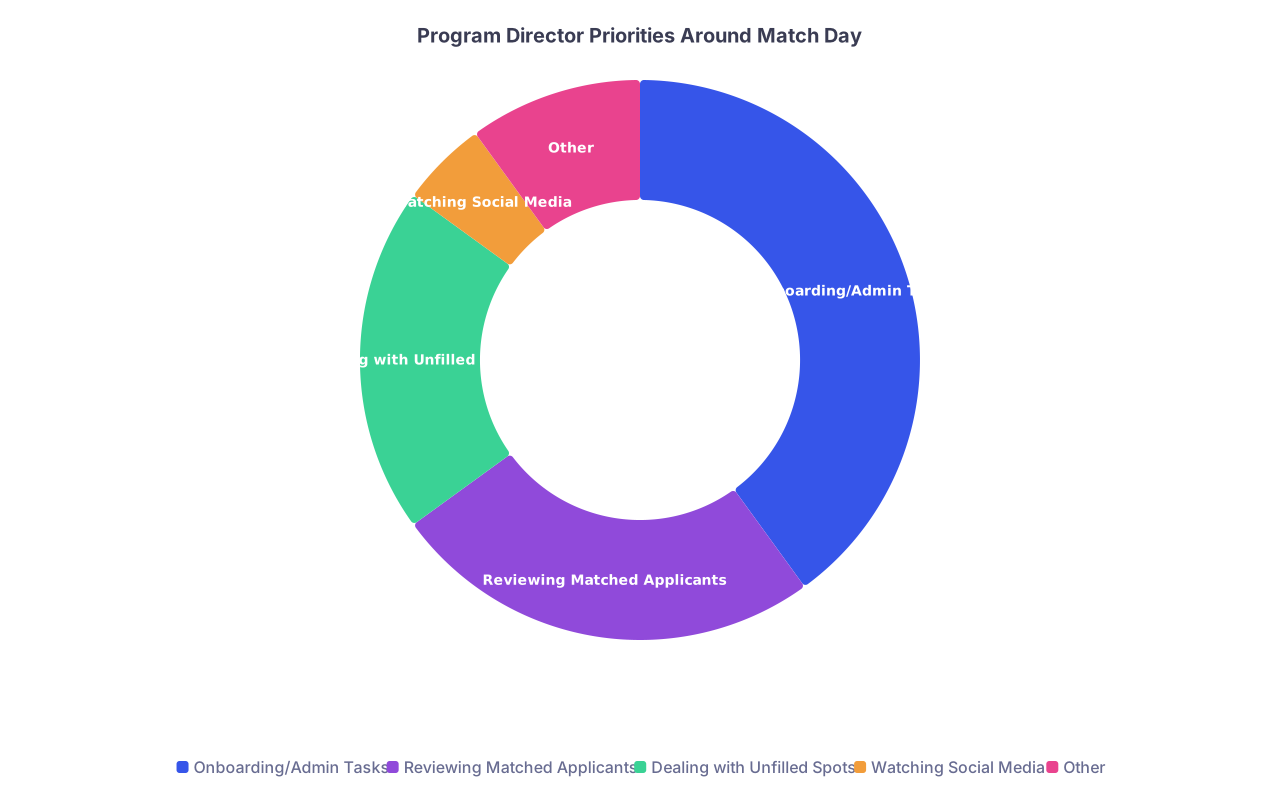
| Category | Value |
|---|---|
| Onboarding/Admin Tasks | 40 |
| Reviewing Matched Applicants | 25 |
| Dealing with Unfilled Spots | 20 |
| Watching Social Media | 5 |
| Other | 10 |
Do some PDs see reaction videos? Sure. The bigger question: do they care enough to act on them in any meaningful way?
Almost never. And when they do care, it’s not in the way Reddit tells you.
What the Surveys and Data Actually Show
No one has run a randomized trial of “screaming-on-stage” vs “quietly-reading-email” interns. But we do have adjacent data and some PD survey signals that tell a pretty clear story.
The NRMP’s “Program Director Survey” (which you should actually read instead of guessing) lists what PDs value when offering interviews and ranking applicants. You’ll see:
- USMLE/COMLEX scores
- MSPE
- Clerkship grades
- Letters of recommendation
- Personal statement
- Class ranking, AOA, etc.
- Interview performance
What you won’t see: “public Match Day reaction,” “emotional composure on TikTok,” or “degree of crying on stage.”
Not even as a write-in field.
| Factor (NRMP PD Survey) | Reported Importance | Related to Match Day Reaction? |
|---|---|---|
| USMLE Step Scores | High | No |
| MSPE / Dean’s Letter | High | No |
| Letters of Recommendation | High | No |
| Interview Performance | High | Indirect at most |
| Professionalism Concerns (flags) | High | Only if extreme & public |
| Match Day Reaction | Not listed | No formal role |
The only category your Match Day behavior could possibly intersect with is “professionalism concerns.” And that’s where people’s imaginations run wild.
So let’s separate:
- Normal emotional reactions
vs. - Actual professionalism red flags.
They are not the same. At all.
Myth #1: “If You Don’t Look Ecstatic, PDs Will Think Their Program Was Your Backup”
I’ve lost count of how many MS4s have told me this one:
“If I don’t scream and cry when I open my envelope, my PD will think I didn’t want their program and will treat me worse.”
This is nonsense for several reasons.
First, PDs already know they aren’t everybody’s #1. They live in the same match ecosystem you do. They know some residents ranked them second or third. They also know they didn’t rank everyone first.
Second, PDs have matched dozens to hundreds of residents over the years. They’ve seen the whole range: people who were over the moon, people who were quietly relieved, people who scrambled in SOAP then became star residents. Long-term performance bears almost no correlation to whether someone squealed on Match Day.
Third, most PDs never see your live reaction. Many schools do closed ceremonies. Many students open via email at home. And even where there’s a big auditorium reveal, most programs are not scrubbing through hours of grainy faculty iPhone footage to analyze your facial expression.
The only time your lack of visible excitement might register is if:
- You’re in a tiny specialty/program where everyone knows everyone,
- You do an on-stage announcement,
- You obviously look disgusted or make a disparaging comment about the program.
That last part is the line. Indifference? Fine. Mild surprise? Fine. Looking like someone just told you you’re being exiled and then saying it out loud? That’s where you might cause yourself trouble.
But that’s not about “you didn’t scream loudly enough.” That’s about basic respect.
Myth #2: “If You Cry or Lose It on Camera, PDs Will Question Your Stability”
This one’s cruel, and it preys hardest on students who are already under extra pressure: first-gen students, couples matching, people matching far from family, or into low-paying specialties with big loans.
You’re human. You may cry. A lot of people do. PDs know this.
There’s no evidence—none—that a standard emotional reaction on Match Day predicts:
- Burnout
- Unprofessional behavior
- Poor performance in residency
If anything, most PDs who’ve been around the block see intense Match Day emotion as normal. They did it themselves. They’ve watched class after class go through the wringer.
And they also understand context: tears can mean joy, relief after SOAP, grief over leaving family, or simply emotional overload after four brutal years.
Where does mental health/stability actually get formally flagged? Things like:
- Documented unprofessional conduct
- Not showing up for required rotations/exams
- Impairment affecting patient care
- Major incidents reported in the MSPE or by their own institution
Not: “They cried on Match Day while holding their parents.”
If your crying ends up on a public video that goes mildly viral in the med school world, the most likely PD response is: “Yeah, Match Day is rough.” Then they go back to trying to staff the ICU.
Myth #3: “PDs Are Actively Watching Social Media to Judge Incoming Interns”
There’s a very online belief that PDs and chiefs are out there scrutinizing Instagram, TikTok, and YouTube like some residency NSA.
Reality check: most PDs are already buried in email, GME meetings, and service coverage problems. They do not have the time or incentive to hunt your feed just to see whether you fell to your knees on Match Day.
Do some look at social media? Yes. But almost always reactively:
- Someone sends them a link saying, “Have you seen this?”
- Something truly outrageous surfaces: HIPAA violations, slurs, dangerous behavior, explicit insults about the program or patient population.
There are documented cases of residents getting disciplined or even terminated for online behavior. But look at those cases carefully—they are never about “excessive happiness” or “visible distress on a big day.” They’re about:
- Violating confidentiality
- Hate speech
- Harassment
- Clear unprofessional conduct
These are orders of magnitude different from you ugly crying on camera because your partner matched across the country.
Where Match Day Behavior Can Actually Hurt You
Now the part you probably do not want to hear: Match Day is not a free pass for anything-goes behavior. There is a narrow band of scenarios where what you do or say could follow you.
I’ve seen or heard about:
- A student, on stage, loudly saying “Oh f***, I did NOT want to go there”—naming the program—into a mic, in front of faculty who know the PD personally.
- Someone going on Instagram Live immediately afterward and ranting by name about their matched program as “garbage” and “beneath” them.
- A video of a student tearing up their envelope, throwing it, and yelling about how the match is rigged—again, with program name easily visible.
Those are not “emotional reaction” problems. That’s you broadcasting contempt for a program and/or the match system in a way that can be screen-recorded and forwarded.
Could that reach your PD? Yes.
Could it poison the relationship before day one? Absolutely.
Could a truly egregious public meltdown, with insults or bigotry, lead to serious consequences up to GME-level intervention? In extreme situations, yes.
But notice the bar here: this is way beyond “I looked shocked and cried” or “I sat quietly and looked numb on video.”
What About SOAP and Unmatched Students?
Different scenario, same logic.
SOAP week is brutal. Emotions run white-hot. If you’re unmatched or SOAPing, your reactions are less likely to be part of a public ceremony and more likely to be in private rooms, group chats, or smaller settings.
Programs participating in SOAP care about:
- Your application
- Your professionalism in communication
- How you present yourself on the phone / Zoom
They are not scanning live cam footage of your crying in a conference room. They are looking for coherent communication and reasonable behavior in a pressure cooker.
Again, the only way your SOAP emotional reaction really becomes an issue is if you:
- Start harassing programs,
- Post rage content naming institutions and people,
- Cross into abuse or bigotry online.
Psychological Reality: You Won’t Be Able to “Control” Your Reaction Anyway
Here’s the other problem with all this fear-mongering: it assumes you can calmly script your response to one of the most consequential, uncertain, and high-stress moments of your life.
You probably cannot.
I’ve watched tough-as-nails surgery-bound students sob and hug everyone. I’ve watched quiet introverts leap onto chairs. I’ve watched people open an envelope, sit down silently, and stare for 5 full minutes before any expression shows up.
None of that predicted how they did as residents. The star interns came from every reaction pattern. So did the problem residents.
You are not auditioning. You are reacting. Your limbic system is driving the bus for a few minutes. That’s normal.
Trying to perform the “perfect PD-approved reaction” is a fantastic way to make yourself miserable and look stiff and fake on top of it.
Practical, Evidence-Aligned Advice for Match Day
If we piece together everything we know—from NRMP data, PD priorities, and real-world consequences—the guidance becomes pretty simple:
You do not need to perform joy for your program. Be genuine. If you’re happy, great. If you’re overwhelmed, fine. You’re not being graded for enthusiasm.
Strong emotion is normal and safe. Crying, shaking, even being temporarily speechless—this has zero established link to PD judgment or residency performance.
The real danger zone is disrespect and public contempt. Do not insult your program (or any program) by name. Do not rant on a public platform while you’re still flooded with adrenaline. If you need to vent, do it off-camera, with people you trust.
PDs are not watching you like a reality show. If your reaction never gets clipped and sent directly to them, they will never know and will not care. And most will still not care even if they do see it, unless you attack their program.
Protect your future self from your current emotions going viral. Ask friends not to stream you live without your consent. Think twice before posting raw reaction footage to an open account. Not because PDs are hunting you—but because the internet has a long memory.
The Bottom Line: What Actually Matters
Strip away the noise and your Match Day reaction matters to PDs only in extreme, unprofessional edge cases. For 99% of people, it’s a non-factor.
The key truths:
- Match decisions are locked in before anyone sees your reaction; there is no mechanism for PDs to use that moment against you in the match itself.
- Normal emotional responses—joy, tears, shock, quiet disbelief—are not professionalism red flags and have no evidence-based link to how PDs judge you or how you’ll perform.
- The only real risk is public, disrespectful behavior that names and insults programs or crosses obvious professionalism lines—so guard against that, not against being human.