Understanding Match Day: What It Really Means for MD Graduates
For an MD graduate, residency Match Day is the most consequential milestone after graduation. It represents the culmination of the allopathic medical school match process and the gateway to your professional identity as a physician. But beyond the excitement, Match Day can also bring anxiety, uncertainty, and a lot of questions about what to do before, during, and after you open that envelope.
This guide is tailored to the MD graduate residency applicant who wants a clear, strategic, and practical roadmap to navigate Match Week, Match Day, and the immediate aftermath. You’ll learn how to:
- Understand the Match Week timeline and what happens when
- Prepare emotionally, logistically, and professionally for Match Day
- Develop contingency plans if you don’t match or partially match
- Handle common scenarios (undesired location, prelim-only match, couples match outcomes)
- Transition effectively from Match Day to starting residency
Throughout, we’ll use the NRMP (National Resident Matching Program) structure as the reference for allopathic medical school match processes in the U.S.
Match Week Timeline and Key Milestones
Understanding the match week timeline is essential for lowering anxiety and making smart decisions. You should know not just when is Match Day, but what happens on each key day and what decisions might be required.
Overview of Match Week
While dates change slightly every year, the structure remains similar:
- Monday of Match Week – “Did I match?” day
- Monday–Thursday – SOAP (Supplemental Offer and Acceptance Program)
- Friday of Match Week – Match Day
Let’s unpack each step in detail.
Monday: Match Status Notification
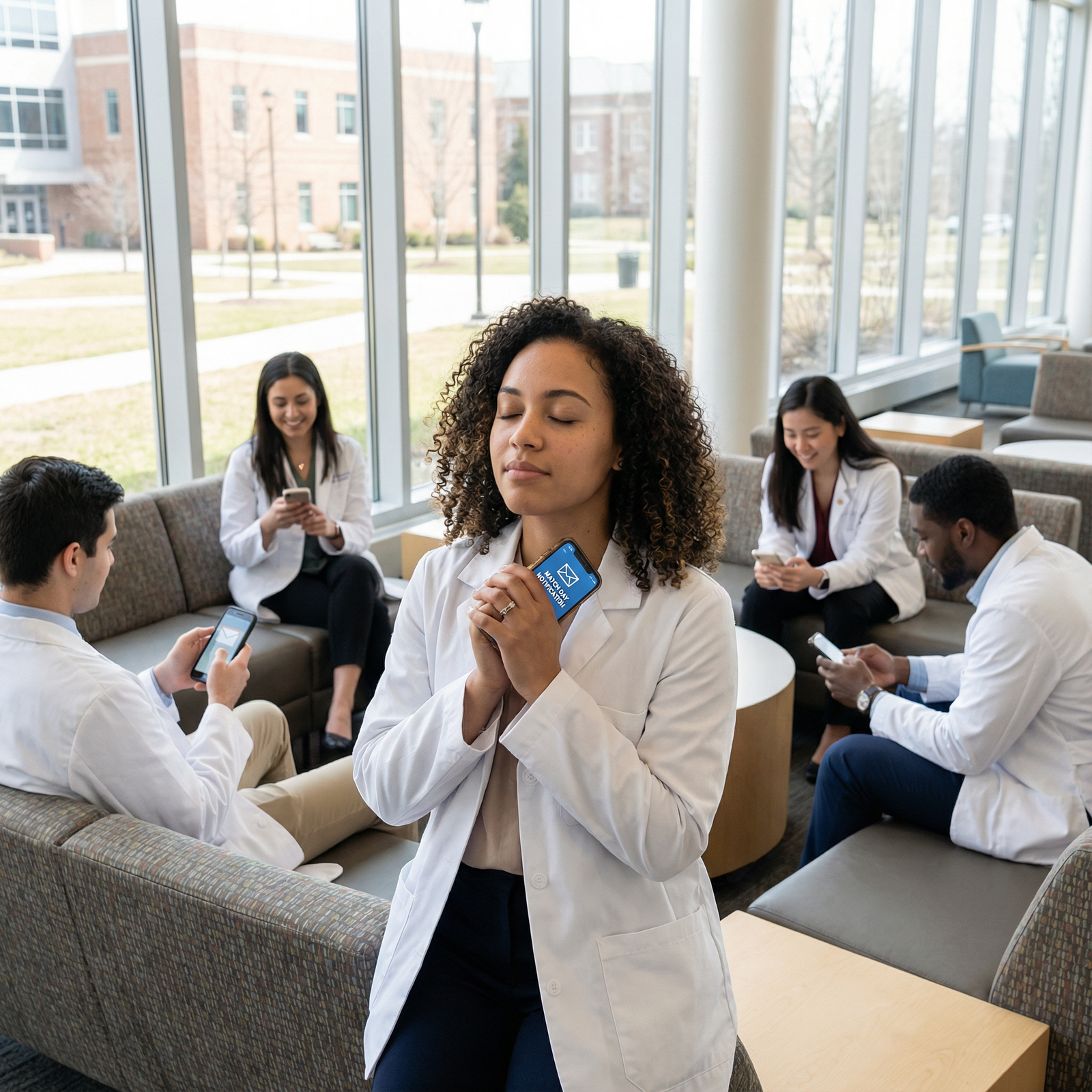
On Monday at 10:00 AM ET, the NRMP tells you if you:
- Fully matched into a categorical or advanced program (and if applicable, a prelim or transitional year)
- Partially matched (e.g., advanced position without preliminary year, or vice versa)
- Did not match
This message is sent via the NRMP R3 system and email. You do not see where you matched yet—only whether you matched somewhere.
Strategic implications:
If you matched:
- You are done making decisions; you simply wait for Match Day to see where.
- Your main task is to plan celebrations and prepare mentally/logistically for all possible locations on your rank list.
If you did not match or partially matched:
- You become eligible to participate in SOAP, beginning that same day.
- You should immediately coordinate with your Dean’s Office and, if available, a residency advising or career counseling team.
Monday–Thursday: SOAP (For Unmatched or Partially Matched Applicants)
SOAP is a structured, time-limited process where unfilled residency positions are offered to eligible unmatched applicants.
Key elements of SOAP:
- You view the List of Unfilled Programs in NRMP.
- You can apply to a limited number of programs through ERAS (the cap is set each year, historically 45).
- Programs review applications and may conduct brief, focused interviews (phone or virtual).
- Offers are extended in multiple rounds (typically four), and you have short time windows to accept or reject each offer.
Important strategy points for MD graduates:
Clarify priorities early Monday
- Identify which specialties and geographic regions you’re willing to pursue in SOAP.
- Decide whether you want to:
- Prioritize any residency spot to continue clinical training immediately, or
- Target specific fields or programs, even if it means a lower chance of matching in SOAP.
Get your documents ready
- Update your ERAS personal statement to reflect your current goals (you may need alternative versions for different specialties).
- Prepare a short, SOAP-focused email template you can customize for programs (concise, professional, and specific about why you’re interested).
Communicate with mentors early
- Ask for rapid advice on which programs to prioritize.
- Request quick, targeted support letters or emails if appropriate.
Answer your phone and monitor email constantly
- SOAP windows are short; missing a call or email can cost you an offer.
If you fully match via SOAP, your Monday status changes later in the week, and you will receive your final placement information along with everyone else by the end of Match Week.
Friday: Match Day
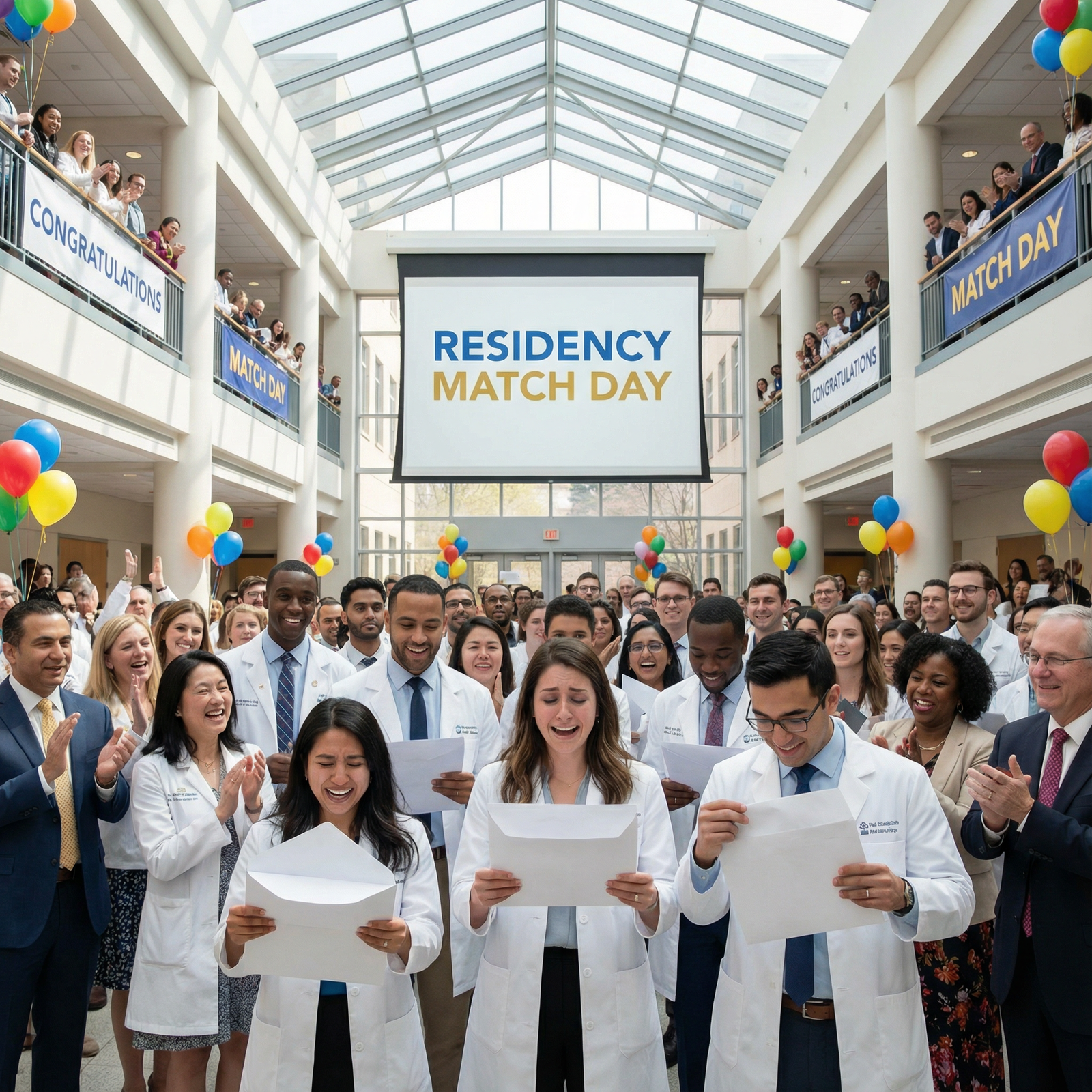
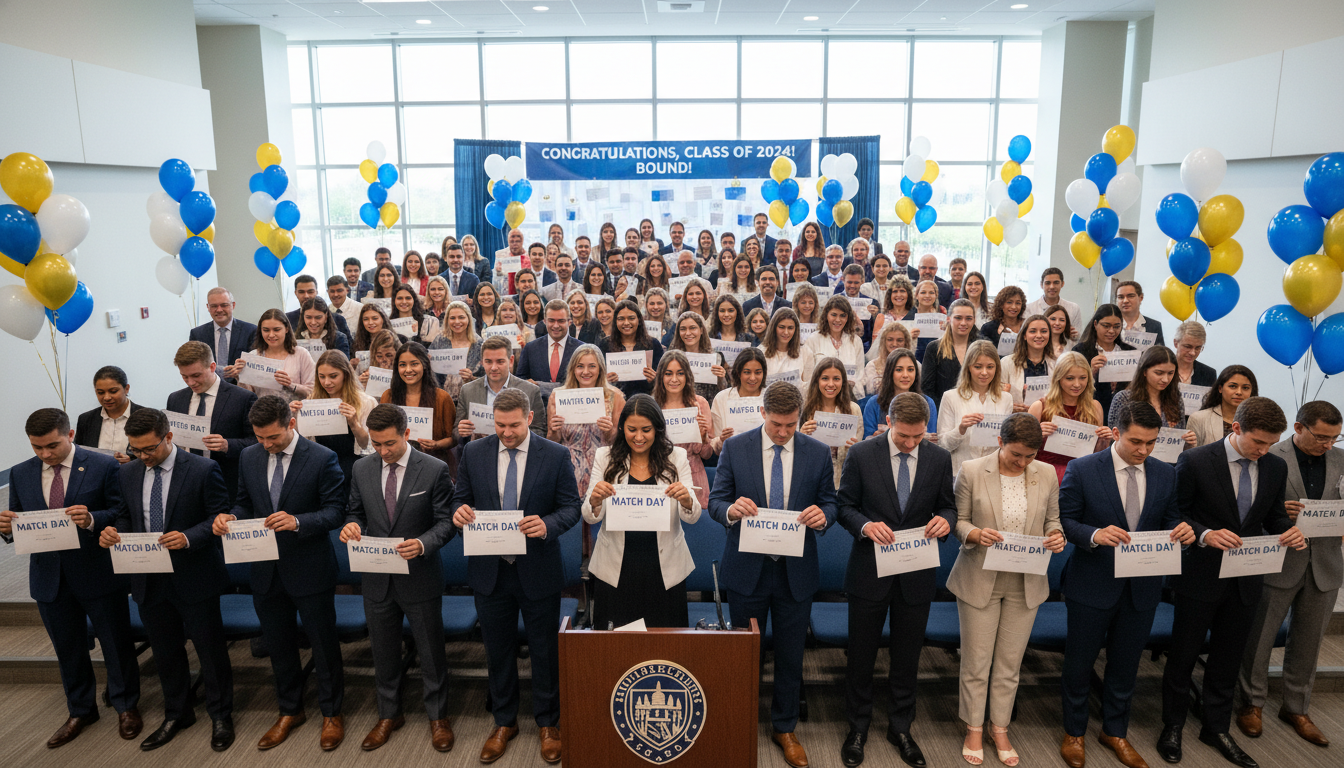
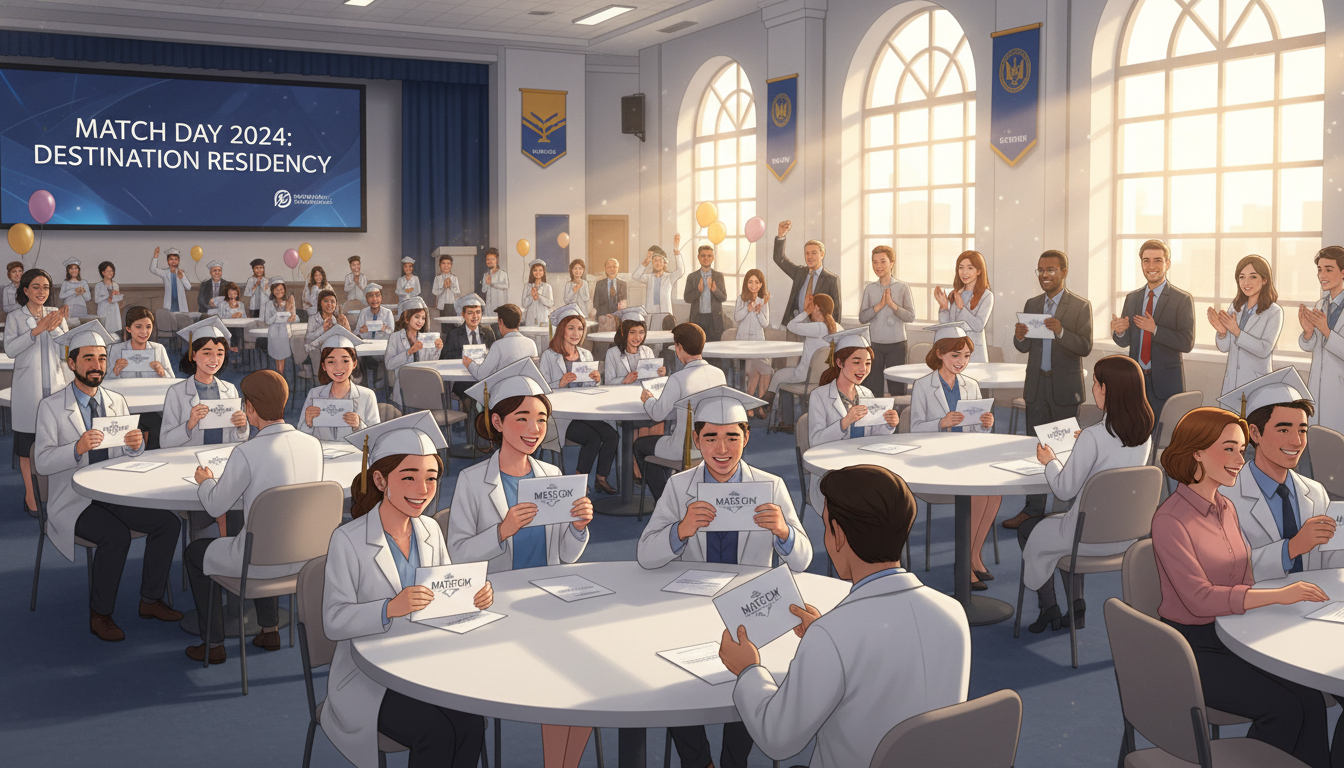
Match Day is when your outcome becomes public, and you finally learn where you matched. MD graduate residency applicants gather in auditoriums, student centers, or virtually to open their envelopes (or email, depending on your school).
What happens on Match Day:
- At a specified local time (often noon), your school will give you an envelope or you may receive your result electronically.
- You get your official NRMP result: program name, specialty, and location.
- Many schools have a ceremony where students announce their matches, take photos, and celebrate with family, friends, and faculty.
Strategic Preparation Before Match Day
Your success on Match Day is largely determined long before that Friday: by your ERAS application, interviews, and rank list. But there are specific strategies in the final weeks leading up to Match Week that can help you feel prepared and reduce stress.
1. Confirm All Logistical Details
As an MD graduate, especially if you may be relocating, do the following before Match Day:
- Check contact information in NRMP and ERAS (email, phone, mailing address).
- Confirm any institution-specific requirements (e.g., health records, background checks) if you have early onboarding communications from certain programs.
- Ensure your financial documents are accessible (for moving costs, housing applications, etc.).
Even though you don’t yet know where you’ll be, having your documents organized means you can move quickly after Match Day.
2. Prepare for All Rank-List Scenarios
Look at your own rank list and walk yourself through realistic outcomes:
- Top-choice academic program vs. community program lower on the list
- Urban vs. rural, close to family vs. far away
- High-cost-of-living city vs. more affordable region
For each scenario, consider:
- How will you handle housing?
- How will this affect your partner/family (if applicable)?
- What does your clinical and career trajectory look like in each case (fellowship plans, research opportunities, lifestyle)?
Actionable exercise:
Write a one-paragraph “silver lining” statement for 3–4 possible match outcomes that are not your top choice. This cognitive reframing makes it easier to adjust emotionally if you don’t get your dream program.
Example:
“If I match at a smaller community program in the Midwest, I’ll get high procedural volume, closer attending supervision, and earlier autonomy, which will be invaluable for my long-term goal of being a strong, independent clinician.”
3. Mental Health and Emotional Readiness
Match Day can be emotionally intense—joy, relief, disappointment, or complex mixed feelings. Normalize this ahead of time.
Practical strategies:
- Set realistic expectations. No program is perfect. A “solid fit” is a success, even if it isn’t your #1 choice.
- Identify your support system. Decide who you want with you on Match Day: parents, partner, close friends, or a smaller circle if you’re more private.
- Give yourself permission to feel. It’s okay to step aside for a few minutes if you need to process your result before celebrating or sharing.
Consider what you’ll share on social media, if anything. Decide in advance what feels comfortable.
4. Plan the Day Itself
Make Match Day more manageable by planning the details:
- Venue: Will you attend your school’s ceremony or open your results privately at home?
- Timing: Some students open their envelope immediately; others wait to open it with family. Choose what works for your mental well-being.
- Post-ceremony: Make a simple plan for later that day—lunch/dinner with loved ones, a small gathering, or a quiet evening.
If you’re in a couples match, discuss together how you want to open your results—together or individually, privately or publicly.
What to Do On Match Day: Step-by-Step Strategy
Match Day is both symbolic and practical. Beyond celebrating, there are specific steps that will set you up for a smoother transition into residency.
Step 1: Open and Process Your Result
When you open your envelope or email, take a moment to:
- Read the result carefully (program name, specialty track, city).
- Confirm whether this is a categorical, preliminary, transitional, or advanced position.
- If you couples matched, discuss your combined result with your partner.
Emotional management tips:
- If you’re thrilled: Enjoy it fully. You’ve earned this.
- If you’re disappointed: Allow yourself a private “reaction window” before public announcements. Even 10–15 minutes alone or with one trusted person can help you decompress.
Step 2: Clarify Your Training Path
Many MD graduates are unsure how to interpret combinations of results. Common scenarios:
Categorical Internal Medicine (PGY-1)
- You are set for your entire residency (e.g., 3 years). No additional matching required.
Preliminary Surgery (1 year) + Advanced Anesthesiology (PGY-2–4)
- You will complete your intern year in surgery, then start anesthesiology in PGY-2 at the matched advanced program.
Transitional Year + Advanced Specialty
- Transitional year is a rotating internship (medicine, surgery, etc.), then your advanced specialty begins afterward.
Preliminary Only (without advanced match)
- You will need to re-enter the match in a future cycle for a categorical or advanced position while completing your prelim year.
If the training structure is confusing, reach out to your Dean’s Office or a trusted mentor quickly after Match Day for clarification.
Step 3: Notify Important People
Beyond celebrating with friends and family, think about professional messaging.
People you should update (usually by the end of Match Week or shortly after):
Key mentors and letter writers
- A brief, gracious email:
“I’m excited to share that I matched into [Specialty] at [Program, City]. Thank you for your support throughout this process—I deeply appreciate your guidance.”
- A brief, gracious email:
Clinical preceptors who strongly supported you
Research mentors, especially if projects are ongoing
This not only shows professionalism and gratitude, but it also preserves relationships that will matter throughout your career.
Step 4: Begin Early Residency Planning
On Match Day and the days immediately after, start a simple “Residency Launch Checklist”:
Licensing/credentials:
- Determine when your program expects you to complete state licensure or training permits.
- Ask your program coordinator (once you receive their contact info) about deadlines.
Housing and relocation:
- Research neighborhoods, commute options, and average costs in your new city.
- Start documenting potential moving budgets and timelines.
Personal life logistics:
- Discuss plans with partners, children, or other dependents.
- Think about childcare, spousal job changes, or support networks in the new city.
You don’t need every answer on Match Day, but starting early eases the pressure later.

If You Don’t Match or Partially Match: Strategic Recovery
For some MD graduates, Match Day can be painful. Not matching or partially matching does not reflect your worth as a future physician—but it does require a clear, structured response.
Understanding “Did Not Match” vs. “Partially Matched”
Did Not Match:
- You have no residency position following the initial allopathic medical school match algorithm.
- You may still obtain a residency spot through SOAP or in a subsequent cycle.
Partially Matched:
- Example: You matched into an advanced position (e.g., radiology) without an intern year, or a preliminary year without an advanced position.
- You must use SOAP (if eligible) or future cycles to fill the missing piece.
Immediate Steps If You Don’t Match (Monday–Thursday)
Meet with your Dean’s Office or Career Advisor ASAP
- Review your ERAS application strengths and weaknesses.
- Decide which specialties and programs to target in SOAP.
Refine Your Application for SOAP
- Adapt your personal statement for SOAP targets (e.g., categorical internal medicine or prelim programs).
- Update your CV with any recent accomplishments.
- Emphasize your commitment to clinical excellence and team-based care.
Be Realistic and Flexible
- Many SOAP positions are in primary care–oriented fields and less competitive specialties.
- You may need to consider geographic areas or program types you hadn’t previously prioritized.
Use Mentors Strategically
- Ask for honest feedback and rapid strategy suggestions.
- Mentors can sometimes reach out to specific programs on your behalf.
If You Still Don’t Match After SOAP
If SOAP does not result in a position, you still have several meaningful paths:
Pursue a funded research year or fellowship
- Ideal if you’re reapplying to a competitive specialty (e.g., derm, ortho, ENT) or want to strengthen your academic profile.
Work in a clinically adjacent role
- Examples: clinical research coordinator, hospital quality improvement, telehealth triage roles (where legally permitted for MDs without full licensure).
- This keeps you close to patient care and builds new skills.
Reapply with a clear, data-driven strategy
- Discuss with advisors whether to:
- Reapply to the same specialty (with strengthened credentials),
- Pivot to a different specialty more aligned with your metrics and experiences, or
- Use a prelim year as a bridge if you can secure one later.
- Discuss with advisors whether to:
Protect your mental health
- Not matching can be a major emotional blow. Seek counseling support, peer solidarity, and trusted mentors. This is a detour, not the end of your career.
Maximizing Your Transition from Match Day to Residency
Once Match Day passes, your focus shifts from getting in to getting ready. The months between Match Day and orientation are an invaluable runway.
1. Communicate Proactively with Your New Program
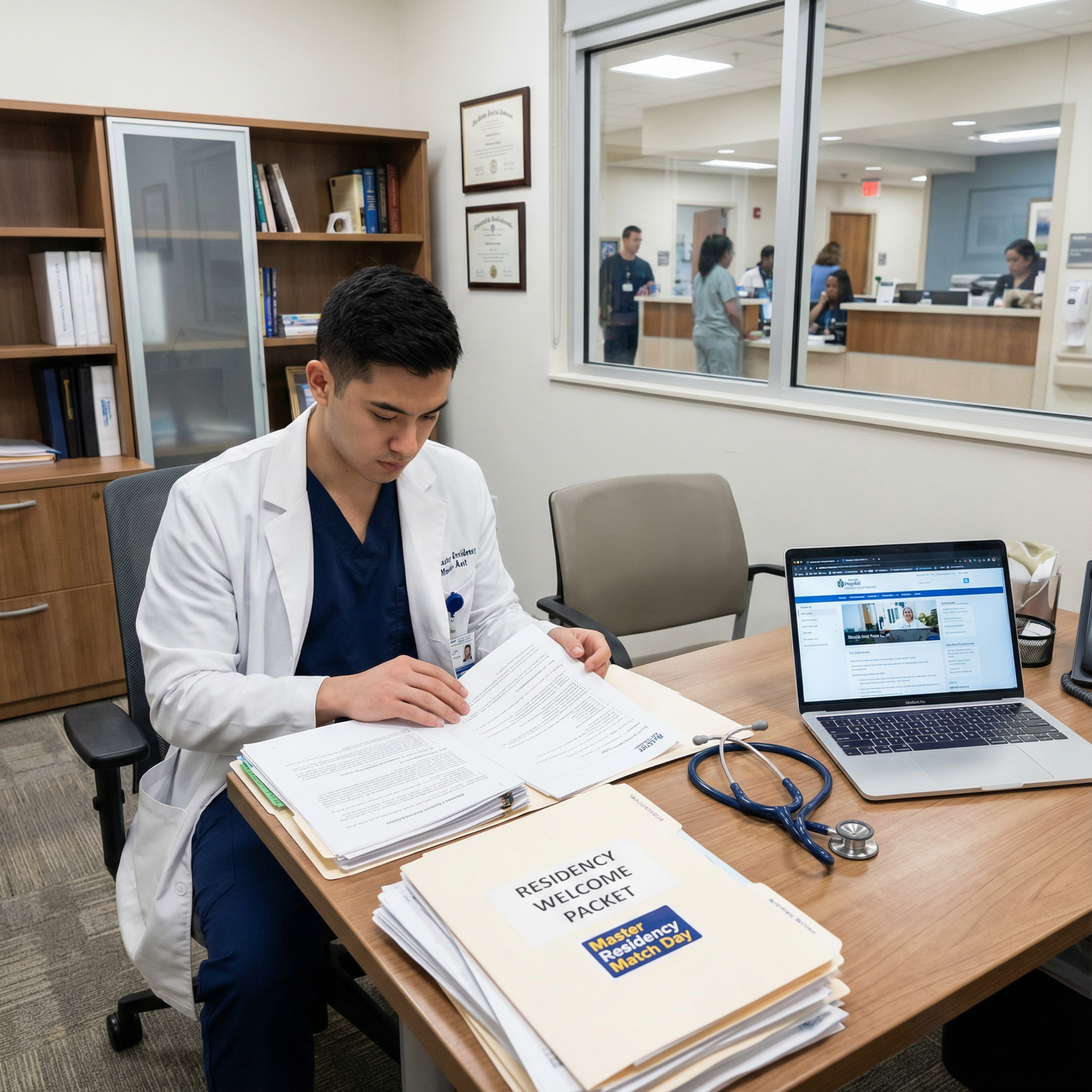
Shortly after Match Day, you’ll receive onboarding information from your program.
Key actions:
- Reply promptly and professionally to emails from the program director and coordinator.
- Provide requested documents on time:
- Immunizations and health screening
- Background check/HR paperwork
- Direct deposit and benefits forms
If you have special circumstances (visa needs, disability accommodations, pregnancy, childcare constraints), notify the program early to allow time for planning.
2. Plan Your Move with Resident Realities in Mind
Moving as an MD graduate about to start residency is not like a typical job relocation. Consider:
Commute vs. housing cost trade-offs
- Early PGY-1 call schedules make long commutes risky. Aim for reasonable proximity, even if the apartment is modest.
Support systems
- Proximity to other residents can help with call coverage swaps, emotional support, and logistics.
Lease length and flexibility
- A 12-month lease is standard, but if you’re uncertain about long-term plans (e.g., couples match reshuffle, spouse job search), explore slightly more flexible options.
3. Academic and Clinical Preparation
Use the months after Match Day to reinforce your knowledge base:
Review core material for your specialty
- For internal medicine: high-yield topics like heart failure, pneumonia, sepsis, diabetes management.
- For surgery: pre-op evaluation, post-op complications, fluid and electrolyte management.
Ask your program or senior residents for recommendations
- Essential textbooks or handbooks (e.g., Pocket Medicine, specialty-specific handbooks).
- Recommended apps (drug references, calculators, guideline resources).
Refresh essential skills
- EKG interpretation, CXR reading, ACLS algorithms.
- Common orders for admitted patients (fluids, DVT prophylaxis, pain regimens).
4. Set Professional and Personal Goals
Before the intensity of intern year begins, articulate what you want from this phase:
Professional goals
- “I want to be comfortable managing common floor calls independently by the end of PGY-1.”
- “I plan to identify at least one faculty mentor in my area of interest within the first six months.”
Personal well-being goals
- “I will protect one half-day each week for exercise or a hobby, as feasible.”
- “I will schedule regular check-ins with family or friends to maintain support networks.”
Write these down. Revisit them mid-year to recalibrate.
Frequently Asked Questions (FAQ)
1. When is Match Day, and how is it different from Match Week?
Match Day is typically the Friday of Match Week in March. It is the day you learn where you have matched and celebrate with classmates, friends, and family.
Match Week refers to the entire week-long sequence coordinated by the NRMP:
- Monday: You learn whether you matched (not where).
- Monday–Thursday: SOAP process for eligible unmatched or partially matched applicants.
- Friday: Formal Match Day announcements and celebrations.
2. I’m an MD graduate from an allopathic medical school—do I have any advantage in the match?
As a U.S. MD graduate, you typically have certain structural advantages in the allopathic medical school match, such as:
- Training and evaluations that programs understand well
- Often higher match rates compared with some other applicant groups
However, residency match outcomes still depend heavily on your Step scores, clinical performance, letters of recommendation, specialty choice, and interview performance. Being an MD graduate is helpful but not determinative; strategy and application quality still matter.
3. What if I match to a location or program that wasn’t high on my list?
This is a common scenario, even for strong applicants. Constructive next steps:
- Allow yourself to acknowledge any disappointment privately.
- Reframe: identify real strengths of the program—case volume, faculty accessibility, collegial culture, or geographic benefits.
- Reach out to current residents for honest insights; many find they grow to genuinely appreciate programs that weren’t initially top choices.
Remember that your effort, attitude, and mentorship relationships often shape your training more than the program’s name alone.
4. How soon after Match Day should I start preparing for residency?
You don’t need to overhaul your life on Match Day itself, but within 1–2 weeks, you should:
- Respond to your program with any requested documentation
- Begin housing and relocation planning
- Outline an academic review plan (core reading and skills refreshers)
Think of the period between Match Day and orientation as your launch pad—the more deliberately you use it, the smoother your transition into residency will be.
Match Day is both an ending and a beginning for every MD graduate residency applicant. By understanding the match week timeline, preparing strategically, and responding thoughtfully to your specific outcome—whether it’s your dream program or an unexpected path—you position yourself to thrive in the next phase of your medical career.