
Match Day is the emotional crescendo of your journey from osteopathic medical student to resident physician. For DO graduates, Match Day also represents validation that your training, OMM skills, and whole-person approach belong in the broader GME landscape. This guide walks you through Match Day and Match Week step-by-step—from strategy and preparation to handling outcomes and planning next steps—specifically through the lens of a DO graduate.
Understanding Match Day as a DO Graduate
What Match Day Really Represents
Match Day is the day when the National Resident Matching Program (NRMP) releases final residency placement results to applicants and programs. You learn where you will train and in what specialty—often several years of your life decided in a single moment.
For a DO graduate, Match Day is more than just a placement:
- It affirms that DO training is valued alongside MD training.
- It may cap years of navigating perceptions about osteopathic vs. allopathic backgrounds.
- It is often the culmination of strategic choices about exams (COMLEX vs USMLE), program lists, and how to frame your osteopathic identity.
Match Week vs Match Day: Know the Difference
Understanding the match week timeline will help you prepare emotionally and logistically.
Typical NRMP Match Week Timeline (for Main Residency Match):
Monday (11:00 AM ET)
- You learn if you matched (not where).
- Email + NRMP website update.
- If you didn’t match or partially matched (for some specialties), you’re eligible for SOAP (Supplemental Offer and Acceptance Program).
Monday–Thursday: SOAP (if needed)
- Monday: List of unfilled programs posted.
- Multiple SOAP offer rounds (usually Monday–Thursday).
- All communication with programs must go through ERAS/NRMP rules.
Friday: Match Day (typically at 12:00 PM local time)
- You learn where you matched.
- Your school may hold a Match Day ceremony.
- NRMP results become available online at the same time.
Key keyword connections:
- If you’re asking “when is Match Day?”—it’s typically the third Friday in March, but the exact date is posted yearly by NRMP.
- “Match Day” is the culmination of “Match Week” and the broader “osteopathic residency match” process (now part of the single accreditation system).
Pre-Match Preparation: Strategic Steps for DO Graduates
Even though Match Day feels like a single event, your experience on that day is shaped by everything you do months in advance.
1. Build a Strategic Rank Order List (ROL)
Your Rank Order List is your most powerful tool in the osteopathic residency match.
Core principles:
- Always rank in true preference order.
- The Match algorithm favors applicants; “gaming” the system usually backfires.
- Rank every program where you would be willing to train.
- If you would not go there even in a worst-case scenario, do not rank it.
- Include a mix of reach, target, and safety programs.
- Especially important for a DO graduate in competitive specialties (e.g., derm, ortho, ENT).
DO-specific considerations when creating your ROL:
- DO-friendly programs:
- Programs with a track record of taking DOs (check FREIDA, program websites, current residents’ bios).
- Previous AOA/osteopathic positions:
- Many remain DO-welcoming under the single accreditation system.
- Recognition of COMLEX vs USMLE:
- Ensure programs either accept COMLEX alone or you meet their USMLE preferences.
Practical example – Family Medicine applicant (DO):
- 5 programs in major cities (reach)
- 8 community-based programs with strong current DO representation (target)
- 5 smaller or more rural programs known to be DO-friendly (safety)
Ranking all 18 programs in genuine order of preference increases your chances more than ranking only your top 8.
2. Understand and Track Program Signals and Preferences
Newer tools like program signaling (in some specialties) and supplemental ERAS applications can matter.
For DO graduates:
- Use signals to highlight your strongest connections where you may be less visible among large MD applicant pools.
- When possible, signal programs where:
- DO residents are already present
- You have geographic ties
- You had away rotations or meaningful contact
3. Prepare Logistically for Match Week
Long before Match Week:
- Confirm NRMP and ERAS access:
- Test your logins; update contact info.
- Plan your Monday schedule:
- Avoid high-stakes obligations during the 11:00 AM ET result time.
- Arrange travel (if needed) for Match Day ceremony:
- Book flexible travel; anticipate family wanting to attend.
Personal contingency planning:
- Think through a SOAP plan before Match Week:
- Update your CV.
- Prepare a short personal statement addendum or SOAP-specific version.
- Identify specialties and locations you would consider in SOAP (e.g., broadening from internal medicine only to include prelim-year positions or family medicine).
This front-loaded planning makes it easier to act quickly if you get a “did not match” message on Monday.

Match Week: What to Expect Day by Day
For many DO graduates, anxiety peaks not on Match Day itself, but on Monday when match status is released. Knowing the structure can reduce uncertainty.
Monday: “Did I Match?” Day
11:00 AM ET: You receive one of the following statuses from NRMP:
- “You are matched.”
- “You are partially matched” (e.g., advanced but not preliminary, depending on your track).
- “You are unmatched.”
If you matched:
- Breathe. You’re done with the process.
- You won’t know where until Match Day, but you no longer need to think about SOAP, applications, or offers.
- Resist over-analyzing what this means; you cannot change the outcome now.
If you did not match (or partially matched):
You will enter the Supplemental Offer and Acceptance Program (SOAP) process, if eligible.
For DO graduates, SOAP is an important safety net:
- Many unfilled programs are community-based or DO-friendly.
- There may be good opportunities in primary care (FM, IM, peds) and prelim-year positions.
Immediate action steps on Monday for SOAP-eligible DOs:
- Meet with your dean’s office or advisor that day.
- Review the list of unfilled programs:
- Filter for your specialty interests.
- Identify programs with DO residents or DO-friendly histories.
- Update and refine your ERAS documents:
- Tailor personal statements toward SOAP programs/specialties.
- Ensure your experiences/skills highlight adaptability and strong clinical performance.
Tuesday–Thursday: SOAP Rounds (if needed)
SOAP runs in multiple offer rounds. During this time:
- You cannot contact programs directly; all communication follows NRMP rules.
- Programs may review your SOAP application and decide whether to extend you an offer in a given round.
- You can accept, reject, or let offers expire while considering other options—within strict timelines.
Strategies for DO graduates in SOAP:
- Be flexible but intentional:
- Consider related specialties or prelim years (e.g., prelim medicine or surgery positions that keep doors open).
- Make decisions quickly:
- Offers have a time limit; discuss your priorities with mentors in advance if possible.
- Focus on long-term goals:
- A solid SOAP position can lead to a fulfilling career.
- Many physicians successfully transition from prelim or alternative paths into desired fields later.
Friday: Match Day
This is the culmination of the match week timeline:
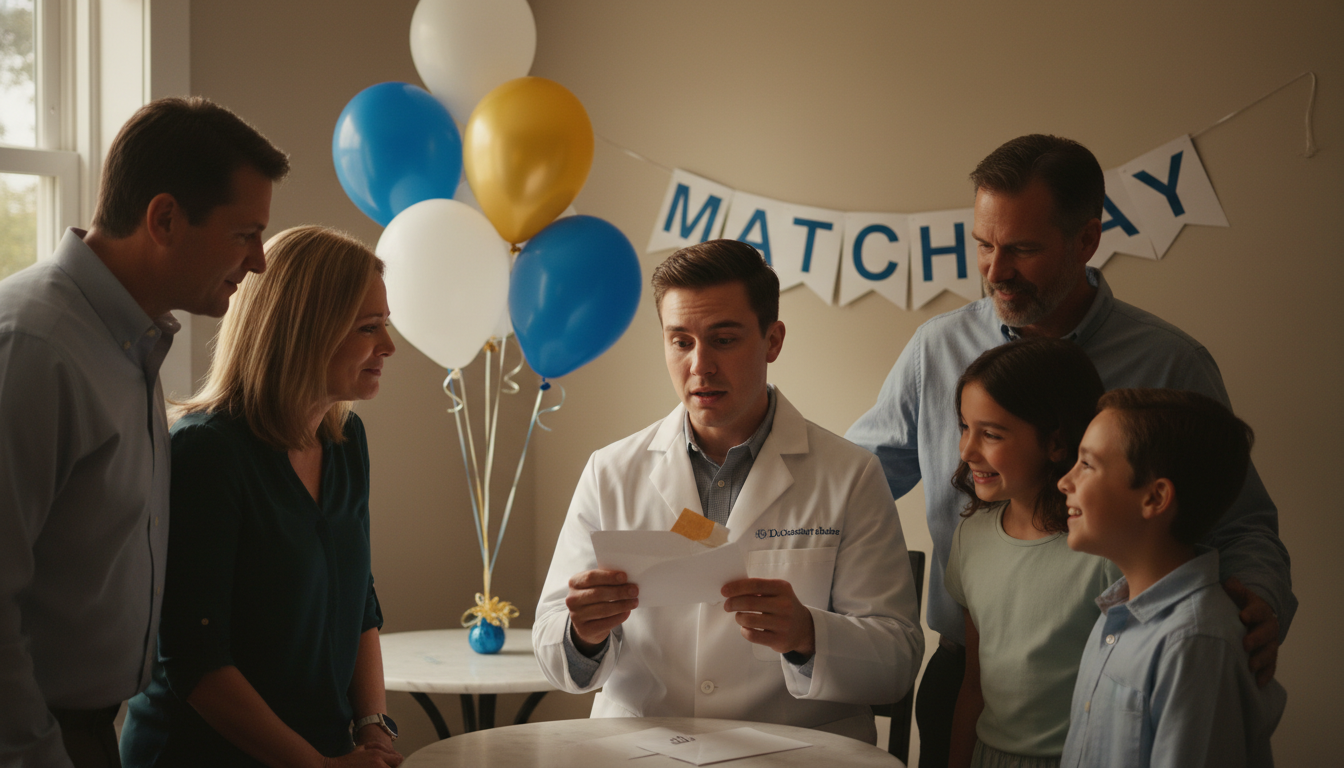
- At the scheduled time (often noon local time), envelopes are opened or online results released.
- You learn:
- The program
- Specialty and track
- Location where you’ll spend your early career years.
Emotions range from joy to disappointment, relief to shock. For DO graduates, this can also stir reflections on your path through osteopathic training and how programs perceived your background.
Match Day Strategy and Mindset for DO Graduates
1. Decide How You Want to Experience Match Day
You have options:
- Public ceremony (school event):
- Great if you enjoy shared celebrations and community support.
- May be emotionally intense if the outcome is not what you hoped.
- Private or small-group opening:
- Some DO graduates choose to step outside the ceremony or open their envelope quietly with close friends/family.
- Virtual/remote experience:
- If you’re not near campus, plan a digital celebration with loved ones.
You don’t have to do what everyone else is doing. Think about your own temperament and support needs.
2. Prepare for Emotional Variability
Match Day is inherently emotional, no matter your results. As a DO graduate, you might also feel:
- Pride in your osteopathic identity being recognized.
- Frustration if you perceive bias may have affected your options.
- Mixed feelings if you matched into your specialty but not your preferred location.
Strategies:
- Normalize complexity: It’s okay to feel joy and disappointment simultaneously.
- Limit social comparison: Social media will be full of highlight reels. Focus on your own journey.
- Plan your support team: Decide which friends, family, or faculty you want to talk with immediately after opening your envelope.
3. Make Space for Your DO Identity
You’ve trained differently—and that matters.
On Match Day, reflect on:
- How your OMM skills and holistic approach will bring value to your new program.
- How you can serve as an advocate and educator about osteopathic medicine.
- How being a DO may shape your resident identity, especially in mixed MD/DO programs.
Consider a brief private ritual:
- Journaling your goals as a DO resident.
- Writing down how you plan to integrate osteopathic principles in your training.
- Setting intentions for leadership or advocacy roles.
After the Envelope: Practical Next Steps for DO Graduates
Once the initial emotions settle, shift into action mode.
1. If You Matched: Organizing Your Transition to Residency
a. Contacting Your Program
Most programs will reach out with a welcome email and next steps, but you can:
- Send a brief, professional thank-you email:
- Express excitement and appreciation.
- Confirm you’ve received any initial onboarding materials.
- Avoid questions that are easily answered on their website or in welcome packets.
b. Licensing Exams and Paperwork
As a DO graduate, you may need to complete or plan:
- COMLEX Level 3 (and/or USMLE Step 3 if you’re on that pathway):
- Check your program’s expectations and timeline.
- State licensure planning:
- Start understanding the state’s board requirements where your program is located (some accept COMLEX only; some may expect USMLE, though this is improving).
- Credentialing documents:
- Immunization records
- Background checks
- Drug screens
- Transcripts and diplomas
c. Housing and Relocation
- Ask your program for advice on:
- Resident-preferred neighborhoods
- Typical commute times
- Cost-of-living considerations
- Connect with current DO residents if possible:
- Ask about the program’s culture and DO experience.
- Seek tips on navigating the transition as an osteopathic graduate.
2. If You Did Not Match or SOAP Did Not Result in a Position
This is one of the most challenging outcomes—and it can happen even to excellent DO graduates.
First, stabilize emotionally:
- Give yourself permission to feel disappointed, angry, or confused.
- Reach out to trusted mentors and peers, especially other DOs who have faced setbacks.
- Avoid making irreversible decisions in the first 24–48 hours.
Then, begin structured problem-solving:
Debrief with your dean’s office and advisors.
- Review your application objectively:
- COMLEX/USMLE scores
- Clerkship grades and MSPE
- Personal statement and letters
- Specialty choice competitiveness
- Identify whether DO-related factors (e.g., no USMLE scores, applying to historically less DO-friendly specialties) may have played a role.
- Review your application objectively:
Create a 12-month plan:
- Options include:
- Reapplying next cycle with a stronger application.
- Pursuing a research year (ideally in your target specialty).
- Gaining clinical experience (e.g., prelim position outside the Match, if available).
- Broadening target specialties for the next osteopathic residency match cycle.
- Options include:
Strengthen your profile as a DO graduate:
- Publish or present research or QI projects.
- Pursue additional OMM or osteopathic leadership opportunities.
- Obtain new, stronger letters from supervising physicians.
Unmatched years are painful but not career-ending. Many DOs ultimately match after a gap year with excellent outcomes.
Special Considerations for DO Graduates in the Single Accreditation Era
The era of separate AOA and ACGME matches is over, but not all residual perceptions or structures have vanished.
1. COMLEX vs USMLE on Match Day
If you took only COMLEX:
- Most programs that interviewed you already accepted COMLEX, so your Match outcome inherently validates that choice.
- For future mobility (fellowship, licensure in certain states), know current requirements but also recognize that the landscape is steadily becoming more COMLEX-inclusive.
If you took both COMLEX and USMLE:
- On Match Day, the decision is behind you. Focus on your strengths and outcome.
- In residency, you may find your dual-exam path helps when counseling future DO students.
2. Integration in MD-Dominant Programs
As a DO graduate entering a primarily MD program:
- Be proactive in affirming your competence:
- Perform strongly on rotations and call.
- Share osteopathic perspectives when relevant to patient care.
- Offer OMM as appropriate:
- Many attendings and patients are curious and appreciative.
- Coordinate with program leadership to integrate OMM responsibly.
3. Advocating for Future DO Applicants
Your Match Day is not just personal; it’s part of an ongoing story of DO integration.
You can:
- Participate in program recruitment for future DO students.
- Help your program refine how it evaluates COMLEX scores and DO transcripts.
- Encourage your institution to recognize osteopathic holidays/events and faculty.
FAQs: Match Day for DO Graduates
1. How is Match Day different for a DO graduate compared to an MD?
Mechanically, Match Day is the same: DO and MD graduates participate in the same NRMP Match, with the same match week timeline and algorithm. The differences are mostly contextual:
- DOs may have navigated decisions about COMLEX vs USMLE.
- Some specialties and programs are historically more or less DO-friendly.
- DO graduates often think strategically about where their osteopathic training is understood and valued.
However, on Match Day itself, the process, timing, and result release are identical.
2. When is Match Day, and how early should I start preparing?
“When is Match Day?”
NRMP Match Day typically falls on the third Friday in March each year, though the exact date is published well in advance on the NRMP website.
Preparation should begin:
- 6–9 months before Match Day: Through strategic application planning, exam timing, and specialty choice.
- 2–3 months before Rank List deadline: Begin structuring your Rank Order List and consulting mentors.
- 4–6 weeks before Match Week: Finalize your ROL, plan logistics, and mentally prepare for different possible outcomes.
3. If I’m a DO graduate and I only took COMLEX, will that hurt me on Match Day?
If you received interviews, that typically indicates that those specific programs accept COMLEX and are comfortable ranking DO applicants without USMLE scores. By Match Day, there’s nothing you can change about exam choices for the current cycle.
For future planning:
- Many programs are COMLEX-friendly, and the trend continues to improve.
- Some highly competitive specialties or institutions may still prefer or require USMLE; this generally affects interview invitations more than Match Day itself.
- Long-term, keep an eye on evolving state licensing and fellowship requirements, but be reassured that hundreds of DO-only-exam graduates match into strong programs every year.
4. What should I do if I’m a DO graduate and I don’t match?
If you receive an “unmatched” status on Monday of Match Week:
- Confirm if you are eligible for SOAP.
- Immediately meet with your dean’s office or advisor to:
- Review the unfilled positions.
- Update your application materials.
- Strategize which specialties and locations you’ll target.
- If SOAP does not result in a position:
- Debrief in detail with mentors.
- Develop a structured plan for the next 12 months (research, clinical work, broadened specialties).
- Strengthen your profile as a DO applicant for the next osteopathic residency match cycle.
Unmatched status is deeply distressing but not definitive for your career. With targeted planning and support, many DO graduates successfully match on a subsequent attempt.
Navigating Match Day as a DO graduate is both an emotional milestone and a strategic transition point. By understanding the Match Week structure, planning for different outcomes, and embracing your osteopathic identity, you can step into residency with clarity, confidence, and purpose—no matter what your envelope holds.