
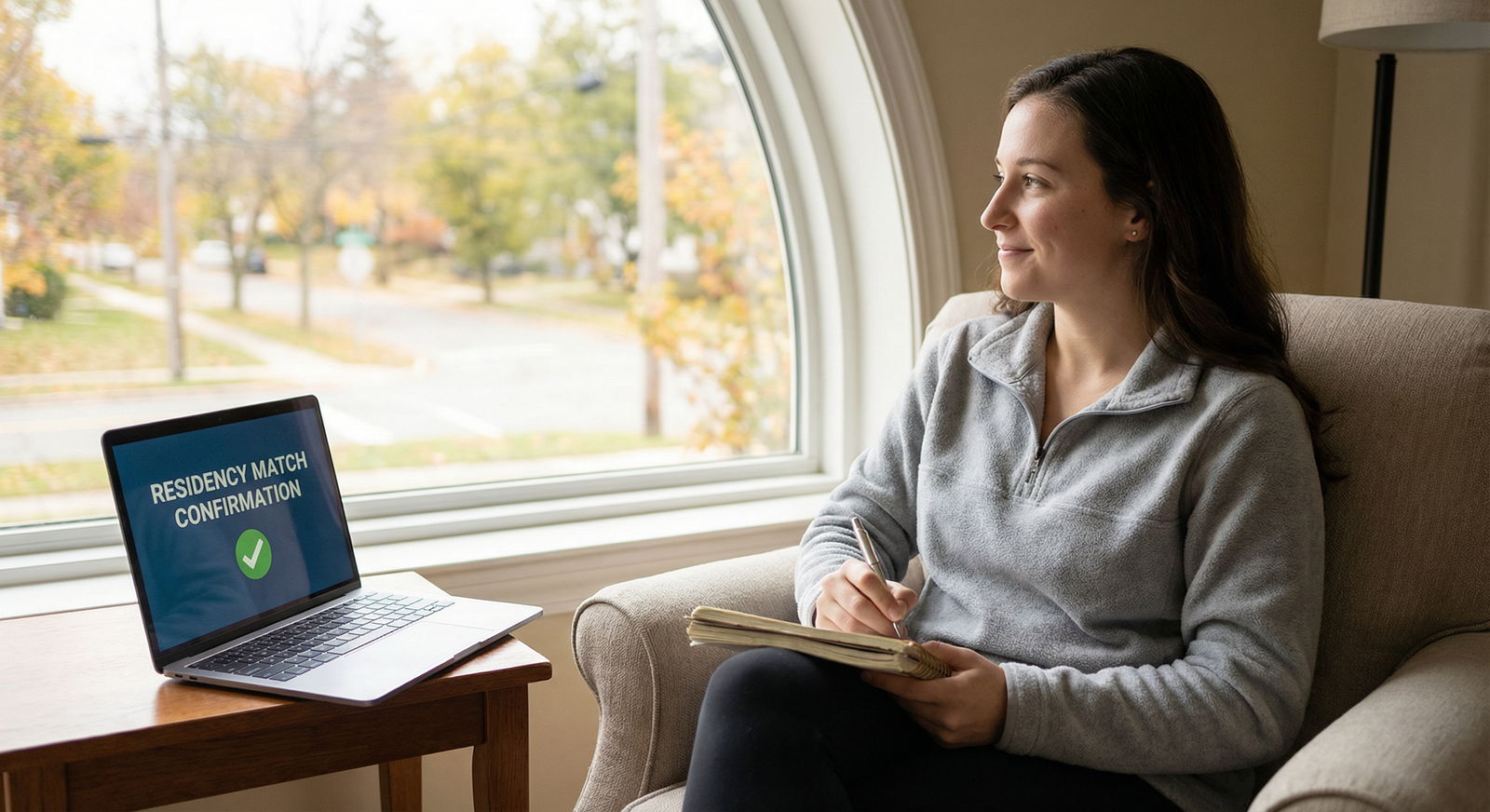
The residency Match does not care about your city preferences. You found that out the hard way. Now you have a contract in a city you did not rank first—and the clock is already ticking.
You can waste a week sulking. Or you can treat this like an emergency logistics operation and get ahead of 90% of your co-interns.
This is the logistics checklist you should have had in your email the second you saw “Congratulations, you have matched…” in the wrong ZIP code.
1. First 24–48 Hours: Stabilize And Get Key Facts
Your emotions will pull you toward catastrophizing. Your job: pull back to facts and timelines.
A. Lock down the essentials from your program
Within 24–48 hours, you should have:
- Program coordinator contact info (phone + email)
- GME office contact
- PGY-1 start date and orientation start date
- Required onboarding items and deadlines
- Visa / licensing / credentialing requirements (if relevant)
Send a concise email to your coordinator:
Subject: Incoming PGY-1 – Requesting Onboarding Timeline and Housing Resources
Dear [Name],
I am an incoming PGY-1 in [Specialty]. I am organizing my move and would be grateful for any information on:
– Orientation and official start dates
– Expected onboarding/credentialing timelines
– Any hospital housing partnerships or resources for incoming interns
– Contact for current residents who may advise on neighborhoods and commutingThank you for your help,
[Name]
Do not ask vague questions like “What is the cost of living?” Ask the stuff that moves decisions.
B. Get your city and hospital on a map (literally)
Pull up:
- Google Maps / Apple Maps
- Hospital address and satellite view
- Surrounding neighborhoods within 30–40 minutes (driving or transit)
You are looking for:
- Major highways or transit lines
- Where the residents actually live (you will confirm this later)
- Relative distance to airport / train station (matters for visits home)
This is not about whether you like the city yet. This is supply chain planning: where will you sleep and how will you get to work.
2. Housing: Decide, Commit, And Avoid Rookie Mistakes
Housing is where people either bleed money or cripple their sleep for a year. You cannot afford either as an intern.
, Hospital-affiliated housing](https://cdn.residencyadvisor.com/images/articles_svg/chart-common-intern-housing-choices-1348.svg "Common Intern Housing Choices")
| Category | Value |
|---|---|
| Apartment with roommates | 40 |
| Studio/1BR alone | 30 |
| [Living with partner/family](https://residencyadvisor.com/resources/residency-match-day-prep/how-to-handle-mismatched-expectations-when-your-partner-didnt-match) | 20 |
| Hospital-affiliated housing | 10 |
A. Decide your housing strategy in 10 minutes
You have three realistic options:
- Short-term landing pad first, then permanent
- Remote lease now, commit for 6–12 months
- Hospital or med school dorm–style housing (if offered)
If you did not match your top city and you do not know the area, I strongly favor:
Short-term 1–3 month landing pad → then choose a real place after you see the city
Why? Because:
- Online listings lie about neighborhood noise and safety.
- Your schedule may make a “cheap but 45-minute commute” absolutely miserable.
- You might find a resident looking for a roommate once you start orientation.
Short-term options:
- Airbnb / Furnished Finder (used by lots of traveling nurses)
- Extended-stay hotels with kitchenettes
- Sublets from graduating MS4s or outgoing residents
B. Non-negotiable housing criteria for interns
Forget aesthetics. Focus on four things:
- Commute reliability
- Aim for ≤30 minutes door to door, ≤45 max
- Ideally no complex transfers on public transit for early calls or night shifts
- Sleep quality
- Quiet building or unit that does not face a main street
- Blackout curtains possible, decent temperature control
- Safety
- Residents or program staff consider it safe to come and go at odd hours
- Well-lit streets and building entrance
- Basic support nearby
- Grocery store or supermarket within 15 minutes
- Laundry access if not in-unit
- Pharmacy reasonably close
If a place fails on any of these, do not rationalize it because the rent is $150 cheaper.
C. How to use current residents as intel
Send a short email (or ask on program’s WhatsApp/GroupMe once you are added):
“Where do most PGY-1s live, and which buildings or complexes are popular? Any areas you would strongly avoid for safety or commute reasons?”
You are not looking for Yelp-level nuance. You want:
- Top 3 “intern neighborhoods”
- Specific building names residents cluster in
- Areas they explicitly avoid
Write them down. Those become your search filters.
D. Negotiating and sanity-checking a lease remotely
Before signing a 12-month lease in a city you did not choose:
- Ask for a video walkthrough
- Have them show: windows, street view/noise, storage, and hallway/building entrance
- Check commute live
- Use Google Maps with real commute times (6–7 AM weekday, 11 PM weekday)
- Get crime snapshot
- Look at local crime map tools and ask residents if your perception matches reality
- Ask for escape valves
- Month-to-month after 6 months if rent slightly higher
- Try to avoid breaking lease penalties >2 months rent
If anything feels off, do not talk yourself into it because you are tired. Tired now is nothing compared to tired on ICU nights with a brutal commute.
3. Money: Build A Fast And Dirty Relocation Budget
This is where people get blindsided. Different cities change your numbers brutally.
| Category | Lower-Cost City | Mid-Cost City | High-Cost City |
|---|---|---|---|
| Rent | $900 | $1,400 | $2,300 |
| Utilities | $120 | $150 | $200 |
| Groceries | $300 | $350 | $450 |
| Transport | $200 | $250 | $350 |
| Misc / Other | $300 | $350 | $450 |
A. One-time relocation costs
List these explicitly:
- Travel to city for housing / move (flight, gas, hotel)
- Moving truck or shipping pods / boxes
- Furniture essentials (bed, mattress, desk, chair, blackout curtains)
- First month rent + security deposit + potential broker fee
- Licensing application fees, fingerprinting, background checks
- Professional clothing refresh (if needed) for orientation/clinic
Rough rule of thumb:
- Low to mid cost city: $2,000–$4,000 upfront
- High cost, coastal city: $4,000–$8,000 upfront (yes, really)
B. Recurring monthly budget aligned to your actual city
Call or email GME:
“What is the current PGY-1 salary and do residents get any housing, meal, or transit stipends?”
From there, rough allocation:
- 30–40% of take-home pay: rent
- 10%: utilities + internet + phone
- 15–20%: food (groceries + occasional takeout)
- 10–15%: transport (gas, parking, public transit)
- Remainder: debt payments, small emergency fund, minimal “life”
Run quick math. If your rent will be >45–50% of your take-home pay, you need roommates, cheaper area, or hospital housing. Pretending otherwise does not end well by December.
C. Ask about hidden financial supports
Programs rarely advertise all their perks clearly. Ask:
- Meal stipends or free food on call
- Parking discounts or transit passes
- Moving stipends or signing bonuses (rare, but some specialties/programs offer them)
- Discounts on local gyms or housing
I have seen residents leave $1,000+ on the table each year because “I did not know we had that.”
4. Licensure, Paperwork, and Credentialing: Start Yesterday
Administrative delays can stop you from working. Which means stop you from getting paid.

| Step | Description |
|---|---|
| Step 1 | Match Day |
| Step 2 | Program Welcome Email |
| Step 3 | Licensure and Forms Submitted |
| Step 4 | Background Check and Drug Screen |
| Step 5 | Hospital Credentialing |
| Step 6 | Orientation |
| Step 7 | Start PGY1 |
A. Build a single “onboarding folder”
Physical or digital, but consistent. Include:
- Passport or government ID
- Social Security card (if in US)
- Vaccination records and TB tests
- Step scores / COMLEX scores
- Medical school diploma or expected graduation letter
- DEA and state license applications when relevant
- Bank info for direct deposit
Scan everything as PDFs. Title clearly: Lastname_Firstname_Step2Score.pdf, etc. You will be asked for the same items multiple times on different portals. This saves hours.
B. Start state license and paperwork the week it opens
Do not wait for reminders.
Ask your coordinator:
“When do you recommend I submit state licensing materials and what typically delays approval?”
Common slow points:
- Background checks
- Fingerprinting appointments
- Verification from your medical school
- Name mismatches (passport vs diploma vs old IDs)
Treat any licensing process like Step 1: high stakes, firm deadlines, minimal tolerance for “I forgot.”
5. Transportation: Car, No Car, And What Actually Works
This is where the “not my top city” pain really hits. Maybe you matched in a driving city when you wanted subways. Or the reverse.
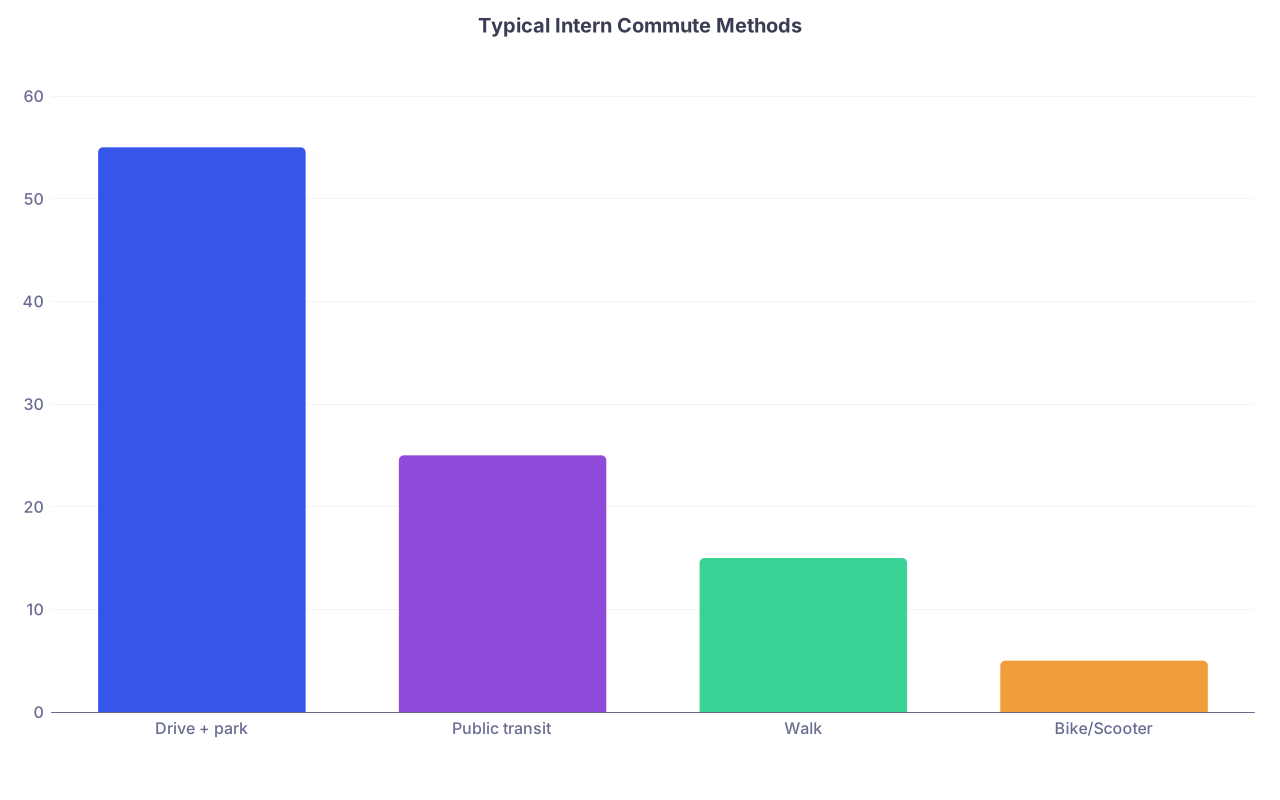
| Category | Value |
|---|---|
| Drive + park | 55 |
| Public transit | 25 |
| Walk | 15 |
| Bike/Scooter | 5 |
A. Decide: Car vs. no car
Ask three PGY-2s the following:
- “Do you recommend having a car as an intern at this program?”
- “What rotation sites are off main campus and how do you get there?”
- “Is parking a nightmare or manageable?”
If they all say “You need a car,” believe them. If half say “you can survive without, but it is tight,” ask follow-ups:
- Does call schedule line up with transit hours?
- Is Uber/Lyft late-night service reliable in this city?
- Do most residents actually go carless, or only a couple of outliers?
Then make a decision and commit. Waffling for months is worse than choosing one imperfect option and planning around it.
B. If you are driving
Checklist:
- Parking: cost, availability, safety, and distance from hospital entrance
- Insurance: adjust for new state/city
- Winter readiness: snow tires, scraper, emergency kit if relevant
- Backup: plan if car is in shop during week of nights
C. If you are not driving
Your commute must be rehearsed before Day 1:
- Walk the exact route or ride the train/bus at your typical start time
- Identify backup route if your main line shuts down
- Save numbers for local taxi services as backup to ride-share apps
You are going to be post-call, exhausted, sometimes in the rain or snow. Build redundancy now.
6. Health, Support, And Daily Life Infrastructure
New city, new job, no time. If you do not systematize daily life, it will fall apart by September.

A. Lock in basic healthcare
Before or within the first month:
- Identify a primary care provider in your new city
- Know where the nearest urgent care and 24/7 pharmacy are
- Transfer prescriptions if you use any chronic medications
The irony: residents are terrible at accessing healthcare. Do not be that stereotype.
B. Mental health and backup plans
Moving to a city you did not choose is a quiet emotional hit. It adds up.
Do this now:
- Identify mental health services covered by your insurance
- Check if the hospital has confidential counseling for residents
- Keep 2–3 telehealth options bookmarked in case local wait lists are long
You might never need them. Or you might need them in the middle of an ICU month. Preparation is the difference.
C. Survival infrastructure
Think in categories:
- Food
- 1–2 grocery stores you like
- One meal-prep workflow (Instacart + bulk cooking on one day off, for example)
- Laundry
- In-unit, in-building, or nearest laundromat with decent hours
- Supplies
- Amazon / Target / Costco strategy for bulk items
- Banking and mail
- Update mailing address with bank, credit cards, licensing boards
Do this once, write it down, and you are done. Future-you at 3 AM will thank you for not hunting for a 24-hour pharmacy from scratch.
7. Social and Emotional Adjustments: Making a “Second Choice” City Livable
You do not have to fall in love with the city. But you do need to make it livable.

A. Build a minimal support network quickly
You need three types of people:
- Resident peers – people who understand the job
- Non-medical locals – to keep your world from shrinking to the hospital
- Remote anchors – friends/family from home or med school
Concretely:
- Say yes to at least the first 2–3 group invites from co-interns, even if you are tired
- Join 1 low-effort local group: church, climbing gym, book club, running club, whatever fits
- Schedule 1 recurring remote call (every 2–4 weeks) with someone who knew you before all this
That is it. You are not building a massive social life. Just scaffolding.
B. Explore strategically, not randomly
You will not have time to “get to know the city” like a tourist. So aim smaller:
- Identify 2–3 neighborhoods that residents actually hang out in
- Find:
- One coffee shop you like
- One park or outdoor spot
- One restaurant or takeout place that is your go-to
Do that in your first 4–6 weeks. Once a place feels familiar, the whole city feels less hostile.
8. Timeline: What To Do When
You asked for a checklist; here is the high-yield version.
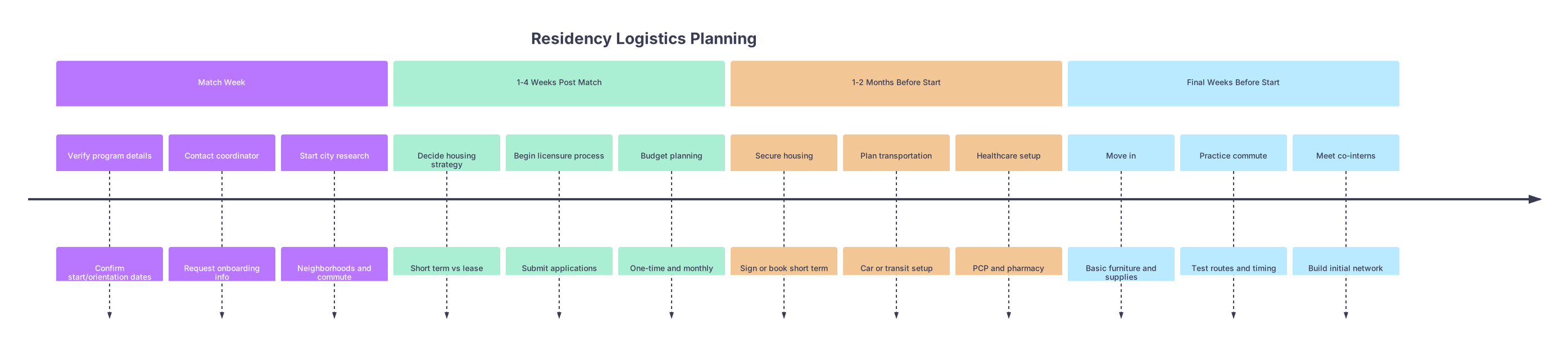
| Period | Event |
|---|---|
| Match Week - Verify program details | Confirm start/orientation dates |
| Match Week - Contact coordinator | Request onboarding info |
| Match Week - Start city research | Neighborhoods and commute |
| 1-4 Weeks Post Match - Decide housing strategy | Short term vs lease |
| 1-4 Weeks Post Match - Begin licensure process | Submit applications |
| 1-4 Weeks Post Match - Budget planning | One-time and monthly |
| 1-2 Months Before Start - Secure housing | Sign or book short term |
| 1-2 Months Before Start - Plan transportation | Car or transit setup |
| 1-2 Months Before Start - Healthcare setup | PCP and pharmacy |
| Final Weeks Before Start - Move in | Basic furniture and supplies |
| Final Weeks Before Start - Practice commute | Test routes and timing |
| Final Weeks Before Start - Meet co-interns | Build initial network |
9. Rapid-Use Checklists
Print or screenshot these.
Housing decision checklist
- Commute ≤30–40 minutes in typical traffic
- Safe to walk in/out at odd hours by local resident standards
- Quiet enough to sleep days (ask about street noise, neighbors)
- Grocery store ≤15 minutes away
- Within your budget (rent ≤40–45% take-home)
- Lease terms understood, including penalties and move-out dates
Moving/relocation checklist
- Secure temporary or permanent housing
- Schedule move date and transportation
- Sort and pack essentials vs. non-essentials
- Arrange mail forwarding
- Update address with banks, licensing boards, and school
- Confirm utilities start date (electric, gas, internet)
Onboarding/administrative checklist
- Send coordinator requested documents
- Submit state license application
- Complete background check and drug screening
- Upload vaccination and TB documentation
- Enroll in benefits (health, dental, vision)
- Set up direct deposit

FAQ (Exactly 3 Questions)
1. I hate the city I matched in. Is it worth trying to transfer programs?
Usually not in the first year, and definitely not before you even start. Transfers are rare, politically messy, and almost always easier after you have proven yourself clinically. For now, treat this like a one-year deployment: optimize your housing, commute, and support system. If you still want out six to twelve months in, talk to a trusted faculty member about realistic options rather than daydreaming about an immediate escape.
2. Should I fly out before starting to find housing, or can I do everything remotely?
If you can afford a 1–2 day scouting trip, it reduces risk, especially in large or high-cost cities. You can see neighborhoods, test the commute, and confirm that “quiet building” is not on top of a nightclub. If funds are tight, pair a short-term rental (1–3 months) with remote research, then pick longer-term housing once you know the area. What you should not do is sign a 12-month lease unseen in a city you barely know, unless multiple residents vouch strongly for that exact building.
3. How much time should I actually spend on all this during the last months of MS4?
Enough to prevent disasters, not enough to derail the rest of your life. Think 2–3 focused sessions per week for a few weeks: one for housing, one for budgeting and logistics, one for onboarding paperwork. Batch tasks. Use checklists. The goal is to step into orientation with a roof you trust, a commute you have tested, and paperwork mostly done. After that, residency itself will consume plenty of bandwidth—your logistics should run in the background, not be the main show.
Key points: Treat this like an operations problem, not a personal failure. Prioritize safe, sleep-conducive housing and a reliable commute above everything else. Get your money and paperwork handled early so you can spend July learning medicine, not fighting your logistics.


