Navigating the Unknown: Your Comprehensive Match Day Checklist
Match Day is one of the most highly anticipated—and anxiety-provoking—milestones in medical school. It represents the transition from student to resident, the culmination of years of exams and rotations, and the official launch of your residency training and career journey.
Because so much rides on a single moment, it’s easy to feel overwhelmed. Questions swirl:
What if I don’t match? What should I bring? How do I prepare emotionally? How do I support classmates who are having a tough day?
This expanded Match Day checklist is designed to guide you step-by-step—from the days leading up to Match Week through the moment you see your results and the immediate next steps afterward. The goal is simple: reduce uncertainty so you can be as prepared, grounded, and supported as possible on this life-changing day.
1. Laying the Groundwork: Preparation in the Days Before Match Day
The days leading up to Match Day and Match Week are critical. Thoughtful residency preparation and planning now will help you feel more in control later, no matter what the outcome is.
1.1 Confirm All Match Logistics and Status
Even if you’re confident everything is in order, double-checking key details can prevent last‑minute panic.
Review Your NRMP and ERAS Information
NRMP Registration
Log in to your National Resident Matching Program (NRMP) account and confirm:- Medical school information (correct institution, graduation year)
- Specialty choices and participation status
- Primary email and backup email
- Current phone number and mailing address
ERAS/Residency Application Materials (for reference)
While you can’t change submitted materials at this point, it’s useful to:- Save a local copy of your application, personal statement, and CV
- Keep a list of the programs you ranked and why
Revisit Your Rank Order List (Mentally)
You can’t change your Rank Order List (ROL) after the deadline, but taking time to revisit it in your mind can help you feel more grounded on Match Day.
Reflect on:
- Why you ranked your top programs highly (location, training quality, culture)
- Your deal-breakers and “nice-to-haves”
- How each option aligns with your long-term career goals
Talk through your list with:
- A trusted faculty mentor
- Your academic advisor or dean of student affairs
- A resident in your desired specialty who knows you and the programs
This reflection won’t alter the algorithm, but it can restore confidence that you submitted a thoughtful, values-aligned ROL.
1.2 Plan Your Communication and Content Strategy
In the age of social media, it’s worth thinking ahead about how you want to share your Match results.
Decide Who You’ll Tell and How
Inner circle: Parents, partner, siblings, closest friends
- Will you call them live as you open your results?
- Will you FaceTime or video chat?
- Do they want to be physically present?
Extended circle: Classmates, faculty, mentors
- Will you text a group chat or post in a class channel?
- Will your school host an official Match Day ceremony where results are shared publicly?
Online presence:
- Do you want to post on:
- Instagram (feed vs. stories)
- LinkedIn (more professional tone)
- X/Twitter, Facebook, or other platforms
- Do you want to:
- Share immediately?
- Wait until later in the day?
- Post at all?
- Do you want to post on:
There’s no single “right” way. Some students want a big public celebration; others prefer a quiet, private moment before sharing selectively. Choose what aligns with your personality and emotional needs.
Prepare Optional Posts or Messages in Advance
- Draft a few versions of a post:
- A short celebratory announcement: specialty + city or program
- A gratitude-focused message thanking mentors and supporters
- A more reflective post about your journey through medical school
You can adjust or discard these drafts on Match Day, but having them ready can reduce decision fatigue at a highly emotional moment.

2. Designing Your Match Day Experience
Match Day is about more than reading an email—it's a major milestone in your career journey. Being intentional about how you spend the day can shape your emotional experience and your memories of it.
2.1 Plan the Day’s Structure
Think through your Match Day hour by hour, especially the morning and early afternoon.
Morning Routine
- Sleep: Aim for at least 7 hours the night before. Avoid excessive caffeine or alcohol.
- Breakfast: Eat something with protein and complex carbs (e.g., eggs and toast, yogurt and granola, oatmeal with nuts). An empty stomach can amplify anxiety.
- Movement: A short walk, light stretching, or a quick run can help diffuse nervous energy.
- Mindset:
- Use grounding techniques: deep breathing, mindfulness apps, journaling
- Remind yourself: Match Day is one step in a long career journey, not the final verdict on your worth as a future physician.
Block Your Time
Before results are released:
- Attend any official school events or breakfasts
- Check your tech (Wi-Fi, NRMP login, email access)
- Decide what time and with whom you’ll open your results
After results are released:
- Time for emotional processing (whether ecstatic or disappointed)
- Calls with family and mentors
- School or class-wide celebrations (if desired)
- A lower-key evening activity, in case you’re emotionally drained
Having a loose schedule—not minute-by-minute, but with clear anchors—can help you feel less at the mercy of anxiety.
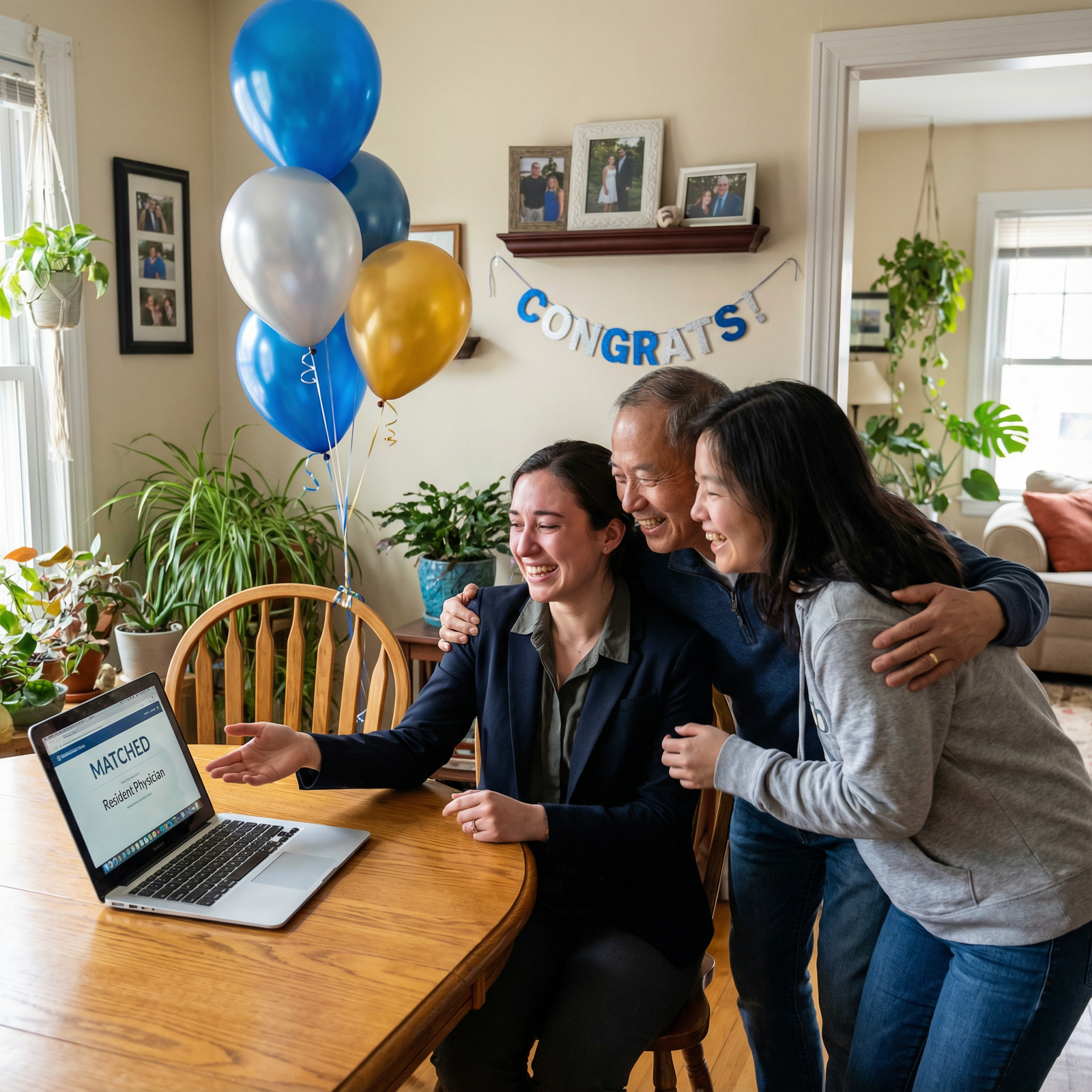
2.2 Choose Where and With Whom You’ll Open Your Results
There’s no universal best setting; what matters is what you need to feel safe, supported, and respected.
Consider These Options
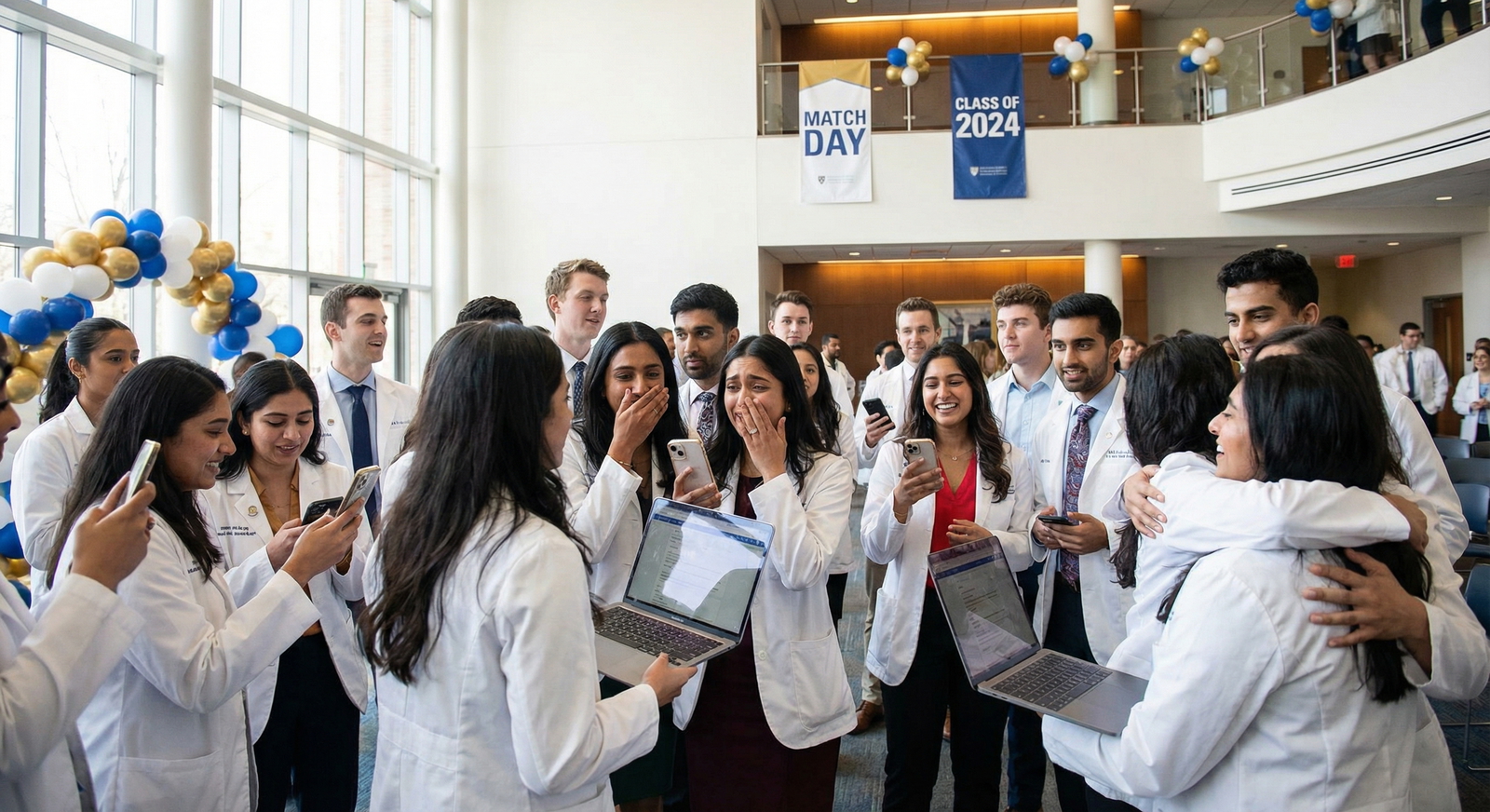
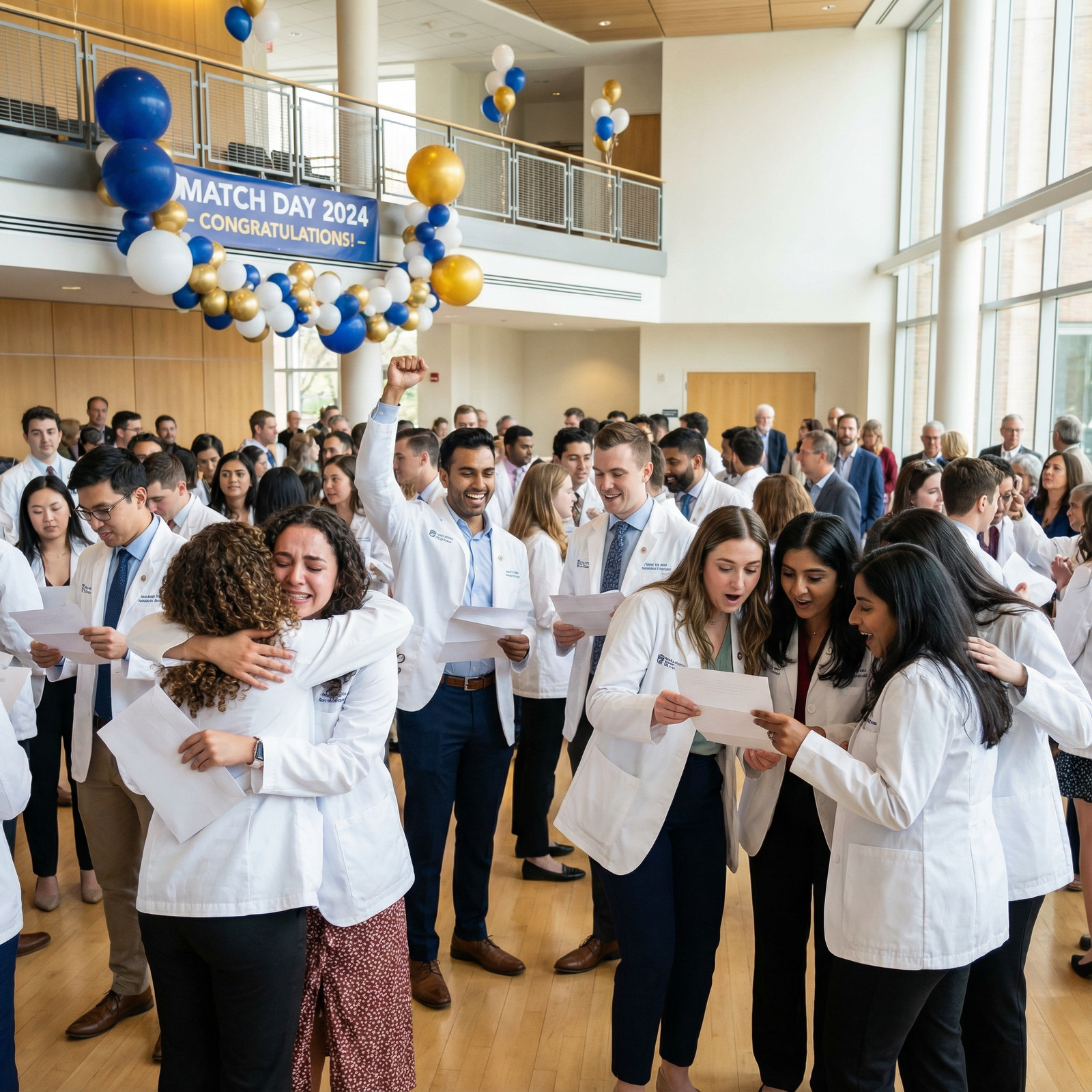
At a school ceremony or auditorium
- Pros: High energy, shared excitement, immediate connection with classmates and faculty
- Cons: Less privacy if you are disappointed or need time to process
At home or in a quiet space
- Pros: Privacy, control over who is present, quieter environment for emotional reactions
- Cons: Less of the collective celebration experience
With a small group of close friends
- Pros: Peer support, shared accomplishment, people who understand the journey
- Cons: Emotional comparison if outcomes differ widely
Create a Supportive Environment
- Add meaningful items:
- Photos from clinical rotations
- Notes or cards from mentors
- A white coat or stethoscope that symbolizes your growth
- Prepare comfort items:
- Tissues, water, snacks
- A favorite blanket or hoodie
- Noise-cancelling headphones or music playlist for downtime
2.3 Organize Your Match Day Documents and Tech
While you won’t need many physical documents, being organized reduces last-minute stress.
Have ready:
- Identification
- Driver’s license, passport, or student ID (especially if attending an official event)
- NRMP access information
- Username and password saved in a secure password manager
- Email account accessible on at least two devices (e.g., laptop and phone)
- Contact list
- Phone numbers and emails for:
- Family and partner
- Key mentors and letter writers
- Medical school dean’s office
- Student support services / mental health resources
- Phone numbers and emails for:
Ensure your phone, laptop, or tablet is fully charged, with chargers and/or a power bank nearby.
3. The Big Moment: Accessing and Processing Your Match Results
When the scheduled time arrives (typically late morning or noon local time), emotions tend to peak. A clear, calm approach can help.
3.1 Logging In and Viewing Your Results
- Sign in early: Log in to the NRMP portal or your email a few minutes before the official release time. Avoid waiting until the exact second—this can add unnecessary stress.
- Anticipate technical delays: Occasionally, systems can be slow. Try not to panic if the page is lagging; give it a few minutes and refresh calmly.
- Open your results intentionally:
- Take several slow, deep breaths
- Decide whether you want to read silently first or out loud
- Decide if you want someone else to read it to you
3.2 Emotional First Aid: Whatever the Result
Regardless of the outcome—your top choice, somewhere lower on your list, or an unexpected situation—intense emotions are normal and valid.
If You Matched at or Near Your Top Choice
- Allow yourself to fully feel joy, relief, and pride
- Take a moment to recognize:
- The years of sacrifice and persistence behind this moment
- The people who helped you along the way
- Jot down a quick reflection about how you feel; it can be meaningful to revisit later in your career.
If You Matched, But Not Where You Hoped
This scenario is more common than many students expect.
- Acknowledge your disappointment—it’s real and legitimate.
- Give yourself some private time before public posting or celebrations.
- Remind yourself:
- You did match. You are starting residency.
- Many physicians thrive in programs that were initially lower on their lists.
- Program culture, mentorship, and your own attitude will greatly influence your experience.
Talking with a trusted resident or faculty mentor in your specialty can provide helpful perspective in the coming days.
If You Did Not Match (or Partially Matched)
Not matching is deeply painful, but it is not the end of your medical career.
- Take immediate steps:
- Reach out to your dean’s office or student affairs—most schools have a structured response for unmatched students during Match Week.
- Connect with mentors who know your strengths and can advocate or advise.
- Allow yourself to grieve. Disappointment, anger, embarrassment—these are normal.
- Keep in mind: Many unmatched students go on to successful residency training through SOAP or in a future cycle.
4. After the Reveal: Celebration, Support, and Next Steps
Once the initial wave of emotion settles, the rest of the day and week is about connection, planning, and beginning your transition into residency.
4.1 Celebrating Your Achievement and Career Journey
Even if the outcome is not perfect, you’ve reached the end of medical school, a tremendous achievement.
Ways to Celebrate Thoughtfully
With family and friends
- Lunch or dinner at a favorite restaurant
- A small gathering at home or a park
- Virtual celebration with loved ones in different locations
With classmates
- Attend your school’s Match Day reception
- Group photos in white coats or specialty-themed props
- Shared storytelling about clinical memories and hopes for residency
Personally
- Take a quiet walk to reflect on how far you’ve come
- Write a letter to your “first-year medical student self”
- Treat yourself to something meaningful: a book, stethoscope upgrade, or a short trip later in the year
Expressing Gratitude
Match Day is an excellent time to acknowledge people who supported your residency preparation and medical school journey.
- Consider sending:
- Personalized emails to letter writers and mentors
- Short thank-you notes to office staff, coordinators, and educators
- A brief update and thanks on LinkedIn for professional contacts
Mention your Match result, your specialty, and how their support made a difference.
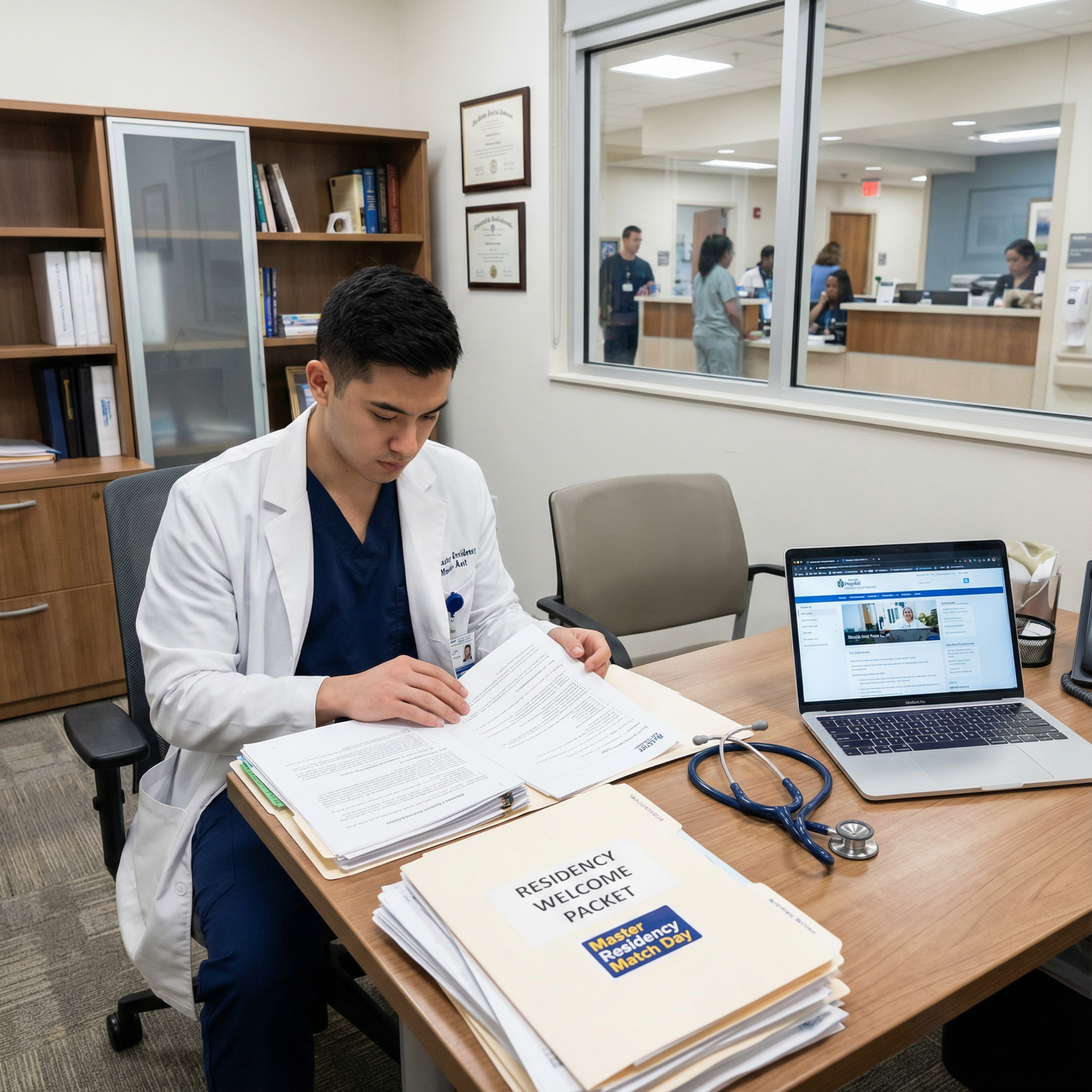
4.2 If You Matched: Early Residency Preparation
Once the celebration settles, begin preparing for your transition from medical school to intern year.
Learn About Your New Program
- Review:
- Program website and curriculum
- Call schedules and rotation structure
- Resident wellness resources and benefits
- Connect with:
- Future co-residents (group chats, social media, welcome emails)
- Chief residents or program leadership, if they reach out
Plan Your Life Logistics
- Consider:
- Housing: research neighborhoods, commute times, cost of living
- Moving: timeline, shipping vs. driving, storage if needed
- Finances: create a simple budget based on PGY-1 salary, loans, and expenses
Academic and Professional Preparation
- Identify core topics to review before residency (e.g., ACLS, common inpatient issues, basic note-writing and orders).
- Ask current residents what they wish they had reviewed before starting.
- Update your CV with your Match information and upcoming residency start date.
4.3 If You Did Not Match: Navigating SOAP and Alternative Paths
Not matching is a significant emotional and logistical challenge, but there are defined paths forward.
Understand and Engage in SOAP (if Eligible)
The Supplemental Offer and Acceptance Program (SOAP) offers unmatched students the chance to secure unfilled residency positions during Match Week.
- Work closely with:
- Your dean’s office and student affairs
- Specialty advisors and mentors
- Key steps:
- Rapidly update and tailor applications to available programs
- Prepare a succinct, honest explanation of your situation and strengths
- Be open to related specialties, preliminary positions, or different geographic regions if appropriate
If You Remain Unmatched After SOAP
You still have options to strengthen your profile and reapply:
- Clinical experiences:
- Transitional or preliminary year (if secured)
- Research positions or fellowships
- Additional clinical exposure or sub-internships
- Academic enhancement:
- Publications, quality improvement projects, or presentations
- Targeted coursework (e.g., MPH, research methods, or another advanced degree)
- Strategic planning:
- Honest discussion with advisors about specialty choice
- Consider allied specialties or different application strategies in the next cycle
Above all, stay connected to student support services and mental health resources. Navigating the unknown after an unmatched result is difficult, and you do not need to do it alone.

5. Taking Care of Yourself and Others: Emotional Wellness and Student Support
Match Day is emotionally complex not only for you, but also for your classmates, faculty, and family.
5.1 Managing Anxiety and Emotional Ups and Downs
In the lead-up to Match Day and immediately afterward, anxiety is expected—but it can be managed.
Practical Coping Strategies
- Set boundaries with social media
- Decide ahead of time how much you want to see others’ posts
- It’s okay to mute certain feeds or take a temporary break
- Use grounding techniques
- Box breathing (inhale 4 seconds, hold 4, exhale 4, hold 4)
- 5-4-3-2-1 sensory check-in (identify 5 things you see, 4 you feel, etc.)
- Lean on your support system
- Friends who are also going through Match
- Family who can provide unconditional support
- Peer support groups or student wellness initiatives
If anxiety feels overwhelming, reach out to student mental health services or your physician. This is an intense transition point, and seeking help reflects strength, not weakness.
5.2 Being a Supportive Classmate and Colleague
On Match Day, everyone’s outcomes are different. Some are ecstatic; others are devastated.
Consider these principles:
- Avoid asking, “Where did you match?” immediately. Instead, ask:
- “How are you feeling?”
- “Do you want to talk about it?”
- Be mindful of:
- Public celebrations within earshot of classmates who did not match
- Jokes or comments that might feel dismissive of someone’s disappointment
- Offer concrete help:
- A quiet place to sit together
- Walking with someone to student affairs or support services
- Checking in via text later in the day or week
The professionalism and empathy you show your peers now foreshadow the kind of colleague you’ll be as a resident.
Match Day FAQ: Common Questions and Clear Answers
1. What should I wear on Match Day?
Wear something that balances confidence, comfort, and context:
- If attending a formal school ceremony:
- Business-casual or smart attire (e.g., dress, slacks and blouse, button-down and blazer)
- Comfortable shoes—events may be long with lots of standing and photos
- If checking results at home:
- Anything that makes you feel at ease: jeans and a sweater, or even scrubs
- Photos and social media:
- If you expect many photos, choose an outfit you feel proud and comfortable in
The priority is feeling like yourself, not meeting any unspoken dress code.
2. How can I handle the anxiety leading up to Match Day?
A structured approach can help:
- Limit “what if” spirals by planning both your ideal outcome and your backup strategy, so uncertainty feels less overwhelming.
- Use routines: consistent sleep, regular meals, and short physical activity breaks.
- Talk it out: Sharing your fears with friends, mentors, or a counselor can normalize your feelings and reduce isolation.
- Focus on what you control: Your schedule, your environment on Match Day, your coping strategies—not the algorithm.
If anxiety disrupts sleep, appetite, or functioning, reach out to student mental health services or a clinician for additional support.
3. What should I do immediately if I don’t match?
If you receive news that you did not match:
- Pause and breathe—you don’t need to respond to anyone immediately.
- Contact your dean’s office or student affairs right away; they typically have a structured SOAP support process.
- Reach out to trusted mentors in your chosen specialty or related fields for rapid guidance.
- Engage fully with SOAP (if eligible), staying flexible and open-minded about programs and locations.
- Prioritize your mental health: seek emotional support and take breaks from social media as needed.
Not matching is a serious setback, but many have navigated this path successfully.
4. Should I have backup plans in place before Match Day?
Yes—thinking through backup plans can actually reduce anxiety:
- If you match but not at your top choice:
- How will you reframe and adapt to make the most of the program you join?
- If you do not match:
- Are you prepared to participate in SOAP?
- Have you discussed alternative specialties or locations with mentors?
- Are you aware of potential research positions or additional training opportunities?
A backup plan is not pessimism; it’s responsible residency preparation.
5. What happens after I receive my results on Match Day?
Your next steps depend on your outcome:
If you matched:
- Share the news with your support network.
- Communicate with your new program as they reach out.
- Begin planning housing, moving, and financial logistics.
- Enjoy any school events and ceremonies—this is a major milestone.
If you did not match:
- Engage with SOAP if eligible, guided by your school’s advising team.
- If you remain unmatched after SOAP, work with mentors to craft a strategic plan for the next year and next application cycle.
- Focus on wellness and support resources; you are not alone in this.
Conclusion: Match Day as a Milestone, Not a Final Verdict
Match Day is a defining event in medical school, but it does not define you as a physician or a person. It is one critical waypoint in a long career journey filled with growth, change, and new opportunities.
By following a thoughtful Match Day checklist—confirming your logistics, planning your environment, preparing your support system, and understanding your options—you give yourself the best chance to experience this day with clarity and resilience.
Whether you match at your dream program, land somewhere unexpected, or face the challenge of not matching this cycle, your story in medicine continues. Lean on your community, use the student support resources available, and remember: your capacity to care for others begins with how you care for yourself during moments like this.
You’ve come a long way. Match Day is not the end of your journey—it’s the beginning of the next chapter.