

It is the Sunday before Match Day. Your phone is somewhere between “fully charged” and “radioactive.”
Group chats are already spinning:
– “Do we call them right away?”
– “What if they did not match here?”
– “Do I text or call?”
You are either:
- A mentor who genuinely cares but does not want to say the wrong thing.
- A PD or APD who knows this is high‑stakes optics for your program.
- A classmate / friend who wants to be supportive without being intrusive.
And you are realizing: nobody actually taught you how to handle Match Day calls. There is etiquette. There are landmines. And there are definitely better and worse scripts.
Let me fix that for you.
We will walk through:
- What to do before Match Day so you do not make a mess.
- Exact call / text templates for:
- Mentors
- PDs / APDs / faculty
- Friends / classmates / partners / family
- What to say if:
- They matched somewhere else
- They SOAPed
- They did not match at all
- Timing rules and boundaries so you do not add stress to an already brutal week.
Step 1: Get Your House in Order Before Match Day
If you are reading this before Match Week, good. You can prevent most awkwardness by doing a few concrete things.
1. Clarify your role and your boundaries
Ask yourself bluntly: “What am I to this person on Match Day?”
- Program director / APD / key faculty
- Research mentor / advisor
- Peer / friend / roommate
- Partner / family
Your role decides:
- Whether you should call
- When you should call
- How much detail you should expect or ask for
- Whether your primary mode should be text, call, or email
If you are in a position of power (PD, APD, clerkship director, dean), you must be extra careful not to make your excitement about you or your program.
2. Decide your communication channel in advance
Rough cut:
- PDs / APDs: phone call if they matched at your program; otherwise short email or text.
- Mentors: short text first, then offer call.
- Friends: text or group chat, calls only for close friends.
- Family / partners: call or in-person. Text is backup, not primary.
3. Learn (and respect) timing norms
Use this as a baseline:
| Role | Day to Reach Out | Preferred First Contact |
|---|---|---|
| PD/APD | Match Day (Fri) | Call (if matched with you) |
| Faculty mentor | Mon or Fri | Text then offer call |
| Close friend | Mon & Fri | Text; call if invited |
| Classmate | Mon or Fri | Text only |
| Family | Mon & Fri | Call or in-person |
Remember:
- Monday 9–11 AM (ET): they find out if they matched, not where. Emotional minefield.
- Friday noon (local time): they find out where. Peak chaos.
So:
- Do not blow up their phone Monday morning asking, “Did you match???”
- Do not call during their ceremony unless you know they are not at one.
Step 2: Templates for Mentors
You are the attending, research PI, sub‑I preceptor, or advisor. They trust you. You do not want to make their day harder.
A. If they matched at your institution (or your specialty) – mentor, not PD
First contact: short celebratory text, then offer a call.
Text template:
“Huge congratulations on matching! I am very happy for you. When you have a quiet moment and if you would like to debrief or celebrate, I am glad to hop on a quick call. No rush at all today.”
If they reply and seem open:
“That is fantastic. Truly proud of you. I know today is busy and loud—if you prefer, we can schedule 15–20 minutes sometime this weekend or next week to talk about next steps and any questions you have.”
Why this works:
- Zero pressure.
- You are not asking where they matched first line.
- You show availability without demanding emotional energy.
B. If they matched, but not in your specialty / not at your institution
This is where mentors screw it up by being weirdly disappointed. Do not be that person.
Text template:
“Congratulations on matching! That is a huge milestone. I would love to hear where you are headed whenever you feel like sharing. Very proud of the work you put in this year.”
If they tell you where:
“That is a strong program and a great fit for you. They are lucky to have you. If you want to talk through transition to residency, early expectations, or just decompress, I am happy to schedule a quick call in the next week or two.”
C. If they SOAPed into something unexpected
Different ballgame. The tone shifts from celebration to grounded support.
Text (Monday after noon ET, or Tues/Wed if you know they are in SOAP):
“I am thinking of you this week. Match Week can be brutal. If you would like to talk through options or just have a safe space to vent, I am here and can make time.”
Once they tell you they SOAPed:
Call or scheduled Zoom. Script outline:
Open with validation, not spin.
“I am sorry this was such a rough week. SOAP is exhausting and frankly unfair sometimes. You got through something very hard.”
Acknowledge the mismatch without judgment.
“This is not the path you originally aimed for. That reality hurts, and it is okay to say that out loud.”
Shift to concrete next steps.
- What does this program look like?
- What are the options after year 1? (prelim to advanced, re‑apply, pivot, etc.)
- Who can advocate for them locally?
Offer a specific follow‑up.
“Let us check in again in a week, once you have had some time to breathe. I can help you map out the next 12 months so you feel less at the mercy of the process.”
D. If they did not match at all
This is the hardest scenario. Do not ghost them. And do not swoop in with empty cheerleading.
Text (Monday late afternoon / early evening):
“I heard how today went. I am really sorry you are going through this. If you have the bandwidth, I would like to talk sometime this week to help you sort through options. No pressure to respond quickly.”
On the call, your script needs four parts:
Name the pain.
“This is awful. You did not deserve to have your worth measured by this one outcome. It is okay to be angry, numb, or anything in between.”
Stabilize the logistics.
- “Who from your school is helping you right now?”
- “Do you have someone walking you through SOAP or re‑application strategy?”
- “What is your immediate financial / housing situation for the next 3–6 months?”
Frame the year concretely.
“We have to treat the next year like a structured gap year: clinical work, research, maybe an MPH or other role. The goal is to keep you close to medicine, strengthen the application, and avoid isolation.”
Set one near‑term task.
“Between now and Friday, your only job is to rest as much as you can and have a basic list of potential positions or projects you would consider. We will reconnect after the weekend and build a plan.”
Step 3: Templates for PDs / APDs / Program Faculty
You are not just calling as a person. You are calling as “the program.” Many students will remember this call more clearly than your name.
A. When a student matched into your program
This is where PDs sometimes ramble or make it about their recruitment “win.” Keep it short, human, and welcoming. Call on Match Day after the public reveal for your time zone.
Call script (≈60–90 seconds):
Immediate clear purpose.
“Hi [Name], this is Dr. [Last]. I am calling from [Program]. I wanted to personally welcome you to our residency. We are thrilled you matched with us.”
Let them react. Let them have their joy.
Pause. Let them scream, cry, whatever.Short validation.
“You were one of our top choices. We are genuinely excited to have you join the team.”
Set expectations lightly.
“I know today is very busy for you. Over the next few weeks, you will get official onboarding information from our GME office and coordinator. For today, your job is just to celebrate.”
Offer follow‑up.
“If any questions come up, feel free to email me or [Coordinator Name]. We will also schedule an incoming resident meet‑up / Q&A soon.”
Close warmly, not performatively.
“Congratulations again. Welcome to [Program]. We are looking forward to working with you.”
B. PD / APD calling applicants who matched elsewhere (optional)
You are not obligated to call, but a short email can mean a lot and costs you 90 seconds.
Email template:
Subject: Congratulations on Matching
Dear [First Name],
I wanted to congratulate you on matching into residency. While we will not have the opportunity to train with you at [Your Program], I have no doubt you will be an asset to [Matched Program] and to our field.
If you ever need a sounding board or advice as you move through training, do not hesitate to reach out.
Wishing you a rewarding residency and career,
[Name, Title]
That is it. Quick, respectful, no weirdness.
C. PD / APD when one of “your” students did not match or SOAPed unexpectedly
You may be their home PD, sub‑I PD, or someone they see as leadership.
Ground rules:
- Do not call them Monday morning asking, “Did you match?” Your school already handled notification.
- Do not call during SOAP chaos unless you are directly helping with SOAP placements.
Email / text for unmatched (send Mon evening or Tues):
“Hi [Name],
I am very sorry about how Match Day went. This is a painful outcome, and it does not define your potential as a physician.
If you would like, I am available this week to talk through options, including potential positions, re‑application strategies, and ways we can support you. Please let me know a day/time that would work for a 20–30 minute conversation.
Sincerely,
[Name]”
On the call:
- Focus on what you can realistically do.
- Do not promise spots that do not exist.
- Be explicit if you can advocate with other programs or if there are local roles (prelim slots, research, clinical instructor, etc.).
Step 4: Templates for Friends and Classmates
Friends mean well. Friends also spam group chats and ask intrusive questions.
Your job as a decent friend: be available, not demanding.
A. Monday: when they find out “Matched” vs “Did Not Match”
You do not need to be the first to text. You need to be the least annoying.
If you know they matched (they posted or told you):
“So relieved for you. Congratulations on matching. Proud of you. Let me know if you want to grab dinner or decompress later this week.”
If you do not know their status: Do not text: “Did you match??”
Better:
“Thinking of you today. No need to respond. I am here for whatever you need this week—celebration, distraction, or quiet.”
If they eventually say “I did not match”:
“I am really sorry. That is brutal and unfair. I am here for you as much or as little as you want right now—venting, food drop‑off, or just sitting in silence. Tell me what you need, or I can check back in a couple days.”
Then follow their lead.
B. Friday: the “Where did you match?” temptation
You will be very tempted to send 20 texts asking everyone. Do not.
If they publicly post or tell you first:
“[Program] is lucky to have you. That is an awesome match. When the chaos settles, I would love to hear all about it.”
If you have not heard and you are close friends:
- Wait until evening.
- Use a softer prompt.
“Thinking about you today. However it turned out, I care about you first and the match second. If you feel like sharing, I would love to hear how you are doing.”
If you are acquaintances / classmates, not close:
“Hope Match Day treated you kindly. Wishing you the best with wherever you are headed.”
No interrogation. No “Did you get your #1??”
Step 5: Scripts for Family, Partners, and Non‑Medical Friends
Non‑medical people often unintentionally say the worst things because they do not understand the process.
If that is you, here is the shortcut.
A. If they matched
Do not turn it into your bragging rights call. Focus on them.
Call script (condensed):
“I am so proud of you. I know how hard you worked for this. How are you feeling right now?”
Then let them talk. Ask:
- “Are you happy with where you are going?”
- “What are you most excited or nervous about?”
Avoid:
- “Is that a good hospital?”
- “Could you not get into [city you prefer]?”
B. If they did not match
You will want to fix it. You cannot. Your job is support, not strategy.
Call script:
“I am really sorry. I know how much this meant to you. I love you and I am here for you, no matter what happens with the match.”
Then ask:
“Do you want to talk about it right now, or would you rather just be distracted and do something else?”
Do not say:
- “Maybe it is for the best.”
- “You can always do something else with your degree.”
- “You are too smart for medicine anyway.”
Let them decide how much they want to explain. Drop the topic if they change the subject.
Step 6: Special Situations and How to Handle Them
Match Day is messy. Here are specific problem spots and how to handle them without making things worse.
1. You do not know if they matched, but you want to be supportive
Rule: never ask “Did you match?” as your first message.
Template:
“I know this week carries a lot of weight. Thinking of you and rooting for you. If you want company, distraction, or just a food delivery, say the word.”
They will volunteer their status or they will not. Both are okay.
2. You suspect they had a disappointing match (not their preferred specialty / location)
Your job is to avoid second‑guessing or pity.
Instead of:
- “Oh… that is far away.”
- “But you really wanted [specialty], right?”
Say:
“How are you feeling about it?”
Then mirror their tone. If they say:
- “It was not my first choice, but I think it will be good” → match their cautious optimism.
- “Honestly, I am struggling with it” → validate and listen.
3. Group chat behavior
If you are in a class group chat / friends chat:
- Celebrate without ranking people’s outcomes.
- Do not ask “Where did everyone match??” repeatedly.
- Do not post lists of “top programs” to compare.
A simple:
“Proud of everyone getting through this week. If you feel like sharing where you are headed, please do—we would love to cheer you on.”
lets people opt in.
Step 7: Quick Reference – Example Call and Text Playbook
Here is a consolidated view of what I would actually keep in a note on my phone the week of Match.
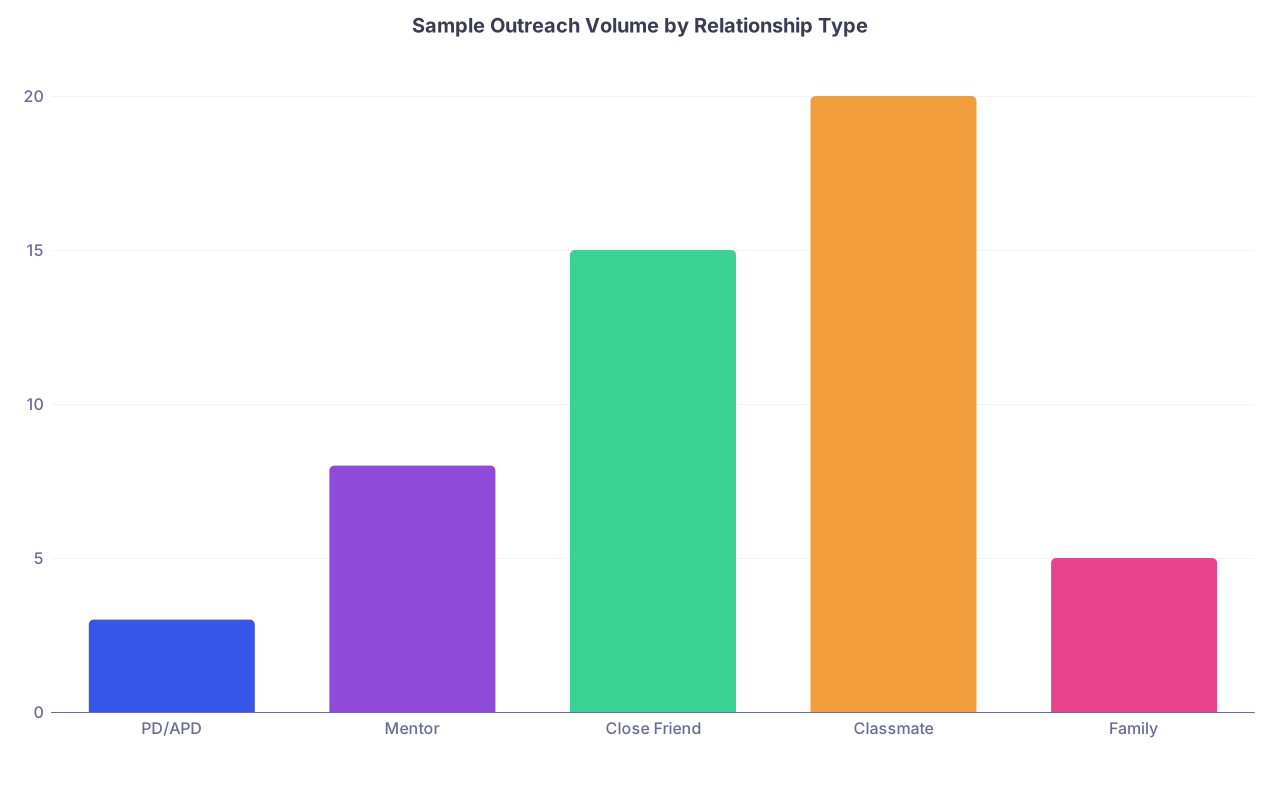
| Category | Value |
|---|---|
| PD/APD | 3 |
| Mentor | 8 |
| Close Friend | 15 |
| Classmate | 20 |
| Family | 5 |
For mentors
Matched (anywhere)
Text:“Congratulations on matching! I am very happy for you. When you have a quiet moment and if you would like to debrief or celebrate, I am glad to hop on a quick call.”
SOAP / unmatched
Text:“I am thinking of you this week. Match Week can be brutal. If you would like to talk through options or just have a safe space to vent, I am here and can make time.”
For PDs / APDs
Matched at your program – call script opener
“Hi [Name], this is Dr. [Last] from [Program]. I wanted to personally welcome you to our residency. We are thrilled you matched with us.”
Unmatched – email opener
“I am very sorry about how Match Day went. This is a painful outcome, and it does not define your potential as a physician. If you would like, I am available this week to talk through options…”
For friends / classmates
Known matched
Text:“So relieved for you. Congratulations on matching. Proud of you. Let me know if you want to grab dinner or decompress later this week.”
Status unknown, want to be kind
Text:“Thinking of you today. No need to respond. I am here for whatever you need this week—celebration, distraction, or quiet.”
Unmatched (they told you)
Text:“I am really sorry. That is brutal and unfair. I am here for you as much or as little as you want right now—venting, food, or just sitting in silence.”

Step 8: If You Are the One Getting the Calls
Quick reversal: if you are the student matching, you should control your own bandwidth.
A few practical moves:
Pre‑write a short broadcast text you can send to key people:
“Matched into [Specialty] at [Program]. Feeling very grateful and overwhelmed. Will reply more fully later—thank you for all the support.”
Set expectations with family early in the week.
“Friday will be chaotic. I might not pick up right away. I promise I will call you as soon as I can breathe.”If you did not match, consider one trusted person to run interference:
They can:
- Tell extended family “They will share details when ready.”
- Block intrusive questions.
- Help with food / errands during SOAP.

| Step | Description |
|---|---|
| Step 1 | Student |
| Step 2 | Family |
| Step 3 | Friends |
| Step 4 | Mentor |
| Step 5 | PD APD |
| Step 6 | Support Call |
| Step 7 | Text Support |
Final Thoughts: What Actually Matters
By Match Day, the applications are done. The rank lists are locked. You are not changing any outcomes with a phone call.
What you are changing:
- Whether someone feels like a number or a human being on one of the most emotionally loaded days of their life.
- Whether you add pressure and noise, or create a small pocket of safety and sanity.
- Whether you show up as the kind of colleague, mentor, and friend people remember fondly five years from now.
Keep your messages simple. Lead with care, not curiosity. Offer presence, not performance.


