
That moment hits fast. You match. Your phone lights up. You're thrilled, stunned, maybe crying a little, and then your brain jumps to logistics: Wait, what about call? What about that wedding, that medical issue, that childcare gap, that religious observance, that move across the country? Can I ask them to change my call?
Here's the mistake. Treating that request like a casual favor.
Don't.
Call schedule changes are not cute little administrative tweaks. They touch patient coverage, supervision, duty hour compliance, fairness across a resident class, and sometimes payroll or onboarding systems. One badly timed "quick question" can make you look naive at best and difficult at worst. I've seen applicants send a cheerful Match Day email that basically says, "So excited to join! Also I can't do weekends in July." That lands badly. Every time.
The myth is simple and dangerous: asking for call changes on Match Day is easy, harmless, and welcomed. It usually isn't. Not because programs are cruel. Because operations are real.
So take the protective view. On Match Day, a request about call is not a personal convenience request. It's an operational request. Different category. Different stakes. Different tone.
No. It's not "just call."
Call schedules are built around a few non-negotiable things:
- Patient care coverage
- Resident duty hour rules
- Equity among co-residents
- Attending supervision structure
- Rotation-specific staffing needs
- Backup coverage if someone gets sick or pulled
That's the reality. Your individual preference is usually the smallest piece of that puzzle.
Why do applicants get this wrong? Because they assume the goodwill of Match Day automatically creates flexibility. It doesn't. A program can be thrilled to have you and still have no ability to casually rearrange overnight call. Those are two different things.
I've seen this go sideways in very predictable ways:
- The applicant writes like the change is already expected.
- The applicant asks multiple people at once.
- The applicant follows up again two days later.
- The applicant frames the issue as "work-life balance" when what they really mean is "I don't want that call pattern."
Bad move.
Programs don't hear that as harmless honesty. They hear:
- "This person may not understand service obligations."
- "This person may create fairness problems."
- "This person may be hard to schedule."
That label sticks faster than people think.
The red-flag behaviors are painfully common:
- Demand language: "I need my call adjusted."
- Entitlement framing: "I assumed this would be accommodated."
- Repeat asking: same request to coordinator, chief, APD, and PD
- Preference disguised as necessity: "I do better when I'm not on Sunday call"
Don't make that mistake. If your request is preference-based, treat it as low priority. If it's necessity-based, prove it and use the correct process.

Myth vs Reality #2: "Match Day Is the Best Time (or Only Time) to Ask"
Usually false. Sometimes very false.
Match Day feels like the obvious moment because communication opens up. But operationally? It's often one of the worst times to push a scheduling issue. Programs are handling announcements, onboarding instructions, paperwork, communication bursts, institutional workflows, and class-wide logistics. In many places, the actual people with authority over call schedules haven't even started that build process yet.
That means your request can end up in one of three bad places:
- Ignored because it's too early
- Forwarded to the wrong person
- Remembered as a nuisance before anyone even knows you
Again, don't make this mistake.
The safer move is to find out:
- Who actually handles schedule-related requests?
- When do they accept them?
- Is there a formal process through orientation, GME, HR, disability services, a scheduling chief, or a coordinator?
Sometimes the right answer is: wait.
Not forever. Just until the program's process exists.
Here's the practical channel map.
If you ask too early or through the wrong person, you risk more than silence. You risk being quietly tagged as "difficult to schedule." Fair? Not always. Real? Absolutely.
So protect yourself:
- Ask for the process, not the outcome, if timing is unclear.
- Use the official pathway.
- Save emotional explanations for your journal, not your first scheduling email.
When It's Reasonable to Ask: The "Legitimate Basis" Checklist
Let's get blunt. Not every reason is equal.
A request is much stronger when it has a legitimate basis such as:
- Documented medical needs
- Pregnancy-related restrictions or health needs
- Disability accommodations
- Religious observance needs, if supported by policy
- Unavoidable logistical constraints with proof
- Legal or institutional compliance issues
A request is much weaker when it boils down to:
- "I prefer not to take call early"
- "I was hoping for more weekends free"
- "I want a better pattern than the rest of the class"
- "I already made personal plans"
That last one stings, but it's true. A vacation, wedding, trip, or family event may matter deeply to you. It does not automatically create a scheduling obligation for the program.
Documentation changes everything.
No documentation? Your request often reads as anecdote. With documentation, it becomes a process issue. That's the difference between "maybe" and "we need to review this properly."
Keep these rules in mind:
Stronger requests usually have:
- A clear policy basis
- Necessary supporting documentation
- A narrow, specific ask
- Flexibility where possible
- Respect for confidentiality and proper channels
Weaker requests usually have:
- Vague wording
- No proof
- Broad requests for special treatment
- Emotional pressure
- Multiple repeated follow-ups
One more caution. Sensitive personal circumstances should stay appropriately private. Do not overshare your entire medical history to a random program inbox. Share only what is necessary, and only through the correct channel. Usually that means GME, HR, employee health, disability office, or a designated program contact, not a mass email and definitely not a group thread.
How to Ask Without Triggering Red Flags (Language, Timing, and Tone)
This is where people blow it.
The safest formula is simple:
Ask + intent + flexibility
Meaning:
- What you need
- Why it's necessary
- Confirmation that you understand scheduling constraints
That formula works because it shows maturity. It says you understand this is a system, not a vending machine.
Here's the tone you want:
- Concise
- Calm
- Factual
- Policy-aware
- Collaborative
Here's the tone you do not want:
- Demanding
- Chatty and oversharing
- Passive-aggressive
- Repetitive
- Vague but urgent-sounding
Bad example:
- "I need my call moved because this won't work for me."
Better example:
- "I'm writing to ask about the appropriate process for requesting a schedule-related accommodation. I understand call assignments must meet coverage and duty hour requirements, and I'd appreciate guidance on the correct next step."
See the difference? One creates friction. The other asks for process.
If your issue is non-urgent, say so. That lowers defensiveness immediately.
If your issue is urgent and legitimate, say that too, but don't fake urgency. Programs can smell manufactured urgency a mile away.
A few protective rules:
Language safeguards
- Use "request guidance" instead of "need this changed"
- Use "accommodation" only if it truly is one
- Use "documentation is available" when appropriate
- Avoid "unfair," "impossible," or "I assumed"
Timing safeguards
- Don't send your first request in the middle of Match Day chaos unless the issue is truly time-sensitive
- If possible, wait for onboarding instructions, orientation materials, or identified scheduling contacts
- Ask once, then pause
Tone safeguards
- Acknowledge operational constraints
- Don't compare yourself to future co-residents
- Don't volunteer preferences as if they are restrictions
- Don't issue ultimatums unless you're prepared for consequences
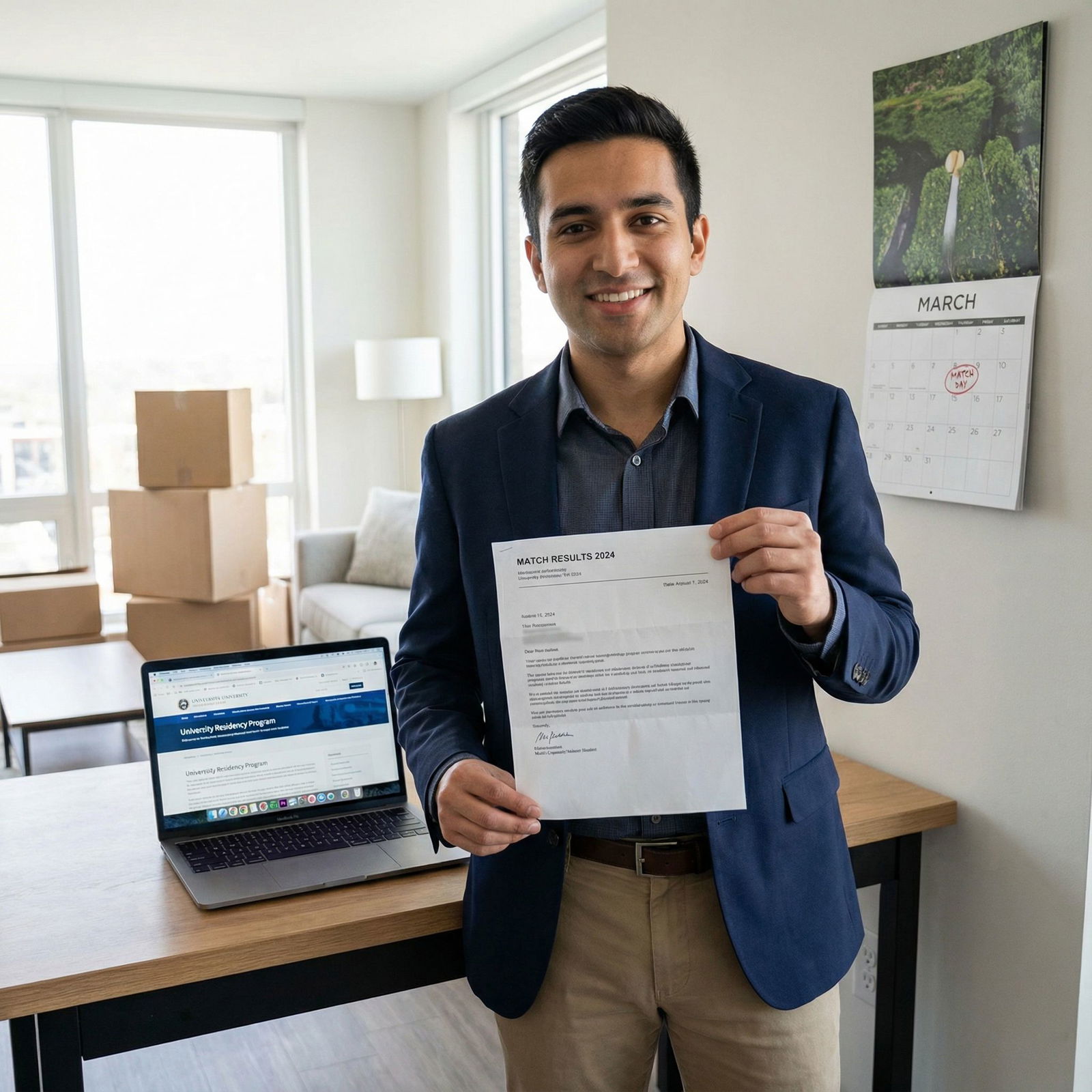
The biggest mistake I see? People asking for a preferred call pattern without showing any awareness of duty hours, fairness, or coverage needs. That reads as self-centered. Even if you don't mean it that way. Intent doesn't save you from bad optics.
Practical Action Plan: Match Day Prep That Protects Your Position
Do this instead of improvising.
1. Identify the scheduling authority now
Before you send anything, figure out who actually owns:
- Call schedule construction
- Accommodation intake
- Resident scheduling changes
This may be:
- Chief residents
- Program coordinator
- APD/PD designee
- GME office
- HR or disability office
Guessing is sloppy. Find the right lane.
2. Read the policy before you ask
Look for:
- Duty hour rules
- Call structure
- Scheduling request windows
- Accommodation procedures
- Religious or medical leave guidance
If you haven't read the policy, you are not ready to write the email.
3. Prepare documentation and a short factual summary
Keep it tight:
- What the issue is
- Why it matters
- What documentation exists
- What timing applies
Not your life story. Just the operationally relevant facts.
4. Time non-urgent requests carefully
If it's not urgent, wait for:
- Orientation
- Onboarding guidance
- Schedule request windows
- The point when actual schedule builders are active
This is one of those times where patience is strategic, not weak.
5. Be ready for "no"
Your professionalism matters most when the answer is disappointing.
If denied:
- Acknowledge the response
- Ask if there is a later review window
- Follow the default assignment unless directed otherwise
That last part matters. Programs remember who stays professional under friction.
What to Expect If They Say "No" (and How Not to Escalate Poorly)
A denial is often policy-based, not personal.
Don't turn it into a story about disrespect. That's how people make a manageable issue worse.
Here are the escalation traps to avoid:
- CC-ing leadership when no one asked you to
- Emailing multiple people separately hoping for a different answer
- Complaining to future co-residents
- Posting about it online
- Re-raising the issue every few days
- Framing the denial as retaliation or unfairness without evidence
I've watched applicants poison their own first impression this way. Not because the original request was unreasonable, but because the reaction to "no" was.
The better move:
- Ask for clarification on the process
- Ask whether future review windows exist
- Confirm what you should do in the meantime
That's it. Clean. Adult. Safe.
Sample Templates (Respectful, Policy-Based Requests)
Use these as structure, not scripts to spam.
Template 1: Non-urgent scheduling guidance request
Subject: Guidance on schedule request process
Dear [Coordinator/Chief Resident/Program Contact],
I'm excited to be joining [Program Name]. I had a question about the appropriate process for schedule-related requests for incoming interns.
I understand call assignments and scheduling need to account for service coverage, duty hour requirements, and class-wide fairness. If there is a formal process or timeline for submitting non-urgent scheduling requests, I'd be grateful if you could point me to the correct guidance.
I'm happy to follow the standard process and timing.
Thank you, [Your Name]
Why this works:
- It doesn't assume approval
- It respects operations
- It asks for process, not special treatment
Template 2: Accommodation/documented need request
Subject: Request for guidance regarding schedule-related accommodation
Dear [Designated Contact],
I'm writing to request guidance on the appropriate process for a schedule-related accommodation for my upcoming start at [Program Name].
I have a documented [medical/disability/pregnancy-related/religious observance] need that may affect certain scheduling assignments. I understand the program must balance coverage, duty hour compliance, and fairness, and I want to make sure I use the correct process and provide any necessary documentation through the appropriate channel.
Please let me know the best next step and whether there is a designated office or form I should use. I can provide documentation as needed.
Thank you for your guidance, [Your Name]
Why this works:
- It states a legitimate basis
- It doesn't overshare
- It invites the proper channel to take over
The one follow-up rule
After you submit:
- Wait a reasonable amount of time
- Send one respectful follow-up if needed
- Then stop unless new information appears or they reply
Follow-up example:
Subject: Follow-up: schedule-related request guidance
Dear [Name],
I wanted to follow up once on the message below in case it was missed. I understand this may be a busy time, and I'd appreciate any guidance on the appropriate process when available.
Thank you, [Your Name]
That's enough. More than that starts to look like pressure.
Key takeaways
Don't make this mistake: a Match Day call-change request is not a casual ask. It's an operational issue. If you have a legitimate, documented basis, use the right process, the right person, and the right timing.
And if you remember only one thing, remember this: one respectful, concise, policy-based message is safer than a demanding email, three follow-ups, and a bad first impression.
Action steps for today
- Write down whether your issue is a preference or a necessity.
- Find the likely scheduling or accommodation contact.
- Read the relevant policy before contacting anyone.
- Gather documentation if your request has a legitimate basis.
- Draft a short message asking for the process, not demanding the outcome.
- Send it once. Follow up once. Then wait like a professional.
Protect your position early. Match Day joy can survive a little patience. A bad first impression is harder to undo.