Asking for specific schedule preferences right after matching is usually the wrong move. Timing and framing matter more than you think.
You matched. You’re excited. You’ve got a life to organize, maybe a spouse, maybe childcare, maybe a lease that’s about to explode. Your instinct is to email the program coordinator that afternoon and say, “Can I avoid nights in July and start with outpatient?”
That’s how you accidentally flag yourself as “high maintenance” before you even start.
Let me be very clear:
- It is appropriate to ask about the general schedule process soon after matching.
- It is appropriate to communicate true, major constraints (spouse match, pregnancy, immigration, critical childcare).
- It is usually not appropriate to start requesting favorite rotations, ideal months off, or “lighter” blocks immediately after Match Day.
Here’s how to do this like a grown professional instead of a panicked MS4.
The Core Answer: What’s Appropriate Right After Matching?
You can safely do three things in the first 1–2 weeks after Match:
- Send a brief, professional thank-you / excited-to-join message.
- Ask when and how schedule preferences are typically collected.
- Disclose truly significant constraints that affect your ability to work specific dates (not “I’d rather not do nights,” but “I am due to deliver in October.”)
What you should not do right after matching:
- Ask to avoid specific rotations because they “seem intense.”
- Request that your vacation line up with a wedding three states away in October… before you even know how vacation is structured.
- Ask for a custom schedule because you’re “a morning person” or “not great with nights.”
Here’s a reasonable first email template:
Dear [Coordinator / PD],
I’m very excited to have matched at [Program] and am looking forward to starting in July.
I had a quick question about schedules for incoming interns: when are schedules usually created, and is there a standard process or form where we’ll be able to share any necessary constraints or preferences?
Thank you again,
[Your Name]
That’s it. No demands. No shopping list of requests. You’re asking about the process, not the outcome.
Why Programs Don’t Love Early Specific Requests
Programs are juggling a lot behind the curtain: ACGME rules, coverage needs, senior vs intern ratios, vacations, sick leave, maternity/paternity leave, night float coverage, clinic continuity. Schedules are a massive puzzle.

On top of that, coordinators see patterns every year:
- The “can I start on something light?” intern
- The “I really don’t want nights or ICU early on” intern
- The “I need vacation for three trips plus three weddings” intern
Those residents are remembered, and not in a good way.
Here’s the blunt truth:
- The baseline expectation is that you can work any rotation, any month, unless you’ve communicated a legitimate, concrete constraint.
- Early, detailed schedule requests can look like you think your preferences outrank team needs.
- Programs are much more receptive if you wait until they ask for preferences or open a formal process.
So, asking, “When will we hear about schedules, and is there a way to submit constraints?” is smart.
Sending a ranked list of your ideal rotation order is not.
What’s Reasonable to Bring Up Early vs Later
Let’s separate what you can responsibly raise right after Match from what should wait.
| Topic / Request Type | Right After Match? | Better to Wait? |
|---|---|---|
| General schedule timeline/process | Yes | - |
| Major life events (pregnancy, surgery) | Yes | - |
| Spouse/partner in same hospital/city | Yes | - |
| Legal/visa-related constraints | Yes | - |
| Childcare needs (in general terms) | Yes (briefly) | - |
| Vacation month preferences | No | Yes |
| “Lighter” rotations first | No | Sometimes |
| Specific rotation order (“ICU in spring”) | No | Maybe if asked |
Appropriate early disclosures
These are fair to share once you know who the point person is (usually the program coordinator, sometimes PD or APD):
- Known pregnancy with approximate due date
- Scheduled major surgery or medical treatment
- Spouse or partner also matching / starting in same hospital system
- Immigration/visa timing that might affect your start date
- Very high-stakes childcare reality (single parent of infant without local support, etc.)
Key: you’re not asking for a “nice to have.” You’re communicating something that could cause patient care or coverage issues if not planned for.
Example email line:
I also wanted to mention one scheduling consideration: my due date is in mid-September, and my OB has advised I’ll likely need 4–6 weeks off around that time. I’m very happy to follow the program’s standard parental leave process and can provide documentation as needed. I just wanted to make sure you’re aware as schedules are being built.
That’s appropriate. Respectful. Helpful, even.
Things that should usually wait
These are better saved for when the program explicitly asks for preferences or opens a survey:
- Vacation month preferences
- Requesting certain rotations earlier or later for fellowship goals
- Trying to batch outpatient blocks for exam studying
- Requesting days off for weddings, conferences, etc.
Most programs will send you:
- A schedule preference form or survey
- A vacation request system/timeline
- A block structure overview
Answer those honestly, clearly, and once. Do not send five follow-up “one more ask” emails.
How Programs Actually Build Schedules (So You Don’t Fight Reality)
If you understand what they’re doing behind the scenes, your asks become smarter and less annoying.
Most residency schedules are built around:
- Fixed block structure (usually 4-week blocks)
- Required coverage slots (ICU, wards, ED, nights, clinic)
- Required number of weeks per rotation type per year
Then they overlay:
- PGY level (intern vs senior)
- Vacations (spaced out so services are covered)
- Leaves of absence (parental, medical, etc.)
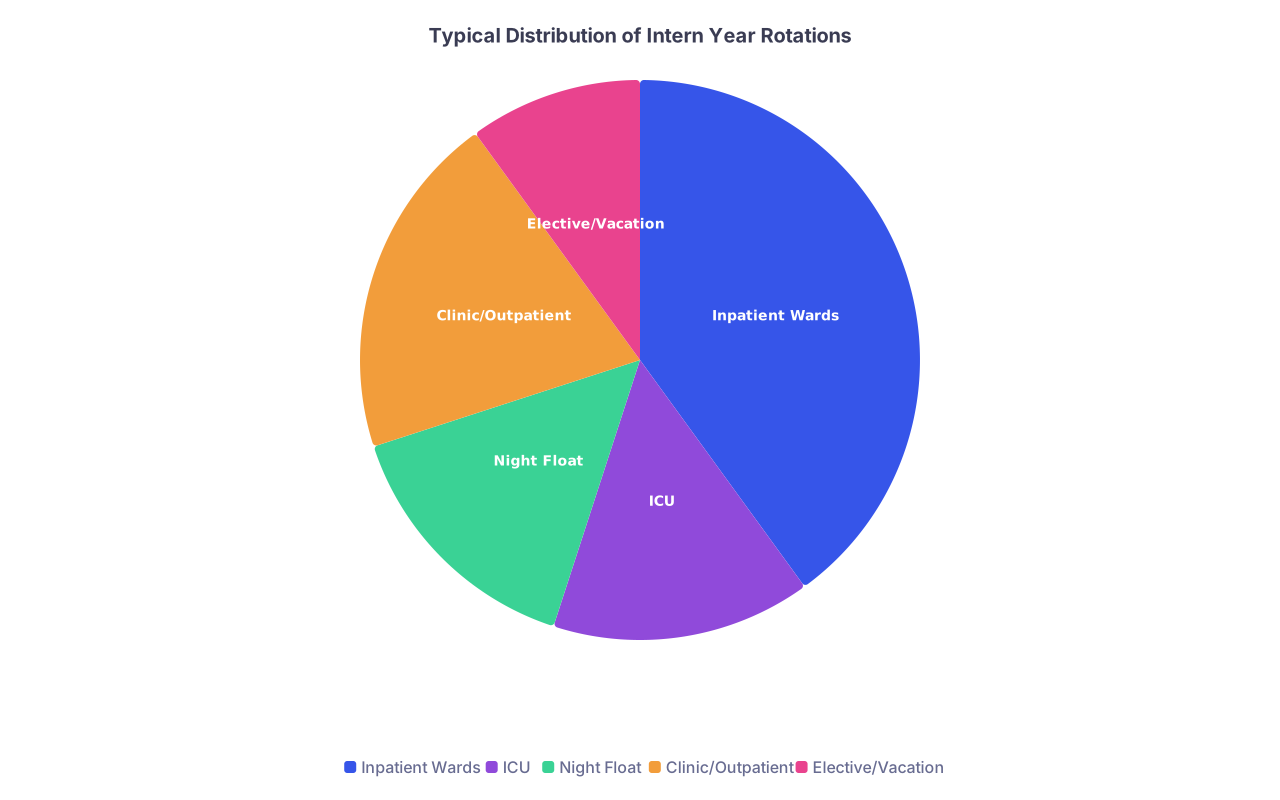
| Category | Value |
|---|---|
| Inpatient Wards | 40 |
| ICU | 15 |
| Night Float | 15 |
| Clinic/Outpatient | 20 |
| Elective/Vacation | 10 |
What this means for you:
- Somebody will be on nights in July. Somebody will be in ICU in winter. That’s baked in.
- Programs can sometimes shuffle who gets what and when, but not eliminate the need.
- If three interns all ask for “no ICU until January,” two are getting disappointed, guaranteed.
So instead of “no ICU until later,” a more realistic approach (once preference time comes) is:
If possible, I’d prefer to avoid ICU July–August due to [brief reason], but I understand service needs come first and will of course do any rotation when scheduled.
You’re signaling a preference, not a demand.
How To Phrase Things So You Don’t Sound High-Maintenance
Content matters. Tone matters more.
Here’s how the same idea can sound reasonable or entitled.
Bad:
I really don’t want to start with nights or ICU because I’d like to ease into intern year.
Better:
If there’s any flexibility, I’d prefer not to start with nights or ICU, but I completely understand if the schedule doesn’t allow for that.
Bad:
I need vacation in October for two weddings and a family trip.
Better (when vacation requests open):
If possible, my first choice for vacation would be October due to family events, but I’m flexible and happy to adjust based on service needs.
Bad:
I’m not a night person and don’t do well with overnight shifts.
That one you just do not send. At all.
When You Should Speak Up Clearly
There are a few scenarios where being quiet hurts you and the program.
Pregnancy or parental leave
Programs need to plan staffing and comply with institutional leave policies. Early heads-up helps everyone.Health issues that limit specific types of work
Example: a seizure disorder that’s impacted by circadian disruption. Depression that is significantly worsened by prolonged nights. This should often be framed with help from your physician and, if needed, GME or HR.Formal accommodations (ADA)
If you will need formal accommodations, do not wait until orientation. Contact GME or HR following their process.Dual-career or couple match logistics
Two interns in the same household with no childcare might need to avoid being on nights simultaneously for months on end. Again—this is about coverage stability, not comfort.
When you bring these up, focus on:
- Factual description, not emotional argument
- Willingness to work with whatever process is required
- Understanding that they’ll do their best, not promise perfection
Timeline: What to Ask and When
Let’s map out a rational approach.
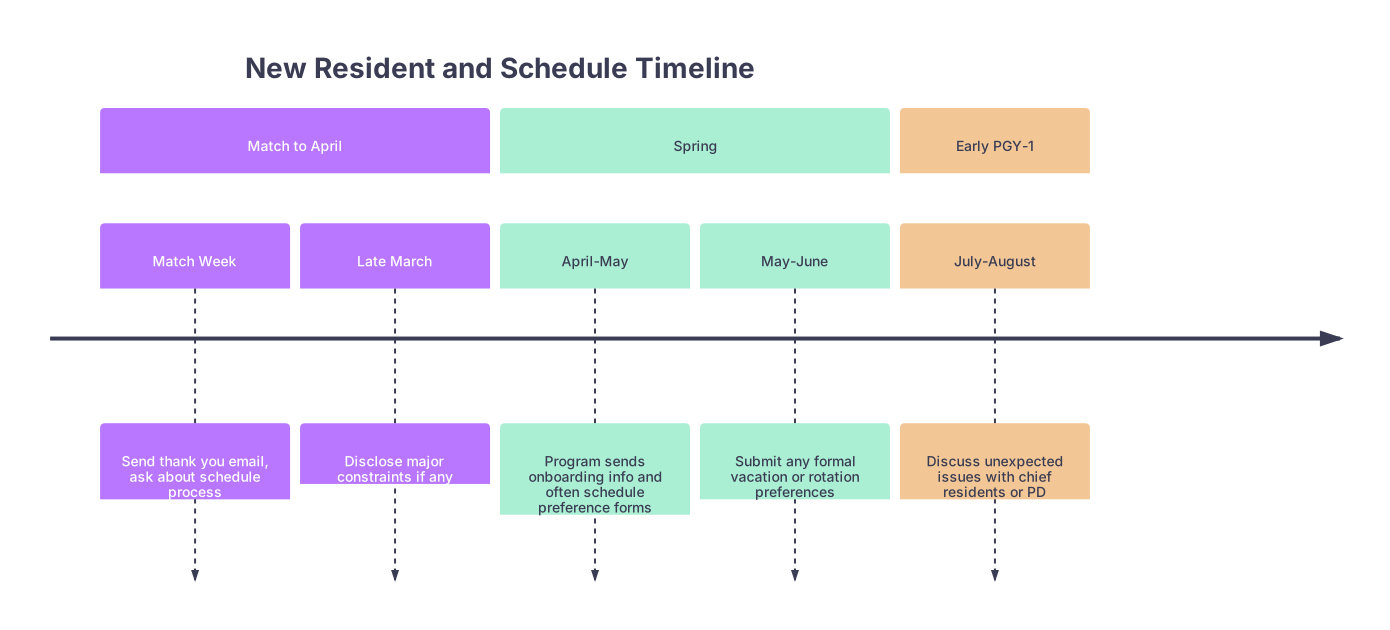
| Period | Event |
|---|---|
| Match to April - Match Week | Send thank you email, ask about schedule process |
| Match to April - Late March | Disclose major constraints if any |
| Spring - April-May | Program sends onboarding info and often schedule preference forms |
| Spring - May-June | Submit any formal vacation or rotation preferences |
| Early PGY-1 - July-August | Discuss unexpected issues with chief residents or PD |
You’re playing the long game. Your relationship with your program will last at least three years (often more, if you stay for fellowship). Do not burn good will in week one over something that could’ve waited a month and been handled through the normal channel.
How To Handle Real-Life Examples
A few concrete scenarios and the right move in each.
Scenario 1: You’re due to give birth in October
Right after Match, once they know who you are:
- Email coordinator / PD.
- Briefly state due date and expected leave window.
- Ask how they prefer you to handle documentation and official leave paperwork.
This is absolutely appropriate. Programs will not resent you for this.
Scenario 2: You have a big family wedding in November
Do not email about this on Match Day.
Wait until:
- The program explains how vacation requests work.
- Then submit the request politely, with flexibility if they can’t grant that exact week.
If you have three such “must attend” events, shave that down. One big ask is realistic. Three is not.
Scenario 3: You’re very anxious about starting on nights
You don’t email to avoid nights. Everyone does nights.
Instead:
- Start.
- If you’re truly struggling, talk to your chief or an APD.
- Focus the conversation on performance and safety, not preference: “I’m worried I’m missing things on post-call due to fatigue; can we talk about coping strategies or options?”
That’s professional. “I don’t like nights” is not.
Who You Should Contact (And Who You Shouldn’t)
Generally:
- Program coordinator – logistics, timeline, forms, who to contact about what. Safe first stop.
- Program director / associate PD – big-picture issues, health, parental leave, serious constraints.
- Chief residents – once you’ve started, good for small tweaks, informal guidance.
Avoid:
- Mass emailing several people at once with your “needs.”
- Going straight to the department chair about your schedule. Wildly disproportionate.
If you’re unsure, email the coordinator first: “Who would be the best person to talk to about X?”
FAQ: Schedule Questions Right After Matching
1. Can I ask to avoid starting on nights or ICU as a new intern?
You can express a preference when they formally ask for them, but you should not expect it to be granted. Right after Match, don’t email about “avoiding” specific hard rotations. Wait for the official process, and phrase it as a preference, not a requirement.
2. Is it okay to ask for a specific vacation month before I start?
Usually no. Vacation requests are handled by a specific system and timeline. Asking for a particular month before you’re even officially onboarded screams entitlement. Wait until they tell you how to request vacation, then submit your preference once, clearly and politely.
3. I have a major life event (pregnancy/surgery) that will affect my schedule. When do I tell them?
Tell them early—within the first few weeks after Match is completely appropriate. That kind of information helps them plan coverage and comply with policy. Keep it factual, indicate you’re happy to follow their formal leave process, and send it to the coordinator and/or PD.
4. What if I have childcare issues and can’t easily do certain shifts?
You can mention that you’re a primary caregiver or have significant childcare responsibilities when they ask about constraints, but you still need to be able to meet essential job requirements. Most programs will try to avoid obviously impossible combinations (both parents on nights with no backup), but they can’t guarantee a “childcare-optimized” schedule. Framing it as “constraints” not “demands” helps.
5. Will asking about the schedule process make me look bad?
No. Asking how and when schedules are made is completely appropriate and signals you’re trying to plan like an adult. What makes you look bad is jumping straight to a laundry list of specific requests and “needs” before you’ve even received the program’s standard instructions.
Bottom line:
- Right after matching, ask about the process, not for a customized schedule.
- Share true, major constraints early; save normal preferences for the official request window.
- Phrase everything as preferences and realities, not demands—your reputation in the program starts the day you hit send.