
Who actually deserves that first phone call when you find out where you matched—the people who paid for your MCAT, the mentor who fought for you in the rank meeting, or the classmates who suffered through 3 a.m. call with you?
Let me answer this straight: there’s no “morally correct” order. But there is a smart order, depending on three things:
- Your emotional bandwidth
- Your relationships
- Your actual Match outcome (better, worse, or different than expected)
I’ll walk you through how to decide, what usually works best, and how to avoid hurting people you care about without spending an hour glued to your phone while everyone else is celebrating.
Step 1: Decide Your Priority—Support vs Politics vs Celebration
First question is not “Who do I owe?”
The first question is: What do I need in the first 10–20 minutes after I open that email or envelope?
You’re going to fall into one of three emotional modes:
- Shock / Overwhelmed (good or bad)
- Relieved and happy
- Confused / mixed feelings
Your “first call” should align with that.
- If you think you might cry, shake, or go silent: call someone safe first. That’s usually family or your closest person (partner/spouse, sibling, best friend) who has seen you ugly-cry before.
- If you matched exactly where you wanted or better: the first call can be to whoever has been emotionally “in the trenches” with you.
- If you’re stunned, disappointed, or did not match your top choices: you probably should not start with mentors or highly invested classmates who might react strongly.
So before you obsess over etiquette, ask: “Right now, do I need comfort, containment, or pure celebration?”
Then pick the person who fits that role.
Step 2: The Practical Default Order (That Works for Most People)
Here’s the general order that works well for most students and causes the least drama.
Take 2–5 minutes for yourself.
Breathe. Read the email again. Let your brain catch up.Tell whoever is physically with you.
Partner, roommate, spouse, close friend, or the crowd at Match Day if you’re opening it live. That’s instant.First actual call: the person most emotionally invested in you.
For most people, this is one of:- Partner or spouse
- Parent(s) or guardian
- Sibling
- “Chosen family” (the one person who’s basically family)
Second wave: your inner circle
Same-day calls or FaceTimes to:- Immediate family who is not first call
- Best friends (med or non-med)
- Closest classmates
Third wave: mentors and professional contacts
These people do not need a live, minute-one phone call. They do need:- A same-day text or email
- A call or video chat in the next few days is ideal, but not mandatory for everyone
Mentors will not be offended they weren’t literally the first call at 12:01 p.m. They know your family comes first. What matters to them is that you personally update them in a timely, respectful way—not that they beat your mom to it.
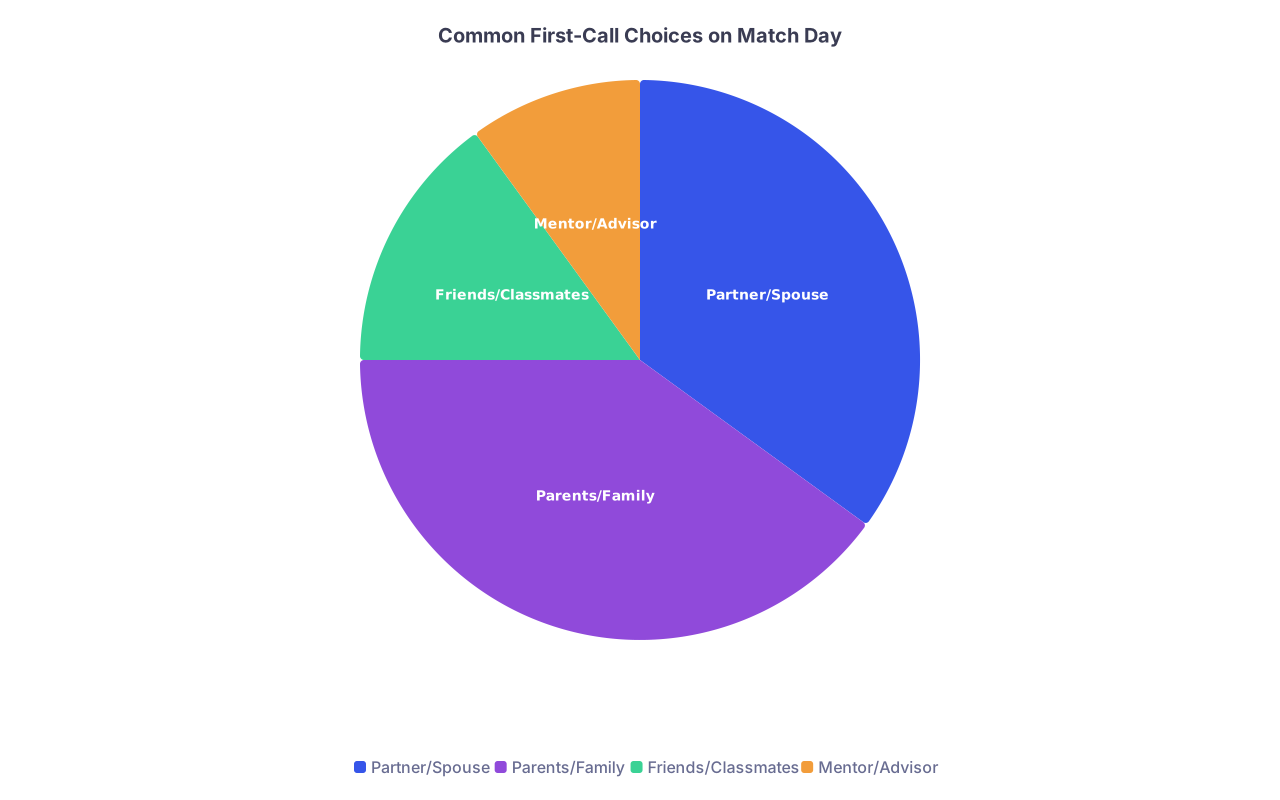
| Category | Value |
|---|---|
| Partner/Spouse | 35 |
| Parents/Family | 40 |
| Friends/Classmates | 15 |
| Mentor/Advisor | 10 |
Step 3: How Your Match Result Should Change Your Call Order
The outcome changes the script. Here’s how to think about it.
Scenario A: You Matched at Your Top Choice
You’re ecstatic. Your first call should be whoever:
- Knew your true top choice (not just your “reasonable” list)
- Saw the sacrifice up close
- Will explode with happiness for you, not compete with you
That’s usually:
- Partner/spouse
- Parents
- That one best friend from M1 or undergrad who heard every rank list debate
Mentors? They’re in your top 3 to 5 people to contact today, but again, not necessarily call #1. A good pattern is:
- First call: partner or parent
- Second: your other “primary” (if you have a partner and parents both very involved)
- Third/Fourth: closest friend and one key mentor (PD at your home program, main research PI)
Scenario B: You Matched—but Not Where You Wanted
This is more complicated. Maybe you:
- Matched at #5 instead of #1–3
- Matched in a less desired city
- Matched in a backup specialty
- SOAPed into a program or specialty that was not the plan
Your first call should be someone who can handle your real reaction, not just the Instagram version.
In these cases, the “best” first call is usually:
- Partner/spouse or one person in your life who will not pressure you to immediately say, “I’m so happy!”
- Or a parent/sibling who’s emotionally steady and not prone to guilt-tripping or panicking
I would not start with:
- Super-competitive classmates (you’ll end up comparing)
- People who financially sacrificed a lot but also project heavy expectations
- Mentors who are heavily invested in your specialty/program choice—they’ll care, but you may want a calmer voice first
Give yourself permission to say, “I’m still processing. I’m grateful I matched, but I need a bit of time.”
Scenario C: You Did Not Match
If you learned on Monday that you did not match, your “first call” question is really about that moment, not Friday’s envelope.
In that case, you should:
- First talk to your dean’s office / student affairs—this is mandatory logistics, not emotional choice
- Next, a safe person emotionally: one parent, partner, or best friend
- Then, a mentor who understands the Match mechanics and can guide SOAP strategy
On Match Day Friday, the atmosphere might be emotionally rough. If you’re participating in SOAP and have a position, it’s still OK to keep your first non-official call to someone close to you, not a mentor.
Step 4: Family vs Mentors vs Friends—What You “Owe” Each Group
Let’s be blunt.
You do not “owe” anyone a specific order. But you do owe different groups different types of communication.
| Group | Priority Level | How to Contact First | Timing Goal |
|---|---|---|---|
| Partner/Spouse | Highest | Call/FaceTime | Within 5–15 minutes |
| Parents/Guardians | Very High | Call/FaceTime | Within 30–60 minutes |
| Siblings/Close Family | High | Call or text + call | Same day |
| Best Friends/Classmates | Medium | Text or call | Same day |
| Primary Mentor(s) | Medium-High | Text + later call | Same day to 48 hrs |
| Other Faculty/Advisors | Medium | Email or text | Within 3–5 days |
| Broader Network | Low | Email/social update | Within 1–2 weeks |
Family
They usually expect to hear it from you, not social media.
Minimum:
- One live conversation with each parent/guardian or equivalent person
- Personal message to key relatives who were actively involved (grandparent you lived with, sibling who helped you move three times, etc.)
Group calls are totally fine: put both parents on speaker. Or do a family FaceTime. That’s efficient and actually more fun.
Mentors
Mentors do not need to be first, but they should not find out from Instagram or a mass email list if they wrote letters for you.
Good rule:
- Anyone who wrote a letter of recommendation or made calls for you: personal text or email the same day
Something as simple as:
“Hi Dr. Smith, I wanted you to hear from me directly— I matched at [Program], [Specialty]. I’m really grateful for your support and mentoring through this process.”
You can call your primary mentor(s) later that day or week to talk through fit, schedule, and next steps.
Friends and Classmates
Your closest friends deserve a direct update. But you do not need to individually call every person from your anatomy group.
Reasonable approach:
- Inner-circle friends: text or call personally
- The rest: see them at Match ceremony, group chats, or social media update later

Step 5: Smart Communication Strategy So You’re Not Glued to Your Phone
You can absolutely ruin your own Match Day by spending the first hour stuck in a hallway trying to call twenty people.
Here’s a sensible framework.
Before Match Day
Do a 5-minute prep:
- Decide your likely first and second calls based on your situation
- Tell your inner circle:
“When I find out, I’m going to call [X] first, then [Y]. I’ll post in the family group chat as soon as I can.” - Set expectations. That avoids hurt feelings.
On Match Day
Try this order:
- 0–5 minutes: Take it in. Look at your envelope/email again.
- 5–15 minutes: Call your #1 person (partner or key family member).
- 15–45 minutes:
- Quick text to family group chat: “Matched at [Program]! Calling everyone later!”
- Quick text to 1–3 mentors: “Matched into [Specialty] at [Program]. Will email/call you this weekend but wanted you to know. Thank you for everything.”
- Rest of the day: Be present. Celebrate with your classmates. You will remember this more than the call order.
You can clean up any missed calls, texts, or emails later that evening or the next day.

| Step | Description |
|---|---|
| Step 1 | Open Match Result |
| Step 2 | Process Emotion 2-5 min |
| Step 3 | Call Partner |
| Step 4 | Call Closest Family |
| Step 5 | Text Family Group Chat |
| Step 6 | Text Key Mentors |
| Step 7 | Celebrate In Person |
| Step 8 | Later - Call Mentors and Friends |
| Step 9 | Who is priority? |
Step 6: Special Situations That Complicate “Who Do I Call First?”
Real life is messy. A few specific scenarios I’ve seen:
1. Divorced or High-Conflict Parents
Do not use Match Day to prove fairness. Use it to stay sane.
Strategy:
- Decide one person as your first family call (often the most emotionally supportive, not the most demanding)
- Then tell both:
“I’m going to call each of you, but I can’t do it at the exact same second. I’ll talk to [X] now and [Y] later this afternoon.”
Group calls where there’s tension? Terrible idea.
2. You Have a Partner and Your Parents Expect to Be First
You’re allowed to put your partner first. This is your adult life starting.
If you want to soften it:
- First call: partner/spouse
- Second: parents joint call or FaceTime ASAP after
What parents care most about is that they’re clearly high priority, not necessarily literally first.
3. Your Mentor Practically Carried Your Application
Maybe your PD or research PI made multiple phone calls, edited your personal statement, and prepped you for interviews.
Even then, they do not need to be before your family. What they do deserve is:
- Same-day personal message
- A follow-up call within 24–72 hours where you genuinely acknowledge their role
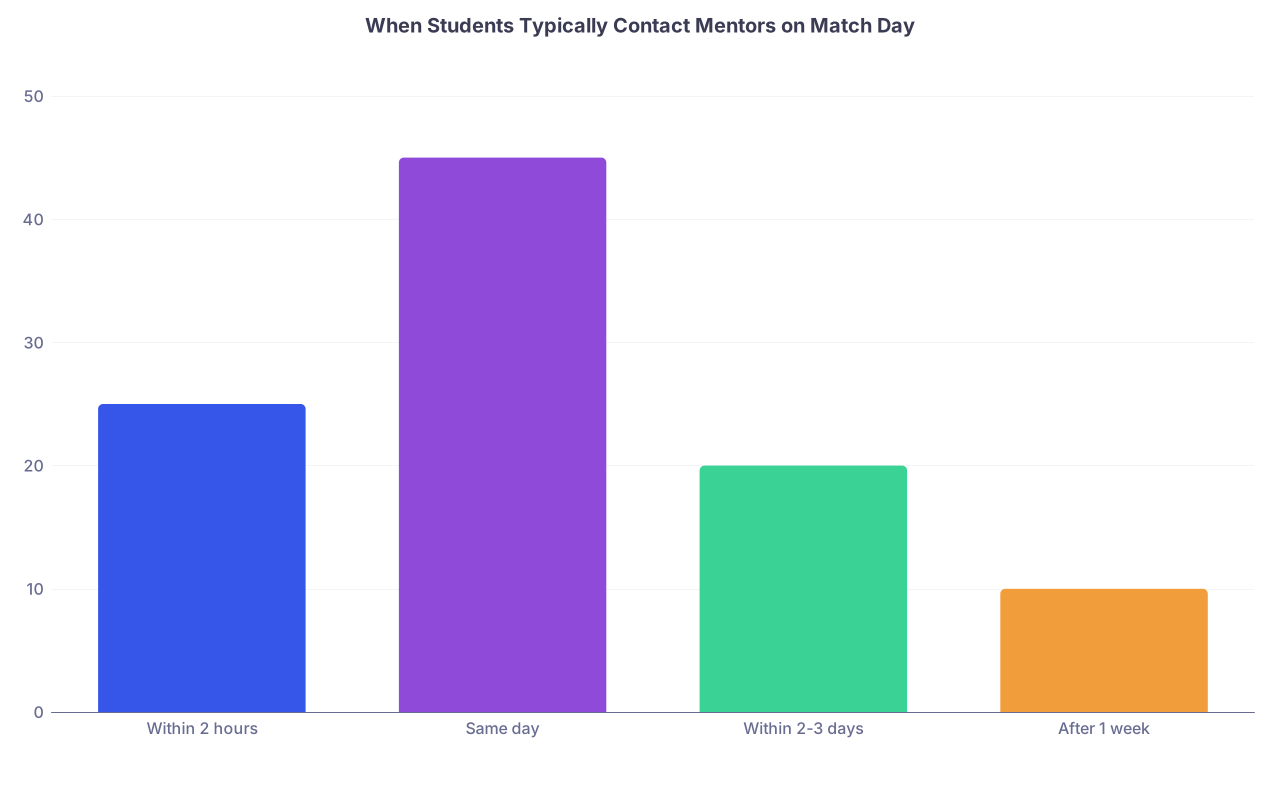
| Category | Value |
|---|---|
| Within 2 hours | 25 |
| Same day | 45 |
| Within 2-3 days | 20 |
| After 1 week | 10 |
Step 7: What Not to Do (Common Match Day Communication Mistakes)
A few things I’ve seen that backfire:
Posting on social media before telling your parents/partner.
That’s how you get a hurt, “You had time to post but not to call?” text.Calling no one and only texting everyone.
For a lot of people in your life, this is a once-in-a-lifetime milestone. At least a couple of them deserve to hear your voice.Dumping your disappointment on someone who can’t handle nuance.
If you matched but feel conflicted, don’t start with people who will say “But at least you matched” and shut you down. Start with someone who gets nuance.Ghosting mentors for a week.
They invested in you. A two-line message the same day is enough to show respect.Trying to make your first call “politically correct” instead of emotionally right.
Your first call is allowed to be selfish. It should be about who will best hold you in whatever state you’re in—ecstatic, stunned, or somewhere in between.

Bottom Line: So Who Should You Call First?
Here’s the clean version.
If you:
- Have a partner or spouse who’s been with you through this entire journey → Call them first.
- Don’t have a partner, but have close parents/guardians who’ve backed you up for years → Call them first.
- Are not close with family → Call the person who has been your emotional anchor through med school.
Then:
- Message your family group
- Send short, direct thanks + update to mentors the same day
- Save the full story and processing for later calls that weekend
Match Day is not about “performing” the right order of calls. It’s about sharing one of the biggest transitions of your life with the people who actually carried you there.
Key points to remember
- First call goes to whoever can best handle your raw, unfiltered reaction—usually partner or closest family.
- Mentors don’t need to be first, but they do deserve a timely, personal update and genuine thanks.
- Set expectations ahead of time and don’t let your phone steal the actual Match Day experience from you.
FAQ (Exactly 7 Questions)
1. Will my mentor be offended if I call my parents before calling them?
No. Any reasonable mentor expects family to come first. What they care about is that you personally update them relatively quickly (same day is ideal) and acknowledge their support. A simple text or email followed by a later call is completely appropriate.
2. Is it rude if my first call is to my partner instead of my parents?
Not at all. If you’re building a life with your partner, it makes sense they’re first. You can still honor your parents by calling them right after, doing a joint call or FaceTime, and making sure they hear it directly from you before social media or extended family.
3. How fast should I contact people after I see my Match result?
Aim for this: first call within 5–15 minutes, family group text within 30–60 minutes, mentors same day (even if it’s a short text), and more extended calls within a few days. You’re allowed to be present at your ceremony first, then catch up on communication.
4. What if I’m disappointed with my match—who should I tell first?
Start with someone emotionally safe: a partner, close friend, or calm family member who can handle you saying, “I’m grateful I matched, but I’m not sure how I feel yet.” Do not start with people who minimize or catastrophize. You can update mentors once you’ve had a chance to process a bit.
5. How do I tell mentors if I matched into a different specialty than planned?
Be direct and respectful. For example: “Dr. Lee, I wanted you to know I matched into Family Medicine at [Program]. I’m very grateful for your mentorship in Internal Medicine—it shaped how I’ll practice regardless of specialty.” Most mentors care more that you matched and are thoughtful than that you followed their exact specialty.
6. Is a text enough for people who wrote my recommendation letters?
First contact can be a text or email, yes. It should be personal, not a mass blast. Something short like, “I matched at [Program] in [Specialty]. Thank you again for your letter and support,” is fine. If they were a primary mentor or advisor, follow with a call or Zoom within a few days.
7. Do I have to call every extended family member who supported me?
No. You’re not obligated to individual calls for everyone. A reasonable approach is: live calls for parents/guardians and maybe one or two very close relatives; group updates through family chats; and follow-up calls to specific people who were especially invested when you have time that weekend.