
The worst time to “shoot your shot” with a residency program is Match Day itself.
If you’re asking, “Should I tell my future program I’m excited on Match Day?” here’s the blunt answer:
- If you matched there: yes, absolutely, reach out.
- If you didn’t match there / don’t know: no, it’s pointless and potentially awkward.
- If you mean trying to influence where you match on Match Day: that ship sailed weeks ago.
Let’s break this down properly so you don’t do something cringey or counterproductive.
1. What Match Day Actually Is (And Why Your Email Won’t Change Anything)
On Match Day, all the “decisions” are already done. NRMP’s algorithm finished its work days earlier.
Key reality:
By the time you hit “open” on that email at noon ET:
- Programs already have their final lists.
- NRMP already ran the match.
- Nothing a program does that day can change your outcome.

| Step | Description |
|---|---|
| Step 1 | Interview Season |
| Step 2 | Rank Lists Finalized |
| Step 3 | Applicants Certify List |
| Step 4 | Programs Certify List |
| Step 5 | NRMP Runs Algorithm |
| Step 6 | Match Results Locked |
| Step 7 | Match Week Emails |
| Step 8 | Match Day Celebration |
So if by “tell my future program I’m excited on Match Day” you’re secretly hoping:
- They’ll bump you up their list last-minute
- They’ll “pull strings” if you didn’t match
- They’ll somehow open or alter a spot
…that’s fantasy. It does not work like that. There’s no “manual override” button.
Match Day is about receiving news and celebrating. Not lobbying.
2. Three Different Scenarios – And What You Should Actually Do
You’re really in one of three buckets. The right move depends on which one you’re in.
Scenario 1: You Matched and Know Your Program (standard Match Day)
You open your envelope (or email) and see your program. You’re excited. You want them to know.
In this case: yes, you should reach out. But do it the right way.
What to do:
- Send a short, professional thank-you / excitement email later that day or that evening.
- Aim it at:
- Program Director (PD)
- Program Coordinator
- Optionally, a resident or faculty you connected with.
Template you can basically copy:
Subject: Excited to Join [Program Name]
Dear Dr. [PD Last Name] and the [Program Name] team,
I’m thrilled to share that I’ve matched at [Program Name] and will be joining you as a [specialty] resident this July.
I truly enjoyed meeting everyone during interview season and am excited to train with you and contribute to the program.
Thank you again for the opportunity. I’m looking forward to getting started.
Best regards,
[Your Name], M.D. Candidate
[Your Medical School]
That’s it. Don’t overdo it. Don’t send a novel about your life story. Don’t ask a bunch of logistical questions in that first message.
Bad versions you should avoid:
- “I knew I was your #1 all along!!!”
- “I’m so glad you believed in me.” (you don’t know where they ranked you)
- “I turned down more prestigious places for you.” (weird, and usually untrue)
Keep it simple: grateful + excited + professional.
Scenario 2: You Matched But You’re Disappointed
You matched somewhere you ranked lower. You’re not thrilled, and now you’re wondering whether to fake excitement to the program.
Here’s the uncomfortable but honest answer: yes, you should still contact them and sound positive.
Why? Because:
- This is your training home for years.
- Programs can usually tell when residents are resentful. Those residents have a rougher time.
- You don’t have to lie about “dream program” status, but you can be genuinely appreciative that you matched and get to train.
Something like:
Dear Dr. [PD Last Name],
I’m writing to let you know I’ve matched at [Program Name] and I’m looking forward to joining your team as an incoming [specialty] resident.
I appreciated the chance to interview and learn more about [specific thing you liked about the program – teaching culture, patient population, etc.]. I’m eager to get started and contribute to the program.
Sincerely,
[Your Name]
You don’t need to overcompensate or pretend it was #1. Just professional, courteous, and forward-looking.
Don’t send a message saying:
- “I was surprised I ended up there, but I’ll make the best of it.”
- “I thought I’d be in [other city] but I guess this will work.”
Think it if you must. Don’t write it.
Scenario 3: You Didn’t Match or You’re in SOAP
If it’s Monday and you got the “You did not match” email, your priorities are different.
You might be thinking: “Should I email programs I interviewed at and tell them I’m still excited?”
No. On Match Week, emotion emails are useless. SOAP is its own machine.
What actually matters in SOAP:

- Your application to unfilled programs through ERAS/SOAP.
- Quick response to interview offers.
- Being organized, available, and not chaotic.
PDs in SOAP are not swayed by “I’m very excited about your program!!” messages. They’re filtering:
- Board scores
- School
- Red flags
- How fast you respond
- Fit for their specific holes (categorical vs prelim, etc.)
Focus on polishing your SOAP documents, not sending love letters.
Once you DO match in SOAP:
- Same rule as Scenario 1 → a simple, grateful note to the program is appropriate and good.
3. Timing: When Is It Appropriate to Contact Your Program?
Let’s talk timing, because people overthink this.
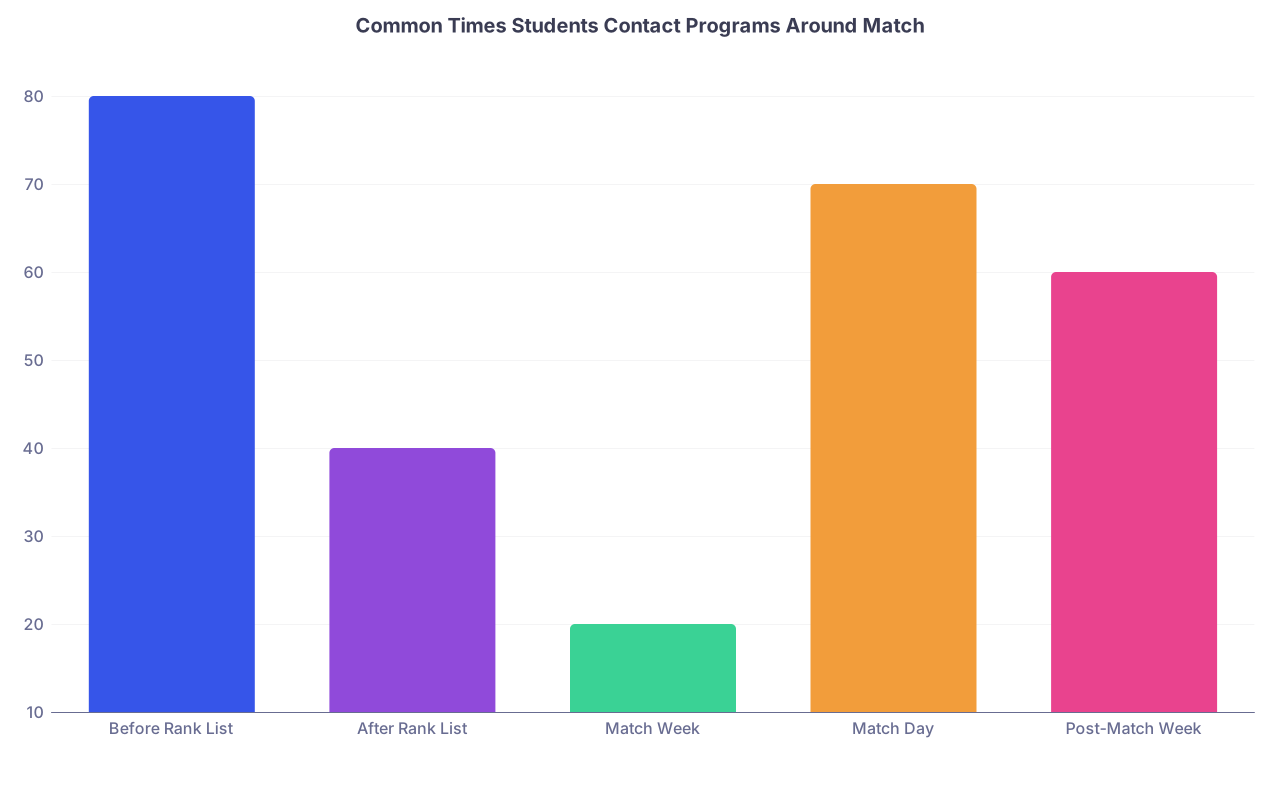
| Category | Value |
|---|---|
| Before Rank List | 80 |
| After Rank List | 40 |
| Match Week | 20 |
| Match Day | 70 |
| Post-Match Week | 60 |
Here’s the breakdown:
Before rank list certification (Jan–Feb)
This is when signaling interest actually matters. Thank-you notes, clarifying questions, occasional “you’re my top choice” (if true) emails.After rank lists are in (late Feb / early March)
You can still send neutral thank-yous, but they cannot change anything ethically. No promises should be made by either side.Monday–Thursday of Match Week
If you’re unmatched and in SOAP, all communication is within that system. Cold emailing random programs is mostly noise.Match Day (Friday)
Only one kind of email makes sense: “I’m excited to have matched with you.” That’s it.After Match (weeks later)
Programs will send you onboarding info. You may reach out with administrative questions, schedule preferences, moving logistics, etc.
So the “tell my future program I’m excited” message?
That belongs in the Match Day or weekend bucket, once you know where you’re going.
4. What Programs Actually Think About These Messages
I’ve seen PDs scroll through their inbox on Match Day. Here’s the honest reaction pattern:
- “Nice, they’re excited.” (2-second smile, star the email, move on)
- “Good, this one matched with us, seemed solid.”
- “Wow, this one wrote 900 words. Why?”
They appreciate courtesy.
They remember extreme weirdness.
They forget generic flattery almost instantly.
Where applicants go wrong:
- Sending 5+ separate emails that day to PD, APD, coordinator, random faculty.
- Writing like a fan letter, not a colleague: “I’m so honored you chose me!!!”
- Oversharing: “My parents cried when we saw your program!”
Your goal: sound like a new junior colleague who’s excited, not like a teenager who just got a concert ticket.
Use this mental filter:
Would I be fine if my email was read aloud in front of the whole residency class? If no, don’t send it.
5. Special Cases People Mess Up
Case 1: You Told Multiple Programs “You’re My #1”
Hopefully you didn’t. But if you did, here’s the deal.
On Match Day, only one of those programs ends up with you. The others:
- Already know you didn’t match there.
- Already have their lists filled.
- Do not need a follow-up explanation email.
Do not send an apologetic “I’m sorry I didn’t match with you” email. It’s unnecessary and makes them roll their eyes.
The one you did match with?
You can still send a simple “excited to join” note. Don’t mention who you told what before. Just move forward.
Case 2: Couples Match
Couples sometimes want to say, “We’re so excited we both ended up near you!”
Totally fine to include that in your email if your partner matched nearby:
My partner and I are both thrilled to have matched in [City]; I’m especially excited to be joining your team at [Program].
Just don’t oversell the romance angle. This is still a workplace message.
Case 3: Prelim + Advanced
You match at a prelim IM year at one place and advanced anesthesia/derm/rads at another.
Should you email both?
Yes.
- Email your advanced program: emphasize long-term training, specialty excitement.
- Email your prelim program: emphasize appreciation and commitment to being a solid intern.
They don’t need to compete for your affection; they serve different roles.
6. Quick Decision Guide: Should You Reach Out on Match Day?
Use this simple flow:

| Step | Description |
|---|---|
| Step 1 | Is it Match Day? |
| Step 2 | Do not contact - wait |
| Step 3 | If in SOAP, follow SOAP rules |
| Step 4 | Send short excited email |
| Step 5 | One email to PD + CC coordinator |
| Step 6 | Stop. Do not spam others |
| Step 7 | Do you know your program? |
| Step 8 | Did you match? |
If it’s still before Match Day and you’re asking this question, you’re actually thinking about:
- Post-interview thank-you notes
- Pre-rank list “interest” messages
That’s a different game, with different rules.
7. How Excited Is “Too Excited”?
Let’s calibrate, because applicants often either undershoot or go off the rails.
Reasonable to include:
- “I’m thrilled to have matched with your program.”
- “I’m excited to train with your team.”
- “I really enjoyed meeting everyone on interview day.”
Off the deep end:
- “This is literally the best day of my life.”
- “I’ve thought about your program every day since the interview.”
- “I will do anything for this program.”
You’re not auditioning for a cult. You’re beginning a job.
Think: warm, appreciative, adult.
8. What Actually Matters More Than Your Match Day Email
Here’s the slightly harsh truth: that Match Day “I’m excited” email is low-yield. It’s nice. It’s polite. But it’s not the thing that will define you.
What matters a lot more, starting immediately after Match:

- Showing up on time for orientation
- Completing your onboarding tasks quickly
- Responding to program emails reliably
- Being teachable, prepared, and not arrogant on Day 1
So yes, send the email. Then stop obsessing over it. Focus on being the kind of intern they’re happy they matched with.
| Situation | Should You Contact? | What To Say |
|---|---|---|
| Matched at a program | Yes | Short, excited, professional note |
| Matched but disappointed | Yes | Grateful, neutral-positive message |
| Unmatched, in SOAP | Only via SOAP/ERAS | Professional, within system channels |
| Before Match Day, lists certified | Optional | Neutral thank-yous only |
| Didn’t match at “dream” program | No | Don’t send apology or follow-up |
| Prelim + Advanced both matched | Yes to both | Tailored note for each role |
FAQs
1. Should I call the program instead of emailing on Match Day?
No. Calling is overkill and interrupts their day. Everyone is busy dealing with their own logistics, rank list review outcomes, and internal celebration events. A concise email is more than enough. If the coordinator or PD wants a call, they’ll reach out to you.
2. Is it weird if I don’t email my program on Match Day at all?
It’s not fatal, but it’s a bit of a missed courtesy. Lots of students send a quick note either the day of or over the weekend. If you forget, you can still send a short “I’m excited to join the program” email within a few days and it’ll be perfectly fine.
3. Should I tell my program they were my #1 choice in my Match Day email?
No point. At that stage, it doesn’t matter and just sounds like retroactive flattery. They already have you; you already have them. Stick with “I’m thrilled to have matched with you” instead of “You were my top choice.”
4. Can I ask logistical questions (housing, schedule, visa, etc.) in the Match Day email?
Keep the first email mostly about excitement and gratitude. You can add one simple logistics question if it’s urgent, but don’t dump a list of 10 questions. Programs will send you structured information and next steps soon. Save the detailed questions for follow-up emails or when they invite them.
5. If I’m in SOAP, should I email programs I applied to saying I’m very interested?
Outside the SOAP/ERAS system, no. Programs are swamped and have defined processes for SOAP. Unsolicited “I’m very interested” emails rarely help and can irritate people. Put your effort into a clean, strong SOAP application and being responsive to official invitations instead.
6. Do Match Day emails affect fellowship or future opportunities at that program?
Not directly. No one is pulling your Match Day email three years later during fellowship applications. What matters long-term is how you perform as a resident: your clinical work, evaluations, research, and how you treat people. The email is simply a polite first impression, not a long-term lever.
Key points to remember:
- Your email on Match Day won’t change where you match; it’s about courtesy, not influence.
- If you matched at a program, a short, professional “excited to join” message is appropriate and enough.
- Don’t overdo it, don’t be weird, and then stop worrying about the email—your real reputation starts when you show up to work.