
You just opened your Match Day envelope. Hands still shaking. You know where you’re going. And now your brain jumps immediately to: “Do I start hunting for an apartment today, or can this wait a week?”
Here’s the direct answer:
If you’re going to a high-demand city or you’re moving with a partner/family, you should start the apartment process on Match Day or that weekend. If you’re going to a less competitive rental market and you’re flexible (solo, no kids, not locked into a specific neighborhood), you can safely wait about a week—sometimes longer.
But let’s break it down in a way that actually helps you decide.
The Core Question: Match Day vs Waiting a Week
Let me be blunt: the right timing depends on where you matched and how picky you are allowed to be.
Think about these two scenarios:
You matched at NYU in Manhattan, you’ve got a dog, and you need parking.
Waiting “to let things settle” for a week? Bad idea.You matched at a community program in the Midwest where one-bedrooms are $900 and sit empty for months.
Killing yourself to sign a lease 48 hours after Match? Unnecessary.
So the real question isn’t “Match Day or a week later?”
The real question is: How competitive is your housing market, and how constrained are your needs?
Here’s a simple framework.
| Situation | When To Start Serious Hunting |
|---|---|
| NYC / SF / Boston / LA / DC / Seattle | Match Day weekend |
| Big city but cheaper (Houston, Dallas, Atlanta) | Within 3–7 days |
| Medium city / college town | Within 1–2 weeks |
| Small city / low-demand market | 2–4 weeks is usually fine |
If you’re in that first row? You do not wait a week “to breathe.” You breathe while filling out rental applications.
What You Should Actually Do on Match Day
Notice I didn’t say “sign a lease on Match Day.” That’s usually too fast and too risky.
Match Day is about starting the process, not finishing it.
Here’s what I’d do on Match Day and the weekend after:
Confirm start date and orientation timing.
Most programs start July 1, but some orientations creep earlier. Email or check your program’s welcome materials so you know when you must be physically there.Decide: rent alone, roommates, or live with co-residents?
This changes everything. Price range, bedroom count, location options.Stalk the program’s current residents.
Ask in the GroupMe/WhatsApp/Facebook group:- Best neighborhoods for residents
- Typical commute times
- Areas to avoid
- Average rent people are paying
This saves you hours of mindless scrolling in the wrong zip codes.
Nail down your budget range.
Quick rule: try to keep rent around 25–35% of take-home pay, not gross salary. Many new interns overshoot and then suffer all year.Start monitoring listings.
On Match Day weekend, you should at least:- Identify 1–3 target neighborhoods
- Get a feel for typical rent ranges
- Bookmark several places you’d actually consider
You’re not panicking. You’re laying groundwork so when you’re ready to apply, you’re not starting from zero.
When Starting on Match Day Is Smart (And When It’s Not)
Start on Match Day (or that weekend) if:
- You matched in a high-demand city or neighborhood, especially:
- Manhattan / Brooklyn
- Boston / Cambridge / Brookline
- San Francisco / Oakland / Berkeley
- Seattle, DC, West LA / Santa Monica
- You:
- Have a pet, especially a dog
- Need parking or in-unit laundry
- Have a partner or kids and want a decent school district
- Are aiming for walking distance to the hospital
In those markets, the best deals go fast. Landlords are used to June/July being a bloodbath. Residents, new grads, and everyone else are all competing.
You don’t want to be the person in June saying “Wow, everything decent is gone or insanely priced.” I’ve seen that happen. It’s ugly.
You can safely wait a week (or more) if:
- You’re moving to:
- A smaller city or town
- A place where Zillow shows dozens of open rentals under your budget
- You’re:
- Single
- Flexible about neighborhood and building type
- Okay with a reasonable commute (15–25 minutes)
In these places, landlords are actually worried about vacancies, not fielding 20 applications in a day. A week won’t kill your options.
The Hidden Factor: Typical Lease Start Dates
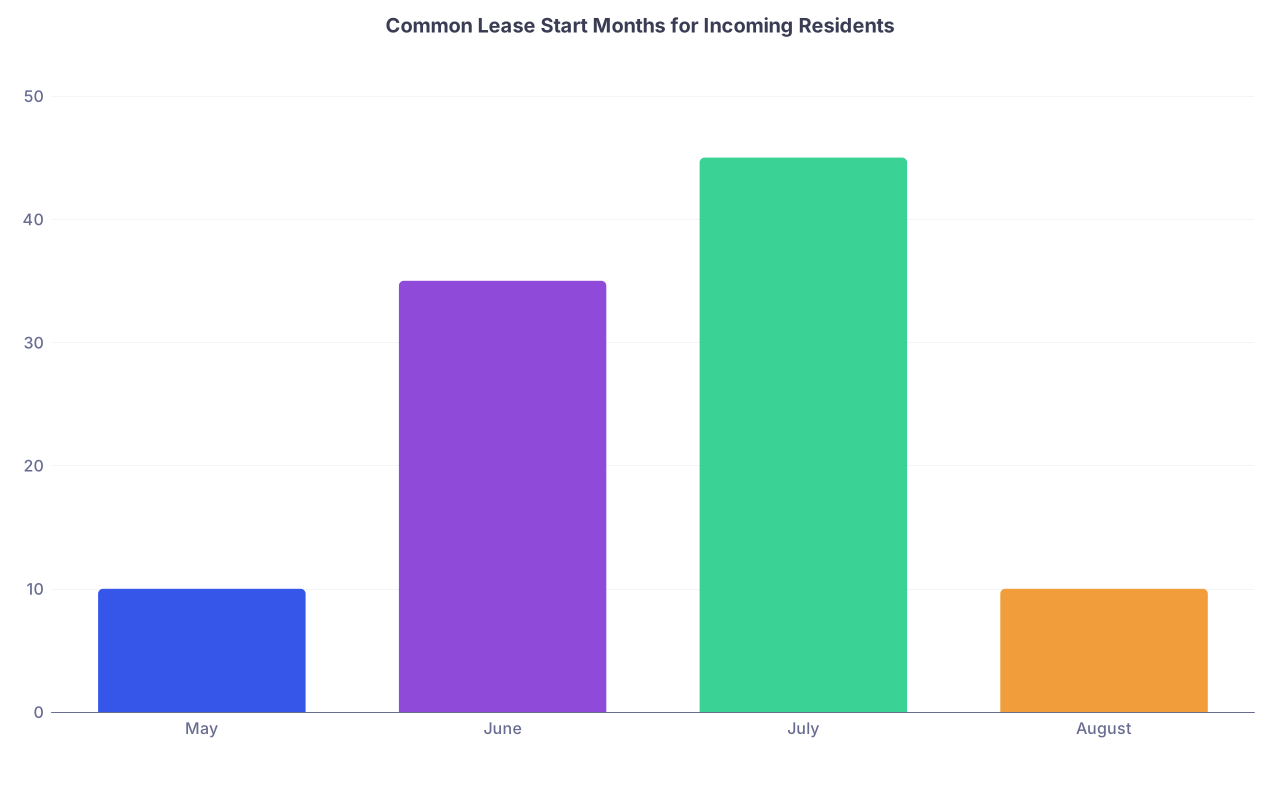
Another reason this question is confusing: you’re matching in March, but most leases you’ll want start June or July.
| Category | Value |
|---|---|
| May | 10 |
| June | 35 |
| July | 45 |
| August | 10 |
Most incoming interns want June or July start dates.
So what does that mean?
In March:
- Some listings will already be up for June/July.
- Some cities (like Boston) list units months in advance.
- Others (like parts of California) don’t post until 30–45 days before.
In April–May:
- Many June/July options hit the market.
- This is often the sweet spot for actively applying.
So starting on Match Day doesn’t always mean you’ll find “the one” that same weekend. It just means you’re ready when good listings start dropping. You’ll know what a fair rent is, which areas are reasonable, and what tradeoffs you’ll accept.
How Aggressive Should You Be in Week 1 After Match?
Let me give you a practical timeline for your first 7–10 days after Match.

| Step | Description |
|---|---|
| Step 1 | Match Day |
| Step 2 | Confirm start date and salary |
| Step 3 | Contact current residents for neighborhood tips |
| Step 4 | Start daily listing checks |
| Step 5 | Check listings every few days |
| Step 6 | Shortlist 5 to 10 apartments |
| Step 7 | Schedule virtual or in person tours |
| Step 8 | High demand city? |
During that first week, your priorities should be:
- Understanding your market reality (price vs location vs quality)
- Clarifying your non-negotiables
- Starting initial contact with landlords or agents in hot markets
- Lining up tours (virtual or in-person) for weeks 2–4
You’re not “behind” if you don’t have a signed lease by the end of week 1. You are behind if you haven’t done any of the above and you’re going to a high-demand area.
Common Mistakes Around Match Day Apartment Hunting
Here’s where people screw this up.
1. Signing a lease too early with zero context
I’ve seen interns sign the first place they see on Match Day weekend, then later learn:
- Other residents are paying $300–500 less for similar quality
- They picked a neighborhood everyone else avoids
- Their commute is 40 minutes when they could’ve done 12
Don’t confuse starting immediately with committing immediately. You need data before you lock in.
2. Waiting for “everything to fall into place”
The “I’ll wait until I know more details” trap kills people.
You’re not going to know every detail. You won’t have your exact rotation schedule or call schedule before you sign. You just need:
- Hospital address
- Start date range
- Rough salary
- Feedback from residents
Once you have those, you have enough to hunt.
3. Ignoring commute realities
A “cheaper” place that’s 35–40 minutes away from the hospital can feel very expensive when you’re post-call and exhausted. I’d rather see you:
- Pay a bit more for a 10–20 minute commute
- Or live close to reliable public transit
Ask current residents: “What’s your door-to-door time on a post-call morning?” That’s the number that matters.
Using Current Residents to Shortcut the Process
Honestly, this is the biggest hack that people underuse.
Ask your new co-residents:
- “If you were looking again, what 2–3 neighborhoods would you focus on?”
- “Anyone leaving their lease in June/July who wants to pass it on?”
- “Do most of you drive, walk, or take public transit?”
- “What’s a realistic rent for a 1BR or 2BR near the hospital?”
You’ll often find:
- People who are moving and happy to connect you with their landlord
- Group houses that have a room opening up
- Buildings that are unofficially ‘resident buildings’ where management already knows the drill with July 1 moves
That can save you days of random searching.

In-Person vs Remote Hunting
Some people can visit the city in April or May. Many can’t.
Here’s my stance:
- In very hot markets, I’d seriously consider a quick 1–2 day visit, especially if you’re picky or have special needs (kids, dog, weird parking constraints).
- If you can’t visit:
- Get real video tours, not just staged photos.
- Use FaceTime/Zoom with a trusted friend in the area if you have one.
- Ask for videos of:
- The street outside
- The lobby/hallways
- Noise levels (windows open)
You’ll still survive if you move into a mediocre place your first year, but with a little effort, you can avoid the truly awful setups.
Quick Decision Guide: Should You Start on Match Day?
Here’s the 30-second version.
| Question | If YES | If NO |
|---|---|---|
| High-cost, high-demand city? | Start Match weekend | You can wait a few days |
| Need a pet-friendly place? | Start early | Some slack |
| Want walking distance commute? | Start early | More flexible |
| Moving with partner/kids? | Start early | Less urgent |
| Current residents say market is brutal? | Do not wait | You can pace yourself |
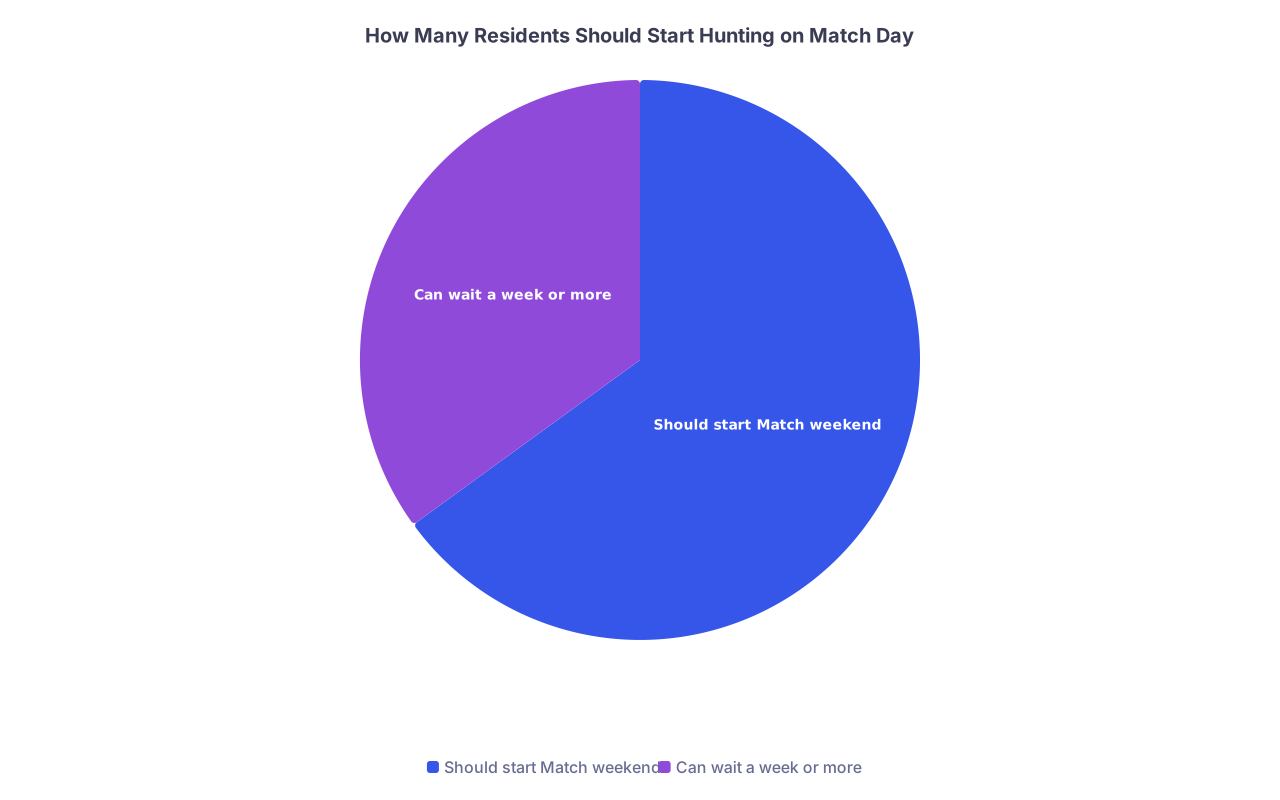
If you answer “yes” to two or more of those left-column questions, you should be in “Match Day weekend and first week = start now” mode.
| Category | Value |
|---|---|
| Should start Match weekend | 65 |
| Can wait a week or more | 35 |
Timeline Example: A Reasonable Plan
Let’s say you matched at a moderately competitive city program (e.g., Atlanta, Denver, Minneapolis).
A sane schedule would be:
- Match weekend (Days 0–2)
- Join resident chats
- Ask about neighborhoods and rent ranges
- Scan listings casually
- Days 3–7
- Narrow neighborhoods
- Identify 5–10 promising places
- Start contacting landlords/agents
- Weeks 2–3
- Do video or in-person tours
- Compare commute times + cost
- Apply to your top 1–3 places
- Weeks 3–5
- Sign a lease for a June or July 1 start
You’ll feel like you’re “on it,” without nuking your sanity during Match weekend.

Final Take: So, Start on Match Day or Wait?
Here’s my clear position:
- Yes, you should start the process on Match Day or that weekend—meaning: gather info, talk to residents, scan neighborhoods, define budget.
- Whether you need to actively apply for apartments in the first 2–3 days depends on:
- How competitive your city is
- How constrained your needs are
- What current residents say about availability
You don’t earn extra points for being the first intern to sign a lease. But you can absolutely make your life harder by waiting too long in a brutal market.
FAQ: Apartment Hunting Around Match Day
1. Is it a mistake to sign a lease the same weekend as Match Day?
Usually yes. You’ll be rushing without understanding neighborhood options, typical pricing, or what other residents are doing. Use Match weekend to gather info and shortlist, not to commit—unless you have very strong guidance from current residents and you already know the area.
2. How much rent can I realistically afford as an intern?
Aim for around 25–35% of your take-home pay, not gross salary. If your PGY-1 salary is around $65–70k, after taxes your monthly take-home might be ~$3,500–4,000. So a common target is $900–1,400 if you have roommates or $1,400–2,000 solo, depending on your market. Push higher only if the market forces you and you’re okay cutting back elsewhere.
3. Should I live walking distance from the hospital?
If you can afford it without financial pain, it’s usually worth it. Walking distance or a short transit ride is a big win when you’re fried post-call. That said, don’t bankrupt yourself just to shave off 10 minutes. I like the sweet spot of 10–25 minutes door-to-door by car or transit, assuming the neighborhood is safe and you’re not paying a crazy premium.
4. How important is it to live near other residents?
Not mandatory, but very helpful. Living near other interns means:
- Shared rides, shared complaints, shared support
- People who understand your schedule
- Built-in social circle
If multiple residents suggest the same 2–3 buildings or neighborhoods, treat that as a big green flag.
5. Should I use a realtor or do it myself?
Depends on the city. In some places (e.g., Boston, NYC), brokers are common and sometimes unavoidable, though fees can be ugly (one month’s rent or more). In many other cities, you can work directly with property managers and big apartment complexes. Ask residents: “Did you use a broker or go directly to buildings?” Copy what they did unless you have a strong reason not to.
6. Is it okay to show up in June without a place and stay in an Airbnb while I look?
It’s possible, but I don’t recommend it unless your market is very slow and you’re very flexible. You don’t want to be on nights while juggling showings and temporary housing. Better to have at least a decent, safe place locked in by late May or early June, even if it’s not your forever-perfect apartment.
7. I matched far from home and can’t visit—how do I avoid getting scammed?
Stick to:
- Reputable large apartment complexes or property management companies
- Units recommended by current residents
- Listings on well-known platforms (Zillow, Apartments.com, etc.) rather than random Facebook Marketplace landlords
Never wire money or send deposits without: - A signed lease you’ve read
- Verifying the landlord/company name and address online
- Doing at least a video tour
Open your browser right now and pull up Google Maps around your new hospital. Draw a rough 15–20 minute commute circle in your head and list 2–3 neighborhoods inside it to focus on. That’s your starting map—everything else builds from there.