
The illusion that no one knows anything about you until Match Day is a lie.
By the time you see your Match result, there’s a good chance at least one of your future co-residents already has an opinion about you. Sometimes a detailed one. Sometimes based on things you did not realize anyone was watching.
Let me walk you through what actually happens on the other side of ERAS and interview season, and what your future colleagues know about you long before you ever put on that program’s fleece.
The Hidden Backchannel: Residents Talk. Constantly.
Here’s the part schools and official webinars never emphasize: residents are the information network of residency recruitment. Not faculty. Not coordinators. Residents.
We trade names and impressions like currency.
We’re in a group chat during interview season. Multiple, actually. There’s the official WhatsApp or GroupMe the chief starts for the interview day logistics. Then there are the side chats and the cross-program chats and the med-school-friends-at-different-programs chats.
That’s where your name shows up.
A very typical scenario:
- You interview at Program A and Program B.
- A PGY-2 at Program A did med school with a PGY-3 at Program B.
- PGY-2 texts: “Hey, you’re interviewing [Your Name] next week – any intel?”
- PGY-3: “Yeah, they rotated with us / with my friend / same school. Heard they’re solid / quiet / a little entitled / amazing with patients / disorganized but smart.”
You just got pre-labeled before you even log into Zoom.
Sometimes it’s as simple as, “Oh yeah, that’s the guy who asked every program if they could guarantee fellowships.” Or “That’s the woman who destroyed that poor M3 on rounds.” Or “That’s the one everyone loved at [another program].”
None of this shows up in your ERAS file. But it affects how people receive you on interview day, how they interpret your behavior, and later how they feel when your name shows up on an incoming list.
What Residents Actually See From Your Application
You probably imagine some sort of sacred wall between faculty and residents. Not during recruitment.
In most programs, at least a subset of residents sees parts of your application before or during interview season. Sometimes everything, sometimes strategically selected snapshots.
Here’s how it usually breaks down:
- The chief residents and recruitment residents often see your full ERAS file: personal statement, experiences, grades, letters. They may help pre-screen or rank.
- Interviewing residents usually get at least a summary: Step scores, school, research highlights, red flags, a few comments from the file.
- At many programs, the resident team gets your name and school well before Match. And yes, they google you more often than people admit publicly.
So a future co-resident may already know:
- Your school and whether you were “one of the strong ones” from there.
- If you were AOA / GHHS / had a reputation from clerkships.
- Your Step scores if the program shares them internally.
- If you had any “concerns” (code words: professionalism incident, repeated year, leaves).
- Whether you have a partner / kids (if you mentioned it repeatedly).
They don’t always get every detail. But they usually have enough to form a sketch of who’s about to join them.
The Pre-Match Whisper Network
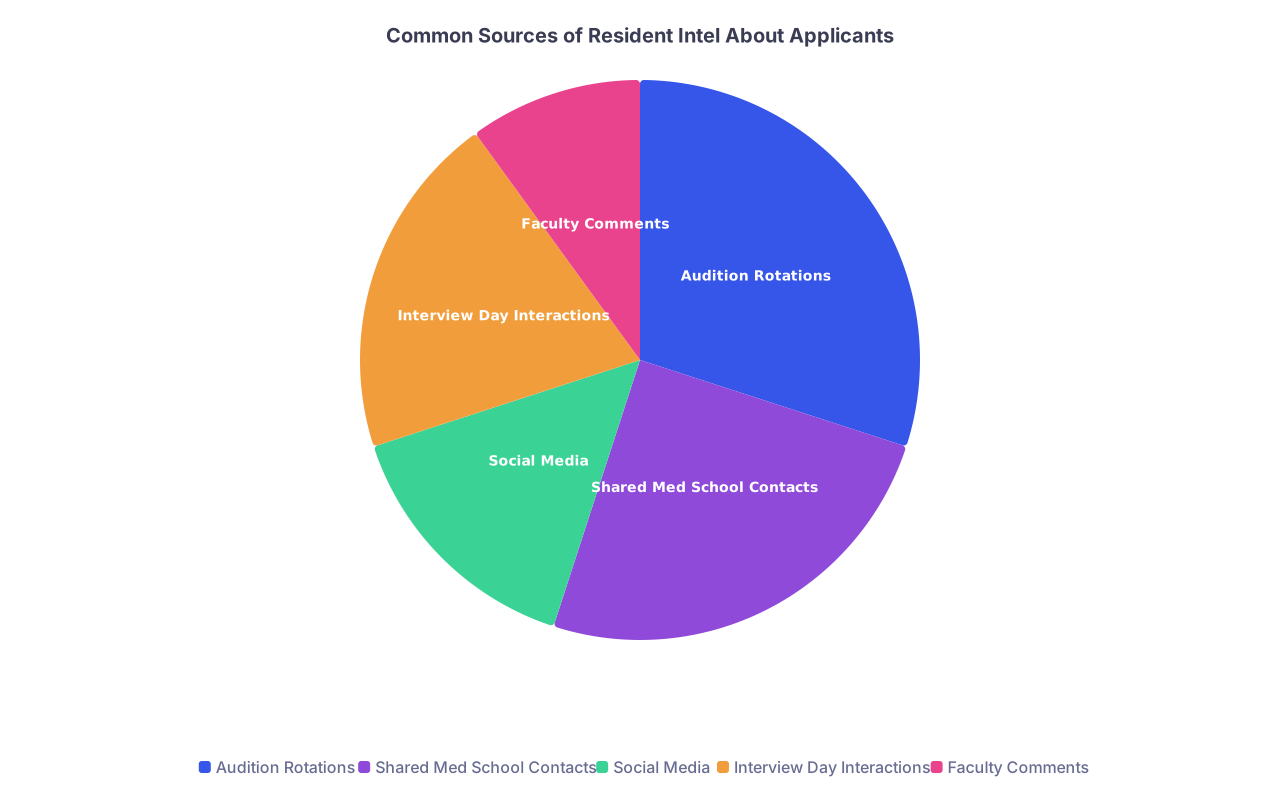
| Category | Value |
|---|---|
| Audition Rotations | 30 |
| Shared Med School Contacts | 25 |
| Social Media | 15 |
| Interview Day Interactions | 20 |
| Faculty Comments | 10 |
Your reputation doesn’t start on interview day. It starts the minute you intersect with someone who’s already inside the system.
The biggest upstream sources:
1. Audition / Sub-I Rotations
This is the single most powerful source of real intel. If you did a sub-I at the program where you’ll eventually match, your future co-residents already know more about you than you think.
They remember:
- Whether you showed up early or just on time.
- Whether you quietly did scut or rolled your eyes at it.
- Whether you disappeared during hard parts of the day.
- How you treated the nurses and consults.
- If you helped the other students or tried to step on them.
I’ve sat in ranking meetings where someone said, “That’s the student who would vanish whenever there was a difficult family meeting” and the room nodded. That’s the moment your entire “hardworking, compassionate future physician” personal statement becomes background noise.
Now the flip side: if you rotated and consistently stayed an extra 15 minutes to finish notes, or you clearly read about your patients, or you owned a mistake early and matured from it – that sticks.
Your future co-residents will know if you were “the sub-I we were sad to see leave” or “the one we were relieved to send off at the end of the month.”
2. Shared Medical School History
If anyone in the residency is from your med school, they have a story about you. Even if they didn’t work with you directly, they’ll have heard something.
Typical hallway conversations during recruitment:
- “You know [Your Name]?”
- “Yeah, we were on surgery together. Smart, but very… intense.”
- Or: “Honestly, they were one of the few who always helped the team without being asked.”
This becomes your tag line in the program – before you get there.
If you had a professionalism incident in med school, do not assume it died at the dean’s office. Faculty talk. Deans talk. Sometimes residents hear a sanitized version: “Had some professionalism growth during third year but improved.” Translation: people are primed to watch your behavior.
3. Social Media and Online Presence
Residents absolutely look you up. Do they document it in any official policy? Of course not. But behind the scenes, it happens a lot.
What they notice:
- Public Instagram or TikTok with questionable content.
- Tweets trashing certain specialties, hospitals, or patient populations.
- Overly curated “future neurosurgeon” brands that look fake or overcompensating.
- Or occasionally, genuinely interesting hobbies that make you seem like a real person.
You’d be surprised how often someone says in a group chat: “Is this the same [Your Name]? Look at this post.” And now, ten people who will be your seniors have formed an impression before they even read your ERAS “Hobbies” section.
What They Infer From Your Behavior on Interview Day
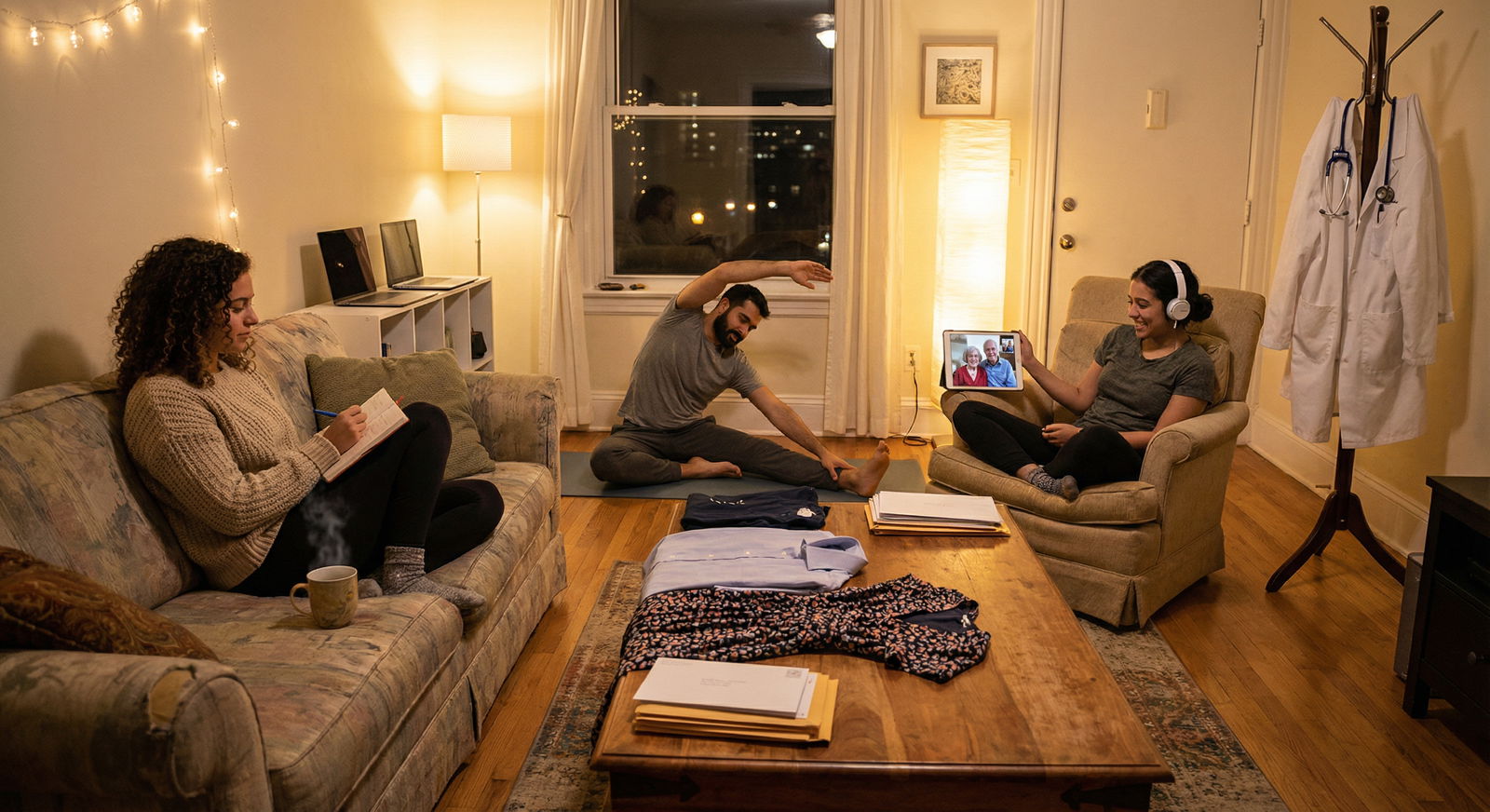
Residents don’t just listen to your words; they watch how you behave in the interstitial spaces.
The pre-interview social, the break rooms, the “meet the residents” session – that’s where your co-residents form the most lasting judgments.
Here’s what they pick up:
How You Treat “Non-Decision Makers”
This is a huge one. Residents talk to:
- The program coordinator.
- The front desk staff.
- The resident who volunteers to give tours but isn’t on the selection committee.
If you’re overly polished and deferential with the PD, and then curt with the coordinator about a scheduling email, that story gets back to the group.
I watched an applicant visibly deflate when he realized the “casual” resident leading the evening pre-interview Zoom was actually one of the chief residents and had full say in ranking. Until then, he’d been distracted and disengaged. After that, he turned on the charm. Too late. The impression had already formed.
How You Interact With Other Applicants
You are being watched when you think you’re just networking with peers.
Are you constantly trying to dominate conversation in the breakout room? Do you one-up everyone’s experiences? Are you weirdly competitive about who has more interviews?
Residents don’t forget: “He kept humble-bragging about his Step score.” Or “She rolled her eyes when another applicant mentioned wanting to have kids during residency.”
These things stick.
The Gap Between Your “Brand” and Your Vibe
If your application screams “team player, humble, lifelong learner” and then you show up as the most self-promotional person on the call, residents feel the disconnect. They may not say it out loud in the meeting, but your name goes into the “something’s off” mental bucket.
Conversely, if your stats are average but you come across as grounded, curious, and easy to talk to, residents will fight for you more than you think. They’re imagining you as the person next to them on night float, not as a bullet point on the program’s website.
The Rank Meeting: Where Your Name Really Gets Defined

| Step | Description |
|---|---|
| Step 1 | Interview Day Ends |
| Step 2 | Residents Share Impressions |
| Step 3 | Rank Meeting |
| Step 4 | Influences Rank Position |
| Step 5 | Default to Faculty View |
| Step 6 | Final Rank List |
| Step 7 | Resident Opinion Strong? |
You need to understand how much power a few resident comments can have in that final meeting.
Most programs do some version of this:
- Faculty and PD discuss the file.
- Residents who interviewed you give impressions.
- Occasionally, a resident who knows you from elsewhere chimes in.
The scary part? Often it only takes a few sentences to define you.
Real examples I’ve heard:
- “Honestly, they’re the one applicant I could see myself grabbing coffee with on a terrible call night.”
- “Technically strong, but every answer felt rehearsed. I didn’t get a sense of who they really are.”
- “They were dismissive when we talked about work-life balance. Said they ‘don’t need time off.’ That’s a red flag.”
- “They were fine, but I honestly don’t remember anything about them.”
That last one is deadly. Forgettability is one of the most common reasons applicants slide quietly down a list.
Residents rarely say, “Don’t rank this person at all” unless something was truly bad. What happens more is: your name gets a shrug while someone else gets an enthusiastic endorsement. Over multiple applicants, that’s the difference between matching and not.
Cross-Program Gossip: Yes, It’s Real
You’re not just being evaluated by individuals; you’re being tracked across the ecosystem.
If you act like a different person at different programs, residents compare notes. Especially in competitive specialties or tight geographic regions.
Typical pattern:
- Applicant is charming and engaged at Program X.
- At Program Y, they show up late to the social, clearly unprepared, and admit they’re “not that interested” in that city.
- Residents at Program X and Y know each other. They talk.
Suddenly your “authentic honesty” about preferences becomes a story about being disrespectful or careless with people’s time.
I’ve also seen the opposite. An applicant we loved didn’t match with us, went to a nearby program. Over the year, we kept hearing from friends there: “They’re crushing it. Total workhorse. Great with juniors.” Our program literally started preferring students from that med school more the next cycle because of that one person.
Your behavior as a student and early resident shapes the reputation of your entire pipeline.
What They’ll Know About You From the Match List Alone

Once the Match list comes out internally, what do your future co-residents actually see?
Depends on the program, but typically:
- Your name.
- Your medical school.
- In some programs, your photo from ERAS.
- Occasionally a short note from the PD or chief: “Strong interest in cards,” “Returning to this city for family,” “Did sub-I with us.”
Now the real fun begins.
People go:
- “Oh, another [Your Med School] grad. I wonder if they know [Resident X].”
- “Hey, I interviewed them. They were great.”
- Or: “That’s the one who asked if we ‘actually follow duty hours’ in kind of a weird way.”
They’ll look you up on social media again now that they know you’re “one of us.” Some programs add you to a group chat within days. Before you ever step foot on site, they know if you have a dog, a partner, kids, or if you’re really into CrossFit or baking or ultra-marathons.
Do they know your Step scores? Officially, often no. Unofficially, it leaks sometimes. Or residents reverse engineer from context:
- If the PD said “very strong academic metrics,” they infer you’re on the higher side.
- If the PD said “amazing fit, we prioritized them despite slightly lower board scores,” that label is now stuck to you.
None of this is malicious, necessarily. But it means you’re not arriving as a blank slate.
How to Shape What They Know – Before You Ever Meet Them
| Your Behavior | Typical Resident Interpretation |
|---|---|
| Consistently early, prepared on sub-I | Reliable, good to have on call |
| Polite to PD, curt with coordinator | Two-faced, potential problem |
| Engaged in applicant social, asks others questions | Team-oriented, easy to work with |
| Dominates conversation, brags about scores | High ego, maybe difficult |
| Owns a mistake on rotation | Mature, trustworthy |
| Talks down about another program or specialty | Lacks professionalism |
You can’t control what people say about you completely. But you can tilt the odds heavily in your favor.
A few very practical levers:
Audit Your Pre-Existing Reputation
If you know residents from your med school who are now at programs you’re applying to, assume they’ll be asked about you.
If your relationship is neutral or positive, fine. If you had a weird interaction, fix what you can now. A simple, “Hey, I know things were rough on that rotation, but I’ve grown a lot since then. No hard feelings, and I hope you’re doing well,” can shift someone from negative to neutral.
Neutral is a win.
Treat Every Rotation Like It Can Follow You
Because it can.
That attending who watched you cut corners on notes? She has friends on the faculty at programs you’re applying to. That resident you blew off when they tried to teach you something? They might be the one writing a short informal email months later: “If you’re asking, I’d be cautious.”
On the flip side, being the student who covers for a sick classmate, or who quietly takes care of discharge summaries without complaining – that’s the stuff residents remember and share.
Tighten Your Online Footprint
No, you don’t need a professional LinkedIn-faux-influencer persona. Just make sure there’s nothing obviously unprofessional with your real name attached.
Residents are not HR, but there are lines:
- Jokes that dehumanize patients.
- Publicly mocking specific hospitals or programs.
- Long rants about “lazy co-workers” or “idiot attendings.”
These aren’t just “opinions.” They are preview clips of what you might be like as a colleague.
What Actually Matters Once You Arrive
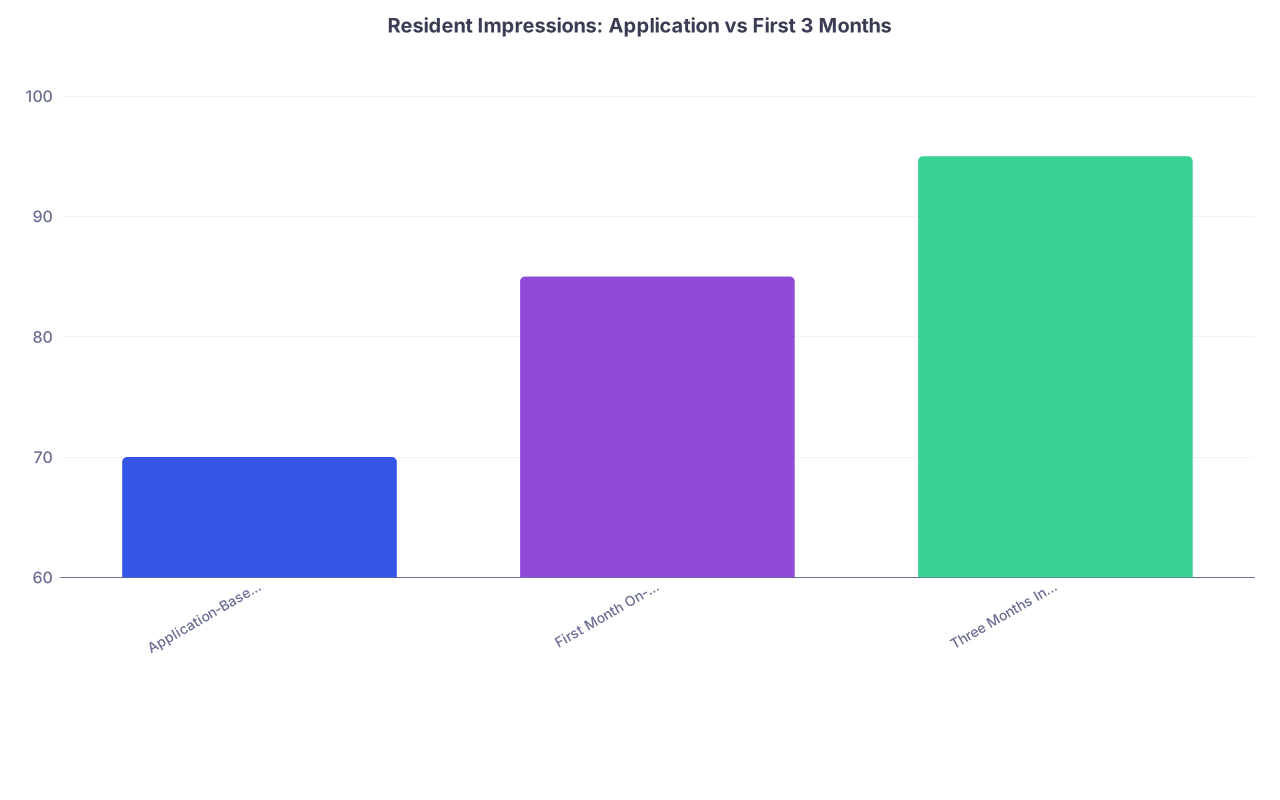
| Category | Value |
|---|---|
| Application-Based Impressions | 70 |
| First Month On-Service | 85 |
| Three Months Into Internship | 95 |
Here’s the part that should calm you down: pre-Match impressions are not destiny.
By the end of your first 3 months, almost all of your co-residents will care far more about how you show up now than what anyone said about you during recruitment.
I’ve seen:
- Candidates we ranked highly show up disorganized, resistant to feedback, impossible on nights. Their golden applicant halo evaporated in weeks.
- Applicants we were “meh” about become absolute stars. Show up, do the work, own their gaps, support juniors – they rewrote their entire narrative.
The whisper network gets you labeled. Your daily behavior as an intern either confirms or destroys that label.
That’s the uncomfortable truth.
The Three Things Your Future Co-Residents Really Want to Know

Strip away the gossip, the scores, the labels. At the end of the day, when residents look at a list of incoming interns, they are quietly asking three questions:
- Will this person be safe with patients?
- Will this person pull their weight when things get ugly at 2 a.m.?
- Will this person make my already hard job harder… or slightly easier?
Everything you do before Match – on rotations, in emails, on social media, in interviews – feeds into those three questions.
If the unofficial story about you by March is: “Smart, teachable, decent human, doesn’t crumble under pressure,” you’re in very good shape. Even if you weren’t the flashiest applicant on paper.
If the story is: “Sharp but doesn’t listen,” or “Nice but unreliable,” you’ll still match somewhere, but you’ll be digging yourself out of a hole from day one.
Wrap-Up: What You Should Take From All This
Let me condense it, because you do not have time for fluff:
First: Your reputation starts long before Match Day, and residents are the ones building it behind the scenes. Audition rotations, shared med school connections, and interview behavior all feed into what your future co-residents “know” about you.
Second: Small, ordinary behaviors matter more than any single impressive line on your CV. How you treat staff, how you handle fatigue, how you respond to feedback – those are the stories that get repeated in group chats and rank meetings.
Third: Pre-Match impressions are powerful but not permanent. You show up as an intern and either confirm or completely overturn the narrative. If you want your future co-residents to be glad your name showed up on that list, start behaving like the colleague you’d want next to you on your worst call night.