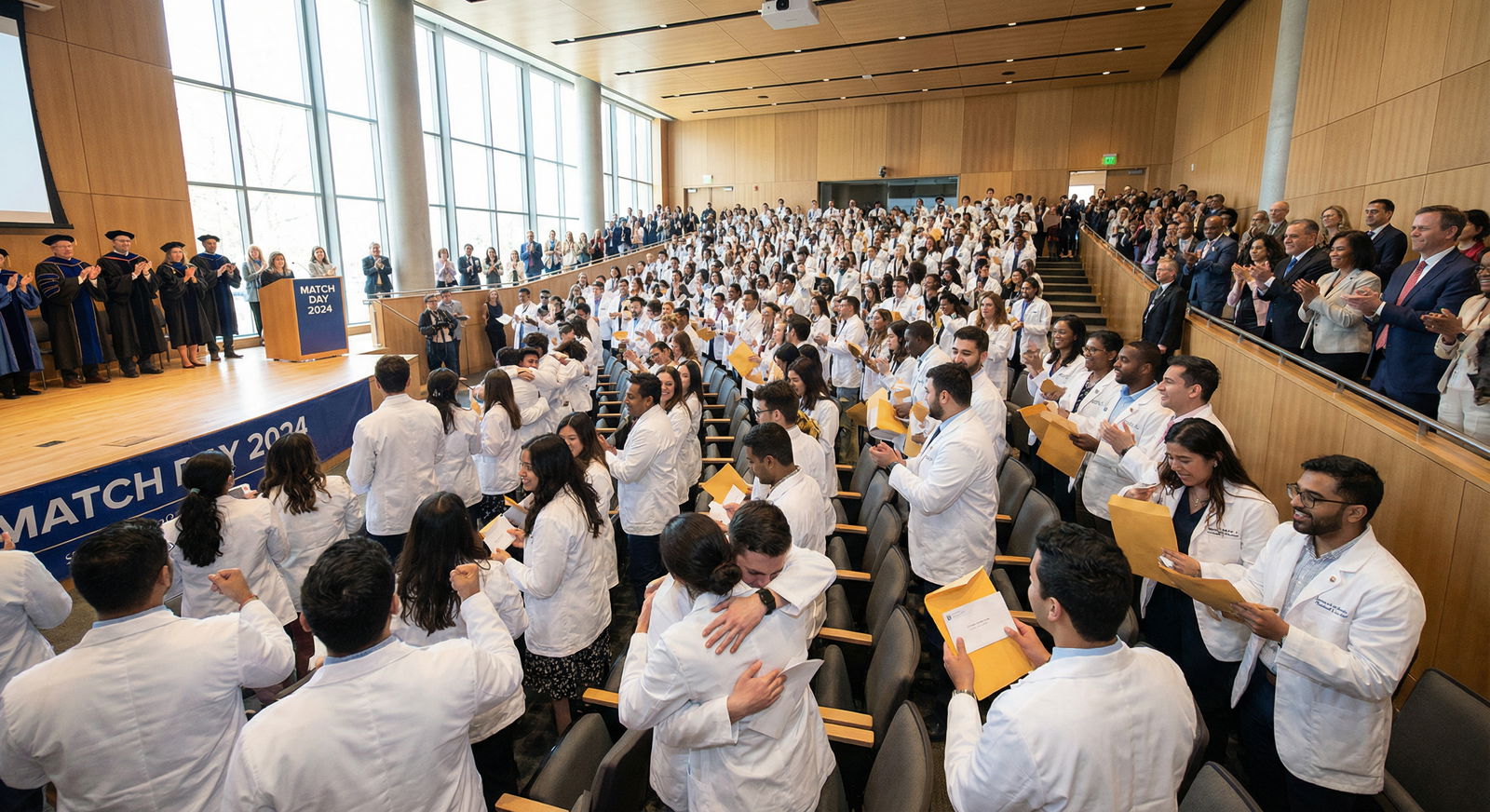
The fastest way to damage your reputation on Match Day is not by where you matched. It is by what you post about it.
Match Day turns otherwise thoughtful future physicians into impulsive content creators. Screenshots. Champagne. Hashtags. Location tags. You have seen the mess on Instagram and TikTok the last few cycles. You probably rolled your eyes at some of it. Do not become one of those screenshots people send around in group chats with, “Can you believe this?”
Let me walk you through the 9 most common ways students cross a professional line when posting about their residency match—and how to avoid becoming a cautionary example.
1. Posting Before You Tell the Right People
The worst “flex” on Match Day is letting people find out from social media instead of from you directly.
I have watched this happen:
A student matches into a competitive surgical program. They are euphoric, post an Instagram story within three minutes. Their parents are still at work. Their closest friend who scrambled last year sees it on social before getting a text. Their current mentor, who wrote a powerful letter, finds out because a co-faculty member sends a screenshot.
They all smile publicly. They do not forget privately.
You cross a professional line when:
- Your mentors learn about your match from a public post
- Your letter writers and home program faculty are never directly updated
- Your classmates find out in a way that is obviously performative, not relational
Before posting anything, run this checklist:

| Step | Description |
|---|---|
| Step 1 | Receive Match Result |
| Step 2 | Call or text key family |
| Step 3 | Reach out individually |
| Step 4 | Send short thanks + update |
| Step 5 | Consider Social Media Post |
| Step 6 | Told Family? |
| Step 7 | Told Closest Friends? |
| Step 8 | Told Key Mentors? |
If you are posting before you have communicated with:
- Immediate family / partner
- Closest friends (especially those in your class)
- Key mentors and letter writers
…you are choosing public image over actual relationships. That is immature and, frankly, short-sighted.
Safe move:
Block 30–60 minutes after you open your envelope for calls and short texts. Only then consider posting. If you cannot wait that long to post, you are thinking like an influencer, not a physician.
2. Turning Your Match Into Someone Else’s Loss
“Dream program.”
“#1 choice.”
“Beat the odds.”
“Proved them wrong.”
Those phrases sound harmless in your head. They read like arrogance or cruelty to someone who did not match or had to go far down their list.
The line you cross here is not “celebration is bad.” The line is when your joy is framed as superiority or victory over others.
Here is what students consistently get wrong:
- Announcing “Matched at my #1 program!” on Monday when classmates are sitting in the “did not match” email shock
- Using “finally got what I deserve”–type language
- Comparing your result to others explicitly (“So many people told me this was impossible from a low-tier school…”)
Look at the emotional context. Match Day is a zero-sum system. Your win is literally someone else’s loss. Boasting in that environment is not just tacky. It is unprofessional.
Better framing:
- “I am grateful to have matched in [specialty] at [program]”
- “Feeling very lucky to be training with the team at [program]”
- Omit “#1 choice,” “top program,” “dream,” and “beat the odds.” You do not need that language for people to understand this is good news.
This is not about policing joy. It is about not kicking people who are already on the floor.
3. Oversharing Personal Details That Future Employers Will See
You will forget this, so let me say it bluntly: your Program Director and future fellowship directors can and do look you up.
Match Day posts that cross the line on personal exposure usually fall into three buckets:
- Alcohol and partying
- Emotional oversharing
- Relationship drama
You are not “unprofessional” for having a drink. You are careless if the only photo that appears when someone Googles you is you chugging from a champagne bottle in a wrinkled suit, with a caption full of expletives.
Also risky:
- Posting crying videos with long captions about how you barely passed Step, hated rotations, or “almost dropped out”
- Recounting how you “proved that attending wrong” by matching better than they predicted
- Including details about mental health crises that belong in private spaces, not in a searchable, permanent post
For context, here is how often students publicly post things they later regret:
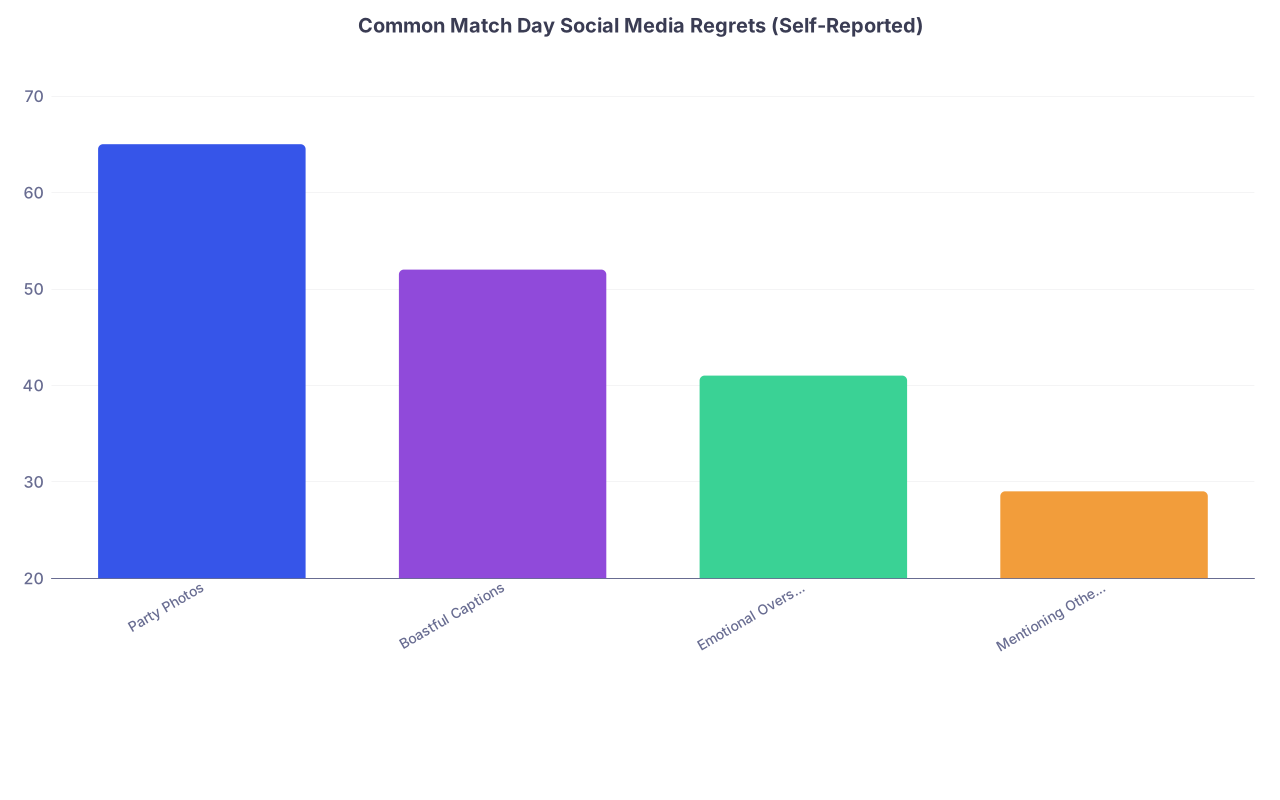
| Category | Value |
|---|---|
| Party Photos | 65 |
| Boastful Captions | 52 |
| Emotional Oversharing | 41 |
| Mentioning Others Negatively | 29 |
Your future colleagues will look you up at 2 a.m. before a call shift. You want them thinking, “Seems mature,” not “Oh. That post.”
Guardrails:
- No visible intoxication. Smiling with a glass of champagne? Fine. Chugging, sloppiness, or obviously drunk behavior? No.
- Keep mental health and personal trauma details for private conversations or anonymous forums, not your public professional identity.
- Avoid any language that sounds like you barely held things together ethically or academically, even if that is emotionally true.
4. Violating Program or School Confidentiality
This is where people slip from “a bit tacky” into “potentially serious trouble.”
You cross a hard professional line if you:
- Post screenshots from NRMP emails that include match codes or internal IDs
- Share parts of program communications that were clearly meant to be private
- Mention ranking conversations, promises, or “we told you we would rank you highly” quotes
- Reveal details of other students’ match outcomes without explicit permission
I have seen students post:
- A screenshot of a group email from the PD with internal notes
- “Behind-the-scenes” DMs where residents hinted they would “push for you”
- A grid of classmates’ names and matched programs before everyone agreed to share
They thought it was harmless storytelling. Programs see it as poor judgment and a breach of trust.
Understand this: residency is built on the assumption that you can keep sensitive information private—about patients, about processes, about people. If you cannot be trusted with email screenshots, how will you be trusted with charts?
Rule of thumb:
If it was communicated to you privately (email, call, DM, one-on-one chat), it is not content. It is confidential. Do not post.
5. Posting About Others Without Their Explicit Consent
The “match grid” is a minefield.
You feel proud of your class. You want to post a screenshot of the match list showing where everyone went. Or you want to tag your entire friend group and congratulate “the whole team.”
Here is where you cross the line:
- Including someone who did not want their specialty or location public
- Announcing a couple’s match result when they intentionally kept their relationship private
- Posting identifying details about classmates who did not match or SOAPed
Remember: some of your peers have complicated family situations, abusive relationships, immigration concerns, or safety issues. Publicly broadcasting their location and specialty without consent can put them at real risk.
Before you post anything that mentions someone else:
- Get specific, explicit permission: “Can I post that you matched at X in Y city?”
- Not “I assume you’re fine with it”
- Not asking once in a group chat and assuming silence = consent
Respect a “no” without debate. If someone wants to keep it vague (“Matched into IM, will share more later”), let them.
6. Trashing Other Programs, Cities, or Specialties
The fastest way to look immature on Match Day is to mock the outcomes you did not get.
I have read actual captions like:
- “Dodged a bullet not ending up in [city] LOL”
- “So glad I did not have to settle for community programs”
- “All my exes can stay in [state], I am out”
That is not edgy. It is unprofessional. And it travels.
Residency and fellowship are small worlds. The chief resident you insult on social media now might be the fellowship coordinator who screens you later. The “boring city” you disparage might be where you desperately want a job in five years.
Red flag language that crosses the line:
- Calling any program “trash,” “backup,” “safety,” or “beneath me”
- Insulting geographic regions or populations (yes, I have seen “flyover states” and “I am not a rural doctor” captions)
- Mocking other specialties as “lesser” (e.g., “Guess I did not have to default to family med after all”)
You matched. Be grateful. Do not insult what others wanted or what serves real patients.
7. Sharing Mismatched Professional Branding
Another subtle, but serious, mistake: posting a Match Day announcement that does not line up with the professional identity you claimed in your application and interviews.
Examples I have seen:
- Applicant marketed themselves as “serious clinician-scientist,” then Match post is 10 photos deep of partying, zero mention of academic interest, and hashtags like #securethebag
- “Deep commitment to underserved communities,” followed by a post complaining about living away from big-city conveniences
- Talks about being “humbled” by patients in their personal statement then uses extremely self-focused, braggy Match content
Do programs sit there cross-checking your social media with your ERAS personal statement? Usually no. But people notice dissonance. Especially when they are already trying to read what kind of colleague you will be.
Your Match post does not need to be sterile. It does need to feel roughly consistent with who you said you are professionally.
Ask yourself:
- If my PD saw only this post and my application, would they feel like they are looking at the same person?
- Does this make me look grounded, grateful, and excited to learn—or like I think I just won a trophy?
If it feels like a character break, fix it.
8. Forgetting the Public, Permanent Nature of Platforms
You will be tempted to think, “It is just a story; it will disappear.” That is naive.
Screenshots exist. Screen recordings exist. People save things.
Here are the platforms students underestimate most often:
- Instagram Stories (“It is gone in 24 hours.” No. Someone will screen-record the drunk speech.)
- TikTok (algorithm might resurface your reaction video months or years later)
- Twitter/X (residents and attendings amplify and comment on your posts; it travels beyond your bubble)
And the biggest trap: private accounts. Plenty of students assume a “private” handle means they can say whatever they want. Then:
- They accept follow requests they barely review
- Someone shares a screenshot in a group chat
- A resident shows your post to a PD “as a funny thing” and it stops being funny
Think of everything you post on Match Day as potentially being shown in:
- A PD meeting
- A legal deposition
- A fellowship selection committee
- Your own future embarrassment reel
If that sounds dramatic, good. It should.
9. Posting When You Did Not Match (Or Matched Far Down Your List) Without a Plan
This one is more sensitive but needs to be said.
If you did not match or you matched to a program or specialty that you are devastated about, you are vulnerable. Social media is not your friend in that first 24–72 hours.
I have seen students, in the pain of not matching, post:
- Long, raw rants about specific programs, faculty, or the system
- Accusations of bias with program names attached
- Details about SOAP applications and offers while the process is still ongoing
Some of these posts were completely understandable emotionally. All of them had consequences—strained relationships with home departments, awkward PD conversations, regrets a year later.
You cross a line when you:
- Name programs or people while you are actively angry
- Share internal match or SOAP processes publicly in real time
- Commit, in writing, to statements you have not thought through (e.g., “I will never apply to X again,” which looks odd when you reapply there next year)
If you did not match, here is the immediate social media plan:
- Post nothing about the match until you have met with your dean or advisor
- If you feel compelled to say something, keep it generic: “Taking some time offline to process this week. Grateful for support.”
- Do not live-blog SOAP. Not on Twitter/X, not on TikTok, not in stories.
You deserve space to be devastated without your future self having to manage the digital consequences.
Quick Comparison: Safe vs Risky Match Day Posts
| Area | Safer Approach | Risky Approach |
|---|---|---|
| Timing | After family/mentors informed | Immediate post before telling key people |
| Tone | Grateful, humble, specific | Boastful, competitive, “proved them wrong” |
| Content About Others | Only with explicit permission | Sharing classmates’ results without consent |
| Program References | Positive or neutral language | Insults, “backup,” “dodged a bullet” |
| Party Photos | Mild celebration, no obvious intoxication | Drunk, wild, or suggestive content |
FAQs
1. Is it unprofessional to post that I matched at my “#1 choice”?
It is not strictly unprofessional, but it is tone-deaf. You gain nothing by including “#1 choice” publicly other than signaling hierarchy and inviting resentment. Programs do not need that phrasing to feel appreciated. Your peers who did not match, or who matched low on their list, will feel the sting. Replace “#1 choice” with “grateful to be joining” or “excited to train with” and you avoid the unnecessary flex.
2. Can I post a group photo of my classmates holding their Match envelopes?
Yes, if everyone in that photo has explicitly agreed to be posted and you are not including identifying details about where they matched unless they are comfortable with that. A generic caption like “Celebrating Match Day with my classmates” is usually fine. The problem arises when you tag people, list their programs, or share close-up shots of others’ envelopes without their permission.
3. What if my program reposts my content—does that mean it was professional?
Not necessarily. Social media managers are not the professionalism police. They are looking for excitement and good PR, not analyzing long-term implications for your career. A program reposting your celebratory photo means it fit their branding needs that day. It does not automatically mean the post aligns with how a PD will feel about it in a faculty meeting three months later. Your standard should be higher than “the marketing team liked it.”
4. I have older posts that might look bad now that I matched. Should I delete them?
If you have clearly unprofessional content (mocking patients, disparaging programs, drunk or inappropriate photos), deletion is reasonable. Do it quietly, without making a big public statement that draws attention. Going forward, focus on posting in a way that would not worry you if a PD, future colleague, or patient saw it. You are building a professional identity now. Act like it.
Open your primary social media app right now and draft, but do not post, your ideal Match Day announcement. Then ask yourself: “If my Program Director, my most vulnerable patient, and my most disappointed classmate all read this, would I still be comfortable?” Make edits until the honest answer is yes. Then and only then is it ready to go live.