
It is 10:58 a.m. on Monday of Match Week. You are staring at the NRMP login page with sweaty hands and a knot in your stomach. At 11:00, the screen refreshes, you click through, and there it is:
“You did not match to any position.”
Your phone starts buzzing. Group chats light up. Your dean’s office email arrives about SOAP. Your parents want to know “What happened?” And then you see it. An email from the program you thought would rank you for sure. Maybe even two or three.
You are angry. Or numb. Or convinced they “made a mistake.” Your cursor drifts to “Reply.”
Stop. This is where people destroy their future options in under sixty seconds.
I have watched students salvage an unmatched year with smart, disciplined communication. I have also watched people torch bridges with one impulsive email that faculty screenshot and pass around for years. You do not want to be the second group.
Let me walk you through seven very specific ways a badly handled unmatched email response can make your situation much worse—and what to do instead.
1. Firing Off an Immediate Emotional Reply
The first and biggest disaster: replying while you are still in shock.
You read: “Thank you for your interest in our program. Unfortunately, you did not match…”
You feel: humiliation, anger, betrayal.
You type: “I can’t believe you didn’t rank me. After everything I did for your program…”
I have seen versions of that email. More than once. It never ends well.
When you answer in the acute emotional phase, you make predictable mistakes:
- You over-share: “I have no other interviews, I am devastated, I do not know what to do.”
- You blame: “You led me on, your coordinator said you were very interested.”
- You threaten: “I will be sharing this experience with others.”
Programs remember names attached to emotional outbursts. Faculty talk. PDs move between institutions and bring those memories with them.
Here is the rule: no responses in the first 24 hours, especially not before you have your SOAP strategy and dean support in motion.
If you absolutely must acknowledge something (for example, a dean or advisor checking on you), keep it surgical:
“Thank you for reaching out. I am processing the news and working with my school on next steps. I will follow up once I have a clearer plan.”
You owe no one else a same‑day response. Not programs. Not that one attending you shadowed once. Not your undergraduate mentor who suddenly wants to “chat.”
Your job on Unmatched Monday: stabilize, plan, SOAP. Not vent.
2. Trying to Argue or Negotiate the Match Result
Another common mistake: emailing programs to argue with reality.
Variations I have seen:
- “I think there was a mistake. I was told I was ranked to match.”
- “Can you please double‑check your rank list?”
- “If there is any way to put me in a position after the fact, I would accept immediately.”
Let me be blunt. The Match is a binding algorithm. When you get the “you did not match” email, the ranked spots are gone. There is no secret waiting list they can pull you into. Programs cannot “edit” the Match outcome on Monday morning because you seem nice or persistent.
When you argue with the outcome, you do three things:
- You reveal that you do not understand the system.
- You come across as entitled and naive.
- You make it less likely that the same program will consider you for SOAP, off‑cycle positions, or a re‑application next year.
If a program reaches out to you after the unmatched announcement with a generic “We appreciate your interest” message, that is not an invitation to debate their rank list.
Do not reply with, “But you told me X on interview day.” That is how you get labeled as “high maintenance” or “lacks professionalism” in one sentence.
If you genuinely suspect a technical error (for example, your NRMP status says unmatched, but multiple programs reach out saying they see you as matched), that is a different scenario. Then you contact:
- NRMP support
- Your dean’s office
Not the programs. Let your institution investigate through official channels.
Most people emailing to “check” for errors are not in that rare situation. They are in denial. Do not make that your brand.
3. Oversharing Personal Crisis or Desperation
On unmatched day, desperation wants to write your emails.
“I am the first in my family to go to medical school.”
“I cannot disappoint my parents.”
“I moved across the country for this specialty.”
“I have loans, I cannot afford to wait a year.”
I understand all of that. But programs are not social services. They are training environments. When you lead with emotional hardship in your unmatched responses, you unintentionally send the wrong message: “I am unstable right now.”
Programs are asking a brutal but necessary question: “If we take this person into our high‑stress environment, will they cope or break?” Oversharing your crisis makes them nervous.
I have seen unmatched applicants send long, confessional emails to PDs:
- Explaining family drama
- Describing financial panic
- Detailing mental health struggles in graphic terms
Result? Their name goes on a quiet mental list: “Do not bring this chaos into the program.”
This does not mean you have to pretend everything is fine. But you handle personal issues through:
- Your dean / wellness office
- Your own physician / therapist
- Trusted mentors who already know you well
Not through cold emails to programs that did not rank you.
If a program does reach out and you want to maintain a relationship, one short, composed response is enough:
“Thank you for the opportunity to interview at your program. Although I did not match this year, I remain very interested in [specialty]. I am working with my school to plan next steps and appreciate the consideration your team gave my application.”
No emotional novel. No life story. Just professional, future‑oriented language.
4. Burning Bridges with Impulsive Honesty or Blame
This one is ugly, and I have seen it more than once.
A student gets an unmatched result. They remember something the PD said about them being “a great fit.” Rage takes over. They decide this is the moment for “honesty.”
Emails like:
- “Your interview process misled me into thinking I had a real chance.”
- “It is disappointing that you say you value diversity but chose not to rank me.”
- “I regret wasting my time interviewing with your program.”
Or the nuclear version: a mass email venting about a specific program, sent to multiple faculty, coordinators, sometimes even posted on social media and tagged.
You cannot un-send this kind of message. Screenshots exist forever. That PD you attacked? They talk to other PDs. They serve on specialty committees. They become fellowship directors. You are effectively self‑blacklisting.
Do not confuse “candor” with self‑sabotage. Match Week is not the time to give programs moral feedback. You are not going to reform their rank process by shaming them. You are only going to damage your reputation.
I have seen one applicant fire off a bitter email Monday, then discover Thursday that the same program had open SOAP positions… for which they were quietly not considered.
Do not light anything on fire. You are allowed to feel betrayed. You are not obligated to express that to the people who just did not pick you.
If there is discrimination or unethical behavior you genuinely believe should be reported, there are structured channels later:
- Your dean’s office
- GME office at the institution
- NRMP violation reporting, if applicable
But that happens with documentation and counsel. Not in a raw, hastily written email from your couch.
5. Revealing SOAP Strategy or Rank Preferences Carelessly
During SOAP, your communication needs to be tighter than during the main ERAS season. Programs know you are desperate for a position. Some will use that to extract information you should not give.
Common missteps in unmatched email responses during SOAP:
- Telling one program they are your “top choice,” then writing the same line to three others in the same specialty. PDs talk. This gets back to them.
- Admitting that you already prefer another offer you “might get” but want to “keep options open.” That tells them you see their program as a backup and they do not need that risk.
- Revealing that you applied broadly to unrelated specialties and have no clear interest in theirs. (“I love surgery, but I am applying to psych and FM in SOAP too, just hoping something sticks.”)
They understand you are applying widely. You do not need to announce it.
What they want to see, if you respond at all, is targeted professionalism:
- Evidence you know their program (briefly)
- Genuine interest in the field
- Stability, not chaos
Not a running commentary on your SOAP offers, rankings, or panic level.
If a program coordinator or PD emails you with: “Will you rank us highly if we offer you a spot?” be very careful. You cannot make binding promises that conflict with NRMP rules, and you should not get trapped in honest‑sounding but sloppy replies like “You are my number one” when you are saying that to everyone.
Safe language:
“I would be very grateful for the opportunity to train at your program and would seriously consider any offer.”
That signals interest without putting you in an ethical or strategic bind.
Do not try to be too clever by “playing” programs against each other in writing. You are not in a position of power on unmatched week. You are in a position where clarity, humility, and professionalism buy you the most leverage you are going to get.
6. Broadcasting Your Unmatched Status Unnecessarily
Some students, in a panic or in a drive for “transparency,” start sending broad unmatched announcements.
Mass emails to every PI they ever worked with. To distant attendings from third‑year. To office staff. To that radiologist who once said “Keep in touch.”
Subject lines like: “I did not match – any help appreciated.”
Or worse: “Unmatched – desperate for advice or positions.”
I understand the instinct. You want to activate every possible connection. The problem is how this looks from the other side.
Faculty are busy. They skim. They remember headlines and tones, not details. What sticks is: “Panicked,” “Disorganized,” “Mass email blast.” That is not the story you want following you around.
The better strategy: quiet, targeted outreach through your dean’s office and select mentors, coordinated with your SOAP plan. You do not need to inform the entire extended network on day one. You especially do not need to email current or former PDs of programs that just passed on you with a plea like:
“Can you reach out to other programs on my behalf?”
They already declined to rank you. They are not the allies you focus on now.
If a program that you interviewed with but did not match at sends you any generic correspondence on unmatched day (survey, thank you, etc.), you are not obligated to reveal your status. You can ignore it entirely. Or, if they specifically acknowledge unmatched applicants, reply with a concise, professional note as above.
But avoid turning every interaction into “I did not match; please help.” That becomes your whole professional identity in their minds. You want them to see: “resilient, composed, strategic.” Not “defined by this one outcome.”
7. Writing Nothing at All When Follow‑Up Is Actually Warranted
The final mistake is the opposite: total silence where a short, professional response would actually help you.
Some unmatched students get so overwhelmed they shut down completely. They ghost everyone: mentors, PDs who reached out kindly, even their own dean. That reads as avoidance and unreliability.
There are a few very specific scenarios where a short reply is wise:
- A PD you interviewed with sends a personal note: “I am sorry this year did not work out; please keep me posted on your plans.”
- A faculty mentor who advocated for you emails: “I heard the news. I am here to help strategize.”
- Your own institution’s program director in another specialty writes: “If you consider [our specialty] in SOAP or next cycle, let me know.”
Ignoring these is a mistake. These are people who might help you now or next year.
Your reply still should not be long or emotional. Aim for something like:
“Thank you very much for your message and for your support throughout this process. I did not match this cycle and am working with my school and mentors on a SOAP strategy and potential re‑application next year. I appreciate your willingness to help and may reach out as my plans solidify.”
You do not need to ask for letters, calls, or positions in the first response. Hold that until you have a real plan and have spoken with your dean. But maintain the relationship. Programs remember the students who handled disappointment with maturity.
Silence at the wrong time gives people permission to forget you. Or to assume you are floundering. Neither helps.
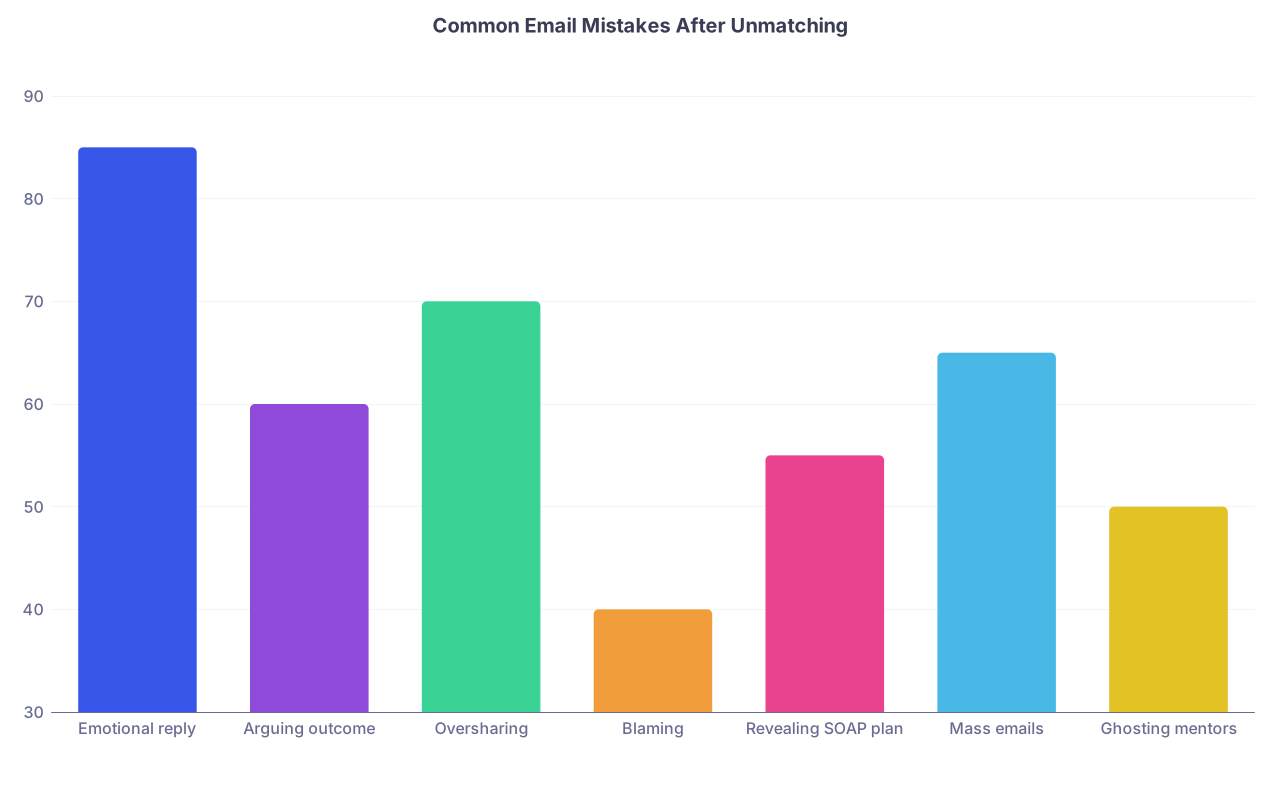
| Category | Value |
|---|---|
| Emotional reply | 85 |
| Arguing outcome | 60 |
| Oversharing | 70 |
| Blaming | 40 |
| Revealing SOAP plan | 55 |
| Mass emails | 65 |
| Ghosting mentors | 50 |
How to Respond Safely (When You Need To)
You might be thinking: “So what am I allowed to say?” Good. That is the right question.
A few principles to keep you out of trouble:
Delay > react.
Draft in a notes app, not your email client. Sit on it. Let someone you trust read it. Half of those drafts should never be sent.Short > detailed.
Two to four sentences is almost always enough. Long emails on Match Week scream “unstable.”Forward‑looking > backward‑looking.
Do not dissect why they did not rank you. Focus, if anything, on your ongoing interest in the field and your plan to move forward.Professional > personal.
You are writing as a future colleague, not a wounded student. Tone matters more than content.
Here is a template that is almost always safe when a program or mentor reaches out kindly post‑unmatch:
“Dear Dr. [Name],
Thank you very much for your message and for the opportunity to interview with your program. Although I did not match this cycle, I remain committed to a career in [specialty or field]. I am working closely with my school to plan my next steps, including SOAP and potential re‑application. I truly appreciate your support.
Sincerely,
[Your Name]”
Notice what it does not do:
- It does not blame.
- It does not beg.
- It does not explain your whole life story.
You are protecting your future self by staying boringly professional here.


| Step | Description |
|---|---|
| Step 1 | Unmatched Email or Message |
| Step 2 | No reply needed |
| Step 3 | Draft short response |
| Step 4 | Hold 24 hours and edit |
| Step 5 | Send |
| Step 6 | Usually ignore |
| Step 7 | From who |
| Step 8 | Emotional? |

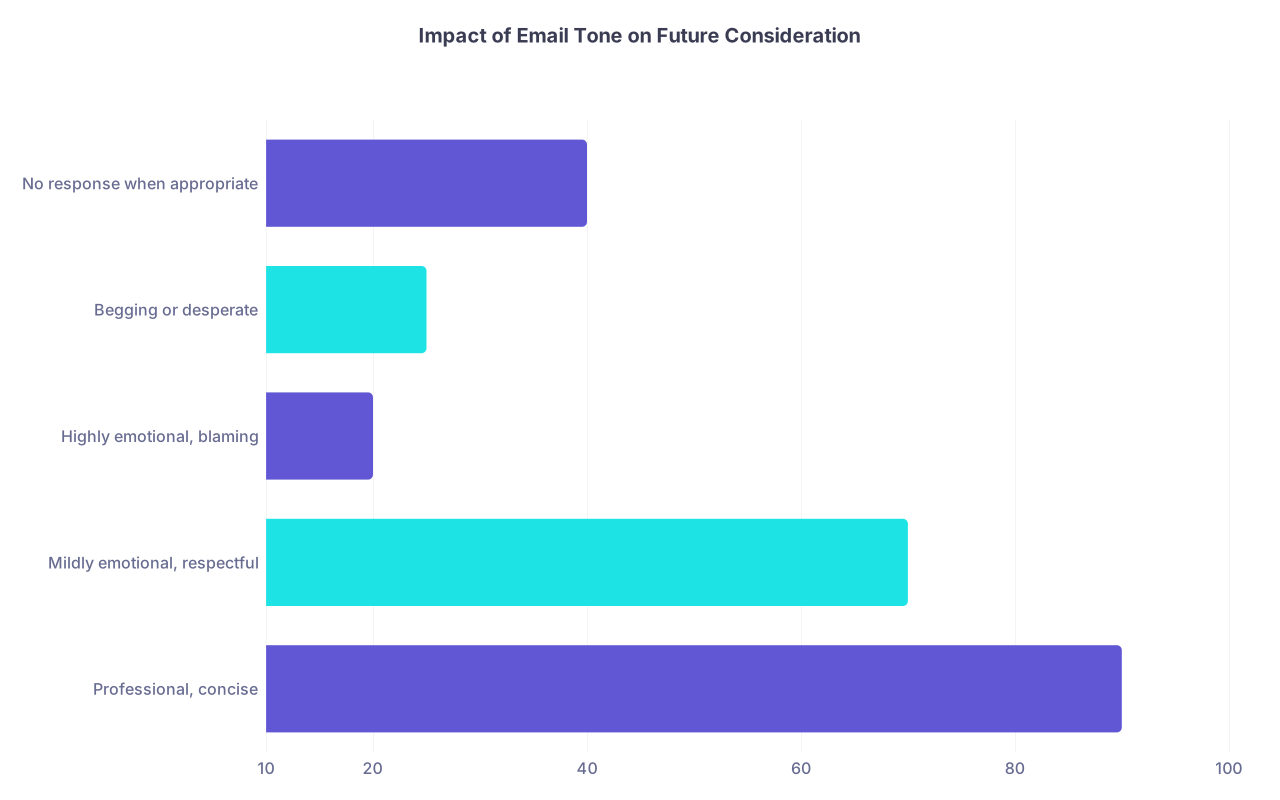
| Category | Value |
|---|---|
| Professional, concise | 90 |
| Mildly emotional, respectful | 70 |
| Highly emotional, blaming | 20 |
| Begging or desperate | 25 |
| No response when appropriate | 40 |

Final Thoughts: What Actually Matters
Match Week when you do not match feels like the end of the road. It is not. But you can make the next stretch much harder if you let your inbox become a minefield.
Remember these core points:
- The wrong unmatched email can haunt you longer than the unmatched result itself.
- Emotions belong in private spaces with trusted people, not in emails to programs.
- Quiet, professional, minimal responses preserve options; impulsive, emotional ones shut doors you do not even see yet.
Protect your future self. If you are about to type something you would not want read aloud in a rank meeting next year, do not send it.