
Match Day Mistakes That Damage Your Reputation Before Residency Starts
It’s 11:59 AM on Match Day. You and your classmates are crowded into a too-bright auditorium, half-listening to the dean, fingers hovering over email apps. Someone’s parent is already crying. The envelopes are on the table. You’re about to find out where you’ll spend the next three to seven years of your life.
This is the moment you’ve been working toward for a decade.
It’s also the moment a lot of people blow their professional reputation in under 24 hours.
I’ve watched it happen: the student who gets their dream program and becomes insufferable by 1 PM. The one who doesn’t match well and melts down publicly—online and in front of faculty who know their future PD. The one who posts something “funny” that gets screenshotted and passed around the program Slack before orientation.
Everyone thinks about how to get the match. Way fewer think about how not to torch their reputation after they do.
Let me walk you through the mistakes that actually follow you into residency—because they do—and how to avoid being the cautionary tale people still talk about three years later.
Mistake #1: Losing Emotional Control in Public
Let’s start with the obvious one people still underestimate: your reaction.
Yes, Match Day is emotional. Yes, you’re allowed to feel everything. No, you’re not free of consequences for how you express it.
There are three flavors of reputation-damaging reactions.
1. The “Trash My Program” Meltdown
Variants I’ve heard almost verbatim:
- “Oh hell no, I’m not going there.”
- “Are you kidding me? That’s beneath me.”
- “I’m stuck in [city]. This is actual hell.”
You think you’re venting to friends. You’re not. You’re venting in a room full of:
- Faculty who know your PD
- Residents who trained or rotated at that program
- Classmates who will be your colleagues—and occasionally your co-residents’ friends
Medicine is a tight network. A surprisingly small world. That one loud, bitter comment has a way of finding its way to exactly the wrong person.
Better plan:
If you’re disappointed, keep the script simple and contained:
- “Not exactly what I expected, but I’m grateful to have matched and I’ll make it work.”
- “Mixed feelings, going to process it privately.”
Save the raw breakdown for:
- Your room
- Your car
- A trusted friend in a quiet place
- Your therapist
You do not have to pretend you’re thrilled. You do have to avoid publicly insulting the place that just committed years of training to you.
2. The Over-the-Top Gloating
Other end of the spectrum:
- Standing on chairs announcing: “I matched at [Top 5 program], suck it!”
- Live-streaming your reaction with your rank list visible
- Announcing multiple friends’ results without their consent
You might feel on top of the world. I’ve seen that high turn into resentment fast—from classmates, from faculty who vouched for you, from the people who didn’t match or matched at their 12th choice.
Your future co-residents might see that clip too. First impression? Arrogant, self-centered, no awareness.
Better plan:
- Be happy. Just don’t be loud about it at other people’s expense.
- Phrases that don’t make people hate you:
- “I’m really excited about where I matched.”
- “Grateful to be heading to [program].”
- “Lucky to have this opportunity.”
Notice what’s missing: comparison. Flexing. Ranking other people.
3. The Visible Collapse in the Middle of the Room
If you SOAPed or didn’t match where you hoped, the pain is real. I’m not minimizing that. But there’s a difference between tearing up quietly at a table and screaming, throwing the envelope, or storming out cursing.
The harsh truth: faculty and residents are watching how you handle disappointment. They’re asking themselves: “What are they going to do when they have a bad outcome on a patient?”
Better plan:
- If you feel yourself losing composure:
- Step outside with one friend.
- Ask a dean quietly if there is somewhere private to go.
- Text someone you trust: “Need to step out, will call you.”
You can cry. You just don’t want your lowest emotional moment to be the defining image people have of you.

Mistake #2: Posting Reckless Social Media Content
If you only remember one thing from this entire article, remember this:
Match Day social media gets watched. By residents. By alumni. By PDs. By coordinators bored at their desks with Instagram open.
And screenshots last longer than your judgment.
Here are the landmines.
1. Posting Before Official Announcements
Every year someone hits “post” too early:
- Time zone mix-ups
- Breaking a school rule about opening envelopes
- Posting their match before the school’s formal ceremony
Technically? This one may not sink you. But it marks you as impulsive and attention-seeking to people who care about professionalism and tradition way more than you do.
Avoid it by:
- Confirming: “When are we allowed to open/post?”
- Setting your own rule: “No posting until I’m fully calm, have checked details, and have a caption I’m not embarrassed to show my PD.”
2. Insulting Other Programs or Cities
Screenshots I’ve literally seen:
- A tweet: “Guess I’m stuck in [city] for 3 years #killme”
- Instagram story: “Didn’t spend all this time to end up at a community program lol”
- Group chat screenshot posted publicly: “At least I didn’t end up at [Program X].”
You think it’s private. It never is.
Coordinators Google you. PDs search hashtags for their program on Match Day. Residents stalk new interns (yes, they do) and share the worst posts in group chats.
Ask yourself before hitting post:
- “If my PD saw this and printed it out in a meeting, would I feel sick?”
- “If I were my future co-resident seeing this, would I trust this person?”
If the answer is no, delete it.
3. Oversharing Rank Lists and Backstage Drama
Posting:
- “Matched at my #4, they were lucky to get me tbh.”
- “Ranked [Program A] dead last, dodged a bullet.”
- Screenshots showing your entire rank list or complaining about who interviewed you badly
You’re broadcasting that you don’t understand basic confidentiality or discretion. Programs you didn’t even rank might read it. They talk too. Especially within specialties.
Better way:
- Publicly share:
- Where you matched
- Gratitude
- Maybe a short reason you’re excited (city, mission, training strength)
- Keep private (or extremely tight circle):
- How you ranked programs
- Who you thought was “toxic”
- Behind-the-scenes gossip
4. Drunk, Inappropriate, or Unprofessional Photos
The classic Match Night error: alcohol plus Instagram Stories.
Red flags:
- Visible intoxication while in white coat or school gear
- “We’re gonna destroy nights on call” type captions
- Offensive jokes about patients, specialties, or co-residents
Nobody cares that you drank. They care if you look reckless.
Simple rules:
- No alcohol in your hand in your main Match announcement post.
- No photos where you’re clearly obliterated, slumped over furniture, or doing something illegal.
- No content you wouldn’t show to:
- Your future chief
- Your grandmother
- The hospital CEO
If friends tag you in questionable photos, untag yourself. Immediately.
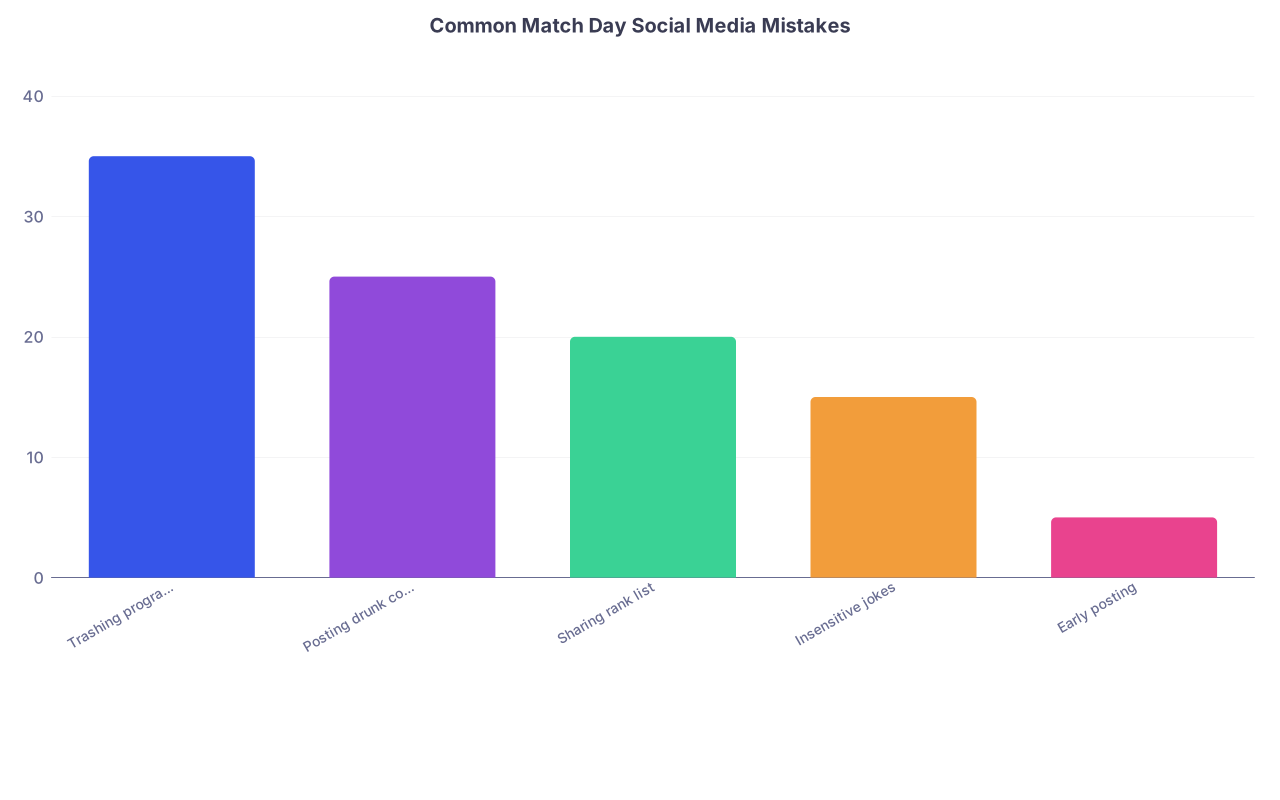
| Category | Value |
|---|---|
| Trashing program/city | 35 |
| Posting drunk content | 25 |
| Sharing rank list | 20 |
| Insensitive jokes | 15 |
| Early posting | 5 |
Mistake #3: Burning Bridges with Classmates, Faculty, and Programs
Match Day is not just about where you’re going. It’s about the relationships you’re leaving behind—and how you handle that says a lot about your professionalism.
1. Abandoning Your Home Institution the Second You Match
I’ve seen students mentally peace out at 12:05 PM:
- Stop responding to mentors’ emails
- Blow off remaining shifts or electives
- “Senioritis” their way through the last few months
Here’s what you’re forgetting: your letters, your reputation, and your future fellowship connections all trace back to those same people.
Your residency PD can and will email your dean or clerkship director if there are concerns.
Avoid this by:
- Writing a short, direct thank you to:
- Your letter writers
- The clerkship director in your chosen specialty
- Any mentor who wrote you a strong email or called a program for you
It’s not optional. It’s basic professionalism.
2. Flexing on Classmates or Ranking Them
Don’t be the unofficial class ranking system.
Phrases that instantly mark you as obnoxious:
- “You only matched there because of your Step score.”
- “Wow, didn’t realize [lower-tier program] was even on your list.”
- “You should have aimed higher.”
You don’t know:
- Who scrambled after SOAP
- Who has family constraints
- Who’s thrilled just to be in a particular region
You also don’t know which one of these people might be your attending someday.
3. Ghosting Programs That Ranked You Highly
This one is subtle but damaging.
You matched at your top choice. Great. But there were programs that:
- Interviewed you
- Ranked you seriously
- Maybe advocated for you internally
And then… nothing. Radio silence.
The PD community is small. You might apply for fellowship later. Or your spouse might apply to that program. Or your resident friend will.
At minimum:
- Send very short thank-you emails to:
- The program you matched at
- 1–2 programs where you had strong connection but didn’t match
- Something like:
- “Thank you again for the opportunity to interview with your program. I matched at [Program], but I truly appreciated meeting your team and learning about your training.”
You don’t need to send 40 emails. But don’t pretend those relationships never existed.
Mistake #4: Mishandling Communication with Your New Program
Once you match, you’re on their radar. You’re not “future maybe applicant”; you’re “incoming intern.” How you act now starts building your file—for good or bad.
1. Ignoring or Delaying Responses to Program Emails
Typical incoming PGY-1 inbox on a random Tuesday in April/May:
- HR paperwork deadlines
- Licensure or training modules
- Immunizations or background checks
- Housing or orientation info
Students regularly:
- Let messages sit for weeks
- Miss deadlines
- Need multiple reminders
If you’re already that person before you start, guess what label you get? Disorganized. High-maintenance. Not reliable for time-sensitive tasks.
Your rule:
Aim to respond to program emails within 24–48 hours, even if it’s just:
- “Received, I will complete this by [date]. Thank you.”
If you can’t meet a deadline:
- Email before the deadline and explain briefly.
This is low-effort professionalism. Many people still fail it.
2. Oversharing Worries and Demands Before Day One
I’ve seen emails like:
- “I absolutely cannot work nights my first month.”
- “I need all my vacation in July and August for weddings.”
- “I heard your ICU is toxic, can you reassure me about that?”
There’s a line between asking reasonable questions and broadcasting that you’ll be a problem.
Early red-flag behaviors:
- Negotiating every little thing in your schedule
- Demanding special exceptions with no clear reason
- Requiring constant hand-holding about details already explained in orientation materials
How to handle concerns instead:
- Keep emails focused, brief, and respectful.
- Phrase constraints as rare and specific, not general:
- Bad: “I prefer not to work weekends.”
- Better: “I have a preexisting obligation the weekend of [date]—is there any chance that could be considered when building the schedule?”
3. Broadcasting Disappointment About Matching There
This one’s almost unbelievable, but it happens.
You email your coordinator or PD with some version of:
- “You weren’t my top choice, but I’ll make the best of it.”
- “I was really hoping for [Other Program], so I’m still adjusting.”
You are not the first to feel this. But you don’t need to say it out loud—to the people responsible for evaluating and supporting you.
You can talk about mixed feelings to friends, family, therapists. Not to your new bosses.
| Situation | High-Risk Response | Safe Response |
|---|---|---|
| Disappointed in match | Trash city/program online | Share feelings privately with close friends |
| Program email about paperwork | Ignore for a week | Reply within 24–48 hours with plan to complete |
| Classmate matches “lower” program | Comment on their rank or prestige | Congratulate them and stop there |
| Excited about top program | Publicly rank programs, mock others | Post simple, positive announcement |
Mistake #5: Being Careless About Confidentiality and Patient Content
You’re still a student on Match Day. HIPAA still applies. Professional standards still apply. People forget that in the adrenaline rush.
1. Posting Photos in Clinical Areas
I’ve watched students take celebratory selfies:
- In patient hallways
- Outside ORs with staff in background
- In scrubs with patient boards partially visible
Then they post them with captions like: “Last day on medicine before I become a surgeon!! Matched at [Program]!”
One unlucky detail in the background—name on a board, location marker, family member recognizable—and you’ve crossed into privacy violation territory.
Safer rules:
No Match photos:
- In clinical hallways with other people visible
- With computer screens or patient boards in background
- Anywhere patients or families appear
Use:
- Outdoor photos
- Neutral school backdrops
- Auditors, classrooms, your home, or non-clinical spaces
2. Casual Stories About Patients on Match Day
You’re excited. People ask where you matched. You respond with stories like:
- “I had a patient at [Hospital X] who was treated there and they said it was awful…”
- “We had this crazy trauma case at my new program’s hospital…”
You forget families, staff, even the patient themselves might see this if shared. Also, residents and attendings hate hearing students brag about specific patient cases publicly. It reads as immature and unsafe.
Keep your Match announcements about you, not your patients.
Mistake #6: Letting Match Day Turn into a Multi-Day Bender
Nobody is saying you should stay home and silently reflect with herbal tea. You’re allowed to celebrate. But you can still trash your reputation before orientation if you turn Match into a spectacle.
The dangerous pattern:
- Match Day: heavy day drinking, videos everywhere.
- Match Night: group bar crawl, shots, questionable photos.
- Next 24–48 hours: more drinking, more unfiltered posting, less judgment.
The problem isn’t the alcohol itself. It’s:
- Who sees you
- What gets posted
- What you say that you don’t remember
If residents from your future program trained at your med school (very common), they might be out in the same places. They might see you screaming, trash-talking, or drunk to the point of needing help.
You do not want your new senior’s first thought to be, “Oh, that’s the intern who was obliterated on Match Night.”
Reasonable boundaries:
- Pick one main celebration event. Be present. Have fun. Don’t annihilate yourself.
- Ask friends not to post videos of you without checking.
- If you know you’re a messy drunk, limit it. This is not the weekend to test your limits.
Mistake #7: Acting Like the Match Is the End of Professionalism
Some students treat Match Day like the finish line. “I made it. No one can touch me now.” Wrong.
You’re about to enter one of the most feedback-heavy, evaluated phases of your life. The people who trained you, wrote your letters, and vouched for you? They still matter. A lot.
Common “post-match personality shift” mistakes:
- Showing up late or unprepared for remaining rotations
- Being openly dismissive of feedback because “I already matched”
- Telling juniors, “None of this matters, just get the Step score and fake the rest”
That stuff spreads. Fast. And it gets back to people who can call your PD.
I’ve seen deans send “quiet warnings” to residency programs about matched seniors whose professionalism tanked after Match. That follows you.
Protect yourself by:
- Keeping your work ethic at least minimally consistent through graduation
- Avoiding cynical speeches to M3s about “cheating the system”
- Remembering: your reputation doesn’t reset on July 1. It continues.
The Bottom Line: Don’t Be the Story People Tell
If you’ve read this far, you already care more about not being a disaster than most. Good.
So let’s boil this down.
Handle your emotions with basic public control.
Feel what you feel, but don’t trash your program, your city, or your classmates out loud or online.Treat social media like your PD is reading over your shoulder.
Because sometimes they are. No rank lists, no insults, no drunk chaos tied to your professional identity.Behave like an intern already.
Answer emails, respect your home institution, communicate clearly with your new program, and don’t suddenly drop your professionalism now that the Match letter is in hand.
Match Day can be one of the best days of your life—or the first line in your residency file that says “concerning judgment.” You only get one shot at that first impression. Don’t waste it.