
You’re standing in a crowded auditorium. Balloons, families, champagne flutes half-filled. Your school’s dean just finished the countdown. You rip open your envelope.
You matched. But not where you wanted.
Your phone starts buzzing: classmates screaming, parents calling, group chats exploding. Meanwhile, deep in some program office, a coordinator is screen‑shotting emails, saving them under your name, and saying quietly to the PD, “You’re not going to believe what this applicant just sent.”
That’s the part no one warns you about: Match Day is not just a celebration. It’s also one of the easiest days to permanently burn bridges with programs, faculty, and future colleagues—often in under 60 seconds.
Let me walk you through the behaviors programs do not forget. The stuff that follows you into fellowship, job searches, and beyond. And how to avoid being that story everyone passes around for years.
Mistake #1: The Angry “Why Didn’t I Match There?” Email
You’d think this would be obvious. It isn’t.
Every year, programs get some version of:
“I’m shocked and disappointed I didn’t match at your program given my strong interest and interview. I ranked you highly. Can you explain what happened?”
Or worse:
“You led me to believe I would match there. This feels dishonest and unprofessional.”
I’ve seen PDs forward these to their chiefs with, “Save this name. Never for a fellowship spot.” That harsh.
Why this burns bridges
It misunderstands the Match.
Programs don’t “promise” you anything. The algorithm favors applicant preferences. Not yours? Someone else ranked them higher, or they ranked you lower. That’s the game.It signals entitlement.
You’re basically saying, “I deserved you.” Programs hate that. They want residents who can handle disappointment without lashing out.It creates a permanent record.
These emails do not get deleted. They get saved. Sometimes screen‑shotted and shared (with names removed publicly, but not inside the PD group chat).
What to do instead
Do not email asking why you didn’t match there.
Ever. That door is closed.If you must email, keep it short and gracious:
“Dear Dr. Smith,
I wanted to thank you again for the opportunity to interview with your program. Although I matched elsewhere, I remain very grateful for your time and consideration and wish you and your residents all the best.
Sincerely,
[Your Name]”
That’s it. No subtext. No “I’m disappointed.” No “I thought I’d be a good fit.” You’re signaling maturity instead of entitlement.
Mistake #2: Public Meltdowns on Social Media
Match Day + adrenaline + disappointment + Twitter/Instagram/TikTok = disaster.
I’ve watched students post things like:
- “Can’t believe I ended up at a program in [city]. This is going to suck.”
- “My program was my #7. Whatever.”
- “Guess I’m stuck at [Hospital Name] for 3 years. Pray for me.”
- Subtweets clearly aimed at specific faculty or institutions.
And then they’re shocked when the PD screenshots it and emails, “We need to talk about this” before July 1.
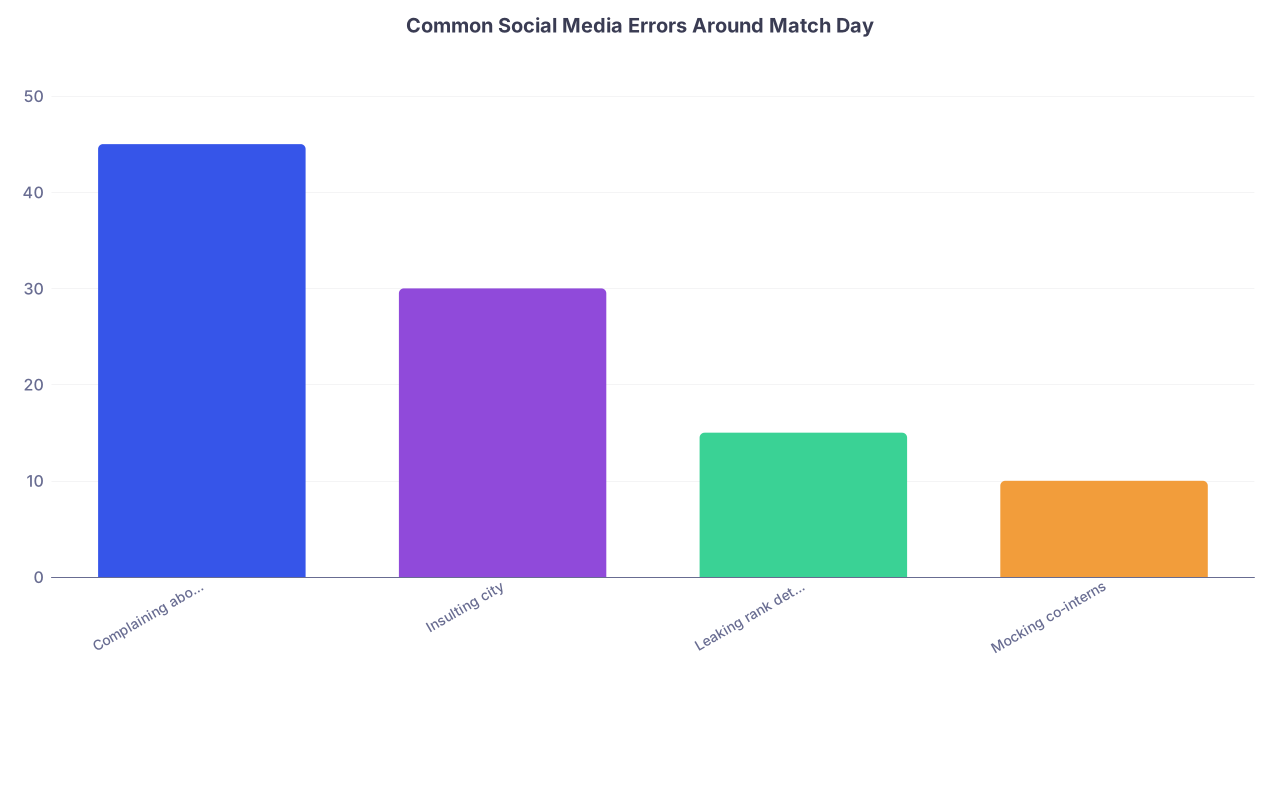
| Category | Value |
|---|---|
| Complaining about program | 45 |
| Insulting city | 30 |
| Leaking rank details | 15 |
| Mocking co-interns | 10 |
Why this burns bridges
Programs are watching.
Residents follow you. Faculty follow you. Applicants follow you. You are not tweeting into the void.You’re insulting your future colleagues.
When you trash the program or the city, you’re insulting everyone who works there and everyone who wanted to be there and didn’t match.Receipts live forever.
Deleted is not gone. Screenshots exist. Program leadership may never fully trust you after that.
How to avoid it
24‑hour rule:
Don’t post anything emotional about the Match for 24 hours. Celebrate. Cry. Vent to actual humans. Just not the internet.Assume your PD will see every post.
If you’d be embarrassed reading it in a CCC meeting with your name on the slide, do not post it.Set a simple rule for yourself:
- No complaining about:
- Program
- City
- Co‑interns
- Faculty
- Your position on your own rank list
- No complaining about:
If you need to scream, do it in your car with the music up, not on TikTok.
Mistake #3: Ghosting Programs That Ranked You
Here’s an ugly one no one teaches you about.
You matched somewhere else. Fine. But:
- A program director you told, “You’re my top choice”
- A mentor who called a PD on your behalf
- A PD who took extra time advocating for you in their rank meeting
…finds out where you matched, and never hears from you again.
Why programs remember this
They invested in you.
That meeting where they argued for you? That was time, political capital, and reputation.You claimed you were “very interested.”
Maybe you even implied you’d rank them high. Then you vanish. They notice.Reputation spreads.
PDs talk. “Did you have [Name]? Yeah, they ghosted us after we ranked them to match.” That’s the sort of sentence that kills a future application in another specialty or fellowship.
What you should actually do
Within 48 hours of the Match, send short, respectful closure emails to:
- Programs where you had strong contact/mentorship
- Anyone who wrote “I called the PD for you” emails
- Programs you visited as a home away rotation where they clearly liked you
Template:
“Dear Dr. X,
I wanted to share that I matched at [Program, Specialty, City]. I’m very excited to start this next chapter. I’m also sincerely grateful for your support during this process and for the opportunity to interview with your program. I learned a great deal from meeting you and your residents, and I hope our paths cross again in the future.
Best regards,
[Your Name]”
It’s basic professionalism. And it’s how you don’t close doors you may need later.
Mistake #4: Telling Programs “You Were My #1” When They Weren’t
This one doesn’t always explode on Match Day, but when it does, it’s spectacular.
Scenario I’ve personally watched play out:
- Applicant emails multiple programs: “You are my #1.”
- Match results come out.
- At least two of those programs compare notes casually.
- They realize they were both allegedly “#1.”
- Applicant’s name now lives in multiple PD email archives as untrustworthy.
Why this is a big deal
It’s lying, not “gaming the system.”
There’s a difference between signaling strong interest and outright lying about rank order. Programs don’t forget dishonesty.Programs talk more than you think.
Particularly within the same region or specialty. PDs share stories at conferences and via listservs. “Did anyone else get an email from [Name] saying we were first?” is not a rare sentence.Your integrity becomes the issue.
You’re not the applicant who was mildly awkward. You’re the one they can’t trust with patient care, documentation, or feedback.
How to avoid this trap
If you want to signal interest:
Use language like:
- “I plan to rank your program very highly.”
- “You are one of my top choices.”
- “I would be thrilled to train at your institution.”
Only use “You are my #1 choice” if:
- It’s actually true.
- You are ready to live with that ranking no matter what.
Lying might get you one program slightly more interested. It might also get you quietly blacklisted down the line. Not worth it.
Mistake #5: Trash‑Talking Other Applicants or Programs… on a Hot Mic
Match Day is loud. People are emotional. Which is exactly when people say things they shouldn’t within earshot of exactly the wrong person.
Some greatest hits I’ve heard or had relayed to me:
- “How did he match there with his scores?”
- “That program is garbage. I don’t know why anyone would rank it.”
- “She only got that because of diversity stuff.”
- “I’d rather not match than end up in [city/program].”
Someone always hears. Sometimes it’s your future co‑resident’s friend. Or a faculty member who used to work at the program you just trashed. Or the dean, who now has a mental note about your attitude.

Why this sticks
Character judgments linger.
People can forgive disappointment. Openly belittling others? Much harder.Medicine is small.
Today’s random listener is tomorrow’s chief resident or fellowship PD.It reveals how you’ll talk about colleagues and patients.
If you can’t hold your tongue at a party, are you going to gossip about attendings or patients on the wards?
How to protect yourself
Complain only:
- With 1–2 trusted friends
- In private
- Away from crowds
Assume every room on Match Day has:
- A dean
- A program director
- Someone who will eventually train or hire you
If you need to vent, wait until you’re at home or off campus. Your career is longer than this one afternoon.
Mistake #6: Making Your “Backup” Program Feel Like a Consolation Prize
You matched at your #3 or #5. Maybe lower. It stings. But here’s a big mistake:
- Telling your new program on the phone: “You weren’t my top choice, but I’m happy to be there.”
- Saying to future co-interns in a group chat: “Yeah, this wasn’t where I wanted to be, but at least I matched.”
- Joking with friends in public: “Guess I’ll survive in [city] for 3 years.”
That gets back to people. Fast.
Why this damages you where you’re going
First impressions are sticky.
You don’t want your PD’s first impression to be “reluctant, resentful, thinks they’re above us.”Your co‑interns will feel it.
Nobody wants to spend 80‑hour weeks with someone who thinks they settled.People will invest less in you.
Mentorship, research hooks, strong letters—those go first to trainees who want to be there.
Better approach
You don’t have to fake joy. You do have to show basic respect.
When programs call you or you email them:
“I’m very excited to join your team and grateful for the opportunity to train at [Program]. I’m looking forward to meeting everyone in June/July.”
Period. Your internal ranking process? Irrelevant now.
With classmates, if you must be honest, keep it tight:
“It wasn’t my #1, but I think it’ll be a good fit and I’m ready to make the most of it.”
You can grieve later, in safe company. On Match Day, protect your reputation in the place that’s actually hiring you.
Mistake #7: Forgetting That Faculty at Your School Have Long Memories
Here’s a sneaky long‑term one: burning bridges with your own med school on Match Day.
I’ve seen all of these:
- Ignoring the clerkship director who championed you when they walk up to congratulate you.
- Blowing off the department’s Match reception because you “don’t care about this place anymore.”
- Saying loudly in front of faculty, “I’m just glad I’m done with this institution.”
Those same people:
- Write your MSPE addenda
- Take phone calls from fellowship PDs
- Recommend you for hospital positions years from now
| Role | How They Influence You Later |
|---|---|
| Clerkship Director | Fellowship recommendation calls |
| Program Director (home) | Job references, lateral moves |
| Department Chair | Letters for fellowships and visas |
| Dean of Students | Institutional support, problem solving |
Why this is a bad idea
Medicine is weirdly circular.
You will run into these people again. On committees, conferences, credentialing boards.Your school’s reputation follows you.
If you make them regret supporting you, they’ll think twice before going to bat hard for “students like you” in the future.They talk to each other.
“We had a student last year who was very unprofessional on Match Day.” You do not want to be that case example in next year’s professionalism lecture.
How not to torch your home base
Thank:
- Your advisor
- At least one key clerkship or sub‑I faculty
- The dean or student affairs person who helped you
If you’re bitter about something your school did:
- Table it for later.
- Process with trusted people, not at a public ceremony.
You’re not just graduating. You’re shaping the story they’ll tell about you long after you’re gone.
Mistake #8: Drunk You Making Career‑Ending Choices
You already know getting hammered around attendings is dumb. Yet every year: someone does it.
Match parties—school‑sponsored or not—tend to involve alcohol. Combine:
- An empty stomach
- Emotional high/low
- Pressure to “celebrate hard”
…and people lose judgment.

Stories I’ve seen or heard:
- Student slurring and oversharing about specific programs in front of faculty.
- Student posting drunken Instagram Lives ranting about which programs are “toxic.”
- Student making inappropriate comments to residents or staff at a department reception.
Why this gets remembered
People associate you with your worst night.
Fair or not, they do. “That was the student who was really drunk at our Match event.”Unprofessional behavior can trigger formal consequences.
I’ve seen professionalism reports written for Match Day behavior. Those don’t always disappear.You’re days away from onboarding to a professional role.
You’re about to be a physician. People expect you to act like one.
Reasonable boundaries
Decide before the day:
- Max number of drinks (2 is a sane cap).
- Who will be your “no, you’re done” friend.
Avoid:
- Posting anything while drinking.
- Venting to faculty or residents after your third drink.
You can celebrate without giving your future colleagues a preview of “problem resident at the holiday party.”
Mistake #9: Oversharing Match Details That Violate Confidentiality Norms
You’re excited. You want to show your whole rank list in a group chat. Or you’re furious and tempted to blast:
- “Program X told me I’d match there. They’re liars.”
- “Program Y’s PD is a jerk. Never rank them.”
Here’s the issue: programs aren’t supposed to tell you how they ranked you. You’re not supposed to pressure them. When you start quoting private communications publicly, you may accidentally implicate yourself and the program in a match violation mess.

| Step | Description |
|---|---|
| Step 1 | Private PD Email |
| Step 2 | You Screenshot |
| Step 3 | Post to Group Chat |
| Step 4 | Someone Shares Wider |
| Step 5 | Seen by Program or Admin |
| Step 6 | Professionalism Concern |
Why this can blow back on you
You may out yourself as participating in match‑inappropriate communication.
If a PD wrote “We will rank you highly,” and you post it, you drag them—and yourself—into uncomfortable territory.You look untrustworthy with private communication.
If you screenshot DMs now, what are you going to do with internal residency emails later?It can trigger unnecessary conflict.
People you name can—and sometimes will—defend themselves. Publicly or internally.
Safer approach
Do not post screenshots of:
- PD emails
- Coordinator messages
- Faculty DMs about ranking
If you feel genuinely misled:
- Bring it to your dean or advisor privately.
- Use it as a learning point, not a public crusade.
You’re allowed to feel hurt. Just don’t set yourself on fire to prove a point.
Mistake #10: Forgetting the Long Game
This is the overarching mistake behind all of the above: believing Match Day is the finish line, not the starting point.
It feels like the end of a saga. But in reality:
- You’ll need letters for fellowship.
- You may want to transfer programs.
- You might need a PD or chair to vouch for you with a licensing board or job.
- You’ll run into the same faces at conferences and on committees.
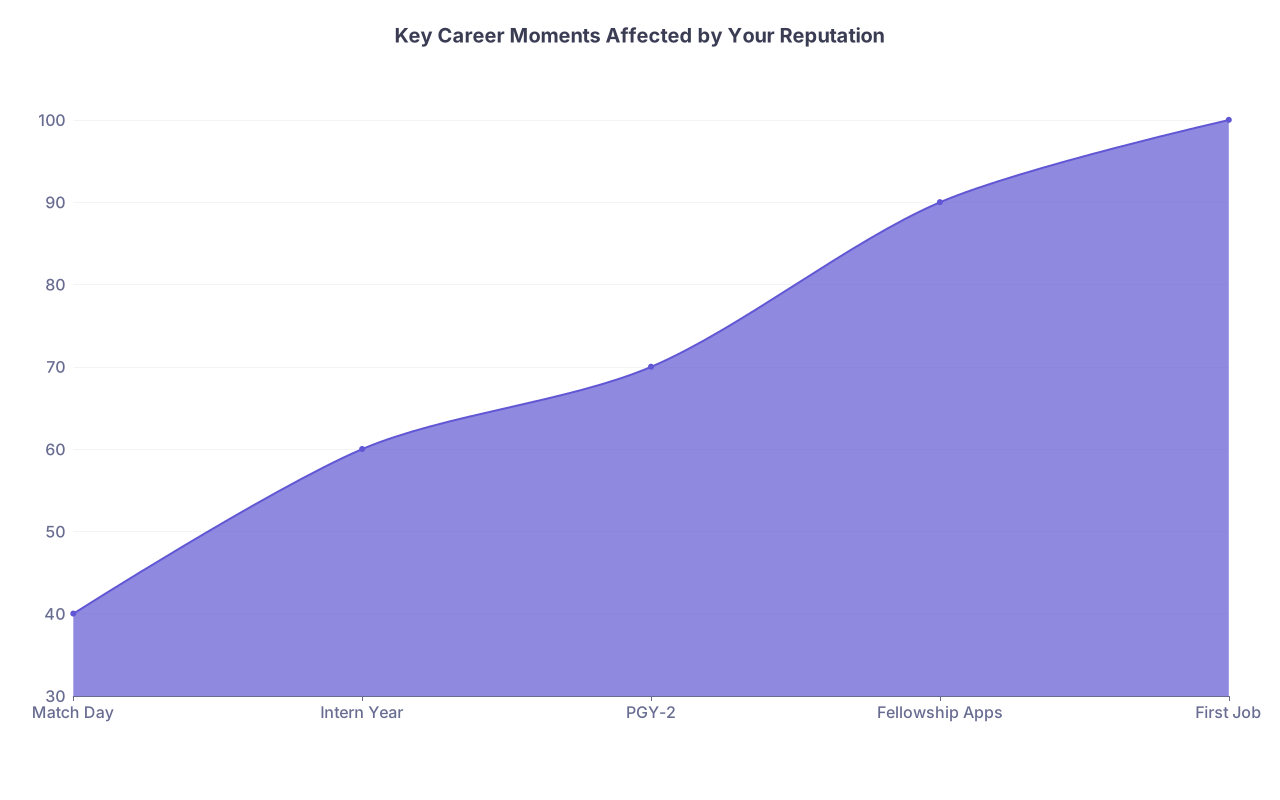
| Category | Value |
|---|---|
| Match Day | 40 |
| Intern Year | 60 |
| PGY-2 | 70 |
| Fellowship Apps | 90 |
| First Job | 100 |
Match Day is one chapter in a very long book. Programs remember:
- The student who emailed a gracious thank you despite disappointment.
- The one who showed up appreciative, even at their “backup” program.
- And, unfortunately, the one who ranted on Twitter and insulted half the specialty.
You get to choose which story they tell about you.

Your Move Today
Do one thing right now:
Write three short, professional email templates you can copy‑paste on Match Day:
- To the program you matched at (enthusiastic, grateful).
- To a program you liked but didn’t match at (brief, gracious closure).
- To a mentor or faculty member who advocated for you (specific thanks, share your result).
Save them in a note or email draft folder. On Match Day, when emotions are high and judgment is low, you’ll have guardrails already in place—and you won’t end up being the cautionary story programs tell for the next decade.