
The fastest way to turn Match Day from the best day of your life into a career liability is to treat it like a college tailgate.
You think I’m exaggerating. I’m not. I’ve watched people tank their reputations, damage relationships with future colleagues, and even trigger professionalism reviews because of what they did in the 6–12 hours after opening that envelope.
Match Day is not “just a party.” It is a working-day public event sponsored by your medical school, often attended by faculty who will be writing your employment references for the next decade. That’s the mindset you need—or you’ll make mistakes you cannot fully undo.
Let me walk you through the traps you probably aren’t thinking about.
The Big Myth: “Once I’ve Matched, I’m Safe”
This belief ruins more careers than a low Step score:
“I matched. The hard part’s over. I can finally relax.”
No. You are not “off the clock.” You’ve just entered a different kind of scrutiny.
Programs can’t just “unmatch” you on a whim, but they can:
- Notify your school of serious professionalism concerns
- Request information or clarification about alarming incidents
- Start residency with a mental note: “Watch this person”
- Quietly shape your early evaluations based on their first impression of you
More importantly, the faculty and deans at your own school—standing in that ballroom or auditorium—are the ones who get the phone calls when you’re up for fellowships, jobs, academic appointments. The ones who remember the student screaming profanities on stage or drunkenly stumbling during the class photo.
They don’t forget. You will graduate and move on. They stay. They talk.
You’re building your professional narrative even while you’re spraying champagne. Or rather, because you’re spraying champagne.
Public Match Ceremony: Where Most People Overplay Their Hand
If something is going to haunt you, it’s probably not the dinner with your family. It’s the ceremony. The cameras. The stage.
Here’s where people lose control.
Over-the-top celebrations that cross into spectacle
Screaming, jumping, crying—fine. Normal. That’s emotion.
What crosses the line:
- Standing on chairs or tables
- Ripping shirts, tearing coats, throwing clothes
- Chugging alcohol on stage or in front of kids and faculty
- Making obscene gestures or yelling profanities into the mic
- Dramatic “bit” that doesn’t land—mock fainting, fake proposals, crude jokes
You may think it’s hilarious. Your classmates might even cheer. But your future attendings, program directors who came to support you, your dean’s office, and the school photographer are seeing something different: self-control problems.
And that’s the word you never want casually associated with your name.
Alcohol in the wrong place, at the wrong time
You know the photo I’ve seen more than once? The one that gets quietly circulated later?
Student at 10:05 a.m., visibly intoxicated, waving an open bottle in the middle of the Match ceremony. Kids in the background. Dean on stage.
If your school’s event is alcohol-free (many are before noon), do not try to be clever with flasks, “spiked coffee,” or hiding drinks in Solo cups. Staff see more than you think. The photos last longer than the buzz.
Have a drink afterwards at the bar, restaurant, or after-party. During the actual ceremony, act like you are at a formal academic event—because you are.
Inappropriate stage behavior
This is the one that feels harmless in the moment and looks awful on video.
Common unforced errors:
- Making a joke about a specialty you didn’t match into (“At least I’m not going into family med, am I right?”) while the family med program director is in the third row
- Mocking another city or region (“I guess I’m going to the armpit of America!”)
- Turning a personal political, religious, or controversial issue into your “bit” at the mic
- Announcing your couple’s match in a way that humiliates your partner or feels performative more than celebratory
Remember: what you say into that microphone is not just for your friends. It’s recorded, amplified, and often posted.
Social Media: The Permanent Record You Think Is Temporary
If the ceremony doesn’t burn you, Instagram and TikTok might.
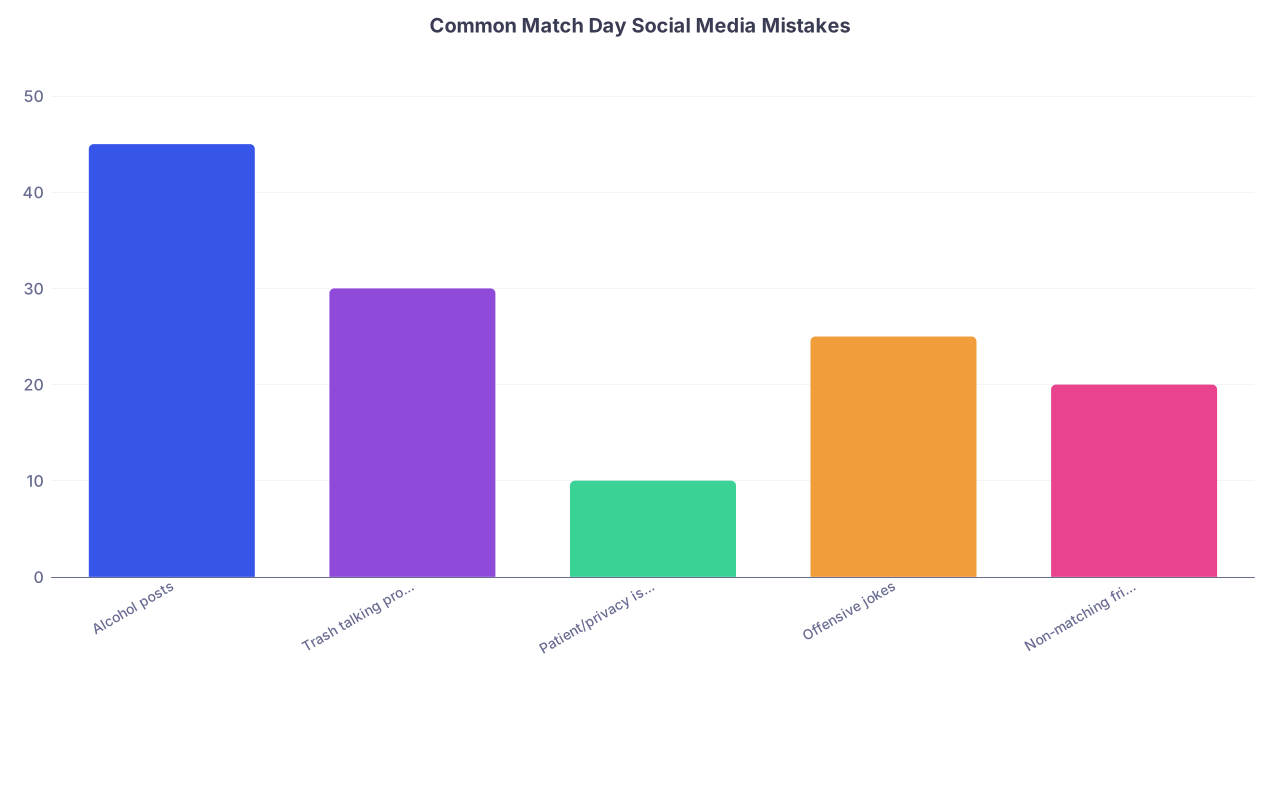
| Category | Value |
|---|---|
| Alcohol posts | 45 |
| Trash talking programs | 30 |
| Patient/privacy issues | 10 |
| Offensive jokes | 25 |
| Non-matching friends exposure | 20 |
Most people underestimate how fast one post can spread, and how many future colleagues quietly watch.
Here’s how people sabotage themselves online.
Posting alcohol-fueled chaos as your “brand”
You know which posts blow up on stories?
- The video of you standing on a bar, shirt half open, yelling “I’m a f***ing doctor now!”
- The boomerang of your friend vomiting in a bathroom in their white coat
- The group shot where four people are too drunk to stand straight—tagged with your real name, med school, and new residency program
Those stories get screenshotted. Saved. Forwarded. Sometimes shown to PDs the next year as a “can you believe this?” anecdote.
If your real name + new hospital + “MD” are in your bio, assume every post is a professional post.
You don’t have to be boring. Just don’t be stupid.
Trash-talking programs or cities online
This one makes me wince because it’s so avoidable.
Variations I’ve seen:
- “Didn’t want [Program X] anyway, their interview day was trash”
- “Guess I’m stuck in [City] for 3 years, rip my life”
- “Still salty about that rejection from [Big Name Program], they really missed out”
- Laughing at a community program you see as “beneath you”
You think you’re talking to your friends. You’re not. You’re talking to:
- Co-residents who trained there
- Faculty who did fellowship there
- Someone’s spouse who works there
- PDs who are friends with that PD
Burning bridges publicly is amateur-level behavior. Medicine is smaller than you think. People remember who disrespected their colleagues.
Violating privacy without realizing it
You’re on stage. The email announcement pops up on the screen. You screenshot. You post.
Problem: those slides and emails often contain other people’s full names, programs, sometimes even emails or identifiers. Same with group photos of people who didn’t give consent.
Bad moves:
- Posting the class match list screenshot
- Zooming in on someone’s result that they haven’t shared yet
- Sharing the name of a partner who didn’t match or SOAPed, before they’re ready
If you’re posting something that includes other people’s information—crop, blur, or don’t post. Their story is not your content.
The White Coat and Envelope: Props, Not Costumes
Treating your white coat like a party costume is the quickest shortcut to looking unprofessional.
Common mistakes:
- Wearing your white coat to the bar or club after the ceremony
- Dancing or grinding in it while people record
- Spilling alcohol on it and laughing
- Letting friends or family wear your coat “for the photo”
A white coat in public signals “physician or trainee on duty.” Acting drunk while wearing it is like showing up to the OR in pajamas. It sends the wrong message, loudly.
Same goes for the envelope itself. Do not:
- Crumple it dramatically and throw it at someone
- Tear it up angrily on camera if you didn’t get your top choice
- Write profanity on it and pose
You are allowed to be emotional. You are not required to perform that emotion in a way that reads as contempt for the process.
Drinking: Where Celebration Quietly Becomes Liability
Nobody is saying you need to be stone sober on Match Day. But you do need to avoid being the story.
Let’s be blunt about the risks.
The line between “buzzed” and “problematic”
If any of these are happening before the end of the official ceremony, you’ve already crossed into dangerous territory:
- Slurred speech in front of faculty or on a livestream
- Needing help to stand or walk
- Knocking over chairs, tables, or decorations
- Aggressive hugging, shouting, or invading personal space
- Arguing, crying uncontrollably, or picking fights
You’re not in college anymore. This isn’t a frat formal. You’re about to hold a DEA number and write orders for controlled substances. People absolutely judge whether you can handle substances yourself.
Mixing strong emotions with alcohol
Match Day produces:
- ECSTATIC joy
- Crippling disappointment
- Awkward survivor’s guilt
- Relief that feels like collapse
Now pour alcohol over all of that. You see the problem.
Different meltdown flavors I’ve seen:
- The person who matched their #1 but gets so drunk they end up screaming about how they “deserve this more than anyone else”
- The person who didn’t get their first choice and spends the night loudly telling everyone their program is “trash” and “beneath them”
- The person whose partner didn’t match, who gets hammered and starts blaming specific faculty or PDs by name, on camera, in public
None of this reads as “understandable emotion” in retrospect. It reads as a warning about your insight and restraint.
Forgetting the People Who Didn’t Match
You’re thrilled. You should be. But Match Day isn’t just about you.
Every year there are classmates who:
- Didn’t match at all
- Had to SOAP into a backup specialty
- Matched somewhere that wasn’t in their top tier and are still processing it
- Had big life plans (partner, kids, mortgage) that Match just scrambled
The mistake is acting like your good fortune obligates everyone else to celebrate at your volume.
Here’s what goes wrong:
- Screaming, “We did it! 100% match rate, we’re all going to be doctors!” when you know at least one person didn’t match
- Posting a big group shot with the caption “Everyone matched!!!” when it’s not true
- Pressuring someone who’s clearly upset to “come drink and forget about it”
- Talking loudly about your #1 choice match right next to someone who SOAPed
Be happy. Just don’t be oblivious. The way you handle your classmates’ pain is something attendings watch very closely. It signals how you’ll treat colleagues in crisis later.
Family, Partners, and Kids: Extra Landmines You’re Ignoring
Match Day is often the first time your professional world and your personal world collide in a big way. That collision can get messy.
Over-exposing family drama
Things I’ve seen blow up later:
- Parents loudly arguing in the venue about your specialty choice
- A partner who didn’t know you ranked another city higher finding out from your announcement
- Two different significant others showing up because you didn’t communicate well
You do not want the faculty to remember you as “the student whose family had a screaming match at Match Day.”
If your family is high-conflict or boundary-challenged, set expectations early and clearly. Where they sit, what they can post, what you will and won’t do publicly.
Kids and inappropriate scenes
If there are kids—yours, classmates’, faculty’s—running around, there are things you really don’t want to be doing in the same room:
- Passing around open containers near them
- Swearing loudly right by the kids’ table
- PDA that would make a PG-13 movie blush
You’re not just a student anymore. You’re a physician in training in the eyes of that room. Act like someone parents would be comfortable having care for their child.
Relationships With Future Colleagues: The Subtle Damage
Here’s something few students realize: by the time Match Day hits, word may already be circulating about certain behavior patterns in your class. Who’s reliable. Who’s unprofessional. Who’s intense. Who’s kind.
Match Day can confirm or correct those narratives. For better or worse.
Being a bad winner
You matched at a “top” program. Congratulations. Don’t use that as a license to:
- Brag non-stop in front of people who didn’t get interviews there
- Frame your match as proof you’re better than your peers
- Post condescending commentary about “community” or “lower-tier” programs
Residents and attendings loathe arrogance. They will be your seniors in a few short months. Their first impression of you matters.
Broadcasting “I don’t want to be there”
If you matched somewhere that wasn’t in your top 3, keep that information tightly controlled. Saying this stuff publicly is career malpractice:
- “Well, it’s only three years. I’ll survive.”
- “I’ll just use this program as a stepping stone and peace out.”
- “Didn’t really want [specialty], but I’ll switch when I can.”
People talk. Your co-interns might see that tweet. The chief resident might hear that quote. Program leadership might get screenshots.
Nobody wants to invest in a trainee who’s clearly half out the door on Day 0.
Money, Venues, and Logistics: Underrated Sources of Trouble
You can also set yourself up for disaster before the day even starts, just in how you plan it.
| Celebration Type | Professional Risk Level |
|---|---|
| School ceremony only | Low |
| Family lunch after ceremony | Low |
| Dinner and drinks with close friends | Moderate |
| Large open-invite bar crawl | High |
| Club/party bus with heavy drinking | Very High |
Over-committing to a wild after-party
If the main event is at 9–11 a.m. and your class books an all-day bar crawl starting at noon, you’ve basically scheduled a controlled demolition of decision-making capacity.
The worst mistakes happen:
- After the third venue
- When tabs are open and nobody’s watching intake
- When others start leaving, and the most intoxicated group sticks together
If you want a late-night rager, fine. Don’t chain it directly to the ceremony. Build in a reset: lunch, water, time with family, a nap.
Ignoring transportation and safety
You’d think future physicians would be better at basic risk management. You’d be wrong.
Problems I’ve seen:
- Students driving themselves “because it’s just one drink” that becomes six
- Uber bills so high they start arguing about whose card to use at 2 a.m.
- People stranded at a far-away venue with dead phones
Plan this like you’re the on-call resident for your own safety:
- Decide before drinking who is driving (or that nobody is)
- Make sure everyone knows how they’re getting home
- Have one or two people in the group who commit to staying mostly sober
You don’t want your 3 a.m. story to be “I spent Match Night in the ER, but as a patient.”
How to Actually Enjoy Match Day Without Sabotaging Yourself
This doesn’t have to be a paranoid, joyless day. You can have a great time without turning it into a risk management seminar.
Here’s a simple mental framework:
- Ceremony = professional event
- Immediate hours after = transitional zone
- Late-night = your biggest risk window
Treat each one differently.

| Step | Description |
|---|---|
| Step 1 | Before Match Day |
| Step 2 | Plan guests and venues |
| Step 3 | Set social media rules |
| Step 4 | Decide alcohol limits |
| Step 5 | Match Ceremony |
| Step 6 | Family lunch or calm break |
| Step 7 | Regroup and slow down |
| Step 8 | Evening celebration |
| Step 9 | Optional late-night plans |
| Step 10 | Go home with trusted friend |
| Step 11 | Professional behavior? |
| Step 12 | Still in control? |
Practical safeguards that don’t kill the mood:
- Assign one friend as your “reality check” who has permission to say, “Hey, no, don’t post that.”
- Decide before you drink what’s off-limits for social media: no tagging, no public alcohol pics, no trash talk.
- Set a personal drink cap for the first 4–6 hours and actually hold yourself to it.
- Have a pre-agreed meet-up spot/time with family so they aren’t wandering around or pulling you away at weird moments.
- Tell at least one trusted person if you’re worried about classmates who might not match, so you can both keep an eye on them and be gentle.
You’re not being uptight. You’re protecting the career you just spent 4+ years and hundreds of thousands of dollars building.
What You Should Do Today
Open your calendar and block out Match Day—from the ceremony through the evening. Under that block, write three things:
- Where you’ll be (ceremony, lunch, evening)
- Who you’ll be with (family, classmates, partner)
- Your personal red lines (what you will not do or post, no matter what)
If you can’t write those down clearly, you’re on track to improvise your way into the same mistakes others have regretted for years. Fix that today, while you still have time to choose how your Match Day story ends.