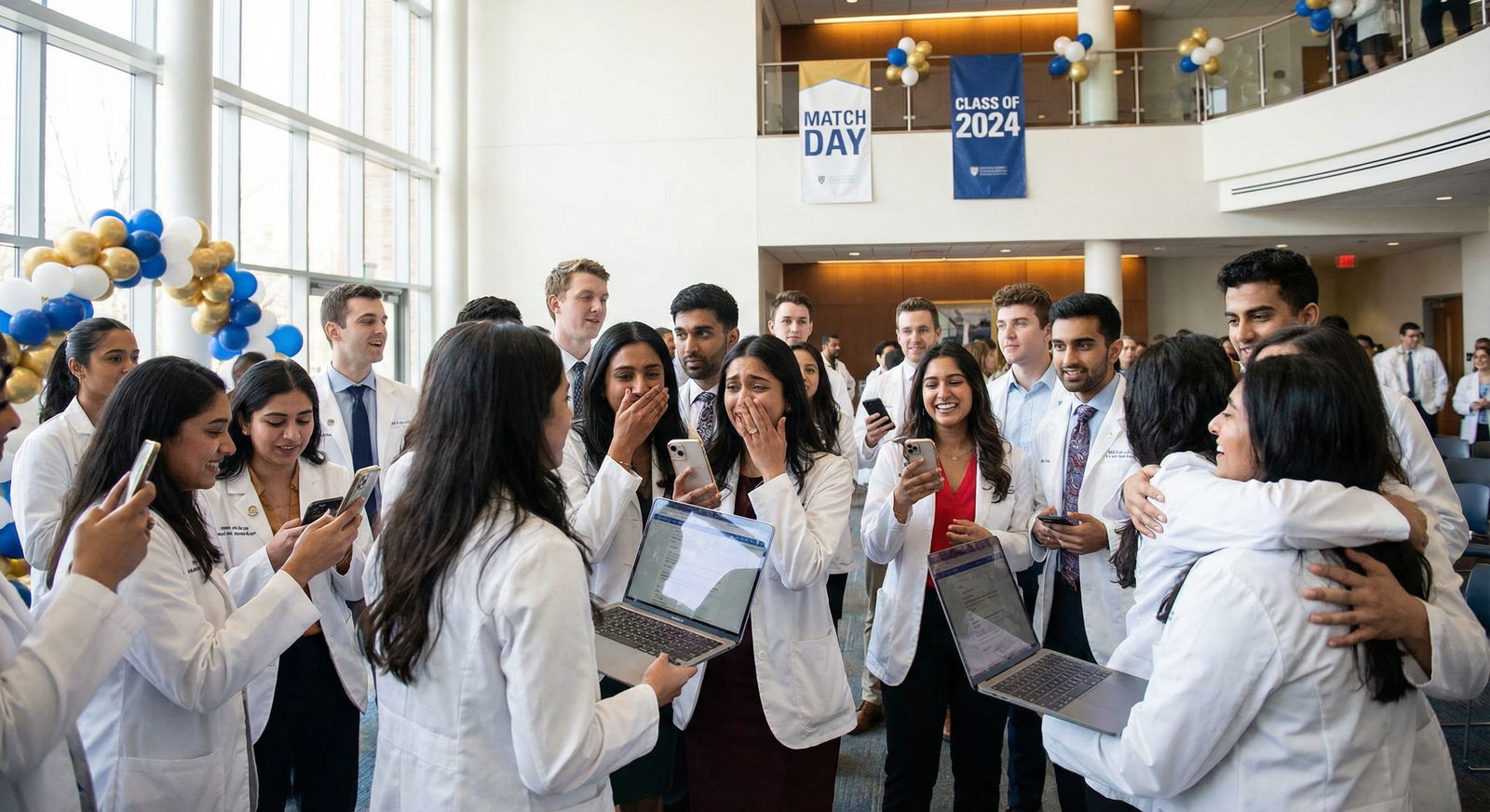
Your Match Day behavior is being remembered by people you do not even realize are watching.
Let me be blunt. Program directors, faculty, chiefs, and even future co-residents absolutely judge you based on how you handle Match Day—especially if you match somewhere competitive or local. The idea that “Match Day is just for us, it doesn’t matter professionally” is a fantasy students tell each other. It is not how faculty think.
I’ve been in those rooms. I’ve sat in the back of the auditorium with other attendings while envelopes are opened. I’ve been on the group text with PDs sharing screenshots from social media. I’ve heard: “Yeah, I saw how he reacted on Match Day. That told me everything I needed to know.”
You are celebrating the biggest moment of your training so far. You’re also sending a broadcast about your maturity, your emotional regulation, and how you’ll act under pressure. Those signals travel much farther than you think.
Let me walk you through what people actually see—and what they quietly infer.
The Room Is Not Just Students
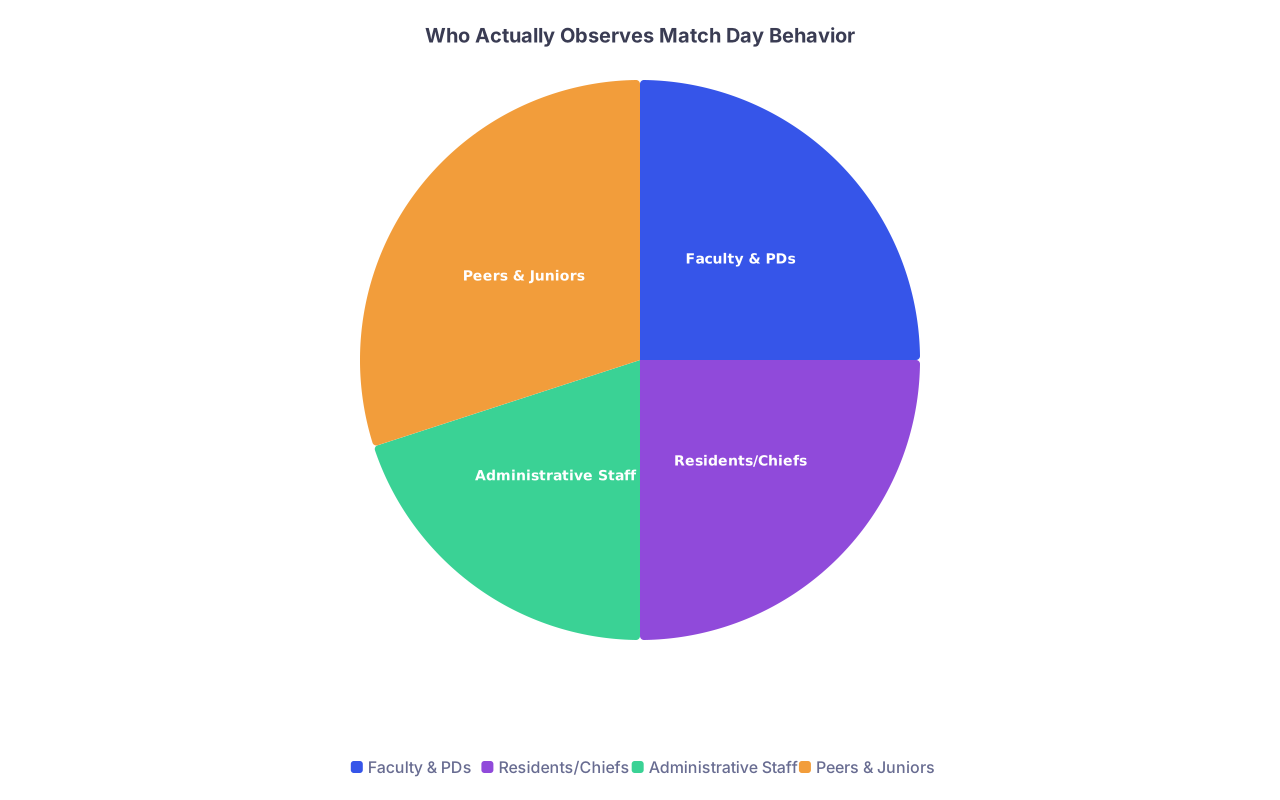
| Category | Value |
|---|---|
| Faculty & PDs | 25 |
| Residents/Chiefs | 25 |
| Administrative Staff | 20 |
| Peers & Juniors | 30 |
Every Match Day I’ve been part of has the same basic setup: students up front with their families, faculty sprinkled around, some residents there unofficially, admin staff managing the logistics, and one or two people “just dropping by” from local residency programs.
Those “drop-ins”? Often assistant program directors, faculty who interview applicants, or chiefs. They are not just eating the free pastries.
What they’re paying attention to is subtle, and it’s almost never the thing students are obsessing over.
You’re worrying about:
- “Did I match somewhere good enough?”
- “Do people think my specialty is impressive?”
- “Will my classmates think I failed if I didn’t match at a name-brand place?”
Faculty are looking at:
- Who goes out of their way to congratulate others.
- Who disappears as soon as they open the envelope.
- Who melts down publicly in a way that will spill over onto patients someday.
- Who looks genuinely grateful versus entitled.
I sat next to a PD once during Match Day. A student opened an envelope, saw a top-tier coastal program, and immediately shouted, “Thank God I’m getting out of this place,” loud enough for half the room to hear. The PD didn’t say anything out loud. Just quietly: “Okay, noted.” That student later applied for fellowship at that same institution. Guess what came up in the hallway: “Isn’t she the one who trashed her med school on Match Day?”
People remember.
Joy, Shock, or Panic: How You Process Emotion in Public

Let me call out three visible “profiles” that attendings quietly talk about after the dust settles.
The Quietly Overwhelmed
This is the student who starts crying (in relief or joy), maybe shakes a little, leans into a friend or partner, and needs a minute. That’s not a problem. In fact, it often plays well.
Faculty read this as: “They care. They’re invested. They’re human.”
What matters:
- They are not making it all about them, drowning out everyone else’s moments.
- They still manage to congratulate others after they collect themselves.
- They are not screaming about rank lists or “I knew it” or throwing shade at other programs.
I’ve watched PDs smile when a usually composed student finally cracks and tears up: “I like seeing that side of them. Shows heart.” That’s a good signal.
The Performative Star
Every year there’s at least one. They stand up on a chair. Or shout “I knew it!” loud enough to echo. Or start a chant for their specialty. Or make a spectacle that turns into a mini performance.
True story: A student once yelled, “Of course I got [big-name program], I crushed their interview,” then joked loudly about “back-up programs.” Half the room went stiff. One of those “backup” programs had a faculty member in the audience. They heard it. They did not forget.
Here’s the thing—confidence and happiness are fine. Faculty aren’t monsters. The problem is when your behavior telegraphs:
- I believe I’m above certain institutions or specialties.
- I lack social awareness in emotionally charged settings.
- I need attention more than I need connection.
That’s the kind of resident who later blows up at nurses in public, boasts about “saving the team” on rounds, or undercuts colleagues. PDs are pattern-matchers. They see this stuff early.
The Public Meltdown
This is where people get truly concerned.
Not the person who cries quietly in a corner after not matching their first choice—that’s understandable. I’m talking about:
- Loud sobbing with angry commentary about “unfair” programs.
- Blaming specific institutions by name in front of classmates.
- Saying things like “My life is over,” “This is a joke specialty,” or “I should have never done this.”
Yes, the system is brutal. Yes, some matches genuinely feel like a punch in the chest. And yes, you absolutely deserve space to process and grieve if you didn’t match, SOAPed, or ended up far from family.
But when you have a full public breakdown with zero filter, people start asking a very specific question:
“How are they going to handle a bad outcome? A code that goes sideways? A complication that isn’t fair either?”
Nobody expects you to be a robot. They do expect basic emotional containment in public spaces. That’s not cruelty. That’s patient safety.
Entitlement vs Gratitude: The Micro-Signals
There’s a moment immediately after you open your envelope that most students underestimate: the first 10–20 seconds of your visible reaction.
Let me translate what faculty see.
The Subtle “I Deserved Better” Face
Some students stare at their envelope, force a smile, and you see the microsecond of disappointment. That’s normal. Anyone paying attention knows how the game works.
The problem is when the disappointment leaks into obvious contempt.
Examples I’ve actually heard in the middle of the auditorium, loud enough for others:
- “I cannot believe I’m going there.”
- “Ugh, that was like my number six.”
- “At least it’s not [insert location they think is beneath them].”
Residents and faculty catch these comments. Often not the ones you think. It might be the random hospitalist in the back whose cousin works at the program you just insulted.
The signal they pick up: This person believes some programs—and by extension, some patients—are “beneath” them. That sticks.
The “I Can’t Believe I Got This” Humility
Contrast that with the student who opens a big name, looks stunned, and says something like, “Wow… I’m so grateful. I really didn’t think I’d get this.”
You know what attendings say later?
“That’s who I’d want on my team. High achievement, low ego.”
Even if you secretly feel you “earned” that top program, show gratitude. There’s no downside.
Social Media: The Part You Think Is Private (It’s Not)
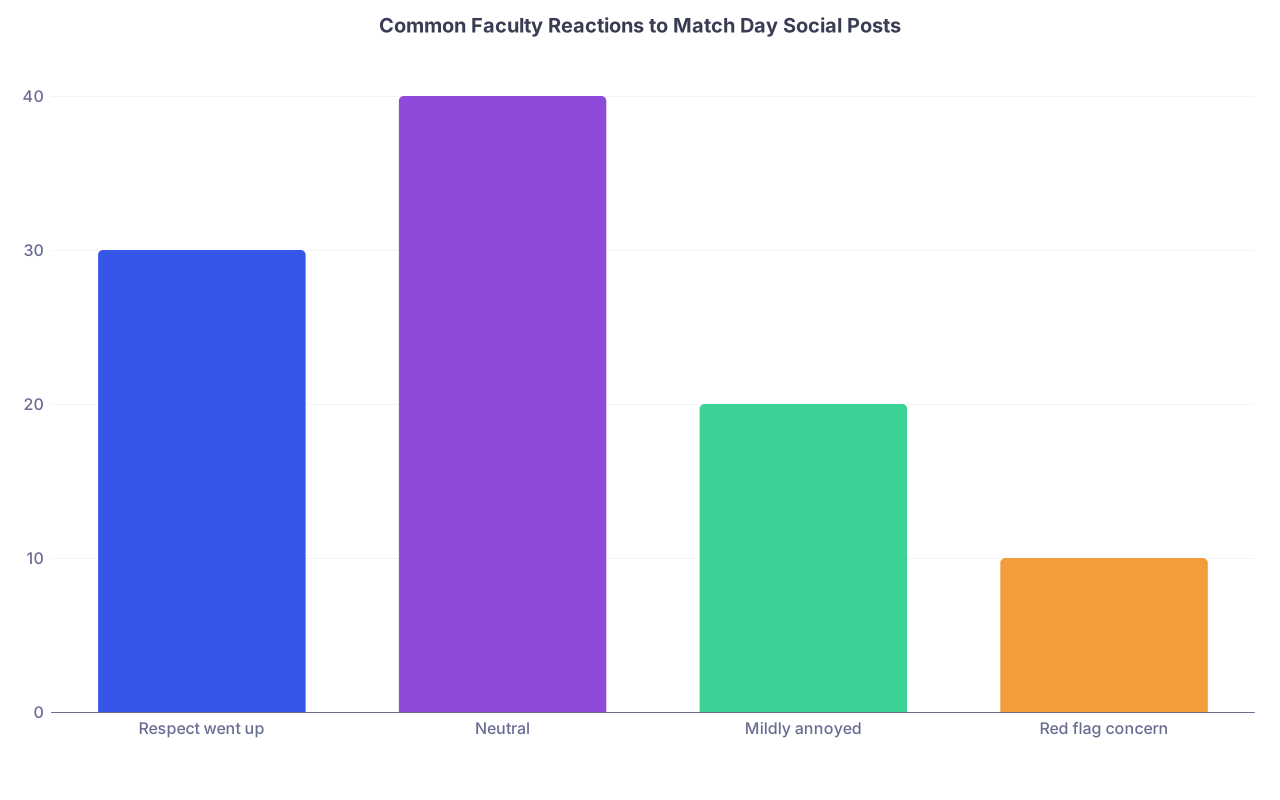
| Category | Value |
|---|---|
| Respect went up | 30 |
| Neutral | 40 |
| Mildly annoyed | 20 |
| Red flag concern | 10 |
Let me be crystal clear: your Match Day social media presence is not separate from your professional identity. The wall between “personal” Instagram and “professional” life dissolved the moment you started medical school.
Faculty and residents see:
- Screenshots sent by classmates.
- Public posts tagged with the med school or hospital.
- Posts shared by institutional accounts that get re-shared by others.
The most common Match Day social red flags we talk about in hallways:
Trashing other specialties
“Thank God I don’t have to do [insert less competitive field]” is the sort of thing that comes back when you need consults or letters for fellowship.Mocking “low-tier” programs or cities
Calling a region “nowhere,” or posting memes about “I guess I’ll be stuck in [city]”… and then later applying for fellowship there. You think people don’t remember? They do.Flexing in a way that diminishes classmates
“Only X spots in [hyper-competitive specialty] and I got one” with the subtext that others failed. That’s how you let people know you care more about status than the people around you.
On the positive side, I’ve seen PDs genuinely impressed by:
- Posts that thank mentors by name.
- Posts that acknowledge classmates: “So proud of our class and where everyone is headed.”
- Posts that show excitement about the program and city without punching down at others.
You never know which screenshot is landing in which group chat. Operate accordingly.
How Match Day Behavior Leaks Into Your Reputation
| Visible Behavior on Match Day | Silent Interpretation Later |
|---|---|
| Bragging loudly about rank/“top” programs | Might be difficult on a team, ego issues |
| Quietly congratulating many classmates | Team player, good colleague potential |
| Public meltdown blaming programs | Poor coping under stress, risky in crisis |
| Gracious about unexpected or lower choice | Mature, resilient, grounded |
| Mocking certain specialties or locations | Disrespectful, narrow-minded |
Here’s the uncomfortable truth: Match Day is, in practice, an informal stress test.
No one will write in your official evaluation, “Cried on Match Day.” There’s no checkbox. But these impressions float through networks you’ll never see.
A few concrete channels where this shows up:
Letters of recommendation for fellowship:
“Technically strong but can be reactive under stress” is sometimes code for “We saw how they act when disappointed.”Informal phone calls:
When PDs call each other behind the scenes, one of the questions is, “What kind of colleague are they?” Match Day is part of that mental reel.Resident culture:
Incoming classes talk. If you humiliated someone on Match Day, or made a cruel comment, that story can follow you into orientation.
I’ve heard: “Oh, she’s the one who laughed when someone said they SOAPed.” That was said by a future co-resident before they ever met in person.
If You Don’t Match or SOAP: What People Actually Respect

| Step | Description |
|---|---|
| Step 1 | Do not match or SOAP |
| Step 2 | Peers uncomfortable |
| Step 3 | Concern and rumors |
| Step 4 | Faculty support |
| Step 5 | Regroup and plan |
| Step 6 | Stronger reputation long term |
| Step 7 | Immediate reaction |
The most misunderstood part of Match Day is how people view those who don’t match.
Students assume: “If I don’t match, everyone thinks I’m a failure.” That’s not how most faculty see it.
What we actually respect:
- The student who steps aside to process, then reaches out to the dean or mentor promptly.
- The one who doesn’t vanish into a hole for weeks, but also doesn’t put their pain on display as content.
- The one who later talks about it honestly, without bitterness, and uses it to fuel growth.
I remember a student who didn’t match into a competitive surgical specialty. They were devastated. Took 30 minutes outside with a friend, came back in, congratulated other people, and quietly told faculty, “I’m going to need help figuring out my next steps.”
Faculty rallied around them. They ended up with a fantastic spot the next cycle and, interestingly, people described them as “one of the most resilient applicants we’ve seen.”
On the flip side, I’ve watched a non-match turn into a long-term reputational wound when a student:
- Publicly attacked programs for not taking them.
- Blamed “politics” and “diversity hires” loudly.
- Posted bitter rants on social media for weeks.
Programs are not blind to systemic issues. But when your response is pure externalization and hostility, people start questioning how safe it is to put you in front of patients.
How to Handle Match Day Like Someone People Want to Work With
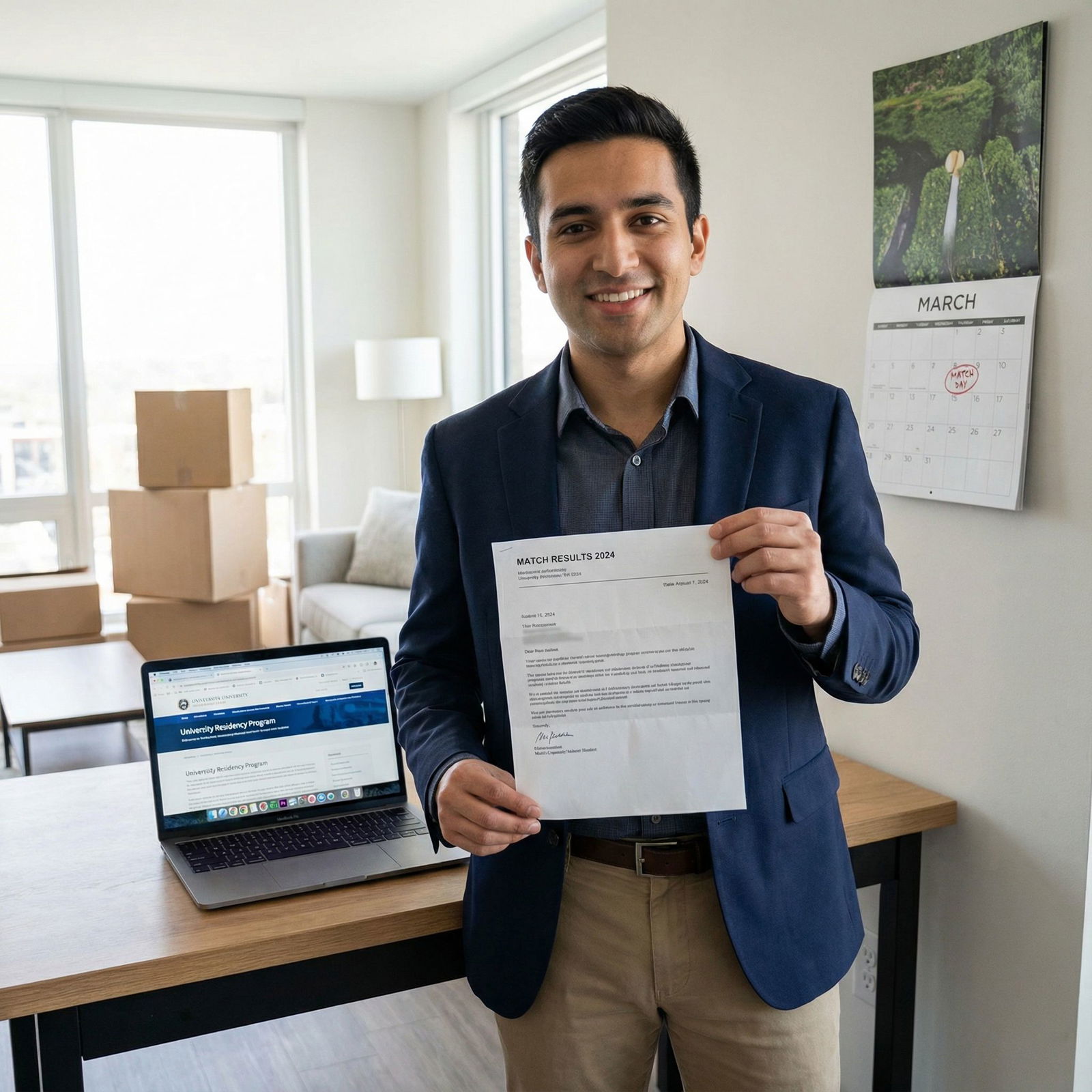
I’m not going to give you a fake script. You can’t choreograph real emotions on a day like this. But you can set some guardrails beforehand.
Three practical moves that change how you come across:
Decide in advance who sees your raw reaction.
Tell one or two people: “When I open this, I want to step aside with you first, then I’ll share with everyone.” That way, you’re not trying to manage your face in front of 200 people.Have one neutral sentence ready.
For any outcome—dream, solid, or disappointing—have a line like, “I’m excited to start the next chapter and grateful to have matched.” You can say that while your brain is still spinning. It buys you time.Delay your social media by a few hours.
The worst posts are always in the first 30 minutes, when adrenaline is spiking. Take your photos. Write your caption. Then sit on it until your heart rate drops.
If you tend to be impulsive, literally hand your phone to a trusted friend with one instruction: “Do not let me post or text anything about programs or rank lists for two hours.”
You’re not censoring yourself. You’re protecting your future self.
What Future Colleagues Are Secretly Asking Themselves
When residents and future co-fellows see you on Match Day—either in person or through the grapevine—they’re not asking, “Are you smart?” They assume that already.
They’re asking:
- Will this person be safe to page at 3 a.m.?
- Will they throw me under the bus to make themselves look better?
- Will they lose it if something doesn’t go their way?
- Will they make rounds heavier or lighter?
I know one chief who keeps a mental list every Match Day. Not of where people went. Of who they’d want on their team. It’s based almost entirely on what they see in those first few hours.
And years later, when those same students circle back for fellowship or jobs, those impressions resurface. Not in a vindictive way. Just as context: “I remember how they carried themselves.”
That’s what this comes down to. Not perfection. Not pretending you’re happy if you’re not. Just carrying yourself in a way that says:
“I feel this deeply. I’m still someone you can trust when things get real.”
Because that—the signal underneath all the noise—is what people never stop watching for.