
The fastest way to ruin Match Day is not a bad result. It is a badly managed family.
You can survive an unexpected program, a different city, even not matching. What destroys people is the careless comment, the livestreamed disappointment, the parent who makes your news about themselves. I have watched more Match Days go sideways because of family than because of scores.
If you’re smart, you’ll think about this now—before the envelopes, before the email, before the cameras.
The #1 Mistake: Treating Match Day Like It’s Their Event, Not Yours
Families often walk into Match Day thinking: “We sacrificed too. This is our celebration.” That mindset is where the damage starts.
Here’s the harsh reality:
Match Day is for you. Everyone else is a guest. Guests need rules.
Common ways families cross that line:
- Parent insisting: “We’re ALL going on stage with you.”
- Sibling joking loudly about your rank list in front of your classmates.
- Uncle planning a Facebook Live without asking.
- Partner demanding to open the envelope with you when you wanted a private moment first.
You’re the one who has to get up and go to that program on July 1. Your family will go home after brunch. They don’t carry the consequences of their behavior. You do.
Prevent this by being explicit, not vague.
Do not say:
“Yeah, it’ll be fun, just show up, we’ll see what happens.”
Say something more like:
- “This is not a family reunion. It’s my professional milestone. I need you to follow what I lay out.”
- “At the moment I open the envelope, I don’t want cameras in my face or questions. Just give me a minute to process.”
- “Please don’t post anything online until I send a text saying it’s OK.”
You’re not being controlling. You’re protecting one of the most emotionally loaded 5-minute windows of your life.
Social Media: The Silent Disaster Zone
If I could ban one thing from Match Day, it’d be the “Post first, think later” reflex.
I’ve watched this exact horror show unfold:
- Student opens envelope. Unmatched. Or matched somewhere they’re still processing.
- They step out for 10 minutes to breathe.
- Meanwhile, a well-meaning mom posts on Facebook: “My baby is devastated, please pray, they didn’t match.”
- Classmates see it. Faculty sees it. Their phone explodes before they’ve told their closest friends.
Or:
- Student matches at a solid but not “name-brand” program.
- Aunt immediately posts: “We were hoping for [Big-Name Hospital] but God had other plans.”
Translation to everyone reading: “This was a disappointment.”
That post never goes away. And yes, residents and faculty Google you.
You need a social media policy for Match Day. Make it painfully clear.
| Rule # | Policy Summary |
|---|---|
| 1 | No posting before student posts |
| 2 | No live streaming without permission |
| 3 | No commentary on rank or prestige |
| 4 | No sharing SOAP/unmatched info |
| 5 | Ask before tagging the student |
Spell it out to your family in advance:
- “No one posts ANYTHING about my match until I post or give an OK.”
- “No one livestreams the ceremony, the envelope opening, or my reaction.”
- “No commentary like ‘not first choice,’ ‘we were hoping for X,’ or ‘small program but…’”
- “If things don’t go as planned, nothing goes online. Not vague prayers, not sad-face posts, nothing.”
- “If you’re not sure—don’t post.”
If someone in your family is notoriously impulsive online (you already know who), you call them personally and say: “I need your promise on this. No surprises.”
Emotional Hijacking: When Their Feelings Overrun Your Moment
Match Day pulls family insecurities to the surface. Prestige issues. Geographic anxieties. Control problems. They come out fast.
Common emotional hijacks:
- The parent who bursts into tears: “How could you leave us?” when you match out of state.
- The partner who says, “But what about my job?” in the first 30 seconds instead of “Congratulations.”
- The relative who blurts, “That’s not a top program, is it?” loud enough for people around to hear.
- The grandparent who says on repeat, “You should have been a surgeon instead.”
Let me be blunt:
Their reaction can rewrite your memory of Match Day. Forever.
You prevent this by pre-gaming expectations and scripts.
Have the “Likely Outcomes” Talk Early
Sit down with your closest people and walk them through:
- Your rank list strategy (at a high level: types of programs, not every detail)
- What types of results are possible (dream, solid, backup, out-of-state, etc.)
- What you’d want to hear from them in different scenarios
Say things like:
- “If I match somewhere far, I need you to start with ‘We’re proud of you’—not ‘That’s so far away.’”
- “Even if the place doesn’t sound impressive to you, I’ve thought this through. Please assume it’s a good result.”
- “If I don’t seem super excited at first, that doesn’t mean it’s bad. It might just mean I’m overwhelmed. Don’t panic.”
And yes, you can set boundaries on faces and tone:
- “No grimaces. No awkward silence. If you’re not sure what to say, just hug me and say ‘I love you, and I’m proud of you.’”
This may feel over-controlling. It’s not. It’s defense. Because once those words are out of their mouths, you don’t get to un-hear them.
Spatial Chaos: Too Many People, Wrong Venue, Zero Control
Another quiet killer: turning Match Day into a circus.
I’ve seen students:
- Show up to a small auditorium ceremony with 12 family members trying to squeeze into 4 reserved seats.
- Bring toddlers with no childcare plan, then spend half the ceremony chasing them.
- Invite relatives who loudly second-guess every program name on the projection screen.
Think hard about this:
Who actually makes you feel calmer, safer, and supported?
It may not be the whole clan.
Common logistical mistakes:
- Inviting every relative because “it’s a big day” and then feeling crowded and watched.
- Not checking guest limits for the ceremony.
- Ignoring your own sensory needs (if you hate crowds, you probably won’t love opening your envelope surrounded by 300 people).
- Having no plan for post-ceremony downtime.
You can fix this with a concrete plan.
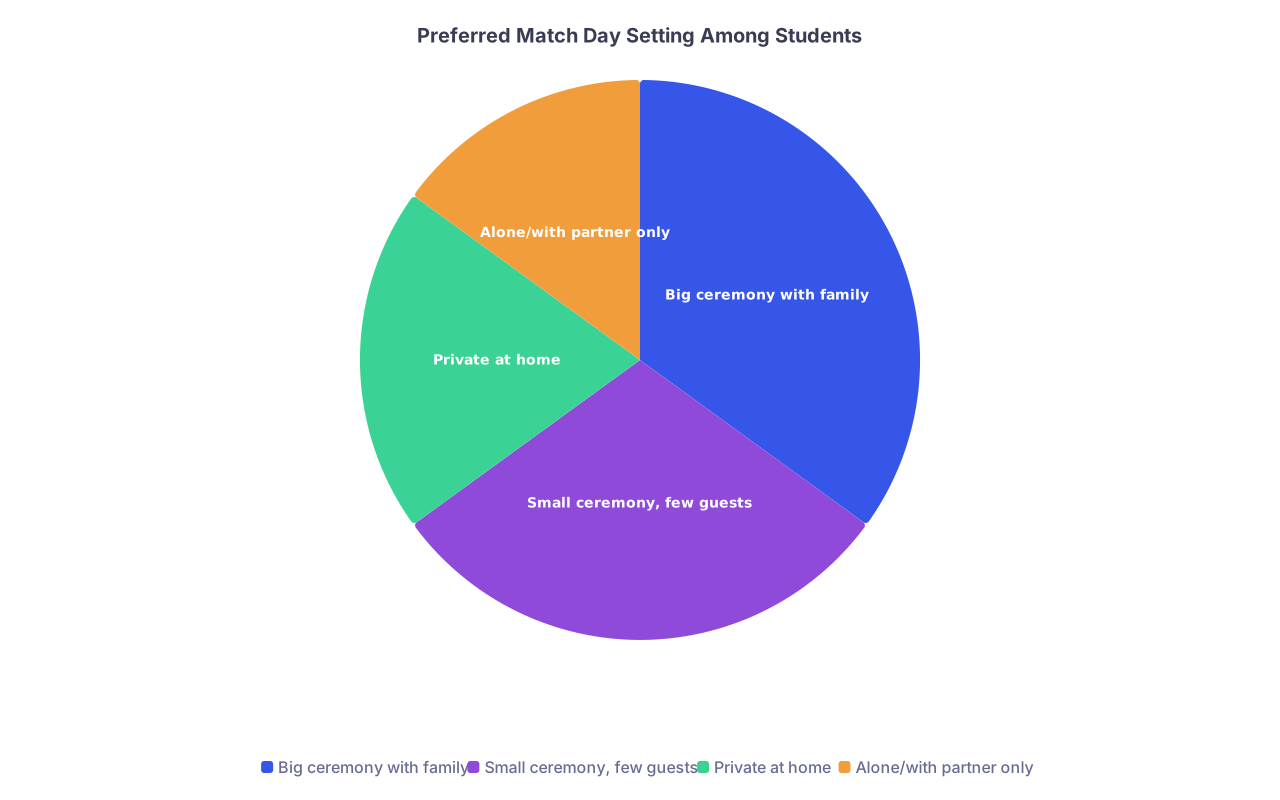
| Category | Value |
|---|---|
| Big ceremony with family | 35 |
| Small ceremony, few guests | 30 |
| Private at home | 20 |
| Alone/with partner only | 15 |
Think through:
- Do you actually want to open the envelope at the ceremony? Or do you want to step out quietly, open it in a side room, then come back?
- Do you want your family at the ceremony, but open the envelope privately later with just your partner?
- Would a separate dinner that evening with extended family be calmer than dragging them to the ceremony itself?
And then say so. Very directly:
- “I’m limiting it to [X] people at the ceremony. Others are invited to dinner that night.”
- “If you come, please treat it like a professional event. This is not the place for family drama, side fights, or complaining about parking.”
If someone tries to guilt-trip you—“But I’m your aunt!”—you hold your line:
“This is about me being able to function that day. I’m not debating it.”
The Prestige Trap: Family Who Care More About Brand Than Fit
Some families are prestige-obsessed. They may not admit it, but you’ll hear it in comments:
- “Did you get into one of the famous ones?”
- “Is that as good as Mayo? What about Hopkins?”
- “What’s the ranking of that place?”
On Match Day, this mindset is toxic.
Here’s what actually matters for you as a resident:
- Training quality and support
- Culture and mentorship
- Case volume and learning opportunities
- Your mental health and sustainability
That’s not how some families think. They see “big name = success, anything else = consolation prize.”
You have to inoculate them ahead of time.
Explain, briefly and clearly:
- “Residency matching isn’t like undergrad. ‘Name brand’ doesn’t always mean better training.”
- “I ranked places by where I’d be best trained and happiest, not by which name impresses people at parties.”
- “If you react like something is ‘less than,’ you’re disrespecting the work I put in to make a smart choice.”
Give them specific language to use:
Instead of
“Is that a top program?”
Ask them to say:
“Tell me what you like about that program.”
Instead of
“Oh… I’ve never heard of that one.”
Have them use:
“I don’t know much about that place—what made you excited about it?”
If you sense they won’t comply, consider sharing your rank list logic (not the list itself) so they can’t argue with phantom “better” options.
Handling Bad Outcomes: When You Unmatch or Under-Match in Front of Family
This is the nightmare scenario everyone pretends won’t happen to them. Pretending it’s impossible is how you get blindsided.
You need a plan for:
- If you don’t match
- If you match somewhere you’re not excited about
- If your SOAP week was brutal and Match Day feels raw
Match outcomes your family may not understand:
- “I matched—but not in my preferred specialty.”
- “I matched in a location I really didn’t want.”
- “I’m going to a prelim year and still need to re-apply.”
Without context, families will say the wrong thing. They always think they’re being supportive. They’re often not.
Common harmful responses:
- “You worked too hard for this, how could they not pick you?”
- “You can sue, right?”
- “Are you sure you did everything you could?”
- “Maybe medicine isn’t for you.”
You can preempt some of this with a pre-Match agreement:
- “If I’m unhappy with the outcome, here’s what I need: no questions, no fixing, no analysis. Just ‘We love you, we’re with you, we’ll figure it out with you when you’re ready.’”
- “If things go badly, I may step away for a while. That doesn’t mean I don’t want you there; it means I need space to think.”
- “Please don’t compare me to anyone else. No ‘But your cousin matched at…’ None.”
Also decide: Who gets told what, and when?
You’re allowed to stagger disclosure:
- Inner circle (partner, parents, 1–2 close people) get immediate truth.
- Extended family gets, “I’m processing, I’ll share details later.”
- Social media gets nothing until you’re stable and have a plan.
And yes—if you’re really worried about this outcome and your family’s reaction would crush you, it’s completely legitimate to do Match Day without them physically present. Watch the email alone or with 1 trusted person, then meet family later.
Over-Filming and Over-Sharing: Turning Your Reaction into Content
One more modern mistake: turning your genuine reaction into a production.
I’ve seen:
- Tripods set up in the aisle “for the perfect reveal video.”
- Family members shouting “Wait! Do it again, I missed it!” like it’s a TikTok clip.
- Students watching their own reaction video that night and hating how raw and vulnerable they look.
Here’s the problem:
If there’s a camera in your face, you’re performing, even a little. You can’t help it.
If you want one person to record on their phone from a respectful distance, fine. But set rules:
- No cameras 6 inches from your face as you open the envelope.
- No lighting you up like a stage show.
- No re-staging.
Say something simple like:
- “You can film, but from behind or to the side, and I don’t want a camera in my face.”
- “If things go badly, I’m deleting the video, no questions.”
- “We are not posting my reaction video online without my explicit permission that day.”
If you’re ambivalent, err on the side of not filming. You’ll remember the moment without a clip. What you won’t recover from is a painful video you wish you could erase.
Don’t Forget Your Partner: The Invisible Stakeholder Families Ignore
Partners get sidelined fast on Match Day. Families sweep in, and suddenly the person who’s actually moving with you, changing jobs, uprooting their life, is pushed to the back.
Common partner-related missteps:
- Parents taking the seat next to you and pushing partner 3 rows back.
- Family speaking about the partner (“She’ll find something there, I’m sure”) instead of to them.
- Zero acknowledgement that your partner is also under massive stress.
You can prevent some of this by making roles explicit:
- “On Match Day, [partner] is with me. They sit next to me. We’ll open the envelope together.”
- “When you talk about the move, talk to both of us, not just me.”
- “This is a big day for [partner] too. Please include them in photos and conversations.”
If your family has a history of being cold or dismissive to partners, plan an escape route: a time limit on the group gathering, and a private decompression with just the two of you later.
A Simple Pre–Match Day Family Briefing Script
If you don’t know how to start this conversation, steal this structure.

| Step | Description |
|---|---|
| Step 1 | Schedule family chat |
| Step 2 | Explain importance of Match Day |
| Step 3 | Share possible outcomes |
| Step 4 | Set social media rules |
| Step 5 | Set behavior expectations |
| Step 6 | Clarify logistics and guests |
| Step 7 | Confirm understanding and agreement |
You might say:
- “Match Day is one of the biggest days of my life, and it’s also very emotionally intense.”
- “There are a range of possible outcomes—from dream program to ‘this is going to take adjustment’ to not matching. I need support in all scenarios.”
- “Here are my rules for social media and posting. I need everyone to agree to this.”
- “Here’s how I’d like you to react, especially if you’re surprised or confused by where I match.”
- “Here’s who is invited where, and what the day will look like.”
- “If something goes wrong, here’s what I need from you in that moment.”
Don’t ask: “Is that OK?”
Ask: “Can you do that for me?” and wait for a clear yes.
If someone balks, address it now. Not when they’re already in the auditorium with their phone raised.
Match Day Is Emotional. It Doesn’t Have to Be Chaotic.
You can’t control the algorithm. You can control your environment.
The big family mistakes on Match Day aren’t mysterious:
- Oversharing and posting too fast
- Making your outcome about their anxiety or ego
- Turning the event into a circus of cameras and commentary
- Prioritizing prestige over your actual training and happiness
- Ignoring partners and logistics until everything feels crowded and out of control
You prevent them by treating your family like what they are on that day:
Well-meaning, emotional people who need clear guardrails.
Do the uncomfortable conversation now so you’re not damage-controlling later.
Today’s action step:
Open a blank note and write your non-negotiables for Match Day—social media rules, who’s invited, how you want reactions handled. Then send a message to the 3–6 people most likely to be there and schedule a 15–20 minute call this week to walk them through it. Do not wait until the week of Match.
FAQ (Exactly 5 Questions)
1. Should I invite my family at all if I’m really anxious about not matching?
If the thought of them being there makes you more tense than comforted, you don’t owe anyone an in-person invite. Many students quietly check their email alone, then join the ceremony or family later, or skip the ceremony entirely. You can also compromise: have them in town but not in the actual room when you open your result. Build the structure that protects your mental state, not their expectations.
2. How do I handle a parent who keeps insisting on a big-name program and won’t listen?
Stop arguing program names. Shift to values: “I’m choosing the place where I’ll be safest, best trained, and most supported. If you can’t trust me on this, please at least agree not to express doubts on Match Day.” If they still push, you may need to limit their role that day. It’s harsh, but better than having them undermine you at the worst possible moment.
3. Is it rude to tell relatives not to come or to cap the number of guests?
No. Programs often have space limits, and more importantly, you have emotional limits. You can frame it as logistics—“The school only allows X guests”—or as personal need—“I function better with fewer people that day.” Adults can handle not being included in every single event. Anyone who can’t is proving you right for setting boundaries.
4. What if my family ignores my social media rules anyway?
Plan your response before it happens. That might mean: immediately asking them to take it down, muting or unfollowing them, or explicitly telling them, “You broke a boundary I made very clear, and that hurt me.” For known repeat offenders, consider not sharing real-time details with them until after you’ve already posted what you want publicly—or at all.
5. How do I prepare my partner and my family to not clash on Match Day?
Talk to each group separately first. Tell your partner, “I want you next to me; your support comes first.” Tell your family, “My partner and I are experiencing this together; please treat us as a unit.” Then clarify specifics: seating, photos, who rides with whom, where you debrief. The more you script the logistics, the less room there is for awkward territorial behavior when emotions are high.