
Don’t Make This Mistake If You Hate Your Match Day Outcome
What do you do when everyone around you is popping champagne—and you’re staring at a Match result that makes you feel sick?
If you’re not happy with your Match Day outcome, you’re standing at a crossroads. One wrong move in the first 24–72 hours can create years of unnecessary pain. I’ve watched people torch careers, reputations, and relationships in a single weekend because they reacted instead of responded.
Let’s walk through the mistakes that will hurt you the most—and how to avoid them.
Mistake #1: Making Permanent Decisions in a 72‑Hour Emotional Freefall
If you hate your match, your brain is in crisis mode. Anger. Shame. Panic. Maybe numbness.
The worst mistake? Treating those first 3 days like a time for big decisions.
I’ve seen people:
- Withdraw from residency before even starting
- Email programs saying they won’t show up in July
- Announce on social media they’re “reapplying next year”
- Tell everyone (including faculty) they “refuse” to train in that city or that specialty
Then two weeks later, once they’d calmed down, they regretted it all. But by then, the damage was done.
Do not:
- Quit your position
- Send any “I won’t be coming” emails
- Threaten to “walk away from medicine” in writing
- Tell your school you’re not going without a concrete alternative
You can hate your outcome and still show up in July while you figure out your long-term path. That option disappears the moment you formally withdraw or burn the bridge.
Your rule for the first week:
No irreversible decisions. No impulsive emails. No commitment to “never” or “always” anything.
Mistake #2: Confusing Embarrassment With Actual Failure
There’s a huge difference between:
- “I’m embarrassed by this outcome”
and - “This outcome destroys my career.”
Most of the time, it’s the first one.
You’re comparing:
- Your community hospital IM spot vs your friend’s academic derm match
- A low‑tier program in a city you hate vs your dream city
- Matching in prelim surgery instead of categorical
- SOAPing into a backup specialty instead of your “dream” field
I’ve heard this line so many times:
“If I stay in this program, I’ll be stuck forever.”
Wrong. What actually gets people “stuck forever” is attitude and performance problems. Not the name of the residency on paper.
Harsh truth: No one at your new program will care that you’re embarrassed. They care whether you show up, work, learn, and aren’t a nightmare to be around. You can quietly be disappointed and still build a career you’re proud of.
Mistake #3: Public Meltdowns That Will Follow You for Years
The easiest way to destroy your professional reputation? Lose control online.
The screenshots I’ve seen:
- Instagram stories: “This match is rigged. [Program name] is garbage. I’d rather quit than go there.”
- Twitter/X threads tagging NRMP, PDs, and calling specific programs “toxic” or “predatory”
- Reddit posts detailed enough to identify you + your program + your school
You think it’s just your friends. It’s not. Screenshots travel.
Program directors know how to use the internet. Co-residents send things “just so you’re aware what this incoming intern said.” GME offices get anonymous “FYI” emails with your posts attached.
If you’re angry, vent where there’s no record:
- Walk with a trusted friend
- Talk to a therapist, counselor, or your school’s mental health service
- Use a notebook, then burn the pages if you have to
Your rule:
No venting about specific programs, people, or specialties on any platform that can be saved, shared, or searched. That includes “private” stories and group chats with 20 classmates.
Mistake #4: Assuming You Have Zero Leverage—Or Infinite Leverage
When the match doesn’t go your way, people tend to swing to one extreme:
- “I have no power. I’m trapped. Might as well give up.”
- “I’ll just reapply to my dream specialty next year. I’ll transfer. I’ll threaten to leave and they’ll fix it.”
Both are wrong—and both are dangerous.
Here’s the uncomfortable reality: your leverage is limited but not nonexistent.
You generally cannot:
- Demand a different program because you’re unhappy
- Force NRMP to “undo” a match
- Transfer out before proving you can function as an intern
- Announce you’ll leave if they don’t give you a different schedule and expect that to go well
You can:
- Show up, work hard, and then explore lateral moves (transfers, fellowships) with much stronger footing
- Use your PD’s advocacy later—if you’ve given them a reason to advocate for you
- Build a strong internal reputation and then pursue a subspecialty, academic role, or geographic move that you care about
The main mistake is playing your cards before you’ve even sat at the table. You want options later? Earn them first.
Mistake #5: Ignoring the Difference Between “Bad Fit” and “Unsafe”
Hating your match isn’t always about prestige. Sometimes it’s about safety, life circumstances, or identity.
Examples I’ve actually seen:
- An LGBTQ+ trainee matched to a program in a region openly hostile to them
- Someone with a serious medical condition matched somewhere with no access to their specialists
- A trainee in an abusive relationship matched to the same city as their abuser
Don’t make the mistake of treating every uncomfortable match as an “unsafe” one. But don’t do the opposite either—ignoring real risks because you’re scared to speak up.
If your match raises legitimate safety or health issues:
- Talk to your med school’s student affairs/dean ASAP.
- Document clearly: medical issues, legal issues, threats, required specialists, etc.
- Ask about options: deferral, support, potential advocacy with the program or GME.
Do not email the program saying, “I won’t come because your city is dangerous and your state laws are trash.” Express concerns through appropriate channels and with measured language. That’s how you get help instead of consequences.
Mistake #6: Telling Your New Program You Don’t Want to Be There
I’ve literally heard interns say on Day 1:
“Yeah, this wasn’t my top choice. I’m just here until I can transfer.”
Program leadership hears that as:
- “I’m not committed.”
- “I might leave you short‑staffed.”
- “I’ll be a headache when it’s time for evaluations and support.”
Even if you’re secretly planning an eventual move, keep that plan secret until:
- You’ve proven you’re reliable
- You have a track record
- You have a trusted mentor or PD you can talk to carefully
Your new program does not need to know they were your #12. They don’t need a speech about how “I really wanted ortho but I guess I’ll do IM for now.” That’s a fast track to lukewarm letters and minimum-effort support.
Your outward stance should be:
- “I’m committed to making the most of this opportunity.”
- “I’m eager to learn and contribute.”
You can grieve and process privately. You don’t have to advertise your disappointment.
Mistake #7: Blowing Up Your Relationship With Your Home Institution
Here’s what lots of students don’t realize: if you ever want to reapply, pivot specialties, or pursue a competitive fellowship, you will need your med school on your side.
I’ve seen students:
- Rage at the dean: “You failed me. This match proves your advising was worthless.”
- Send nasty emails to advisors: “You pushed me into this specialty. You ruined my career.”
- Stop responding to school outreach and ghost everyone once the match result came in.
Then, 2 years later, they want to apply to a new specialty or a trans‑regional fellowship. Guess who’s writing their MSPE addendum or institutional letter? The same people they torched on Match Day.
You’re allowed to be disappointed. You’re allowed to say, “I’m struggling with this outcome” or “I feel like the strategy didn’t work.” But stay professional.
Some useful phrases that don’t burn bridges:
- “I’m really struggling emotionally with this result and could use guidance.”
- “I’d like to understand what my long-term options might look like from here.”
- “I’m disappointed, but I want to make the most of this. Can we talk strategy?”
You don’t need to pretend to be happy. You do need not to destroy your future letter-writers.
Mistake #8: Misunderstanding How Much You Can Change Later
A lot of furious PGY‑0s say, “I’ll just reapply next year” like it’s an easy reset button. It’s not.
Let’s be clear about what’s possible vs fantasy:
| Plan | Reality Check |
|---|---|
| Do well in IM then subspecialize into cards/GI | Very possible |
| Start in prelim surg, then switch to anesthesia | Sometimes possible, needs support |
| Quit before Day 1 and reapply to derm | Almost always a disaster |
| Start FM, then transfer to radiology PGY-2 | Rare, needs near-perfect profile |
| Stay where you are, then do fellowship in dream city | Common, very realistic |
Your best leverage is performance. Strong evaluations, passed boards, good colleague relationships—those buy you future moves.
The mistake is assuming the program name on July 1 locks your whole career. It doesn’t. But your choices in the first 6–12 months can.
If your outcome is a true disaster (SOAP into a specialty you absolutely cannot see yourself in long-term), you still don’t fix it by walking away immediately.
You fix it by:
- Starting the year, proving you’re safe and competent
- Building one or two real advocates
- Quietly exploring options with your PD and mentors
Not by nuking your ERAS and trying to “start over” with a giant red flag on your record.
Mistake #9: Isolating Yourself Because You’re Ashamed
Here’s a pattern I’ve seen repeatedly.
Student hates their match → stops replying in group chats → doesn’t attend Match celebrations → avoids talking to classmates → disappears.
On the surface it looks like self-protection. In reality, it cuts you off from:
- People who could recommend you later
- Classmates who might end up at your program or connected to it
- Emotional support from people going through the same storm
You might be thinking, “I don’t want to explain this outcome to everyone.” Fair. You don’t have to give long stories. A simple line works:
- “It wasn’t what I was hoping for, but I’m processing and trying to move forward.”
- “Not my top choice, but I’m going to show up and see what I can make of it.”
You know what people remember? That you handled a tough outcome with some grace. That matters more later than where you matched.
Shutting everyone out makes the disappointment feel bigger and more permanent than it is.
Mistake #10: Treating Match Day as the Final Verdict on Your Worth
This one is psychological, but it bleeds into real behavior.
If you believe “I matched low, therefore I’m not good enough,” you’re at risk for:
- Imposter syndrome that cripples you on day one
- Underperformance because you’ve already decided you’re “less than”
- Resentment that makes you difficult to work with
Your co-interns are not obsessing over your rank list. They’re worried about not killing patients and figuring out the EMR passwords.
I’ve seen some of the strongest clinicians come out of “lower-tier” programs they initially hated. They decided:
- “I’m not going to let this define me.”
- “I’ll wring every bit of training I can out of this place.”
On the flip side, I’ve seen people at top programs fail because they were bitter, entitled, or too busy comparing themselves.
The match feels like a judgment. It isn’t. It’s a deeply flawed, algorithmic outcome influenced by geography, program behavior, and random noise. Your reaction to it is what creates or kills your trajectory.
A Quick Reality Check With Data
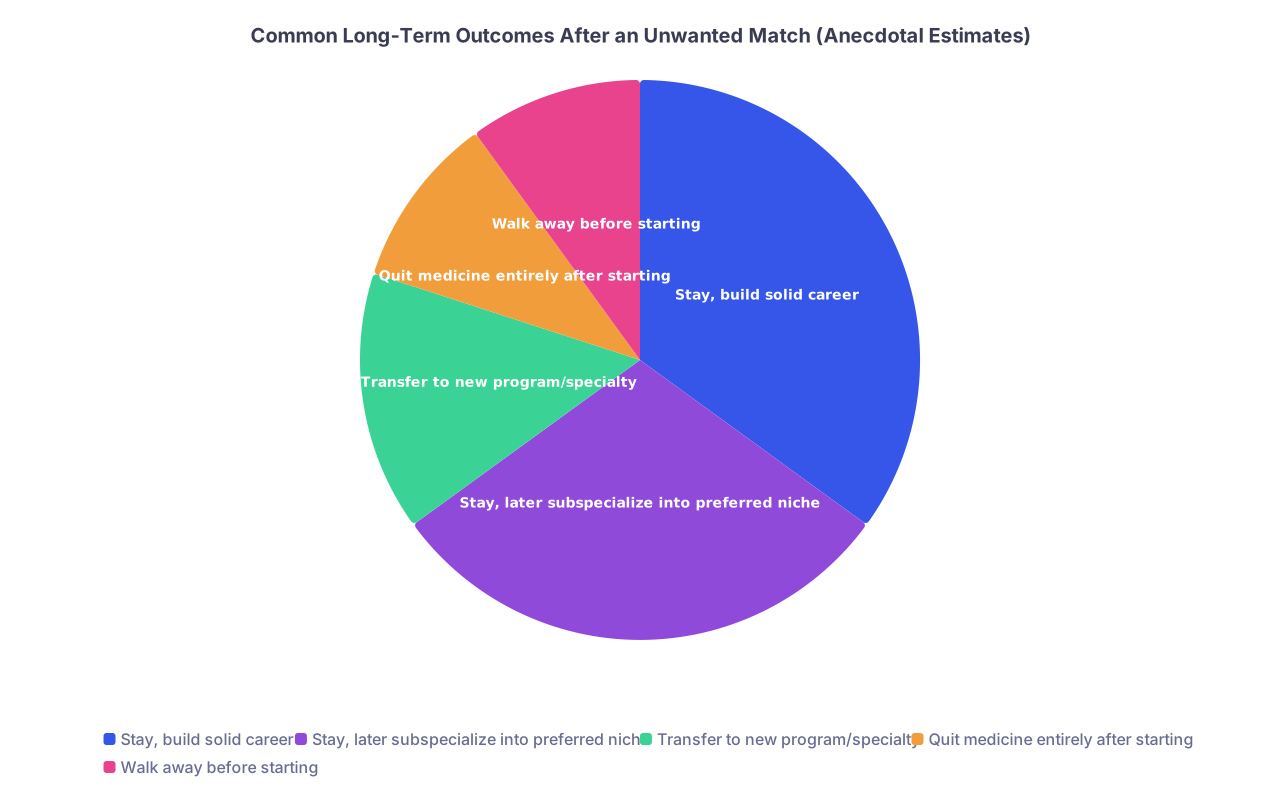
Let me ground this with something a little more objective.
| Category | Value |
|---|---|
| Stay, build solid career | 35 |
| Stay, later subspecialize into preferred niche | 30 |
| Transfer to new program/specialty | 15 |
| Quit medicine entirely after starting | 10 |
| Walk away before starting | 10 |
This isn’t from a randomized trial. It’s roughly what I’ve seen across a few classes and cohorts.
The big point:
Most people who hate their match still end up in a decent spot—either by making peace with the program or carving a path via subspecialty or geography change. The smallest group that ends up happy? The ones who walk away before giving themselves any chance to work the situation.
What To Do in the First Week Instead
Let’s get concrete. Here’s a sane path for the first 7 days after a disappointing Match.

| Step | Description |
|---|---|
| Step 1 | Match Day shock |
| Step 2 | No irreversible decisions |
| Step 3 | Talk to trusted mentor or dean |
| Step 4 | Separate emotional pain from actual safety risks |
| Step 5 | Document and discuss options with school |
| Step 6 | Plan to show up in July |
| Step 7 | Set 3 month goals for intern year |
| Step 8 | Safety issue? |
Notice what’s not in that flowchart:
- No emailing the program to decline
- No ERAS reapplication on Monday morning
- No social media tirades
You’re stabilizing. Not strategizing your entire future.
The Quiet Moves That Actually Help Long-Term
While everyone else is posting sappy “Grateful to have matched at my #1!!!” captions, here’s what you should be doing behind the scenes.
Schedule a real meeting with your dean or advisor.
Not a 5‑minute hallway conversation. A proper block of time to talk through: “Given where I matched and what I want long-term, what are my realistic paths?”Make a short, boring email to your future PD.
Something like:
“Thank you again for the opportunity to join your program. I’m looking forward to working with the team in July and am committed to being a strong resident.”
Even if that’s not exactly how you feel, it buys you a clean slate.Write down your non-negotiables.
Things like: passing boards, protecting your health, staying out of trouble. These matter far more than whether you love the city you’re moving to.Plan your support system in the new location.
Therapy, fitness, religious/community groups, friends-of-friends. Don’t just show up and suffer.
These quiet, unglamorous moves are what keep your future options wide open.
Final Warning: Don’t Let One Bad Day Rewrite Your Whole Story
Match Day feels like the verdict on your entire training. It’s not. It’s one data point—with noise, bias, and randomness baked in.
The biggest mistakes I’ve seen from people who hate their match outcome:
- They make irreversible decisions in the middle of a meltdown.
- They publicly burn bridges that they’ll desperately need later.
- They assume this one outcome defines their ceiling forever.
If you can avoid those three traps, you give yourself something priceless: room. Room to grow, to pivot, to change your mind, to build a career that looks nothing like that awful moment when you opened your email and felt your stomach drop.
You’re allowed to hate your match result. Just don’t let your reaction to it be worse than the outcome itself.