
The way most students “plan” their post-Match tasks is chaos masquerading as productivity.
You do not need another vague checklist. You need a triage system. Exactly what must be handled this week, what can genuinely wait a month, and what will quietly explode in July if you ignore it now.
Let me break this down like you’re on call: stat, urgent, routine.
The Core Framework: Stat vs Urgent vs Routine
Think like EM triage, not like a Type A student with a highlighter addiction.
Every Match Day and post-Match task falls into three buckets:
Stat (This week – within 3–7 days of Match Day)
Time-sensitive. Affects where you show up July 1, whether you get paid, and whether you have a place to live and a license to touch a patient.Urgent (This month – within 2–4 weeks of Match Day)
Important but slightly flexible. Affects how miserable or broke you are during intern year.Routine (Next month and beyond – 4–10 weeks out)
Can safely wait. These are quality-of-life, optimization, and “future you will be grateful” tasks.
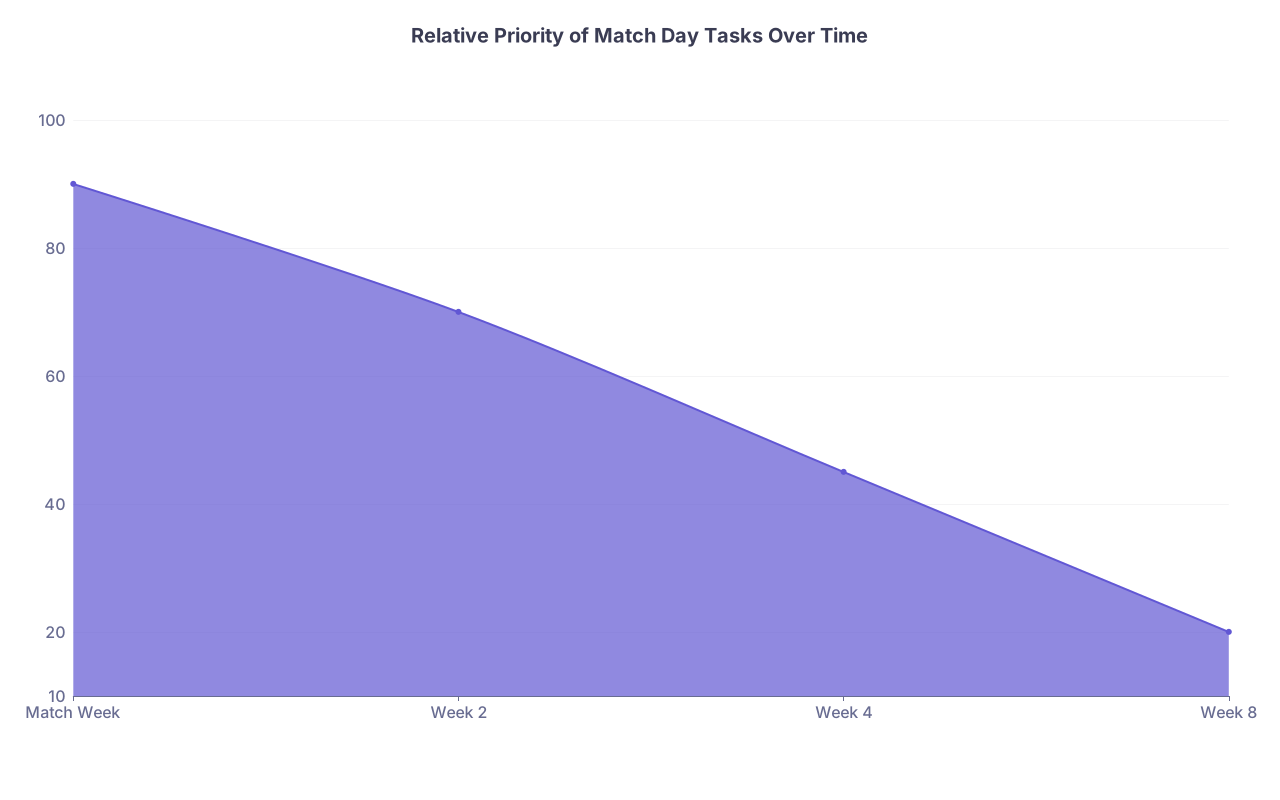
Here is the strategic view before we get tactical.
| Category | Value |
|---|---|
| Match Week | 90 |
| Week 2 | 70 |
| Week 4 | 45 |
| Week 8 | 20 |
That curve is what actually happens: everything feels like a 90/100 emergency on Match Day, but most tasks are not. The art is knowing which 10–20 percent truly are.
Match Week: The Stat List (Handle Now)
Match Day plus the first 7–10 days. You’re emotional, family is texting nonstop, classmates are screaming in group chats. You still need to execute a few non-negotiables.
1. Accepting and Confirming Your Position
Do not play games here.
- Read the NRMP Match Participation Agreement earlier in the year (yes, the one you clicked “agree” on).
- You are contractually obligated to start at the program where you matched, barring very specific exceptions.
What you must do this week:
- Open and respond to emails from:
- Program director / program coordinator
- GME (Graduate Medical Education) office
- HR / onboarding system
- Complete any:
- Initial acceptance or confirmation forms
- “Welcome” questionnaires with deadlines
- Preference forms that clearly say “due within 7 days”
If you see a hard deadline in March, it is a Stat task. Do it before you celebrate too hard.
2. Onboarding Portals and Legal Documents
Most big institutions push you into an onboarding software: Workday, PeopleSoft, MedHub, New Innovations, or their custom HR system. You will be tempted to click around then bail. Do not.
This week, your job is not to finish every form. Your job is to:
- Log in successfully
- Confirm that you can access everything
- Identify time-sensitive pieces
Look for:
- I-9 / employment eligibility verification deadlines
- Contract signatures needed by a specific date
- Background check authorizations with explicit due dates
- Drug screen orders with completion windows (often 72 hours after collection date is generated)
If something says “complete within X days of receipt,” treat it as Stat, not Urgent.
3. Background Check and Drug Screen
This is non-negotiable. Delays here can delay your ability to start or get paid.
You must:
- Read the instructions from HR or GME carefully.
- Note:
- Where you must go for the drug screen (occupational health vs third-party lab)
- Whether you need to fast, bring ID, or present specific forms
- The deadline to complete testing
Do it the first week. Not “once my schedule calms down.” Your schedule will not calm down.
4. Initial Communication with Your Program
No, you do not need to send a novel to the PD. But you do need to communicate like a functioning adult.
This week:
- Reply to program coordinator emails within 24–48 hours.
- Respond clearly and briefly to any scheduling or information requests.
- If you have any major constraints (visa, pregnancy due dates, health concerns that affect start date), you at least flag that there is something to discuss and ask for a time.
Bad move: ignoring emails for 10 days because you are “still processing Match Day.”
Good move: short, professional responses. Get on their radar as reliable.
5. Housing Triage: Decide Your Path, Not Your Exact Apartment
Do not start scrolling Zillow for three hours on Match Day. Not yet. You do not need the exact unit this week. You do need a housing strategy.
This week, answer these concrete questions:
- Will you live alone, with partner/spouse, or with roommates?
- Are you committing to live:
- walking distance to the hospital
- on a short train/bus route
- or driving distance with parking
- Can you safely afford:
- Studio/1-bed
- Shared housing
- Or are you relying on family/partner housing support
Then:
- Join your program’s WhatsApp/GroupMe/Facebook group
- Ask current interns:
- Common apartment complexes
- Neighborhoods to avoid for safety or commute reasons
- Typical rent ranges
You do not sign leases this week. You just define the lane you are in.

The Next 2–4 Weeks: The Urgent List (This Month)
Once the Match-day adrenaline crash fades, this is where most fourth-years either get efficient or get buried.
1. Financial Reality Check and Budget
This should be done before graduation, not in late June when your moving truck is already booked.
You need a realistic residency budget. Not vibes. Numbers.
Core pieces to lock down in the next month:
- Incoming PGY-1 salary (before tax)
- Typical federal and state tax rates (your new state may be different)
- Fixed costs:
- Rent / mortgage
- Car payment or transit pass
- Insurance (auto, renter’s, health premiums if applicable)
- Required fees (parking at hospital, union dues, if any)
- Variable costs:
- Groceries
- Gas/transportation
- Phone/internet
- Loans (even if in residency forbearance, plan interest)
Then map it.
| Category | Amount (USD) |
|---|---|
| Net Pay | 3,800 |
| Rent | 1,400 |
| Utilities/Net | 200 |
| Transportation | 250 |
| Food | 450 |
| Loans/Interest | 300 |
| Insurance | 200 |
If those numbers do not work, you adjust now:
- Roommate instead of solo place
- Cheaper neighborhood with longer commute
- Sell the expensive car that will eat your paycheck
Month 1 is when you decide how stressed you will be about money all year.
2. Housing: Actually Securing a Place
Now you move from “strategy” to “contract.”
Tasks for weeks 2–4:
- Narrow to 2–3 neighborhoods or 3–5 buildings based on input from current residents.
- Visit in person if possible. If not:
- Ask co-residents for video walk-throughs
- Use FaceTime tours with leasing agents
- Check:
- Commute time at 6–7 a.m. and 6–7 p.m. (Google Maps, realistic traffic)
- Safety (local crime maps, ask residents)
- Parking (night float, you will care at 3 a.m.)
Lease timing: for a July 1 start, most leases should start mid-June. You want 10–14 days buffer to move and set up utilities before orientation.
If you are in a hyper-competitive rental market (Boston, SF, NYC), you may need to act sooner. But the month-after-Match window is typical for many cities.
3. Health Requirements and Occupational Health
Do not underestimate how annoying this can be.
Your new institution will likely require:
- Proof of:
- MMR immunity
- Varicella immunity
- Hepatitis B immunity or documented series
- Tdap
- Influenza (seasonal)
- COVID vaccination per local policy
- TB screening:
- Quantiferon or T-spot
- Or PPD, possibly 2-step
In the first month after Match:
- Gather your vaccine records from:
- Med school health office
- Prior employee/student health portals
- Childhood records if needed
- Schedule:
- Missing immunizations
- Titers (Hep B surface antibody is the big one that bites people)
- TB testing at your current institution before you lose easy access
Why now? Because if your new program needs additional doses or boosters, you need time to finish a series.
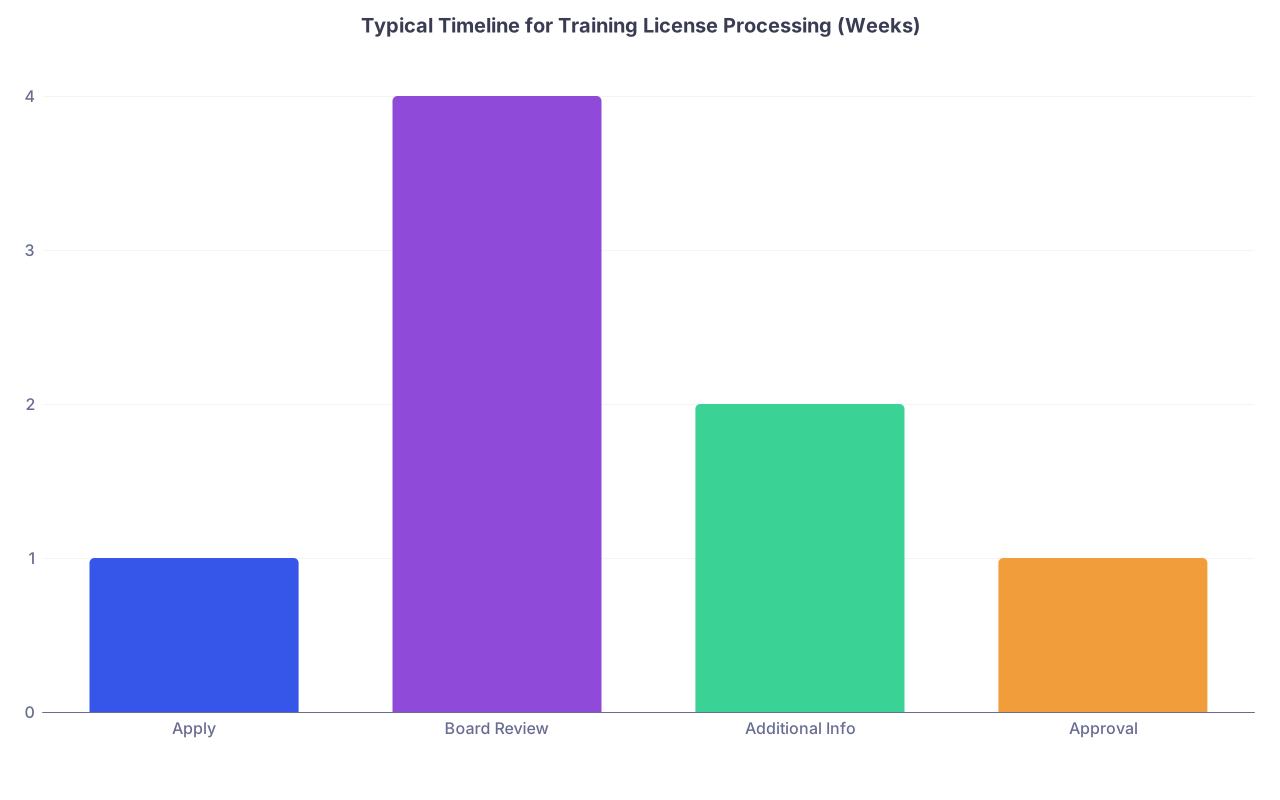
4. Licensing Prep: Pre-Work for Intern License
This is very state dependent, but the general theme is the same: these processes are slow.
Most states require either:
- Training license / limited license
- Full unrestricted license (less common for PGY-1 now, except some locations)
Your GME office will send instructions, but this month you should:
- Gather:
- Official med school transcripts
- USMLE/COMLEX score reports
- Identification documents (passport, birth certificate, SSN card)
- Prior addresses for the last X years (varies, often 5–10)
- Start:
- State medical board portal account
- Watching for any “you must submit by” dates from GME
You can often wait to submit the final application until they give the green light, but you should not start from scratch in June.
| Category | Value |
|---|---|
| Apply | 1 |
| Board Review | 4 |
| Additional Info | 2 |
| Approval | 1 |
You do not want “Additional Info” to coincide with the week you start nights.
5. Moving Logistics (Macro Level)
Not the exact box count. The main decisions.
This month, decide:
- Are you using:
- Full-service movers
- Container service (PODs, U-Pack)
- Rental truck + friends
- Shipping minimal items + buying most new
- What is your realistic moving budget?
- Are there fixed dates you must work around:
- Graduation
- Mandatory orientation at your new program
- Existing lease ending
Book:
- Flights if you are flying
- Movers or rental trucks if moving across state lines
- Time off from any current commitments (research, part-time work)
4–10 Weeks Out: The Routine (But Important) List
Now we move into the “next month” bucket. Things that often get ignored until they hurt.
1. Professional Paperwork and ID Infrastructure
You will need:
- Updated CV with your PGY-1 position listed
- Copies of:
- Passport
- Driver’s license (with your new state address eventually)
- Social Security card
- Professional headshot (many programs ask for this for their website, EMR, badges)
You can put this off a bit, but it is painless to handle once you have housing and major tasks lined up.
Also:
- Decide now what you will use for your professional email going forward (often your institutional email).
- Clean up your public online presence:
- LinkedIn photo and experience list
- Any public social media profiles that are obviously problematic
Does this have to be done in March? No. But if you do it by May, you are not trying to fix your LinkedIn the week you start wards.
2. Banking, Direct Deposit, and Adulting Cleanup
This is very much a “next month but do not ignore” area.
Tasks to schedule:
- Make sure you have:
- A bank with branches or ATMs near your new institution or home
- Online banking fully set up
- Plan:
- How you will handle direct deposit forms once HR sends them
- Any automatic payments (loans, subscriptions) that need updating after your first resident paycheck
If you are switching states:
- Look at state tax implications
- Update your address with:
- Loan servicers
- Credit cards
- Any licensing bodies
Not urgent today. Very annoying if delayed to late June.
3. Clinical Readiness: What to Study and When
Here is where students make two common mistakes:
- They study nothing and feel like they are drowning the first month.
- They “study” by passively reading random resources without focus.
Next month, when the dust settles, is the right time to:
- Decide your core resources:
- For IM: MKSAP, Step-Up to Medicine, UpToDate smart use
- For Surgery: SCORE, Surgical Recall, DeVirgilio case-based
- For EM: EMRA basics, Tintinalli/UpToDate as needed, Rosh for questions
- Make a realistic pre-July plan:
- 30–45 minutes, 4–5 days per week
- Focused on:
- Common intern-level problems (CHF, COPD, DKA, sepsis, chest pain)
- Writing admission notes and basic orders
- Cross-cover issues
You are not “re-studying for Step 2.” You are building a functional floor-level knowledge base.
4. Personal Life Logistics
Next month is where you clean up everything you have ignored during clinical year chaos.
This includes:
- Healthcare:
- Schedule your own appointments: PCP, dentist, eye exam
- Refill chronic meds with at least 90 days overlap
- Relationships:
- If you are in a serious relationship and moving:
- Have actual logistics conversations about how this will work
- Clarify timelines, expectations, and visits
- If you are in a serious relationship and moving:
If you wait until June, you will rush or skip these. And it bleeds into your ability to function as an intern.

What Absolutely Can Wait Until Next Month (Or Later)
Let’s be explicit about what you do not need to lose sleep over in the first month after Match.
These are safe to push into the “next month” or even post-graduation window:
Optimizing your study schedule to perfection
- You need a rough plan, not a minute-by-minute calendar.
Buying fancy gear
- That expensive stethoscope, elaborate scrubs wardrobe, or white coat accessories can wait.
- You will figure out what you actually use after a few weeks on service.
Deep involvement in national organizations or research at your new institution
- Those doors will still be there in August.
- You first need a bed, a paycheck, and a badge.
Detailed retirement planning
- Yes, 401(k) or 403(b) early is good.
- Realistically, set a reminder for September when you are not trying to keep your head above water as a brand-new intern.
Long-term career branding
- Personal websites, blogs, niche social media branding as “Dr. X the [insert specialty] Expert” can wait.
- Right now, the brand you need is “intern who shows up on time and does not lose their badge.”
A Simple Triage Grid You Can Actually Use
When something lands in your inbox, run it through three questions:
- Does this have a hard deadline in the next 14 days?
- Will delaying this by a month jeopardize:
- My ability to start
- My ability to get paid
- My legal ability to practice
- Is someone explicitly waiting on my response to move a process forward?
Map your answers:
| Question | If Yes → | If No → |
|---|---|---|
| Hard deadline ≤ 14 days? | Stat – do this week | Go to Q2 |
| Affects start/pay/license if delayed? | Stat or Urgent | Go to Q3 |
| Someone blocked waiting on me to respond? | Urgent – this month | Routine – next month |
It is not perfect, but it will keep you from treating “designing your intern-year study bullet journal” like it is as important as your I-9.

| Step | Description |
|---|---|
| Step 1 | New Task or Email |
| Step 2 | Stat - Do this week |
| Step 3 | Urgent - Within 2 to 4 weeks |
| Step 4 | Routine - Next month or later |
| Step 5 | Deadline in 14 days |
| Step 6 | Affects start, pay, or license |
| Step 7 | Is someone waiting on me |
Tape that logic next to your laptop if you have to.
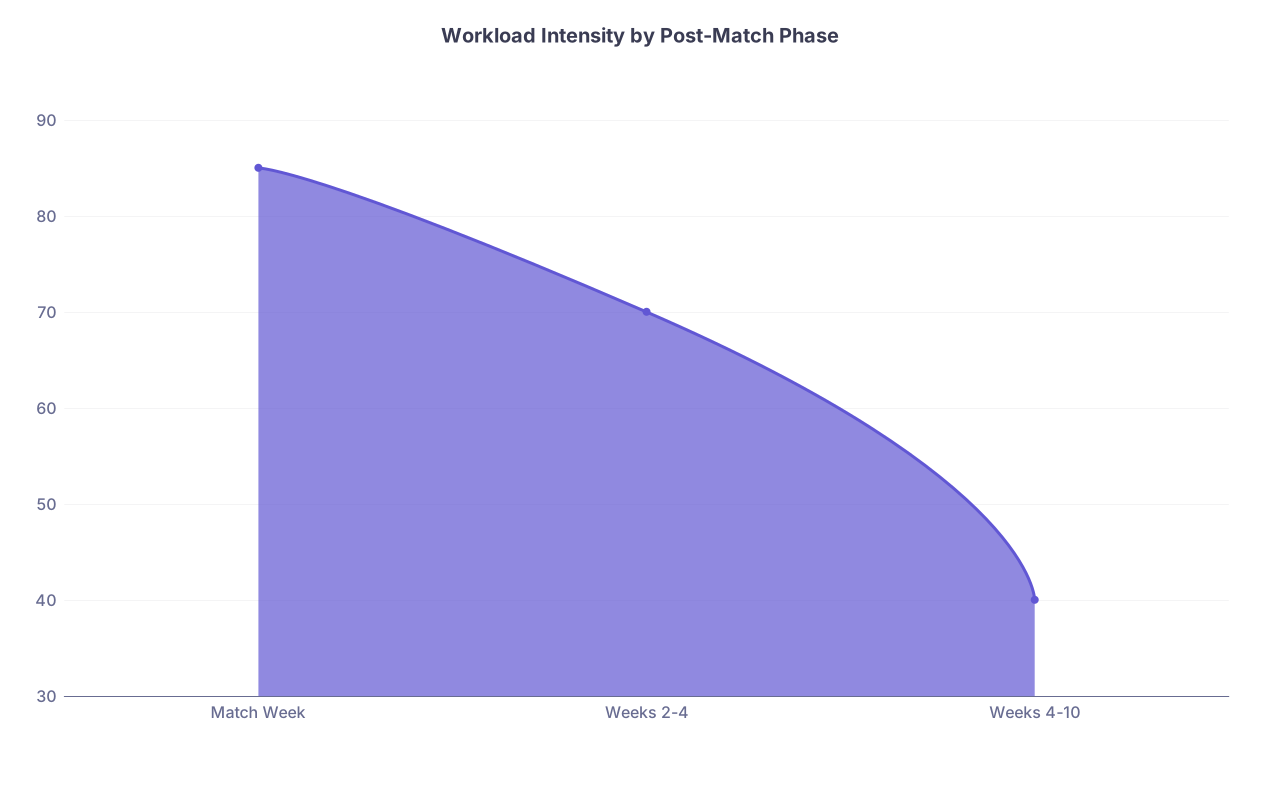
Putting It Together: Sample Timeline
Let’s make this less abstract. Say you matched into Internal Medicine in Chicago with a July 1 start.
Here is how a sane triage might look:
Match Week (Stat):
- Confirm match and respond to program coordinator
- Log into onboarding portal, sign any time-sensitive forms
- Complete background check and drug screen
- Decide: roommate vs alone, which general area of Chicago (e.g., near West Loop vs Lakeview vs walking distance)
- Join program’s resident group chat
Weeks 2–4 (Urgent):
- Build realistic PGY-1 budget based on hospital’s salary
- Tour apartments (virtually or in person), sign lease starting mid-June
- Gather immunization records, get missing titers and vaccines
- Start assembling documents needed for Illinois training license based on GME instructions
- Book moving truck and tentative move dates around graduation
Weeks 4–10 (Routine):
- Update CV, clean up LinkedIn
- Schedule your own medical/dental visits before move
- Begin light, focused IM reading 4–5 days per week
- Set up or adjust bank accounts and plan for direct deposit forms
- Clean up old subscriptions, update addresses, plan loan repayment strategy for after intern year starts
| Category | Value |
|---|---|
| Match Week | 85 |
| Weeks 2-4 | 70 |
| Weeks 4-10 | 40 |
You can see the pattern: front-load the critical, then smooth out the rest.

FAQ: Match Day Task Triage
1. My friends are already signing leases the week after Match. Am I behind if I wait a bit?
You are only behind if you are in an ultra-competitive housing market where inventory disappears in days. In most cities, the correct order is: confirm program logistics → know your budget → then sign a lease. If you do your financial reality check and basic research in the first 2–3 weeks, signing a lease by late March or April for a mid-June start is completely reasonable.
2. How much time should I spend studying before intern year actually starts?
If you are reasonably comfortable clinically, 3–5 hours per week is enough. Focus on practical topics: admitting orders, cross-cover issues, bread-and-butter conditions in your specialty. The return on investment plummets if you try to turn this into a full-time “Step-style” study block. You will get more value from structured, short, consistent sessions than from a panicked cram in late June.
3. What if my program is slow to send onboarding or licensing instructions?
That happens. While you wait, control what you can: gather your documents (transcripts, test scores, ID), complete your vaccines and titers, clarify your housing and budget. Reach out once, politely, to confirm you are on their list and have the correct contact. Then do not spam them. Most GME offices release materials on a predictable internal schedule regardless of your anxiety level.
4. I did not match my top choice and I feel unmotivated to do any of this. How do I handle that?
You are allowed to be disappointed. But the system does not pause for your emotional processing. Give yourself a defined window—48 to 72 hours—to vent, cry, complain to trusted people. Then treat the logistics as nonnegotiable professional obligations. Getting your paperwork, housing, and finances in order is how you protect your future options, including the possibility of fellowship or even future transfer. You do not have to love where you are going to execute like a professional getting ready to work there.
Three points to keep in your head:
- Stat is anything that touches start date, pay, or license. That gets done this week.
- Urgent is housing, budget, and health/occupational requirements. That gets done this month.
- Routine is everything else that optimizes but does not determine your ability to function on July 1. That can wait until next month—if you are honest about what truly belongs there.