Introduction: The Silence After the 'Congratulations' Email
You open the email. Your hands are shaking. "Congratulations! We are thrilled to welcome you to the [Insert Dream Program Name] Family!" You scream. You cry. You call your mom. You text your med school group chat. You update your Instagram with that little graduation cap emoji.
Then the phone goes down. The adrenaline fades. And a slow, cold dread starts creeping up your spine.
If you are worried that your interview performance wasn't genuine, it is worth exploring what PDs really look for in residency interview answers to better manage your expectations.
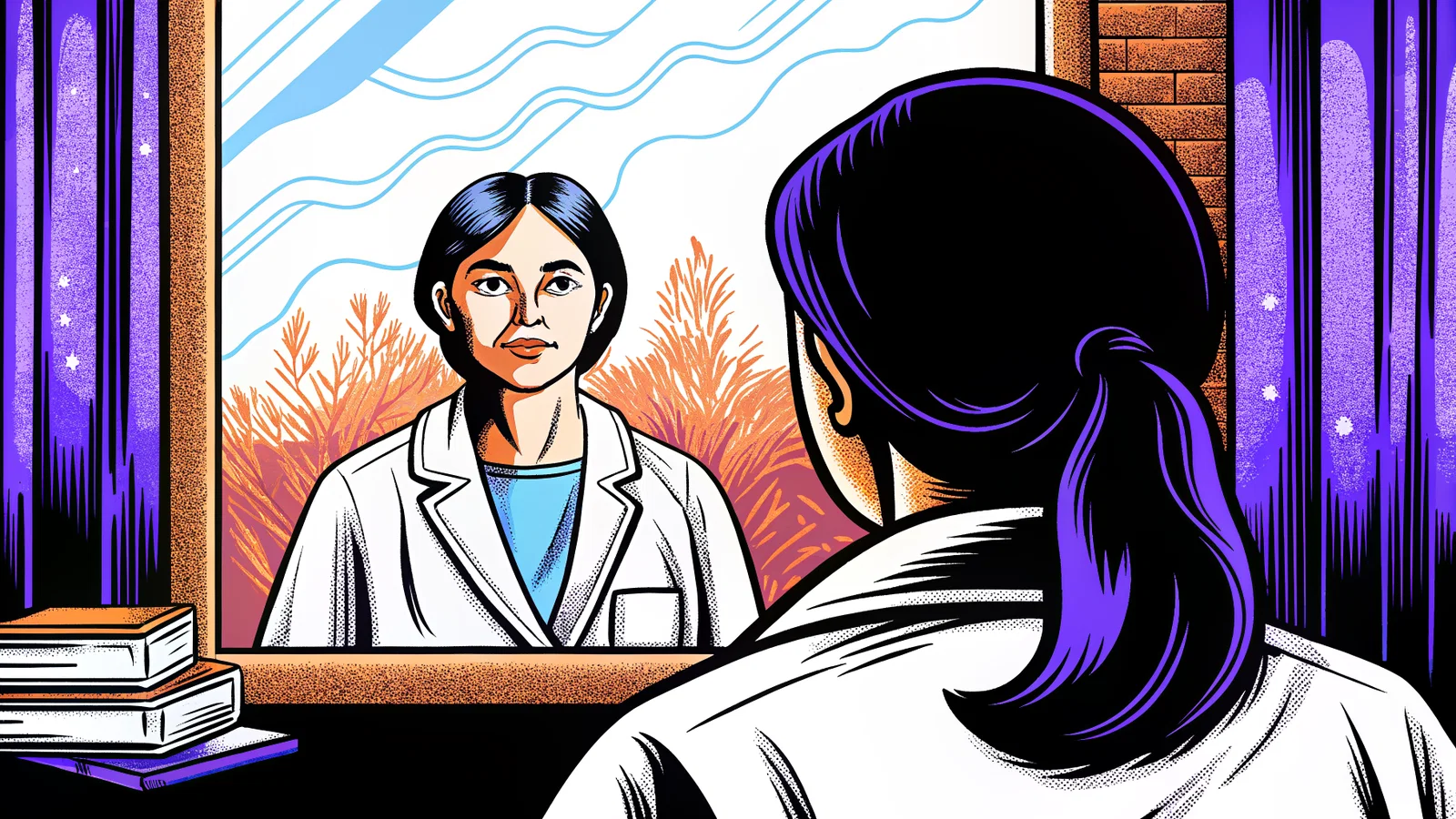
Wait. Did I lie? Did I somehow convince these people I was competent? Because I definitely don't feel competent. I feel like I'm about to walk into a building where everyone knows I faked my way through the last four years, and they're just waiting for July 1st to spring the trap.
This is the part nobody talks about. The "post-match hangover." You spent so much energy trying to get in that you never stopped to ask: What happens when they actually expect me to be a doctor? The perfect interview you gave, the witty answers, the confident handshake, the story about your grandmother that may have been slightly embellished, suddenly feels like a legally binding contract you can't fulfill.
Even if you feel like you aced your interviews, you might benefit from understanding what PDs secretly hope you'll do in the hours after matching to ensure a smooth transition.
I'm writing this because I need to say it out loud, and maybe you do too. There are things program directors (PDs) don't tell you once you're locked in. Things that would have terrified you before you ranked them. Things that might keep you up at 3 AM right now.
So let's pull back the curtain on the silence after the "Congratulations" email.
The Illusion of the 'Fit': What They Said vs. What They Meant
Let's talk about the word "family." Every program says it. "We're like a family here." I heard it at least 14 times during interview season. I said it back at least twice. It sounds warm. It sounds like belonging. It sounds like someone will actually check on you when you're post-call and crying in the supply closet.
Here's what "family" usually means: We will call you on your day off. We will guilt you into covering someone else's shift because "that's what family does." We will expect you to attend mandatory "family dinners" that are actually just networking events with no food. Your boundaries will be tested, and "family" will be the reason you're told to suck it up.
I wish someone had warned me that "family-oriented" is often code for "poor work-life boundaries and a call schedule held together by guilt."
Then there's the "mentorship" promise. During my top-choice interview, I sat with the associate program director who drew me a literal diagram of my five-year career trajectory. She pointed to a name on the org chart and said, "This will be your mentor. She is incredible. She publishes. She advocates for women in medicine. You two will connect immediately."
I matched there. I emailed her. I waited. I emailed again. I saw her once in the hallway six weeks in, and she smiled politely like she vaguely recognized my face from an ERAS photo. That's it. That was the mentorship.
If you are starting to panic about your upcoming performance, consider reading Anxious About PGY-1 Performance After Match Day: Normal or Red Flag?.
I later learned she'd been on sabbatical, then moved to a different role, then was on parental leave. Nobody updated the org chart. Nobody reassigned me. I was just supposed to figure it out. And when I finally asked for a new mentor, I was told, "We're like a family here, we don't assign mentors, we let connections happen organically."
Cool. Love that for me.
Understanding what behaviors will damage your standing is vital, as discussed in Match Day Mistakes That Damage Your Reputation Before Residency Starts.
The truth is this: PDs sell the lifestyle, not the grind. They show you the fancy sim lab. They brag about the free food in the lounge. They don't mention that the free food is there because nobody has time to go home and eat. They don't tell you about the 28-hour calls. They don't tell you that the "wellness curriculum" was implemented after three residents quit in the same year.
I should have been terrified from the start. I should have asked, "If this program is so great, why are you working so hard to convince me?" But I didn't. I was too busy trying to be the perfect candidate to notice the cracks.
The 'Perfect' Candidate Trap: Being Too Good is a Liability
Here's the thought that haunts me at night: What if I was too good at the interview?
I know that sounds insane. Who worries about being too impressive? Me. Because now I'm terrified there's an unattainable bar set in the minds of the faculty. They met this polished, confident, articulate version of me. They expect that person to show up on July 1st. And what's actually showing up is a 26-year-old who still Googles basic pharmacology and has to look up where the bathrooms are on every floor.
Do PDs actually track your interview answers against your clinical performance? I spiral about this weekly. I imagine them sitting in a conference room, pulling up my ERAS photo, and saying, "Remember when she said she was 'detail-oriented and passionate about patient-centered care'? Yeah, she just ordered the wrong dose of metformin."
Realistically, I think they're too overworked to grade my personality like a Yelp review. But the fear is real. The fear that my charisma in October set expectations my clinical skills can't meet in March.
Then there's the "Golden Child" problem. You know the one. The applicant the PD keeps mentioning. "Oh, you're just like our resident Dr. Smith, she matched here five years ago and now she's chief." That feels great. It feels like a compliment. Until you realize that being the Golden Child means everyone watches you. When you make a mistake, and you will, because you're human, it's not just a mistake. It's a disappointment. It's a fall from a pedestal you didn't ask to be placed on.
I've watched this happen. The Golden Child burns out faster. The Quiet Observer, the one nobody talked about during interviews, often ends up thriving because nobody expects anything from them. They get to learn in peace. They get to fail quietly. They get to grow without an audience.
So yeah, being "too perfect" is absolutely a liability. And there's no way to un-be it now.
Hidden Institutional Truths: The Things They Didn't Put in the Brochure
Let me tell you about the brochure. The one with the smiling diverse residents holding dogs and coffee cups. The one with the sunset over the hospital helipad. The one that says "Wellness is Our Priority" in 48-point font.
That brochure is a lie. Not a complete lie. But a curated, strategically cropped, photo-shopped lie.
They didn't mention the attrition rate. My program has lost a resident in nearly every PGY-2 class for the last five years. Not because people fail. Because people transfer, quit, switch specialties, or just disappear. And nobody told me that during the interview. They showed me the match list. They showed me the fellowship placements. They showed me everything except the quiet exodus.
They didn't mention the budget cuts. The hospital tour was all shiny new equipment and renovated call rooms. What they didn't say: "Oh, by the way, the simulation center is being defunded next year. Also, your educational stipend is being halved. Also, we just laid off half the custodial staff, so good luck finding clean scrubs at 3 AM."

Here's the question that keeps me up: If the program is so "perfect," why are they constantly trying to recruit more residents? Why are they expanding the class size? Why are they advertising open spots in the middle of the year? Gaps. There are gaps. And we're going to be the ones filling them.
And the leadership. The PD you fell in love with. The chair who seemed like a visionary. The program coordinator who answered all your emails within hours. Guess what? They're humans. They get recruited elsewhere. They get tired. They retire. The person who sold you on this program might not even be there by the time you graduate.
I didn't think about that. I ranked the program based on the people I met on one day in November. I'm now realizing that those people might be gone by 2027. And I'll be stuck with whatever regime replaces them.
Conclusion: Surviving Your Own Success
Here's the thing I keep telling myself at 3 AM: I'm more than my interview persona.
That polished version of me, the one who had a perfect answer for every behavioral question, who laughed at all the right moments, who pretended to be unbothered by the stress of matching, that was a costume. It was a good costume. It worked. But it wasn't the whole me.
The whole me is anxious. The whole me Googles normal lab values. The whole me cries after codes sometimes. The whole me is going to make mistakes. And that's allowed. That's human. That's what intern year is actually for.
The "perfect" choice is a myth. There's no perfect program. There's no perfect candidate. There's only the imperfect reality of learning to be a doctor while being terrified that someone will figure out you don't know what you're doing. Spoiler: everyone feels that way. Even the chief residents. Even the attendings. The difference is they've just gotten better at faking it.

So what do we do with the fear? We don't let it paralyze us. We let it make us careful. We let it make us double-check our orders. We let it make us ask for help early and often. We let it make us find our co-interns and build the support system the brochure promised.
To every anxious soul waiting for July 1st: I see you. I am you. We're going to be okay. Not because we're ready. Because we don't have a choice. And honestly? That might be the only motivation that actually works.