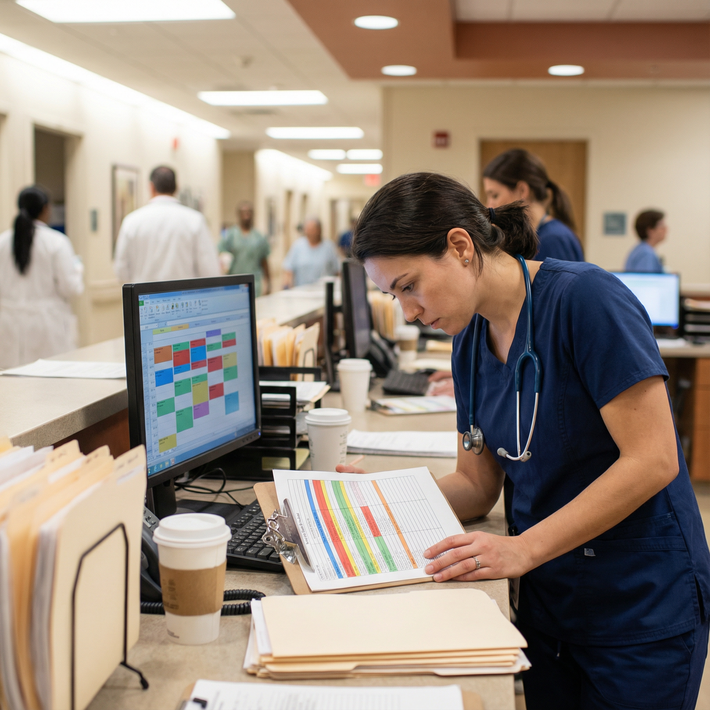
A mid-round admission feels catastrophic because it is sudden, visible, and annoying. The data shows that those three things are not the same as true workflow collapse.
I have watched residents get an admission page halfway through rounds and react as if the entire day just detonated. Usually, it did not. What actually happened was a short-term workload spike layered onto an already fragile routine. That distinction matters. One unscheduled admission can absolutely add friction, but whether it truly derails your shift depends on measurable variables: current patient census, staffing ratio, patient acuity, number of pending discharges, and where you are in the call cycle.
The psychological mismatch is predictable. Humans overweight interruptions. A new admission is emotionally louder than finishing three progress notes, reconciling meds, and calling a family, even if those tasks consume more total minutes. Residents often remember the page, not the downstream math. If your team is carrying 14 patients with two discharges pending and no APP support, one new patient may increase practical workload by 25% to 40% for the next hour. If your team is stable, notes are mostly done, and a senior can absorb triage, the same admission may add 10 to 20 minutes of real delay. Stress spike? Yes. Total derailment? Often no.
What the Data Says About Workflow Disruption
The data shows that a mid-round admission is not a single event. It is a bundle of tasks: chart review, bedside evaluation, order entry, medication reconciliation, communication with nursing, talking to the ED or transfer team, documentation, and sign-out updates. The impact is determined by four variables more than anything else:
- Patient acuity
- Active task load already in progress
- Time remaining in rounds
- Available support from interns, seniors, APPs, and nursing
Start with acuity. A stable cellulitis admission with complete outside records is not the same as a tachypneic CHF exacerbation with no med list and a soft blood pressure. In practical terms, a low-acuity admission may require 15 to 20 focused minutes upfront, then another 15 to 25 minutes of deferred documentation and order cleanup. A higher-acuity patient can consume 45 to 90 minutes fast. No mystery there.
Now layer in timing. The same patient landing during protected work time is much cheaper than the same patient landing during the last 30 minutes before sign-out. Why? Because the interruption cost compounds. If you are 20 minutes from finishing rounds and get pulled out to admit, every unfinished task on your existing list shifts rightward.
A simple comparison makes the point:
Low-impact scenario: 1 admission during protected work time, team census 10, intern available, no unstable patients. Estimated added delay: 15 to 20 minutes. Most of that is documentation.
Moderate-impact scenario: 1 admission during active rounds, team census 14, one discharge pending, senior also fielding pages. Estimated added delay: 30 to 40 minutes. Delays spread across rounds, notes, and family communication.
High-impact scenario: 1 admission during sign-out prep, team census 16, intern post-call, no APP, one staffing gap. Estimated added delay: 45 to 75 minutes. This is where note closure and handoff quality start degrading.
Task-switching is the hidden tax. Cognitive psychology consistently shows that interruptions do not just consume the minutes they occupy; they also create restart costs. In residency, that restart cost is real. You leave rounds, absorb new data, enter orders, answer a pharmacy clarification, then return and try to remember whether bed 12 needed a diuretic increase or a repeat CBC. I have seen residents lose 5 to 10 minutes simply reconstructing where they were. Across a shift, two or three interruptions can convert a nominal 20-minute workload addition into a 45-minute productivity drain.
That is why the loudest part of the disruption is not always the admission itself. It is the scatter effect. Notes close later. Sign-out gets compressed. Nonurgent calls get forgotten until they become urgent. The data shows that cumulative workflow erosion matters more than the single page.
Which Resident Roles Absorb the Most Impact?
Not all residents absorb the same admission the same way. The burden is role-dependent.
For the intern, the admission often means direct execution: history, exam, orders, med rec, and the first-pass note. On a well-staffed team, that can be a 10% to 15% workload increase for the next two hours. On a lean team carrying multiple discharges, it can jump above 40% because the intern is also the person expected to do the discharge summary, call the consultant back, and rewrite the potassium order nursing paged about twice already.
For the senior resident, the work is less visible but often more dangerous if mishandled. Seniors absorb triage, supervision, attending communication, contingency planning, and quality control. They are the air traffic controller. A single mid-round admission may add fewer keystrokes for them, but it increases cognitive load sharply. They are now tracking both the new patient and the unfinished work of everyone else.
For the team lead or supervising senior, the impact is operational. They decide what slips, what gets delegated, and what must happen now. If they make poor sequencing decisions, error risk rises fast.
Here is the ugly truth: error risk tracks workload density, not just workload volume. One extra patient is manageable. One extra patient plus four pending notes, two discharge med recs, one family meeting, and an unstable cross-cover page? That is where mistakes happen. Missed DVT prophylaxis. Delayed antibiotic timing. Omitted follow-up imaging in sign-out.

I have seen the same admission feel trivial on a service with an intern, senior, and APP, then become a complete mess on a service with one intern covering discharges and a senior stuck in a rapid response. The patient did not change. The system did.
How to Quantify the Disruption Before It Snowballs
You need a fast mental model. Not vibes. Not panic. A score.
I use a simple triage formula:
Disruption Score = Acuity x Task Backlog x Staffing Gap
Rate each variable from 1 to 3.
Acuity
- 1 = stable, predictable, complete records
- 2 = moderate complexity, unclear medication history, several active issues
- 3 = unstable, time-sensitive decisions, frequent reassessment needed
Task Backlog
- 1 = few pending notes/orders, rounds nearly done
- 2 = several open tasks, at least one discharge or consultant callback pending
- 3 = multiple unfinished notes, discharges, pages, and follow-up tasks already stacked
Staffing Gap
- 1 = full team available
- 2 = partial support only, someone tied up
- 3 = lean coverage, post-call attrition, no backup, or senior split across crises
That yields a score from 1 to 27.
Use it like this:
- 1 to 4: absorb and continue. Minimal restructure needed.
- 5 to 9: delegate at least one task immediately.
- 10 to 18: defer low-value work, notify senior, protect sign-out preparation.
- 19 to 27: this is a true workflow threat. Escalate early. Do not play hero.
Example. Stable pneumonia admission with complete ED workup: acuity 1. You still have two notes and one discharge summary left: backlog 2. Intern available, senior free: staffing gap 1. Score = 2. Annoying, yes. Derailer, no.
Now the opposite. New GI bleed admission, soft pressures, med list unclear: acuity 3. Three discharges still incomplete and rounds unfinished: backlog 3. Intern at clinic, senior covering another issue: staffing gap 2. Score = 18. That is not the time for stoicism. That is the time for restructuring the team in real time.
The value of the score is not precision. It is speed. It forces you to decide what gets deferred, delegated, or escalated before the shift starts leaking minutes everywhere.
Workflow Preservation Strategies That Actually Move the Needle
Most residents try to survive admissions with pure multitasking. Bad strategy. The data shows that process beats heroics.
Three interventions consistently produce the biggest returns:
- Front-load documentation
- Batch communication
- Protect a 10-minute reset window after the admission
Front-loading documentation matters because unfinished notes become cognitive debt. If you know your service gets frequent admissions, finish the assessment and plan on your current patients before rounds drift too far. Even partial note completion can save 5 to 8 minutes per patient later. Across six patients, that is half an hour recovered. Real time.
Batching communication is another obvious move that residents ignore. Stop making one-off calls every time a thought appears in your head. If the admission arrives, collect consultant questions, nursing clarifications, and family updates into a structured block whenever clinically safe. This reduces task-switching and keeps you from re-opening the same chart six times.
The 10-minute reset window is underrated. After the admission is stabilized and the first orders are in, pause. Rebuild the task list. Reassign ownership. Decide what absolutely must happen before sign-out. That reset often saves more time than the admission cost in the first place because it prevents scatter.
High-yield delegation points are boring. Which is exactly why they work:
- Labs: asking nursing or another team member to help track timing or redraw logistics
- Medication reconciliation: share pieces of the med history gathering
- Collateral calls: family, facility, pharmacy, or outside hospital records
- Order entry sequencing: one person gathers data while another enters standard supportive orders
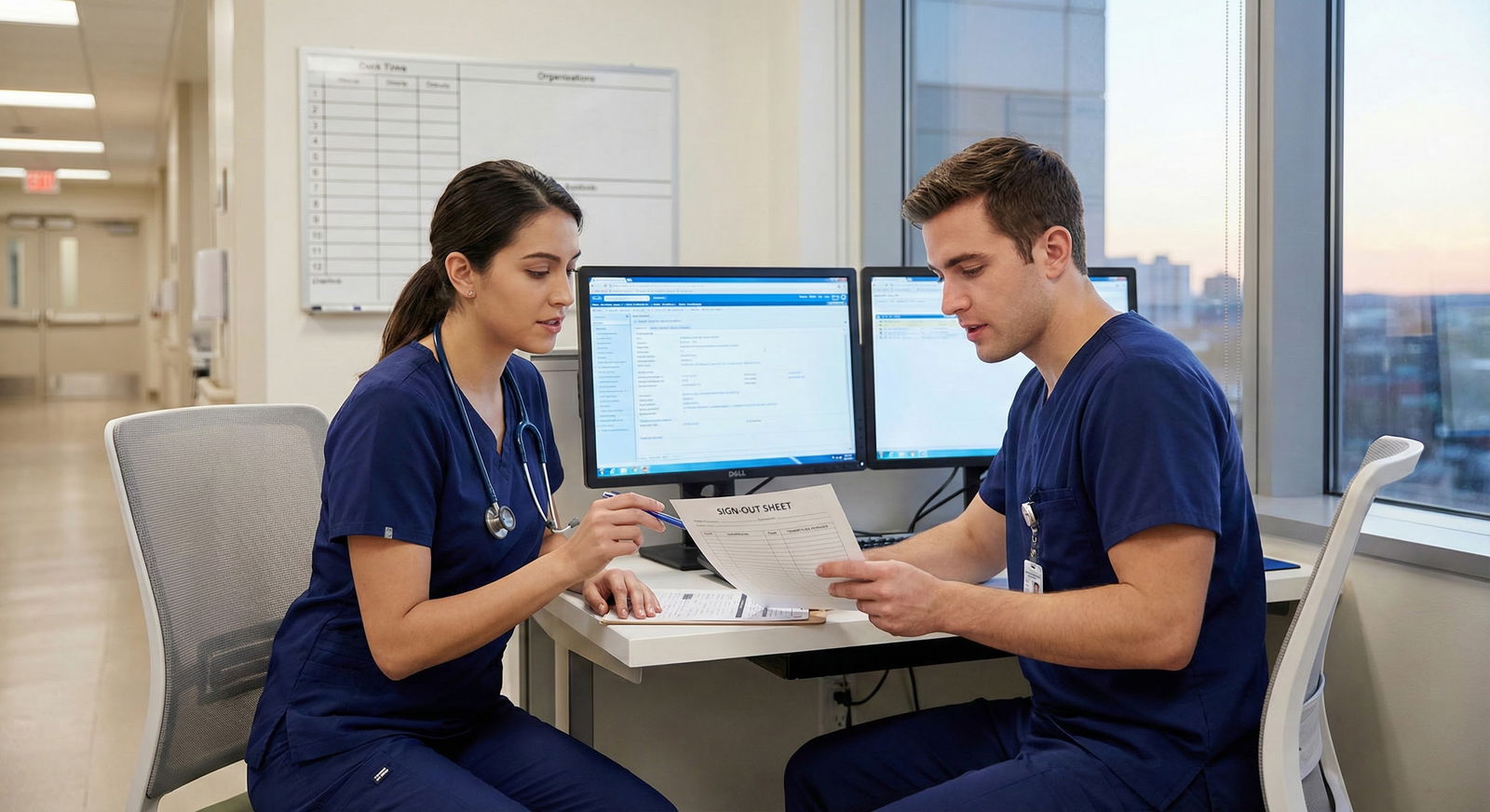
Standardized templates help more than residents admit. A clean admission note template, discharge checklist, and sign-out structure can shave 3 to 7 minutes off repetitive work. That sounds small until you multiply it over a week. Small process fixes are the boring machinery of survival. They beat frantic brilliance every time.
And sign-out hygiene matters. If your sign-out is sloppy before the admission hits, the new patient will expose that weakness immediately. Clean handoffs, pre-ordered morning labs, and prioritized task lists reduce cumulative delay more than staying late trying to brute-force the mess.
When a Mid-Round Admission Does Become a True Derailer
Sometimes it really is a derailer. Let us not pretend otherwise.
The threshold is crossed when the admission lands on top of another clinically meaningful stressor:
- Simultaneous unstable patient care
- Repeated interruptions within the same hour
- Inadequate staffing or unexpected attrition
- Delayed escalation because the resident tries to absorb everything alone
The warning signs are operational, not emotional. You know the workflow is actually failing when you see:
- missed or delayed orders
- note closure pushed dangerously late
- sign-out compressed into a rushed data dump
- handoff omissions
- discharge work left half-finished
- repeated "I thought someone else did that" moments
That is the point where pride becomes dumb. Notify the senior. Pull in backup if your program has float support. Tell the attending if patient acuity or task density has exceeded what the team can safely absorb. I have seen residents delay escalation because they wanted to prove they could handle it. The data shows that delayed escalation is one of the fastest ways to convert inconvenience into error.
A mid-round admission is not a test of toughness. It is a test of systems thinking.
Summary: The Admission Rarely Destroys the Workflow Alone
The data shows that a mid-round admission is usually a stressor, not a full derailment. What determines the real impact is context: workload density, staffing, timing, and acuity. One page rarely wrecks a shift by itself. An overloaded system does that.
That is the practical takeaway. Measure the disruption fast. Use a simple score. Delegate early, batch communication, protect a reset window, and clean up your sign-out habits. Workflow damage is cumulative and measurable. Better sequencing prevents more chaos than raw effort ever will.