
Busy nights do not create mistakes out of nowhere. They expose weak workflows. That is the whole story.
Epic "Pending Results" views and closed-loop tracking are both trying to solve the same problem: get the right result to the right clinician in time for the right action. But they are not the same tool. One is mostly a visibility tool. The other is a completion system. And under pressure, they fail in different ways.
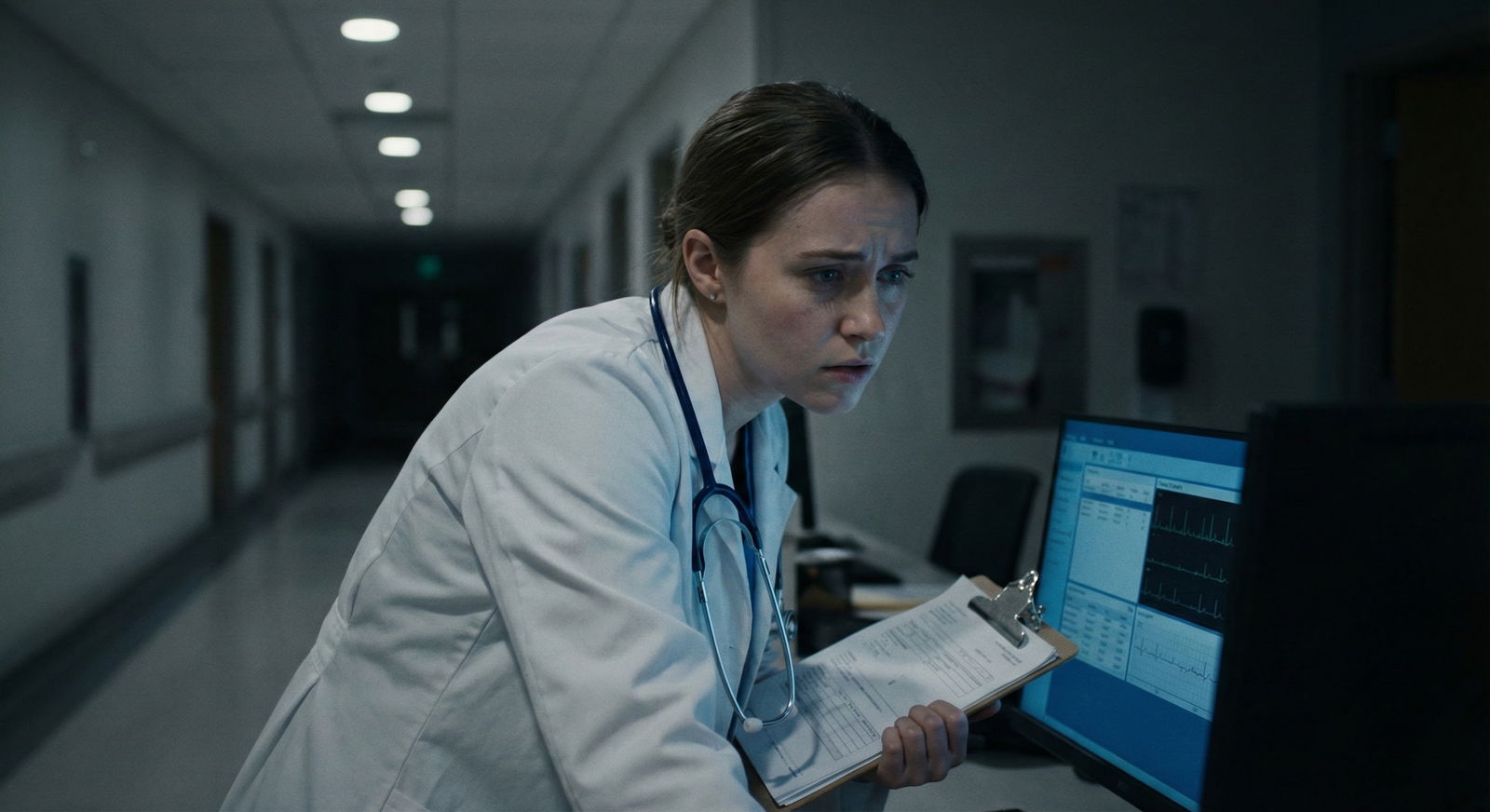
I have seen this play out at 4 a.m. more times than it should. A potassium resulted an hour ago. The order no longer looks "active." The result never hit the inbox the resident expected. The patient got handed off. Everyone was working hard. Nobody was lazy. Still missed.
That is why this matters. This is not an effort failure. It is a workflow failure. Alerts get buried. Ownership gets fuzzy. Action gets deferred to "the day team," and then the day team walks into a surprise they should never have inherited.
Terminology First: What "Pending Results" Actually Means in Epic
Let me break this down specifically, because this is where residents get trapped.
When people say "check pending results in Epic," they usually mean one of three things:
- orders that have been placed but do not yet have a final result
- results that have come back but have not routed cleanly to the expected queue or inbox
- reports or documents that technically exist but are not fully signed, finalized, or visible in the place you are expecting
Those are not the same thing. Treating them as the same thing is how misses happen.
A "pending" order can simply mean the test is still in process. Fine. But the dangerous version is this: the test is no longer truly pending from a clinical standpoint because data are already back somewhere in the chart, yet nobody has reviewed and acted on them. That is the nightmare category. It looks administratively unfinished, but clinically it is already demanding attention.
This is why "pending" is not the same as "not handled." A result may exist and still not be handled because:
- it did not route to your inbox
- it routed to the wrong clinician
- the primary team changed after sign-out
- the result landed in the chart but not in the workflow view you rely on
- someone acknowledged receipt without actually interpreting the result
That last one is especially dangerous. Clicking acknowledgement is not medicine. It is clerical motion.
Residents often carry three bad mental models here.
Trap one: checking only the order, not the actual result. You see "CT chest pending" and move on. Bad move. Open the imaging section. Refresh. See whether a preliminary read exists. On nights, the difference between "pending in the orders tab" and "already read by radiology" can be the difference between catching a PE now or hearing about it at sign-out.
Trap two: trusting the system to notify you automatically. That faith is not earned. Routing logic breaks. Coverage assignments change. The patient gets transferred. Your name falls off. Or a result appears in a bucket you only glance at once. If your workflow depends entirely on passive notification, you are building on sand.
Trap three: assuming the problem will wait until morning. It will not. Hyperkalemia does not care that you are cross-covering 40 patients. A positive blood culture at 3 a.m. is not "a day team issue." A rising lactate is not impressed by how busy the unit is.
The safest way to think about Epic pending views is this: they show you possible unfinished business. They do not prove that a result was received, interpreted, communicated, and acted upon.
That distinction matters more than any button in the EHR.
What "Closed-Loop" Tracking Means Clinically (and Why It Prevents Misses)
Closed-loop tracking is the adult version of result management.
The loop is only closed when the full cycle is complete:
- A test is ordered.
- The specimen is collected or the study is performed.
- The result returns.
- The result reaches the responsible clinician.
- That clinician actually reviews it clinically.
- Action happens if action is needed.
- The review, action, and communication are documented.
If any step fails, the loop is open. Open loops are where patients get hurt.
Here is the point residents need drilled into them: review is not the same as acknowledge. Review means you interpreted the result in context. You compared it to baseline. You looked at the trend. You asked whether it changes management tonight. Acknowledge just means the result touched your screen.
Those are radically different things.
Take a hemoglobin of 7.4. By itself, that number means little. In one patient it is stable and expected. In another, it is a fresh drop from 10.9 after a procedure and should trigger immediate concern for bleeding. The EHR can tell you a result exists. It cannot think for you. Closed-loop tracking forces the thinking step.
Then comes ownership. This is where real-world nights get ugly.
Who owns the result if:
- the ED admitted the patient but the medicine team has not yet staffed them?
- the surgical consult requested the CT but the primary team is hospital medicine?
- the cross-cover resident receives the critical potassium alert on a patient they have never met?
- the patient changed services an hour ago?
If your answer is "whoever happens to notice it," your system is bad. Full stop.
Closed-loop systems work because they define responsibility and escalation in advance. If a result is abnormal, somebody specific must act. If that person is unavailable, there is a backup pathway. If that pathway fails, there is another escalation step. Nurse. Covering resident. Senior. Attending. Rapid response if needed. Not glamorous. Very effective.
And yes, this improves real safety outcomes. This is not bureaucratic decoration.
Closed-loop result tracking prevents:
- delayed treatment of critical lab abnormalities
- missed positive cultures
- unaddressed imaging findings with immediate implications
- "morning surprises" where the day team discovers something dangerous sat untouched overnight
- the classic, awful chart review sentence: "Critical value noted in chart overnight, no documented action"
That sentence should bother you. It bothers me every time.
Here is the workflow visually:
That is the target. Not "I checked the pending tab." Not "I thought Epic would page me." A closed loop.
Epic Reality Check: Where Pending Results Break Under Real Night Shifts
Now the ugly part. Where this falls apart in real life.
Failure mode 1: Routing gaps
Results come back, but not where you expect them.
This is common. A lab may finalize and sit in the chart without surfacing in the queue you monitor most. Preliminary imaging may be visible under imaging results while the order still looks unresolved elsewhere. Microbiology is notorious for this problem because partial updates, preliminaries, and final susceptibilities can emerge at different times and in different views.
If your workflow is "I only trust the inbox," you will miss things. I have seen positive blood cultures sit because the resident looked at the orders list and assumed the alerting mechanism would do the rest. It did not.
Failure mode 2: Ownership gaps
Night medicine is built on handoffs, and handoffs are where ownership goes to die.
An intern signs out "follow repeat BMP" to cross-cover. The cross-cover gets swamped with a crashing patient. The BMP comes back with a potassium of 6.1. Meanwhile, the original intern mentally moved on because they signed it out. The cross-cover assumes the primary team also sees it. The nurse pages one person, then another. Everyone is technically involved. Nobody is clearly responsible.
That is not a people problem. That is a design problem.
Pending items often persist under stale assumptions. The patient moved units. The covering list changed. The resident changed. The consult team ordered the test, but the primary team must treat the finding. Unless ownership is explicit, the result floats in a dangerous gray zone.
Failure mode 3: Volume and alert fatigue
Busy nights flatten everything into one endless stream of noise.
Routine CBCs. Stable BMPs. Duplicate notifications. Old results resurfacing. Then, mixed into that clutter, an actually important value. Human attention is limited. Pretending otherwise is fake professionalism.
The dangerous result is often not missed because it was invisible. It is missed because it had to compete with twenty low-value clicks. Signal buried by workflow junk.
Critical values are especially vulnerable when you are task-switching. You are admitting two patients, answering pages, trying to place orders, and someone says, "By the way, room 18 has a lactate of 5.2." You hear it. You mean to return to it. Then another page interrupts you. That is how action drifts.
Failure mode 4: Action gaps
This one is more subtle and more embarrassing.
The result is visible. You even looked at it. But nobody made the leap from visibility to interpretation to action.
Examples:
- creatinine is up, but no one recognized the trend over 12 hours
- CT final read shows a new infiltrate, but antibiotics are deferred because "pulm is seeing them"
- repeat troponin rose meaningfully, but the number was filed mentally as "already known chest pain workup"
- lactate improved slightly but remains dangerous, and no one asked whether source control or escalation is needed
The EHR is full of seen-but-not-processed information. That is the action gap. It is common, and it is bad medicine.
Failure mode 5: Documentation gaps
You reviewed the result. You called the nurse. You changed the fluids. You planned to repeat the lab. Fine. Did you document any of that?
If not, the next clinician sees ambiguity:
- Was this result missed?
- Was it reviewed but considered non-actionable?
- Was a plan made?
- Is someone waiting on a consultant?
- Does this still need to be done?
Documentation is not busywork here. It is closure logic. It tells the next person whether the loop is closed or still open.
A one-line note can prevent major confusion: "0235: K 6.1 reviewed. EKG ordered, calcium/insulin/dextrose given, repeat BMP in 1 hr, bedside RN notified, senior updated."
That is a closed-loop sentence. Short. Useful. Safe.
Here is the conceptual distribution of why night-shift misses happen:
These numbers are illustrative, not a published dataset. But the pattern is real. Most misses do not come from not caring. They come from systems that fail at routing, ownership, and closure.
Build Your Own Closed-Loop: A Resident-Proven Workflow for the Busy Night
You do not need a perfect institutional solution to be safer tonight. You need a repeatable personal workflow.
My strong recommendation: stop "scrolling and hoping." Use scan + sort + close.
Step 1: Scan
Decide exactly where you will look, every shift, every time.
At minimum:
- your primary results/inbox queue
- critical value alerts or equivalent high-priority message stream
- pending-order or follow-up views
- imaging results section for preliminaries/finals
- microbiology and culture updates if relevant to your service
Timing matters. If you only check when you remember, you are trusting memory during the least memory-friendly hours of the day.
Use fixed review points:
- start of shift: identify inherited unresolved results and expected return times
- mid-shift checkpoint: clear any accumulating urgent items before fatigue peaks
- pre-handoff/end of shift: explicitly review unresolved results and assign owner/action
For unstable patients, add ad hoc checks tied to clinical change, not just the clock.
Step 2: Sort
Once results are visible, do not process them as one undifferentiated pile. Sort them into buckets.
Critical now Needs immediate action or immediate clinical interpretation. Examples: severe hyperkalemia, positive head CT bleed, critical pH, escalating troponin in active symptoms, lactate with instability.
Urgent but stable Needs action tonight, but not in the next two minutes. Examples: new AKI requiring medication adjustment, hemoglobin drop in stable patient, positive imaging finding that changes morning plan but does not require crashing into the room.
Trend-needed Single result is not enough; next step is repeat, correlate, or monitor. Examples: borderline K, rising creatinine, lactate improving but still elevated, sodium correction pace.
Review-only Clinically noted, no immediate action beyond documentation. Examples: expected mild abnormalities, stable chronic findings, negative studies answering a focused question.
This sorting step is what kills alert fatigue. Not every result gets the same psychological weight.
Step 3: Close
Every bucket gets a predefined action threshold.
For critical now:
- verify the result quickly
- assess the patient or direct bedside assessment
- notify the nurse and relevant clinician immediately
- initiate treatment
- document result, communication, and action
For urgent but stable:
- review context and trend
- act within a defined short window
- message or call the responsible team
- adjust plan, meds, or workup
- document clearly
For trend-needed:
- place repeat labs or monitoring orders
- define the threshold that would trigger escalation
- state who is watching for the repeat value
- document the plan
For review-only:
- mark reviewed
- add one-line plan or no-change note if needed
- ensure the next clinician will not reopen the same question unnecessarily
That last point matters. Good documentation reduces duplicate mental work for the whole team.

Time-boxing and batching
Residents get this wrong in two opposite ways.
One extreme: constant reactive checking. You burn attention every five minutes and still miss the important thing because you never process deeply.
The other extreme: giant delayed batch review. You discover too much too late.
The solution is time-boxed batching with interruption rules.
Try this:
- routine review in short scheduled batches
- immediate interruption only for critical alerts, major patient status changes, or high-risk expected results
- after each batch, close or explicitly assign unresolved items before moving on
That is sustainable. Endless passive monitoring is not.
Handoff integration
Your sign-out must include unresolved results, not just unresolved orders.
Bad sign-out:
- "BMP pending"
- "follow cultures"
- "CT pending"
Good sign-out:
- "Repeat BMP due 0300 for prior K 5.8 after treatment; if K remains above 5.5, give next hyperK bundle and call senior."
- "Blood cultures prelim expected overnight; if positive, start cefepime per ID recs and notify covering attending."
- "CT abdomen expected within 1 hour for worsening pain; if free air or obstruction, page surgery immediately."
That is what closed-loop handoff sounds like. Result category. Expected action. Owner. Escalation trigger.
Escalation rules
You need rules for the moments when contact fails.
If you cannot reach the responsible clinician or consult team:
- treat what is immediately dangerous within your scope
- notify bedside nurse
- escalate to senior/attending per local chain
- document attempted contacts and time
- do not leave the issue floating because the "right person" did not answer
That is not overstepping. That is safe coverage.
Exam-Style Thinking: How Questions Test Your Understanding of Closed-Loop vs Pending
Board-style questions love this topic because it sits at the intersection of patient safety and systems thinking.
The stem usually sounds like:
- "What is the most appropriate next step?"
- "Which workflow best prevents missed test results?"
- "What is the safest process for follow-up of abnormal studies?"
The right answer is almost never "check the pending tab more often." That choice sounds diligent, but it is shallow. Monitoring alone is not a safety system.
The best answer choices usually include four elements:
- result routing
- responsible clinician review
- action when indicated
- documentation and escalation pathway
That combination wins because it closes the loop.
Common distractor: "Require residents to verify pending results hourly." That is weak because it leans on individual vigilance. It creates surveillance without completion.
Better answer: "Implement a process that routes finalized results to the responsible clinician, requires documented review and action, and uses escalation if not addressed." That is system design. Boards love system design because it is actually correct.
Here is the logic visually:
If you remember one exam rule, make it this: answers that reduce dependence on memory and increase explicit ownership beat answers that simply ask people to try harder.
Operational Checklist + Templates: Your "Night Shift Closed-Loop" Playbook
Here is the practical playbook. Steal it.
Night shift checklist
At start of shift
- review critical alerts/inbox
- identify expected overnight results
- clarify owner for each unresolved high-risk result
- mark patients needing trend follow-up
During shift checkpoint
- scan queues and imaging/micro results
- sort into: Critical / Urgent / Trend / Review-only
- act on top bucket first
- document each handled item briefly
Before handoff
- recheck unresolved high-risk results
- ensure each open item has an owner
- write expected action and escalation trigger
- do not sign out vague phrases like "labs pending"
Sign-out micro-template
Use this structure:
Labs/imaging pending, critical risk, expected result time, who will act, when to escalate
Example:
- "Repeat lactate pending, concern for occult sepsis, expected 0215, cross-cover resident will review, escalate to senior if rising or if MAP drops."
- "CT head pending for acute confusion, expected 2330, night float to review final, call neuro immediately for bleed or new infarct."
- "BMP pending after hyperK treatment, expected 0400, oncoming intern to act, escalate if K above 5.5 or EKG changes."
That is crisp. No fluff. No ambiguity.
Worked example
A patient with AKI and sepsis has a repeat potassium pending after treatment. At 02:10 the result returns: K 6.3.
Closed-loop response:
- result seen in critical queue during scheduled scan or alert interruption
- verify patient and context, check prior value and EKG status
- notify bedside nurse immediately
- order or confirm EKG, repeat calcium/insulin/dextrose or institution-specific hyperK treatment as appropriate
- inform senior/primary responsible clinician
- order repeat BMP in 1 hour
- document: result, treatment, who was notified, and what threshold triggers next escalation
That is closed. Not because the potassium stopped being dangerous, but because the result has been clinically processed and ownership of the next step is explicit.
Same logic for a lactate. Same logic for a critical imaging result. Same logic for a positive culture.
Contingency plan for handoff-window results
This is where teams get sloppy.
Set a rule: if a result returns during the handoff window, one named clinician owns initial review. Not "both." Not "whoever sees it first." One person.
Then document:
- what returned
- whether action is needed now
- if still unresolved, who owns next review
- what escalation threshold applies
If the team is off-site or fragmented, involve the bedside nurse early. Nurses are often the only stable human node in a chaotic overnight system. Ignore that fact and you are practicing fantasy medicine.
Here is the micro-algorithm:
Summary
Here is the cleanest way to say it.
Epic pending results views help you see unfinished business. They do not guarantee safe follow-up. Closed-loop tracking does. That is the difference.
Most overnight misses come from three ugly gaps:
- routing gaps
- ownership gaps
- closure gaps
So build your own defense:
- scan the same places every shift
- sort results into meaningful urgency buckets
- close each item with action, documentation, and explicit ownership
Busy nights reward structure. Not heroics. Not memory. Not vague promises to "keep an eye on it."
If your sign-out cannot answer what result, what action, who owns it, and when to escalate, the loop is not closed. It is just pending.