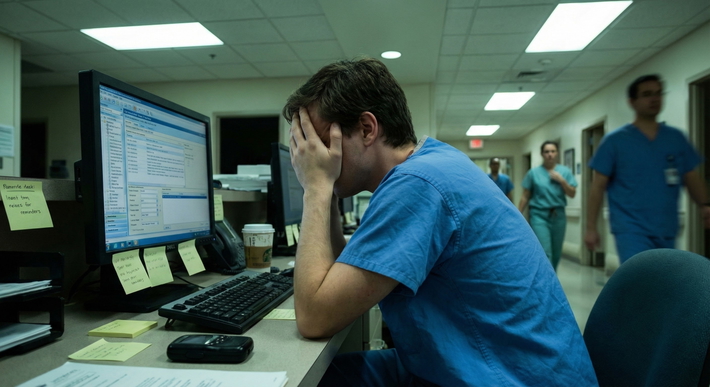
Arrival time is a lousy standalone metric for pre-round quality. That is the point. The myth says the first resident through the hospital doors is the most prepared, the hardest working, maybe even the safest. The reality is much less flattering and far more measurable: strong pre-rounding shows up in what you catch, how efficiently you synthesize it, what tasks are already done before rounds, and how often your plan survives attending scrutiny without major repair.
I have seen the full spectrum. The resident in the workroom at 4:45 a.m. who still misses the urine output trend. The intern who arrives later, but already knows the potassium dropped, the chest tube output changed, the patient refused anticoagulation, and the family wants discharge timing clarified. One looks dedicated. The other is actually useful.
The data lens here is simple. Stop grading pre-rounding by clock-in time and start grading it by signal quality. Useful measures are not glamorous, but they are honest:
- Chart review completeness
- Overnight events captured before rounds
- Minutes spent per patient
- Major plan changes or corrections during attending rounds
- Task completion before the team starts moving
That is the real scoreboard. Not who was first to badge in. Not who made the most noise about being tired. Not who had the earliest coffee.
What the data says upfront: earlier is not automatically better
The myth survives because it is easy to see. If Resident A is sitting at the workstation before everyone else arrives, that creates an immediate impression of discipline and effort. Residency loves visible suffering. It often mistakes that suffering for excellence.
But arrival time is a weak proxy. Weak enough that I would not use it as a serious performance marker unless everything else was equal, which it rarely is. Pre-round quality is better measured by four outputs: accuracy, efficiency, task completion, and clarity of assessment. If two residents start at different times but one consistently identifies overnight instability, updates the medication list correctly, anticipates consultant questions, and presents a clean plan, the data shows that resident pre-rounded better. Full stop.
A practical framework helps. Think about pre-round performance in terms of measurable outputs:
- Completeness: Did you review the key overnight data?
- Yield: Did you identify changes that matter clinically?
- Efficiency: How many minutes did you need per patient?
- Durability: How often did your assessment hold up on rounds without major correction?
Those are stronger signals than arrival time because they map to patient care, not optics. If your chart review is bloated, repetitive, and unfocused, then an extra 30 minutes before sunrise does not make it high quality. It just makes it longer.
Why the myth persists in residency culture
The culture equation many trainees absorb is brutally simple: earlier arrival = more dedication = better doctoring. It is tidy. It is emotionally satisfying. It is also wrong often enough to be dangerous.
The main culprit is visibility bias. Attendings and senior residents naturally notice who is physically present first. They do not automatically see who built the best mental model of the service. A resident quietly arriving 15 minutes later with a sharper synthesis is less visible at 5:30 a.m. but much more visible at 8:10 when their assessment is accurate and concise.
Then there is survivorship bias. Everyone remembers the legendary senior who came in absurdly early and ran circles around the team. Fine. Those people exist. But they become the template while the inefficient early arrivers disappear from the story. I have watched residents spend 90 minutes “preparing” by rereading the same notes, copying stale data forward, and collecting low-yield details that never changed management. They were early. They were not good.
The data pattern is usually a weak correlation at best. Earlier arrival can help, but it does not reliably predict better pre-round quality. You see clusters:
- Early and strong: real, but not universal
- Efficient and on time: often the sweet spot
- Early but inefficient: common and under-discussed
- Late and underprepared: obviously still a problem
Service differences matter too. ICU, surgery, cross-cover-heavy medicine teams, and fresh post-op lists often generate real overnight changes, so earlier arrival has a stronger operational rationale. On a stable ward list with low overnight event burden, the benefit is much smaller. A rigid “earliest is best” mentality ignores case mix, census, and service structure. Bad analysis.
And let us be honest about why some residents come in early. It is not always superior skill. Sometimes it is a huge patient load. Sometimes the EMR is painfully slow. Sometimes the commute dictates it. Sometimes it is anxiety. I have seen interns arrive 30 minutes earlier than necessary because they were terrified of missing something, then burn time on details that did not matter while overlooking trends that did.
What actually predicts strong pre-rounds: the performance metrics that matter
If you want to know who pre-rounds well, measure the domains that actually affect patient care. Strong pre-rounding is not mystical. It can be broken down into reproducible components:
- Overnight event capture
- Vital sign and intake/output trend recognition
- New lab and imaging review
- Medication reconciliation
- Bedside assessment
- Anticipatory planning before rounds
Now compare two residents.
Resident A arrives 90 minutes early for a 9-patient list. Average review time: 20 minutes per patient. Total charting and note prep time balloons because the workflow is nonlinear. They open old notes repeatedly, document excessively, and spend energy on information with low decision value. On rounds, 3 of 9 plans need major revision because they missed a rising creatinine, did not notice overnight hypotension, and failed to reconcile held anticoagulation.
Resident B arrives 45 minutes early. Average review time: 8 to 10 minutes per patient. They review a fixed sequence of high-yield data points for each patient, ask one or two targeted bedside questions, and build a task list before sign-out questions start flying. On rounds, only 1 of 9 plans needs substantial correction.
The data shows Resident B pre-rounded better, despite arriving later. Not because they worked less. Because they extracted more relevant signal per minute.
That is the core efficiency metric: decision-useful findings identified per unit time. A resident who catches four meaningful overnight changes in 60 minutes outperforms a resident who catches the same four changes in 110 minutes. If the slower resident catches nothing additional that changes care, those extra 50 minutes did not buy safety. They bought fatigue.
This is where diminishing returns shows up. There is usually a threshold after which more time produces very little additional clinical value. The exact threshold varies by service and experience level, but the pattern is consistent. The first pass through overnight pages, vitals, I/O, labs, imaging, meds, and bedside status is high-yield. The second and third loops through the chart often are not. That is where people start polishing trivia.
The clinically relevant misses are also very predictable. Strong pre-rounders catch things like:
- Low urine output over the last 8 hours
- Rising creatinine after diuresis
- New fever despite “stable” overnight sign-out
- Escalating oxygen requirement
- Missed DVT prophylaxis or anticoagulation changes
- New drain output, line issue, or post-op pain escalation
Those are the misses that matter. Not whether you had enough time to reread a consultant note from two days ago for the third time.
The best residents I have worked with all converge on the same principle: build a concise, reproducible system. They do not rely on heroics. They do not depend on waking up progressively earlier every month. They reduce variation. They know what they are looking for before they open the chart. That is why they are fast. And safe.
When arriving earlier helps — and when it does not
Earlier arrival absolutely has a place. Pretending otherwise would be stupid. The data shows it helps most when workload and overnight volatility are high.
Earlier is useful when you have:
- High census
- Several unstable patients
- Fresh post-ops
- ICU transfers
- Heavy overnight cross-cover events
- Complex discharge coordination that must be ready early
In those settings, time demand is real. If you have 12 patients and need 5 focused minutes each, that is 60 minutes before you even account for walking, bedside checks, interruptions, or note setup. If you need 12 minutes each because half the list changed overnight, now you need 144 minutes. Start time must reflect arithmetic, not mythology.
Interns and seniors also operate on different curves. Interns generally need more lead time because data extraction is not yet automated. They are still learning where to look, what matters, and how to condense it. Seniors gain speed through pattern recognition. They can often identify instability faster because they have seen the same failure modes dozens of times. That is not laziness. It is expertise.
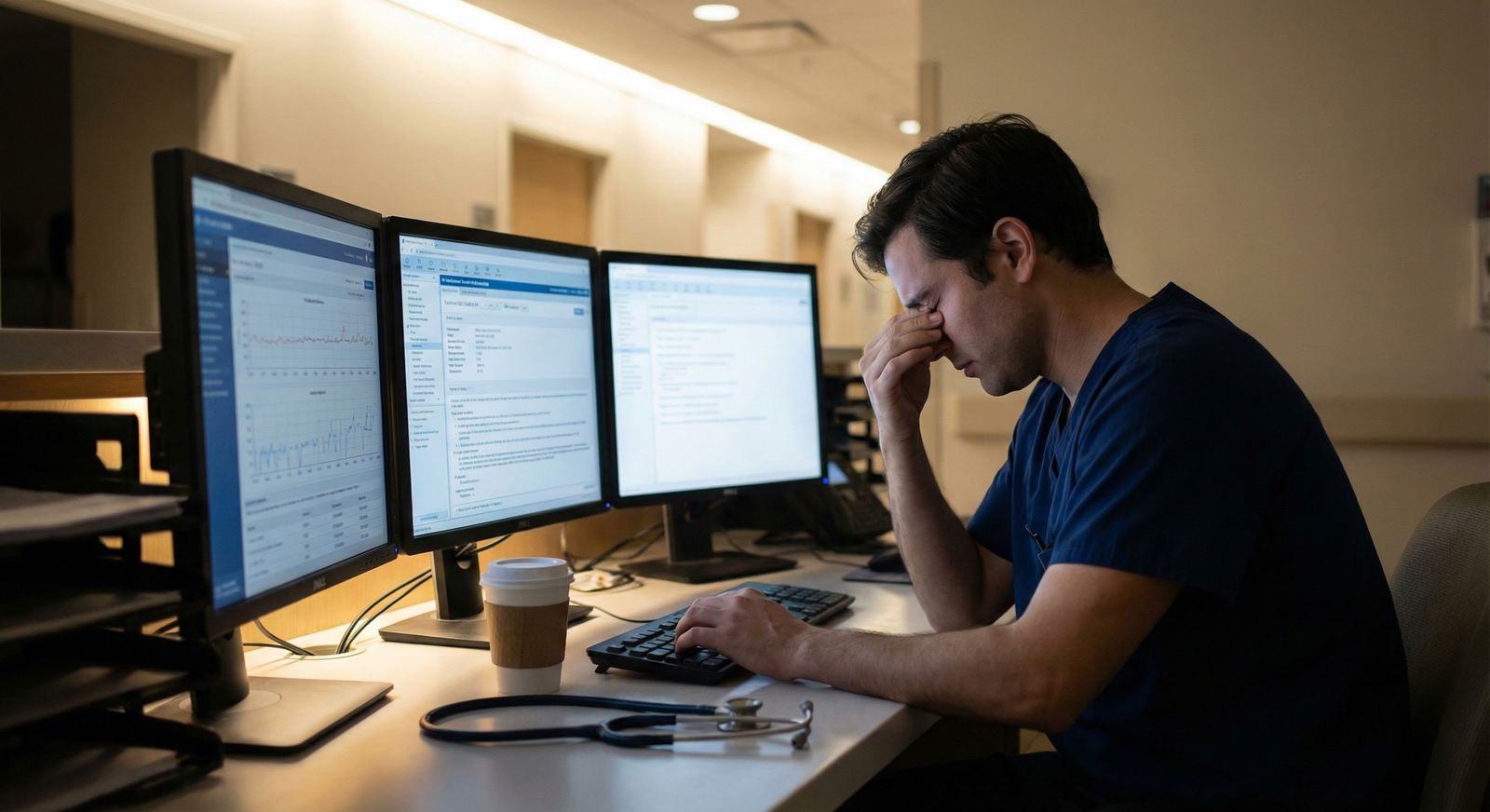
But there are low-yield scenarios too. Stable follow-up patients. Duplicated workflows where two people review the same information. Chart diving without a clear clinical question. Those situations reward structure more than earlier arrival. If all you are doing with extra time is padding your note or rehearsing a presentation that lacks prioritization, you are not improving care.
Then there is the wellness math, which residency often handles with astonishing stupidity. Chronically arriving too early cuts sleep. Sleep loss impairs attention, working memory, and error detection. So yes, the resident who shows up 25 minutes earlier every day may look industrious while simultaneously becoming less sharp by Thursday. That is not a win. It is bad system design disguised as virtue.
The right target is calibration. Match your start time to:
- Census
- Acuity
- Service type
- Your current average minutes per patient
- Your own processing speed
That is how adults manage workload. Not by worshipping the earliest badge swipe.
How residents can improve pre-rounding without just waking up earlier
If you want to get better, collect your own data. For 1 to 2 weeks, track four numbers daily:
- Arrival time
- Average time per patient
- Issues missed that were found on rounds
- Total time to complete notes and tasks
Patterns appear fast. You will learn whether your bottleneck is chart navigation, note writing, bedside inefficiency, or weak assessment synthesis. Most residents guess wrong about where they are losing time.
A standardized checklist is the highest-yield upgrade. Use the same sequence for every patient, every day. Overnight events, vitals, I/O, labs, imaging, meds, lines/drains, bedside status, one-line assessment, prioritized plan. If your system is consistent, it becomes auditable. If it is random, you will miss random things.
Batch workflows also work. Review all overnight pages first. Then vitals for the whole list. Then labs. Then bedside checks. This reduces context switching, which is a quiet time thief in the EMR. I have watched residents burn 15 to 20 unnecessary minutes each morning bouncing between note writing, chart review, and hallway conversations with no fixed order. Chaos feels busy. It performs badly.
Templates, dot phrases, and patient-list shorthand can reduce documentation drag if used well. The rule is simple: automate the repetitive parts, not the thinking. If your note template forces you to process the same core elements each day, good. If it becomes a dumping ground for copied clutter, it is making you slower and dumber.
At the bedside, ask targeted questions that can change management:
- Any new pain, dyspnea, dizziness, bleeding, or confusion?
- Eating and drinking?
- Voiding? Bowel function?
- Wants to go home today? Family concerns?
That is usually enough to surface the morning’s relevant issues. You do not need a theatrical, full-length interview for every stable patient before rounds.
Feedback should be metric-specific. Do not ask your senior, “How am I doing?” Ask, “Am I missing overnight changes?” or “Is my plan prioritization clear?” Narrow questions produce usable answers.

Here is the forward-looking truth: the strongest residents are not the ones who simply wake up earlier and grind harder forever. They are the ones who become reliable, fast, and systems-based. Residency keeps rewarding theater. Real performance rewards design. Build a workflow that catches the right signals, does not waste motion, and still lets you think clearly by noon. That is what scales. That is what protects patients. And that is what will still matter long after nobody remembers who got to the hospital first.