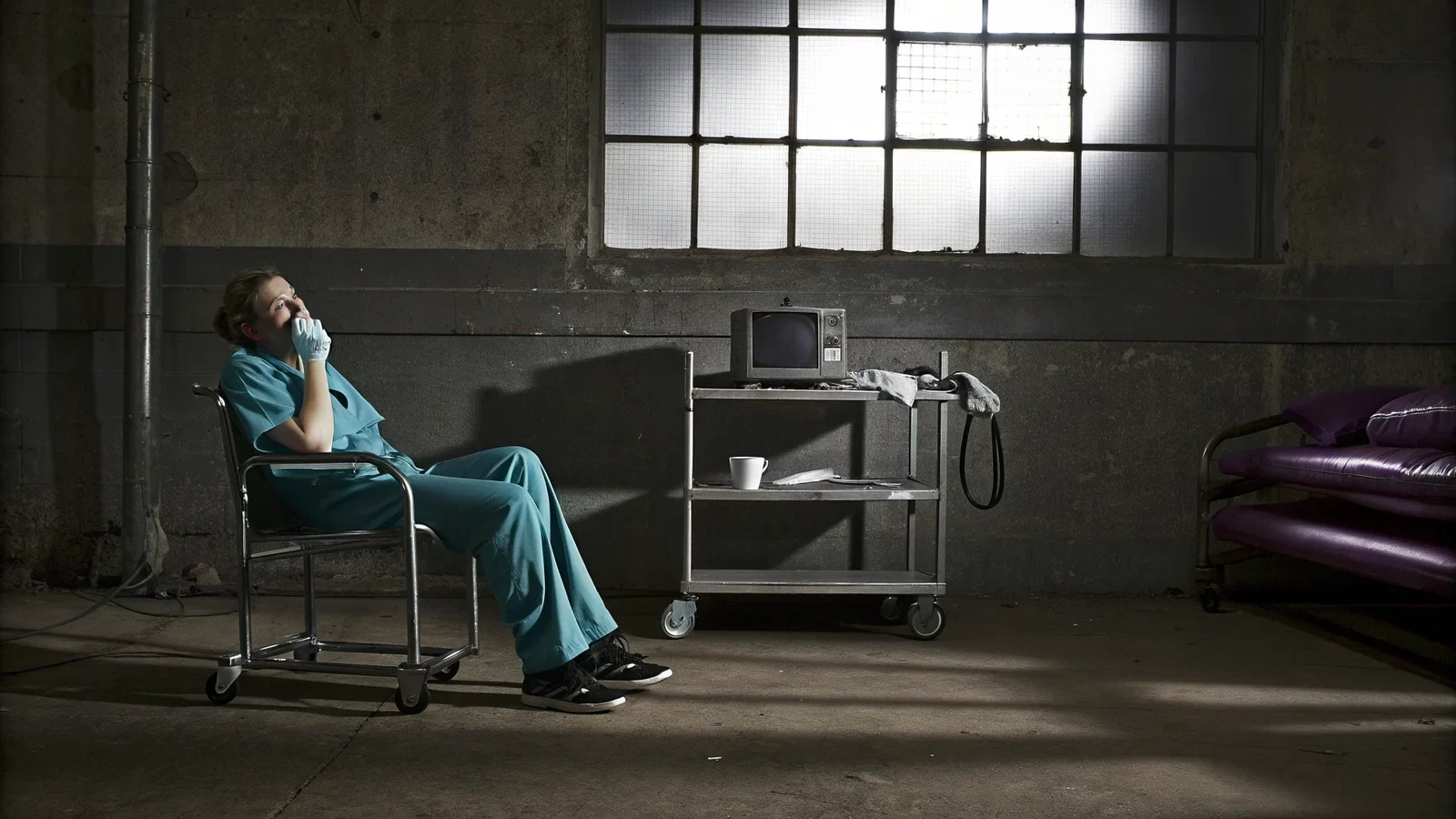
Wait, How Does a Whole Day Go Off the Rails So Fast?
Have you ever looked at the clock at 2:00 PM, realized you haven't eaten, haven't peed, and haven't written a single note, and felt your stomach drop straight through the floor?
I've been there. I remember a shift where sign-out ran forty minutes late. Then one unstable patient rolled through the doors. Then three pages became twelve. Suddenly, the entire schedule wasn't just behind, it was completely gone. Evaporated. You are standing in the middle of a hurricane, holding a stethoscope, wondering if you are actually cut out for this. You start thinking: I'm going to get fired. I'm going to hurt someone. They're going to figure out I have no idea what I'm doing.
Here is the truth I had to learn the hard way: chaos is not always caused by incompetence. Sometimes it's a systems problem. Actually, it's usually a systems problem. A bad day doesn't mean you're a bad doctor. It means you're working inside a massive, inefficient machine that occasionally breaks down and tries to crush you.
But senior residents don't always tell you that. They nod and say, "Yeah, it was busy," and make it sound like they handled it with serene grace. They survived this exact day before, but they skip right over the messy reality of how it actually felt. I'm going to tell you exactly how bad it gets, and more importantly, how you survive it without losing your mind.
What Senior Residents Usually Skip When They Say, "It Was a Busy Day"
When seniors give their polished debriefs in conference, they leave out the gritty details. They don't mention the missed meals that leave you shaky and irritable. They don't talk about the notes that pile up until 9:00 PM, forcing you to stay two hours late. They definitely skip the emotional whiplash of coding a patient, then having to walk calmly into the next room to discuss bowel prep with someone who is annoyed about their wait time.
There's a huge difference between a hard day and a truly chaotic day. A hard day means you're busy, but you're keeping up. A chaotic day means you've entered damage-control mode. You know you're in damage-control mode when urgent tasks keep stacking up, pages aren't being closed out, and you literally cannot tell what is most important anymore. Everything feels like a fire.
And the whole time, there is this silent, crushing pressure to look perfectly calm. You have to project confidence to the patients, to the nurses, and to your interns. Internally, though, you feel like you're one page away from a full-blown panic attack. You're smiling and nodding while secretly calculating if you can hide in a supply closet for five minutes without anyone noticing.
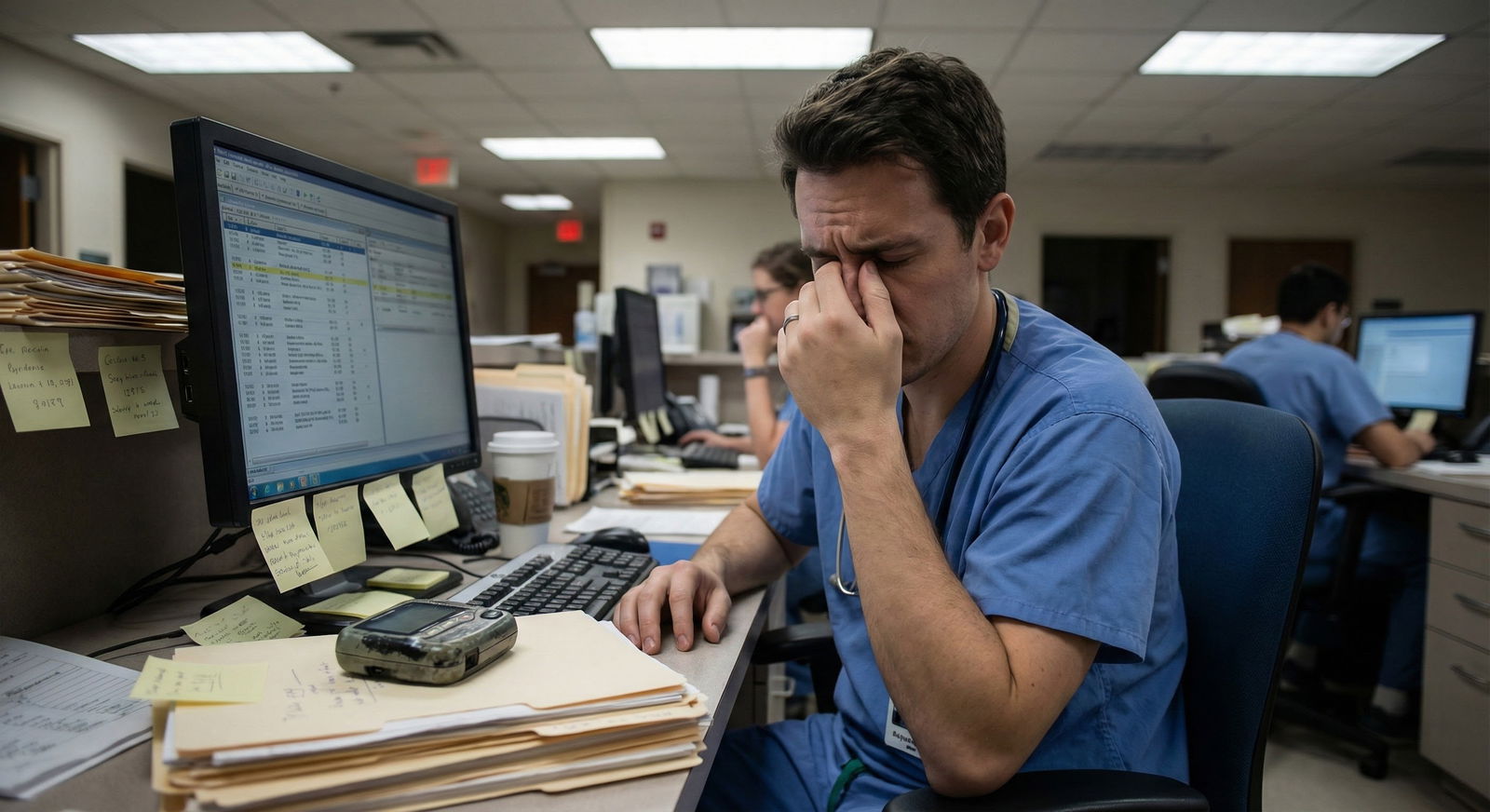
That disconnect, looking calm while feeling terrified, is the part they leave out. It's exhausting. It makes you think you're failing alone, because everyone else looks like they have it together. They don't. They're just acting, too.
The Three Decisions That Keep Chaos from Becoming a Disaster
When the day goes sideways, your instinct is to move faster. Bad idea. Speed without triage just means you make mistakes quicker. You need to stop, take a breath, and make three specific decisions to keep the chaos from turning into an actual disaster.
First, prioritize based on actual harm. What can hurt a patient right now? That gets your immediate attention. What can wait 30 minutes? That goes on a list. What can be delegated? Hand it off without guilt. You are not a failure for asking a nurse to call a consult for you while you deal with a dropping blood pressure.
Second, use a triage framework for the flood of pages. If you try to answer every page the second it comes in, you will never finish anything. Batch the non-urgent stuff. If someone needs an electrolyte refill, it waits. If someone is complaining about their turkey sandwich, it waits. If a patient's rhythm is changing, you run.
Third, and this is the most critical one: communicate. Update your intern. Notify your senior or attending early. Do not disappear, hoping the problem solves itself. The absolute worst thing you can do in residency is to quietly drown. The senior resident can't help you if they don't know you're sinking. A quick text, "Hey, I have three unstable patients, I'm behind on notes, I might need help", is not a sign of weakness. It's called being a safe doctor.
What to Do in the Middle of the Meltdown: Protect the Day You Still Have Left
So, you're in the meltdown. The triage framework is in place, but you're still vibrating with anxiety. You made a mistake, a missed lab, a delayed antibiotic, and now the shame loop starts. I'm so stupid. I can't believe I forgot that. Everyone knows I'm drowning.
You have to cut that out immediately. The shame loop doesn't help the patient, and it doesn't help you. If you mess up, acknowledge it, fix it, and move to the next decision. Do not spend ten minutes beating yourself up while three other patients are waiting.
You need micro-recovery tactics. It sounds stupid, but it works. Sit down for 30 seconds. I don't care if it's on a rolling stool in the hallway. Drink water. Eat a cracker you found in your pocket. You cannot make good clinical decisions when your blood sugar is 40 and your heart rate is 120. You have to reset before you make the next call.

When you need help, and you will need help, use specific language so you don't sound panicked. Don't just page someone and say, "It's a mess." Say: "I have two patients with critical labs, I'm tied up in a procedure, and I need you to evaluate room 4." Clear, direct, no emotion. It projects control even when you feel like you're falling apart. It tells your senior exactly what decision you need them to make for you.
How to Recover After the Day Finally Ends
You finally hand off the pager. You're walking to your car, and all you want to do is replay every mistake you made. This is where you have to actively fight your own brain. There's a huge difference between reflection and rumination. Reflection is reviewing what happened to do better next time. Rumination is spending two hours in the shower re-living the shame of a delayed page.
Do a short debrief, either with yourself or a colleague. Ask four questions: What happened? What was outside my control? What needs follow-up tomorrow? What can wait? Write down the follow-ups, close the notebook, and leave it.
I need to reassure you, because I know exactly what you're thinking. You're thinking this one day proves you're an imposter. It doesn't. One chaotic day doesn't define your competence. It doesn't define your professionalism. It doesn't predict your future performance as an attending. It just means you had a bad Tuesday. Let it go. Eat something, drink water, and go to sleep. The hospital will still be there tomorrow, and so will you.
The Part Nobody Says Out Loud: You Will Have Another Day Like This
Here's the part nobody says out loud, the part that keeps applicants up at night: this will happen again. Chaos is recurring in residency. It's baked into the system. You can't eliminate it, but you can survive it with preparation, boundaries, and a reliable team strategy.
Build a personal chaos plan before the next shift hits. Have a snack stash in your white coat. Set up templates for your notes so you're not typing from scratch when you're exhausted. Know your escalation rules. Find that one trusted colleague you can text when the day starts to slide.
You will survive this. You survived today, and you will survive the next one. It will be ugly, it will be stressful, and you will feel like crying at least once. But you will get through it.
If this article helped you breathe a little easier, save it for the next awful day. Share it with an intern who looks as terrified as you feel. Make a plan before your next shift hits. You aren't alone in the chaos, and you don't have to face it unprepared.