Unlocking Your Future: How AAMC Membership Launches a Successful Medical Career
Introduction: Why AAMC Membership Matters for Your Medical Path
Pursuing a life in medicine is demanding—academically, financially, and emotionally. Between MCAT preparation, medical school admissions, step exams, clinical rotations, and residency applications, it can feel like you’re constantly navigating unfamiliar terrain.
AAMC Membership gives you a structured way to navigate that path.
The Association of American Medical Colleges (AAMC) is one of the most influential organizations in North American medical education. While many students first encounter the AAMC through the MCAT or AMCAS, far fewer realize that formal AAMC Membership can be a sustained advantage throughout premed, medical school, and early residency.
For students and trainees, AAMC Membership is not just a badge—it’s a toolset for:
- Understanding the medical education landscape
- Strengthening your Residency Applications
- Building meaningful Networking in Medicine
- Accelerating your Career Development
- Staying informed about policies shaping your future practice
This guide breaks down how AAMC Membership works as a launchpad for your medical career and offers actionable strategies to get the most out of it, whether you’re a premed, M1–M4, or preparing to match.
Core Benefits of AAMC Membership for Students and Trainees
AAMC Membership aligns closely with the core needs of future physicians: information, support, opportunities, and advocacy. Understanding each benefit—and how to use it strategically—can give you a real edge in Medical Education and beyond.
1. Access to Comprehensive, High-Quality Educational Resources
AAMC Membership plugs you into a curated ecosystem of educational content tailored for medical learners.
MedEdPORTAL: A Goldmine for Learning and Teaching
MedEdPORTAL is a peer-reviewed, open-access journal and repository of teaching and learning resources in health professions education. While it’s often used by faculty and curriculum designers, students can benefit significantly as well.
How you can use MedEdPORTAL:
- Reinforce core concepts: Download case-based learning modules on topics like cardiology, ethics, communication skills, or health systems science to deepen understanding beyond your school’s curriculum.
- Prepare for teaching roles: If you tutor underclassmen, lead peer-teaching sessions, or serve as a teaching assistant, you can adapt MedEdPORTAL materials to build structured, high-yield sessions.
- Explore medical education as a career: Browsing submissions gives insight into how educational scholarship is structured—a useful head start if you’re considering clinician-educator roles.
Example:
An M2 interested in pediatrics uses a MedEdPORTAL module on childhood asthma to teach a small-group session for preclinical students. They then include this educational leadership experience in their ERAS application under “Teaching Activities.”
Careers in Medicine (CiM): Structured Career Development
The Careers in Medicine (CiM) program is one of the most powerful AAMC offerings for career exploration and planning.
With CiM, you can:
- Explore specialties systematically: Access detailed profiles of every major specialty—day-to-day work, lifestyle, competitiveness, training length, and future trends.
- Complete self-assessments: Evaluate your values, personality, interests, and skills to identify specialties that fit your strengths and priorities.
- Review data and match trends: Understand board scores, applicant profiles, and other specialty-specific factors that shape competitiveness.
- Plan longitudinally: Build a 4-year medical school career development plan, including research, clinical exposure, leadership, and scholarly work.
Action step:
Use CiM at three milestones—early M1, end of M2, and early M3—to see how your interests and strengths evolve with more clinical exposure.
AAMC Website and Data Tools: Your Information Hub
The AAMC website functions as a centralized hub for Medical Education information, including:
- Medical School Admission Requirements (MSAR): Detailed data on each U.S. and Canadian medical school, including GPA/MCAT ranges, mission focus, interview style, and special programs.
- FIRST (Financial Information, Resources, Services, and Tools): Guidance on loans, budgeting, repayment strategies, PSLF, and financial literacy.
- Data and reports on specialty competitiveness, match outcomes, diversity, and workforce projections.
These tools help you make data-informed decisions about schools, specialties, and career paths—critical in a competitive, rapidly evolving field.
2. Building a Stronger Connection to Medical Schools and Academic Medicine
AAMC Membership connects you not just with information, but with people and institutions—medical schools, teaching hospitals, and academic leaders across the U.S. and Canada.
Conferences, Meetings, and Workshops
AAMC hosts multiple national and regional events that students can attend, including:
- The AAMC Annual Meeting (“Learn Serve Lead”)
- Specialty-specific or education-focused conferences
- Regional meetings involving medical schools in your area
Why these matter:
- Direct access to decision-makers: Deans, program directors, clerkship directors, and educational leaders often attend and present.
- Exposure to academic medicine: You’ll see how education, policy, and research intersect at the institutional and national level.
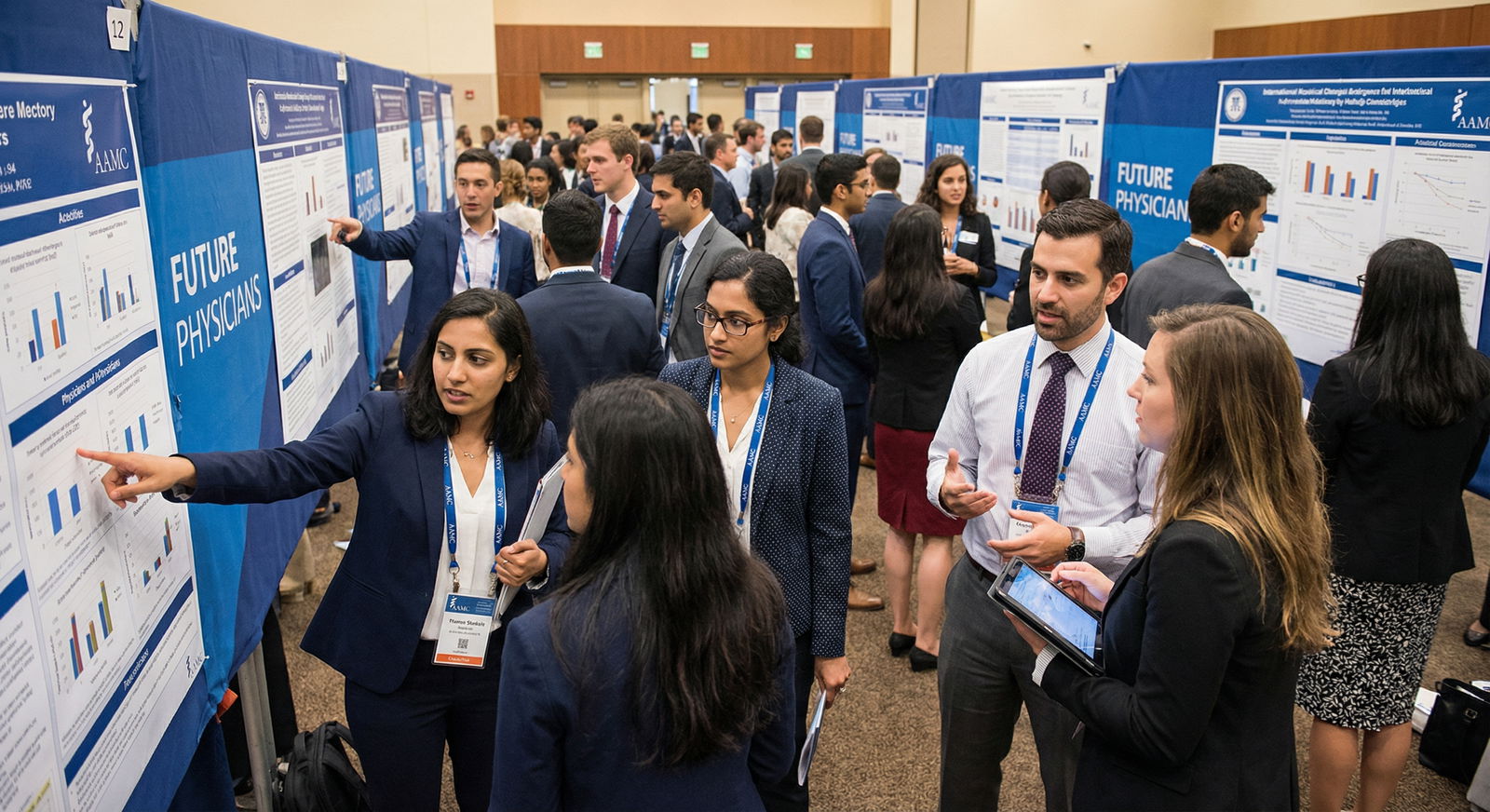
- Opportunities to present: Many meetings feature poster and oral presentation tracks for students and residents.
Practical tip:
If you present a poster at an AAMC-affiliated meeting, add it under “Presentations” in ERAS and be ready to discuss it in residency interviews as evidence of scholarly engagement and academic interest.
Networking in Medicine: From Casual Contact to Career Capital
AAMC events and committees create a structured context for Networking in Medicine that feels more purposeful and less random.
To turn networking into genuine Career Development:
- Set goals before each event: Identify 1–2 specialties or programs you want to learn about.
- Prepare a 30-second intro: Who you are, your year, your interests, and what you’re hoping to learn.
- Follow up intentionally: After meeting someone, send a brief email within 48 hours referencing your conversation and, if appropriate, asking one specific question.
Example:
A student interested in academic internal medicine meets an assistant program director at an AAMC-related workshop. They follow up, are invited to attend virtual case conferences, and eventually schedule an away rotation at that institution—strengthening their residency application and interview prospects.
3. Navigating Medical School and Residency Applications with Confidence
Most students first encounter the AAMC during high-stakes application phases. AAMC Membership helps you do more than just complete forms—it helps you strategize, optimize, and stand out.
AMCAS: Centralizing Medical School Applications
The American Medical College Application Service (AMCAS) is the AAMC’s centralized system for applying to most U.S. allopathic medical schools.
Benefits for premeds:
- Single, standardized application for multiple schools
- Structured timeline and guidance on preparation
- Centralized transmission of transcripts and letters of recommendation
How to use AAMC resources to strengthen your AMCAS:
- Use AAMC’s official guides and checklists to avoid technical errors.
- Review example personal statements and activity descriptions to understand expectations.
- Watch AAMC webinars on “what admissions committees look for”—then revise your application accordingly.
Tools and Guidance for Residency Applications
While ERAS itself is run by the AAMC’s partner organization (AAMC formerly hosted ERAS and now collaborates through related tools and guidance), AAMC Membership still plays a major supporting role in Residency Applications:
- Specialty data and match trends: Use AAMC data reports to understand how many programs to apply to, typical applicant profiles, and geographic trends.
- Interview preparation resources: Access advice on behavioral interviewing, professionalism, and common pitfalls medical students face.
- Transition to Residency tools: Learn about expectations for interns, entrustable professional activities (EPAs), and how program directors evaluate readiness.
Action strategy:
As an M3 or early M4, combine:
- AAMC specialty data
- CiM specialty profiles
- Your school’s match list and advisor input
to build a targeted, evidence-based residency application plan instead of applying blindly.
Application Guides and Toolkits
AAMC produces structured guides such as:
- “Preparing for Medical School” toolkits for premeds
- Application and interview guidance for both medical school and residency
- Diversity, equity, and inclusion resources for applicants from underrepresented backgrounds
Use these to:
- Draft stronger personal statements centered on authentic experiences and reflection
- Choose meaningful, specific examples for interviews
- Understand holistic review and how non-academic experiences are weighed
4. Advocacy, Policy, and the Future of Medicine
AAMC is also a powerful voice in health policy, funding, and Medical Education reform. By engaging with its advocacy work, you gain context for the system you’re entering and opportunities to shape it.
Staying Informed About Policy That Affects Your Training
The AAMC regularly updates members about:
- Changes to federal graduate medical education (GME) funding
- Regulatory shifts affecting medical school accreditation
- Policies impacting student loan repayment and financial aid
- Diversity, inclusion, and workforce initiatives
Understanding these dynamics helps you:
- Anticipate changes to residency positions, specialties, or locations
- Make smarter decisions about loan repayment options and PSLF eligibility
- Speak knowledgeably during residency interviews about the broader healthcare landscape
Getting Involved in Advocacy
As a student or resident, you can:
- Participate in AAMC-led advocacy campaigns (letters, petitions, social media initiatives)
- Attend sessions on health policy at AAMC meetings
- Collaborate with student groups (e.g., AMA, SNMA, LMSA) using AAMC data and resources to support local advocacy efforts
Example:
A group of medical students uses AAMC workforce data to advocate at their state legislature for expanded GME funding, citing projected physician shortages in primary care and rural medicine.
5. Leadership Development and Professional Growth
Clinical excellence alone is no longer enough. Modern physicians must lead teams, improve systems, and mentor others. AAMC Membership helps you build those competencies early.
Student Leadership Programs and Opportunities
Through AAMC-associated councils, sections, and working groups, students can:
- Serve as student representatives to national committees focused on education, diversity, or student affairs
- Engage in working groups that develop best practices or guidelines
- Participate in leadership workshops at conferences and virtual events
Skills you’ll develop:
- Effective communication in interprofessional teams
- Conflict resolution and negotiation in academic settings
- Project management and organizational leadership
These are exactly the kinds of competencies residency program directors look for when selecting future chief residents and academic leaders.
Committee and Organizational Experience
Participating in committees within AAMC-related structures exposes you to:
- How academic decisions are made and implemented
- Budgeting, strategic planning, and program evaluation
- Collaboration across institutions and disciplines
On your CV and in interviews, you can frame this as:
“National-level leadership in academic medicine,”
“Experience contributing to education policy,” or
“Committee work focused on improving Medical Education outcomes.”
These experiences clearly differentiate you from peers who have only local involvement.
Real-World Impact: How Students Use AAMC Membership Strategically
Hearing how others have leveraged AAMC Membership can help you envision your own path.
Networking Success: Sarah’s Residency Match Story
Sarah, a third-year medical student from California, was interested in OB/GYN but unsure how to stand out in a competitive specialty. Through her AAMC Membership, she:
- Attended an AAMC-affiliated regional meeting focused on women’s health and academic medicine.
- Presented a poster on a quality improvement project from her OB/GYN clerkship.
- Networked with residency program representatives and educators during poster sessions and workshops.
Because she had done her homework—reviewing CiM data and specialty trends—she asked informed, specific questions about program culture, research support, and surgical training. After the conference:
- Several faculty members connected with her on email and invited her to virtual journal clubs.
- One program director offered advice on shaping her fourth-year schedule and away rotations.
- She secured a sub-internship at one of her top-choice programs.
When interview season came, Sarah was not just another name on a list—she was already a known quantity. Ultimately, she matched into her top-choice OB/GYN program, and she credits her AAMC-connected conference experiences and networking as key contributors.
Comprehensive Preparation: John’s AMCAS Turnaround
John, a nontraditional applicant with a previous career in engineering, felt overwhelmed by AMCAS. He wasn’t sure how to:
- Translate his engineering background into medicine-relevant experiences
- Structure his personal statement
- Choose which experiences to highlight as “most meaningful”
Using AAMC resources, he:
- Watched webinars on writing effective personal statements and activity descriptions.
- Used the MSAR to identify schools that valued diverse professional backgrounds and had missions aligned with his interests in health systems engineering.
- Consulted AAMC’s “Preparing for Medical School” toolkit to build a structured timeline and checklist.
He revised his personal statement to focus on:
- Systems thinking and problem-solving
- Communication with multidisciplinary teams
- A clear narrative explaining his transition from engineering to medicine
As a result, John received multiple interviews and ultimately earned admission to a medical school that explicitly values innovation and technology in healthcare—a strong fit with his background and long-term goals.
How to Maximize Your AAMC Membership at Every Stage
Signing up is only step one. To truly convert AAMC Membership into career acceleration, you need a deliberate plan.
1. Engage Actively, Not Passively
- Set quarterly goals: “Attend one webinar,” “Explore one CiM specialty in-depth,” or “Identify one AAMC meeting to submit an abstract to.”
- Subscribe to relevant AAMC newsletters and skim them weekly for items aligned with your interests (e.g., diversity, health policy, specialty trends).
2. Use Networking in Medicine Strategically
- Before any AAMC-related event, identify 3–5 people or sessions you want to target.
- Practice brief, clear self-introductions that convey your level (premed, M2, M4) and interests.
- Keep a simple spreadsheet or note file of contacts, how you met, and when you last followed up.
3. Leverage Digital Resources Regularly
- Bookmark high-yield AAMC pages (CiM, MSAR, FIRST, data resources) and review them at key decision points.
- Use AAMC financial tools at least once a year to update your loan and repayment projections.
- For premeds, revisit MSAR annually as schools may change requirements, mission focus, or class profiles.
4. Join Interest Groups and Communities
- Seek out student-led organizations that collaborate with or use AAMC resources (like SNMA, LMSA, APAMSA, AMSA).
- Join specialty interest groups at your school and integrate AAMC CiM and data tools into their programming (e.g., hosting a “Specialty Night” using official data).
5. Document and Reflect
- Keep a running list of AAMC-related activities and achievements—conferences, presentations, leadership roles, and advocacy.
- Reflect in a journal or document about how these experiences shape your career goals and identity as a physician. These reflections often become compelling content for personal statements and interview answers.

FAQ: AAMC Membership, Medical Education, and Your Career
1. What is AAMC Membership, and who is it for?
AAMC Membership connects individuals and institutions to the Association of American Medical Colleges, which represents medical schools, teaching hospitals, and academic societies across the U.S. and Canada.
For students and trainees, membership (or affiliated access) is primarily aimed at:
- Premed students preparing for medical school
- Medical students (MD, MD/PhD)
- Residents and fellows involved in academic medicine
Membership gives you structured access to resources, data, career tools, and professional development opportunities that support your journey from premed through residency.
2. How do I sign up for AAMC Membership or get access to its resources?
To get started:
- Visit the AAMC website and create a free AAMC account (often required for MCAT, AMCAS, and many student tools).
- Explore whether your medical school or institution provides enhanced access or membership benefits through institutional affiliation.
- For specific programs like Careers in Medicine (CiM) or MedEdPORTAL, you often log in using your AAMC account or your institution’s credentials.
If you’re unsure, ask your school’s student affairs or dean’s office how they interface with AAMC and what’s available to you as a learner.
3. Are there fees associated with AAMC Membership, and is it worth it?
Some AAMC services (like MCAT registration and AMCAS application submissions) have associated fees. Certain enhanced memberships or conference registrations may also involve costs, although institutional support, scholarships, or discounts sometimes apply.
When evaluating cost vs. benefit:
- Consider access to career tools, data, networking, and leadership opportunities that can meaningfully impact your Residency Applications and long-term Career Development.
- For many students, the advantage of better-informed decisions, stronger applications, and national-level visibility outweighs the costs, especially when used strategically.
Always check the AAMC website for the most current fee structures and available discounts.
4. Can AAMC Membership really help my residency application?
Yes—indirectly but significantly. AAMC Membership and its resources help you:
- Choose specialties and programs using accurate, up-to-date data
- Prepare stronger, more focused personal statements and CVs
- Understand what program directors prioritize in applicants
- Build a track record of academic presentations, leadership, and advocacy that stands out on ERAS
For example, attending an AAMC-affiliated conference, presenting a poster, serving on a committee, or using CiM to plan a cohesive specialty narrative can all be powerful additions to your application and talking points in interviews.
5. How does the AAMC support diversity, inclusion, and equity in medicine?
The AAMC is deeply involved in:
- Producing data and research on representation in medicine
- Creating toolkits and programs aimed at recruiting and supporting students from groups underrepresented in medicine
- Advocating for policies that promote equitable access to medical education and care
- Providing guidance to schools on holistic admissions and inclusive learning environments
As a student, you can benefit from:
- Targeted resources and mentorship pathways
- Participation in diversity-focused initiatives and workshops
- Data and language to support your own local advocacy work
Conclusion: Turn AAMC Membership into Momentum
AAMC Membership is far more than a gate you pass through when you register for the MCAT or submit AMCAS. Used deliberately, it can be a powerful launchpad for your entire career in medicine.
Through its resources, networking opportunities, data, advocacy, and leadership pathways, AAMC helps you:
- Navigate Medical Education with clarity and confidence
- Build a competitive, mission-aligned profile for Residency Applications
- Develop lasting professional relationships through Networking in Medicine
- Engage in meaningful Career Development from premed through residency
- Understand and influence the policies shaping the future of healthcare
If you’re serious about building a successful, sustainable, and impactful medical career, don’t treat the AAMC as a one-time transactional organization. Engage with it as a long-term partner in your professional journey—and start using your membership today to move closer to the physician you want to become.