Introduction: Beyond Grades and MCAT Scores
Most premeds and medical students quickly learn how to manage coursework, study for exams, and build a competitive application. But what often separates thriving future physicians from those who merely “get through” training has little to do with test scores and everything to do with the hidden curriculum of medical education.
The hidden curriculum includes the attitudes, values, professional norms, and unspoken rules you absorb along the way—how you talk to patients, navigate power dynamics, advocate for change, and protect your own Wellness in a demanding system. These lessons rarely appear on a syllabus, but they profoundly shape your identity as a physician.
This is exactly where the American Medical Student Association (AMSA) stands out. As one of the largest and oldest independent organizations for premedical and medical students, AMSA doesn’t just add lines to your CV; it systematically exposes you to the hidden curriculum that underpins long-term success in medicine.
Through Medical Education programming, Advocacy training, leadership opportunities, community service, and a strong focus on Wellness, AMSA helps you build the skills, mindset, and network you need to excel in medical school and residency—and to become the kind of physician patients actually need.
This article breaks down how AMSA enriches the hidden curriculum for premed and medical students and offers practical tips on how to leverage AMSA at each stage of your journey.
Understanding the Hidden Curriculum in Medical Education
What Is the Hidden Curriculum?
In Medical Education, the “formal curriculum” is what’s written down: lecture objectives, required readings, OSCE checklists, exam content. The hidden curriculum, by contrast, is everything you learn between the lines:
- How physicians actually communicate with patients under time pressure
- How teams respond to mistakes
- How hierarchy, bias, and power show up in daily practice
- How people balance—or fail to balance—career and personal Wellness
- How Advocacy fits (or gets sidelined) in clinical care
These lessons are conveyed through:
- Role modeling by attendings, residents, and peers
- Organizational culture (what gets rewarded, tolerated, or ignored)
- Informal experiences (student groups, leadership roles, volunteer work)
For premeds, early exposure to this hidden curriculum makes the transition to medical school much smoother. You learn not only what physicians do, but how they think, communicate, and advocate.
Core Components of the Hidden Curriculum
1. Communication Skills
Beyond memorizing “open-ended questions” or empathy phrases, real communication involves:
- Reading non-verbal cues and emotional tone
- Navigating difficult conversations (breaking bad news, discussing prognosis, handling conflict)
- Adjusting communication style for different cultures, literacy levels, and ages
- Collaborating effectively with nurses, pharmacists, social workers, and other team members
These skills are rarely taught in depth in preclinical lectures—but they are central to patient trust and safety.
2. Teamwork and Professional Dynamics
Modern medicine is built on interprofessional collaboration. Hidden curriculum topics here include:
- How to speak up respectfully when you notice a safety concern
- How to contribute as a junior learner without overstepping
- How to handle disagreements on rounds or in multidisciplinary meetings
- How to support colleagues who are struggling
Learning these dynamics early can prevent many of the interpersonal challenges that derail students and residents.
3. Professionalism, Ethics, and Identity Formation
Professionalism is more than dress codes and punctuality. It includes:
- Handling ethical dilemmas (resource limitations, informed consent, confidentiality)
- Managing boundaries with patients and teams
- Responding to bias, discrimination, or inappropriate behavior
- Developing your own professional identity and values
The hidden curriculum is often where students decide what kind of physician they want to be—and what they are not willing to become.
4. Leadership and Advocacy
Finally, the hidden curriculum includes how future physicians learn to:
- Recognize structural drivers of health (policy, inequity, racism, socioeconomic factors)
- Use their voices to advocate for patients, communities, and system-level change
- Lead projects, teams, and initiatives—even as students
This is where AMSA’s mission aligns directly with the most impactful elements of the hidden curriculum.
How AMSA Shapes the Hidden Curriculum for Future Physicians
AMSA is uniquely positioned in the STUDENT_ORGANIZATIONS space to support PREMED_AND_MEDICAL_SCHOOL_PREPARATION by intentionally teaching what most students only pick up by chance.
Founded in 1950 and independently led by students, AMSA centers its work on four pillars:
- Advocacy and health policy
- Education and training (beyond the classroom)
- Community and networking
- Wellness and professional development
These programs give you structured access to exactly the skills and perspectives that the hidden curriculum demands.
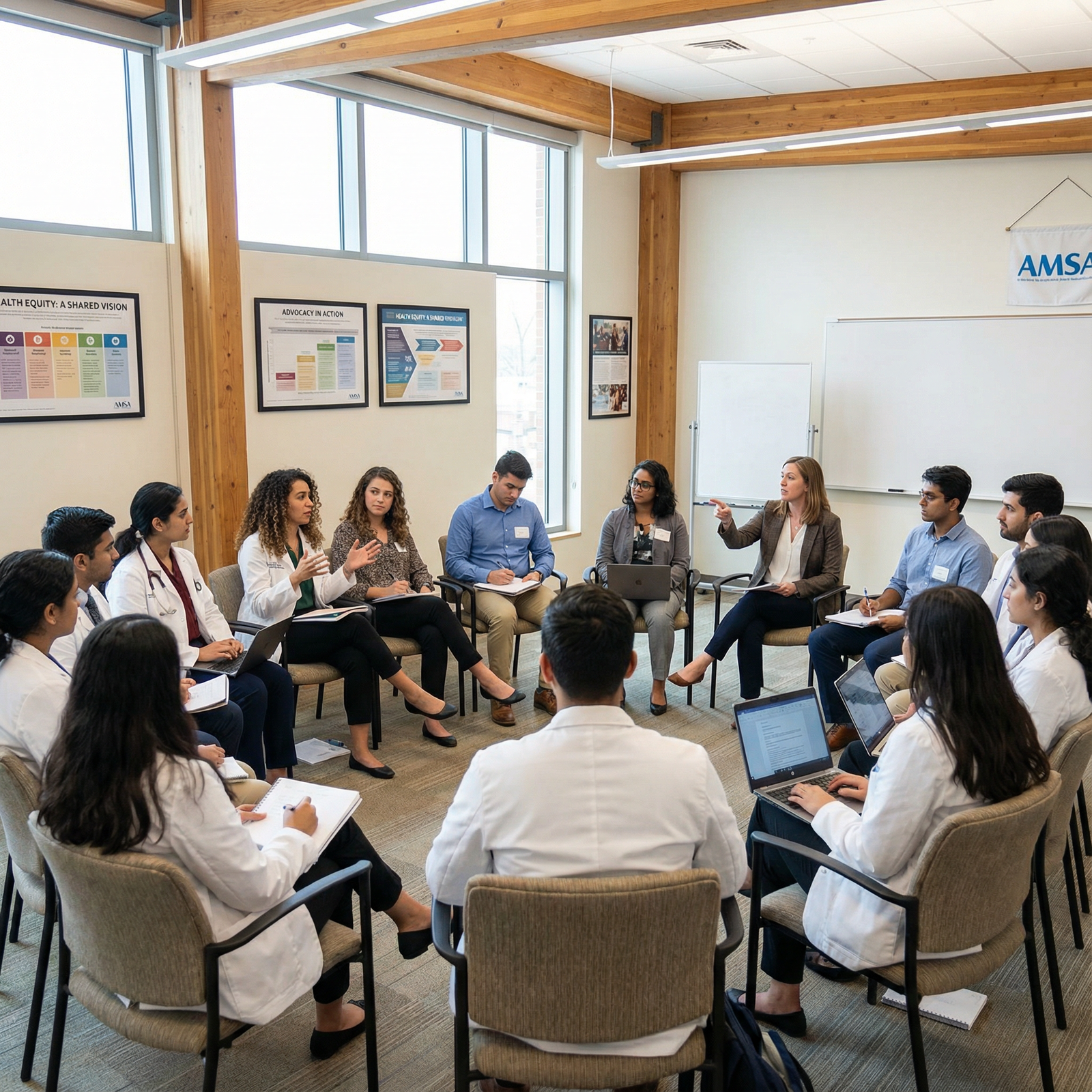
1. Advocacy and Health Policy: Learning to Use Your Voice
Why Advocacy Belongs in Medical Education
Many students assume Advocacy is an “extra”—nice to have, but separate from “real medicine.” In reality, policies determine:
- Which medications are covered
- Who can access preventive care
- How clinics are staffed and resourced
- Whether communities have safe housing, clean water, or healthy food
Physicians who understand policy can advocate effectively for their patients and communities. AMSA builds this capacity early.
AMSA Advocacy Training and Opportunities
AMSA Advocacy Training and related programs introduce you to:
- How laws and regulations about health care are created and changed
- The basics of health policy (insurance, public health, health equity)
- Skills for meeting with legislators, writing op-eds, and organizing campaigns
Examples of advocacy experiences through AMSA might include:
- Lobby days: Traveling (in person or virtually) to meet with state or federal lawmakers about issues such as graduate medical education (GME) funding, reproductive health, or mental health access.
- Campaigns for health equity: Collaborating with local chapters to address disparities in your community (e.g., vaccine outreach, harm reduction, food insecurity).
- Policy writing and resolutions: Participating in AMSA’s internal policy process to draft, debate, and adopt positions that guide national advocacy efforts.
How This Translates to the Hidden Curriculum
By engaging in AMSA’s Advocacy work, you learn:
- How to speak confidently with authority figures (skills directly transferable to interacting with attendings and administrators).
- How to contextualize individual patient problems within broader social determinants of health.
- How to maintain your values and sense of purpose in systems that often feel rigid or unjust.
These are powerful foundations for long-term resilience and leadership in medicine.
2. Workshops and Skill-Building: Practicing the “Soft Skills” That Matter Most
Formal curricula emphasize pathophysiology and pharmacology; AMSA complements this with direct training in leadership, communication, and practical skills that shape your daily life as a student and physician.
Leadership Development for Future Physicians
AMSA Leadership Workshops and chapter roles (e.g., president, advocacy chair, Wellness chair) allow you to:
- Practice project management by organizing events, fundraisers, or health fairs
- Learn conflict resolution and negotiation as you work with peers and faculty
- Develop a leadership style grounded in empathy, integrity, and collaboration
Actionable ways to grow:
- Volunteer to coordinate a single event (e.g., a wellness week, blood drive, or speaker panel) to build a track record of reliable leadership.
- Join or start a committee within your chapter to work on a focused issue like global health, LGBTQ+ health, or rural medicine.
- Attend regional or national AMSA conferences and sign up specifically for leadership tracks.
These experiences train you in exactly the hidden curriculum skills that residency programs look for when they ask about “leadership potential” or “initiative.”
Communication, Cultural Humility, and Difficult Conversations
Many AMSA events specifically target communication and cultural humility—critical elements of the hidden curriculum:
- Workshops on patient-centered communication: Practicing how to elicit values, beliefs, and goals of care from patients.
- Sessions on breaking bad news: Using role-play to rehearse challenging conversations in a psychologically safe environment.
- Cultural humility training: Exploring how race, gender identity, immigration status, disability, and other factors shape patient experiences and health outcomes.
These structured settings allow you to make mistakes and receive feedback before you’re in high-stakes clinical encounters.
Actionable steps:
- When attending an AMSA event, choose at least one workshop that focuses on communication or cultural competency—not just those that seem directly “CV-building.”
- After a workshop, write a short reflection: What surprised you? What will you do differently in your next patient interaction or volunteer experience?
- Seek opportunities to practice these skills in real settings, such as free clinics or community events coordinated through AMSA.
3. Networking and Mentorship: Building Your Support System Early
Medical Education can be isolating if you try to navigate it alone. AMSA functions as a powerful community and mentoring platform across the entire pipeline—from premeds to residents and practicing physicians.
Peer Mentorship and Chapter Communities
Local AMSA chapters often create tiered mentoring structures, such as:
- Medical students mentoring premeds
- M2/M3 students mentoring M1s
- Upperclassmen guiding peers through board prep, clerkships, or the residency application process
Benefits of this peer mentorship include:
- Honest, practical advice on course selection, MCAT prep, or studying effectively
- Realistic perspectives on burnout, imposter syndrome, and how to ask for help
- Protection from misinformation or toxic competitiveness that can appear in premed or med school environments
For premeds, being connected to medical students through AMSA can demystify:
- What medical school is really like
- How admissions committees view activities and gaps
- How to develop a narrative that connects your experiences to your goals in medicine
Professional Networking and Long-Term Connections
At the regional and national AMSA conferences, you’ll meet:
- Practicing physicians who share your interests (e.g., primary care, surgery, global health)
- Residents and fellows who can speak candidly about specialty choice and residency life
- Leaders in Advocacy, public health, and medical education reform
Actionable ways to maximize networking:
- Prepare a brief introduction (“elevator pitch”) about who you are, your interests, and what you’re looking to learn.
- After meeting a mentor or interesting speaker, follow up within a week with a concise email or LinkedIn message referencing your conversation.
- Ask about shadowing, research, or Advocacy opportunities—but always frame it in terms of shared interests, not just what they can do for you.
The relationships you build through AMSA help you navigate the hidden curriculum of career planning, specialty choice, and professional growth.
4. Community Service and Social Responsibility: Learning Medicine in Context
AMSA’s commitment to service and health equity gives students early, structured exposure to the real-world context of medicine.
Health Fairs, Free Clinics, and Community Events
Through AMSA, students often help organize or staff:
- Community health fairs providing screenings for blood pressure, diabetes, and cholesterol, along with education on nutrition, exercise, and preventive care.
- Free or low-cost clinics in partnership with local organizations, where students under supervision can practice basic clinical skills, triage, and patient education.
- Targeted public health initiatives, such as flu shot campaigns, HIV testing drives, or reproductive health education.
These experiences reinforce:
- How social determinants (housing, employment, insurance, transportation) affect patients’ ability to follow medical advice.
- The importance of clear patient education and health literacy.
- The need for Advocacy when you see systemic barriers that keep patients from staying healthy.
Volunteer Programs Focused on Wellness and Prevention
AMSA also encourages involvement in wellness-focused community projects, such as:
- School-based health education on nutrition, mental health, and physical activity.
- Collaborations with local nonprofits addressing food insecurity, substance use, or homelessness.
- Programs that integrate mental health and Wellness promotion in community settings.
For premeds, these activities offer concrete examples you can discuss in personal statements and interviews—showing that you understand medicine as more than diagnosis and treatment.
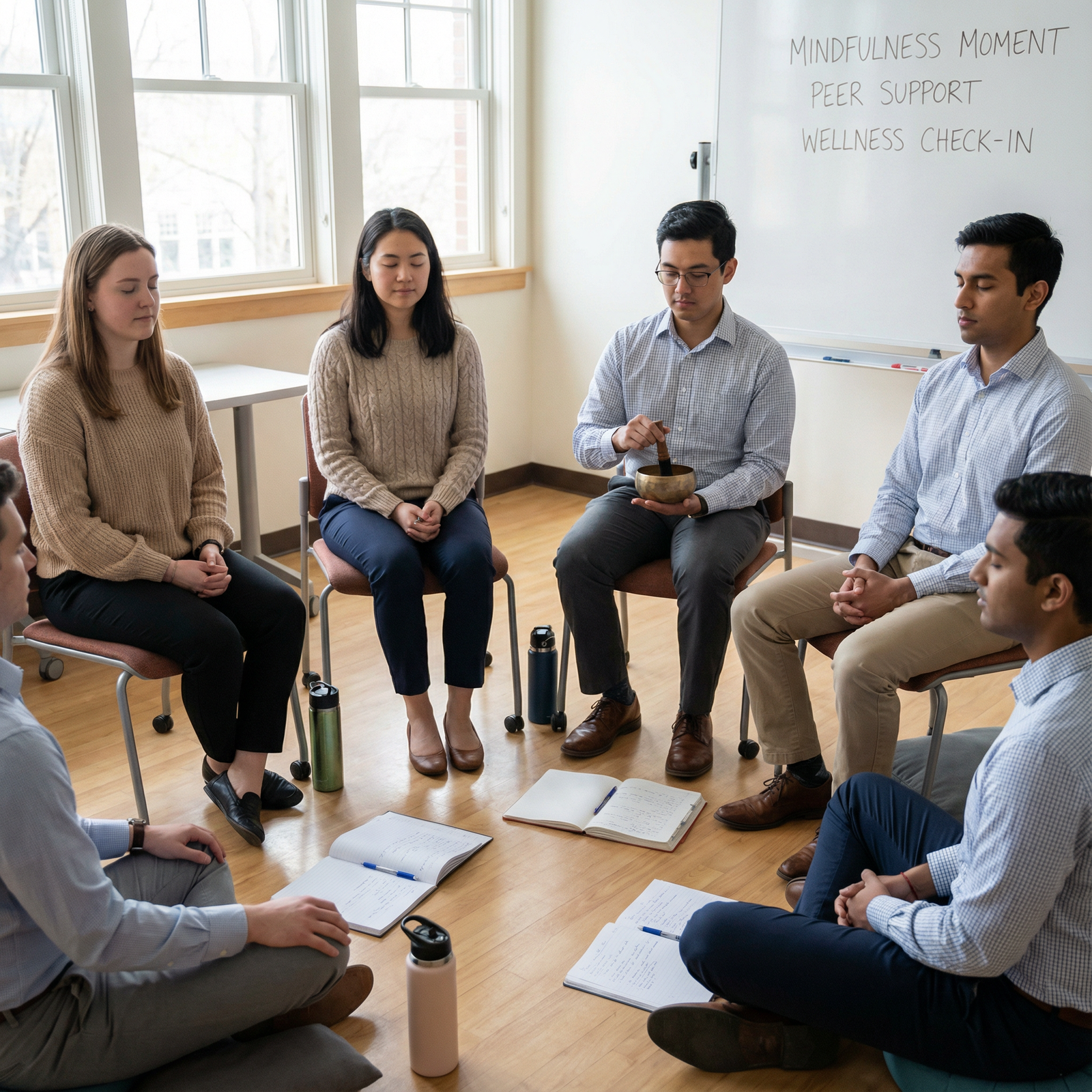
5. Wellness and Resilience: Protecting Yourself While You Learn to Care for Others
One of the most critical—and too often neglected—aspects of the hidden curriculum is learning how to protect your own Wellness in a demanding training environment.
AMSA’s Wellness Programming
Recognizing that burnout, depression, and anxiety are prevalent among medical trainees, AMSA integrates Wellness into its core Medical Education mission through:
- Workshops on stress management and resilience: Covering topics like time management, mindfulness, boundary-setting, and recovery after setbacks.
- Peer support spaces: Opportunities to talk honestly about imposter syndrome, failure (e.g., low exam scores, rejections), and personal challenges.
- Wellness campaigns: Chapter-based initiatives like meditation challenges, reflective writing groups, or movement and fitness activities.
These initiatives send a powerful message: caring for yourself is not optional or selfish—it is a professional responsibility.
Mental Health Awareness and Stigma Reduction
AMSA actively works to normalize help-seeking by:
- Hosting talks from physicians and trainees who share their own mental health journeys
- Partnering with mental health organizations to promote resources specific to medical trainees
- Encouraging schools to adopt policies that protect students who seek care (e.g., confidentiality, fair leave policies)
Actionable steps you can take:
- Attend at least one Wellness-focused AMSA event per term and actually implement one strategy you learn (e.g., protected time for exercise, journaling, therapy, or sleep hygiene).
- Start or join a Wellness committee in your chapter—creating change for others is often a powerful way to reinforce your own habits.
- If you’re struggling, use your AMSA network to find peers and mentors who can validate your experience and direct you to resources.
Learning to value and protect your Wellness early on will carry you through medical school, residency, and beyond.
Putting It All Together: AMSA as a Comprehensive Hidden Curriculum Partner
When you zoom out, AMSA’s offerings map remarkably well onto the hidden curriculum of Medical Education:
- Advocacy and Health Policy → Learning to see and change the system, not just treat individuals
- Skill-Building Workshops → Practicing communication, leadership, and cultural humility in low-risk settings
- Networking and Mentorship → Gaining guidance on unspoken rules and expectations of each training stage
- Community Service → Understanding patients’ lived realities and the social context of disease
- Wellness Initiatives → Developing sustainable habits and support systems to protect your mental health
For premeds and early medical students, joining AMSA isn’t just about padding your application; it’s about accelerating your growth into a thoughtful, resilient, and socially responsible physician.
Practical Tips to Maximize AMSA Membership
- Join early: Get involved as a premed to build skills and insights long before your first day of medical school.
- Be intentional: Pick 1–2 focus areas (e.g., Advocacy, Wellness, community service) and invest deeply rather than scattering your efforts.
- Document your growth: Keep a simple log of major AMSA activities, what you did, and what you learned. This will be invaluable for personal statements, interviews, and future reflection.
- Seek feedback: Use mentors and peers in AMSA to reflect on your leadership style, communication skills, and Professionalism—this is your mirror for the hidden curriculum.
Frequently Asked Questions About AMSA and the Hidden Curriculum
1. What is AMSA, and who can join?
The American Medical Student Association (AMSA) is a national, student-run organization dedicated to advancing Medical Education, Advocacy, and Wellness for premedical and medical students. AMSA has membership options for:
- Premedical students (undergraduate or post-bac)
- Medical students (MD/DO)
- International medical students in some cases
You can often join through a local chapter at your college or medical school, or as an at-large member if your institution doesn’t have a chapter.
2. How does AMSA specifically help with medical school preparation?
AMSA supports PREMED_AND_MEDICAL_SCHOOL_PREPARATION by:
- Offering MCAT and application-related resources (webinars, panels, and guides)
- Connecting premeds with current medical students for honest, up-to-date insight
- Providing leadership, communication, and Advocacy experiences that stand out to admissions committees
- Demonstrating, through your involvement, that you understand medicine as service, not just a career
These experiences also give you rich, authentic stories to share in personal statements and interviews.
3. Are AMSA activities recognized and valued by admissions committees and residency programs?
Yes. Admissions committees and residency program directors often look beyond grades and test scores to see:
- Evidence of leadership and initiative
- Commitment to Advocacy, health equity, and community engagement
- Ability to work in teams and communicate effectively
- Attention to Wellness and professionalism
Substantive engagement with AMSA—especially in roles that demonstrate impact, responsibility, and reflection—can strongly support these dimensions of your application.
4. How does AMSA contribute to my Wellness and mental health during training?
AMSA promotes Wellness and mental health by:
- Hosting workshops on resilience, mindfulness, time management, and burnout prevention
- Creating peer communities where it is safe to talk about struggles and seek support
- Advocating for better institutional policies around student and trainee mental health
- Modeling a culture where self-care is viewed as a professional duty, not a weakness
For many students, their AMSA community becomes a crucial buffer against the stresses of premed and medical school life.
5. I’m already busy with classes and other commitments. Is getting involved in AMSA worth the time?
Yes—if you engage strategically. You don’t need to join every committee or attend every event. Instead:
- Choose 1–2 areas that align with your passions (e.g., Advocacy, global health, Wellness).
- Start small: attend a local meeting, join one project, or go to a regional conference.
- Gradually take on more responsibility if and when it fits your schedule and goals.
The time you invest in AMSA often pays off in skills, mentorship, and clarity about your path in medicine—things that ultimately make your training more sustainable and meaningful.
For additional guidance on thriving in the hidden curriculum and strengthening your medical school application, explore: