
The way program directors actually view AMSA, SNMA, and anything “AAMC-related” is not what your premed advisor told you.
They are not sitting there ranking organizations on a secret scale. They are scanning for three things: signal, story, and risk. The specific logo matters far less than you think—until it suddenly matters a lot.
Let me walk you through how those conversations really go behind closed doors.
The Quiet Truth About Big-Name Student Organizations
When your file hits the review table, nobody says, “Oh wow, AMSA, automatic interview” or “SNMA, instant bump.” That fantasy rubric does not exist.
Here’s what actually happens.
A PD or faculty reviewer is flipping through your ERAS or your med school application. They hit your activities section. Their brain does a three-step calculation in about six seconds:
- Do I recognize this organization enough to have a mental bucket for it?
- Does this role suggest leadership, follow-through, and reliability—or just attendance?
- Does this involvement fit coherently with the rest of your story, or is it random padding?
AMSA, SNMA, LMSA, APAMSA, Gold Humanism, AAMC committees—those are all “recognizable signals.” But the signal strength depends entirely on how you were involved.
Let me decode how each of these plays out in the real world.
How PDs Actually Read “AMSA” on Your Application
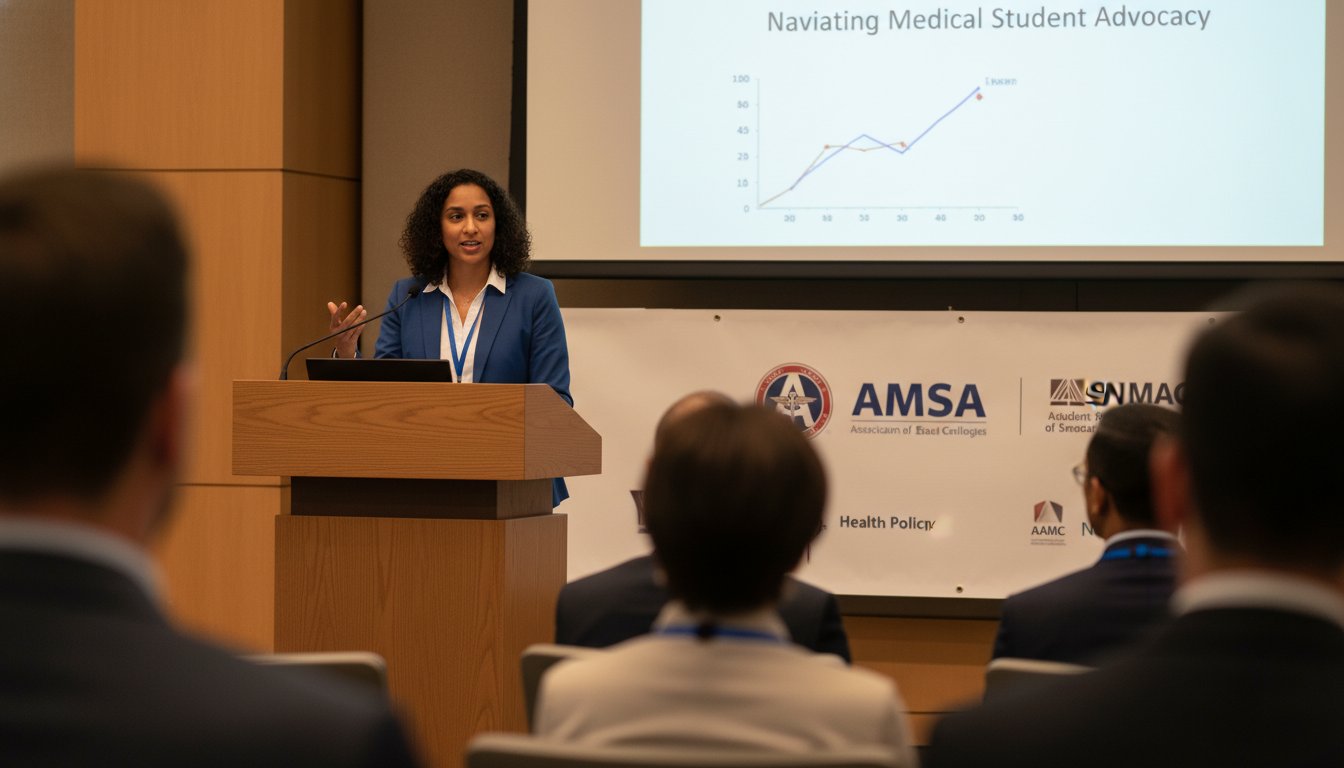
AMSA (American Medical Student Association) has a weird dual reputation among faculty and PDs:
- To some, it screams: “activist, policy-minded, organized, probably took on too much.”
- To others, it quietly whispers: “talks a lot, does little, likes titles.”
Which bucket you fall into depends on the specific details you give and whether anyone on that committee has ever watched an AMSA chapter implode.
At a mid-tier academic IM program where I sat in on file review, you’d hear things like:
- “Chapter President of AMSA... ok, what did they actually do? Any projects?”
- “National leadership? That’s work. Someone had to deal with that chaos.”
- “Oh, MedPAC track and policy work. This one might actually understand advocacy.”
The real AMSA hierarchy in PDs’ heads
They will never say this out loud to you, but internally it breaks down like this:
AMSA that makes them lean forward:
- National-level roles: national committee chair, national board, national programs/advocacy teams
- Well-documented major initiatives: organizing a regional conference with outcomes, successful state or school-wide policy changes, publication of position statements, meaningful advocacy campaigns
- Sustained, multi-year involvement with increasing responsibility
AMSA that’s neutral background noise:
- “Member” for two years, with no listed activities
- One-time “conference organizer” with no explanation of impact
- Generic “Health policy interest group through AMSA” with vague language
AMSA that raises quiet red flags:
- A long list of AMSA titles without any outcomes (lots of “co-chair,” “co-director,” but nothing happened)
- A premed with five AMSA roles at once plus 10 other activities—PDs assume superficial engagement
- A strong AMSA identity with zero clinical service or research to back it up
What PDs are really asking themselves is: did this person show they can move something from idea to execution? Or did they just collect titles in a national org where it is notoriously easy to add “co-” to anything?
And yes—every PD who’s been around long enough has seen the AMSA chapter that went totally off the rails politically, burned out half the class, and left bad blood with the dean’s office. That institutional memory shapes how risk-averse they are about “heavily activist” profiles.
If you want AMSA to help you instead of hurt you, your file needs to show:
- Clear, measurable outcomes (“increased X by Y,” “launched Z that is still ongoing”)
- Ties to your later choices (specialty, research, career goals)
- No impression of “all talk, no execution”
How SNMA Signals Something Completely Different

Here’s what faculty will not say on the record but will absolutely say in the workroom: SNMA means something different to people who understand medicine’s realities.
SNMA (Student National Medical Association) is not just “another club.” To Black residents and faculty on selection committees, SNMA can be a shorthand for resilience, community responsibility, and navigating an institution that wasn’t built for you.
To some older, less plugged-in faculty, it’s simply “that minority organization” and they stop there. But the tide is shifting. In many academic centers, especially in big cities, SNMA carries serious positive weight—if the involvement looks real.
The SNMA lenses PDs quietly use
When they see SNMA on your application, PDs and faculty are scanning for a few specific things:
Depth of engagement.
Were you a consistent chapter member, regional leader, national officer? Did you mentor, organize pipeline programs, run conferences?Context of your story.
For an applicant underrepresented in medicine, SNMA often becomes a backbone of their narrative: advocacy, mentorship, health equity. Admissions folks who actually understand the landscape will recognize this.Emotional labor.
People who’ve been there know SNMA leadership often means unpaid DEI and student support work that the institution should have funded and staffed. Some committees give quiet extra credit for that.
At a large urban IM program, I heard variations of:
- “She was SNMA chapter president and co-directed their pipeline program. That’s heavy-lift work.”
- “National SNMA leadership plus research in disparities? This is a coherent story.”
- “He did every DEI thing on campus and still has strong Step and publications. Impressive stamina.”
Contrast that with the more superficial read:
- “SNMA member” with no further description? That is neutral. Not negative, but not a differentiator.
- Only listed once among 20 other activities? Most reviewers assume you did not view it as central to your identity or work.
Where SNMA can become a double-edged sword
There is a delicate reality here.
If your entire file screams “DEI everything” with little clinical, research, or academic depth, some PDs will worry you’re going to be disengaged from bread-and-butter clinical work or burned out on systems before intern year even starts.
You’ll never hear this phrased so bluntly, but internally it sounds like:
- “Will they actually be happy on night float managing DKA and sepsis, or are they going to feel wasted if they’re not in policy/advocacy full-time?”
- “Has this person ever had space to just learn medicine, or have they been carrying institutional DEI on their back for four years?”
The key is balance. The SNMA involvement that plays extremely well usually has:
- Concrete, specific projects: mentorship programs, conferences, community health events
- Evidence of impact: number of mentees, program growth, new partnerships
- Parallel growth in core domains: strong clinical comments, research output, maybe some QI or disparities work
For URiM applicants, SNMA often becomes the spine of your application narrative. PDs who get it will appreciate what it means that you stayed engaged in SNMA and hit your milestones in a system that is not equally weighted for everyone.
That is not fluff. That’s resilience data.
“AAMC Experience” and Why It Impresses a Different Kind of PD
Most students don’t actually have a direct “AAMC” membership like they do for AMSA or SNMA, but they’ll put things on their application like:
- AAMC OSR representative
- AAMC student committee member
- AAMC conference presentation or panelist
Here’s how that lands.
AAMC is institution-level. It’s the infrastructure behind admissions, curriculum, and national policy for medical education. So when PDs see AAMC roles, there’s an assumption:
You’ve seen how the sausage is made.
What AAMC involvement quietly signals
Faculty read AAMC-linked roles as:
- “This student can operate in formal, bureaucratic environments without losing their mind.”
- “They’ve worked with deans, administration, and multi-institutional groups.”
- “They understand systemic constraints beyond just complaining about them.”
There’s a big difference between:
- “Attended AAMC annual meeting”
versus - “Served as AAMC OSR rep, sat on national committees, contributed to policy statements, helped redesign our school’s assessment policies based on AAMC resources”
The former is a line item. The latter is a signal that you can function as a young professional in complex systems.
At one East Coast academic IM program, anything AAMC-OSR or national committee-level would get comments like:
- “OSR at the AAMC level? Those tend to be selected, not random volunteers.”
- “Anyone who survives AAMC committee work can manage residency bureaucracy.”
Is AAMC involvement required? No. Does it help? It can, especially for applicants signaling interest in medical education, academic leadership, policy, or admin tracks.
How PDs Quietly Weigh AMSA vs SNMA vs “AAMC Stuff”
Let’s put all three on the table and be brutally honest.
No PD has a spreadsheet that says:
- AMSA president = +3 points
- SNMA national officer = +4 points
- AAMC OSR = +5 points
They don’t function that way.
Instead, each activity has a story weight and a risk profile.
Story weight
This is how much the activity helps answer the PD’s core questions:
- Who are you?
- What have you actually done?
- How will you function in a residency environment?
- What will you care about when things get hard?
SNMA tends to carry heavy story weight for URiM applicants, especially when it ties directly into mentorship, health equity, or pipeline work. It can define your arc.
AMSA carries strong story weight if your overall profile leans toward policy, advocacy, primary care, or systems change—and if you backed it up with execution, not just titles.
AAMC involvement carries weight for those aiming at academic medicine, education, or leadership roles. It says, “I’ve seen the bigger picture and still signed up for more.”
Risk profile
This is the quiet calculation: will this person be stable, coachable, and present for clinical work?
- Heavy AMSA with overtly confrontational political framing and low clinical metrics? That’s a risk for some programs who fear conflict instead of collaboration.
- Massive SNMA and DEI load with signs of burnout in your MS3 comments? Some PDs worry you’ve already spent your emotional reserves.
- High-level AAMC and committees with thin clinical exposure or low Step scores? Someone will whisper, “Too much committee, not enough medicine.”
The sweet spot for all three is:
Depth, impact, and reflection—without losing sight of the core job: becoming a competent physician.
Premed vs Med School: What Matters When
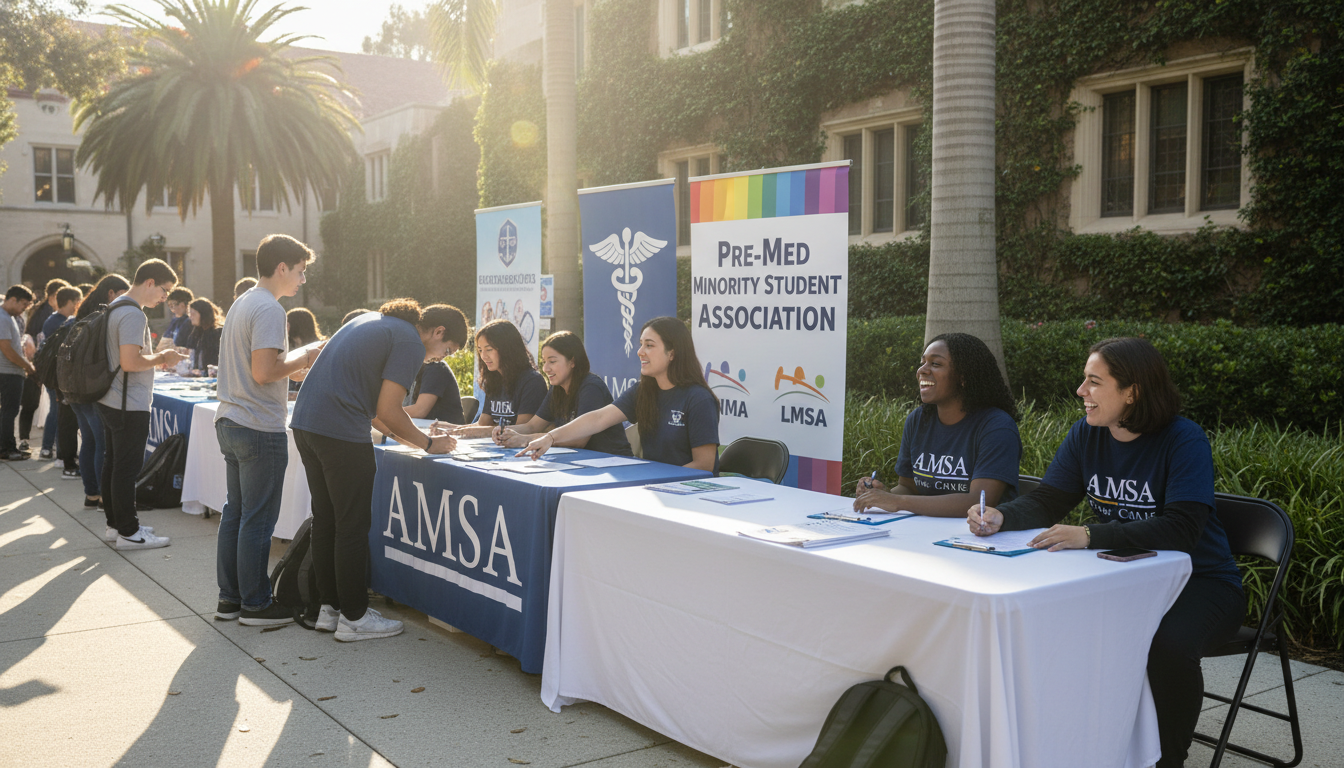
As a premed
Nobody on a residency committee cares what your undergrad AMSA chapter did. That’s too far back.
But admissions committees for med school do notice patterns:
- Premed AMSA leadership can hint at early interest in advocacy or health policy.
- SNMA-related premed organizations, BSU premed chapters, or similar groups can be early indicators of community commitment, especially if you continued them in medical school.
- AAMC is largely irrelevant at the premed stage except maybe for exposure through conferences or summer programs.
What med school adcoms quietly favor:
- Fewer organizations, more depth.
- A clear throughline from your lived experience to what you chose to commit to.
- Roles where you can articulate, “I changed X” rather than, “I attended X.”
In medical school
Now the stakes increase.
Residency reviewers look for:
- Leadership that required you to manage peers, negotiate with administration, and execute real projects
- Evidence that you can juggle serious responsibilities and not tank your grades or clinical performance
- Impact that outlasts you—programs, pipelines, new initiatives
AMSA, SNMA, and AAMC experiences can all score here if they show real-world traction.
How to Frame Each Organization on Your Application
Here is where most students drop the ball. They list positions and forget outcomes.
Faculty are allergic to title salads. “President, Co-chair, Liaison, Director” with no verb phrases about what happened under your leadership is a wasted opportunity.
When you talk about:
AMSA
Do not say: “President of AMSA chapter, organized meetings and events.”
Instead say: “Led AMSA chapter of 120+ members; launched new annual primary care advocacy day that brought 30 students to the statehouse, resulting in ongoing collaboration with X legislative office and new student elective in health policy.”
SNMA
Do not say: “SNMA member, participated in pipeline program.”
Instead say: “SNMA chapter pipeline co-director; designed and led monthly clinical skills workshops for 25 local high school students from underserved communities, with 3 graduates now enrolled in premed tracks; secured $5,000 in institutional funding to expand programming.”
AAMC-linked roles
Do not say: “AAMC OSR representative, attended national meetings.”
Instead say: “Elected AAMC Organization of Student Representatives (OSR) delegate; contributed to national workgroup on assessment reform; presented our school’s pilot pass/fail clerkship evaluation model at AAMC annual meeting, leading to adoption at two additional institutions.”
Same organizations. Completely different signal.
The Unspoken Political Layer
Here’s the part most official advisors will never spell out.
These organizations carry political baggage in different directions depending on where you apply.
- Some conservative-leaning programs view AMSA as “too political” if your file emphasizes activism without a strong core of clinical work. They’ll never say that to you, but I’ve heard it in rank meetings.
- Some very progressive academic programs quietly prefer applicants whose AMSA and SNMA work shows they can push the institution forward.
- AAMC ties are generally seen as safe and institutional—rarely controversial, more “system insider” than radical.
You need to be aware of the culture of the programs you’re targeting.
The same AMSA-heavy file that thrills a program like UCSF or Cambridge Health Alliance might not land as well at a small, community program in a politically conservative region that just wants clinically solid, drama-free residents.
Does that mean you should dilute your identity? No.
It means you present your work in language that emphasizes shared values: patient care, equity, education, system improvement, professionalism. You do not need to sanitize your beliefs, but you do need to show that you can function effectively inside varied clinical environments.
So, What Actually “Wins” Between AMSA, SNMA, and AAMC?
Here’s the final insider verdict:
There is no universal ranking. There is only alignment.
- If your story centers on health policy and national advocacy, high-level AMSA work with concrete outcomes can be gold.
- If your story centers on representation, equity, mentorship, and lived experience as an underrepresented student, sustained SNMA leadership can be the axis your entire application spins around.
- If your story centers on academic leadership, curriculum, or medical education, AAMC/OSR roles can be a powerful proof-of-concept.
The real winners are those who:
- Choose one or two organizations that genuinely match their values and goals
- Dig deep instead of wide—fewer roles, bigger impact
- Tie their organization work to visible, documented outcomes
- Maintain strong clinical performance and growth while doing it
That’s what PDs actually reward when the door is closed and they’re building their rank list late at night.
You are not being scored on brand name. You’re being evaluated on maturity, follow-through, and the coherence of your professional identity.
Get those right, and whether AMSA, SNMA, or AAMC appears on your application becomes less a label and more a spotlight.
And once you’ve set that foundation, the next battlefield is where all of this gets tested in real time: the interview room, when someone looks you in the eye and asks, “So tell me—what did you actually do in that role?”
But that conversation is for another day.