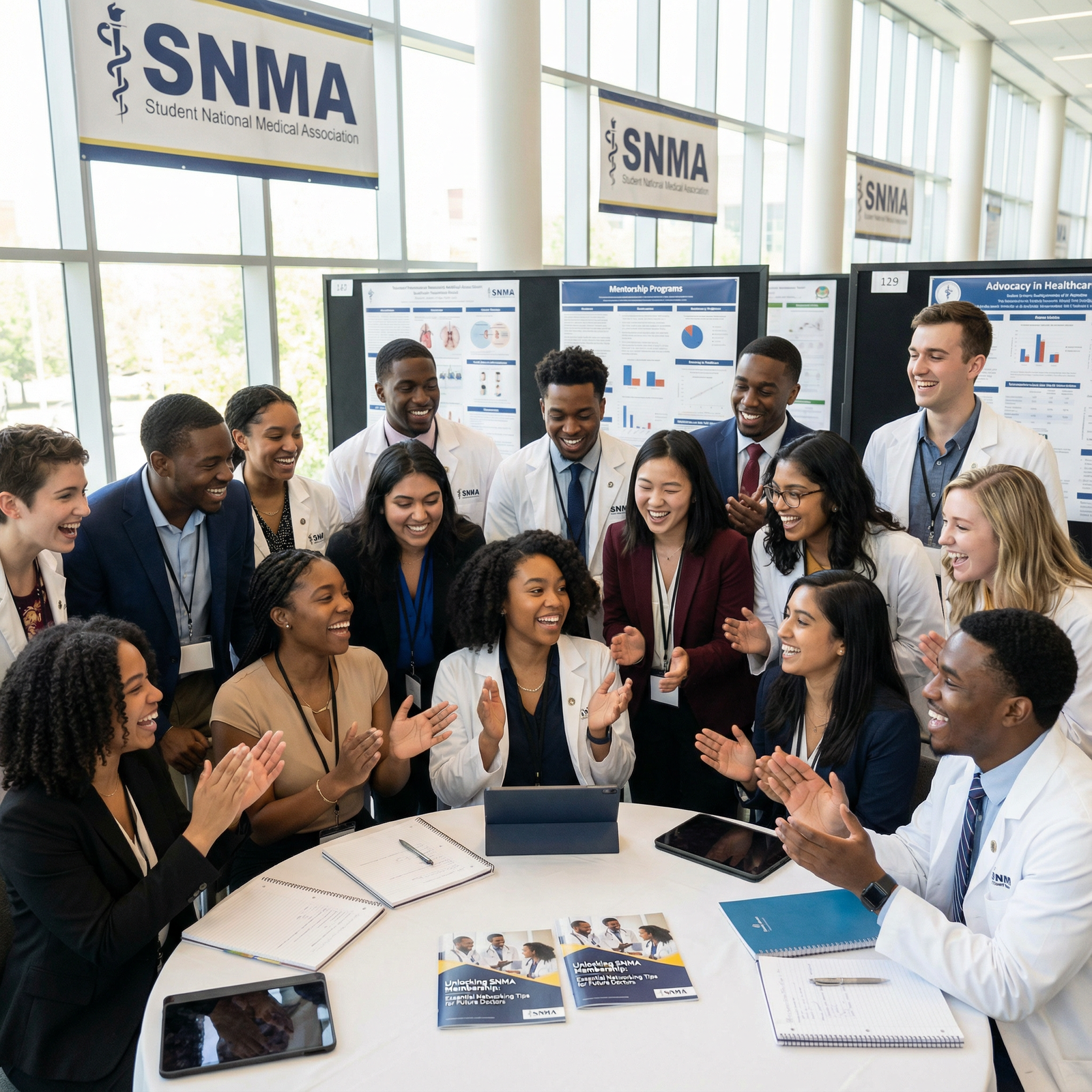
Introduction: Why Your SNMA Membership Matters More Than You Think
Within the realm of medical education, having the right community can be just as important as your GPA or test scores. For future doctors—especially those from groups historically underrepresented in medicine—organizations like the Student National Medical Association (SNMA) can be career-defining.
SNMA is the oldest and largest independent, student‑run organization focused on supporting medical students of color and strengthening the pipeline of physicians committed to underserved communities. But simply paying dues and adding “SNMA member” to your CV is not enough. To truly benefit, you must strategically leverage your membership.
This guide is designed for premedical students and medical students who want to:
- Build powerful networking connections
- Access high‑yield medical education resources
- Make a meaningful impact through community service
- Develop a strong voice in advocacy and leadership
- Position themselves competitively for medical school and residency
If you’re already in SNMA or considering joining, use this as your roadmap to turn membership into momentum for your future career as a physician.
The Power of SNMA Membership in Medical Education
SNMA is much more than a line on your resume; it is an ecosystem built to support your journey from premed to attending physician. Understanding the full scope of what’s available is the first step to using it effectively.
Core Benefits of SNMA Membership
SNMA membership typically gives you access to:
- Local chapter activities at your undergraduate institution or medical school
- Regional and national conferences with workshops, speakers, and recruiters
- Mentorship networks that connect premeds, medical students, residents, and attendings
- Scholarships, grants, and awards for academic achievement and service
- Leadership roles at local, regional, and national levels
- Community service initiatives aligned with health equity and social justice
Think of SNMA as a hub where Networking, Medical Education, Community Service, and Advocacy all intersect—a powerful combination for shaping your professional identity and impact.
Mindset: From Passive Member to Strategic Participant
To truly leverage SNMA:
- Treat it like a career development program, not just a club.
- Set clear goals: networking, research, specialty exploration, leadership, or all of the above.
- Show up consistently and follow through—faculty, physicians, and peers notice reliability.
A helpful approach is to ask yourself at the start of each year:
“What do I want SNMA to help me accomplish this year?”
Then, seek out events, people, and positions that align with that answer.
Networking Through SNMA: Building Relationships That Open Doors
SNMA is one of the most powerful networking platforms available to students interested in health equity, diversity in medicine, and service to underserved communities. Used well, it can transform your support system and career trajectory.
Connecting with Peers Who Understand Your Journey
Your peers are not just classmates; they are future colleagues, collaborators, and co‑leaders in healthcare.
Where to start:
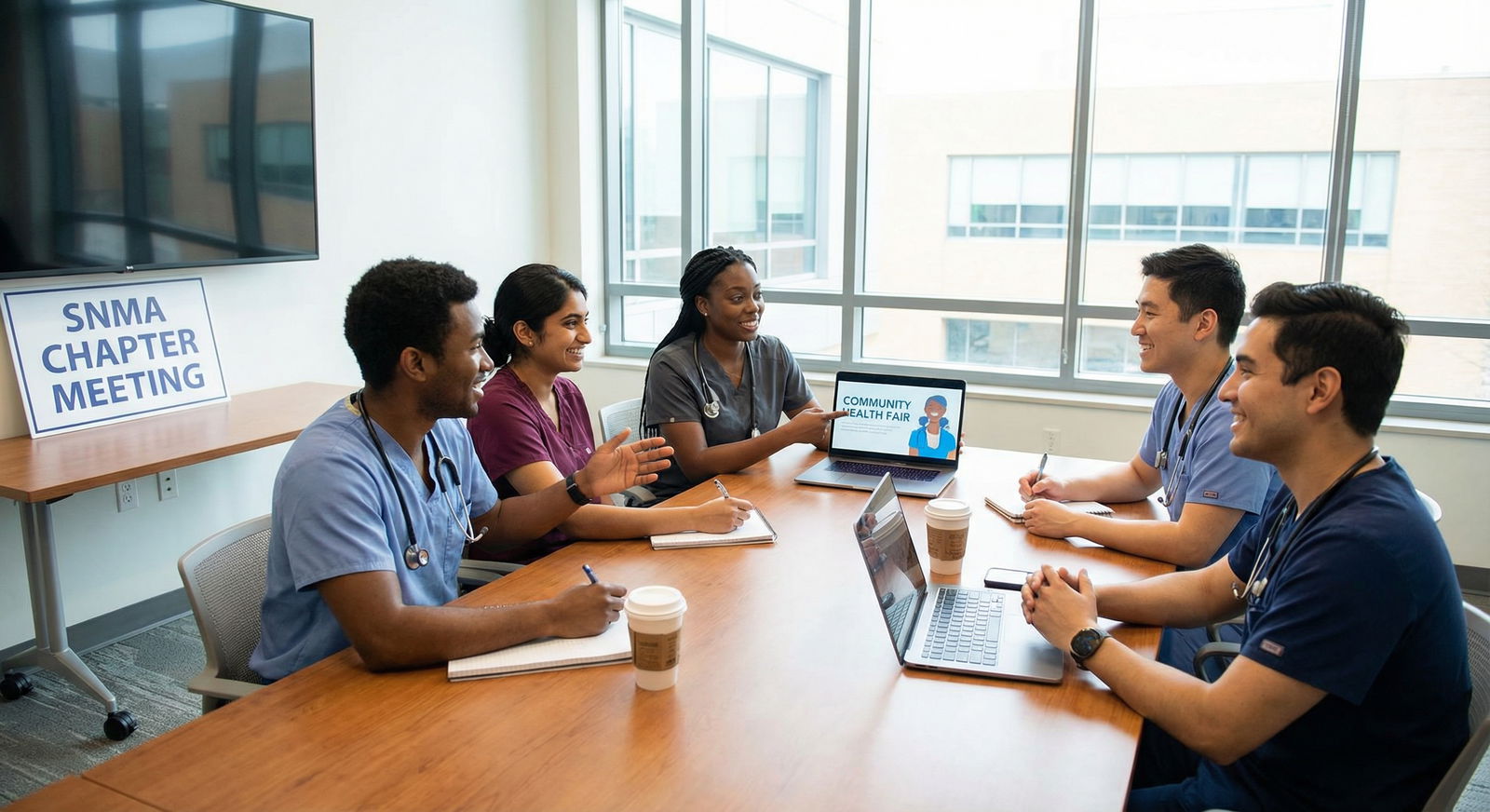
Chapter Meetings:
Attend regularly—early and often. Use these spaces to:- Learn about opportunities (research, tutoring, shadowing, volunteering)
- Share your interests (e.g., “I’m interested in pediatrics and community health—anyone else?”)
- Volunteer for small roles to start building trust and visibility
Regional & National Conferences:
These events gather premeds, medical students, residents, and physicians from across the country. They often include:- Specialty interest sessions (e.g., surgery, emergency medicine, OB/GYN)
- Residency program showcases and networking receptions
- Panel discussions on being underrepresented in medicine
Actionable networking tips:
- Prepare a 15–30 second introduction:
- Who you are (name, school, year)
- Your stage (premed, M1, M3, etc.)
- Your interests (e.g., “I’m exploring internal medicine and health policy”)
- After you meet someone, write their name and a note about your conversation in your phone.
- Connect on LinkedIn or via email within 48 hours.
Building Professional Relationships and Mentorship
SNMA offers structured and informal pathways to connect with mentors who understand both the rigor of medical training and the realities of being a student of color in medicine.
High-yield mentorship strategies:
Ask targeted questions at events:
- “How did you choose your specialty?”
- “What do you wish you’d done earlier in medical school?”
- “What would you recommend I focus on at my stage?”
Follow-up email template you can adapt:
Dear Dr. [Last Name],
It was a pleasure meeting you at the [Event/Conference] SNMA session on [Topic]. I appreciated your insights on [Something specific they said].
I am a [Premed/Year in school] at [Institution] interested in [Field/Interest]. If you’re open to it, I’d be grateful for a brief 15–20 minute conversation to ask a few questions about your career path and any advice you might have for someone at my stage.
Thank you for your time and for your commitment to supporting students through SNMA.
Sincerely,
[Your Name]
[School] | [Contact Info]Diversify your mentorship team:
- Peer mentor (1–2 years ahead)
- Near‑peer mentor (resident or fellow)
- Faculty/attending mentor in your area of interest
- Career or research mentor (can overlap with above)
Using SNMA Resources to Strengthen Your Medical Education
Beyond networking, SNMA offers tangible tools that can improve your academic performance, clinical readiness, and professional development.
Educational Workshops and Skill-Building Opportunities
Many SNMA chapters and national events host sessions focused on:
- Clinical skills (basic physical exam, suturing, simulation experiences)
- Board and exam preparation (MCAT, USMLE Step exams, COMLEX)
- Academic skills (study strategies, time management, test anxiety)
- Professional development (CV building, personal branding, interview skills)
How to maximize these events:
- Approach each workshop with a specific goal:
- “I want to walk away with two new Step 1 study strategies.”
- “I want to practice my response to ‘Tell me about yourself’.”
- Take brief notes and translate them into an action plan within 24 hours:
- Add key dates (MCAT, board exams, application cycles) to your calendar.
- Schedule 1–2 tasks based on what you learned (e.g., “Revise study schedule,” “Draft CV”).
Online Learning, Webinars, and Asynchronous Content
SNMA’s national platforms often host:
- Webinars on specialty exploration, health equity, and research
- Recordings of panels on residency applications and financial literacy
- Resources on mental health, burnout prevention, and well-being
Action steps:
- Set a recurring reminder to check the SNMA website and social media (Instagram, X/Twitter, LinkedIn) for new content and deadlines.
- Create a personal “SNMA Resource Folder” (Google Drive or similar) to save:
- Slide decks or PDFs
- Links to recorded webinars
- Notes from sessions
Organizing resources now will save you time during high‑pressure phases like MCAT prep, clerkships, and residency application season.
Community Service and Outreach: Serving While You Learn
Community service and outreach aren’t just “nice to have” activities—they are central to SNMA’s mission and extremely valuable for your development as a physician.
Why Community Service Is High-Impact for Future Doctors
Participation in community service helps you:
- Understand the social determinants of health firsthand
- Develop true cultural humility and community engagement skills
- Strengthen your medical school and residency applications with meaningful, mission‑aligned activities
- Live out your values around health equity and service to underserved populations
Examples of High-Yield SNMA Community Service Projects
Many chapters coordinate:
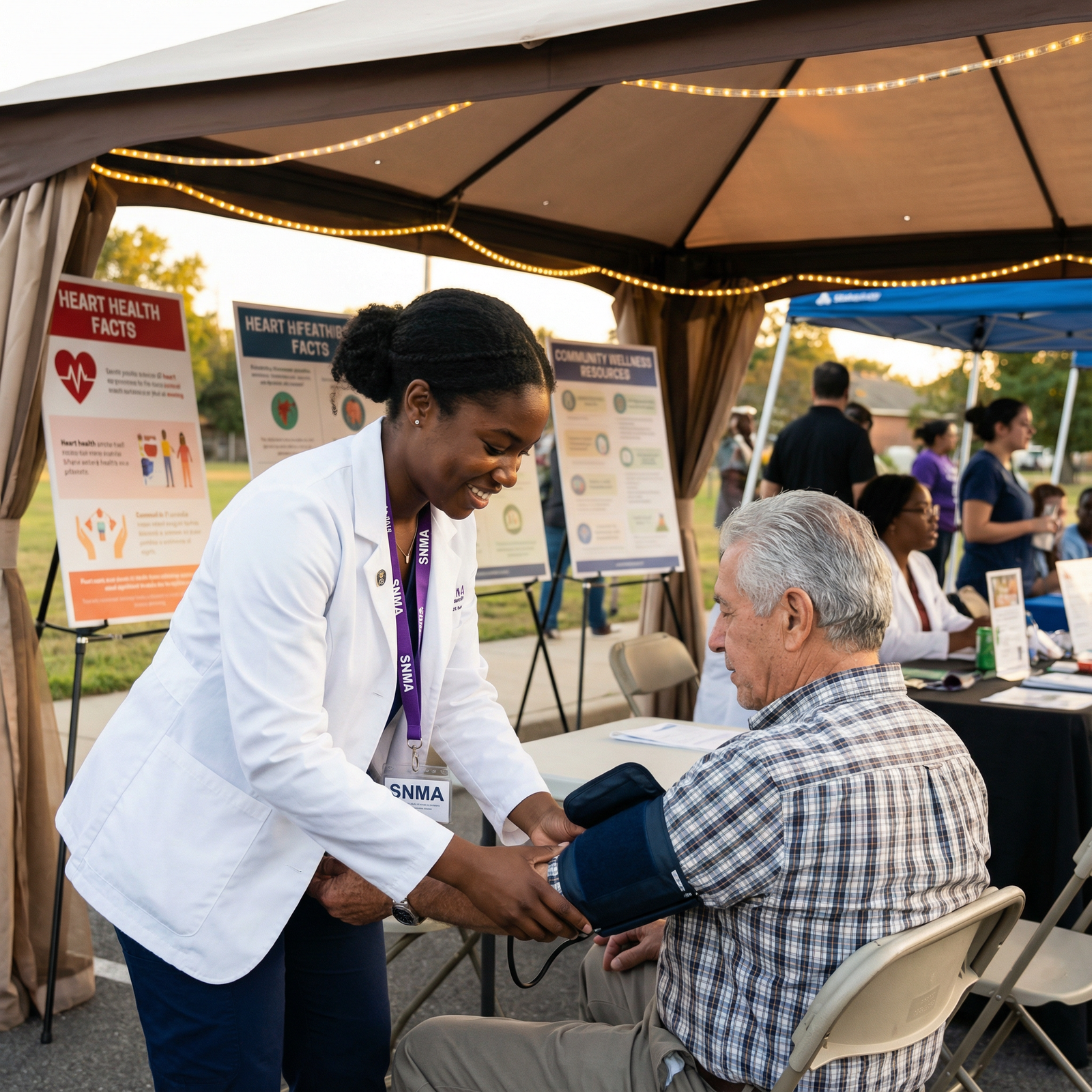
Health Fairs & Screenings
Provide BP checks, glucose screenings, nutrition counseling, and basic health education in underserved neighborhoods, churches, schools, or community centers.Pipeline and Mentorship Programs
- Partner with high schools or colleges serving underrepresented students.
- Host “Doctor for a Day,” mock interview days, or shadowing introductory sessions.
- Run workshops on “How to Become a Doctor” or “Demystifying the Pre-Med Path.”
School-Based Health Education
Teach sessions on topics like:- Healthy relationships and consent
- Nutrition and exercise
- Substance use and mental health
Documentation tip:
Create a simple running log of your activities:
- Date, event name, location
- Your role and responsibilities
- Number of people served (approximate)
- Outcomes or reflections (“What did I learn?”)
This log will be invaluable when you:
- Fill out AMCAS or AACOMAS activity sections
- Write personal statements or secondaries
- Prepare for residency applications and interviews
Advocacy and Leadership in SNMA: From Student to Change-Maker
SNMA has a long history of advocacy for diversity, equity, and inclusion in medicine. Engaging in this work can elevate your leadership profile and deepen your understanding of how policy and systems affect patient care.
Getting Involved in Advocacy
Advocacy can occur at multiple levels:
Campus level
- Work with your SNMA chapter to address issues like curriculum diversity, wellness resources, or recruitment of underrepresented faculty.
- Collaborate with other student organizations on initiatives related to health equity and inclusion.
Local and state level
- Participate in legislative days or letter‑writing campaigns.
- Join SNMA efforts to support policies that improve access to care for marginalized communities.
National level
- Attend advocacy workshops at national conventions.
- Join or follow SNMA’s national legislative and policy priorities.
- Share SNMA advocacy alerts on social media to raise awareness.
When describing advocacy work, be clear about:
- The problem you addressed
- Your specific contributions
- The impact or outcomes, even if small (e.g., “Helped draft a proposal that led to new DEI training for clinical faculty”)
Leadership Development Through SNMA Roles
Leadership positions within SNMA offer structured opportunities to grow skills that residency program directors highly value.
Possible roles include:
- Local chapter positions (President, Vice President, Treasurer, Secretary, Community Service Chair, Premed Liaison)
- Regional representation (Regional officers, committee members)
- National roles (committee chairs, national officers, liaison positions)
Benefits of leadership:
- Experience managing projects, budgets, and teams
- Exposure to organizational governance and strategic planning
- Strong material for personal statements, secondaries, and interview answers
- A broader professional network across regions and institutions
Reflection exercise for your CV and interviews:
For each leadership role, write down:
- One major challenge you faced
- What you did to address it
- What you learned about yourself as a leader
These reflections can easily become polished stories for behavioral interview questions.
Preparing for Medical School, Residency, and Beyond with SNMA
SNMA is uniquely positioned at the intersection of premed preparation, medical education, and career development. Whether you’re just starting the journey or approaching residency applications, the organization can help.
For Premed Students: Building a Strong Application
SNMA premed programming often includes:
MCAT preparation support
- Group study sessions
- Workshops on test strategies and timelines
- Connections to discounted or sponsored prep resources, when available
Application guidance
- Personal statement workshops
- Mock interview sessions (traditional and MMI formats)
- Panels with current medical students
How to leverage as a premed:
- Find and join an SNMA MAPS chapter (Minority Association of Premedical Students) if available at your institution.
- Ask medical student SNMA members to:
- Review your personal statement and activity descriptions
- Conduct mock interviews
- Share what they wish they knew before applying
For Medical Students: Navigating Training and Residency Applications
As a medical student, SNMA can support you at each stage:
Preclinical years (M1–M2)
- Connect with upperclassmen and residents regarding studying for Step 1/Level 1.
- Explore specialties through SNMA interest groups or panels.
- Get involved in research or QI projects through your SNMA network.
Clinical years (M3–M4)
- Seek advice on clerkship success and letters of recommendation.
- Attend SNMA sessions on residency applications, ERAS, and ranking programs.
- Sign up for SNMA mock interviews to refine your communication skills.
Peer support strategy:
Create or join a small SNMA‑connected accountability group (3–5 people) focused on:
- Board exam prep
- Clerkship success and case discussions
- Residency application timelines and milestones
Having peers who share your experiences and goals can significantly improve motivation and resilience.
Enhancing Your Professional Presence Through SNMA and Social Media
In the digital age, your online presence is part of your professional brand. SNMA can help you shape that brand in a way that aligns with your values and aspirations.
Engaging with SNMA on Social Media and Online Platforms
SNMA maintains active online communities where you can:
- Learn about scholarships, fellowships, research internships, and away rotations
- Stay updated on national initiatives, conferences, and deadlines
- Connect with peers and mentors outside your home institution
Practical tips:
- Follow SNMA national and your local chapter on:
- X/Twitter
- Turn on notifications for major announcements.
- Share or repost content related to:
- Diversity in medicine
- Health equity and community service
- Advocacy campaigns
Sharing Your Story While Staying Professional
Use your own social media platforms to:
- Highlight meaningful SNMA projects you’re involved in
- Reflect on lessons learned from community service or advocacy
- Celebrate milestones (presentations, posters, leadership roles) in a professional tone
Always protect patient privacy and follow your institution’s social media policies. When in doubt, ask a mentor to review content you’re unsure about.
FAQs: Making the Most of Your SNMA Membership
1. What is SNMA and who can join?
The Student National Medical Association (SNMA) is a student‑run organization dedicated to supporting current and future underrepresented minority medical students and addressing the needs of underserved communities. Membership is open to:
- Premedical students (often through MAPS chapters)
- Medical students (MD and DO)
- Residents and physicians (often as mentors and advisors)
If you believe in advancing diversity, equity, and inclusion in medicine and serving marginalized communities, SNMA is a good fit for you—regardless of your background.
2. How do I get involved with SNMA at my stage (premed or medical student)?
Premed students:
- Look for a MAPS chapter at your college/university.
- If none exists, talk to SNMA regional leadership about starting one.
- Attend SNMA national conferences and virtual events open to premeds.
Medical students:
- Join your school’s SNMA chapter at the first opportunity.
- Attend meetings and volunteer for committees (community service, mentorship, programming).
- Explore leadership roles once you understand the chapter’s structure.
For both groups, regularly check SNMA’s website and social media for regional and national events to plug into a broader network.
3. How does SNMA help with medical school and residency applications?
SNMA provides structured and informal support at multiple stages:
For medical school applications:
- Workshops on MCAT prep, personal statements, and secondary essays
- Panels with current medical students on what worked for them
- Mock interviews (including MMI-style) and feedback sessions
For residency applications:
- Guidance on building a competitive CV and obtaining strong letters
- Panels with residents and attendings discussing specialty choice
- Mock residency interviews and application review sessions
- Networking opportunities with program representatives at conferences
The key is active engagement—attend events, ask questions, and follow up with people who offer help.
4. How does SNMA support diversity, equity, and inclusion in medicine?
SNMA advances diversity in medicine and health equity through:
- Advocacy: Supporting policies that expand access to care, fund pipeline programs, and protect marginalized communities.
- Pipeline programs: Engaging high school and college students through mentorship, shadowing, and health education.
- Support systems: Providing a community for underrepresented students who may experience isolation, bias, or imposter syndrome.
- Visibility and representation: Highlighting the achievements and stories of physicians and trainees of color, showing future students that they belong.
Involvement in these efforts not only benefits communities but also strengthens your understanding of structural determinants of health—knowledge increasingly valued in modern medical education.
5. Why is it important to intentionally leverage my SNMA membership instead of just listing it on my CV?
Residency program directors, admission committees, and future employers look beyond your list of memberships. They want to know:
- What you did in the organization
- How you grew as a leader, advocate, and team member
- How your experiences align with your stated values and goals
By intentionally leveraging SNMA through networking, community service, advocacy, and leadership, you gain:
- Compelling stories for personal statements and interviews
- Concrete skills (communication, teamwork, project management)
- A powerful network of mentors and peers across the country
- A deeper sense of purpose and direction in your medical career
Being intentional, proactive, and mission‑driven in your SNMA involvement can transform your journey through medical education. Use the organization to build community, sharpen your skills, and live out your commitment to equity in healthcare—now and throughout your career as a physician.