
Introduction: Why Your AAMC Membership Matters More Than You Think
For Medical Students, the journey from premed to residency is increasingly competitive, complex, and fast‑moving. Amid board exams, clerkships, research, and residency applications, it’s easy to overlook one of the most powerful tools already in your corner: your AAMC Membership.
The Association of American Medical Colleges (AAMC) sits at the center of U.S. medical education. It shapes admissions standards, supports academic medicine, and advocates for policies that impact your training and future practice. Yet many medical students barely scratch the surface of what their membership provides.
Used strategically, your AAMC membership can become a comprehensive toolkit for:
- Academic and clinical success
- Professional networking and mentorship
- Long‑term career development
- Leadership growth and advocacy
- Staying current in medical education and health policy
This guide walks through specific, practical strategies to maximize your AAMC membership—from your first day of medical school through residency applications and beyond.
Understanding AAMC Membership: What You Actually Get
Before you can leverage your membership, you need a clear picture of what’s available. AAMC resources span the full pipeline: premed, medical school, residency, and early career.
Core Benefits for Medical Students
1. Educational Resources and Publications
You gain access to a broad ecosystem of content, including:
- Academic Medicine (journal) – Peer‑reviewed research and perspectives on medical education, policy, and leadership.
- AAMCNews – Shorter, timely stories on trends in medical education, healthcare delivery, and research.
- Reports and data – Tools like the AAMC Physician Specialty Data Report and Graduation Questionnaire (GQ) summaries that provide insight into specialty competitiveness and training trends.
- Guides and toolkits – Resources on topics such as wellness, diversity, and effective teaching.
2. Networking and Professional Community
AAMC connects you with:
- Medical students at other institutions
- Residents, faculty, and program directors
- Leaders in academic medicine and health policy
- Members of specialty interest groups and affinity groups (e.g., diversity, DEI, student affairs)
3. Conferences, Workshops, and Webinars
Key offerings include:
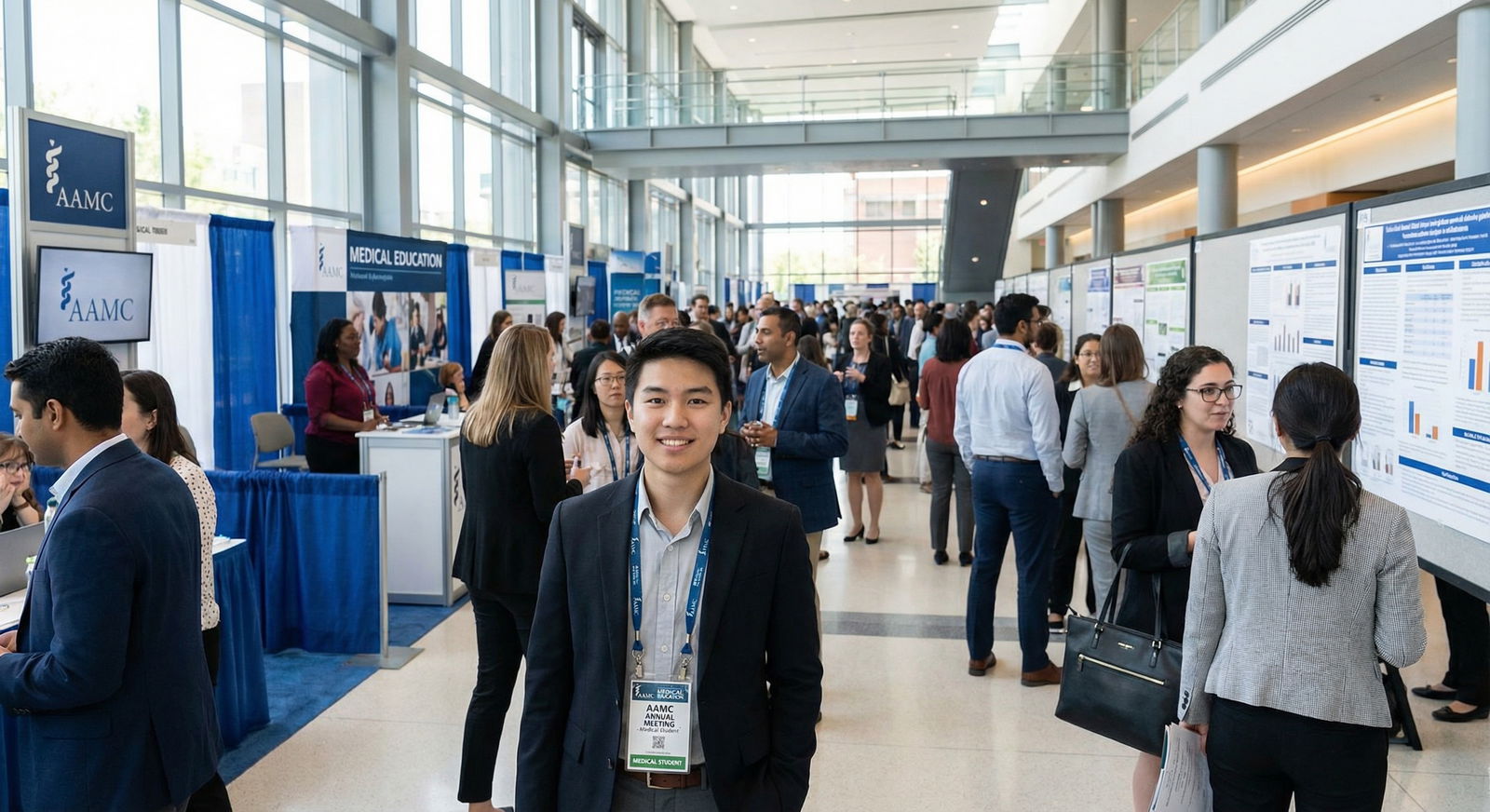
- Learn Serve Lead: The AAMC Annual Meeting – The flagship conference for academic medicine
- Specialty meetings and leadership development programs
- Webinars on admissions, Step/COMLEX preparation trends, wellness, DEI, and policy issues
4. Leadership and Governance Opportunities
Through AAMC‑affiliated student committees and groups, you can:
- Contribute to national discussions on curriculum and assessment
- Represent medical student perspectives
- Build leadership and organizational skills at a high level
Affiliated Organizations and Communities
Your AAMC membership also connects you to affiliated bodies that shape medical education, such as:
- Academic Medicine (journal community)
- AAMC Learning and professional development communities
- Various medical student associations and advisory groups
Many students never realize these exist—yet they are powerful spaces for networking and building a recognizable voice in academic medicine.
Strategy 1: Make AAMC Publications Part of Your Weekly Routine
One of the easiest—and most underused—benefits of AAMC Membership is access to high‑quality publications. Consistent engagement with these resources keeps you ahead of the curve in medical education and healthcare trends.
What to Read and Why It Matters
Academic Medicine
- Ideal for: Students interested in medical education, health professions research, or academic careers.
- Value: Helps you understand how curricula are designed, how assessment changes over time, and what educational innovations are happening at other schools.
AAMCNews and Other Updates
- Ideal for: Staying current with policy changes, new initiatives, and trends across U.S. medical schools.
- Value: Gives you talking points for interviews, essays, and networking conversations.
Workforce and Specialty Data Reports
- Ideal for: Career planning and specialty exploration.
- Value: Provides evidence‑based insight into specialty demand, workforce needs, and training pathways.
How to Build a Sustainable Reading Habit
Actionable Tips:
Schedule “AAMC Power Hour” weekly
Block 30–60 minutes on a low‑intensity day (e.g., Sunday evening) to skim headlines and choose 1–2 articles to read in full.Align reading with your current stage
- Early medical school: Focus on wellness, curriculum innovation, learning strategies.
- Clinical years: Focus on specialty trends, residency preparation, and assessment.
- Application phase: Focus on workforce data, diversity in medicine, and policy issues.
Use articles for professional development
- Bring an interesting piece to a mentor meeting to spark discussion.
- Reference relevant articles in personal statements or interviews to demonstrate insight into broader issues in medicine.
Strategy 2: Use AAMC Events and Conferences as Networking Multipliers
AAMC events are more than lectures—they are high‑yield networking environments that can change the trajectory of your career.
Learn Serve Lead: The AAMC Annual Meeting
This is the AAMC’s flagship conference and a major opportunity for Medical Students who can attend.
You’ll find:
- Plenary talks from nationally recognized leaders in academic medicine
- Sessions on medical education innovation, assessment, and curriculum
- Workshops on career development, leadership, and wellness
- Networking events with faculty, deans, program directors, and peers
Action Tip:
If you can’t attend in person, watch for virtual access or recorded sessions. Many key sessions are later made available through AAMC platforms.
Planning Your Conference Strategy
To get maximum value:
Clarify your goals before you go
Examples:- Explore a career in medical education or academic research
- Identify potential mentors in a specific specialty
- Present your research or educational project
- Learn more about diversity, equity, and inclusion initiatives
Pre‑select sessions strategically
- Choose at least one session about your future specialty or area of interest.
- Attend one session outside your comfort zone (e.g., health policy, informatics, or DEI).
Network intentionally
- Review the program and identify speakers or organizations you’d like to connect with.
- Prepare a brief self‑introduction (who you are, what you’re interested in, what you’re hoping to learn).
- Follow up same week via email or LinkedIn with a personalized note.
De‑brief after the meeting
- Write down 3–5 concrete takeaways or ideas.
- Identify 1–2 actions you’ll implement at your home institution (e.g., joining a committee, starting a project).
Strategy 3: Leverage AAMC Online Learning for Continuous Development
AAMC offers a robust suite of online learning tools tailored to different phases of your journey—from premed to residency preparation.
Types of Online Resources to Explore
Webinars and Virtual Workshops
Covering topics like:- Residency application strategies
- Updates on MCAT and USMLE/COMLEX trends
- Diversity and inclusion in medical education
- Physician well‑being and burnout prevention
Interactive Courses and Modules
Focused on:- Professionalism and ethics
- Quality improvement and patient safety
- Teaching skills (for students interested in education roles)
Premed and Admissions Resources (if you’re mentoring premeds)
- MCAT preparation guidance
- Application process overviews
- Holistic review and equity in admissions
Building a Personalized Learning Plan
Action Tips:
Map your year
- Early academic year: Professionalism, time management, wellness.
- Pre‑clerkship → clerkship transition: Clinical communication and patient safety modules.
- Pre‑residency application: Residency prep webinars, CV and personal statement resources.
Set a realistic cadence
- Aim for one AAMC learning activity per month—short webinars are often easiest to fit in.
- Take notes and save key slides or summaries in a dedicated “AAMC Learning” folder.
Apply what you learn locally
- Share key ideas with student organizations, interest groups, or faculty mentors.
- Use content to develop local teaching workshops or QI projects.
Strategy 4: Network Deliberately Through AAMC Platforms and Events
Networking is not just about collecting contacts—it’s about building mutually beneficial professional relationships over time.
Where AAMC Helps You Build Your Network
- Conferences (national and regional)
- Webinars with Q&A and chat features
- AAMC‑affiliated student and trainee groups
- Committees focused on areas such as medical education, student affairs, or diversity
Practical Networking Steps for Medical Students
Before an event:
- Identify 3–5 people you’d like to meet (e.g., speakers, panelists, student leaders).
- Prepare 2–3 specific questions you can ask them.
During the event:
Introduce yourself concisely:
“Hi, I’m [Name], an MS2 at [School] interested in [specialty/area]. I really appreciated your points about [topic] and would love to hear your thoughts on [question].”
Attend small‑group discussions or breakout rooms where conversations are easier and more intimate.
After the event:
- Follow up within 72 hours:
- Reference something specific from your conversation.
- Ask one focused question or propose a concrete next step (e.g., a brief Zoom meeting, feedback on a project idea).
Action Tip:
Use a simple spreadsheet or note app to track contacts, where you met them, and follow‑up dates. This habit is invaluable when you’re applying for away rotations, research collaborations, or residency.
Strategy 5: Get Involved in AAMC Committees and Student Initiatives
If you’re interested in leadership, educational innovation, or advocacy, AAMC‑affiliated groups can be a high‑impact way to get involved beyond your home institution.
Benefits of Committee Involvement
- Develop leadership and organizational skills
- Gain insight into national trends in curriculum, assessment, and policy
- Contribute to policies and recommendations that affect all medical students
- Build a recognizable profile that stands out on CVs and residency applications
How to Find and Pursue Opportunities
Steps to Take:
Explore AAMC’s student and trainee sections
Look for student advisory groups, task forces, or committees that include learner representatives.Start locally and build up
- Join curriculum committees or student government at your medical school.
- Then use that experience to apply for regional or national AAMC roles.
Align roles with your interests
Examples:- Passionate about diversity and inclusion? Seek roles related to equity in medical education.
- Interested in wellness? Look for initiatives around physician well‑being and burnout prevention.
- Curious about medical education research? Join groups working on assessment, curriculum design, or simulation.
Be reliable and visible
- Attend meetings consistently.
- Volunteer for manageable tasks (drafting documents, summarizing meetings, coordinating student feedback).
- Ask how students can contribute meaningfully rather than just observing.
Strategy 6: Use AAMC Career and Employment Resources as a Career Roadmap
Your AAMC membership includes tools that can guide your career development step by step—from specialty exploration to residency application.
Key Career Development Resources
Careers in Medicine (CiM)
- Self‑assessment tools to clarify your values, strengths, and interests
- Specialty profiles detailing lifestyle, training length, competitiveness, and workforce trends
- Guidance on building CVs, personal statements, and preparing for interviews
Data and Reports
- AAMC Specialty Data Reports to contextualize competitiveness
- Match trends and workforce projections that help inform your specialty choice
How to Use These Effectively
Action Tips:
Start early
Engage with CiM and specialty data by MS1/MS2 rather than waiting until you’re already mid‑clerkship.Revisit assessments periodically
Your interests and priorities may change after clinical exposure—repeat self‑assessments to see what remains consistent.Use resources alongside mentors
Bring your CiM results or specialty data to advising meetings to have more focused, evidence‑based conversations.Prepare intentionally for residency
- Use AAMC guidance on ERAS applications, letters of recommendation, and interview skills.
- Attend AAMC webinars on residency trends and application strategies.
Strategy 7: Participate in and Showcase Research with AAMC Support
Engaging in research is a cornerstone of many medical careers, especially for those aiming for competitive specialties or academic medicine.
How AAMC Enhances Your Research Journey
- Conferences (such as Learn Serve Lead) where you can present educational or health services research
- Exposure to Academic Medicine and related journals, which can be targets for educational research submissions
- Networking with faculty involved in research and scholarship across institutions
Turning Research into Tangible Career Assets
Action Tips:
Identify your focus area early
- Basic science, clinical research, health services, education, or quality improvement.
- Use AAMC publications to identify hot topics in those areas.
Collaborate with faculty at your institution
- Share interest in projects connected to national AAMC priorities (e.g., DEI, wellness, competency‑based education).
Aim to present at AAMC‑related meetings
- Abstract presentations, posters, and workshops build your CV and Networking opportunities.
Translate your work to broader impact
- Consider writing short perspectives or innovations manuscripts for education journals.
- Use AAMC forums to learn how others have implemented or scaled similar projects.
Strategy 8: Use AAMC CareerConnect to Find Jobs and Early Career Opportunities
As you approach graduation or plan for gap years or research years, AAMC CareerConnect becomes especially valuable.
What AAMC CareerConnect Offers
- Job postings across academic medicine and healthcare settings
- Opportunities for:
- Research positions
- Educational fellowships
- Academic and clinical roles
- Tools to search by location, specialty, and role type
Making CareerConnect Work for You
Action Tips:
Set up alerts early
- Create job alerts aligned with your interests (e.g., “clinical research coordinator,” “education fellow,” “academic hospitalist”).
Use it for informational interviewing
- Even if you’re not ready to apply, job descriptions help you understand what skills and experiences are valued.
Align your CV with job expectations
- As you review postings, note recurring skills and responsibilities.
- Seek projects and roles during medical school that build those competencies.
Strategy 9: Engage with AAMC‑Affiliated Medical Student Organizations
Many student organizations operate within or alongside AAMC’s ecosystem, offering rich opportunities for leadership, advocacy, and peer networking.
Why These Organizations Matter
- They provide a structured way to:
- Develop leadership skills
- Collaborate across institutions
- Advocate for issues facing Medical Students
- They frequently connect with national AAMC conversations and initiatives.
Getting the Most from Student Organization Involvement
Action Tips:
Choose strategically, not just broadly
- Instead of joining many groups superficially, pick 1–3 aligned with your values and career goals (e.g., diversity, global health, medical education).
Seek roles that stretch your skills
- Treasurer → learn budgeting and financial management
- Education chair → gain curriculum design and teaching experience
- Advocacy lead → develop policy literacy and communication skills
Connect local efforts to national conversations
- Use AAMC reports and position statements to inform your group’s projects.
- Share back local successes with AAMC student forums if available.
Strategy 10: Advocate and Engage in Policy Through AAMC Channels
Healthcare is significantly shaped by policy—and AAMC is a major voice in those discussions. Your membership positions you to be more than a passive observer.
How AAMC Engages in Policy
AAMC advocates on issues such as:
- Graduate medical education (GME) funding
- Student debt and financial aid
- Diversity, equity, and inclusion in medical education
- Public health, research funding, and workforce planning
How You Can Participate Meaningfully
Action Tips:
Stay informed
- Subscribe to AAMC policy updates or newsletters.
- Track how proposed changes could impact your training, debt, or future practice.
Engage in structured advocacy
- Participate in AAMC‑supported advocacy days or campaigns through your school.
- Collaborate with student organizations to host educational sessions on current policy issues.
Build advocacy into your narrative
- In interviews and personal statements, articulate how policy awareness informs your career goals and patient advocacy.

FAQs: Making the Most of Your AAMC Membership as a Medical Student
1. What are the most important AAMC resources Medical Students should use first?
Start with:
- Careers in Medicine (CiM) for specialty exploration and career development
- AAMCNews and selected Academic Medicine articles to understand trends in medical education
- Online webinars focused on wellness, residency applications, and professional development
As you progress, layer in committee involvement, conferences, and research opportunities.
2. How can I find upcoming AAMC events and decide which to attend?
Visit the AAMC website’s events and meetings section, where you can:
- Filter by topic (e.g., medical education, diversity and inclusion, leadership)
- Check for virtual vs. in‑person options
- Review agendas to match sessions with your current goals (e.g., early career planning, residency preparation, or leadership development)
Talk with faculty mentors or student affairs staff to identify which events are most valuable at your stage of training.
3. Are AAMC webinars and learning modules free for medical students?
Many AAMC webinars and online resources are free or heavily discounted for students at AAMC member institutions. Some specialized or in‑depth offerings may have fees, especially for extended programs or certificate courses. Always:
- Log in with your institutional or AAMC credentials
- Check whether your school or department can sponsor or reimburse registration for higher‑cost offerings
4. How can involvement with AAMC help my residency application?
Engagement with AAMC can strengthen your application by demonstrating:
- Commitment to medical education and leadership (through committees, presentations, or projects)
- Awareness of broader issues in healthcare and education (policy, workforce, DEI)
- Scholarly activity (poster presentations, educational research, or publications linked to AAMC priorities)
Be sure to list AAMC‑related roles and presentations on your CV and discuss how they shaped your professional identity in interviews.
5. What is AAMC CareerConnect, and when should I start using it?
AAMC CareerConnect is a job and opportunity portal for roles in academic medicine and related healthcare fields. You can use it to:
- Explore job descriptions and qualifications even as a student
- Identify research or educational positions for gap years
- Find early faculty or academic roles after residency
It’s helpful to start reviewing postings by MS3/MS4 so you understand what skills and experiences are valued and can cultivate them proactively.
Maximizing your AAMC Membership means approaching it as more than a passive affiliation—it’s an active, evolving partnership in your growth as a physician. By engaging deliberately with AAMC’s networking, career development, and medical education resources, you can transform a standard membership into a strategic advantage throughout medical school, residency, and beyond.