Introduction: Why Student Organizations Matter in Modern Medical Education
In today’s rapidly changing world of medical education, student organizations are much more than social clubs. They are high‑impact platforms that shape how you learn, who you meet, and the kind of physician you ultimately become. From Networking and Advocacy to research, wellness, and leadership, these organizations are where many of the most meaningful learning experiences occur—often outside the formal curriculum.
Whether you’re a premed student just starting to explore medical careers or a current medical student navigating anatomy lab and clinical clerkships, student organizations can fundamentally transform your journey. They offer:
- Direct access to mentorship and professional networks
- Real-world opportunities for leadership and project management
- Hands-on advocacy and community engagement experiences
- Structured support for academic success and wellness
- Early exposure to specialties and career paths
This article walks through how student organizations can change the trajectory of your medical career—from your first campus fair to Match Day—highlighting actionable steps you can take to get involved strategically and meaningfully.
The Strategic Role of Student Organizations in Medical Education
Student organizations sit at the intersection of Medical Education, professional development, and personal growth. They give structure to your interests and turn vague aspirations into concrete experiences that residency programs can see, evaluate, and value.
1. Networking and Relationship-Building That Actually Matters
Networking in medicine is not just about collecting business cards at conferences; it’s about forming authentic, long-term professional relationships. Student organizations are one of the most reliable ways to do that.
Mentorship: Finding Guides for Every Stage
Most robust student groups intentionally connect students with faculty and practicing physicians. This mentorship can be transformative:
- Career Clarification: A cardiologist mentor can walk you through the realities of fellowship training; a family physician can help you understand the scope and lifestyle of primary care.
- Application Strategy: Mentors can advise on research choices, away rotations, letters of recommendation, and how to position your interests for competitive specialties.
- Longitudinal Support: A mentor who meets with you yearly can provide continuity across preclinical years, clerkships, and the residency application process.
Actionable tip:
- When you attend a student organization event with a guest clinician, introduce yourself and send a brief follow-up email within 24 hours. Offer a specific ask (e.g., “Could I meet with you briefly to ask about transitioning from preclinical to clerkships?”).
Peer Support and Collaborative Culture
Medical training can be isolating and intensely competitive. Student organizations help build a culture of collaboration:
- Built-in Support Systems: Classmates in the same interest group often become your study partners, accountability buddies, and emotional support during high-stress periods.
- Vertical Peer Mentoring: MS2s and MS3s in your organization can share practical tips about study strategies, clinical clerkships, Step/COMLEX preparation, and time management that you won’t find in textbooks.
- Sense of Belonging: Identity-based and affinity groups (e.g., SNMA, LMSA, AMWA, or local diversity and inclusion organizations) provide safe spaces where you don’t have to explain your background or values before being understood.
Career Networking and Early Professional Exposure
Student organizations actively create structured Networking opportunities:
- Specialty Interest Panels: Meet residents and attending physicians from multiple programs to compare subspecialties, training pathways, and practice settings.
- Alumni Nights: Alumni are often highly motivated to support students from their alma mater—leading to shadowing offers, research collaborations, and even early job leads.
- Social Events with Purpose: Mixers, mentorship dinners, and specialty nights are low-pressure environments for starting professional relationships that may last for decades.
Actionable tip:
- Before each event, set a small networking goal—for example, “Introduce myself to two new people and learn one useful thing about their path.” Write down what you learn immediately afterward.
2. Leadership and Professional Development: Training for Your Future Role as a Physician
Being a physician is inherently a leadership role—on the care team, in the hospital, and often in the community. Student organizations provide a safe environment to practice and refine those skills before you’re responsible for patient outcomes.
Leadership Roles That Build Transferable Skills
Holding a leadership position in a student group is one of the clearest ways to demonstrate Professional Development and initiative.
Common roles include:
- Executive Board Positions: President, Vice President, Treasurer, Secretary, or Communications Chair. These roles cultivate skills in strategic planning, delegation, conflict management, and long-term project development.
- Committee Leadership: Leading a community service, recruitment, wellness, or education committee allows you to build targeted expertise while managing smaller teams.
- Project-Based Leadership: Piloting a new initiative (e.g., a student-run clinic shift, a wellness week, or a tutoring program) demonstrates innovation and follow-through—qualities residency programs value.
Residency impact:
Committees and program directors often view consistent, meaningful leadership (especially over 1–2 years) as strong evidence that you can manage the responsibilities of a resident, including supervising junior learners and coordinating care.
Event Planning, Communication, and Public Speaking
Physicians frequently teach patients, present at conferences, and advocate for resources. Student organizations offer repeated practice:
- Event Planning: Organizing a skills workshop, keynote lecture, or health fair involves budgeting, logistics, promotion, and evaluation—parallel to organizing quality improvement (QI) projects as a resident.
- Public Speaking Opportunities: Moderating panels, introducing speakers, and delivering short talks on health topics build comfort with speaking clearly and confidently in front of others.
- Written Communication: Drafting newsletters, advocacy letters, or social media content trains you to convey medical concepts to diverse audiences—patients, peers, and policymakers.
Actionable tip:
- Keep a simple “impact log” for each major event or project—attendance numbers, feedback, outcomes, and reflections. This becomes gold when writing your CV, personal statement, and interview stories.
Professional Identity Formation and Career Exploration
Through student organizations, you can experiment with different physician roles:
- Clinician-Educator: Lead peer teaching sessions or curriculum feedback projects.
- Physician-Researcher: Coordinate journal clubs or help connect members with research mentors.
- Physician-Leader or Administrator: Participate in student government, curriculum committees, or liaison roles with the dean’s office.
- Physician-Advocate: Help draft policy statements, organize legislative visits, or plan public health campaigns.
Use your participation to clarify not just what you want to do (e.g., specialty), but how you want to practice medicine and what kind of leader you aspire to be.
3. Academic Support, Research, and Wellness Resources
Student organizations are often the “hidden curriculum” that bridges gaps in formal Medical Education.
Academic Support and Collaborative Learning
Many groups intentionally support academic success:
- Course-Based Study Groups: Interest groups or class councils organize small-group review sessions led by high-performing upperclassmen.
- Board Prep Sessions: Student organizations may partner with faculty to offer Step/COMLEX review workshops, question bank discussions, or high-yield topic reviews.
- Skills Workshops: Procedure nights (suturing, ultrasound basics, airway skills) give early exposure that boosts confidence in clinical years.
Actionable tip:
- If your school doesn’t already have structured peer-teaching, propose it through an existing organization. This can become a strong leadership and educational scholarship opportunity.
Access to Research and Scholarly Opportunities
Research is a common differentiator for residency applications, and student organizations can help you get started earlier and more efficiently:
- Research Match Programs: Some groups maintain databases of faculty eager to mentor students on projects.
- Poster Days and Research Nights: Presenting work at student-run research symposia can be your first step toward abstracts and conference presentations.
- Collaborative Projects: Multi-student QI or public health projects organized through a group can lead to co-authored papers or presentations.
If you’re premed, involvement in undergraduate pre-health advocacy or service organizations can similarly connect you with faculty research mentors and medically relevant projects.
Wellness, Burnout Prevention, and Peer Support
Student organizations also play a central role in maintaining well-being:
- Wellness Committees: Organize yoga sessions, reflection groups, mindfulness workshops, or social outings to foster community beyond academics.
- Peer Support Networks: Many groups create safe spaces for discussing stress, imposter syndrome, and life transitions.
- Advocacy for Systemic Change: Student groups are often the first to push for changes in grading policies, exam schedules, or mental health resources that affect student wellness.
Actionable tip:
- Be mindful of your bandwidth. Choose 1–2 organizations where you can engage meaningfully rather than joining everything and risking burnout.
4. Advocacy, Community Engagement, and Real-World Impact
Advocacy is no longer an optional “extra” in medicine; it is an increasingly recognized core responsibility of physicians. Student organizations are the training ground where you learn how to translate values into action.
Community Engagement and Public Health Experience
Working with communities puts classroom concepts into context and helps you understand social determinants of health firsthand.
Common initiatives include:
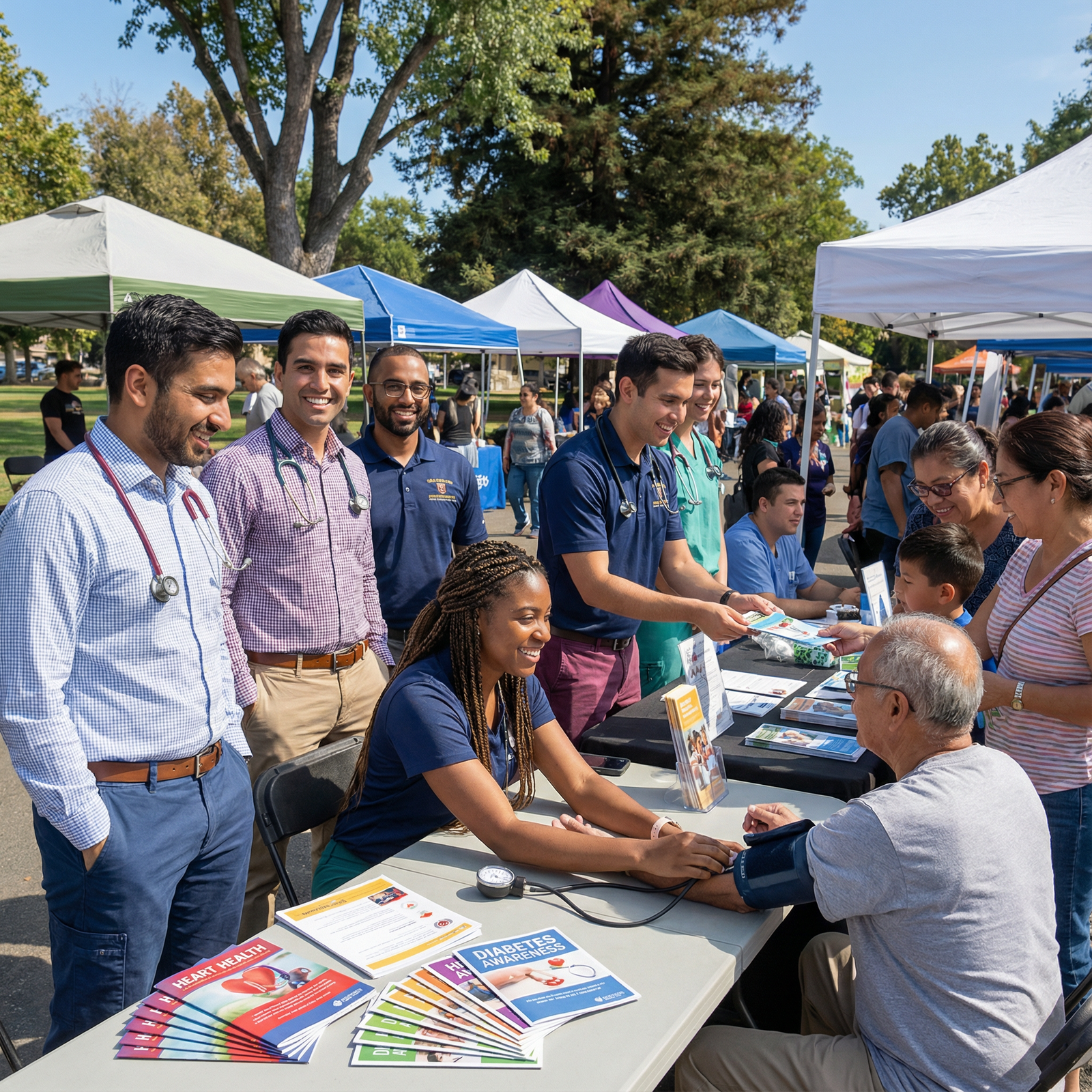
- Health Fairs and Screenings: Blood pressure checks, diabetes risk assessments, and health education at community centers or schools.
- School-Based Programs: Teaching children about nutrition, exercise, sexual health, or substance use in age-appropriate ways.
- Mobile Clinics or Free Clinics: Volunteering at student-run or community clinics offers early, supervised patient interactions and insight into healthcare access barriers.
These experiences are particularly powerful for:
- Deepening empathy and cultural humility
- Building comfort interacting with diverse patient populations
- Understanding how housing, transportation, food access, and policy shape health
Linking to Professional Development:
Community service experiences can form the backbone of your personal statement, demonstrating that your commitment to medicine is rooted in real patient and community needs, not just academic interest.
Legislative and Policy Advocacy
Student organizations are often the primary vehicle for engaging in health policy:
- Policy and Advocacy Committees: Many national organizations (e.g., AMSA, AMA-MSS, SNMA, specialty societies) have student sections focused specifically on legislative issues.
- Lobby Days and Capitol Visits: Students meet with legislators to discuss topics such as graduate medical education funding, reproductive health access, loan forgiveness, or immigrant health.
- Policy Writing and Resolutions: You can help draft resolutions that, if passed by larger organizations, become part of official policy platforms—and sometimes inform real legislation.
Actionable ways to get started:
- Join or form a health policy interest group at your institution.
- Attend a virtual or in-person advocacy training offered by national organizations.
- Participate in a “Call Your Legislator” campaign on a concrete issue (e.g., prior authorization reform, mental health parity).
- Document your experiences—they often yield strong, specific stories for interviews and essays.
Advocacy experience signals to residency programs that you understand healthcare beyond the exam room and are prepared to be a leader in system-level change.
5. Real-World Examples: How Student Organizations Transform Careers
American Medical Student Association (AMSA)
AMSA remains one of the most recognized examples of how Student Organizations can influence both individual careers and national conversations.
Key contributions:
- National Advocacy Campaigns: AMSA has organized campaigns on issues such as health equity, climate and health, LGBTQ+ health, reproductive justice, and reforming medical education.
- Skill-Building Institutes: Through local chapters and national meetings, AMSA offers advocacy bootcamps, policy writing workshops, and leadership academies.
- Networking Across Institutions: Students connect with peers nationwide, opening doors to multi-institution research, advocacy statements, or collaborative projects.
A tangible impact:
An AMSA member might start as a local chapter leader, attend a national conference, co-write a policy resolution on medical student debt, and eventually collaborate with attending physicians and lawmakers on broader reform.
Family Medicine Interest Group (FMIG) and Specialty Interest Organizations
Family Medicine Interest Groups exemplify how specialty-based organizations support career exploration and Advocacy:
- Clinical Skills Workshops: FMIGs often host workshops focusing on outpatient procedures, preventive care, and chronic disease management.
- Mentor Pairing: Students are matched with local family physicians in clinics, community health centers, or rural practices.
- Community-Oriented Projects: FMIGs frequently organize projects related to primary care issues: vaccination drives, maternal-child health fairs, or chronic disease self-management programs.
Similar models exist for nearly every specialty: internal medicine, pediatrics, surgery, psychiatry, OB/GYN, EM, neurology, and more. For each, student organizations:
- Introduce you to the specialty’s culture and day-to-day practice
- Provide research and shadowing opportunities
- Connect you with residents and fellowship-bound physicians
Actionable tip:
- If you’re undecided about your specialty, attend events from multiple interest groups during your first 1–2 years. Notice where you feel most energized and aligned.
6. Making the Most of Student Organizations: Practical Strategies
To ensure your involvement genuinely strengthens your Medical Education and Professional Development, be intentional.
Choose Organizations Strategically
When deciding where to invest your time, consider:
- Alignment with Goals: Does this organization support your interests in primary care, surgery, public health, research, or advocacy?
- Depth Over Breadth: It’s better to have 2–3 deep, meaningful involvements than a long list of superficial memberships.
- Leadership and Growth Potential: Are there clear pathways to leadership, mentorship, or unique projects?
For premed students, engaging with pre-health, volunteer, and advocacy groups in undergrad can show a clear, longitudinal commitment to service and medicine.
Set Clear Personal Objectives
Before committing, ask yourself:
- What specific skills do I want to gain (e.g., public speaking, research experience, advocacy training)?
- How many hours per week can I realistically contribute without harming my academic performance or well-being?
- What kind of impact do I want this involvement to have on my community and on my own growth?
Revisit these questions each semester and adjust your commitments accordingly.
Document Your Impact and Reflect
Throughout your involvement:
- Keep a running document of roles, responsibilities, outcomes, and what you learned.
- Note stories that illustrate your leadership, resilience, teamwork, or Advocacy—these will serve you in personal statements and interviews.
- Ask for feedback from peers and faculty advisors after major projects to refine your skills.
This reflective approach turns your organizational work into clear, demonstrable strengths that residency programs can appreciate.
FAQ: Student Organizations, Medical Education, and Your Career
1. What types of student organizations can I expect in premed and medical school?
You’ll typically find:
- Specialty interest groups (e.g., surgery, pediatrics, psychiatry, EM, family medicine)
- National medical organizations’ student chapters (e.g., AMSA, AMA, SNMA, LMSA, AMWA, specialty societies)
- Community service and public health organizations (e.g., free clinics, global health groups, health equity coalitions)
- Advocacy and policy groups (focusing on health policy, social justice, or specific patient populations)
- Research and academic groups (journal clubs, scholarly interest societies)
- Identity- and culture-based organizations that support diversity, inclusion, and belonging
- Premed organizations at the undergraduate level that mirror or connect to medical school groups
2. How can I get involved if I feel overwhelmed by coursework?
Start small and intentional:
- Attend one general body meeting or introductory fair to explore options.
- Choose just one organization that strongly aligns with your interests or values.
- Volunteer for a limited, clearly defined role (e.g., help with a single event, join one committee).
- As you adjust to your academic load, you can gradually increase your involvement or responsibilities.
Remember: quality, not quantity, is what matters—for both your learning and your residency application.
3. How do leadership and advocacy roles in student organizations influence residency applications?
Residency programs look for evidence that you can:
- Work effectively in teams
- Take initiative and lead projects to completion
- Communicate clearly with patients, peers, and interdisciplinary colleagues
- Understand healthcare systems and advocate for better care
Substantive leadership or Advocacy roles—especially those with measurable outcomes (e.g., a new clinic shift launched, a policy resolution passed, a community program expanded)—can be highlighted in your ERAS application, CV, personal statement, and interviews.
4. What if my school doesn’t have the organization I’m interested in?
You can:
- Start a new organization or chapter with support from a faculty advisor and student affairs. National groups often provide toolkits for launching student sections.
- Collaborate with nearby institutions or online communities to join regional or virtual groups.
- Partner with existing organizations to create a new committee or project that fills the gap (e.g., adding a health policy committee to a general interest group).
Founding or revitalizing an organization is often viewed very positively by residency programs, as it showcases initiative, leadership, and project management skills.
5. How can I balance student organizations with self-care and avoiding burnout?
- Set a weekly time limit for extracurriculars and stick to it.
- Schedule protected time for sleep, exercise, and non-medical hobbies.
- Communicate boundaries clearly with your organizations—“I can take on this project, but not that one.”
- Choose roles that energize rather than deplete you—if a position consistently feels draining, reassess and consider stepping back.
- Use wellness or peer-support groups themselves as part of your self-care strategy.
By engaging thoughtfully in Student Organizations throughout your premed and medical school years, you are not just padding a CV—you’re building a network, a skill set, and a professional identity rooted in service, advocacy, and leadership. When you arrive at residency interviews, you’ll have more than grades and test scores—you’ll have stories of real impact that show who you are as a future physician.