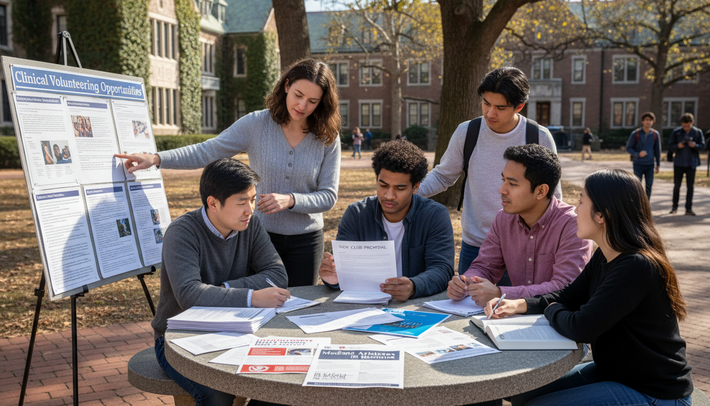
No lab coat Instagram moment. No pipettes. And still you can publish.
If you're a premed or early med student watching your classmates stack PubMed citations from their undergrad PI's lab, here's the truth: residency programs don't care where you did the research. They care that you did it, understood it, and can talk about it intelligently.
Let's answer the question you're actually asking.
This article is for educational purposes only. It is not financial advice, not legal advice, and not tax advice. Figures vary by individual circumstances, so consult a qualified professional before acting.
Why Research Matters (Even Without a Traditional Lab Background)
Residency programs increasingly expect research on applications. Not as a bonus. As a filter.
For competitive specialties, it's non-negotiable. Dermatology applicants averaged 20+ research items in recent matches. Ortho, ENT, plastics? Same story. Even for primary care, 1-2 publications makes you stand out in a sea of identical 240+ Step 2 scores and "passionate about patient care" personal statements.
Publications do two things for you:
- They prove you can finish something academic. Start to finish. Not just shadow.
- They give your interviewers something to actually talk about beyond "why this specialty?"
The problem? Most students think research = bench lab + 2-year commitment + PI who already knows you. If you don't have that access, first-gen, community college background, no home research institution, you feel blocked before you start.
That's where student orgs come in. AMSA and SNMA aren't just resume padding and free pizza lunch talks. They run real, structured, peer-reviewed research pathways designed for people exactly in your position.
If you're concerned about demonstrating meaningful involvement, learn what program directors actually look for in AMSA and SNMA leadership roles.
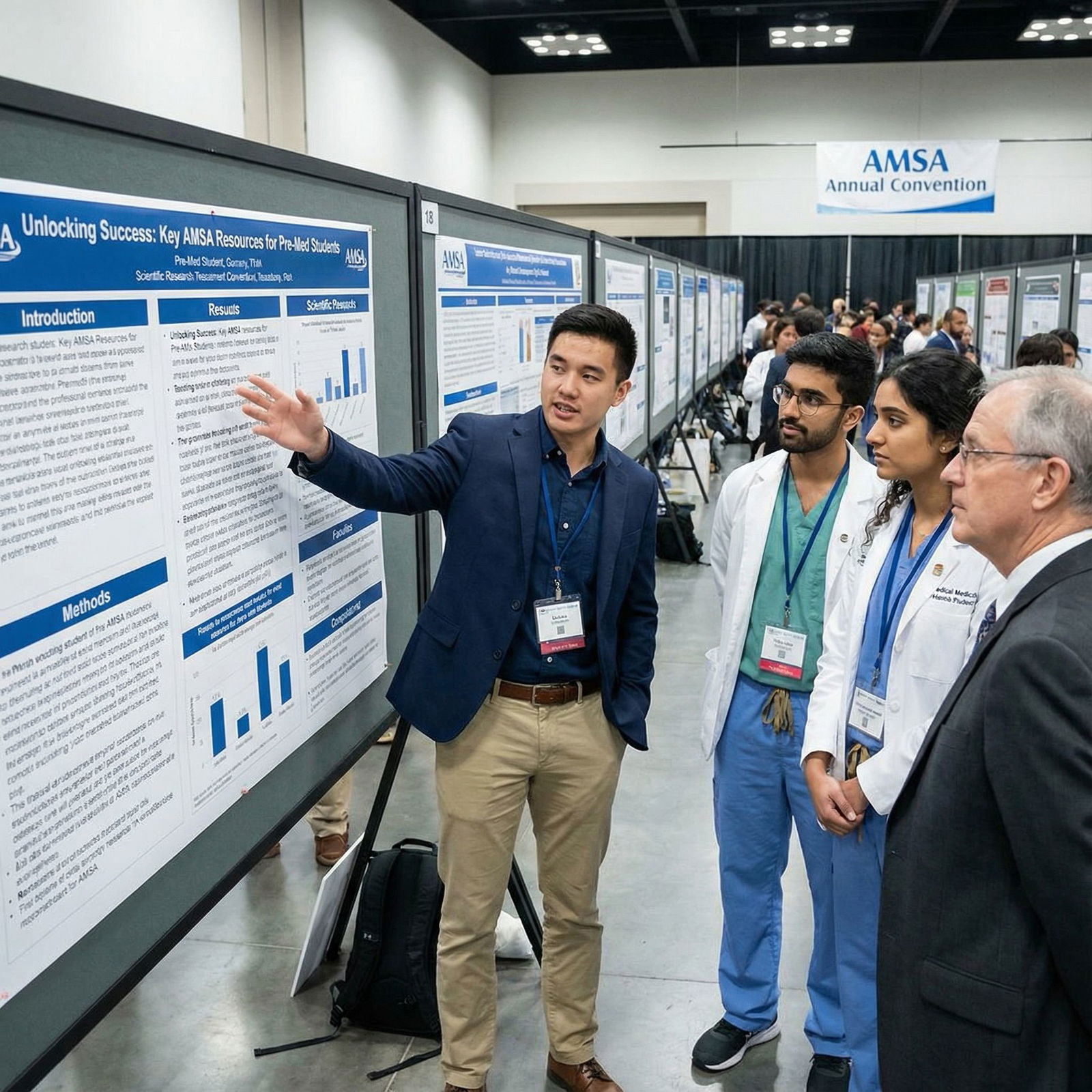
What AMSA and SNMA Actually Offer: Your Research Launchpads
Forget the idea that these groups just do advocacy. Both run legitimate research infrastructure.
AMSA - American Medical Student Association: This is your policy and health systems engine. AMSA runs national committees, advocacy scholar programs, and research fellowships focused on things like pharmaceutical reform, primary care access, reproductive health policy, medical education. Their projects tend to be literature-based, survey-based, and policy analysis. Perfect if you like writing and critical thinking more than lab work. They regularly sponsor abstract submissions to their national convention and help convert policy briefs into publishable manuscripts.
SNMA - Student National Medical Association: SNMA's wheelhouse is health equity and community-based research. Think community health needs assessments, health disparities outcomes, pipeline program effectiveness, culturally competent care interventions. Their chapters often have direct partnerships with community organizations and clinical sites that need data collected. That's gold for original research that doesn't require an NIH grant.
Both give you what you actually need as a beginner:
- Built-in mentorship structure. Not cold-emailing 30 PIs hoping one replies.
- Project infrastructure, existing IRB protocols, datasets, or systematic review registrations you can plug into.
- Publication support, senior authors who know how to navigate journals and who WANT you to publish.
This is not informal club work. I've seen SNMA MAPS projects turn into JAMA Network Open papers. I've seen AMSA PharmFree Scorecard data become peer-reviewed manuscripts. Program directors recognize these orgs.
Types of Projects That Actually Lead to Publications
You don't need mice. You need a project type that matches your constraints.
Here are the high-yield starters. Ranked by beginner-friendliness.
1. Systematic Reviews and Meta-Analyses, The Great Equalizer Most achievable. No IRB needed. No patient recruitment. You need access to PubMed and Covidence or Rayyan. SNMA and AMSA chapters often have registered titles waiting for hands. You learn PRISMA, you learn critical appraisal, you get a PubMed-indexed paper. Yes, they're work. 50-100 hours. But it's work you control.
2. Survey-Based Health Services Research AMSA loves this. Attitudes toward single-payer, burnout in medical students, knowledge gaps on reproductive health. Tools like REDCap and Qualtrics are free through your school. Response rate is your enemy, but even 150 responses can be publishable if the question is good.
3. Community Health Needs Assessments Classic SNMA strength. Partner with a local church health fair or free clinic. Collect blood pressure, diabetes screening, social determinants data. You now have original data. Write it up as a community health paper. Journals love this, especially Cureus, J Health Care for the Underserved, and similar.
4. Policy Briefs Converted to Manuscripts AMSA committees write policy briefs constantly. A good brief + 10 more references + a discussion section = perspective or commentary piece in a peer-reviewed journal. Lower impact factor, sure. Still counts on ERAS.
5. Case Reports and Case Series You don't need a lab for these. You need an interesting patient on clerkships and an attending who will vouch. AMSA and SNMA mentors can help you write it properly and find the right journal. Not glamorous. But it's PubMed.
6. Literature Reviews on Underrepresented Topics SNMA specifically encourages reviews on topics ignored by mainstream literature, sickle cell care barriers, maternal mortality in Black women, diversity in clinical trials. Those gaps are publication opportunities.
Pick ONE to start. Don't try to be the systematic-review-and-survey-and-community-fair person.
Step-by-Step: How to Get Started This Semester
Not next year. This semester. This week.
1. Identify your interest area. Be selfish here. If you want surgery, don't join a psychiatry policy project just because it's available. Alignment matters for residency. Pick health equity, primary care innovation, surgical disparities, whatever fits your story.
2. Reach out to the research liaison. Every active AMSA or SNMA chapter has one. If they don't, email the chapter president. Script: "Hi, I'm a [MS1/MS2] interested in getting involved in a project that leads to publication. Do you have any ongoing systematic reviews or community health projects needing contributors? Happy to commit 5 hours/week." Short. Professional. Shows you know what you want.
3. Join an existing project first. I know. You want your own first-author New England Journal idea. Bad move. Contribute to something already moving as author 4-6. Learn the process. Show you're reliable. Then you'll get invited to lead the next one.
4. Propose your own idea only if it's tight. If you have an idea, frame it like this: Question, Population, Why it matters, Feasibility. "I want to study food insecurity screening rates in our student-run clinic, we have 200 charts, I can review them in 2 months." That's fundable with time.
5. Lock down a faculty mentor through the org. This is the cheat code. Don't cold-email strangers. Ask your AMSA/SNMA advisor: "Who has published with students before and actually responds to emails?" One good mentor who answers in 48 hours beats three big names who ghost you.
6. Set deliverables, not vibes. In your first meeting: "I'll have CITI done by Friday, literature search by week 3, extraction table by week 6." Put it in writing. Medical student research dies from vagueness.
Timeline: From First Meeting to Pubmed-Indexed Publication
Let me kill the fantasy: you will not get published in 2 months. Anyone promising that is selling something.
Realistic? 9-12 months. Here's how it actually breaks down.
Months 1-2: Foundation Join project. Get CITI training done (4 hours, boring but required). Start deep literature review. If it's a systematic review, register on PROSPERO. If survey, finalize questions and submit IRB exemption. Most student org projects are exempt or expedited.
Months 3-4: Grinding Phase Data collection or protocol development. For reviews, this is title/abstract screening, thousands of titles. For community projects, this is health fairs and data entry. This is where 50% of students quit. Don't.
Months 5-6: Making Sense of It Data analysis. For beginners, this is descriptive stats and maybe a t-test or chi-square. You don't need fancy modeling. Then draft writing. Write methods first. It's easiest. Then results. Then introduction and discussion last.
Months 7-8: The Rewrite Internal review. Your mentor will shred your draft. Good. That's learning. Revise. Format for target journal. Submit.
Months 9-12: Hurry Up and Wait Peer review takes 2-4 months minimum. You'll get revisions. Usually minor or major, rarely outright rejection if target journal was chosen well. Revise and resubmit. Then acceptance. Then online ahead of print. Then PubMed indexing. Then you can scream.
Total: 9-12 months if you're consistent. Plan backwards from ERAS. If you apply September 2026, you need to start by September 2025 at latest.
Making Your Research Competitive for Residency Applications
A Cureus publication listed right can beat a NEJM middle author where you did nothing. Strategy matters.
Choose topics that align with your intended specialty. Applying EM? Do a project on ED boarding or health disparities in emergency care. Applying peds? Community health, vaccine hesitancy. Program directors skim for relevance. A coherent story wins.
Aim for PubMed-indexed when possible. Not all journals are indexed. Check NLM catalog before you submit. If it's not PubMed-indexed, it still counts, but it's weaker. AMSA/SNMA mentors know which journals are indexed and student-friendly: Cureus, Journal of Student-Run Clinics, PLOS One, BMJ Open, Journal of Racial and Ethnic Health Disparities.
Present at national conferences. AMSA national, SNMA AMEC, AAMC, regional ACP. Abstract acceptance is much easier than manuscript acceptance and gives you a presentation for ERAS while you wait. Programs love seeing you stood at a poster and talked about data.
Know your contribution cold. On ERAS you'll list authorship position, but in interviews they'll ask: "What exactly did YOU do?" Bad answer: "I helped with the project." Good answer: "I screened 2,400 abstracts, extracted data from 45 studies, and wrote the first draft of the methods and results, our PI guided the analysis." Specifics. Ownership.
Letters should mention it. Ask your research mentor to write one letter that specifically comments on your scholarly rigor, reliability, curiosity. One sentence: "Ms. X demonstrated graduate-level understanding of systematic review methodology", that's gold.
Quality of your contribution matters way more than journal prestige. Every time.
Your Publication Record Starts Now
Look. You don't need a traditional lab. You don't need a famous PI. You don't need to have started at age 19 in undergrad.
You need a structure that actually gets students published. AMSA and SNMA provide exactly that, if you use them correctly.
Systematic reviews and community health projects. That's your entry point. 4-8 hours a week. 9-12 months. One real, PubMed-indexed, you-contributed-to-it publication.
These publications are legitimate. They're peer-reviewed. Residency PDs take them seriously because they should, they show initiative, completion, and scholarly thinking outside the standard pipeline.
Stop telling yourself you'll start research when you have more time. You won't have more time. Clerkships are worse.
Email your AMSA or SNMA research liaison this week. Join one project. Finish it. That's how publication records start.