SNMA: A Gateway to Mentorship and Support for Underrepresented Students in Medicine
Introduction: Why Organizations Like SNMA Matter
Entering medicine is demanding for every aspiring physician—but for students from historically underrepresented and marginalized backgrounds, the path can feel especially isolating and uncertain. Limited representation in faculty and leadership, systemic inequities, imposter syndrome, financial strain, and lack of tailored Medical Student Support often compound the already intense pressures of premed and medical training.
The Student National Medical Association (SNMA) exists to change that reality.
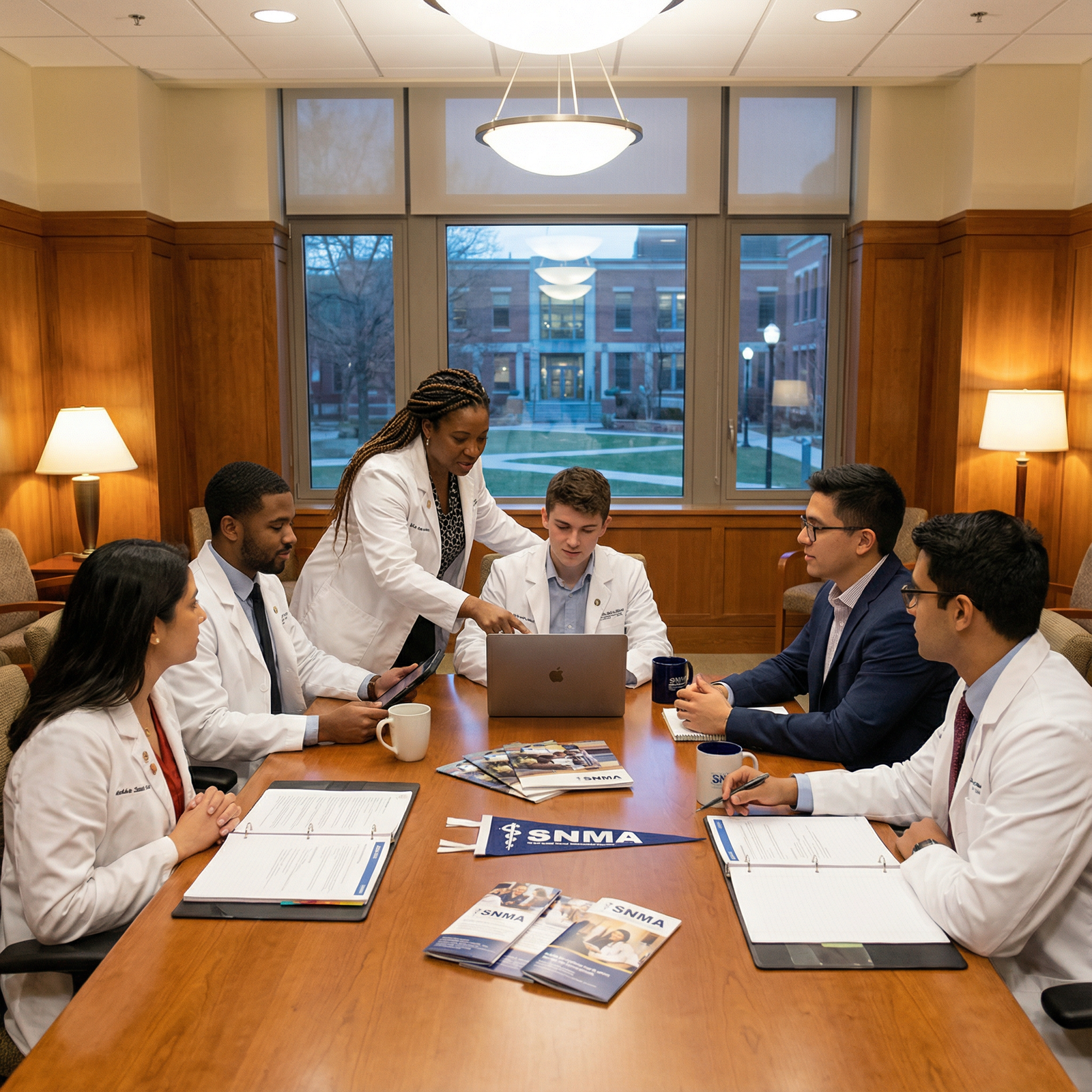
SNMA has become a cornerstone organization for Mentorship in Medicine and Diversity in Healthcare, creating spaces where underrepresented students are seen, supported, and equipped to succeed. Through mentorship, community-building, Healthcare Advocacy, leadership development, and pipeline programs, SNMA helps shape a more diverse, equitable, and culturally responsive healthcare workforce.
This article explores how SNMA serves as a powerful gateway to mentorship and support—from premed through residency preparation—and offers concrete, actionable ways you can leverage SNMA at every stage of your medical journey.
What Is the SNMA? Mission, History, and Impact
The Student National Medical Association (SNMA) is the oldest and largest independent, student-run organization in the United States focused specifically on supporting current and future physicians of color and other underrepresented groups in medicine.
Founded in 1964 by medical students from Meharry Medical College and Howard University College of Medicine, SNMA emerged during the Civil Rights era to address the stark underrepresentation of Black physicians and the profound health inequities facing communities of color. Today, it has grown into a national network with:
- Medical school and premed chapters nationwide
- Thousands of members at different stages of training
- A strong record of leadership in both Diversity in Healthcare and Healthcare Advocacy
SNMA’s Mission and Core Focus
SNMA’s mission is to “support current and future underrepresented minority medical students, address the needs of underserved communities, and increase the number of clinically excellent, culturally competent, and socially conscious physicians.”
Practically, this mission plays out across four core pillars:
1. Mentorship in Medicine
SNMA prioritizes structured and informal mentorship across the entire pipeline:
- Premedical students mentored by medical students
- Early medical students guided by upperclass peers and residents
- Medical students supported by physicians and academic leaders
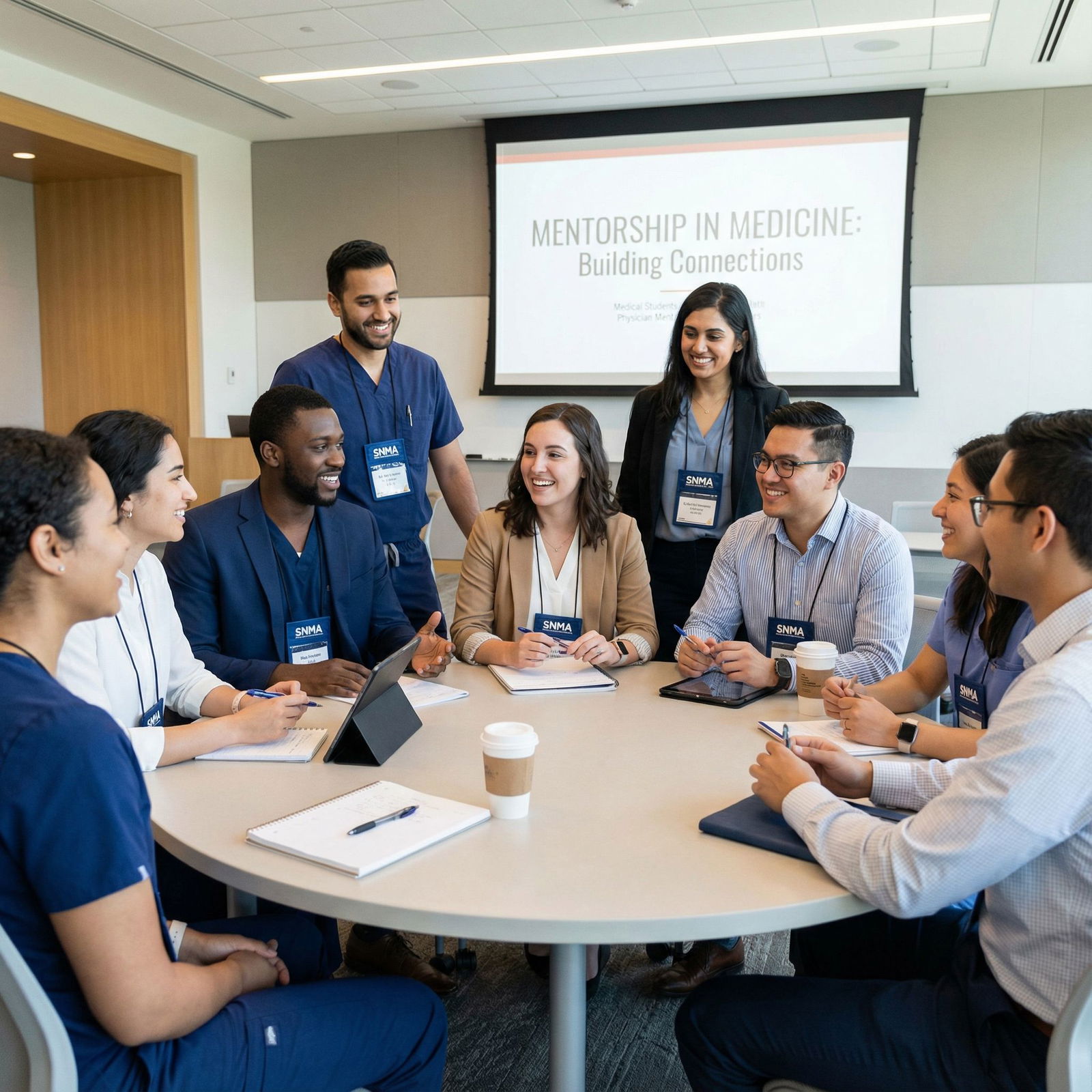
This layered mentorship ecosystem helps students not only survive but thrive during premed coursework, MCAT prep, clinical rotations, and residency applications.
2. Healthcare Advocacy and Health Equity
SNMA has a long-standing role in Healthcare Advocacy, focusing on:
- Reducing health disparities in underserved communities
- Promoting culturally responsive care
- Addressing structural racism in medical education and healthcare delivery
- Encouraging members to become physician-advocates and community leaders
3. Community Service and Pipeline Development
SNMA chapters organize outreach and service projects that:
- Engage K–12 and undergraduate students through pipeline programs
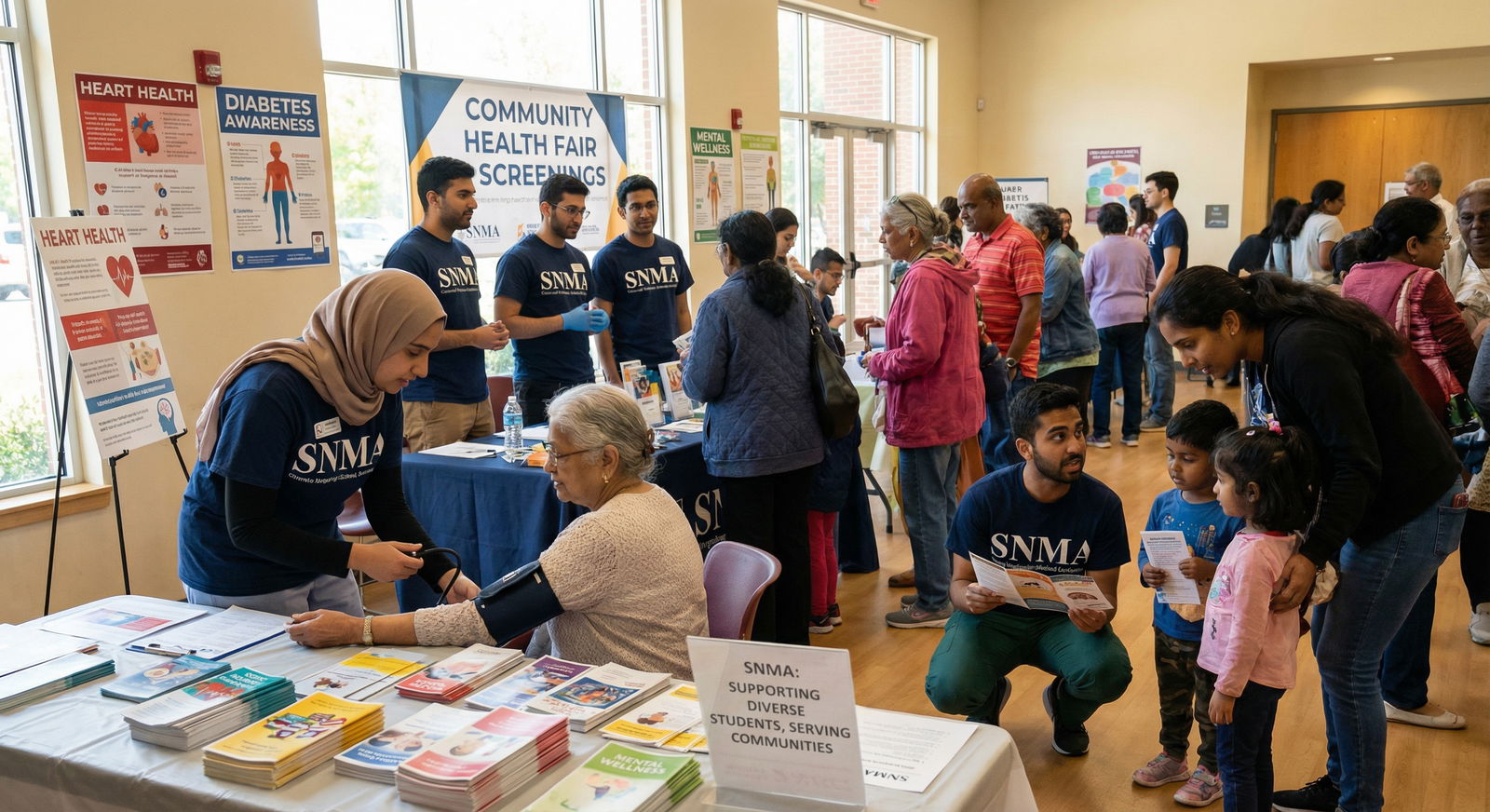
- Provide health education and screenings in underserved communities
- Partner with local organizations, churches, and schools
These activities support Diversity in Healthcare at its roots—by inspiring and preparing the next generation of underrepresented students to pursue medicine.
4. Professional Development and Leadership
SNMA also serves as a hub for Professional Development, offering:
- Leadership roles within local, regional, and national structures
- Workshops on clinical skills, research, networking, and career planning
- Exposure to a wide range of specialties and practice environments
Through these initiatives, SNMA helps members build confidence, competence, and a strong professional identity.
Why Mentorship in Medicine Is Especially Critical for Underrepresented Students
Mentorship is important for every aspiring physician. But for underrepresented students in medicine—whether by race, ethnicity, socioeconomic background, first-generation status, immigration history, gender identity, sexual orientation, disability, or other identities—it can be transformative.
Unique Challenges Underrepresented Students Face
Underrepresented students commonly encounter:
Limited Representation
Few faculty or senior physicians share their background, making it harder to envision themselves in similar roles.Implicit Bias and Microaggressions
Subtle (and sometimes overt) messages may question their belonging or capabilities.Lack of Informal Networks
Many students do not have family members in medicine, making insider knowledge and connections harder to access.Financial and Logistical Barriers
Costs of applications, test prep, away rotations, and memberships can be heavy burdens.
Mentorship directly addresses many of these barriers.
How Mentorship Promotes Success and Well-Being
Mentorship in Medicine is more than academic advice—it’s holistic support. Strong mentors help with:
Academic and Career Guidance
- Choosing undergraduate courses and majors
- Strategizing MCAT preparation
- Selecting medical schools and crafting a competitive application
- Identifying specialties that align with interests, values, and lifestyle
- Planning for research, leadership roles, and away rotations
Professional Development and Networking
- Introducing mentees to physicians, researchers, and program directors
- Encouraging attendance at conferences and specialty interest meetings
- Supporting publication and presentation opportunities
Confidence Building and Imposter Syndrome Management
- Affirming students’ belonging in medicine
- Normalizing struggles and setbacks
- Sharing their own stories of overcoming obstacles
Representation and Identity Support
- Providing role models who reflect students’ backgrounds and values
- Offering safe spaces to discuss racism, discrimination, or identity-related stress
- Demonstrating that it is possible to be both authentically yourself and a successful physician
By systematically connecting students to mentors, SNMA helps transform what might feel like an isolating journey into one supported by a vibrant, engaged community.
SNMA’s Mentorship and Support Programs: From Premed to Residency Prep
SNMA’s strength lies in the breadth and depth of its structured programs, combined with the grassroots energy of its local chapters. While offerings may vary by campus, several key initiatives operate nationally and regionally.
1. Big Brother / Big Sister and Near-Peer Mentorship
The Big Brother/Big Sister model is a hallmark of SNMA’s approach.
For Medical Students:
First-year medical students are paired with second- or third-year “Bigs” who have recently navigated pre-clinicals, Step/Level exams, and early clinical exposure. These mentors can:- Share study strategies and board prep tips
- Help mentees adapt to the culture and expectations of their specific school
- Offer advice on balancing academics with well-being
For Premed Students (via MAPS):
SNMA’s affiliated premed arm, the Minority Association of Premedical Students (MAPS), often pairs undergraduates with medical student mentors who:- Demystify the premed timeline
- Review personal statements and applications
- Offer guidance on extracurriculars, research, clinical exposure, and shadowing
These near-peer relationships are powerful because mentors still vividly remember the challenges of the earlier phases and can offer practical, real-time advice.
2. Peer Mentorship and Study Communities
Beyond formal pairings, SNMA chapters foster:
- Peer-led tutoring and review sessions for challenging courses or exam blocks
- Board study groups where students prepare together for USMLE/COMLEX
- Accountability groups that set weekly goals and check in on progress
These peer-support structures reinforce that success is not a solo endeavor—and they can be especially valuable for students who may feel pressure to overperform or hide their struggles.
3. Professional Development Workshops and Panels
SNMA invests heavily in Professional Development programming that addresses the entire training pipeline:
Premed-Focused Sessions
- How to build a competitive application as a first-gen or non-traditional student
- Financial planning for application cycles
- Choosing schools that align with your values and support systems
Medical Student-Focused Sessions
- Crafting a strong CV and personal statement
- Navigating clerkships as an underrepresented student
- Specialty-specific panels (e.g., surgery, psychiatry, pediatrics, OB/GYN) featuring diverse physicians
- Residency application workshops: ERAS, interviews, and rank lists
These events frequently include physicians, residents, and faculty passionate about Diversity in Healthcare and healthcare justice, exposing students to mentors and role models across a range of specialties and paths.
4. Regional and National SNMA Conferences
SNMA conferences are among the most impactful experiences many members have.
National Annual Medical Education Conference (AMEC)
AMEC draws thousands of medical and premed students, residents, and physicians for:- Keynote speakers and plenary sessions on health equity and Healthcare Advocacy
- Specialty interest tracks and residency fairs
- Mock interviews and CV/personal statement review sessions
- Networking receptions with program directors and national leaders
Regional Conferences and Leadership Institutes
Smaller, regional conferences can be more intimate, making it easier to:- Form deeper mentoring relationships
- Present research or posters for the first time
- Practice leadership and public speaking
Attending even one SNMA conference can significantly expand a student’s network, insight, and confidence.
5. Community Service and Pipeline Programs
SNMA’s mission extends beyond its members to the communities they serve.
Many chapters engage in:
- Health fairs and screening events in underserved neighborhoods
- School-based outreach to middle and high school students, sharing pathways to medicine
- Mentorship for younger students, helping them build academic and personal readiness for STEM careers
For members, these activities:
- Strengthen clinical and communication skills
- Reinforce the importance of culturally relevant care
- Build a strong service record that aligns with mission-driven residency programs
6. Leadership Opportunities Within SNMA
SNMA is also a powerful platform for cultivating future leaders in medicine.
Students can serve as:
- Local chapter officers (e.g., president, mentorship chair, community service chair)
- Regional leaders coordinating programming across several schools
- National officers shaping priorities, advocacy agendas, and conference themes
Leadership within SNMA offers real-world experience in:
- Team management
- Strategic planning
- Budgeting and fundraising
- Public speaking and advocacy
These skills directly translate into success in residency, academic medicine, and healthcare leadership roles.
Real-World Impact: Stories of Mentorship and Transformation
Stories help illustrate how SNMA’s mission plays out on the ground. While each student’s path is unique, the themes of mentorship, advocacy, and Professional Development are consistent.
Dr. Jason H. Johnson: From Uncertainty to Orthopedic Surgery
During his first year of medical school, Dr. Jason H. Johnson was drawn to surgery but unsure whether he “belonged” in a historically non-diverse, competitive specialty like orthopedics. Through his SNMA chapter, he:
- Met a Black orthopedic surgeon at an SNMA conference
- Joined the Big Brother/Big Sister program and was paired with a fourth-year student applying to orthopedics
- Received tailored advice on:
- Research opportunities to pursue
- How to seek out mentors in the orthopedics department
- Navigating away rotations and audition electives
With this support, Dr. Johnson built a strong application, gained meaningful letters of recommendation, and felt prepared to excel during interviews. He ultimately matched into a competitive orthopedic surgery residency and now mentors SNMA students following in his footsteps.
Dr. Maria Rodriguez: Finding Community and Purpose in Public Health
As a first-generation Latina medical student, Dr. Maria Rodriguez initially felt isolated and out of place at her institution. Joining SNMA changed her experience:
- She attended local SNMA meetings and found peers with shared values and experiences.
- Through an SNMA public health and advocacy panel, she connected with a mentor passionate about community-based participatory research.
- With her mentor’s guidance, she:
- Launched an SNMA-led health education program at a local community center
- Presented a poster at an SNMA national conference
- Built a record of community-engaged scholarship
Today, Dr. Rodriguez is a respected public health advocate and physician-leader working to reduce health disparities. She credits SNMA with helping her find her voice, community, and calling in Healthcare Advocacy.
How to Get the Most Out of SNMA as a Premed or Medical Student
SNMA is most powerful when you engage intentionally. Whether you are just starting your premed journey or already deep into clinical rotations, there are concrete steps you can take to maximize the benefits of membership.
For Premed Students
Join a MAPS Chapter (or Help Start One)
- Look for a Minority Association of Premedical Students (MAPS) chapter at your college or university.
- If one doesn’t exist, consider working with advisors and local medical schools to start a chapter with SNMA’s guidance.
Seek a Medical Student Mentor Early
- Attend MAPS–SNMA joint events.
- Ask your chapter officers about structured mentorship pairings.
- Prepare specific questions about coursework, MCAT strategy, and building a balanced premed profile.
Engage in Service Aligned With Your Values
- Join health education, tutoring, or outreach projects that resonate with you.
- Reflect on how these experiences shape your understanding of healthcare inequities and your future role as a physician.
Attend an SNMA Conference if Possible
- Many conferences offer dedicated premed tracks.
- Apply for travel scholarships or fee waivers if cost is a barrier.
- Use the opportunity to network with admissions representatives and current medical students.
For Medical Students
Get Involved in Your Campus Chapter
- Attend meetings consistently.
- Volunteer for mentorship, service, or academic support initiatives.
- Build relationships with classmates and upperclass students.
Request Multiple Layers of Mentorship
Consider building a “mentorship team,” including:- A peer mentor in your year or one year ahead
- A senior medical student or resident in your area of interest
- A faculty mentor who understands your goals and values
Use SNMA for Specialty Exploration and Networking
- Attend specialty-specific panels and Q&A sessions.
- Ask SNMA leaders to connect you with alumni in your desired field.
- Follow up with potential mentors by email to schedule one-on-one conversations.
Take on Leadership Roles Thoughtfully
- Choose roles that align with your interests (e.g., mentorship chair, community service chair, conference coordinator).
- Be realistic about your bandwidth and protect your academic and personal well-being.
- Reflect on how leadership experiences can support your long-term goals.
Leverage SNMA for Residency Preparation
- Attend residency prep workshops and mock interview sessions.
- Ask SNMA physicians to review your personal statement and CV.
- Talk with recent graduates about their application strategies, program cultures, and interview experiences.
SNMA’s Role in Advancing Diversity in Healthcare and Health Equity
SNMA is not only about helping individual students succeed; it is also fundamentally about transforming the healthcare system.
Building a More Representative Physician Workforce
Research consistently shows that:
- Patients often experience better communication and trust when treated by providers who share similar backgrounds or who demonstrate strong cultural humility.
- A more diverse physician workforce is associated with improved access to care in underserved communities.
By supporting underrepresented students from premed through residency, SNMA contributes directly to a more representative and responsive healthcare system.
Training Physician-Advocates
Through conferences, workshops, and community-focused initiatives, SNMA nurtures a generation of physicians who:
- Recognize how structural racism, poverty, and policy shape health
- Engage in Healthcare Advocacy at local, state, and national levels
- Champion reforms in medical education and healthcare delivery
This dual focus—supporting individual career success while advancing collective health equity—is what makes SNMA uniquely powerful.
Frequently Asked Questions About SNMA and Mentorship in Medicine
1. Who can join SNMA or MAPS, and do I need to identify with a specific group?
SNMA and MAPS primarily focus on supporting students who are underrepresented in medicine, including (but not limited to) Black, Latinx, Native/Indigenous, and certain Asian and Pacific Islander communities, as well as those from low-income, first-generation, and other marginalized backgrounds.
However, membership is typically open to all students who are committed to promoting Diversity in Healthcare, supporting underserved communities, and advancing health equity—regardless of race or ethnicity. If you share these goals, you are welcome.
2. What resources does SNMA provide specifically for mentorship and Medical Student Support?
SNMA offers multiple avenues of mentorship and support, including:
- Big Brother/Big Sister and near-peer mentorship programs
- Premed–medical student mentorship through MAPS
- Faculty and physician mentoring networks
- Academic support, study groups, and board review sessions
- Residency preparation workshops, mock interviews, and CV/personal statement review
Many chapters also maintain group chats, listservs, or Slack channels where members can ask questions, share resources, and support each other in real time.
3. How do I join SNMA, and is there a cost?
You can join SNMA by:
- Visiting the national SNMA website and registering as a member.
- Connecting with your local SNMA or MAPS chapter and completing any chapter-specific sign-up.
There is typically a membership fee at the national level, and sometimes a smaller chapter fee. Many students find that the benefits—mentorship, networking, Professional Development, and community—far outweigh the cost. Some chapters offer fee assistance or scholarships for students with financial need.
4. How can involvement in SNMA help my residency application?
Residency programs increasingly value applicants who:
- Demonstrate sustained commitment to service and health equity
- Show leadership and teamwork skills
- Have strong mentorship and professional networks
Through SNMA, you can:
- Gain leadership positions and meaningful volunteer/service experiences
- Connect with residents and attendings in your target specialty
- Receive targeted guidance on choosing programs, crafting a compelling personal statement, and preparing for interviews
These experiences not only strengthen your application on paper but also help you articulate a clear, authentic narrative about who you are and why you are pursuing medicine.
5. I feel overwhelmed and unsure where to start. What’s the first step I should take?
Start small and concrete:
- Look up your school’s SNMA or MAPS chapter online or via your student organizations office.
- Attend one meeting or event—no need to commit to anything more initially.
- Introduce yourself to one chapter leader and mention your interest in finding a mentor or learning more about the organization.
- Follow up with that person via email or group chat, and ask about upcoming mentorship pairings or programs.
From there, you can decide how involved you want to be. Even modest participation can yield substantial benefits in terms of support, connection, and clarity about your path.
SNMA stands at the intersection of mentorship, community, advocacy, and opportunity for underrepresented students in medicine. By intentionally engaging with its programs and people, you’re not just investing in your own success—you’re contributing to a more just, inclusive, and effective healthcare system for everyone.