Transform Your Medical Career: The Unexpected Perks of Joining AMSA
Introduction: Why AMSA Matters More Than You Think
The path to becoming a physician is demanding: dense syllabi, back-to-back exams, clinical responsibilities, and the constant pressure to stand out in an increasingly competitive environment. Amid this intensity, many students focus solely on grades and board scores—while overlooking one of the most strategic tools for growth and differentiation: involvement in a national student organization like the American Medical Student Association (AMSA).
AMSA is far more than another line on your CV. When used intentionally, it can become a powerful engine for medical education, networking, career development, and advocacy. It offers a structured way to build leadership skills, explore clinical and non-clinical interests, and connect your classroom learning with real-world impact.
This guide unpacks the unexpected perks of joining AMSA—especially for premeds and medical students who want to shape their careers proactively rather than passively reacting to the next exam or application cycle.
What Is AMSA and How Does It Support Your Medical Journey?
The American Medical Student Association, founded in 1950, is one of the largest independent organizations for premedical and medical trainees in the United States. Its mission is to empower future physicians to advocate for a better, more equitable healthcare system—and to support students as they develop into skilled, ethical, and engaged professionals.
Who Can Join AMSA?
AMSA is structured to support students across the training spectrum:
- Premedical students (undergraduates or post-baccs)
- Medical students (MD and DO programs)
- Residents and fellows
- Allied members (including international students and physicians aligned with AMSA’s mission)
This multi-level structure means you can stay engaged longitudinally—from your first anatomy lab to your first attending job—and build a consistent narrative of advocacy and leadership across your entire career.
How AMSA Fits Into Your Medical Education and Career Development
AMSA is particularly valuable for students in the premed and medical school preparation phase:
- Clarifies career goals (specialty interests, practice settings, and non-clinical paths)
- Provides exposure to topics underemphasized in the traditional curriculum (e.g., health policy, global health, physician wellness)
- Offers an early platform for leadership and advocacy
- Helps you build a professional network before residency applications
Think of AMSA as a structured ecosystem where you can experiment, grow, and make meaningful contributions while simultaneously strengthening your residency and career prospects.
Networking Opportunities: Building a Powerful Professional Community

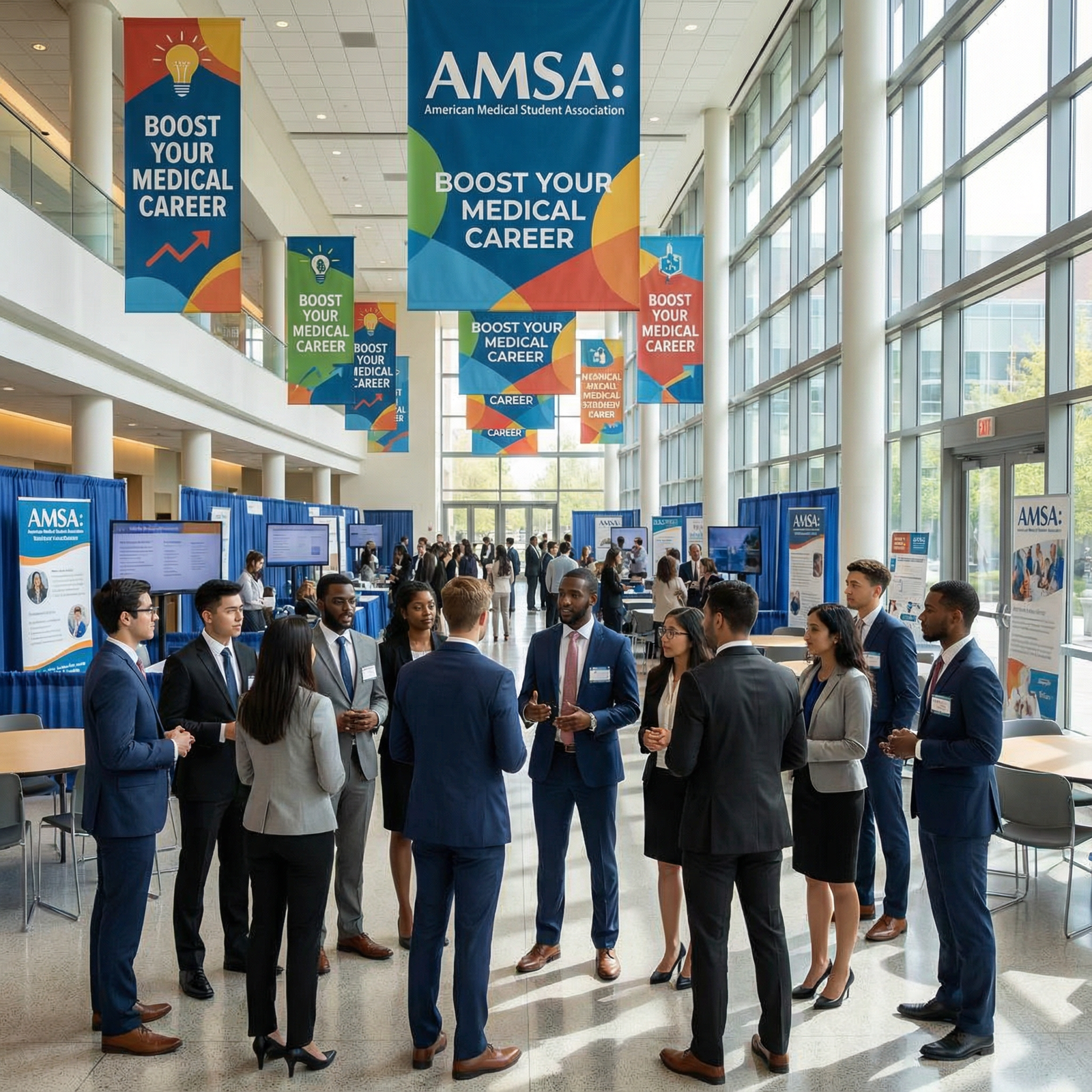
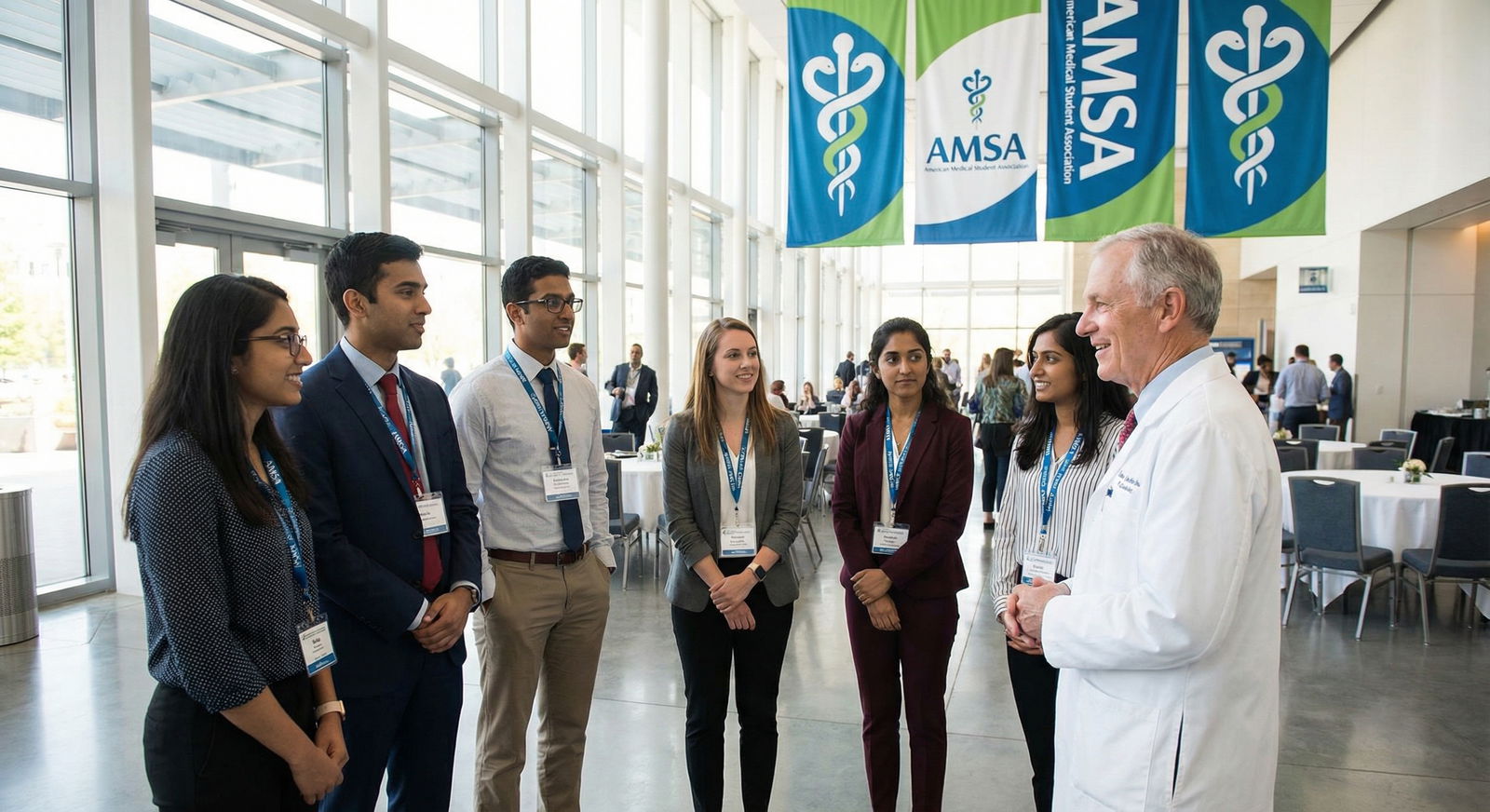
One of the most immediate and impactful benefits of joining AMSA is access to a robust, national network of students, residents, and physicians who share your interests and values.
Meeting Influencers and Mentors in Medicine
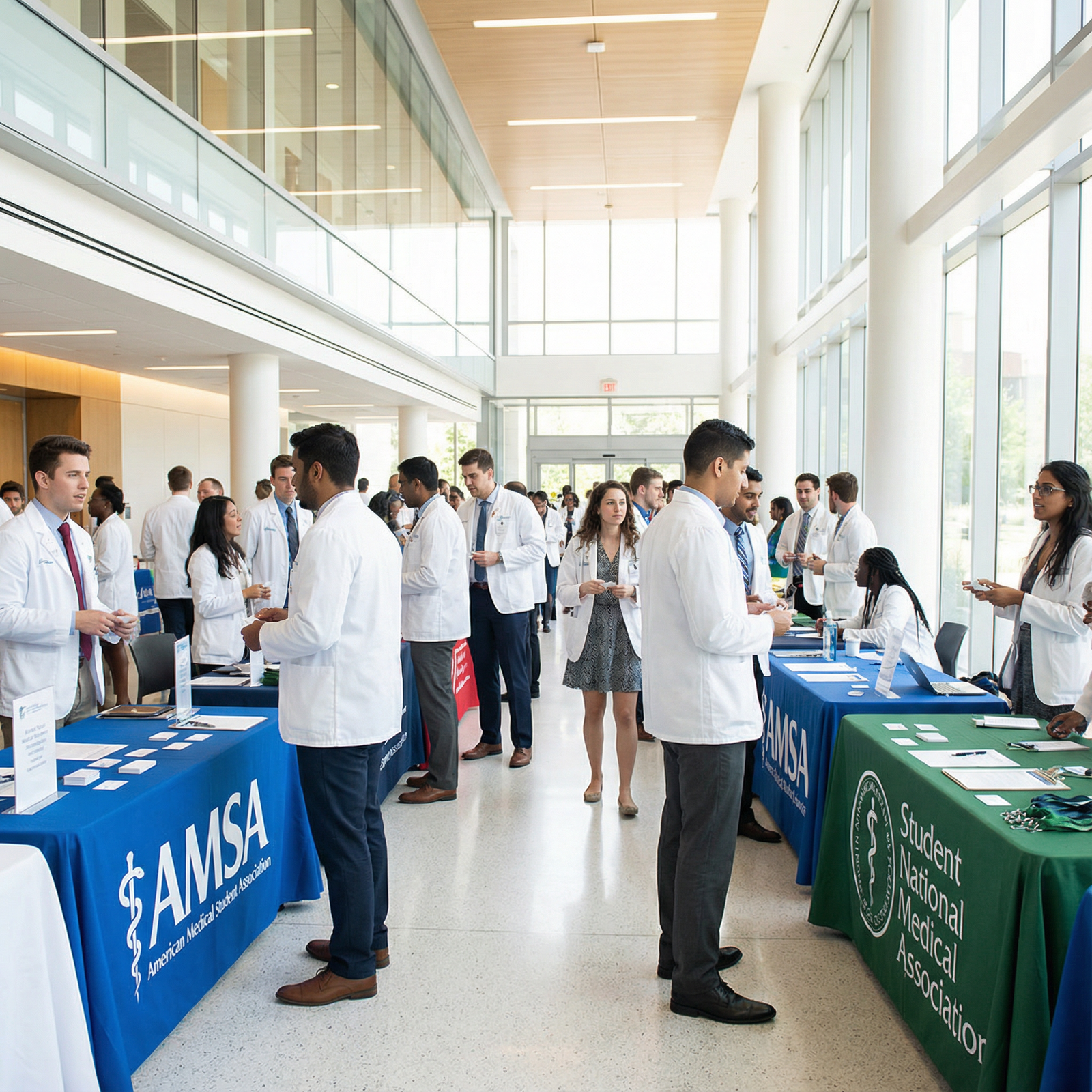
Through AMSA’s local chapters, regional meetings, and national conventions, you gain access to:
- Keynote speakers who are leaders in clinical practice, health policy, public health, and academic medicine
- Workshops and panels featuring program directors, residents, and faculty from diverse institutions
- Informal networking spaces where you can ask candid questions and seek practical advice
These encounters can translate into:
- Informational interviews about specialties and career paths
- Shadowing or observership opportunities
- Letters of recommendation anchored in real collaboration
- Research or quality improvement projects
Example:
A second-year medical student with an interest in psychiatry attends an AMSA national conference panel on mental health advocacy. After asking a thoughtful question, they introduce themselves to a panelist who later helps them secure a summer research position in community psychiatry—leading to a poster presentation and a strong letter of recommendation for residency.
Creating Lifelong Friendships and Peer Support Systems
Networking isn’t only about professional gain—it’s also about community. AMSA connects you with peers who:
- Understand the pressures of medical school
- Share your passion for advocacy, public health, or specific specialties
- Are willing to collaborate on projects, study strategies, and wellness practices
These relationships often evolve into:
- Study groups and accountability partners during preclinical and clinical years
- Research and advocacy collaborators who help you execute projects more effectively
- Long-term professional contacts you’ll see again at conferences, fellowships, and even as colleagues
For premeds, this can be especially transformative. You’re no longer navigating the path to medical school alone; you are learning alongside students who are a few steps ahead and willing to demystify the process.
Advocacy and Leadership: Becoming a Physician Who Shapes the System
One of the defining features of AMSA is its emphasis on advocacy and health policy. Members are encouraged not just to learn medicine, but to actively improve the conditions in which medicine is practiced.
Advocacy Training: A Practical Introduction to Health Policy
AMSA goes beyond theoretical discussions and offers hands-on advocacy opportunities, including:
- Legislative advocacy days and campaigns
- Training in how to meet with legislators or their staff
- Action committees focused on issues such as:
- Healthcare access and affordability
- Reproductive health
- Racial and ethnic health disparities
- Climate and health
- Medical education reform and student debt
These experiences teach you to:
- Translate clinical observations into policy arguments
- Use data effectively when advocating for change
- Communicate complex issues clearly to non-medical audiences
Residency Impact: Programs increasingly value applicants who understand systems-level issues and can advocate for patients beyond the exam room. Advocacy experience through AMSA helps you tell a compelling story about your role as a future physician-leader.
Leadership Development at Every Level
AMSA provides leadership opportunities across multiple tiers:
- Local chapter positions (president, vice president, treasurer, advocacy chair, premed liaison)
- Regional roles (regional directors, coordinators for specific initiatives)
- National leadership (committee roles, national officers, event planning teams)
Through these roles, you develop:
- Project management skills (planning conferences, workshops, and campaigns)
- Team leadership and delegation abilities
- Experience with budgeting, fundraising, and organizational strategy
- Public speaking and facilitation skills
Example:
A premed student serves as their campus AMSA chapter president. Over one year, they organize a health fair, coordinate MCAT prep workshops, and lead a local advocacy campaign on mental health resources. By the time they apply to medical school, they can clearly demonstrate sustained leadership, tangible outcomes, and a commitment to serving their community.
Educational Resources: Extending Your Learning Beyond the Curriculum
Medical education is dense—but also incomplete. Important topics like healthcare systems, financial literacy, and physician wellness often receive minimal attention in formal curricula. AMSA fills many of these gaps.
Access to Exclusive Medical Education Content
AMSA members typically gain access to:
- Webinars and virtual lectures on:
- Specialty exploration
- Residency application strategies
- USMLE/COMLEX and MCAT preparation
- Financial planning, debt management, and contract negotiation
- Online modules on topics such as:
- Global health and ethics
- LGBTQ+ health
- Social determinants of health
- Anti-racism and implicit bias in medicine
- Newsletters and publications that keep you informed about:
- National policy changes
- Trends in medical education
- Opportunities for funding, scholarships, and fellowships
Engaging consistently with these resources keeps you ahead of the curve and demonstrates intellectual curiosity—qualities that stand out in both medical school and residency applications.
Skill-Building Workshops and Hands-On Learning
Throughout the year, AMSA hosts in-person and virtual workshops that emphasize practical skills, such as:
- Clinical skills (suturing, point-of-care ultrasound, physical exam refreshers)
- Communication skills (breaking bad news, motivational interviewing)
- Presentation and teaching skills
- Advocacy and media training (how to write op-eds, speak to reporters, or present to community groups)
Premed students may have access to:
- Personal statement and application workshops
- Mock medical school interviews (including MMI practice)
- Panels with current medical students discussing admission realities
Instead of passively absorbing content, you learn by doing—practicing the skills you’ll need every day as a physician.
Community Service and Public Health: Turning Values Into Action
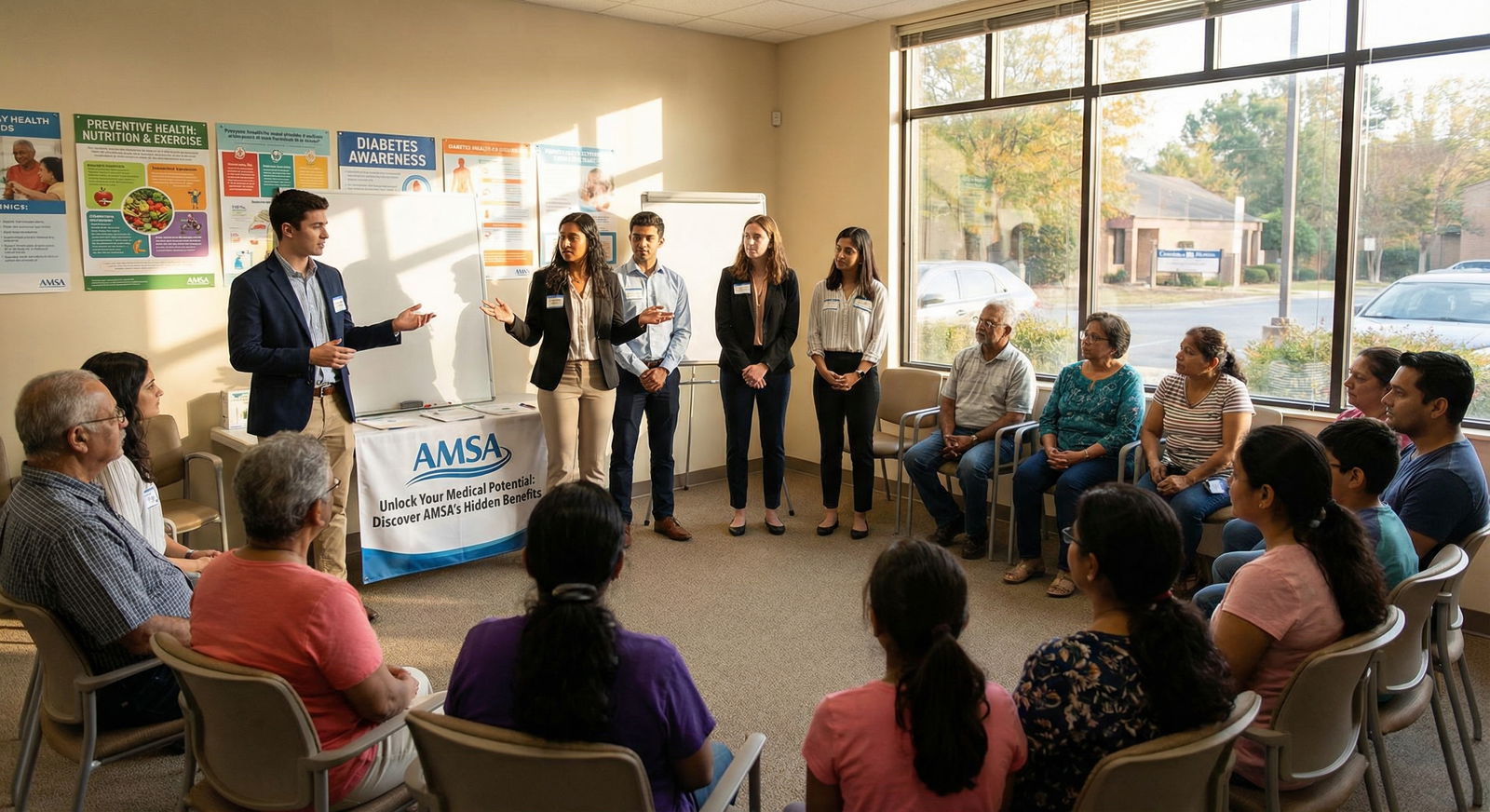
AMSA’s foundation is service. For many members, community-based work becomes one of the most meaningful parts of their medical education.
Engaging in Public Health and Community Outreach
AMSA chapters often organize and participate in:
- Free health screenings and health fairs
- Vaccination or health education drives
- Outreach to underserved or marginalized communities
- School-based programs teaching children about nutrition, exercise, or substance use
- Partnerships with local clinics, shelters, or community centers
Through this work, you develop:
- Cultural humility and sensitivity
- Comfort working with interpreters and navigating language barriers
- A deeper understanding of social and structural determinants of health
These experiences help you connect biomedical knowledge to the realities your patients face—context that is crucial for effective, compassionate care.
Strengthening Your CV and Personal Narrative
Community service through AMSA does more than add bullet points; it helps you build a coherent professional identity.
For premeds, this demonstrates:
- Authentic commitment to service
- Longitudinal engagement rather than one-time volunteering
- Alignment with mission-driven training programs
For medical students, it supports:
- Stronger narratives in personal statements and ERAS applications
- Competitive profiles for primary care, pediatrics, psychiatry, EM, and other specialties that value community engagement
- Letters from faculty or community partners who can attest to your reliability, compassion, and initiative
Residency program directors frequently comment that they look for applicants who care about more than test scores. AMSA provides the platform to prove that you do.
Research and Scholarly Activity: Elevating Your Academic Profile
While AMSA is not primarily a research organization, it creates pathways for research and scholarship through networking, mentorship, and conferences.
Finding and Joining Research Projects
By connecting with faculty, residents, and national leaders, you may gain access to:
- Clinical research in specific specialties (e.g., cardiology, psychiatry, emergency medicine)
- Public health or epidemiology projects
- Health policy analyses or white papers
- Medical education research (curriculum development, assessment, or wellness initiatives)
AMSA involvement helps you:
- Identify mentors who are eager to work with motivated students
- Discover research opportunities at other institutions or via national consortia
- Find co-investigators among peers who share your interests
Presenting and Publishing Through AMSA Channels
AMSA frequently offers:
- Poster and oral presentation sessions at conferences
- Abstract competitions, often with awards or travel scholarships
- Opportunities to write for AMSA publications, blogs, or policy statements
Participating in these activities allows you to:
- Gain experience in scientific communication
- Enhance your CV with abstracts, posters, or publications
- Practice fielding questions and feedback in a professional setting
These achievements are especially valuable for competitive specialties or academic career paths, demonstrating that you can contribute to the scholarly side of medicine.
Personal and Professional Growth: Becoming the Physician You Want to Be
Beyond tangible achievements—publications, leadership titles, or volunteer hours—AMSA also supports deeper, internal growth that shapes you as a future physician.
Strengthening Communication and Teamwork
AMSA environments naturally demand and refine your communication skills:
- Leading meetings and facilitating group discussions
- Navigating disagreements and building consensus
- Presenting to students, faculty, or community members
- Writing clear, persuasive emails, proposals, or advocacy materials
These skills directly translate to:
- More effective patient interviews and counseling
- Healthier, more productive team dynamics in clinical settings
- Stronger performance in OSCEs, clerkships, and residency
Building Empathy, Ethics, and Professional Identity
AMSA consistently centers conversations around:
- Equity and justice in healthcare
- Ethics in clinical care and research
- Physician well-being and burnout prevention
- The impact of systemic racism, bias, and discrimination in medicine
Engaging thoughtfully with these topics helps you:
- Reflect on your own values and implicit biases
- Develop a grounded, realistic sense of what it means to be a physician
- Prepare for complex ethical dilemmas you’ll face in practice
This reflective foundation is invaluable for long-term resilience and fulfillment in your career—not just for getting through the next exam or application.
Making the Most of Your AMSA Membership
To truly transform your medical career, membership must be active, not passive. Here’s how to leverage AMSA strategically:
Step 1: Clarify Your Goals
Ask yourself:
- Am I seeking mentorship, research, service, or leadership—or a mix?
- What issues in healthcare matter to me most (e.g., mental health, global health, reproductive justice)?
- What do I hope my CV and personal narrative will look like in 3–5 years?
Use these answers to guide how you engage with AMSA’s programs, rather than signing up for everything indiscriminately.
Step 2: Start Local, Then Scale Up
- Attend your local chapter meetings regularly.
- Volunteer for one or two consistent roles or projects instead of spreading yourself too thin.
- Once comfortable, consider regional or national roles that align with your strengths.
Step 3: Build Relationships Intentionally
- Introduce yourself to speakers and leaders whose work resonates with you.
- Follow up with a brief, specific email (“I’d love to learn more about X—could we schedule a 15-minute call?”).
- Stay in touch periodically, updating mentors on your progress and expressing appreciation.
Step 4: Translate Experiences Into Your Application Story
Keep a running document with:
- Projects you’ve worked on and your specific contributions
- Skills you’ve gained (e.g., conflict resolution, public speaking, data analysis)
- Impact metrics (number of people reached, events organized, policies influenced)
These details make it much easier to write compelling personal statements, activity descriptions, and interview responses when the time comes.
FAQ: AMSA, Medical Education, and Your Career
1. How do I join AMSA, and when is the best time to start?
You can join by visiting the official AMSA website and following the membership registration process for your level (premed, medical student, resident). The best time to start is as early as possible—even as a freshman premed—so you can build a longitudinal record of involvement and leadership.
2. Is AMSA membership really useful for premed students, or is it mainly for medical students?
AMSA is very beneficial for both. For premeds, AMSA offers:
- Early exposure to medical education and healthcare systems
- Mentorship from current medical students and residents
- Application guidance (MCAT, personal statements, interviews)
For medical students, AMSA expands into deeper advocacy, leadership, and specialty exploration. Starting early gives you more time to grow into meaningful roles and develop a strong track record.
3. How does AMSA involvement help with residency applications and interviews?
Residency programs value candidates who can:
- Lead effectively within teams
- Advocate for patients and systems-level improvements
- Demonstrate sustained commitment to service and professional development
Active AMSA engagement provides concrete examples of:
- Leadership (officer roles, project management)
- Advocacy (campaigns, legislative work, policy initiatives)
- Scholarship (presentations, publications, education projects)
These experiences give you powerful stories to share in your ERAS application and interviews, and may yield strong, specific letters of recommendation.
4. What kind of time commitment should I expect, and how do I balance AMSA with academics?
Time commitment varies:
- General member: Attend events selectively (a few hours per month).
- Local officer: Plan on a few hours per week, depending on role and projects.
- Regional/national role: May involve regular meetings and larger responsibilities.
To balance effectively:
- Align your AMSA roles with your interests and career goals so the time investment pays off.
- Treat AMSA work like a “course” in your schedule—block specific times and protect them.
- Be realistic about your bandwidth during exam-heavy blocks and communicate with your team.
5. Is the membership fee worth it for students on a tight budget?
For many students, the cost is justified by access to:
- Discounted or free educational resources and events
- Networking and mentorship opportunities that can shape your career
- Leadership and advocacy experience that strengthens future applications
If cost is a concern, check whether:
- Your school’s AMSA chapter offers subsidies or institutional support
- There are scholarships, discounts, or special rates for certain membership levels
Think of it as a strategic investment in your long-term professional development, not just another club fee.
By approaching AMSA with intention and curiosity, you can turn a simple membership card into a powerful tool for medical education, networking, career development, and advocacy. Whether you’re mapping out your premed years or already deep into clerkships, AMSA offers opportunities to grow into the kind of physician who not only practices medicine—but helps shape the future of healthcare itself.