No. You do not automatically lose your H-1B status when you switch institutions for fellowship. Period.
That myth causes more panic in the resident lounge than any Step 3 score ever did. I've heard it a hundred times: "Don't do an external fellowship on H-1B, you'll fall out of status." It's wrong. It's based on institutional hearsay and fear, not immigration law.
The reality? U.S. immigration law has a specific protection for you. It's called H-1B portability. And if you manage it like a timeline, not a rumor, you stay legal.
Your mission here is simple: maintain continuous valid status through proactive, documented planning. Not luck. Planning.
This article is for educational purposes only. It is not financial advice, not legal advice, and not tax advice. Figures vary by individual circumstances, so consult a qualified professional before acting.
Understanding the complete guide to switching fellowship programs on H-1B vs. J-1 is essential for avoiding common administrative pitfalls.
Introduction: The H-1B Transfer Anxiety
For an IMG on an H-1B during residency, fellowship feels like walking a tightrope. You finally got cap-exempt H-1B status through your residency hospital. Now you're matching elsewhere. The fear is that the second your residency ends, your status evaporates.
It doesn't.
The anxiety comes from confusing a job ending with a status ending. They are not the same thing. The law doesn't punish you for changing to another cap-exempt academic employer. It actually anticipates it.
This is where most residents get bad advice from seniors, program coordinators, or forums. They think you need an approved H-1B from the new program before you can even show up on July 1st. You don't. What you need is a filed petition and proof of that filing.
At this point you should stop listening to lounge mythology and start thinking in dates, receipts, and paper trails. Let's break down the legal framework that protects you.
Before you commit to your new institution, consider how visa type shapes your fellowship options in competitive specialties to avoid future complications.
The Legal Framework: How Portability Works
For long-term career strategy, read how visa type shapes your fellowship options in competitive specialties to align your goals with institutional requirements.
The whole thing rests on one law: the American Competitiveness in the Twenty-First Century Act, AC21. You don't need to memorize it. You need to understand what it did.
AC21 created H-1B portability. It says an H-1B worker who is in valid status can begin working for a NEW employer as soon as that new employer files a non-frivolous H-1B petition on their behalf. You do not have to wait for USCIS approval.
Let me say that again because it's the part everyone gets wrong. You can start working upon filing.
For most of you, both your residency hospital and your fellowship hospital are cap-exempt, non-profit academic medical centers, university affiliates. That makes this easier. A so-called "H-1B transfer" is not actually a transfer. Legally, it's a brand new I-129 petition filed by your new fellowship program. USCIS calls it a "new employment" or "change of employer" petition, but we all call it a transfer for shorthand.
Your legal anchor for this entire transition is not your approval notice. It's your receipt notice. Form I-797C.
Always ensure you are aware of when your residency is H-1B but fellowship is J-1 to prevent unintended status violations.
When your new employer's immigration attorney files the I-129, USCIS issues an I-797C Receipt Notice within 2-3 weeks. That piece of paper with a receipt number is your green light. Once you have it in hand, and you were maintaining valid H-1B status right up until the switch, you are authorized to start your fellowship.
No gap. No status loss.
The critical distinction: filing vs. approval. Filing gives you permission to start. Approval gives you long-term security. Don't mix them up.
Phase-by-Phase Checklist: Securing Your Transition
If you want zero stress on July 1st, you don't start thinking about this in June. You start almost a year out. Here's the timeline that actually works. I've seen this save people. I've also seen people ignore it and scramble.
Phase 1: The Verification Phase (6-8 Months Out - November to January)
At this point you should be asking hard questions, not making assumptions.
- Contact your future fellowship program's GME office AND their immigration counsel. Not just the program coordinator. The lawyer.
- Ask in writing: "Will you sponsor a cap-exempt H-1B as a change of employer petition? Will you file for H-1B portability?"
- Confirm their policy on premium processing. Who pays? Some programs cover it, some don't. You need that answer now.
- Verify your own status packet. Do you have every single I-797 approval notice from residency? Every pay stub for the last 3 months? Your current CV? Keep it ready.
Don't assume a big-name institution knows what they're doing. Some GME offices are shockingly slow. Your job in Phase 1 is to light a fire early.
Phase 2: The Coordination Phase (4 Months Out - February to March)
At this point you should be the bridge between two bureaucracies that never talk to each other.
- Inform your current residency program director and your current immigration office that you will require documentation for a portability transfer. You'll need an employment verification letter stating you were in valid H-1B status through June 30th.
- Push your new program to initiate their internal immigration intake. They will need your medical license for the new state, your diploma, your ECFMG certificate. This takes weeks. Don't let them wait.
- Get a firm commitment on the I-129 filing date. The target should be no later than early May. Demand a date.
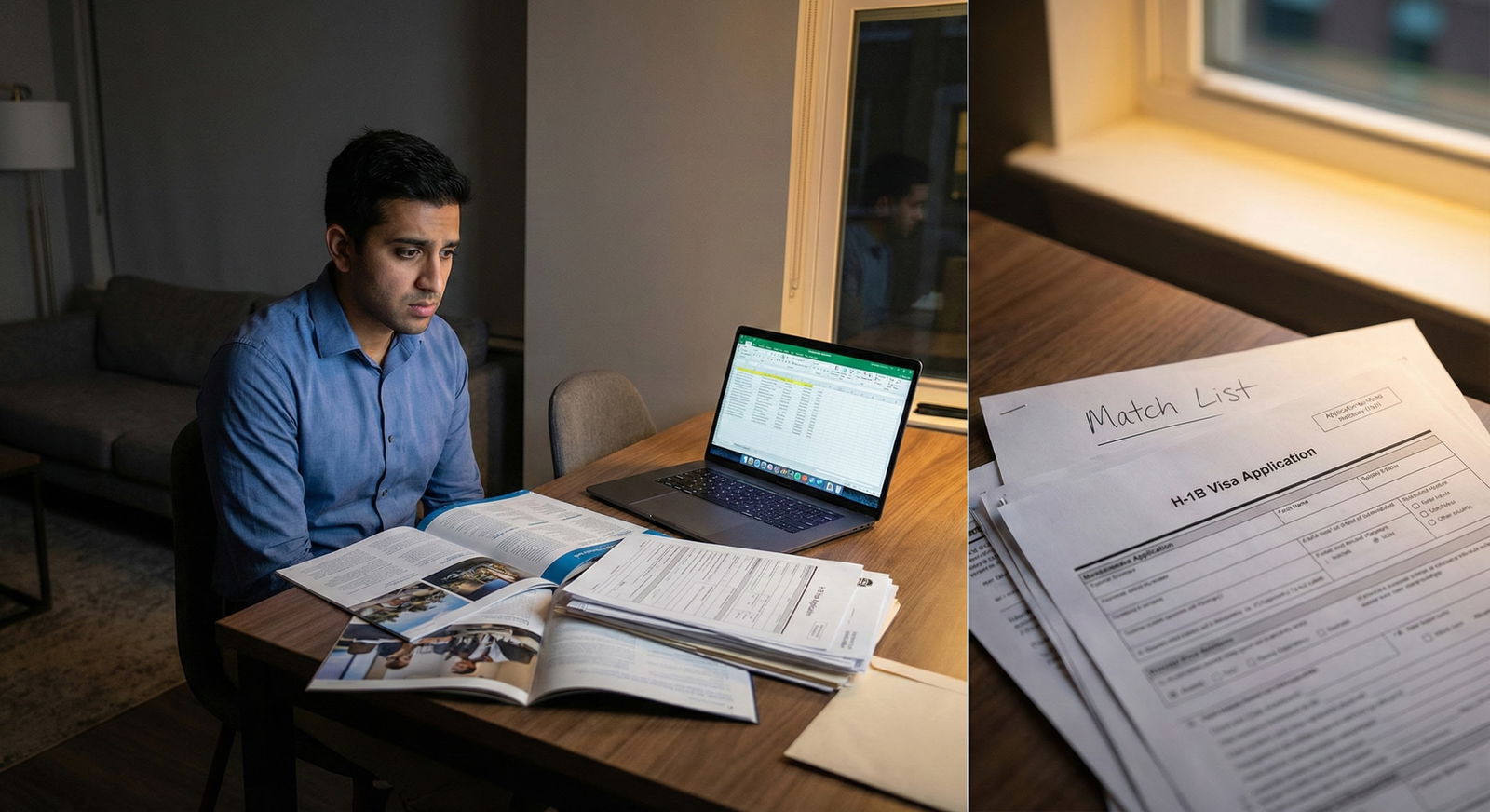
Phase 3: The Monitoring Phase (2 Months Out - April to May)
This is where anxiety peaks. Control it with documentation.
- The new program's attorney should have filed the I-129 by early May. Ask for the FedEx tracking. Seriously.
- Once filed, wait for the I-797C Receipt Notice. This is your most important document. It usually arrives 1-3 weeks after filing.
- Check USCIS case status online daily with that receipt number once you have it.
- Decide on premium processing. If regular filing happened late (late May/June), you need premium. It's $2,805. Expensive. Worth every penny if it prevents a gap.
Phase 4: The Transfer Day (Final Week of June to July 1st)
At this point you should have zero surprises left.
- You MUST have the original or a clear scanned copy of the I-797C Receipt Notice (for the new employer) before you set foot in the new hospital as a fellow.
- You MUST have proof that your last day of residency was in valid status. Your final pay stub is gold here.
- Do not work a single day without that receipt notice. Not shadowing. Not orientation where you're doing clinical work. No. If the receipt hasn't arrived by June 30th, you cannot start. That's the firewall that protects your status.
- On day one at the new program, bring your Green Folder to HR and get final sign-off.
Common Pitfalls and How to Mitigate Risk
The law is forgiving. Human error is not. Here are the ways people actually lose status. It's almost never because of the transfer itself.
1. The Gap Trap. This is the killer. You finish residency June 30th. You start fellowship July 15th because you wanted a vacation, and you work without pay or you work unpaid orientation days. Any gap where you are not in valid H-1B status and not working for your petitioner is unauthorized. USCIS hates gaps. The fix: Your filing must show a start date of July 1st, and you must be able to prove continuous status. No freelance moonlighting in between.
2. The Premium Processing Debate. Should you pay for it? My take: If your new program files before May 1st, regular processing is usually fine for a cap-exempt petition. If they file after May 15th, you are gambling. I've seen regular processing take 6-8 months. Premium is 15 calendar days to a decision. The cost is high, but a denial due to a gap costs you your entire career in the US. If you can afford it, demand it.
3. The Paper Trail Failure. USCIS doesn't care what you told them on the phone. They care what you can prove on paper.
Your Green Folder should contain:
- Every I-797A approval notice you've ever had
- Every I-797C receipt notice
- Last 6 pay stubs from residency
- New fellowship offer letter with start date
- Copy of the filed I-129 petition (ask the attorney for it)
- Copy of your new state medical license
If USCIS ever issues a Request for Evidence (RFE), this folder saves you.
Look, the bottom line is this: status is rarely lost by people who follow a timeline. It is lost by people who trust verbal promises, miss filing deadlines, or work without authorization for a week because their program said "it's just orientation, it's fine." It's not fine.
When you hear someone say they lost status during a fellowship transfer, ask them when the petition was filed and when they got the receipt notice. Nine times out of ten, the answer is "late" or "I don't know." That's not a legal problem. That's a planning problem. And it's completely avoidable.
The Reality Check:
H-1B portability is real, legal, and designed for exactly your situation. You do not lose status by porting. You lose status by creating a gap, failing to get a receipt notice, or working without authorization. Control the timeline, demand the receipt, and keep every piece of paper. Do that, and your transfer will be boring. And boring is exactly what you want in immigration.