Understanding the Visa Landscape for IMGs in Cleveland
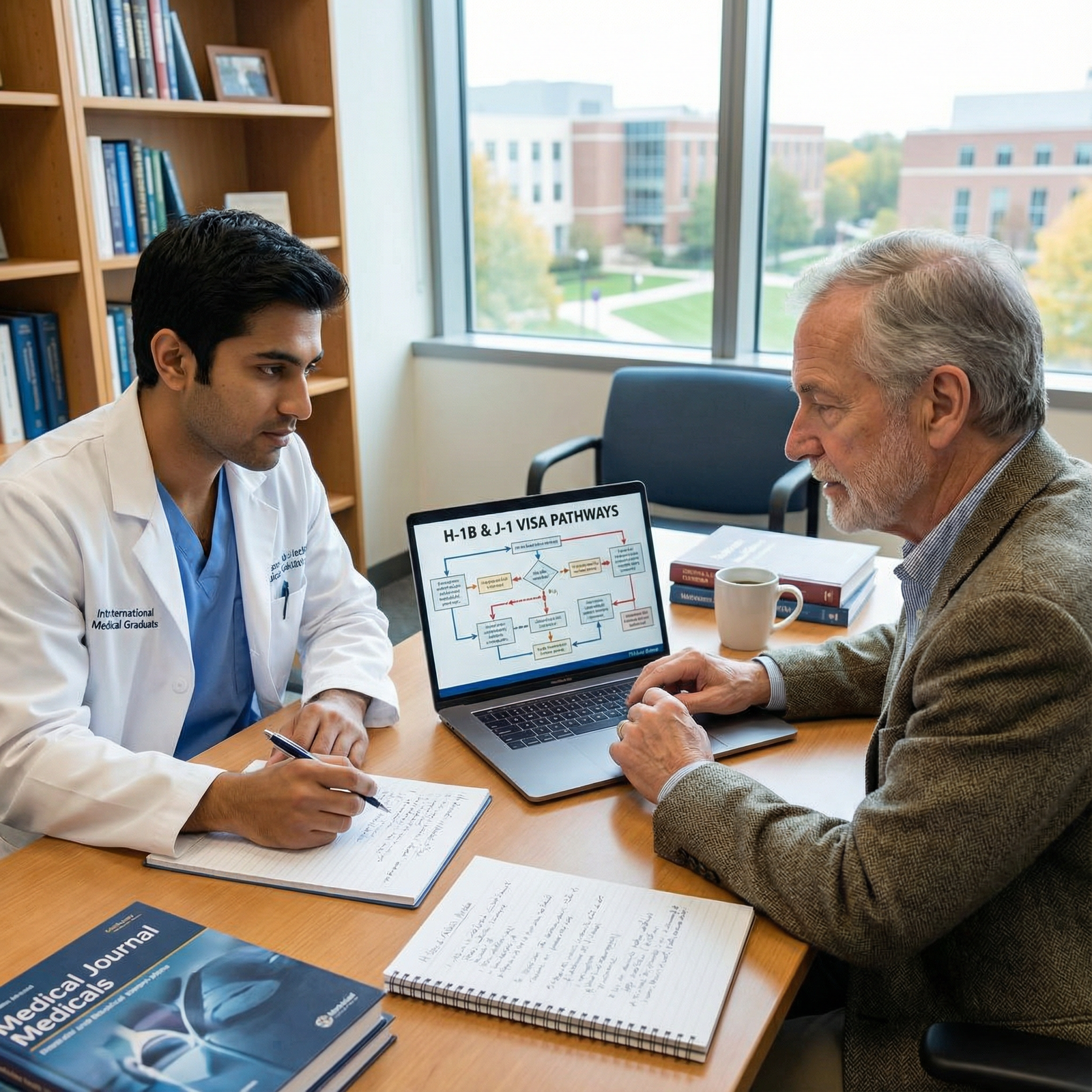
For any international medical graduate (IMG), securing the right visa is just as critical as acing exams or crafting a strong ERAS application. In Cleveland, where institutions like Cleveland Clinic and major university-affiliated hospitals attract large numbers of IMGs, understanding residency visa options is essential for a successful Match and a stable training path.
This IMG residency guide will walk you through:
- The main visa types used for residency (J‑1 vs H‑1B)
- How Cleveland residency programs—especially Cleveland Clinic residency programs—approach sponsorship
- Step-by-step planning from pre-ERAS through fellowship and beyond
- Practical tips for avoiding common visa pitfalls
While rules are federal (U.S.-wide), your program’s policies in Cleveland will determine what is realistically available to you. Think of this as your strategic roadmap to visa navigation for residency as an IMG in Cleveland.
Core Visa Options for Residency: J‑1 vs H‑1B
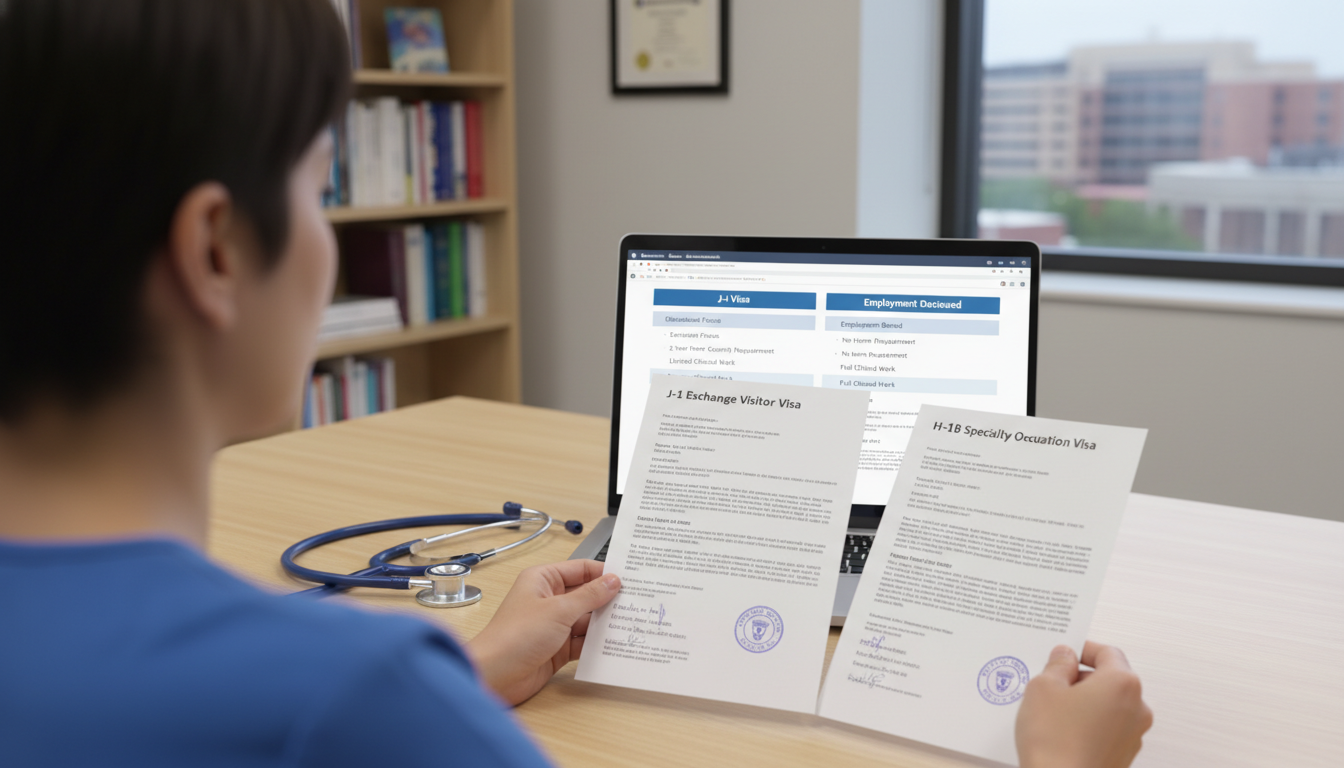
Most IMGs training in U.S. residency programs use one of two visa pathways:
- J‑1 Exchange Visitor (ECFMG-sponsored “Alien Physician”)
- H‑1B Temporary Worker (Specialty Occupation)
Understanding the differences between J‑1 vs H‑1B is the single most important visa decision most IMGs will make.
1. J‑1 Exchange Visitor Visa (ECFMG-Sponsored)
The J‑1 is the most commonly used visa for IMGs in residency across the U.S., including Cleveland.
Key features
- Sponsor: ECFMG (not the hospital or university)
- Purpose: Graduate medical education (residency, fellowship)
- Duration: Up to 7 years total for clinical training (sometimes extendable in limited scenarios)
- Employment: Only at the training site(s) and rotations listed on your ECFMG Form DS‑2019
- Government requirements: You are expected to return to your home country after training to share knowledge/skills
The 2‑Year Home Residence Requirement (212(e))
Most J‑1 physicians are subject to a two-year home-country physical presence requirement after training. This means:
- You must return to your country of last permanent residence for a total of two years OR
- Obtain a J‑1 waiver before changing to many other U.S. statuses (e.g., H‑1B, L‑1, permanent residence/green card)
Without a waiver or fulfilling 212(e):
- You cannot change to H‑1B or L‑1 status from within the U.S.
- You cannot receive an immigrant visa or adjust status to permanent residence.
Why many Cleveland residency programs prefer J‑1
- Administrative ease: ECFMG handles most of the immigration process.
- Predictability: Well-established processes and timelines.
- Lower cost and risk for the program: No complex USCIS filings for the residency.
Practical implications for you
- You must maintain valid ECFMG certification throughout training.
- Each year, your program must confirm your status with ECFMG for DS‑2019 renewal.
- You will probably need to plan ahead for:
- J‑1 waiver options after residency (e.g., Conrad 30 waiver jobs in Ohio or other states)
- Timing of fellowship (if J‑1 waiver will be obtained later)
- Potential requirement to return home if you do not secure a waiver
2. H‑1B Specialty Occupation Visa
The H‑1B is an employment-based visa allowing work in a specialty occupation such as physician roles.
Key features
- Sponsor: The hospital or university (employer-based)
- Duration: Initial up to 3 years, max 6 years (with some extensions possible for those in green card process)
- Exam requirements: Most programs require:
- USMLE Step 3 passed before filing H‑1B
- Valid state training license or unrestricted license, depending on state rules
- Portability: You can sometimes change employers (with a new H‑1B petition), but transitions must be carefully timed.
Benefits for IMGs
- No automatic 2‑year home country requirement like J‑1.
- Often considered more compatible with:
- Long-term U.S. career goals
- Transition to fellowship or attending roles
- Pursuing permanent residency (green card) more directly
Limitations
- Not all Cleveland residency programs sponsor H‑1B.
- More expensive and higher administrative workload for the hospital.
- Strict requirements on:
- Prevailing wage
- Institutional salary scales
- Role being “specialty occupation” and resident being qualified at the time of filing.
Common scenario in Cleveland
Many IMGs applying to Cleveland residency programs will find:
- Some programs only sponsor J‑1.
- Some elite institutions (e.g., select Cleveland Clinic residency programs) may offer H‑1B for highly qualified candidates who meet key conditions (Step 3 passed, ECFMG certified, early timelines).
You must adjust your visa strategy to the sponsoring policy of each individual residency program.
How Cleveland Residency Programs Handle Visa Sponsorship
Cleveland is home to several major academic and community training centers, including:
- Cleveland Clinic residency programs (multiple specialties)
- University-affiliated hospitals (e.g., Case Western Reserve-affiliated programs)
- Community-based ACGME-accredited programs (internal medicine, family medicine, pediatrics, etc.)
Each program sets its own policy on IMG visa options.
Typical Sponsorship Patterns
While you must always verify current policies on each program’s website, in general:
Large academic centers & major institutions
- Commonly sponsor J‑1 visas via ECFMG as their primary track.
- May offer limited H‑1B sponsorship if:
- You have passed USMLE Step 3 before Rank Order List (ROL) deadline.
- The program has an existing infrastructure for H‑1B filings.
- Often receive many IMG applications; being “visa-ready” can help you stand out.
University-affiliated community programs in Cleveland area
- Many sponsor J‑1 only as a default.
- Some will consider H‑1B sponsorship but may reserve it for:
- Candidates with particular skills or research experience.
- Hard-to-fill positions or high-need specialties.
Pure community programs
- May have tighter budgets and less immigration infrastructure.
- Frequently sponsor only J‑1 or sometimes do not sponsor visas at all.
- Be sure to check whether they accept IMGs and if they sponsor any residency visa.
Example: Navigating a Cleveland Clinic Residency as an IMG
While details differ by department and year, your approach might look like this:
- Review the Cleveland Clinic residency program website for your specialty.
- Look for phrases like:
- “We sponsor J‑1 visas.”
- “H‑1B considered on a case-by-case basis.”
- “H‑1B sponsorship may be offered to highly qualified candidates with USMLE Step 3 completed.”
- If H‑1B is possible:
- Plan to take USMLE Step 3 early enough so your score is available before contract and visa paperwork deadlines.
- Highlight in your application and communications that Step 3 is completed (or scheduled with result expected early).
If the program states “J‑1 only”, planning for H‑1B will not be realistic for that particular residency. Instead, you will need to anticipate:
- A J‑1 visa during residency.
- A J‑1 waiver job (commonly an underserved area, sometimes in Ohio or neighboring states) after training, if you wish to stay in the U.S.
Step-by-Step Visa Planning Timeline for IMGs Targeting Cleveland
This section outlines how to weave visa strategy into your residency application timeline, from preparation to post-match.
Step 1: Early Preparation (1–2 Years Before ERAS)
1. Clarify your long-term goals
Ask yourself:
- Do I want a long-term career in the U.S., including possible fellowship and permanent residency?
- Am I open to working in underserved or rural areas after training (for J‑1 waiver jobs)?
- How flexible am I about geography after residency?
Your answers will shape your view of J‑1 vs H‑1B:
- If you strongly prefer to stay long-term and avoid the two-year home requirement, you may lean toward programs offering H‑1B.
- If your options or exam timing make H‑1B unlikely, you can still build a strong career via J‑1 + waiver.
2. Strategy around exams
- USMLE Step 1 & 2 CK: Essential for any IMG applying to Cleveland residency programs.
- USMLE Step 3:
- Critical for H‑1B: Many programs require a Step 3 pass before they can initiate or finalize H‑1B petitions.
- If aiming for H‑1B, plan to finish Step 3 before Match season or at least early enough that:
- You can indicate “Step 3 passed” in ERAS, or
- Score is expected before contract signing.
3. Research program-specific visa policies
Create a spreadsheet for your target programs in Cleveland (e.g., Cleveland Clinic, university hospitals, community programs) with columns:
- Visa sponsorship: J‑1 only, J‑1 + H‑1B, none
- Step 3 requirement for H‑1B
- IMG acceptance history (how many IMGs currently in program)
- Notes from program website and past residents (if available)
This allows you to stratify programs according to your visa strategy.
Step 2: ERAS Application Season
During application season, treat visa considerations as a core part of your program selection.
1. Tailor your program list by visa reality
- Include a healthy number of programs that clearly sponsor J‑1 if you are uncertain about Step 3 timing.
- If you have passed Step 3 and want H‑1B:
- Prioritize Cleveland residency programs that explicitly mention H‑1B options.
- Still include J‑1-sponsoring programs to avoid over-restricting yourself.
2. Highlight your “visa readiness”
Within your CV and ERAS application:
- Clearly state your citizenship and current status (if already in the U.S.).
- Note prominently:
- “ECFMG certified”
- “USMLE Step 3 passed” (if applicable)
- For programs that offer H‑1B, consider mentioning in your personal statement (briefly and professionally) that:
- You are Step 3-complete and open to either J‑1 or H‑1B, depending on their policies.
- Your primary goal is a strong training environment; visa flexibility is a secondary (but important) issue.
3. During interviews: asking about visas
During interviews with Cleveland programs, you can ask:
- “What visa types does your program typically sponsor for IMGs?”
- “Do residents on J‑1 or H‑1B have any differences in rotations, moonlighting eligibility, or research opportunities?”
- “For H‑1B sponsorship, are there specific Step 3 or timing requirements we should be aware of?”
Keep questions concise and professional, indicating you are organized, not demanding.
Step 3: Post-Interview and Rank List Strategy
After interviews:
- Update your spreadsheet with actual information from conversations.
- Rank programs primarily on:
- Quality of training
- Fit with your career goals
- Supportive culture for IMGs
- Factor visa options as:
- A tie-breaker (e.g., two equal programs, one offers H‑1B)
- A minimum filter (e.g., if you can only accept programs that sponsor any visa at all)
Avoid ranking programs that do not sponsor any residency visa if you will require one; matching there can be problematic or even impossible.
Step 4: After Match – Visa Execution
Once you match into a Cleveland residency:
J‑1 track
- ECFMG and your program’s GME office will provide instructions.
- Prepare:
- Valid passport
- ECFMG certification proof
- Financial documentation if requested
- Home-country ties for visa interview
- Follow timelines closely for DS‑2019 issuance and consular interview.
H‑1B track
- Your GME office / legal department will manage the petition.
- You must provide:
- USMLE transcripts
- Degree and ECFMG certificate
- License or training license eligibility documents
- Ensure that:
- your start date aligns with H‑1B approval timelines
- any needed consular processing is done timely if you are outside the U.S.

After Residency: J‑1 Waivers, Fellowships, and Long-Term Planning
Visa navigation does not end when residency starts. Especially for J‑1 holders, post-residency planning is crucial.
J‑1 Waiver Basics (For Those on J‑1)
If you train on a J‑1, you will likely be subject to the 2-year home residence requirement. To remain in the U.S. without returning home for 2 years, you usually need a J‑1 waiver.
Common waiver pathways include:
Conrad 30 Program
- Each U.S. state can sponsor up to 30 J‑1 physicians per year.
- Typically requires:
- A job offer in a Health Professional Shortage Area (HPSA) or Medically Underserved Area/Population (MUA/P)
- A 3-year full-time service commitment
- Ohio participates in this program, but competition and criteria vary.
Federal agency waivers
- Examples: VA, Department of Health and Human Services (HHS), others.
- Often linked to service in certain research or clinical roles.
Hardship or persecution waivers
- More complex, based on individual circumstances (e.g., persecution risks if returning home).
After you receive a J‑1 waiver recommendation and USCIS approves it, you can typically:
- Change from J‑1 to H‑1B (usually sponsored by your waiver employer).
- Begin a path that may lead to permanent residency.
Residency → Fellowship Transitions
On J‑1
- Many IMGs complete both residency and fellowship on J‑1, then seek a waiver job after all training.
- Consider:
- Total time limit (usually up to 7 years) for clinical training on J‑1.
- Whether your specialty + fellowship combination fits within that limit.
- Example: Internal Medicine (3 years) + Cardiology fellowship (3 years) is usually feasible under J‑1.
On H‑1B
- For H‑1B holders, transitioning to fellowship often means:
- New H‑1B petition by the fellowship institution.
- Ensuring you do not exceed the 6-year cap (or planning green card steps that allow cap extensions).
- Some fellowships sponsor only J‑1; in such cases, H‑1B holders may need to switch to J‑1, which could then introduce the 2-year rule.
Building a Long-Term Strategy as an IMG in Cleveland
For an IMG in Cleveland aiming for a U.S. career:
- Early years (residency/fellowship):
- Focus on strong clinical performance and relationships with mentors.
- Stay in close communication with your GME office about visa timelines and any policy changes.
- Mid-term (around PGY‑2/3):
- If on J‑1: start understanding Ohio’s Conrad 30 and potential waiver employers.
- If on H‑1B: discuss with mentors and, if appropriate, an immigration lawyer about green card strategies (e.g., EB‑2 NIW, employer-sponsored PERM).
- Long-term:
- Aim for a stable employer (e.g., hospital system or academic center) that supports immigration processes.
- Keep close track of document validity: passport, I‑94s, DS‑2019 or I‑797 approvals, etc.
Practical Tips and Common Pitfalls for IMGs in Cleveland
Practical Tips
Use programs’ official websites as your primary reference
- Policies can change year to year.
- Always verify current sponsorship options and exam/work authorization requirements.
Communicate clearly but succinctly
- When contacting coordinators or program directors, include:
- ECFMG certification status
- USMLE scores (and Step 3 status)
- Current visa or citizenship status
- Keep visa-related emails focused and polite.
- When contacting coordinators or program directors, include:
Maintain copies of everything
- Keep organized digital folders for:
- Passports, visas, I‑94 records
- ECFMG certificates
- DS‑2019 forms, I‑797 approvals
- Contracts and offer letters
- This will speed up every future application.
- Keep organized digital folders for:
Consult a qualified immigration attorney for complex cases
- Especially if:
- You have prior U.S. visa issues (overstays, status gaps).
- You are changing from another status to residency.
- You are planning long-term green card strategies.
- Especially if:
Common Pitfalls to Avoid
Ignoring Step 3 timing if you want H‑1B
- Taking Step 3 too late can make H‑1B practically impossible during PGY‑1.
- Consider scheduling it before ERAS submission if feasible.
Assuming all Cleveland programs sponsor the same visas
- Each program decides independently.
- Never assume because one Cleveland Clinic residency sponsors H‑1B that all of them do.
Last-minute DS‑2019 or H‑1B preparation
- Delays in paperwork can delay your start date.
- As soon as you match, respond promptly to all GME office requests.
Over-focusing on visa at the expense of program quality
- A supportive program that only sponsors J‑1 may be better for your career than a marginal program offering H‑1B.
- Try to balance training quality and visa advantages.
FAQs: Visa Navigation for IMGs in Cleveland Residency Programs
1. Do most Cleveland residency programs sponsor J‑1 or H‑1B for IMGs?
Most Cleveland residency programs that accept IMGs sponsor J‑1 visas via ECFMG as their standard option. A smaller subset—often larger academic centers or select Cleveland Clinic residency programs—may sponsor H‑1B for candidates who meet strict conditions, particularly USMLE Step 3 completion and timely documentation. Always confirm with each individual program.
2. Can I switch from J‑1 to H‑1B after starting residency in Cleveland?
You cannot simply “switch” from J‑1 to H‑1B during residency unless:
- You resolve or waive the 2-year home residence requirement (212(e)), and
- A program or employer files and obtains an H‑1B petition for you.
In practice, many IMGs complete all training on J‑1 and then transition to H‑1B for a J‑1 waiver job after residency or fellowship. Direct mid-residency changes are uncommon and often complicated.
3. Is it better for an IMG to pursue H‑1B instead of J‑1 from the start?
“Better” depends on your goals and circumstances. H‑1B avoids the 2-year home requirement and may simplify green card pathways, but:
- Not all Cleveland programs offer H‑1B.
- You must usually have Step 3 passed before they can sponsor you.
- The process is more complex and costly for the program.
J‑1 is more widely available, supported by ECFMG, and fully compatible with residency and fellowship training. However, it usually requires either a J‑1 waiver job or a 2-year return home later. Your decision should weigh your test timing, risk tolerance, and long-term career plans.
4. If I’m already in the U.S. on another visa (e.g., F‑1), how does that affect residency visas in Cleveland?
Many IMGs in U.S. medical schools or research positions hold F‑1 or other visas. For residency:
- You will still need a new status (J‑1 or H‑1B) sponsored appropriately.
- If on F‑1 with OPT, a program might help you transition directly to H‑1B or J‑1, depending on its policies.
- Existing U.S. presence can sometimes make logistics easier, but you must still meet all visa and licensing criteria.
In any non-standard situation, it is wise to coordinate early with the residency’s GME office and, if needed, consult an immigration attorney.
By understanding the visa landscape—especially J‑1 vs H‑1B, program-specific policies in Cleveland, and post-residency options—you can approach the residency Match with a clear plan. Combine this visa strategy with strong exam performance, clinical experience, and tailored applications, and you will be well-positioned to succeed as an international medical graduate in Cleveland.