
The email lands in your inbox on a Tuesday afternoon. It's from the GME office. The first paragraph is polite. The second paragraph uses words like "unforeseen circumstances" and "unable to proceed." By the third paragraph, you realize your residency contract is gone, and with it, your visa sponsorship.
This is a nightmare scenario for any International Medical Graduate (IMG). You've spent years and a small fortune navigating USMLEs, clinical rotations, and the Match. Now, you're staring at a clock that's ticking down your legal stay in the United States. Programs won't tell you the real reasons this happened, and they certainly won't hand you a roadmap on how to survive it.
Understanding that institutions sometimes back out unexpectedly is why you should know how to recover from H-1B sponsorship issues.
This article provides educational purposes only and is not legal advice. Figures vary based on individual circumstances. If you face a visa crisis, consult a qualified professional immediately.
Here is exactly how to handle the situation when a program pulls your visa sponsorship out from under you.
The Sponsorship Carpet-Pull: Understanding the 'Why' Without the PR Speak
When a program rescinds a visa sponsorship, the email you get will be full of sanitized corporate language. They'll blame "funding reallocations" or "shifts in departmental priorities." Let's cut through the PR speak.
Always keep in mind that even in stable programs, it is wise to learn about what happens if a program director suddenly leaves to protect your long-term training.
Sudden rescissions happen for a few reasons, and they almost never have anything to do with your clinical ability. Sometimes a hospital loses a massive grant and decides to cut their entire research-track PGY-2 class. Sometimes an HR office realizes they miscalculated their J-1 cap allocations and needs to dump five candidates overnight. Other times, a new institutional policy drops restricting H-1B sponsorships entirely, leaving you holding a useless match certificate.
The program is prioritizing their legal safety over your career trajectory. They want you gone quietly so they don't trigger a compliance audit or negative PR.
You need to immediately determine if this is a true rescission or a procedural clerical error. A clerical error is a missing signature or a delayed GME committee vote. That gets fixed with a phone call. A rescission means the funding or institutional will to sponsor you is dead.
Your initial triage step is absolute: Do not sign anything they send you, and do not withdraw your application yet. Programs often try to get IMGs to voluntarily withdraw from the NRMP or their contract to make the termination look like a mutual decision. If you withdraw, you take the blame. If they rescind, they own the mistake. Keep it that way.
The Immediate Crisis Response: Protect Your Status
Your medical career matters, but your legal status matters more. A residency is a three-to-seven-year gig. An immigration violation is a permanent professional liability that can bar you from the US for a decade.
Here is your exact action plan for the first 48 hours:
- Document the timeline. Save every email. Forward them to a personal, non-hospital email account. Take screenshots of text messages. If you had a verbal conversation with a coordinator, write down the exact time, date, and what was said. You are building a paper trail in case the institution tries to claim you were terminated for cause.
- Call an immigration attorney before you call the program back. Do not rely on the university's international student office. They work for the university, not for you. Their goal is protecting the university from liability. You need a private attorney who specializes in physician immigration to tell you exactly how many days you have left on your grace period.
- Communicate with ECFMG or your J-1 sponsor immediately. If you are on a J-1, the ECFMG is your actual sponsor, not the hospital. The hospital merely signs off on your training. If the hospital rescinds, you need to tell ECFMG before the hospital feeds them a story about your performance.
- Assess your visa clock. If you are on an F-1 OPT, your grace period is tight. If you are on a J-1, you might have 30 days to leave the country, or you might be able to pivot to another status. You need to know the exact date your status expires.
Do not make a single move without knowing your legal runway.
Negotiation vs. Damage Control: When to Fight and When to Fold
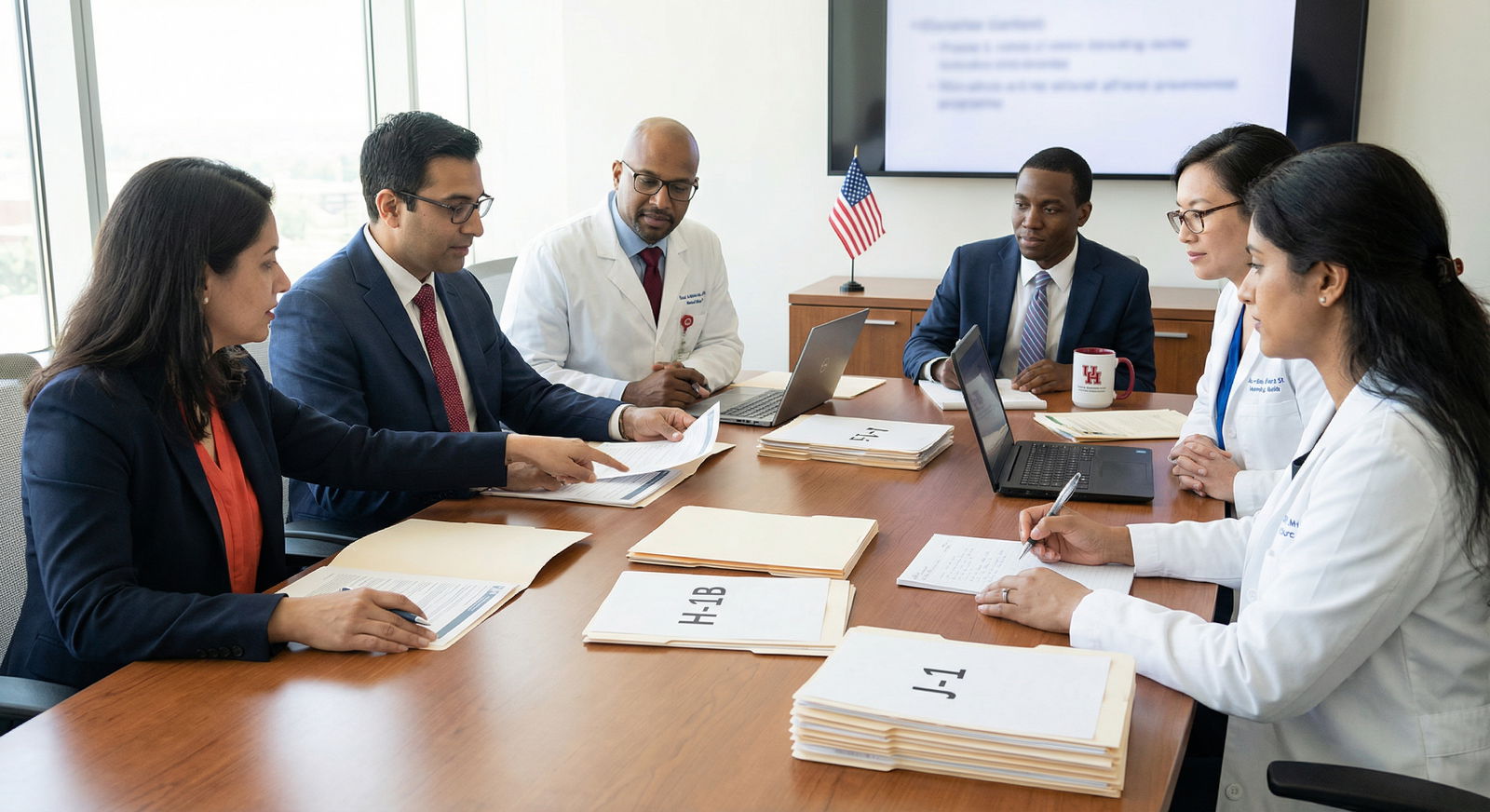
Once your legal status is secured, you can decide whether to fight for the spot or just manage the fallout. Most of the time, fighting to force a program to sponsor you is a terrible idea. If they don't want you because of a funding cut, forcing their hand means walking into a hostile work environment where you might be targeted for failure.
But you still need to negotiate the exit.
Draft a polite, firm inquiry to the GME office. Do not send an angry email to the Program Director. Keep it administrative. Ask for clarification on the reason for the rescission in writing. Ask if the offer is deferred to the next cycle or entirely terminated.
You want a "No-Fault" exit. This means ensuring the rescinded offer doesn't show up as a disciplinary withdrawal on your ERAS record. You need a letter from the GME office stating that the contract was rescinded due to institutional reasons, not due to your academic or professional performance.
This is critical because of that dreaded checkbox on every residency application: "Have you ever had an offer rescinded or a contract terminated?"
If you have to check 'Yes', you need ammunition to explain it. When future programs ask about it, your answer is simple: "The institution experienced a sudden funding cut and rescinded five contracts, including mine. I have a letter from the GME office confirming it was an institutional decision. I immediately secured my visa status and continued my clinical work."
If you don't get that letter, future programs will assume you were fired for being a bad doctor.
The Pivot: Re-Entering the Match or Entering the Workforce
You've secured your visa, documented the exit, and now you're sitting in your apartment without a job for July 1st. It's a brutal reality, but IMGs survive this. Here is how you pivot.
First, look for off-cycle positions. Check the AAMC's Find a Resident portal. Call hospitals directly. Programs lose residents to pregnancies, medical leaves, or sudden transfers all the time. An open PGY-1 or PGY-2 slot in October is a lifeline if your visa status allows you to wait.
If you need to keep your visa status active immediately, transition to a temporary research role. Many university departments have clinical research coordinator positions that can sponsor an H-1B or use your F-1 OPT extension. It's not residency, but it keeps your foot in the US medical system, generates letters of recommendation, and pays the bills while you reapply.
When you re-enter the Match, you have to address the gap in your timeline. Do not hide it. Frame it as a story of resilience. "The institution lost funding, they rescinded the contract, and rather than panic, I secured an immigration attorney, transitioned to a research role at a top-tier institution, and improved my clinical research skills."
Programs want residents who can handle adversity. You just got handed a massive dose of it. If you handle it cleanly, legally, and professionally, it becomes a selling point, not a scarlet letter.
Key Takeaways
- Never accept a 'withdrawal' request from a program until you have consulted an immigration attorney, as it can jeopardize your current status.
- Documentation of the institution's error is your greatest asset in preventing a permanent blemish on your ERAS record.
- Prioritize your legal status above all else; a residency spot is temporary, but an immigration violation is a permanent professional liability.
If you are facing this right now, shut down the panic. Open a blank document. Start recording every detail. Call a lawyer. Protect the visa. The Match will be there next cycle, but only if you are legally here to apply for it.