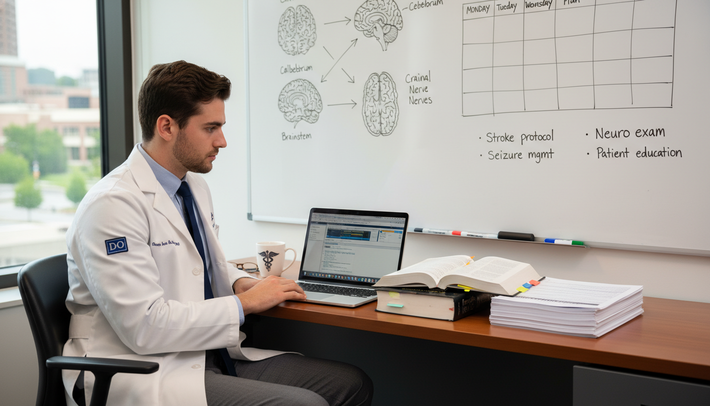
Here is the short answer: no, a pre-SOAP virtual open house is not a magic bullet.
Educational disclaimer: This article is for educational purposes only and is not legal, financial, tax, or professional advising. SOAP policies, NRMP rules, and program-specific practices can change; confirm current requirements with the NRMP, ERAS, your medical school, and qualified advisors.
It can help. Sometimes meaningfully. But if you think simply showing up on Zoom will push you over the line in SOAP, that is fantasy. Programs do not hand out positions because you logged in, smiled, and asked one polished question about resident wellness. They are making fast decisions under pressure, and they are usually looking at much more concrete things: Are you eligible? Is your file complete? Did you respond quickly? Do you look like someone they can plug into residency with minimal drama?
That is the reality.
Let me define the term clearly, because people get sloppy here. In the SOAP context, a pre-SOAP virtual open house is usually an informational session run by a program before or around the SOAP window. It is not a secret audition day. It is not a backdoor interview. It is not a guaranteed pipeline to selection. It is usually a structured opportunity for programs to explain logistics, answer common questions, and give applicants a sense of the training environment.
Applicants overestimate these events for a simple reason: SOAP feels chaotic, and people become desperate for any signal they can control. If the process feels opaque, attendance starts to feel powerful. I have seen this pattern repeatedly. Someone attends two open houses, gets a friendly response from faculty, and suddenly convinces themselves they are “on the radar.” Maybe. But being on the radar is not the same as being at the top of the list.
Use the open house for what it is. A tactical tool. Good for clarifying fit. Good for avoiding dumb mistakes in communication. Good for helping you decide where to spend your limited energy. Not a shortcut. Not a substitute for a strong file. Not a reason to neglect the tasks that actually drive SOAP outcomes.
Why Programs Use Virtual Open Houses During or Before SOAP
Programs do not hold these sessions out of pure generosity. They do it because they have a practical problem: too many applicants, too little time, too many repeated questions.
A virtual open house lets them address the crowd efficiently. One coordinator can explain schedule structure, visa limitations, onboarding expectations, preliminary-year issues, call burden, or whether they will even consider certain applicant profiles. That saves dozens of one-off emails. It also reduces noise during a time-sensitive process.
There is also a second layer. A quieter one. Programs are watching.
Not always formally. Not always with a score sheet. But they are watching. They notice who arrives late with camera off and chaotic audio. They notice who asks a thoughtful, program-specific question. They notice who clearly has not read the website and asks something painfully basic that was answered on page one. These are not trivial impressions during SOAP, where programs are trying to reduce uncertainty quickly.
That said, you need to understand the distinction between informational value and selection value. Informational value can be high. You may learn exactly how the program thinks, what they prioritize, whether they are IMG-friendly, whether they need a prelim year, or whether they are rigid about graduation year cutoffs. That is useful. Very useful.
Selection value is different. Most programs are not saying, “This applicant attended the open house, therefore move them above stronger candidates.” That is not how the process usually works. Attendance can create familiarity. Familiarity can help. But it rarely overrides a weak application, missing documents, slow responses, or poor fit.
Timing matters too. A session held before SOAP may be intended to orient applicants and reduce confusion before the flood starts. A session held during SOAP may function more like crowd control and expectation setting. In both cases, the program is trying to streamline communication. That is the real engine here. Efficiency, not romance.
What Actually Moves the Needle in SOAP Selection
Let me be blunt. The applicants who get picked in SOAP usually do not get picked because they attended an open house. They get picked because, when the file is opened, the program sees something usable, credible, and low-risk.
That is what moves the needle.
The big drivers are predictable:
- Eligibility for the position
- Completed, clean application materials
- Fast responsiveness
- Professional communication
- Fit with program needs
- Minimal red flags
- A believable story for why this specialty and this program make sense
If you are missing a required document, no open house will rescue you. If your communication is sloppy, no panel interaction will neutralize that. If your application raises concerns and the program has ten other options with fewer concerns, you are done. Fast.
This is where applicants confuse memorable with selectable. Those are not the same thing.
A thoughtful question during an open house may make someone remember you. That is real. I have seen faculty say, “Oh yes, that was the applicant who asked about supervision structure in the ICU.” Fine. Helpful, even. But if that same applicant has an incomplete file, a weak personal statement, unexplained exam issues, or poor specialty alignment, the memory does not become a match offer.
Programs in SOAP are often using a filtering mindset. They are not searching for the most charming person in the Zoom room. They are trying to answer more practical questions:
- Can this person start and function safely?
- Is there a major professionalism concern?
- Will this applicant likely accept and succeed here?
- Does the file make sense without a lot of detective work?
- Are there hidden problems we do not have time to untangle?
I have seen common SOAP decision patterns over and over. Red flags are screened first. Completeness matters immediately. Responsiveness becomes a tiebreaker faster than people realize. A coordinator emails three applicants for follow-up; one replies in seven minutes, one in two hours, one the next morning. Guess which one feels safer to move forward.
That is SOAP. Compressed, practical, occasionally brutal.
The misconception I dislike most is this idea that one visible act can outweigh the rest of the file. It cannot. Not in any serious program. Attendance is a seasoning, not the meal. If the meal is bad, nobody cares about the garnish.
How to Use a Virtual Open House Strategically if You Attend
Now the useful part. Because I am not anti-open-house. I am anti-magical thinking.
Attend if the session helps you answer one of three questions:
- Is this program actually a fit for me?
- Does this program have requirements or constraints I need to know before I spend energy here?
- Can this session help me communicate with more precision later?
If the answer is yes, attend. If the answer is no, skip it and work on higher-yield SOAP tasks.
Here is the framework I give applicants.
Before the session
Do your homework first. Read the website. Review the program structure. Know whether it is categorical, preliminary, community-based, university-affiliated, IMG-friendly, rural-heavy, research-light, or procedure-dense. If you show up asking basic questions that the website answers in ten seconds, you look lazy. During SOAP, lazy is a bad look.
Prepare one or two questions only. Not six. Not a speech disguised as a question.
Good questions are specific and reveal that you understand what matters in training. For example:
- “How does the program support residents who need early remediation in workflow efficiency during intern year?”
- “You mentioned strong autonomy in the second year. How is that balanced with supervision in high-acuity rotations?”
- “For applicants coming from a different geographic region, what usually predicts a good transition into your training environment?”
These work because they are thoughtful without sounding performative.
Bad questions are everywhere:
- “Can you tell us about your program?” Too vague.
- “How many vacation days do we get?” Fine to know, poor first impression.
- “What are my chances?” Absolutely not.
- “If I attend this open house, does it help me match?” Never ask the quiet part out loud.
During the session
Show up on time. Camera on unless instructed otherwise. Neutral background. Good audio. Professional clothing. Notes nearby. Name displayed correctly. This is not obsessive. This is basic adult behavior.
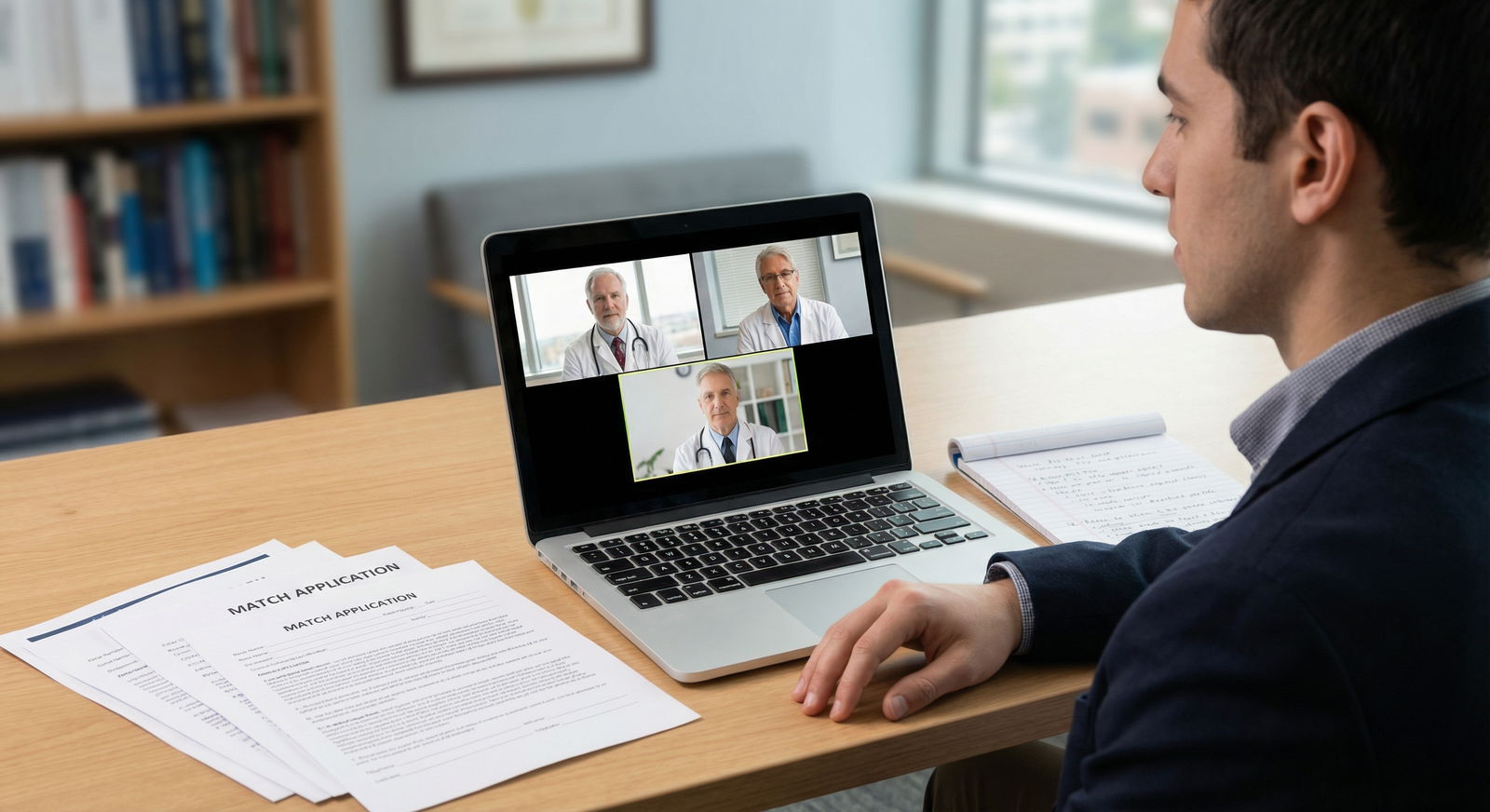
If you speak, be concise. Introduce yourself only if appropriate and keep it short. Programs are not there for your mini personal statement. I have watched applicants ramble for ninety seconds before reaching a question. Painful. It wastes time and makes you look self-focused.
Do not monopolize the Q&A. Do not force yourself into visibility. Visibility without discipline is how people remember you for the wrong reason.
Also, do not oversell. SOAP has a way of making applicants sound desperate. “Your program is my dream.” “I would do anything to train here.” “I know I would be a perfect fit.” Please do not do this. It reads as generic at best and unstable at worst. Programs want readiness, not emotional spillage.
Aim for this tone instead: informed, calm, interested, professional.
After the session
The real value of an open house often comes after the event.
Use what you learned to tailor communication. If the program emphasized resident independence, community service, underserved care, procedural volume, or close faculty access, fold that into later messages only if it is genuinely relevant to your background. Specificity is powerful. Generic praise is worthless.
If the program requested follow-up materials or clarified a process point, act immediately. SOAP rewards speed and accuracy. I have seen applicants lose momentum simply because they treated a same-day request like a next-week task. Wrong instinct.
You can also use the open house to decide not to pursue a program. That matters. If the culture sounds wrong, the logistics do not fit, or the eligibility barriers are obvious, stop wasting your bandwidth there. During SOAP, focus is a resource.
The strategic use of these events is not “How do I get seen?” It is “How do I reduce uncertainty for both sides?” That is the mature way to play this.
Myth-Busting the Most Common SOAP Open House Mistakes
Let us clean up the myths, because this is where people sabotage themselves.
Myth 1: Attendance proves interest
No. Attendance proves attendance.
Interest is shown through the whole interaction pattern: you followed instructions, understood the program, asked a targeted question, and responded appropriately afterward. A logged-in name on a participant list is weak evidence. Professional behavior is stronger evidence.
Myth 2: Visibility alone creates advantage
Wrong. Visibility without substance is risky.
I have seen applicants become highly visible by talking too much, asking self-serving questions, or trying to sound impressive. It backfires. If your visibility reveals poor judgment, you would have been better off silent.
Myth 3: Every program values participation the same way
Definitely false.
Some programs barely track attendance. Some appreciate it informally. A few may use it as a tiny differentiator among similar applicants. Tiny. That variability matters. Do not build your SOAP strategy around an assumption that every program is scoring your presence.
Myth 4: More enthusiasm is always better
No again. Desperation is not enthusiasm.
There is a specific kind of applicant error I have seen in these sessions: asking for reassurance, hinting about rank pressure, fishing for special consideration, or speaking in a way that sounds panicked rather than prepared. Programs do not want to manage your anxiety in real time. They want to assess whether you can communicate like a future colleague.
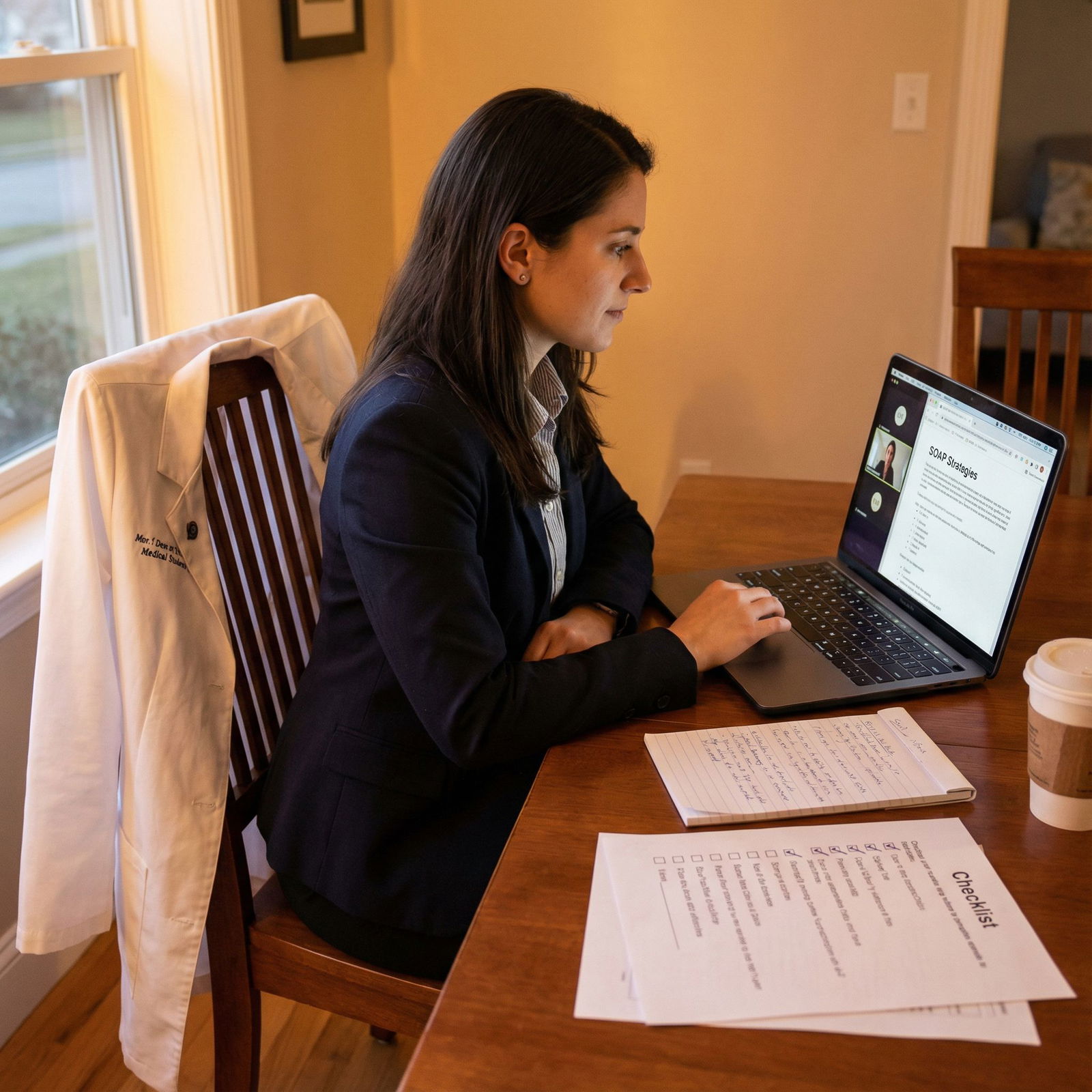
Subtle errors matter too:
- Asking questions clearly answered online
- Interrupting panelists
- Using an unprofessional screen name
- Eating on camera
- Turning the session into a personal pitch
- Suggesting that attendance should somehow earn preference
That last one is especially bad. No program wants to hear the subtext: “I showed up, so I deserve extra credit.” You do not. This is not a loyalty punch card.
Bottom Line: When a Virtual Open House Helps, and When It Does Not
Here is the nuanced reality.
A pre-SOAP virtual open house can help you. It can sharpen your understanding of a program, improve the quality of your questions, reduce mismatches, and help you communicate like someone who actually belongs in the conversation. Those are real advantages.
But it is rarely the reason you get picked.
If your time is limited during SOAP, your priorities should be brutally clear:
- Make sure your application is complete.
- Respond quickly to every legitimate program communication.
- Follow instructions exactly.
- Maintain professional, calm communication.
- Use optional events only if they add real strategic value.
That is the order. Not the other way around.
So what is the decision rule?
Attend if the session is relevant, if you can show up professionally, and if the information will help you make better choices or communicate more effectively. Skip if it will distract you from urgent SOAP tasks, if you are unprepared, or if you are only going because you hope your face on a screen will compensate for other weaknesses.
That is the myth-vs-reality split right there.
Use open houses as one component of a broader SOAP strategy. A useful component. Sometimes a smart one. But never a substitute for the fundamentals. The applicants who do best in SOAP are usually not the ones chasing every optional signal. They are the ones who stay organized, avoid self-inflicted wounds, and make it easy for programs to say yes.