
Most of what you’ve heard about SOAP is either outdated, sanitized, or flat-out wrong.
Let me tell you how program directors really build their SOAP rank lists when the clock is ticking and their phones are blowing up.
SOAP is not a mini-version of the regular Match. It is organized chaos with just enough rules to keep it from being a total street fight. PDs are tired, annoyed they still have unfilled spots, and working under a four-day time bomb. That mindset changes everything.
You want to survive SOAP? You need to understand what’s actually happening in the program offices during those 72 frantic hours.
What SOAP Looks Like Inside the Program Office
Here’s the scene that applicants never see.
Monday noon ET, list of unfilled positions drops. PD and coordinator have already blocked off the week “just in case,” even though they swore this year they’d fill. They always say that. They rarely do.
ERAS SOAP portal opens. Within a couple of hours, the applicant pool explodes. Hundreds of files. No time. No nuance. No “holistic” anything.
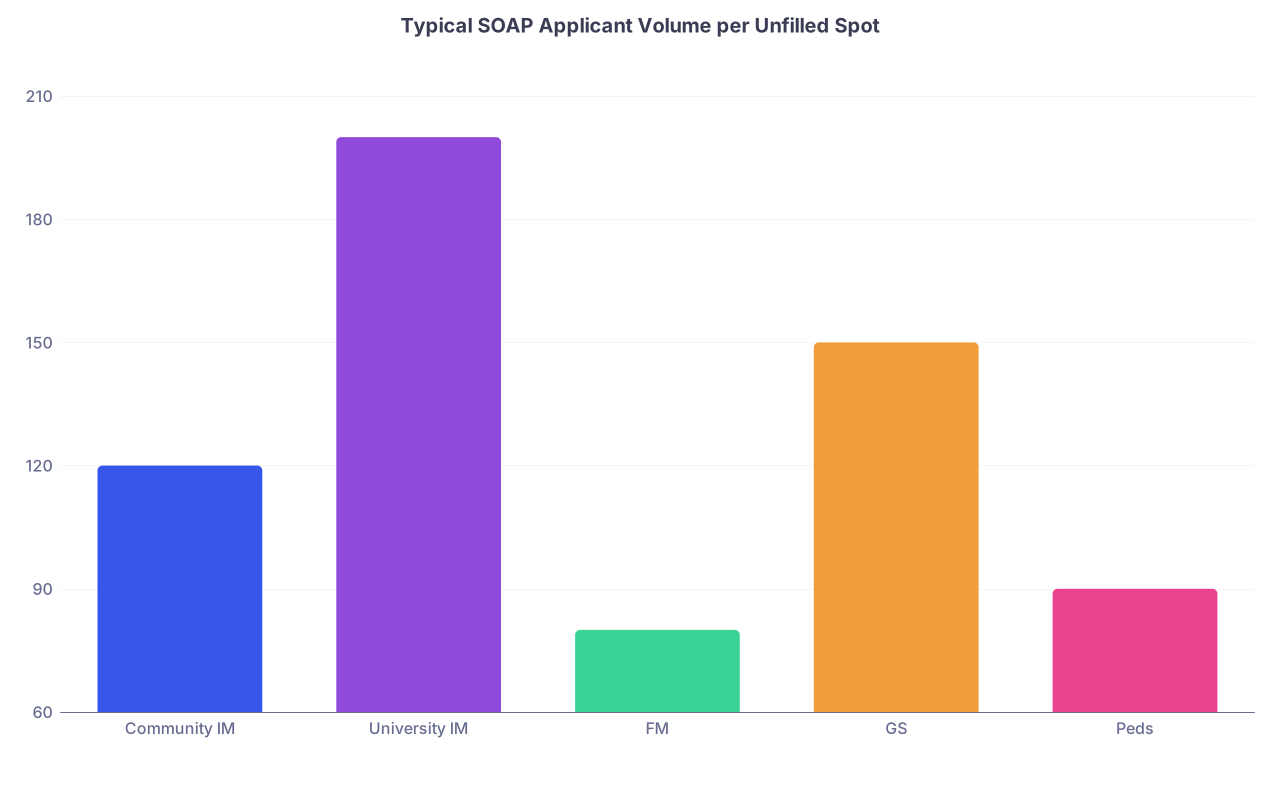
| Category | Value |
|---|---|
| Community IM | 120 |
| University IM | 200 |
| FM | 80 |
| GS | 150 |
| Peds | 90 |
For a program with 3–5 unfilled categorical spots, it’s routine to see 400–800 SOAP applications. I have watched PDs scroll through 70+ applicants in under 10 minutes. Do the math. You’re getting seconds.
Here’s how the internal workflow actually runs in many places:
- Coordinator does a hard pre-screen (US grads vs non-US, visa, degree type, obvious red flags).
- Chief resident or APD does a second pass for “probable interview” and “auto-no.”
- PD comes in later for the final cut, interviews, and actual ranking.
Nobody is leisurely reading your personal statement with a cup of coffee. They’re triaging a pile.
SOAP is war-room medicine: fast rule-outs, quick picks, and heavy bias toward anything easy and low-risk.
The First Filter: Convenience and Risk (Not Your Dreams)
The dirty truth: the first SOAP filter almost never starts with “Who’s the best applicant?” It starts with “Who will be the least headache to hire in 3 days?”
Common internal questions you’ll never hear out loud:
- Can we get this person credentialed fast?
- Are they local or at least in the country right now?
- Do they need a visa? (Huge differentiator.)
- Is this a US MD/DO or IMG?
- Any obvious professionalism/disciplinary hits?
- Where have they been since graduation?
If you think I’m exaggerating, here’s a typical whispered comment I’ve heard in multiple SOAP cycles:
“We’re not figuring out visas in SOAP. Just filter to no-visa-needed first.”
Not fair. Absolutely true.
So your first job is to not get filtered out in those 5–10 seconds per file.
What that means in practice:
- If you’re a US grad with no visa needs and no big red flags, you are immediately safer and easier. You get looked at more seriously.
- If you need a J-1 or H-1B, you are not dead, but you are not equal. You must overcome the extra “friction” with clear strengths and cleaner documentation.
- If you’ve been out of school for a few years and your “recent clinical experience” is vague or unsupported, you’re in trouble.
PDs in SOAP are not optimizing for the perfect future academic superstar. They are trying not to get burned by a problem hire under a ridiculous timeline.
The Real Priority Stack: How Files Get Sorted
Nobody officially writes this on a whiteboard, but this is the mental algorithm most PDs use when they scan SOAP applicants.

| Step | Description |
|---|---|
| Step 1 | All SOAP applicants |
| Step 2 | Immediate reject |
| Step 3 | Low friction group |
| Step 4 | Extra review group |
| Step 5 | Top priority review |
| Step 6 | Next tier review |
| Step 7 | Lower tier |
| Step 8 | Meets basic filters |
| Step 9 | No visa needed |
| Step 10 | US MD or DO |
| Step 11 | Outstanding candidate? |
Let’s break down what PDs actually care about, in rough order, during SOAP specifically (not the main Match):
1. Eligibility and Logistics
Not glamorous, but this is first.
- Visa status
- State licensing/ECFMG status ready or easily obtainable
- Graduation year (most hate >5 years out, many quietly filter >3 years)
- Clean background on first glance (no obvious academic dismissal, unaddressed professionalism hits)
If anything here is messy or unclear in your ERAS profile or documents, you get dropped to the “maybe later” pile. In SOAP, “maybe later” usually means never.
2. Category: US MD vs DO vs IMG
People dance around this, but this is the Insider version, so I won’t.
In SOAP, risk tolerance drops. Many programs become more conservative than during main Match:
- US MD: Safest category, especially if recent grad and no serious red flags.
- US DO: Still very competitive; in many community and primary care programs, this is effectively equivalent to US MD.
- US IMG: Often seriously considered, especially in IM/FM/peds/psych, but now your file must be sharper—good Step 2, clear recency of clinical activity.
- Non-US IMG: You’re fighting friction (visa, distance, recency) and implicit bias. Not impossible, but you’re not on equal footing.
Anyone saying “we treat all degrees equally” is giving the brochure answer, not the war-room answer.
3. Exam Performance – With Context
Step 1 is pass/fail now. That helps some people, hurts others. Step 2 CK becomes your main numeric signal.
Here’s how PDs look at it during SOAP:
- Passing Step 2 with no repeats = baseline requirement for most.
- A strong Step 2 (say 240+ for IM or 230+ for FM/psych/peds) can absolutely rescue you if your file is otherwise unremarkable.
- Multiple failures, or worse—no Step 2 yet—are killers in SOAP. Programs hate unknowns this late.
One PD said it bluntly in our committee room:
“I’m not fixing someone else’s Step mess in SOAP.”
They want someone who won’t be an immediate board-pass and remediation problem.
4. Recency and Type of Clinical Experience
SOAP shifts attention heavily to “What have you been doing with your hands lately?”
- Recent US clinical experience (auditions, sub-Is, observerships that are real, not sketchy) = big plus.
- Gap years with no clinical explanation = huge red flag.
- A letter from a rotation last month in the same specialty? Gold.
- Four letters, all >2 years old, none from US? That hurts more in SOAP than in the regular cycle because they’re hiring you next month, not in a year.
One internal medicine PD I know had two similar candidates in SOAP:
- Candidate A: US IMG, Step 2 233, recent 2-month US IM observership, strong PD letter dated January.
- Candidate B: US MD, Step 2 219, letters all 2 years old, no clear recent clinical work.
They ranked A over B. Why? “I know exactly what A looks like in a US ward last month. B is a blurry picture from two years ago.”
Recency matters more than prestige when they’re scrambling.
5. Fit for the Program’s Pain Points
You think you’re applying to “an IM program.” They think they’re hiring a warm body for a very specific need:
- Night coverage gaps
- ICU rotations without enough senior residents
- Outpatient clinics drowning in volume
- A toxic PGY-2 who just left and blew a hole in the schedule
In SOAP, PDs ask: “Can this person plug into our worst rotations without falling apart?”
If your application quietly signals that you can handle:
- Heavy service loads
- Underserved populations
- Tough call schedules
- Complex, comorbid patients
you move up. If you look fragile, vague, or overly “academic only” for a clearly service-heavy program, you slip.
How Interviews Actually Work During SOAP
SOAP interviews are not the same creature you practiced for in the fall.
They are:
- Short, often 15–20 minutes.
- Stacked back-to-back.
- Often done by Zoom or phone.
- Sometimes handled by APDs or chiefs more than PDs, who may only speak to top candidates.

The goals of a SOAP interview from the PD’s side:
- Confirm you’re normal to talk to. Not weird, not disorganized, not hostile.
- Confirm you genuinely understand the specialty and are not just panicking into it.
- Quickly gauge reliability and work ethic.
- Filter out anyone likely to quit, fail, or become a problem.
They ask a few very standard questions:
- “Tell me briefly about yourself.”
- “Why this specialty, and why now?”
- “Tell me about the gap/failed exam/withdrawal in your record.”
- “If we offered you a spot, would you come here?” (Yes, this gets asked, politely or not.)
SOAP interviews are often more blunt than main-cycle interviews. There’s less theater.
You might hear:
- “You didn’t match—what happened?”
- “If you want surgery long-term, why are you in my FM SOAP pool?”
- “You’ve been out 4 years; why should I take the risk?”
Your job is to have direct, short, emotionally stable answers. No long stories. No defensiveness. No blaming your school, your dean, or “the system.”
If you sound collected, honest, and committed, you can absolutely beat better-paper applicants who crumble when asked, “Why did you not match?”
How Rank Lists Are Actually Built During SOAP
This is where the myths really diverge from the truth.
Most students imagine SOAP rank lists as some careful, 2-day deliberative process. No. It’s speed sorting plus snap judgments, with some sanity checks at the end.
Here’s a very common internal ranking process I’ve seen up close:
- Coordinator filters for basic eligibility and logistics.
- One faculty member or APD does the first triage:
- “Interview”
- “Maybe if we need more”
- “No”
- Interviews happen in a single burst on Tuesday/Wednesday.
- After each interview block, quick debrief:
- “Yes, good”
- “Maybe”
- “No way”
- PD (and often the chief) sit in the afternoon and stack the “Yes” and “Maybe” piles into a rank list.
| Bucket | Meaning |
|---|---|
| Strong Yes | Rank top, would be happy |
| Soft Yes | Rank, acceptable |
| Maybe | Rank if we need more names |
| No | Do not rank |
They are not arguing over who had the better research abstract or who published more. They’re asking:
- “Who can definitely do the work?”
- “Who seemed most stable and realistic?”
- “Who’s least likely to leave or implode?”
Two patterns you should know:
Interview impressions can jump you several tiers.
If your paper app is mid-tier but your interview is calm, mature, and clear, you can absolutely leap over higher-stat applicants who sound entitled or bitter.Red flags sink you more harshly than in the main cycle.
In the main Match, they sometimes take a chance on a high-upside risk. In SOAP, they do not. There is no time to babysit.
Specific Things That Quietly Move You Up (or Down)
Let me be very concrete here. These small details often matter more than you think.
Things that move you up
- A clear, concise explanation of why you didn’t match that doesn’t blame anyone and shows insight.
- Evidence that you’ve already mentally committed to this specialty (even if it wasn’t your first love): electives, reading, mentors, or honest narrative.
- Strong Step 2 relative to the SOAP pool, especially if your Step 1 was weak.
- Recent, believable US-based clinical work with contactable supervisors.
- A short, focused answer to “Why our program?” that references something real (safety-net hospital, specific population, structure of residency, geography).
Things that quietly tank you
- Vague hand-wavy explanations for gaps: “family reasons” without any clear structure to what you did clinically.
- Badmouthing your medical school, an attending, or “the system” as the reason you didn’t match.
- Hinting you’ll re-apply to another specialty immediately or that this is “just for the year.”
- Overly fancy research spin in a very service-heavy community program—makes them think you’ll be miserable or leave.
- Poor technology etiquette in virtual interviews: late, bad audio, chaos in the background.
One PD said this after a SOAP block:
“I don’t need a superstar. I need someone who will show up at 6 a.m. on July 1 and not blow up the schedule.”
If you project that person, you get ranked.
What You Can Actually Control in the Middle of the Scramble
You cannot rewrite your Step score or invent new rotations during SOAP week. You control presentation, clarity, and realistic targeting.

Here’s where smart applicants separate themselves:
1. Your Story About Not Matching
You need a 20–30 second, practiced, emotionally even explanation:
- What happened (concise and factual).
- What you learned.
- What you did differently now.
- Why you are still fully committed to training.
Example structure:
“I applied to X last cycle. My application had weaknesses: [briefly name them—late Step 2, limited audition exposure, too few programs]. I’ve addressed those by [concrete steps]. SOAP gives me a chance to continue training now, and I’m fully committed to building a career in Y through your program.”
No drama. No victimhood. No five-minute backstory.
2. Showing You Understand the Specialty You’re SOAPing Into
If you’re pivoting—say from surgery to FM, or from ortho to IM—you must make that pivot sound genuine and thought-through, not like pure desperation.
You need a couple of specific points:
- Concrete exposure to that specialty.
- A reason it fits your temperament and goals.
- A sense of what day-to-day life in that field actually looks like.
PDs smell “I’ve never thought seriously about FM, I just clicked all SOAP boxes” instantly.
3. Being Instantly Reachable and Ready
This sounds trivial. It isn’t.
SOAP moves fast. Some programs:
- Call or email on short notice.
- Offer limited interview slots.
- Expect quick responses.
If you miss a call, have a full voicemail, respond 12 hours later, or fumble scheduling, you might just disappear from their rank list purely out of logistics.
Treat SOAP week like a 72-hour code: phone charged, email notifications on, Zoom installed and tested, quiet place ready.
What PDs Say After SOAP Is Over
When SOAP ends and the dust settles, PDs don’t sit back and say, “We found the five best possible residents in the country.”
They say some version of:
- “We got solid people given the situation.”
- “At least nobody seems like a disaster.”
- “Let’s hope they pass boards and stick around.”
That’s what you’re fighting for in SOAP: to be seen as a solid, reliable, teachable hire in a crisis, not a flawless unicorn.
If you understand that, you’ll present yourself differently. Less about glossy perfection. More about stability, insight, and readiness to work.
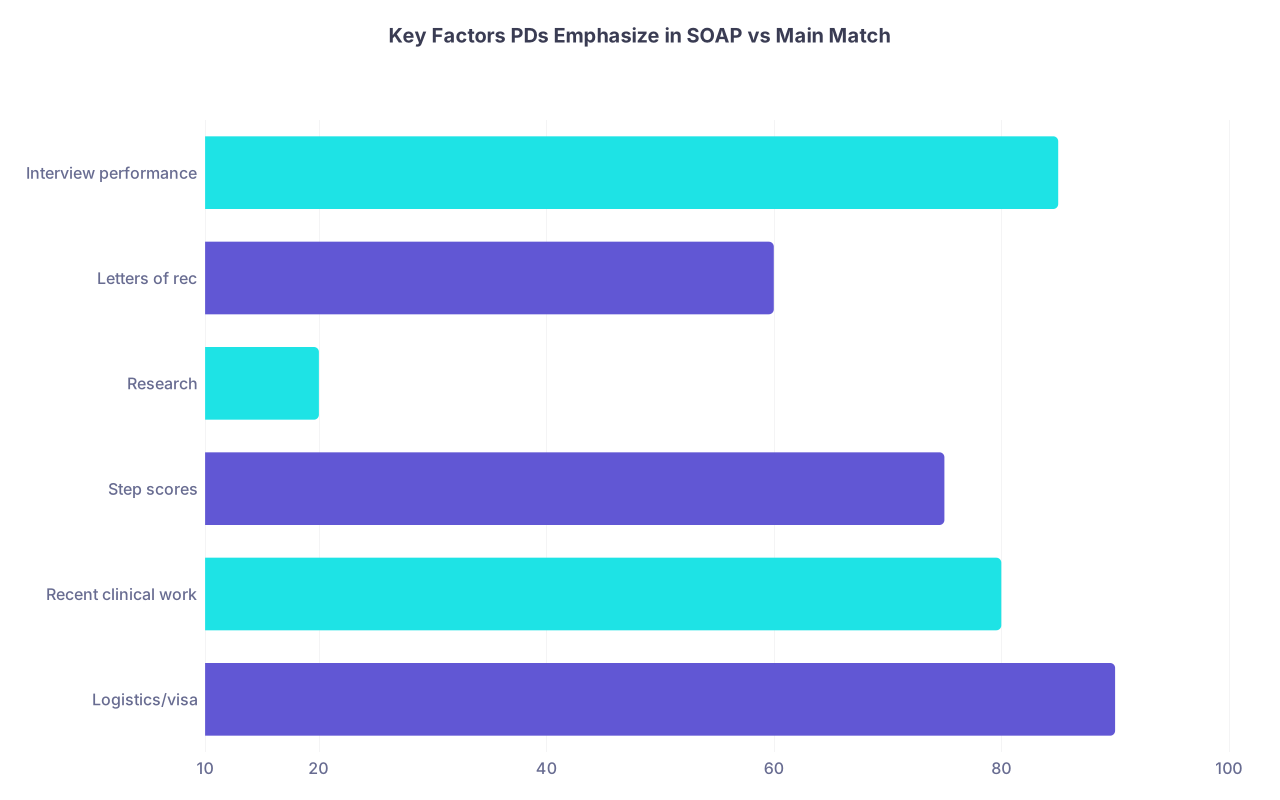
| Category | Value |
|---|---|
| Logistics/visa | 90 |
| Recent clinical work | 80 |
| Step scores | 75 |
| Research | 20 |
| Letters of rec | 60 |
| Interview performance | 85 |
FAQ (SOAP Edition – Exactly What You’re Afraid to Ask)
1. If I say “I’ll come if you rank me,” do they actually believe me?
They’ve heard that line a hundred times in three days. What matters is whether your story, specialty interest, and geography make that believable. Saying “This is my top choice in SOAP and I would be thrilled to train here” is fine—but if you’re obviously saying it to every program, they smell it. Back it up with specific reasons you’d actually stay.
2. Do programs really avoid visa candidates in SOAP?
Many do, some don’t. In SOAP, every extra step (ECFMG timing, visa paperwork, start dates) feels heavier. That means some PDs quietly prioritize non-visa candidates if they have enough to choose from. If you need a visa, your best counter is an impeccable, complete file, strong Step 2, and recent US clinical letters that scream “low risk and ready to go.”
3. Is it better to SOAP into a “backup specialty” I’m unsure about or go unmatched and reapply?
This is the question everyone dances around. Here’s the blunt view most PDs have: SOAP into a field you could realistically see yourself practicing and do a good job in. Do not SOAP into something you will hate and likely quit. Leaving a residency after PGY-1 is a bigger stain on your record than not matching once. If you can commit to the specialty with integrity, SOAP. If you absolutely cannot, sitting out and re-strategizing is painful but sometimes smarter.
Key truths to walk away with:
- SOAP is about risk and logistics more than prestige and ideal fit.
- PDs rank applicants who look stable, recent, and realistic, not necessarily the flashiest on paper.
- Your ability to explain your path, own your weaknesses, and project reliability in a 15-minute conversation can move you higher on a rank list than a marginally better Step score ever will.