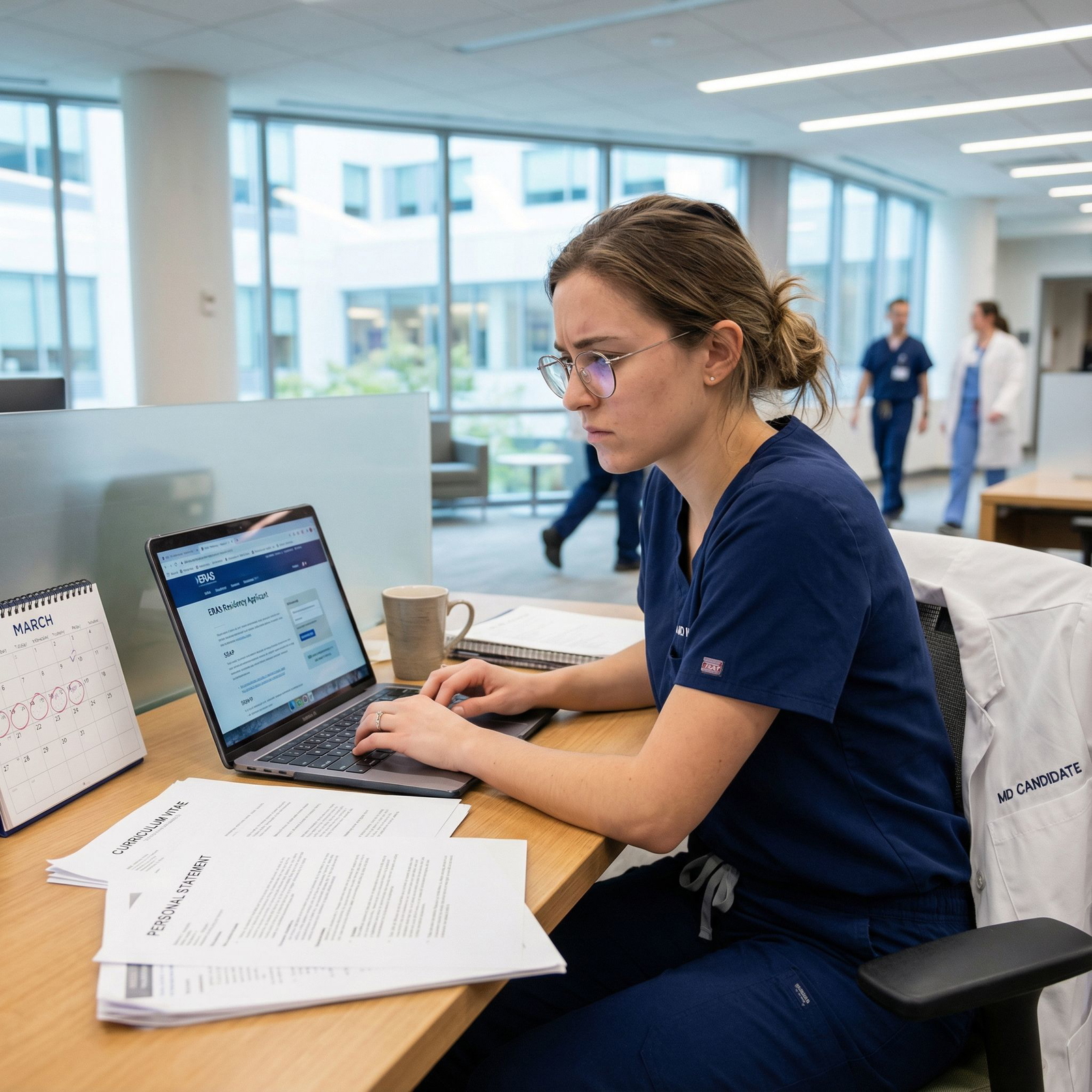
Navigating the Supplemental Offer and Acceptance Program (SOAP) is stressful for everyone—but as a non-US citizen IMG trying to secure a preliminary surgery year, the challenges can feel multiplied. Visa constraints, funding concerns, and limited prelim positions all intersect in a very compressed timeline.
This guide walks you through SOAP preparation specifically tailored to a foreign national medical graduate targeting prelim surgery residency positions. You’ll learn what to do before Match Week, how to act strategically during SOAP, and how to keep longer-term goals in mind (transitioning to a categorical position, reapplying, or building your profile).
Understanding SOAP: What It Is and Why It Matters for Prelim Surgery
Before you can prepare effectively, you must clearly understand what is SOAP and how it fits into the bigger residency match process—especially as a non-US citizen IMG.
What is SOAP?
SOAP (Supplemental Offer and Acceptance Program) is the structured process run by the NRMP during Match Week for applicants who:
- Are eligible for the Main Match
- Have registered for the NRMP
- Are unmatched or partially matched when Match results are released
SOAP is not a free-for-all scramble; it’s a regulated, time-boxed system:
- You can apply only through ERAS to a limited number of programs.
- Programs can only contact you once they’ve sent you an interview invitation (no cold calls or emails from you).
- There are multiple offer rounds over a few days; you can accept, reject, or let offers expire.
For a non-US citizen IMG, SOAP is often the primary realistic opportunity to enter US training after an initial failed or partial Match.
Why SOAP Matters Specifically for Preliminary Surgery
Preliminary surgery positions are:
- Non-categorical (1-year) slots, not guaranteed progression to PGY-2 or beyond.
- Often designed to:
- Meet service needs (e.g., large surgical services, trauma centers)
- Train residents going into other specialties (e.g., radiology, anesthesia, urology)
- Frequently experience vacancies due to last-minute resignations, changes in program needs, or unfilled slots in the Main Match.
For a foreign national medical graduate, a prelim surgery year via SOAP can:
- Provide US clinical and surgical experience
- Build strong US letters of recommendation
- Demonstrate performance and reliability in a demanding environment
- Create opportunities to convert to categorical within the same institution (when/if available) or boost your competitiveness for a future Match cycle
However, prelim years also carry risks:
- No guaranteed second year
- Heavy workload with less structured education sometimes
- Visa sponsorship may be more limited for 1-year positions
Understanding these pros and cons early will help shape a realistic SOAP preparation strategy.
Pre-SOAP Preparation (3–6 Months Before Match Week)
SOAP moves very fast. Most of your success will come from steps you take well before Match Week, especially as a non-US citizen IMG.
1. Clarify Your Goals and Boundaries
Ask yourself:
- Is my top priority:
- Any US training to get in the system?
- Only prelim surgery? Or would I consider other prelim options (e.g., prelim medicine, transitional year)?
- Am I willing to move anywhere in the US, or do I have geographical restrictions?
- What are my visa requirements?
- Am I eligible for J-1 (ECFMG-sponsored)?
- Do I need H-1B or absolutely cannot accept J-1?
- Can I financially support myself through a year with potential relocation and licensing costs?
For most non-US citizen IMGs targeting surgery:
- Being open geographically and to J-1 visas significantly increases options.
- Being too restrictive (H-1B only, limited locations) can make success in SOAP much harder.
Write down your non-negotiables and your flexible areas. You’ll need to make rapid decisions during SOAP, and clarity helps.
2. Optimize Your ERAS Application for Prelim Surgery
You can’t substantially rewrite your application during SOAP, so pre-SOAP optimization is crucial.
Key components to tailor for a prelim surgery residency:
Personal Statement
- Prepare two versions:
- A surgery-focused personal statement.
- A general SOAP personal statement that can be used for other specialties or prelim medicine if needed.
- For the surgery PS, emphasize:
- Genuine interest in surgery
- Hands-on procedural experiences (even if limited)
- Resilience, work ethic, ability to handle long hours
- Teamwork in high-stress environments
- Prepare two versions:
Experiences Section
- Highlight:
- Any surgical rotations, observerships, or electives in the US or abroad
- Clinical exposure to acute care, trauma, critical care
- Roles demonstrating leadership, responsibility, and reliability
- For a non-US citizen IMG, US clinical exposure (even observerships) can be critical to prove familiarity with the US system.
- Highlight:
Letters of Recommendation (LoRs)
- Aim to have at least one 1–2 LoRs from surgeons, ideally in the US.
- Also have at least one strong general LoR (e.g., internal medicine or family medicine) you can use broadly.
- Confirm that letters are uploaded to ERAS well before Match Week.
Step Scores and Attempt History
- You can’t change scores, but you can:
- Prepare a concise, honest explanation (if asked) about failures or delays.
- Emphasize improvement trajectory (e.g., higher Step 2 CK, strong clinical performance).
- You can’t change scores, but you can:
3. Know Your Visa Situation and Target Programs Accordingly
For a non-US citizen IMG, visa is often the biggest practical barrier.
- J-1 visa (via ECFMG):
- Most commonly sponsored by programs, including many community surgery programs.
- Easier to get than H-1B in SOAP.
- H-1B visa:
- Fewer programs sponsor it.
- Often requires Step 3 completion before start date.
- For a 1-year prelim surgery year, many programs avoid H-1B for cost and complexity reasons.
Action steps:
- Pre-Match season, create a table of surgery prelim programs that have historically:
- Accepted IMGs
- Sponsored J-1 and/or H-1B
- Use:
- Program websites
- FREIDA
- Program/ECFMG reports
- Word-of-mouth from current residents, alumni, or IMG forums (always verify)
During SOAP, you will not have time to research each program from scratch. A pre-built list with visa information and IMG-friendliness is essential.
4. Understand SOAP Timelines and Mechanics
Know the key events of Match Week:
- Monday morning:
- NRMP releases “Matched” / “Did Not Match” status.
- Later Monday:
- List of unfilled programs becomes visible (through NRMP/R3 system).
- SOAP-eligible applicants can begin researching programs.
- Monday–Thursday:
- Multiple SOAP offer rounds.
- ERAS limits the number of applications you can send (e.g., up to 45 during SOAP—verify exact year’s rules).
Preparation steps:
- Read NRMP and ERAS SOAP guides in detail before Match Week.
- Make a SOAP checklist:
- Logins for NRMP and ERAS
- Time-zone conversion for offer rounds
- Notification settings (text/email from NRMP/ERAS)
- If you’re in a different country, ensure stable internet, backup power, and communicate with family or current employer about needing flexibility that week.

Strategic SOAP Preparation for Prelim Surgery
Once you understand the landscape, you need a practical, stepwise plan to act on during SOAP as a non-US citizen IMG.
1. Build a Prioritized Target List Template Before Match Week
You won’t know which programs are unfilled until Match Week, but you can build the framework:
Create a spreadsheet with columns like:
- Program name & ACGME ID
- Location (state, city)
- Type (university, university-affiliated, community)
- Position type (Prelim surgery / categorical / prelim other)
- Visa policy (J-1 only, H-1B, both, none)
- IMG friendliness (historical acceptance of IMGs)
- Step score preferences (if known)
- Notes (call structure, trauma designation, ICU exposure)
- Priority level (A/B/C)
Then, pre-load it with:
- Programs you previously applied to.
- Additional prelim surgery programs that historically take IMGs and sponsor J-1.
During SOAP, when the unfilled list is released, you can quickly:
- Cross-match unfilled prelim surgery programs with your template.
- Assign priority based on:
- Visa eligibility for you
- Your competitiveness
- Lifestyle/ location considerations
2. Segment Programs by Realistic Competitiveness
You want a mix of reach, reasonable, and safe options:
- High priority / realistic:
- Programs that accept IMGs regularly
- Sponsor J-1
- Located in areas that are not ultra competitive (e.g., outside major coastal metro hubs)
- Reach:
- Highly reputed university programs
- Major metropolitan academic centers
- Programs preferring US grads but occasionally taking strong IMGs
- Safe:
- Smaller community hospitals, often in less popular geographic regions
- Programs explicitly stating openness to IMGs and J-1 visas
As a foreign national medical graduate, don’t restrict yourself only to “prestigious” programs; your first goal is to enter the US system with a solid training environment where you can succeed, build relationships, and get strong letters.
3. Prepare SOAP-Specific Communication Materials
Even though you can’t cold-email programs during SOAP, you may be asked to respond quickly when invited to interview.
Have templates ready for:
Email reply to interview invitation:
- Express gratitude
- Confirm availability
- Ask politely about interview format (phone, video, panel) if unclear
1–2 minute verbal pitch (elevator pitch):
- Who you are (non-US citizen IMG from [country/university])
- USMLE and graduation year
- Why prelim surgery
- Why you are a strong fit for their program (focus on work ethic, reliability, ability to handle volume, interest in surgical career)
Short explanation for common concerns:
- Gap years or delayed graduation
- Step failures or low scores
- Limited US clinical experience
- Visa needs (clarify that you are fully aware of J-1 terms and ready to proceed if applicable)
Practicing these responses aloud is part of effective SOAP preparation.
4. Be Flexible Beyond Prelim Surgery if Needed
Many non-US citizen IMGs enter SOAP with a plan:
“I will only accept a prelim surgery residency.”
But once you see the unfilled list, you may find:
- Very few prelim surgery positions that accept J-1
- Many more prelim internal medicine or transitional year positions open
You have to decide in advance:
- Would you accept a prelim medicine or transitional year if no prelim surgery offer comes?
- Is your ultimate career goal definitely surgery, or are you open to internal medicine or another specialty in the long run?
A prelim medicine year can still:
- Provide US experience and letters
- Improve your chances for categorical internal medicine or even another prelim year later
- Keep visa status and clinical engagement active
However, if you are absolutely committed to surgery and would rather reapply from outside the US than do a non-surgical prelim, be clear on that. This will drive how you use your limited SOAP applications.
Executing During SOAP: Day-by-Day Tactics
Now we shift from planning to real-time execution during SOAP week.
Monday: Status Reveal and Unfilled List
Check Your Status Early
- If you are unmatched or partially matched, confirm your SOAP eligibility in NRMP.
- If not SOAP-eligible, your strategy will be different (independent scramble, networking), but this guide focuses on SOAP-eligible applicants.
Access the Unfilled List
- Filter for:
- Preliminary Surgery
- And, if relevant: Prelim Medicine, Transitional Year (as backup)
- Filter for:
Rapidly Filter by Visa and IMG-Friendliness
- Cross-reference the list with your pre-built spreadsheet.
- Eliminate:
- Programs that don’t sponsor your visa type
- Programs explicitly “No IMGs” (if confirmed from reliable sources)
Assign Priorities
- Mark immediate A-priority prelim surgery programs where:
- J-1 is supported (or H-1B if you qualify)
- They have prior IMGs or at least not explicitly restricted
- Then assign B and C levels similarly.
- Mark immediate A-priority prelim surgery programs where:
Monday–Tuesday: Submitting ERAS SOAP Applications
Remember: You have a finite number of ERAS applications during SOAP (e.g., 45 total). Strategic allocation is vital for a non-US citizen IMG.
Suggested allocation for someone strongly focused on surgery:
- 25–30 applications: Prelim Surgery
- 10–15 applications: Prelim Medicine or Transitional Year (if you are open to them)
- Remaining slots: Any categorical programs with clear IMG + visa support that appear unfilled (rare in highly competitive specialties but may appear in less sought-after locations)
Tailor your application:
- Use surgery-specific personal statement for:
- Prelim surgery
- Possibly prelim year leading to surgery (e.g., prelim medicine with explicit surgery track)
- Use general SOAP personal statement for:
- Prelim medicine
- Transitional year
- Any non-surgical options
Tuesday–Wednesday: Interview Invitations and Rapid Responses
Programs can start reviewing SOAP applications and sending interview invitations fairly quickly.
Your job:
- Monitor email and phone constantly.
- Respond to invitations within minutes to hours, not days.
- Arrange your schedule to be available for:
- Phone interviews
- Video calls (Zoom, Teams, etc.)
Common prelim surgery interview themes:
- “Why surgery, and why prelim?”
- “What do you understand about the demands of surgical training?”
- “How do you handle stress, long hours, and high-acuity environments?”
- “Given your visa situation, what are your long-term plans?”
As a foreign national medical graduate, emphasize:
- Your readiness to work hard.
- Any prior surgical exposure (even if limited).
- Clear awareness that a preliminary year does not guarantee a categorical spot, but you are committed to proving yourself.
- Familiarity with J-1 obligations and long-term planning around them.

Offer Rounds and Decision-Making: How to Choose Wisely
SOAP has multiple offer rounds, usually from Wednesday to Thursday. Each round, you may receive:
- No offers
- Single offers
- Multiple offers (less common but possible)
1. Understand SOAP Offer Rules
- When you receive an offer, you can:
- Accept (binding—Match is complete for that position)
- Reject (cannot get that same program’s offer again)
- Let it expire (equivalent to reject)
- Offers come with strict time windows (often a few hours).
For a non-US citizen IMG, missing a time window due to time zone or connectivity can mean losing your only chance. Plan accordingly.
2. Evaluating a Prelim Surgery Offer
Key factors to assess quickly:
Visa Sponsorship:
- Confirm they will sponsor your specific visa type.
- If there is ambiguity, ask immediately before accepting.
Training Environment:
- Ask during interview about:
- Case volume
- OR time for prelims
- ICU exposure
- Faculty involvement
- Is this a place where you can get good letters of recommendation and solid training?
- Ask during interview about:
Culture Toward Prelims:
- Are prelims treated as integral team members or just service providers?
- Is there a history of prelims transitioning to categorical spots in:
- General surgery in that program
- Other specialties or institutions
Location and Support System:
- Can you realistically move there quickly?
- Any family/friends nearby?
- Cost of living vs. prelim salary
For many non-US citizen IMGs, the priority must be:
A program that sponsors your visa, offers legitimate clinical exposure, and where you can realistically perform well and be supported.
Prestige is secondary to survivability, opportunity, and growth.
3. Deciding Between a Prelim Surgery and a Non-Surgery Prelim Offer
Scenario example:
- Round 1: You get an offer for Prelim Internal Medicine at a supportive, IMG-friendly hospital with J-1 sponsorship.
- You are still hoping for a Prelim Surgery offer in later rounds.
Consider:
- How certain are you that later a prelim surgery offer is coming?
- How important is it for you to enter US training this year versus staying abroad and reapplying?
- Is the prelim IM program strong, with potential pathways into categorical IM or connections to surgery?
For some foreign national medical graduates, accepting a solid non-surgery prelim can be a smart move if surgery options are very limited. For others absolutely committed to surgery, they may wish to wait through multiple rounds for a prelim surgery position, understanding the risk of ending SOAP unmatched.
4. Once You Accept an Offer
- The offer is binding; you are now matched.
- Immediately:
- Email program coordinator expressing gratitude and enthusiasm.
- Clarify start date, orientation dates, and next steps for:
- Credentialing
- Visa processing (if applicable)
- State licensing / training license
- Begin planning for relocation, medical exams (physical, immunizations), and required certifications (e.g., ACLS, BLS).
After SOAP: Maximizing Your Prelim Surgery Year and Planning Ahead
Your SOAP preparation shouldn’t end with getting a prelim spot. For a non-US citizen IMG, the preliminary surgery year is a critical 12 months.
1. Excel Clinically and Professionally
- Be reliable:
- Arrive early
- Stay late when needed
- Never miss pages
- Be teachable and humble, but confident enough to take initiative.
- Document your work:
- Keep a log of surgeries, procedures, and call experiences.
- Request mid-year feedback to identify and correct weaknesses.
2. Strategically Seek Mentors and Letters
- Identify faculty who value teaching and work closely with prelims.
- Ask for feedback and show you are invested in improvement.
- Toward the mid-to-late part of the year, request LoRs:
- Clear, enthusiastic letters from US surgeons are gold for future applications.
3. Explore Opportunities for Categorical Transition
Some prelim surgery residents successfully convert to categorical positions by:
- Demonstrating excellence on service
- Being proactive when a categorical spot opens unexpectedly due to attrition
- Networking with program leadership
Be realistic:
- Not all programs will have openings.
- You may need to apply broadly again through ERAS while completing your prelim year.
- Keep communication transparent and professional; never assume you are entitled to a categorical spot.
4. Have a Parallel Plan
If you cannot secure a categorical surgery position:
- Consider:
- Categorical internal medicine, family medicine, or other fields where your prelim year is valued.
- Returning to your home country and using your US experience in a hybrid career.
- Maintain:
- Valid ECFMG certification
- Active contact with your mentors
- Updated CV with detailed description of your prelim year responsibilities
For a foreign national medical graduate, visa timelines (especially J-1 home country rules) will also affect your longer-term planning.
FAQs: SOAP Preparation for Non-US Citizen IMGs in Preliminary Surgery
1. As a non-US citizen IMG, is it realistic to get a prelim surgery residency through SOAP?
Yes, it is realistic—but competitive. Your chances are higher if:
- You are open to J-1 visas
- You apply widely to IMG-friendly, community and university-affiliated programs
- Your USMLE scores are at least moderate and you have no major professionalism red flags
- You respond quickly to interview invitations and interview well
Prelim spots are often used to fill service needs, and many programs value hard-working IMGs in these roles.
2. Should I prefer a prelim surgery year over a categorical position in another specialty during SOAP?
This depends on your ultimate goal:
- If your lifelong goal is surgery, a prelim surgery year may be worth more than a categorical spot in a field you do not truly want.
- If you are more flexible or worried about visa stability and long-term security, a categorical position (e.g., internal medicine) may offer a more reliable path.
Be honest with yourself about your tolerance for risk and willingness to reapply.
3. Can I get an H-1B visa for a preliminary surgery year through SOAP?
It is possible but uncommon. Most programs are reluctant to sponsor H-1B for a 1-year prelim position because:
- Costs and logistics are high
- They prefer H-1B for multi-year categorical residents
If you need an H-1B, your options shrink significantly. Many non-US citizen IMGs targeting prelim surgery accept J-1 for this phase, then manage longer-term visa strategy later.
4. What if I go unmatched even after SOAP?
If you remain unmatched:
- Do a post-SOAP debrief:
- Review your application (scores, LoRs, personal statement).
- Seek honest feedback from US mentors, if available.
- Strengthen your profile:
- Additional US clinical experience (observerships, research positions).
- Improve language and communication skills.
- Consider Step 3 if appropriate for your visa strategy.
- Plan for the next application cycle:
- Broader specialty list if you are open to them.
- Adjust expectations and program targeting.
- Remain engaged clinically or academically in medicine to avoid large gaps.
Final Takeaway:
For a non-US citizen IMG, SOAP can be a narrow but powerful window into US residency. With focused SOAP preparation, clear understanding of prelim surgery residency dynamics, realistic visa planning, and a disciplined approach during Match Week, you can significantly improve your chances of securing a position that launches your surgical career—or at minimum, opens doors into the US medical system.